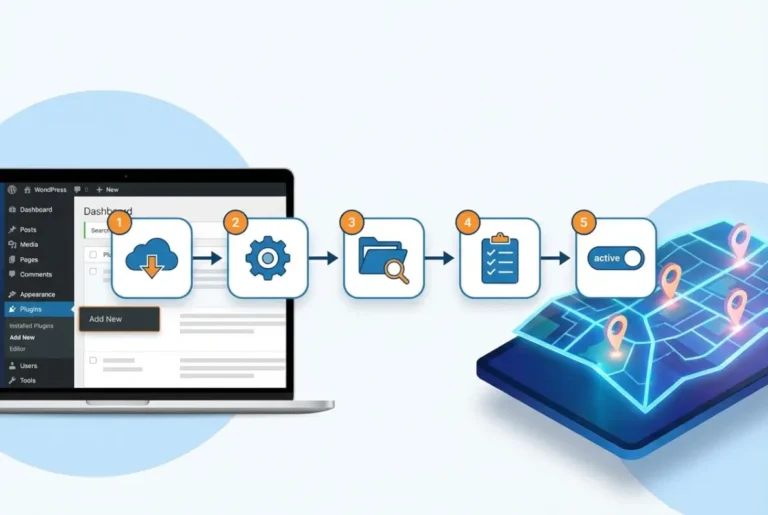
5 Simple Steps to Make a Free Online Directory for Any Niche

Generating summary...
Picture this: you’ve spotted a gap in the market—maybe it’s a directory for sustainable fashion brands, pet-friendly hotels in your region, or freelance drone photographers. You know there’s demand, but the idea of building a website from scratch feels overwhelming. Here’s the surprising truth: you can launch a fully functional online directory without spending a dime on software, and it won’t take months of your life. The barrier to entry has never been lower, and the potential for creating genuine value (and revenue) has never been higher.
What makes directories powerful in the current digital landscape isn’t just their utility—it’s their compounding nature. Every listing you add increases the value for users, which attracts more visitors, which attracts more businesses wanting to be listed. It’s a flywheel effect that, once started, can generate momentum with surprisingly little ongoing effort. The key is starting with the right foundation and following a systematic approach that prioritizes sustainability over complexity.
TL;DR – Quick Takeaways
- Niche focus is everything – A tightly defined directory beats a broad one every time for initial traction
- Free tools are genuinely viable – WordPress with free plugins or no-code builders can handle thousands of listings
- Data structure matters upfront – Spending time on your listing schema prevents painful migrations later
- Seed content is essential – Launch with at least 20-30 quality listings to establish credibility
- SEO compounds over time – Directory sites naturally build authority through structured data and internal linking
Step 1 — Define Your Niche and Directory Scope
The single biggest mistake new directory builders make is going too broad. It’s tempting to think “I’ll create a directory for all businesses in my city” or “a directory for every type of freelancer,” but that approach puts you in direct competition with established giants like Yelp or Upwork. Instead, the sweet spot lies in what I call “defensible niches”—specific enough that you can dominate search intent, but large enough to support hundreds of potential listings.
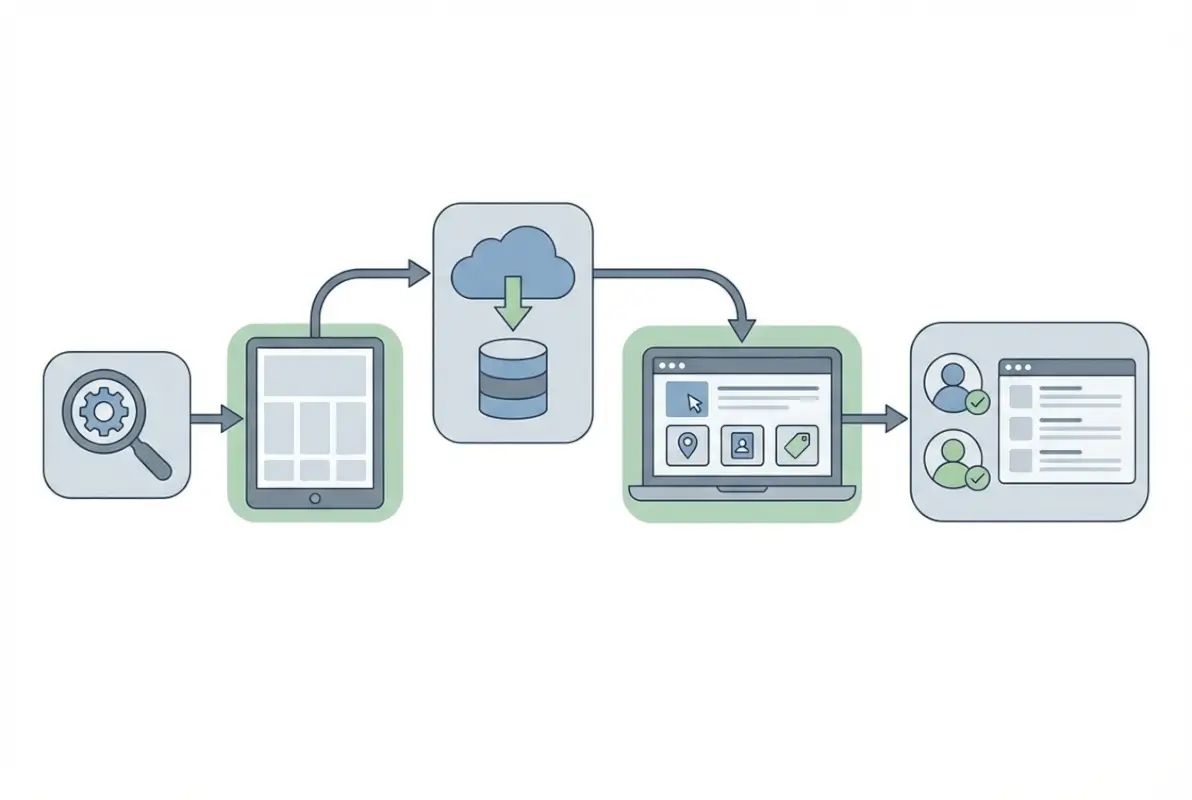
Start by asking yourself three critical questions: First, can you identify at least 100 potential listings without breaking a sweat? Second, are people actively searching for this category (check Google Keyword Planner for monthly search volume)? Third, do existing directories serve this niche poorly or not at all? If you can answer yes to all three, you’ve likely found a viable niche.
Choosing a Focused Niche
Your niche should intersect passion with practicality. I’ve seen successful directories built around remarkably specific categories: certified lactation consultants, commercial refrigeration repair services, wedding calligraphers who specialize in modern fonts. The specificity isn’t a limitation, it’s your competitive advantage. When someone searches for exactly what you’ve cataloged, you become the authoritative source.
Consider these selection criteria: market size (enough businesses to list but not so many you’re overwhelmed), competition level (check if major players dominate the space), and audience pain points (is discovery genuinely difficult right now?). A niche with 500-5,000 potential listings often hits the sweet spot for a free directory project.
Defining Your Directory Scope
Once you’ve chosen your niche, establish clear boundaries. Will you focus on a specific geographic area, or operate nationally with category restrictions? Geographic focus works brilliantly for service-based directories (think “sustainable contractors in the Pacific Northwest”), while category-focused directories excel in creative or specialized industries.
Your scope document should include category definitions, geographic boundaries (if applicable), minimum quality standards, and any ethical or operational requirements. For example, a directory of eco-friendly businesses might require third-party certification or clear documentation of sustainable practices. These criteria protect your directory’s reputation and give you clear grounds for rejecting spam or inappropriate submissions.
Crafting Your Value Proposition
Why would businesses list with you instead of (or in addition to) existing platforms? Your value proposition needs to be crystal clear. Free basic listings remove the primary barrier to entry, but you need to offer something beyond just “another place to be listed.” Maybe it’s reaching a highly targeted audience, appearing in niche search results, or being featured in content you’ll create around the directory.
Think about credibility signals you can build into the platform: verified badges for businesses you’ve vetted, customer review integration, or editorial features highlighting exceptional listings. These elements transform your directory from a simple list into a trusted resource, which is what ultimately drives both user traffic and business interest in being included. The pathway from simple listing site to how to create business directory authority happens through consistent value delivery.
Step 2 — Pick a Free/Low-Cost Directory Platform and Tech Stack
The platform you choose will determine how much time you spend on technical maintenance versus content and growth. The good news is that several genuinely capable options exist at the free or low-cost tier, each with different tradeoffs. Your decision should align with your technical comfort level and your specific directory requirements.

I’ve tested dozens of directory solutions over the years, and the landscape has improved dramatically. You no longer need custom development or expensive proprietary software to launch something professional. The key is understanding which features you absolutely need versus nice-to-haves that can come later.
Free and Low-Cost Platform Options
WordPress with free directory plugins remains the most flexible option for anyone comfortable with basic website management. Plugins like Directorist (freemium model) or Business Directory Plugin offer surprising functionality at zero cost, including submission forms, search functionality, and basic categorization. The free tier limitations typically involve design templates and advanced features, but core directory functionality works perfectly well.
| Platform | Best For | Technical Level | Scalability |
|---|---|---|---|
| WordPress + Free Plugin | Maximum flexibility and control | Moderate | High |
| No-Code Builder (Softr, Glide) | Quick launch, non-technical users | Low | Moderate |
| Airtable + Public View | Simple catalogs, minimal features | Very Low | Low |
| Google Sites + Forms | Absolute beginners, proof of concept | Very Low | Very Low |
No-code platforms like Softr (which builds on Airtable) or platforms with directory templates offer the fastest path from idea to launch. You’re trading some customization flexibility for speed and simplicity. These platforms excel when your primary goal is validating demand before investing heavily in development. Many successful directories started as simple Airtable bases with public views before migrating to more robust solutions once they proved traction.
Essential Features to Prioritize
Regardless of platform, certain features are non-negotiable for a functional directory. First, search and filtering capabilities—users need to find relevant listings quickly through category browsing, keyword search, and ideally location-based filtering if geography matters to your niche. Second, a submission workflow that captures the data you need while remaining simple enough that businesses will actually complete the form.
Third, moderation tools that let you review submissions before they go live, edit existing listings, and remove problematic content. Fourth, SEO-friendly URL structures that create individual pages for each listing and category (avoid platforms that display everything on a single page or use problematic URL parameters). These four elements determine whether your directory feels professional or amateurish.
Security and Spam Considerations
Free submission forms attract spam like honey attracts bees. Your platform needs robust spam prevention from day one, this means CAPTCHA or similar verification on submission forms, email verification for user accounts, and ideally some form of automated spam detection. WordPress plugins typically include these features, but verify they’re enabled and configured properly.
Consider implementing a two-tier verification system: automated spam filters catch obvious junk, then manual moderation catches sophisticated spam or borderline submissions. This takes more time initially but protects your directory’s credibility. One quality directory with 50 verified listings dramatically outperforms a directory with 500 listings where half are spam or abandoned businesses.
When exploring how to build business directory app from scratch alternatives, remember that pre-built solutions have already solved most security challenges, which is a significant advantage for non-technical founders.
Step 3 — Design Data Model and Listing Workflow
This step separates directories that scale smoothly from those that require painful restructuring later. Your data model—the structure of information you collect for each listing—needs to balance comprehensiveness with simplicity. Too few fields and your listings lack useful detail; too many and submission abandonment rates skyrocket.
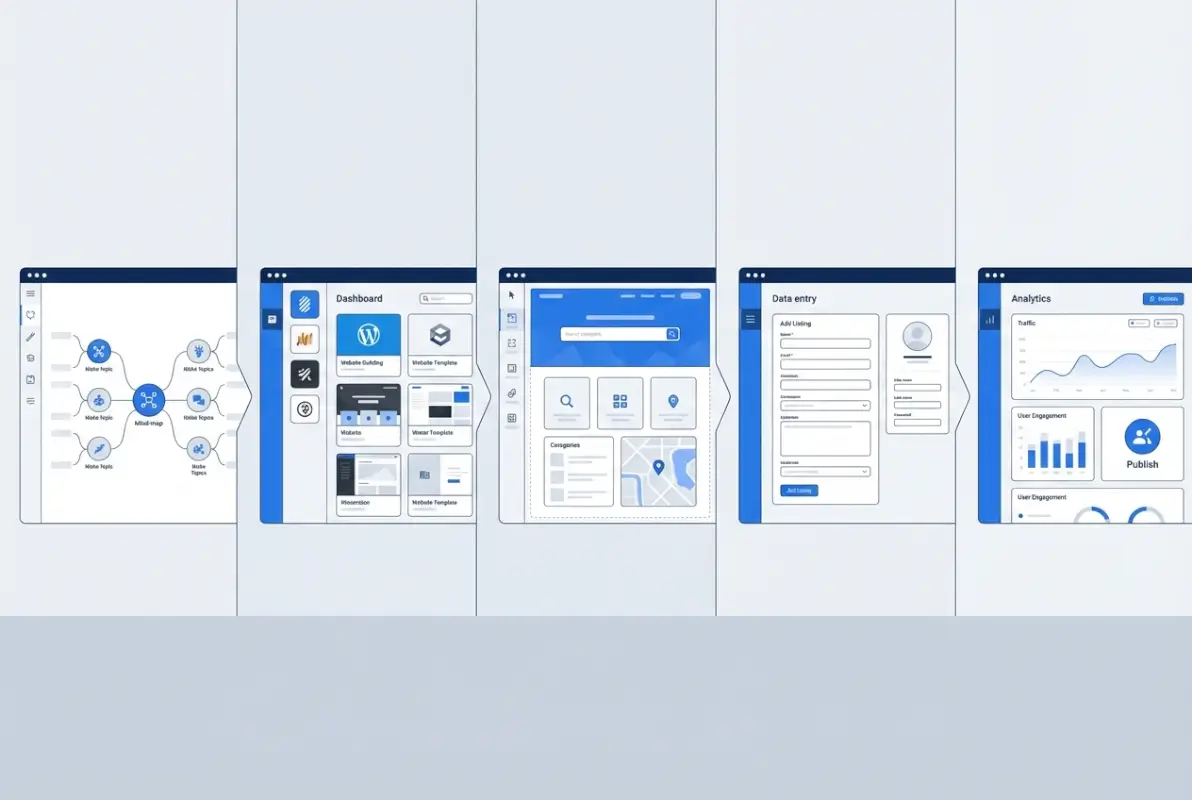
Think of your data model as the foundation of a building. Changing it after you have hundreds of listings is possible but messy and time-consuming. Spending an extra few hours getting this right upfront will save you dozens of hours down the road. I learned this the hard way when I had to manually update 200+ listings because I initially forgot to include a “year established” field that users kept asking about.
Defining Your Core Data Model
Start with the absolute essentials that every listing must have: business name, primary category, description, contact method (usually email and/or website), and location (even if it’s just country/state for remote services). These form your mandatory fields. Then add optional but valuable fields based on your niche: hours of operation for local services, portfolio links for creatives, certifications for professional services, price ranges for consumer services.
Consider the relationship between categories and listings carefully. Will listings belong to a single category or multiple categories? Single-category assignment simplifies browsing but may frustrate businesses that legitimately span multiple specialties. Multi-category assignment better reflects reality but requires more sophisticated filtering. There’s no universally correct answer, but make a deliberate choice based on your niche characteristics.
Submission and Moderation Workflow
Your submission workflow should collect necessary information without feeling like an interrogation. Structure your submission form logically: basic information first (name, category, location), detailed information second (description, services, specialties), media third (logo, photos, documents), and contact/verification last (email, website, social media). This progressive disclosure reduces form abandonment because early fields are quick wins that build momentum.
Your moderation process needs clear decision criteria. Create a simple checklist: Does the submission fit your niche criteria? Is the information complete and accurate? Does the business appear legitimate (verified website, professional email domain)? Are there any red flags (stock photos, generic descriptions, suspicious contact details)? Approve submissions that pass these checks, reject those that clearly don’t, and flag borderline cases for deeper research.
Schema Markup and SEO Structure
Search engines love structured data, and directories are perfectly positioned to provide it. Implement Schema.org markup for your listings using the LocalBusiness schema (or appropriate specialty like Restaurant, Attorney, or Organization). This structured data helps search engines understand your content and can generate rich results in search listings, dramatically improving click-through rates.
Each listing should have its own dedicated page with a clean URL structure (yoursite.com/listings/business-name, not yoursite.com/?p=12345). Category pages should list all businesses in that category with brief previews and link to full listing pages. This internal linking structure helps both users and search engines navigate your directory efficiently. For more advanced implementations, understanding divi business directory layouts website approaches can provide visual inspiration.
Include breadcrumb navigation (Home > Category > Listing) and implement proper heading hierarchy (H1 for listing name, H2 for major sections like Services or Location, H3 for subsections). These seemingly minor details add up to significantly better SEO performance over time, according to Google’s structured data guidelines.
Step 4 — Populate and Grow Listings (Launch Phase)
An empty directory is worthless, so your immediate post-launch priority is reaching critical mass—the minimum number of listings needed to demonstrate value to visitors. For most niches, that’s somewhere between 20 and 50 quality listings. Below that threshold, your directory feels incomplete; above it, momentum starts building organically as businesses discover you and submit themselves.

The chicken-and-egg challenge of directory businesses is real: businesses won’t submit without traffic, and users won’t visit without listings. The solution is manually seeding your directory with high-quality initial listings before you even announce it publicly. This takes hustle, but it’s absolutely necessary for launch credibility.
Manual Seeding Strategy
Start by identifying the 30-50 best businesses in your niche that you can research and list with publicly available information. Visit their websites, gather the data your schema requires, and create their listings (with a note that they’re pending business verification, if you want to be transparent). Focus on quality over quantity—these initial listings set the standard for your entire directory.
Once you’ve seeded 20-30 listings, reach out to those businesses with a personalized message: “I’ve created a directory focused on [niche] and included [Business Name] as one of the featured initial listings because of [specific reason]. You can claim and enhance your free listing here: [link].” This approach is remarkably effective because you’ve already provided value before asking for anything.
Encouraging User-Submitted Listings
After seeding, shift to encouraging organic submissions. Make your “Submit a Listing” button prominent on every page. Write clear, benefit-focused copy explaining why businesses should list: “Reach [audience description] actively searching for [services]. Free basic listing includes [specific features].” Remove friction from the submission process—every additional required field reduces completion rates.
Consider offering incentives for early submissions: “First 100 listings receive featured placement for 90 days” or “Submit in the next 30 days and receive a detailed review from our editorial team.” Time-limited offers create urgency without ongoing cost to you. These psychological triggers significantly boost submission rates during the critical early growth phase.
Content and Discovery Strategy
Build content around your directory to drive organic traffic. Write blog posts highlighting exceptional listings, create “Best of” roundups by subcategory, develop guides and resources related to your niche. Each piece of content should link to relevant directory listings, creating a mutually reinforcing ecosystem where content drives discovery and listings provide credibility to content.
Internal linking is particularly powerful for directories. Every category page should link to its subcategories and featured listings. Every listing should link back to its category and related listings. This dense internal linking structure distributes link equity throughout your site and helps search engines understand the relationships between your pages, similar to strategies outlined when you connections business directory reasons get listed.
Leverage social proof by showcasing listing numbers prominently: “Join 150+ businesses in our directory” or “Browse 200+ verified providers.” Social proof reduces hesitation for both businesses considering submitting and users evaluating your directory’s comprehensiveness. Update these numbers regularly as you grow.
Step 5 — Launch, SEO, and Ongoing Maintenance
Launch day isn’t the finish line, it’s the starting gun. Your directory’s long-term success depends on consistent optimization, maintenance, and growth. The good news is that directories naturally improve with age as they accumulate listings, inbound links, and search engine authority. Your job is nurturing that growth rather than forcing it.

The most successful directories I’ve studied share a common trait: their founders stayed engaged and actively maintained them for at least 12-18 months before they became relatively self-sustaining. This isn’t a “set it and forget it” project in year one, but the maintenance requirements decrease significantly once you’ve built momentum and established processes.
On-Page SEO Fundamentals
Every page on your directory needs optimized metadata. Category pages should target “[category] directory” or “find [category] providers” type keywords. Individual listing pages should focus on business-name and service-specific terms. Write unique, descriptive title tags (50-60 characters) and meta descriptions (150-155 characters) that incorporate relevant keywords naturally while remaining compelling to human readers.
Implement breadcrumb navigation sitewide and ensure your XML sitemap includes all listing and category pages. Submit this sitemap through Google Search Console and monitor indexing status regularly. Directories can have thousands of pages, so monitoring crawl errors and ensuring complete indexing is essential for maximizing organic visibility, as confirmed by research from Moz’s SEO learning center.
Structure your URLs logically and consistently. Category pages might follow yoursite.com/category/category-name/, while listings might be yoursite.com/listings/business-name/ or yoursite.com/category-name/business-name/. Consistency matters more than the specific structure—choose a pattern and stick with it to avoid duplicate content issues and confusion.
Performance Metrics and Analytics
Track metrics that actually indicate directory health, not vanity metrics. Key performance indicators include: number of active listings (and growth rate), new submissions per week, claimed vs. unclaimed listings ratio, user search queries and click-through patterns, pages per session (indicating successful discovery), and repeat visitor percentage. These metrics tell you whether you’re solving the discovery problem you set out to address.
| Metric | Healthy Range | What It Indicates |
|---|---|---|
| Listing Growth Rate | 10-20% monthly (early stage) | Market interest and word-of-mouth |
| Submission Completion Rate | 60-80% | Form usability and value perception |
| Pages Per Session | 3-5 pages | Discovery effectiveness |
| Organic Search Traffic % | 50-70% after 6 months | SEO effectiveness and sustainability |
Set up Google Analytics (or privacy-focused alternatives like Plausible) and Search Console from day one. Track which search queries bring users to your site—these reveal additional content opportunities and help you refine your category structure. If users repeatedly search for a subcategory you haven’t created yet, that’s valuable market feedback you should act on.
Maintenance Routines
Establish weekly and monthly maintenance routines early. Weekly tasks include reviewing new submissions (set a 2-3 day turnaround expectation), responding to listing update requests, and checking for broken links or outdated contact information on high-profile listings. Monthly tasks include reviewing analytics for trends, updating featured listings, checking for duplicate submissions, and auditing a sample of listings for accuracy.
Stale listings undermine directory credibility, so implement an annual verification process. Email all listed businesses once per year asking them to verify their information is still current. Businesses that don’t respond within 30 days get flagged with “Last verified [date]” until they confirm. This keeps your directory fresh and gives you a legitimate reason to re-engage with listed businesses annually.
Sustainable Monetization Approaches
Once you’ve achieved critical mass (100+ listings and steady organic traffic), explore monetization carefully. The key is adding revenue streams without degrading the core free directory experience. Featured or premium listings that offer additional visibility while keeping basic listings genuinely free and functional represent the most common sustainable approach. Businesses often happily pay $20-50/month for enhanced placement once they see value from the free listing.
Other monetization options include modest display advertising (but avoid anything too intrusive), affiliate relationships with relevant service providers, sponsored content or business spotlights, and lead generation fees if your niche supports it. The most successful approach I’ve seen is the freemium model: excellent free listings that meet basic needs, plus premium options that offer tangible additional value for businesses willing to invest. Understanding various methods extract emails online directory outreach can also inform growth strategies.
Resist the temptation to monetize too aggressively early on. A directory with 50 listings and aggressive upselling feels desperate; a directory with 500 listings and selective premium options feels legitimate. Build value first, monetize second. This patient approach typically yields better long-term revenue than trying to extract money from an immature platform.
Niche-Specific Enhancements and Advanced Features
Once your core directory is functioning smoothly, you can consider enhancements tailored to your specific niche. These additions should solve real user problems rather than adding features for features’ sake, which is a trap I see many directory builders fall into when they get bored with basic maintenance tasks.
Geographic vs. Global Focus
If your directory has geographic elements, map integration transforms user experience dramatically. Free map providers like Leaflet with OpenStreetMap data let users visualize listing locations without Google Maps API costs (though Google Maps offers free tiers for lower traffic sites). A well-implemented map view often becomes users’ preferred browsing method for location-based directories.
For global directories, consider multi-language support once you have solid traction in your primary language. WordPress plugins like WPML or Polylang enable this, though content translation represents significant ongoing work. Start with machine translation for listing descriptions (with clear disclaimers) and manually translate only your core UI elements and category names initially.
Reviews and Social Proof Integration
User reviews add immense value but also introduce moderation complexity. If your niche would genuinely benefit from reviews (service directories, restaurants, healthcare providers), implement them with strong spam prevention and clear guidelines. Consider requiring verified accounts to leave reviews and implementing both rating systems and written feedback.
Alternatively, aggregate existing reviews from established platforms rather than building your own review system. Many APIs (Google Places, Yelp) allow you to display existing reviews with proper attribution. This provides social proof without the moderation burden of hosting reviews directly. It’s a pragmatic middle ground that saves significant time while still adding value for users.
Advanced Filtering and Discovery
As your directory grows beyond 100 listings, sophisticated filtering becomes essential. Implement faceted search that lets users combine multiple filters (category + location + specific attributes like “accepts insurance” or “open weekends”). This type of advanced search functionality significantly improves user experience but requires more sophisticated platform capabilities—another reason to choose your initial platform carefully.
Consider adding a “compare” feature for directories where users evaluate multiple options (contractors, software tools, service providers). Allow users to select 2-3 listings and view their attributes side-by-side in a comparison table. This functionality increases engagement and helps users make informed decisions, which is ultimately why they came to your directory in the first place.
Common Pitfalls and How to Avoid Them
Learning from others’ mistakes is cheaper than making them yourself. These pitfalls catch nearly every first-time directory builder, but awareness helps you sidestep them entirely or at least recover faster.
The Premature Monetization Trap
Trying to charge for listings before you’ve proven value is the fastest way to stall growth. Businesses need evidence that your directory drives real traffic or leads before they’ll pay for enhanced placement. Keep listings free until you can show analytics demonstrating value—at minimum, 500+ monthly unique visitors and documented business inquiries from your listings.
The Insufficient Seed Content Problem
Launching with fewer than 20 listings makes your directory look abandoned before it even starts. Visitors won’t bookmark or return to a nearly empty directory. Invest the time to manually seed 30-50 quality listings before you announce publicly, this effort pays dividends in credibility and early growth momentum.
The Spam Spiral
Unmoderated free listings attract spam exponentially. One visible spam listing encourages more spam submissions because it signals you’re not paying attention. Implement strong spam prevention from day one and moderate every submission initially. As you grow, you can implement trusted-user systems where verified businesses can update listings without moderation, but start strict.
The Feature Creep Distraction
Adding features feels productive but rarely drives growth the way content and outreach do. Resist the urge to build complex functionality before you’ve validated basic directory demand. Many successful directories run on remarkably simple platforms because they focus on comprehensive, accurate listings rather than technical sophistication.
The Inconsistent Maintenance Death Spiral
Directories require consistent attention, especially in the first year. Going weeks without reviewing submissions or responding to business inquiries signals that your directory isn’t a priority, which becomes a self-fulfilling prophecy as growth stalls. Set sustainable maintenance routines—even 30 minutes three times per week—and stick to them religiously. Consistency beats intensity for directory success.
Frequently Asked Questions
How do I start a free online directory for a niche?
Begin by defining a specific niche with 100-500 potential listings, then choose a free platform like WordPress with directory plugins or a no-code builder. Manually seed 30-50 quality listings before launch, implement basic SEO, and establish a submission workflow. Focus on providing genuine value to both businesses and users searching for services in your niche.
What platform should I use to build a free directory?
WordPress with free plugins like Directorist or Business Directory Plugin offers the most flexibility for free directory projects. For non-technical users, no-code platforms like Softr (using Airtable as a backend) provide faster setup with less customization. Choose based on your technical comfort level, desired features, and long-term scalability needs.
How can I attract businesses to list for free in my directory?
Start by manually creating listings for quality businesses using public information, then reach out offering them the chance to claim and enhance their listing. Demonstrate value through targeted traffic and clear niche focus. As you grow, businesses will submit organically once you achieve critical mass and establish credibility within your niche community.
How do I prevent spam in a free directory?
Implement CAPTCHA on submission forms, require email verification for accounts, and manually moderate all submissions initially. Establish clear listing criteria and rejection standards. Use spam detection plugins if available on your platform, and regularly audit existing listings for quality. Prevention is easier than cleanup, so start with strict moderation.
Is a free directory sustainable and how can it scale?
Free directories are sustainable when you monetize thoughtfully after establishing value—typically through premium listing upgrades, featured placements, or modest advertising. Scale by expanding categories within your niche, building content that drives organic traffic, and encouraging user submissions. Many directories become relatively self-sustaining after 12-18 months of consistent effort and growth.
What SEO strategies work best for directory sites?
Focus on structured data markup for listings, unique metadata for each page, strong internal linking between categories and listings, and content creation around your niche. Build local citations if relevant, encourage quality inbound links from listed businesses, and ensure clean URL structures. Directories naturally benefit from long-tail keyword traffic as they grow.
How do I monetize a free directory without losing listings?
Wait until you have proven traffic and value, then introduce optional premium features that enhance existing listings rather than limiting free ones. Featured placement, enhanced profiles with additional media, or priority search placement work well. Keep core directory access genuinely free and functional—the freemium model maintains trust while generating revenue from businesses seeking additional visibility.
What data should I collect for each listing and how should I structure it?
Collect essential fields (name, category, description, contact, location) as mandatory, with optional fields for niche-specific attributes like hours, certifications, or services. Structure data to support both user browsing and search engine understanding. Plan your schema carefully upfront since restructuring after accumulating hundreds of listings becomes time-consuming and complex.
How should I handle listing moderation and user-generated content?
Review every submission against clear criteria before approval—does it fit your niche, is information complete and accurate, does the business appear legitimate? Approve quality submissions quickly (within 2-3 days), provide clear rejection reasons for declined submissions, and establish an update process for existing listings. Consistent moderation maintains directory quality and user trust.
What are the best practices for schema markup for directories?
Implement LocalBusiness schema (or appropriate specialty schema) on individual listing pages, Organization schema on your homepage, and BreadcrumbList schema for navigation. Include all relevant properties like address, phone, opening hours, and ratings if applicable. Use Google’s Rich Results Test to verify implementation. Proper schema markup helps search engines understand your content and can generate rich search results.
Your Directory Launch Plan Starts Now
Building a free online directory for your niche isn’t a passive project, but it’s also not as complex as the dozens of platform options and feature discussions might suggest. The fundamental success formula is straightforward: choose a focused niche where you can provide genuine value, select a free platform that matches your technical comfort level, seed quality listings before launch, establish sustainable maintenance routines, and grow steadily through consistent effort and smart SEO.
The directories that succeed long-term are those that solve a real discovery problem better than existing alternatives. That doesn’t require the most sophisticated technology or the longest feature list. It requires deep understanding of your niche, commitment to quality over quantity, and persistence through the early growth phase where progress feels slow. Most directory founders give up during months 3-6, when the initial excitement fades but organic momentum hasn’t built yet. Push through that valley and you’ll likely find yourself with a valuable asset that grows increasingly self-sustaining.
Ready to Launch Your Directory?
Start with these immediate actions: identify your niche and document your scope criteria, choose your platform and set up basic pages, manually research and create your first 10 seed listings, establish your submission form and moderation workflow, and set a realistic launch date 2-3 weeks out. Small, consistent progress beats sporadic bursts of activity every time.
Remember that your directory doesn’t need to be perfect at launch. It needs to be functional, valuable, and improvable. Every successful directory you admire started as something much simpler. Your job is to start, learn from real user behavior, iterate based on feedback, and steadily compound your efforts over time. The compounding effect of directory building—where each listing makes the next easier to attract—is remarkably powerful once it kicks in.
The opportunity in niche directories remains strong precisely because it requires effort that most people won’t sustain. If you’re willing to invest 6-12 months of consistent work building something genuinely useful, you can establish yourself as the definitive resource in your chosen niche. That’s a position with real value, both for the community you serve and potentially for your own business goals. So pick your niche, choose your platform, and create that first listing today—your directory won’t build itself, but the path forward is clearer than you might think.
Was this article helpful?