How to Manage, Build, Grow & Profit from a Web-Based Online Directory

Generating summary...
Reading time: 12-15 minutes
Building a web-based directory isn’t just about listing businesses anymore, it’s about creating a self-sustaining ecosystem that generates recurring revenue while genuinely solving a discovery problem. Most people think directories are a relic of the early internet, yet niche directories are quietly outperforming generic aggregators in both user engagement and monetization per visitor. The secret? Hyper-focus on one vertical, obsessive data quality, and multiple revenue streams that don’t rely solely on advertising. If you’ve been looking at directories as simple listing platforms, you’re leaving serious money on the table.
TL;DR – Quick Takeaways
- Niche specificity wins – General directories struggle against established players; focused verticals (healthcare, contractors, local services) capture higher-intent users and command premium pricing
- Monetization is multi-layered – Successful directories blend free basic listings with featured placements, premium profiles, lead generation fees, and data services rather than relying on one revenue stream
- Data quality trumps quantity – Verified, curated listings with rich media outperform massive databases of thin profiles; quality drives trust, and trust drives conversions
- SEO architecture is foundational – Schema markup, location pages, and structured data aren’t optional—they’re the difference between ranking and invisibility in local search results
- First-year profitability is realistic – With proper positioning and execution, niche directories can reach profitability within 8-14 months through a mix of listing fees and partnerships
Concept, Niche, and Positioning
The directory landscape has shifted dramatically from the Yelp-style “everything everywhere” model to laser-focused vertical plays. What makes directories work in this era is solving a specific pain point for a defined audience—not trying to be the yellow pages of the internet. According to Forbes research on small business websites, over 71% of small businesses maintain an online presence, and they’re actively seeking visibility channels beyond social media and Google My Business. This creates a genuine opportunity for well-positioned directories that offer more than just a name and address.

The core value proposition breaks down into two distinct stakeholder groups. For users (the searchers), you’re providing filtered, trustworthy discovery in a specific domain where generic search engines fall short. For businesses (the listed entities), you’re offering qualified lead flow and visibility to an audience already primed to convert, which is fundamentally different from cold traffic. The magic happens when you position yourself as the authoritative hub for a niche, not a pale imitation of established platforms.
Define Your Directory’s Focus
Generic directories die slow deaths competing against established players with decade-long head starts and massive SEO authority. Your competitive advantage lies in going narrow and deep. Local business directories work when they’re hyper-local (neighborhood level, not city-wide) or when they serve underserved geographic markets. Vertical directories thrive in regulated industries (healthcare providers, licensed contractors, financial advisors) where verification and credentials matter more than review volume.
Hyper-niche examples that consistently outperform general directories include: specialty healthcare (fertility clinics, sports medicine, pediatric dentists), service businesses with licensing requirements (HVAC, electrical, plumbing in specific regions), B2B services where discovery is fragmented (industrial suppliers, commercial real estate, wholesale distributors), and lifestyle categories with passionate communities (vegan restaurants, pet-friendly venues, accessible facilities). The pattern? Each solves a specific discovery problem that Google struggles to answer definitively.
Validate Demand and Competition
Before building anything, you need to validate that people are actually searching for what you plan to organize. Keyword research for directories differs from content sites, you’re looking for “near me” searches, location + service combinations, and “best [category] in [location]” patterns. Tools like Google’s Keyword Planner, Ahrefs, or even Google Trends reveal search volume, but the real insight comes from search intent analysis.
Look at what people click when they search your target queries. Are they clicking directories, or are they clicking individual business websites? If most clicks go directly to provider sites, users don’t see value in directory intermediaries for that category. Competition analysis should focus on feature gaps—what are top directories missing that users complain about in reviews? Common gaps include outdated information, lack of real verification (not just claimed profiles), poor mobile experience, and thin profiles with no useful detail beyond contact info.
I remember validating a contractor directory idea by manually tracking local Facebook groups for six weeks. The same question—”Who do you trust for kitchen remodeling?”—appeared 23 times in a single metro area. That’s not a data point you’d find in keyword tools, but it’s pure gold for validation. User-generated questions in communities often reveal pain points that search volume data misses entirely.
Value Proposition and Differentiation
Your differentiation can’t be “we have more listings” because incumbents will always win that battle, and quantity without quality is worthless. Winning value propositions center on trust mechanisms (verified credentials, insurance validation, background checks), superior data quality (operating hours accuracy, real-time availability, detailed service descriptions), or unique access (exclusive provider networks, curated selections with editorial standards).
Speed and user experience matter more than people think. If your directory can answer a query in three clicks versus seven on a competitor site, that’s differentiation. If you offer instant lead routing versus making users fill out forms and wait, that’s differentiation. The best positioning isn’t “we’re better,” it’s “we solve [specific friction point] that other directories ignore.” For business listings, the best free business listing sites offer immediate value, and your premium directory needs to deliver something worth paying for beyond mere visibility.
Platform Architecture and Data Model
The technical foundation of your directory determines everything from how quickly you can launch to how well you’ll rank in search engines five years from now. Most first-time directory builders over-engineer the platform or under-invest in data structure—both mistakes are expensive. Your platform choice fundamentally shapes your operational overhead, customization flexibility, and long-term scalability, so this decision deserves serious analysis before writing a single line of code.
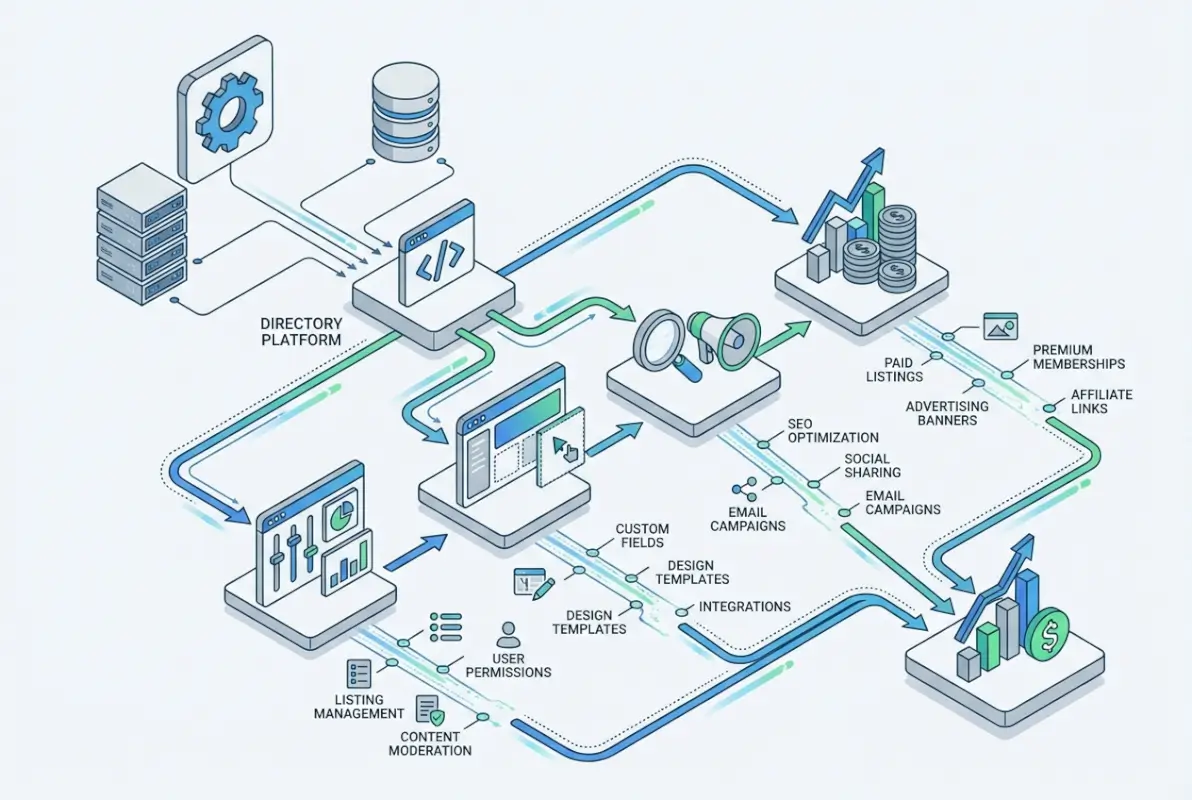
The architecture debate breaks into three main paths: WordPress with directory plugins (fastest to launch, limited customization ceiling), dedicated directory SaaS platforms (mid-range flexibility, subscription dependency), or custom-built solutions (maximum control, highest initial investment). According to research from Statista on website technologies, WordPress powers over 43% of websites globally, and directory-specific plugins have matured significantly—but they come with tradeoffs that aren’t obvious until you hit scaling constraints.
Core Tech Stack Choices
WordPress directory setups using plugins like GeoDirectory or Business Directory Plugin get you live in days, not months. The ecosystem offers ready-made monetization features, payment gateways, and decent SEO foundations out of the box. The ceiling appears when you need custom matching algorithms, complex filtering logic, or integrations that plugin developers didn’t anticipate. You’ll spend more time working around plugin limitations than building value as you scale.
SaaS directory platforms (Brilliant Directories, DirectoryHub, Directify) eliminate technical overhead entirely and include hosting, updates, and support. The monthly costs range from $40-$300 depending on features, which seems reasonable until you calculate lifetime value over five years versus ownership costs. You’re also locked into their feature roadmap—if they don’t prioritize something critical to your vertical, you’re stuck waiting or working around it with third-party integrations.
Custom development makes sense when your directory model includes unique business logic: complex verification workflows, proprietary matching algorithms, or deep integrations with industry-specific systems. Initial costs run $15,000-$75,000+ depending on complexity, but you own everything and aren’t paying perpetual platform fees. The break-even calculation depends on your revenue model and growth projections, but for directories planning to exceed $10,000/month in revenue, custom builds often pencil out favorably by year three.
Listings Schema and Taxonomy
Your data model isn’t just about what fields to include, it’s about creating a structure that scales across different use cases while maintaining consistency. Core listing fields should include: legal business name, DBA (doing business as), complete address with geocoding, primary phone and alternate contacts, website URL, business email, hours of operation (with holiday hours and seasonal variations), category assignments (primary and secondary), service area definitions, and verification status with verification date.
The taxonomy design determines how users filter and discover listings. Multi-level category hierarchies work for broad verticals (Home Services → Electrical → Residential Electrical → Smart Home Installation), while tag-based systems offer more flexibility for cross-cutting attributes (accepts cryptocurrency, wheelchair accessible, women-owned, emergency services). The process to join an online directory should capture rich data upfront rather than allowing sparse profiles that provide no user value.
Custom fields tied to your vertical create defensible value. A healthcare directory needs medical license numbers, board certifications, accepted insurance plans, and hospital affiliations. A contractor directory requires license numbers, insurance coverage amounts, bonding status, and specialty certifications. These fields aren’t just data points—they’re trust signals that generic directories can’t easily replicate because they require verification workflows and industry knowledge.
Data Quality, Verification, and Sourcing
Data quality separates directories that users trust from those they abandon after one disappointing search. You have three main sourcing approaches: manual curation (slow but highest quality), public data aggregation (fast but requires extensive cleanup), and user-submitted data with validation (scalable but needs robust workflows). Most successful directories use a hybrid approach—seed initial listings from curated sources, then open user submissions with strict validation requirements.
Verification isn’t just confirming a business exists; it’s validating that all information is current and accurate. Phone verification through automated calls, address validation via mail with verification codes, license verification through public records databases, and insurance verification through certificate uploads all add friction but dramatically improve data quality. Users can tell the difference between directories with verified listings and those that are essentially crowdsourced data dumps with no accountability.
Data decay is real—businesses close, relocate, change phone numbers, and update hours constantly. According to business database research, approximately 2-3% of business information becomes outdated every month. Without systematic re-verification, your directory becomes unreliable within a year. Automated re-verification workflows (annual phone verification, periodic email confirmations, monitoring for disconnected phone numbers) and user feedback mechanisms (“Is this information correct?”) help maintain quality without massive manual overhead.
SEO-Friendly Architecture
Directory SEO hinges on structured data, location-based pages, and internal linking architecture. Schema.org markup for LocalBusiness, Organization, or Service entities tells search engines exactly what each listing represents, enabling rich results in search. Implementing JSON-LD structured data for every listing page isn’t optional—it’s the baseline for competing in local search results. The official schema.org vocabulary provides detailed specifications for marking up business information in machine-readable formats.
Location-based landing pages create indexable entry points for every geography you serve. City pages, neighborhood pages, and service-area pages targeting “[category] in [location]” queries form the backbone of organic acquisition. These aren’t thin doorway pages—they need genuine value through curated provider lists, local market insights, and area-specific content that helps users make decisions. Google’s spam algorithms are sophisticated enough to detect and penalize pure SEO pages with no user value.
Internal linking architecture should create clear paths between category pages, location pages, and individual listings while distributing authority logically. A well-structured directory naturally clusters related listings, making it easy for search engines to understand topical relationships. For those looking at how to leverage existing directories, understanding how to find an online directory for research reveals patterns in successful site architecture worth emulating.
URL structure matters more than most people realize. Readable, hierarchical URLs (domain.com/category/city/business-name) perform better than parameter-based URLs (domain.com/listing?id=12345) both for users and search engines. Canonical tags prevent duplicate content issues when listings appear in multiple categories. XML sitemaps should segment listings by category and location to help search engines prioritize crawling and understand site structure—massive single sitemaps with 50,000 URLs are less effective than well-organized sitemap indexes.
Content and User Experience
User experience determines whether someone finding your directory through search actually uses it to complete their task or bounces back to refine their query elsewhere. Content quality signals whether your directory is a trusted resource or just another database. The interplay between these two elements drives engagement metrics that search engines use to assess quality—dwell time, click-through rate, return visits, and conversion actions all stem from how well you execute content and UX.

Most directories fail not because they lack listings, but because the listings lack substance and the interface makes discovery unnecessarily difficult. A sparse profile with just a phone number and address provides minimal value over what users can find in a generic search. Rich profiles with photos, detailed descriptions, service lists, pricing transparency, and genuine reviews create the type of experience that keeps users coming back and drives actual conversions for listed businesses.
Listing Quality and Media
High-quality listing content starts with comprehensive business descriptions that explain what makes each provider unique, not generic boilerplate that could describe anyone in the category. Descriptions should cover specific services offered, service area details, years in business, specializations or certifications, and what types of clients they work with best. A business card directory approach—minimal information just to establish presence—doesn’t cut it when users are making important service decisions.
Visual content dramatically impacts conversion rates on directory listings. Research on business listings consistently shows that profiles with multiple high-quality photos receive significantly more engagement than text-only profiles. The ideal listing includes: storefront or facility exterior, interior workspace or showroom, team photos showing the people users will interact with, work samples or completed projects, and equipment or credentials that establish expertise.
Video content is underutilized in directories despite strong performance data. A 60-second introduction video from the business owner builds trust faster than paragraphs of text. Service demonstration videos, customer testimonial videos, and facility walkthroughs all add richness that static content can’t match. The technical implementation is straightforward—YouTube or Vimeo embeds work fine—but the impact on conversion rates is substantial, particularly for high-consideration services where trust is paramount.
Search and Discovery Features
Search functionality needs to balance simplicity for casual browsers with power for users who know exactly what they want. The core search experience should support natural language queries (“plumber near downtown who handles commercial work”), not just keyword matching. Autocomplete suggestions, spell correction, and synonym handling prevent users from hitting dead ends due to minor query variations.
Filtering is where most directories either shine or frustrate users. Essential filters include distance/location radius, category refinement, availability (open now, accepts appointments), pricing level, and verification status. Advanced filters tied to your vertical (insurance accepted, languages spoken, certification types, service capabilities) let power users narrow results precisely. The key is progressive disclosure—show essential filters upfront, hide advanced options behind an expand action to avoid overwhelming casual users.
Map integration isn’t just a nice-to-have; it’s fundamental to how people search for local services. Interactive maps should support clustering at zoom-out levels (showing result counts by area), individual markers on zoom-in with listing preview cards on click, and current location detection with distance calculation. The ability to download directory data or export search results adds value for power users in B2B verticals, though you’ll want to balance data accessibility with preventing wholesale scraping.
Sorting options matter more than they seem—different users optimize for different criteria. Default relevance sorting should consider verification status, profile completeness, review ratings, and distance from user location. Alternative sort options (closest first, highest rated, most reviewed, recently updated) let users prioritize what matters most for their specific need. Transparent sorting signals (“Sorted by: closest first within 10 miles”) prevent the black-box feeling that erodes trust.
Trust Signals and Verification
Trust is currency in directory businesses. Users default to skepticism—they’ve been burned by fake reviews, outdated information, and businesses that don’t match their descriptions. Visual verification badges (verified license, background checked, insurance confirmed) need to be prominent and backed by real validation processes, not just decorative icons. The verification date and what was verified should be transparent, not hidden behind vague “verified business” claims.
Reviews are the most powerful trust signal when they’re authentic and moderated properly. The platform needs to prevent fake reviews (verified purchase/service confirmation, identity verification of reviewers, pattern detection for suspicious activity) while making it easy for genuine customers to share experiences. Review recency matters—a business with 50 reviews from three years ago raises questions, while one with 15 recent reviews feels actively engaged.
Review response functionality where businesses can reply to feedback demonstrates accountability and gives context to negative reviews. A thoughtful response to a complaint can actually build more trust than a perfect 5-star record with no business interaction. Moderation policies need to balance preventing abuse with allowing honest negative feedback—overly sanitized review sections are obvious and destroy credibility.
Mobile-First Design and Performance
Mobile isn’t just important—it’s primary for local directory searches. Research consistently shows that location-based searches happen predominantly on mobile devices, often with immediate intent (“I need this service now”). Your mobile experience can’t be an afterthought responsive retrofit; it needs to be the core design that desktop adapts from. Single-column layouts, thumb-friendly tap targets, and minimal scroll depth to core actions (call, get directions, view hours) are non-negotiable.
Page speed on mobile determines whether users wait for your content or hit back and try another result. Target lighthouse scores above 90 for mobile performance through aggressive image optimization (WebP formats, responsive image sizing, lazy loading), minimal JavaScript execution, and critical CSS inlining. Every 100ms of delay in page load correlates with measurable conversion rate drops—this isn’t theoretical optimization, it’s revenue impact.
Mobile-specific features like click-to-call buttons, one-tap directions integration, and SMS inquiry options reduce friction between discovery and action. The goal is zero barrier from finding a listing to initiating contact. Forms should be minimal (name, phone, message) with input types optimized for mobile keyboards (tel for phone numbers, email for email fields) to reduce typing errors and abandonment.
Accessibility and Internationalization
Accessibility isn’t just ethical—it’s good business and improves usability for everyone. WCAG 2.1 Level AA compliance should be baseline, covering keyboard navigation, screen reader compatibility, sufficient color contrast, and proper semantic HTML structure. Alt text for images, ARIA labels for interactive elements, and skip-to-main-content links help users with disabilities while also improving SEO signal quality.
Internationalization planning depends on your market, but even English-only directories should consider multilingual support if serving areas with significant non-English populations. Beyond UI translation, internationalized directories need locale-appropriate formatting (addresses, phone numbers, dates), currency handling, and potentially separate SEO optimization for different language versions. The technical implementation is significantly easier when planned from launch rather than retrofitted onto a monolingual codebase.
Monetization and Economics
A well-architected directory can become a profitable platform through multiple revenue streams, but success hinges on understanding your audience’s willingness to pay and structuring offerings that align with business outcomes. The most sustainable monetization models balance free access for discoverability with premium features that deliver measurable ROI to listing owners. In 2024–2026, directories have proven revenue potential across featured listings, advertising, affiliate partnerships, and data services—each requiring distinct pricing strategies and operational infrastructure.
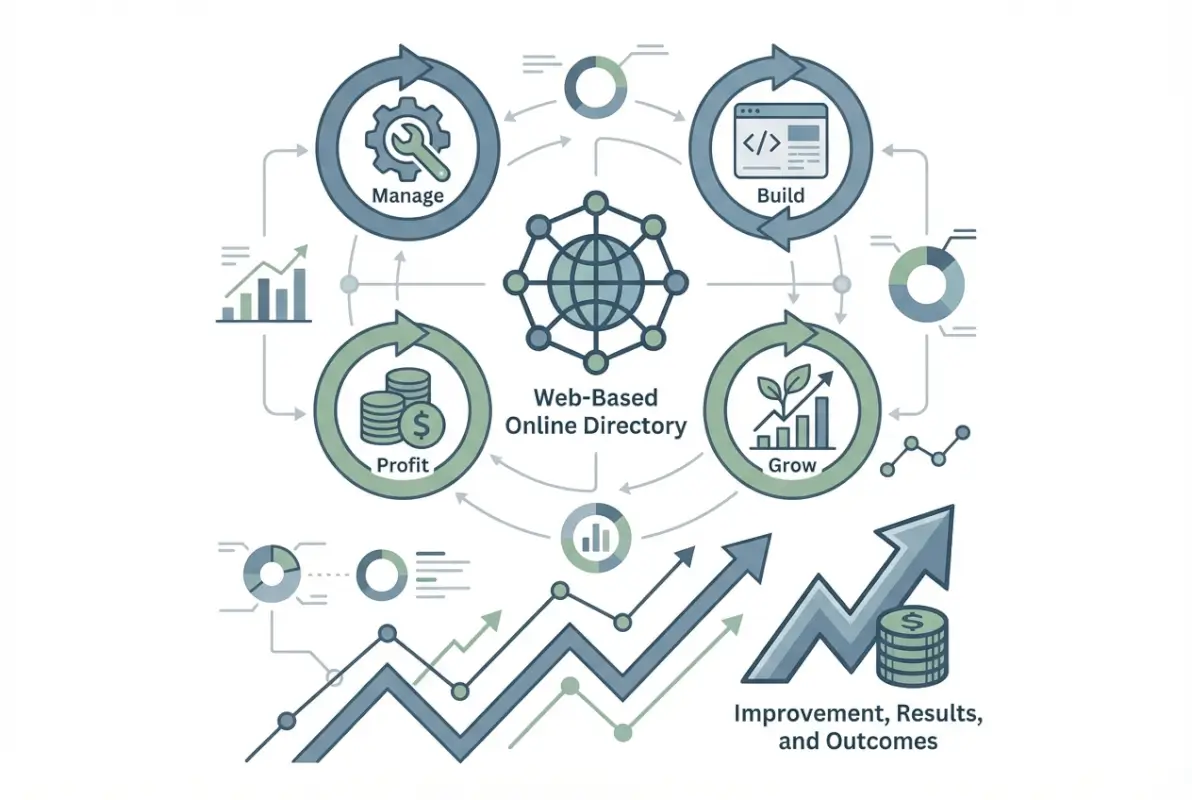
Monetization Blueprint: Free Listings + Paid Tiers
The freemium model remains the cornerstone of directory monetization. Free basic listings create network effects—encouraging widespread adoption, building domain authority, and establishing your directory as a comprehensive resource. Paid tiers unlock enhanced visibility and engagement features that translate directly to leads and conversions for business owners.
Typical tier progression follows this pattern:
| Tier | Features | Typical Monthly Price |
|---|---|---|
| Free | Basic contact info, category placement, limited images | $0 |
| Enhanced | Logo, gallery, social links, extended description, analytics | $29–$79 |
| Featured | Top placement in category, verified badge, lead notifications, priority support | $99–$249 |
| Premium | Homepage spotlight, video embeds, CRM integration, white-label reports, custom CTAs | $299–$599 |
The value proposition for each tier must be unambiguous: enhanced listings should demonstrably increase profile views, featured placements should drive 3–5× more click-throughs, and premium tiers should offer ROI-positive lead generation for high-value service businesses. Track conversion lift by tier and use that data in sales conversations—concrete metrics turn skeptical prospects into paying subscribers.
In niche B2B directories, where a single qualified lead can be worth thousands of dollars, annual contracts at $2,000–$5,000 are feasible if you can demonstrate consistent lead flow. For local consumer-facing directories, monthly subscriptions work better, aligning cost with seasonal business cycles. Consider offering annual discounts (10–20% off) to improve cash flow and reduce churn.
Pricing Strategy and Packaging
Effective pricing balances customer lifetime value (LTV) against acquisition cost, competitive benchmarks, and perceived value. Start by surveying a sample of target businesses: ask what they currently spend on online marketing, what outcomes matter most (calls, form fills, visits), and what price points feel reasonable for those outcomes. Use this qualitative input to anchor your initial pricing, then iterate based on conversion data.
Several packaging strategies can optimize revenue:
- Good-Better-Best tiers: Three options reduce decision paralysis and anchor buyers toward the middle tier, which should be your target revenue driver. The highest tier acts as an anchor, making the middle option appear more affordable.
- À la carte add-ons: Offer modular features (e.g., featured placement for one month, additional gallery images, priority badge) that businesses can purchase individually. This works well if your base tier is already comprehensive.
- Volume discounts for multi-location businesses: Enterprise pricing can unlock high-value accounts. Offer a per-location discount for businesses managing 5+ listings, bundled with centralized billing and reporting.
- Seasonal promotions: Launch discounts or free trial extensions during high-demand periods (e.g., New Year for service businesses, spring for home improvement). Use scarcity and urgency to drive conversions (“50% off featured listings for first 20 sign-ups in January”).
Pricing psychology matters: $99/month converts better than $100/month, and annual plans billed as “$79/month, paid annually” feel more accessible than a $948 upfront charge. A/B test price points, payment frequencies, and discount structures to find the sweet spot for your niche. Monitor conversion rate by tier—if fewer than 5% of prospects choose your highest tier, it may be overpriced or under-differentiated.
Dynamic pricing can also work in mature directories: adjust featured placement costs by category popularity or competitive density. If your “Plumbers—Downtown” category has 50 listings and high search volume, charge a premium for top placement. Transparent auction or bid-based models (similar to local service ads) can maximize revenue in competitive categories while keeping costs fair in emerging ones.
Additional Revenue Streams (Ads, Affiliate Partnerships, Data Services)
Beyond subscription listings, directories can layer in complementary revenue models:
Display and native advertising: Once you reach meaningful traffic (10,000+ monthly visits), display ads via Google AdSense or direct partnerships can generate $500–$3,000/month depending on niche and geography. Native ads—sponsored content or “promoted listings” that mimic organic placements—often yield higher CPMs and better user experience. Limit ad density to preserve trust; a cluttered directory alienates users and reduces organic engagement.
Affiliate and referral partnerships: If your directory covers businesses that offer products or booking services, integrate affiliate links (e.g., restaurant reservation platforms, booking widgets, e-commerce storefronts). Earn commissions on conversions or fixed fees per referral. For instance, a home services directory might partner with a lead-generation platform and earn $15–$50 per qualified lead sent. Ensure transparency—label affiliate links and prioritize user benefit over commission potential.
Lead generation and pay-per-lead models: In high-value verticals (legal, healthcare, financial services), businesses will pay for exclusive or shared leads. Implement contact forms or quote requests on listings, then sell those leads to relevant businesses. Typical lead prices range from $10–$100+ depending on industry. This model requires rigorous quality control—validate leads, filter spam, and guarantee that only serious inquiries are billed.
Data licensing and market insights: Aggregated, anonymized directory data (category trends, geographic distribution, search behavior) can be valuable to market researchers, trade associations, or economic development agencies. License sanitized datasets or produce annual industry reports that you sell or use as lead magnets for premium subscriptions.
White-label and SaaS offerings: If your directory technology is robust, license the platform to associations, franchises, or regional business groups. Charge setup fees plus monthly SaaS fees for hosting, support, and feature updates. This B2B2C model can scale revenue without scaling content operations.
Unit Economics and Profitability Benchmarks
Understanding unit economics—the revenue and cost per listing or user—is essential for profitability. Track these key metrics:
- Customer Acquisition Cost (CAC): Total sales and marketing spend divided by new paying customers acquired. For directories, CAC typically ranges from $50–$300 depending on niche and channel mix.
- Average Revenue Per User (ARPU): Total monthly recurring revenue divided by paying customers. Healthy directories see ARPU of $75–$200 in mid-tier niches, higher in specialized B2B verticals.
- Customer Lifetime Value (LTV): ARPU multiplied by average customer lifespan (in months). A 3:1 LTV:CAC ratio is a baseline for sustainable growth; aim for 5:1 or better as you optimize retention.
- Churn rate: Percentage of subscribers who cancel each month. Directory churn typically runs 3–10% monthly. Lower churn through ongoing value delivery—regular listing updates, lead reporting, and feature enhancements.
For a worked example: suppose your directory charges $99/month for enhanced listings, acquires customers at $150 CAC, and sees 5% monthly churn (average lifespan = 20 months). LTV = $99 × 20 = $1,980. LTV:CAC = 13.2:1—a strong ratio that justifies aggressive growth investment. If churn climbs to 10% (10-month lifespan), LTV drops to $990 and the ratio falls to 6.6:1, still healthy but warranting retention initiatives.
Early-stage profitability benchmarks based on 2024–2026 niche directory reports suggest:
- Year 1: Directories often run at a loss or break-even, investing heavily in content, SEO, and initial customer acquisition. Target 50–200 paying listings by month 12.
- Year 2: With SEO momentum and word-of-mouth, revenue growth accelerates. Aim for 200–500 paying listings and monthly recurring revenue (MRR) of $15,000–$50,000. Gross margins should exceed 70% as listing management scales efficiently.
- Year 3+: Mature directories with strong domain authority can reach $100,000+ annual profit on $200,000–$500,000 revenue, especially if multiple monetization streams contribute. Some operators achieve 7-figure valuations and exit to aggregators or strategic acquirers.
These benchmarks vary widely by niche intensity, competitive moats, and operator skill, but they provide a reality check for planning and fundraising conversations.
Marketing, Traffic, and Growth
Building a directory is only half the equation—driving consistent, qualified traffic determines whether listings convert into revenue. Growth strategy must balance organic search, content marketing, strategic partnerships, and paid acquisition. The strongest directories treat traffic as a compounding asset: every new listing adds long-tail keyword coverage, every piece of content attracts backlinks, and every satisfied user becomes a referral engine.

Traffic Sources and Acquisition Mix (SEO, Local Search, Content, Partnerships)
Organic search is the lifeblood of most profitable directories. Each listing page, category page, and location-based index should target specific search intent—users looking for “best plumbers in Austin” or “HIPAA-compliant telehealth providers” represent high-intent, conversion-ready traffic. Prioritize:
- Long-tail keywords: Individual listing pages rank for “[business name] + city” and related queries. Category pages target “[service] + [location]” searches. Build location and category landing pages systematically to capture all viable search combinations.
- Local SEO signals: Embed structured data (LocalBusiness, Organization schema) on every listing. Encourage businesses to claim and update their profiles, adding fresh photos, hours, and posts—these signals improve local pack rankings and rich result eligibility.
- Backlink acquisition: Reach out to industry blogs, local news sites, and trade associations for editorial mentions and directory listings. High-authority backlinks to your homepage and key category pages lift domain authority and ranking potential across all pages.
- Internal linking: Cross-link related categories, top-rated businesses, and editorial content. A well-structured internal link graph helps search engines discover and index new listings faster while distributing authority throughout your site.
Supplement organic search with targeted paid acquisition during launch and seasonal peaks. Google Local Services Ads, Facebook/Instagram geo-targeted campaigns, and LinkedIn Sponsored Content (for B2B directories) can seed initial traffic and validate demand. Track cost per visit and conversion rate by channel—shift budget toward channels that deliver paying subscribers, not just visitors.
Partnerships amplify reach without proportional cost increases. Co-marketing with complementary platforms (e.g., a restaurant directory partnering with a reservation platform), sponsoring local events, or offering value-added content to trade associations can unlock new audience segments. Each partnership should be win-win: provide partners with attribution links, co-branded content, or lead-sharing arrangements that justify their investment of time and brand equity.
Content and Authority Building
Editorial content serves dual purposes: it attracts search traffic on informational queries and positions your directory as a trusted industry resource. Common content types that perform well:
- “Best of” guides and curated lists: “Top 10 wedding photographers in Seattle” or “Best HVAC contractors in Phoenix” aggregate your top-rated listings into shareable, link-worthy articles. Update these annually to maintain relevance and earn repeat backlinks.
- How-to and buyer’s guides: “How to choose a commercial electrician” or “What to ask before hiring a divorce attorney” target early-stage research queries. These pieces build topical authority and funnel readers toward your directory’s relevant category pages.
- Industry news and trend analysis: For niche directories, covering regulatory changes, market trends, or technology shifts establishes your platform as the go-to information hub. This attracts backlinks from journalists and industry insiders.
- Case studies and success stories: Highlight businesses that saw measurable growth from your directory (more leads, higher visibility, successful hires). Use these stories in sales materials and as social proof on landing pages.
Optimize every content piece for search: include target keywords in headlines, meta descriptions, and first 100 words; use descriptive alt text for images; add internal links to relevant listings and category pages; and format content with clear H2/H3 structure for featured snippet eligibility. Regularly refresh high-traffic content to maintain rankings—update statistics, add new examples, and expand sections that users engage with most.
Guest posting on industry blogs, contributing quotes to journalists (via HARO or similar platforms), and speaking at conferences all build personal and brand authority. Each external mention drives referral traffic and earns backlinks that lift your directory’s domain authority. Track referral sources in Google Analytics and double down on the highest-converting channels.
Partnerships and Integrations
Strategic integrations extend your directory’s utility and create network effects. Consider:
- CRM and marketing automation platforms: Allow businesses to sync directory leads into their CRM (Salesforce, HubSpot, Zoho). This reduces friction and makes your directory indispensable to their sales workflow.
- Booking and scheduling widgets: Embed appointment booking (Calendly, Acuity) or reservation systems (OpenTable, Resy) directly in listing pages. Earn affiliate commissions and improve conversion rates by eliminating clicks to external sites.
- Review aggregation and reputation management: Pull in reviews from Google, Yelp, and Facebook to display a unified reputation score. Partner with reputation management SaaS tools to offer monitoring and response features as a premium add-on.
- Analytics and reporting dashboards: Provide listing owners with white-label analytics showing profile views, click-through rates, and lead conversions. Partner with a BI or analytics platform to offer this as a premium feature.
- Payment and transaction processing: In directories for e-commerce or booking-centric businesses, integrate Stripe, Square, or PayPal for seamless checkout. Earn transaction fees or monthly SaaS fees for payment facilitation.
Each integration should solve a real pain point for listing owners or users. Prioritize integrations that increase stickiness (businesses are less likely to churn if they’ve invested time setting up CRM sync or booking widgets) and that unlock additional revenue streams (affiliate fees, transaction processing margins).
Co-marketing partnerships with local chambers of commerce, industry associations, and media outlets can also accelerate growth. Offer exclusive discounts to association members, sponsor their newsletters or events, and provide white-label directory solutions that they can rebrand and offer to their constituents. These partnerships confer credibility and open doors to audiences that trust the partner brand.
Conversion Rate Optimization for Listings and Monetized Pages
Driving traffic is only valuable if visitors convert—whether that means clicking through to a business, submitting a lead form, or upgrading to a paid listing. Systematic CRO involves hypothesis-driven testing and iterative improvement:
Listing page CRO: Test variations of call-to-action buttons (“Get a Quote,” “Call Now,” “Book Appointment”), placement of contact information (above the fold vs. sidebar), and trust signals (verified badge, review count, years in business). Use heatmaps (Hotjar, Crazy Egg) to identify where users scroll and click, then optimize layout to surface high-value elements earlier.
Upgrade funnel CRO: Analyze the path from free listing to paid subscription. Where do prospects drop off? Common friction points include unclear value propositions, complicated signup forms, and lack of social proof. Simplify forms (ask only for essential information upfront), add testimonials from similar businesses, and offer a live demo or free trial to reduce perceived risk.
Mobile conversion optimization: Over 60% of directory traffic is mobile; ensure forms are thumb-friendly, CTAs are prominent, and pages load in under 3 seconds. Test one-tap calling and click-to-message features that reduce conversion friction on smartphones.
A/B and multivariate testing: Run controlled experiments on high-traffic pages. Test headline variations, image choices, pricing displays, and feature lists. Use tools like Google Optimize, Optimizely, or VWO to measure statistical significance. Prioritize tests with the highest potential revenue impact—pricing page changes, checkout flow tweaks, and CTA copy variations typically yield the largest gains.
Personalization and segmentation: Show different messaging to first-time visitors vs. returning users, or tailor CTAs based on referral source (organic search vs. partnership link). For example, visitors from a partner association might see a special discount code or co-branded messaging that increases trust and conversion.
Track micro-conversions (e.g., profile views, photo gallery opens, “directions” clicks) alongside macro-conversions (lead submissions, paid upgrades). Improving micro-conversions often lifts macro-conversions over time by building engagement and familiarity.
Scaling from Niche to Multiple Verticals
Once your initial niche directory reaches critical mass—strong domain authority, predictable revenue, and efficient operations—you face a strategic choice: deepen your dominance in one vertical or expand into adjacent categories and geographies.
Vertical expansion: Launch new category sections within your existing domain (e.g., a home services directory adding “Interior Designers” alongside “Contractors”). Leverage your existing SEO foundation and user base; new categories benefit from domain authority and cross-promotion opportunities. This approach is lower-risk and operationally simpler than launching standalone properties.
Geographic expansion: If you’ve built a strong local directory in one city, replicate the model in neighboring metros. Use a hub-and-spoke content strategy—duplicate the category and listing structure, customize location-specific content, and pursue local backlinks and partnerships. Geographic expansion can be systematized with templated page structures and bulk listing imports from public data sources.
Multi-brand portfolio: Launch separate directories for distinct verticals (e.g., one for healthcare, another for legal services) under different brands. This strategy maximizes niche authority and allows tailored monetization and UX, but increases overhead (separate domains, marketing, brand management). Best suited for operators with strong capital and team resources.
Technology and process leverage: Whichever expansion path you choose, invest in scalable infrastructure. Build reusable listing schemas, automated data ingestion pipelines, and templated page generation. Centralize analytics and CRM systems so you can monitor performance across all verticals from a single dashboard. Hire or contract specialists (SEO, content, sales) who can support multiple directory properties without linear cost scaling.
Expansion timing matters: premature scaling dilutes focus and resources, while delayed expansion allows competitors to capture emerging niches. Monitor search volume trends, competitive gaps, and customer requests for new categories. When a new vertical consistently shows demand signals—rising search volume, inbound listing requests, or partnership inquiries—that’s a green light to expand.
Operations, Compliance, and Trust
A directory’s reputation hinges on operational excellence and trustworthiness. Poor data quality, unmoderated spam, or legal missteps can destroy years of growth in weeks. Building robust operational frameworks—covering data privacy, content moderation, verification, and legal compliance—protects your brand and creates competitive moats. Users and businesses gravitate toward directories they trust, and trust is earned through consistent, transparent, and legally sound practices.
Data Privacy, Terms of Use, and User-Generated Content Policies
Directories collect, store, and display personal and business data, making privacy compliance non-negotiable. Key regulatory frameworks to address:
- GDPR (EU): If you serve European users or list EU-based businesses, comply with GDPR’s consent, data portability, and right-to-erasure requirements. Obtain explicit consent before collecting personal data, provide clear privacy policies, and enable users to download or delete their data on request.
- CCPA/CPRA (California): California’s privacy laws grant consumers rights to know what data is collected, opt out of data sales, and request deletion. Even if your directory doesn’t “sell” data, sharing with third-party ad networks may trigger disclosure obligations.
- Sector-specific regulations: Directories in healthcare (HIPAA), finance (GLBA), or children’s services (COPPA) face additional compliance burdens. Consult legal counsel to ensure your data practices, security controls, and consent flows meet industry standards.
Draft comprehensive Terms of Service and Privacy Policy documents that:
- Clarify what data you collect (contact details, behavioral analytics, user-generated content) and how it’s used (listing display, analytics, marketing).
- Specify user rights (data access, correction, deletion) and how to exercise them (contact form, automated self-service portal).
- Outline prohibited uses (spam, fraudulent listings, abusive reviews) and enforcement mechanisms (account suspension, content removal).
- Limit your liability for inaccurate listings or user-generated content (include disclaimers that listings are provided “as-is” and that you don’t guarantee accuracy).
Require users and businesses to accept these terms upon signup. Provide persistent links in your site footer and update policies as regulations evolve—notify users of material changes and re-prompt acceptance if necessary.
For user-generated content (reviews, comments, photos), establish clear community guidelines. Prohibit hate speech, defamation, spam, and coordinated manipulation. State that you reserve the right to moderate, edit, or remove content that violates guidelines. Under Section 230 (U.S.) and similar safe-harbor provisions internationally, platforms are generally not liable for user content, but proactive moderation and responsive takedown procedures strengthen your legal position and user trust.
Listing Verification and Fraud Mitigation
Fake or fraudulent listings erode trust and harm legitimate businesses. Implement multi-layered verification:
- Email and phone verification: Require businesses to confirm ownership via email and SMS codes before listings go live. This simple step filters out many low-effort spam attempts.
- Business documentation: For premium or sensitive categories (legal, medical, financial services), request business licenses, professional certifications, or tax IDs. Verify these documents manually or via third-party services (LexisNexis, Dun & Bradstreet).
- Address and location checks: Cross-reference submitted addresses with public business registries, Google Maps, or postal databases. Flag discrepancies for manual review.
- Review and activity patterns: Monitor for suspicious behavior—sudden spikes in reviews, identical review text across multiple businesses, or reviews posted from the same IP address. Use automated fraud detection tools (e.g., machine learning models that flag anomalies) and manual spot-checks.
- User reporting and flagging: Empower users to report inaccurate, outdated, or fraudulent listings. Provide a clear “Report this listing” link and respond to flags within 24–48 hours.
Display verification badges (“Verified Business,” “Licensed Professional”) on listings that pass checks. These badges increase click-through rates and conversion, creating positive incentives for businesses to complete verification. Consider tiered verification—basic verification for all, enhanced verification (with stricter checks) for premium subscribers.
Fraud mitigation also extends to payment and billing. Use fraud-detection services (Stripe Radar, Sift) to prevent stolen credit card use, chargebacks, and account takeovers. Implement two-factor authentication (2FA) for business account logins, especially for accounts managing billing or multiple locations.
Moderation Workflows and Escalation Paths
As your directory grows, manual moderation becomes unsustainable. Build scalable workflows:
- Automated pre-moderation: Use spam filters, keyword blocklists, and machine learning models to auto-reject or flag submissions with high spam/fraud probability. Route flagged content to a manual review queue.
- Tiered review queues: Categorize flagged content by severity—low-risk (minor policy violations), medium-risk (potential fraud), high-risk (legal threats, hate speech). Assign priority and escalation rules so high-risk items reach senior moderators or legal counsel quickly.
- Moderator training and guidelines: Develop detailed moderation playbooks that define edge cases and provide example decisions. Train moderators on privacy laws, community guidelines, and escalation criteria. Conduct regular calibration sessions to ensure consistent decision-making.
- Appeals process: Allow businesses or users to appeal moderation decisions. Provide a clear process (email or ticket-based), respond within a defined SLA (e.g., 48 hours), and involve a senior moderator or ombudsman for final review. Transparency in appeals builds trust and reduces legal risk.
For directories with high user-generated content volume, consider hybrid moderation—automated systems handle obvious spam, community voting or reputation scores surface trusted contributors, and human moderators focus on nuanced or escalated cases. This approach balances cost, speed, and accuracy.
Document every moderation decision—record the reason, the moderator, the timestamp, and any follow-up actions. This audit trail protects you in legal disputes and helps refine policies over time by revealing patterns in violations or false positives.
Legal Considerations for Monetization and Advertising
Monetizing a directory introduces legal obligations around transparency, consumer protection, and advertising standards:
- Disclosure of paid placements: Clearly label featured or sponsored listings as “Sponsored,” “Featured,” or “Paid Placement.” The FTC (U.S.) and equivalent agencies globally require transparency in advertising. Failure to disclose paid placements can result in fines and loss of consumer trust.
- Endorsement and testimonial rules: If your directory highlights “Editor’s Pick” or “Top Rated” businesses, ensure those selections are based on objective criteria (user reviews, verified performance metrics) and not simply paid promotions. If compensation influences selection, disclose it.
- Affiliate link disclosures: When embedding affiliate links (booking platforms, e-commerce, lead-gen partners), include clear disclosures: “We may earn a commission if you book through this link.” Place disclosures near the link, not buried in a footer.
- Data monetization
FAQ 1: What is an online directory and how does it work?
An online directory is a structured, searchable database of businesses, services, or resources organized by category, location, or attribute. Users search or browse listings to find providers, while businesses submit profiles to gain visibility. Directories monetize through featured placements, premium listings, and advertising.
FAQ 2: How can a directory website make money in 2026?
Directory sites generate revenue through tiered listing packages, sponsored placements, display advertising, affiliate commissions, lead-generation fees, and premium services such as analytics or CRM integrations. Many successful directories combine free basic listings with paid upgrades for enhanced visibility and features.
FAQ 3: What is the quickest way to launch a profitable directory site?
Choose a focused niche with proven demand, use a WordPress directory plugin or SaaS platform to reduce development time, seed the database with quality listings, implement basic SEO and schema markup, and launch with a freemium model that upsells featured placements within the first 90 days.
FAQ 4: How do I ensure the quality of listings and user trust?
Implement verification workflows for new submissions, require proof of business ownership or credentials, enable user reviews with moderation, display verification badges on profiles, remove inactive or fraudulent listings regularly, and maintain clear community guidelines. Trust signals directly impact conversion and retention.
FAQ 5: What features drive the best user engagement for directories?
Advanced search filters, interactive maps with proximity search, high-quality photos and videos, verified reviews, real-time availability or booking, mobile-responsive design, personalized recommendations, and social proof elements like ratings and testimonials consistently improve engagement and time-on-site metrics.
FAQ 6: What are realistic revenue benchmarks for a niche directory in its first year?
Well-executed niche directories can achieve $500–$3,000 monthly recurring revenue within 12 months, depending on market size, pricing strategy, and traffic quality. Conversion rates of 2–5% from free to paid listings are common, with ARPU ranging from $20–$150 per month across tiers.
FAQ 7: How important is mobile experience for directory sites?
Critically important—over 60% of directory searches originate on mobile devices. Fast load times, tap-friendly interfaces, click-to-call buttons, map integration, and responsive design are non-negotiable. Google’s mobile-first indexing means mobile performance directly impacts organic visibility and ranking.
FAQ 8: What data signals matter most for local SEO in directories?
NAP consistency (name, address, phone), structured data markup (LocalBusiness schema), verified Google Business Profile links, user-generated reviews, geo-tagged content, location-specific landing pages, internal linking to category and city pages, and authoritative backlinks from local sources drive local search visibility.
FAQ 9: What is the best monetization mix for a new directory?
Start with a freemium model offering free basic listings and two or three paid tiers with incremental benefits. Add display ads once traffic exceeds 10,000 monthly visits, introduce affiliate links for relevant products or services, and explore lead-generation fees or data licensing as the directory matures.
FAQ 10: How do I scale from one niche to multiple verticals?
Validate adjacent verticals with overlapping user bases, replicate your platform architecture and SEO playbook, cross-promote from your established directory, leverage shared technology and operations, maintain vertical-specific branding and content, and consider white-label or franchise models to accelerate expansion while preserving quality.
Your Roadmap to Directory Success
Building, managing, and profiting from a web-based online directory is both an art and a science. The playbook is clear: start with a well-defined niche, validate demand through keyword research and competitive analysis, then architect a platform that balances SEO-friendly structure with exceptional user experience. Layer in monetization from day one—freemium listings, sponsored placements, ads, and value-added services—so revenue compounds as traffic grows.
Quality and trust are your competitive moats. Verification workflows, user reviews, rich media, and transparent moderation protect your reputation and drive conversion. Mobile-first design is non-negotiable; the majority of your users will discover and interact with your directory on smartphones. Structured data, LocalBusiness schema, and robust internal linking ensure search engines index and rank your content effectively, delivering organic traffic at scale.
Operations and compliance underpin long-term sustainability. Privacy policies, terms of use, fraud detection, and legal safeguards for user-generated content and advertising protect you from liability and build user confidence. Track core metrics—listings, visits, CTR, lead volume, revenue, and LTV—and run continuous experiments to optimize every touchpoint. Know when to double down, when to pivot, and when to consider an exit if market conditions or personal goals shift.
The directory business model remains viable and scalable in 2026 because it solves a fundamental problem: connecting users with the right providers, fast. As local and vertical search intent continues to drive commerce, well-executed directories capture high-intent traffic and convert it into sustainable revenue streams. The barriers to entry are low, but the execution details—data quality, UX, SEO, trust signals, and monetization balance—separate hobbyist projects from six- and seven-figure businesses.
Ready to Launch Your Directory?
Apply this playbook in the next 90 days: choose your niche, validate demand, select your platform, seed 50–100 quality listings, implement schema markup, launch with a freemium tier, and start driving traffic through SEO and partnerships. Track your metrics weekly, iterate on user feedback, and scale what works.
Your profitable directory business starts with one decision—make it today.
Whether you’re launching a hyper-local business directory, a vertical marketplace for a specialized profession, or a multi-region platform with premium services, the principles in this guide provide the foundation. Combine strategic focus, technical rigor, user-centric design, and disciplined monetization, and you’ll build a directory that delivers value to users, generates recurring revenue, and scales sustainably over time.
Was this article helpful?