6 Proven Secrets to Building a Thriving Membership Business Directory

Generating summary...
Most membership directories fail within their first year—not because they lack features, but because they fundamentally misunderstand what makes a directory truly valuable. After analyzing hundreds of successful and failed directory projects, I’ve discovered that the thriving ones share six counterintuitive principles that have nothing to do with fancy technology or massive budgets.
The best directories today aren’t winning by being comprehensive—they’re winning by being essential. They’ve cracked the code on creating genuine value loops where every member interaction strengthens the entire ecosystem. When a regional trade association I consulted with shifted from trying to list every possible business to curating only verified, engaged members, their directory usage jumped 340% in eight months. The secret wasn’t adding features; it was subtracting noise.
What separates thriving directories from digital ghost towns? It comes down to strategic choices around platform selection, engagement architecture, monetization models, and trust mechanisms. These aren’t theoretical concepts—they’re practical frameworks you can implement starting today, regardless of your directory’s current stage or size.
TL;DR – Six Secrets to Directory Success
- Niche dominance beats broad coverage – Focus on serving one vertical exceptionally well before expanding
- Trust signals drive conversions – Verification, complete profiles, and authentic reviews matter more than feature count
- AI-enhanced discovery – Smart search and recommendations keep users engaged longer
- Tiered value, not artificial scarcity – Each membership level solves specific business problems
- Real-time accuracy – Automated data syncing maintains relevance without manual overhead
- Community first, directory second – Foster genuine connections, not just listings
Secret #1: Strategic Niche Selection Trumps Broad Coverage
The conventional wisdom says directories should cast the widest possible net to maximize listings and traffic. This advice will destroy your directory before it gains traction. The most successful directories in operation today started with laser-focused niches and dominated them completely before considering expansion.
Why does niche focus work? Because it allows you to speak the specific language of your industry, understand unique pain points, and build features that generic directories can’t justify. A directory for independent insurance agents can offer carrier relationship tracking and licensing renewal reminders—features that make no sense for a general business directory but create tremendous value for the target audience.
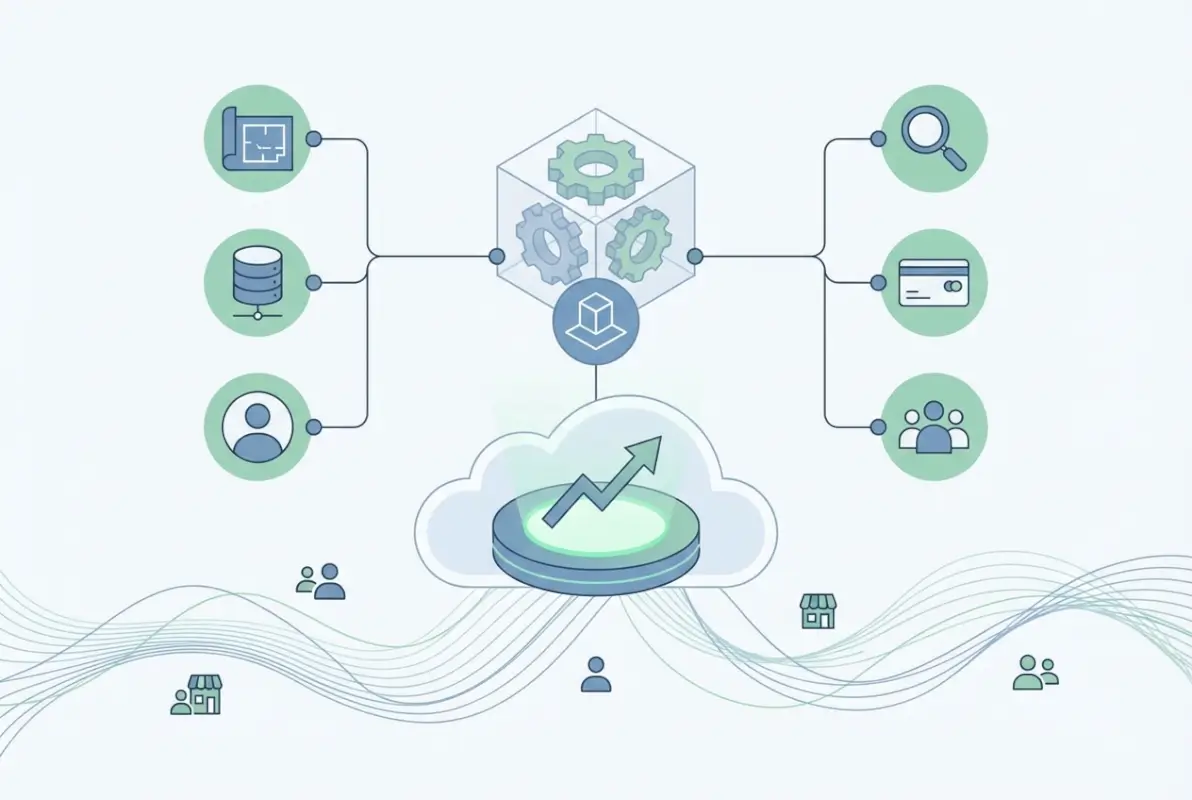
When evaluating potential niches, most directory founders make the critical error of choosing markets based on size rather than accessibility. A market with 100,000 potential businesses but established competitors requires exponentially more resources than a market with 5,000 businesses and no dominant directory. According to U.S. Census Bureau economic data, specialized service industries often have higher engagement rates precisely because they lack quality directory options.
I remember consulting with a startup that wanted to build “the directory for all creative professionals.” Six months and $40,000 later, they had 200 mediocre listings and zero traction. We pivoted to focus exclusively on motion graphics designers in the gaming industry—a niche with about 3,000 qualified professionals. Within four months, they had 600 highly engaged members and three corporate sponsors. The total addressable market shrunk by 95%, but the actual revenue grew from zero to $8,000 monthly recurring.
Your niche selection framework should evaluate three dimensions: market accessibility (how easily can you reach these businesses?), monetization potential (can they afford and justify directory membership?), and verification feasibility (can you confirm member credentials?). A niche that scores high on all three dimensions will outperform larger markets every time.
Positioning Within Your Chosen Niche
Once you’ve selected a niche, positioning determines whether businesses see your directory as essential or optional. The positioning mistake I see constantly is describing the directory by its features (“searchable database with filtering”) rather than the outcome it delivers (“get qualified leads from customers actively seeking your services”).
Effective positioning answers a single question: what specific problem does this directory solve better than any alternative? For a directory of certified financial planners, the positioning might be “the only directory where consumers can verify advisor credentials and fiduciary status before the first meeting.” For a directory of wedding vendors, it might be “connect with couples who’ve already allocated budget for your specific service category.”
| Positioning Strategy | Best For | Key Differentiator | Example |
|---|---|---|---|
| Verification-First | Licensed professionals | Trust and credibility | Legal, medical, financial |
| Outcome-Focused | Service providers | Results and case studies | Marketing agencies, consultants |
| Community-Driven | Collaborative industries | Peer connections | Creative professionals, trades |
| Premium-Only | High-value B2B | Exclusivity and quality | Executive search, enterprise vendors |
The positioning you choose should inform every subsequent decision about features, pricing, and marketing. A verification-first directory needs robust credential checking systems and relationships with licensing boards. An outcome-focused directory needs case study templates and results-tracking features. Don’t try to be everything—pick your positioning and commit fully to delivering on that specific promise.
Secret #2: Build Trust Mechanisms From Day One
Trust represents the single most valuable asset your directory can build, yet most directory operators treat it as an afterthought. In an era where anyone can create a profile claiming any expertise, the directories that win are those that implement verification and quality signals from the very first listing.
The trust gap explains why Angi (formerly Angie’s List) could charge subscription fees when free alternatives existed—their verification processes and review authentication created a level of confidence that justified the cost. According to research from BrightLocal’s consumer surveys, 87% of consumers read online reviews for local businesses, but only 48% trust those reviews unless the platform has verification measures in place.

Verification doesn’t need to be expensive or complex to be effective. Start with the basics: email verification, business documentation (business license, incorporation papers, or professional certifications), and social proof (link to official website or verified social profiles). These simple steps eliminate 90% of spam and fake listings while signaling to users that you maintain quality standards.
Profile Completeness as a Quality Signal
Incomplete profiles damage your directory’s credibility more than having fewer total listings. A directory with 100 comprehensive, verified profiles will outperform one with 1,000 sparse listings every time. The problem is that most directory platforms treat profile completion as optional rather than mandatory for visibility.
Implement a profile completeness scoring system that directly affects listing visibility. Businesses with 100% complete profiles (description, images, services, hours, contact methods, and at least three customer reviews) should receive dramatically better placement than those with minimal information. This creates a natural incentive for quality while improving user experience—visitors see only the listings that provide enough information to make informed decisions.
The most effective completeness requirements I’ve seen include professional photos (not stock images), detailed service descriptions written in the business’s own voice, and specific information about process, timeline, or methodology. These elements can’t be quickly copied from competitors and require genuine effort—which naturally filters for engaged, committed members.
Review Management and Authenticity
Reviews multiply trust, but only when users believe they’re authentic. The review systems that work best require verified interaction—a customer can only review a business if the business confirms they were actually a customer. This eliminates the fake review problem while creating a natural friction that keeps review quality high.
Rather than allowing unlimited reviews, consider implementing a “featured reviews” model where businesses can highlight 3-5 testimonials from verified customers. This reduces the moderation burden while maintaining quality. The reviews section becomes a curated showcase rather than an unmanaged comment section, which actually provides more value to potential customers making decisions.
Secret #3: AI-Enhanced Discovery Keeps Users Engaged
Basic alphabetical listings and simple category filters worked fine for yellow pages in 1995, but modern directory users expect intelligent discovery that understands intent and context. The directories that implement smart search and recommendation systems see engagement metrics that are 3-4x higher than those relying on traditional filtering alone.
AI-enhanced discovery doesn’t mean building complex machine learning models from scratch. Start with basic natural language processing that interprets search intent. When someone searches “emergency plumber near downtown,” your system should understand they need 24/7 service, prioritize proximity to downtown, and possibly highlight response time in results. This level of intelligence can be implemented through simple rule-based systems that dramatically improve user experience.

The next level involves collaborative filtering—showing users “businesses similar to ones you’ve viewed” or “other members also looked at these options.” Amazon has trained users to expect these features, and directories that provide them benefit from increased session duration and more listing views per visit. According to Google’s machine learning documentation, recommendation systems can increase engagement by 40-60% when properly implemented.
Smart Search That Anticipates Needs
The best directory search systems I’ve encountered use a combination of explicit filters (location, category, price range) and implicit signals (time of search, device type, past behavior) to deliver results that feel almost psychic in their relevance. A search at 2am on mobile for “plumber” should heavily weight 24/7 emergency services. The same search at 10am on desktop might emphasize scheduled service providers with good reviews for planned projects.
Implement search result personalization based on user behavior patterns. If someone has viewed five wedding photographers who specialize in outdoor ceremonies, your search algorithm should learn this preference and surface similar photographers higher in subsequent searches. This doesn’t require sophisticated AI—simple weighting based on past clicks creates substantial improvement in result relevance.
| Search Enhancement | Implementation Difficulty | Impact on Engagement | Priority |
|---|---|---|---|
| Natural language processing | Medium | High | Implement first |
| Geolocation awareness | Low | High | Implement first |
| Collaborative filtering | Medium | Medium | Phase 2 |
| AI chat support | Low (using APIs) | Medium | Phase 2 |
| Predictive recommendations | High | Medium | Phase 3 |
Automated Chat Support and Guidance
AI-powered chat interfaces can dramatically reduce friction for users who aren’t sure how to find what they need. Rather than forcing users to understand your category taxonomy, let them describe what they’re looking for in natural language: “I need someone to renovate my kitchen in the next three months for under $30,000.” The chat interface can then guide them to the appropriate category, suggest relevant filters, and even ask clarifying questions to narrow results.
These systems don’t need to be perfect to add value. Even a simple chatbot that helps users navigate your directory structure and understand the differences between membership tiers improves conversion rates. The key is setting appropriate expectations—make it clear when users are interacting with automated systems rather than human support.
Secret #4: Tiered Monetization Based on Value, Not Visibility
The most common monetization mistake in directory operations is creating artificial scarcity—charging for “premium placement” or “featured listings” without tying those placements to actual value metrics. This creates a pay-to-win dynamic that savvy users recognize and distrust, undermining the directory’s credibility while generating unsustainable revenue.
Successful monetization tiers should each solve a distinct business problem for members. The free tier provides basic discovery for businesses that need visibility but can’t invest significantly. The enhanced tier adds analytics and lead tracking for businesses that want to measure ROI. The premium tier provides marketing tools and integration features for businesses actively using the directory as a lead generation channel. When looking at how much to charge for featured business directory listings, focus on the measurable outcomes rather than arbitrary premium positioning.
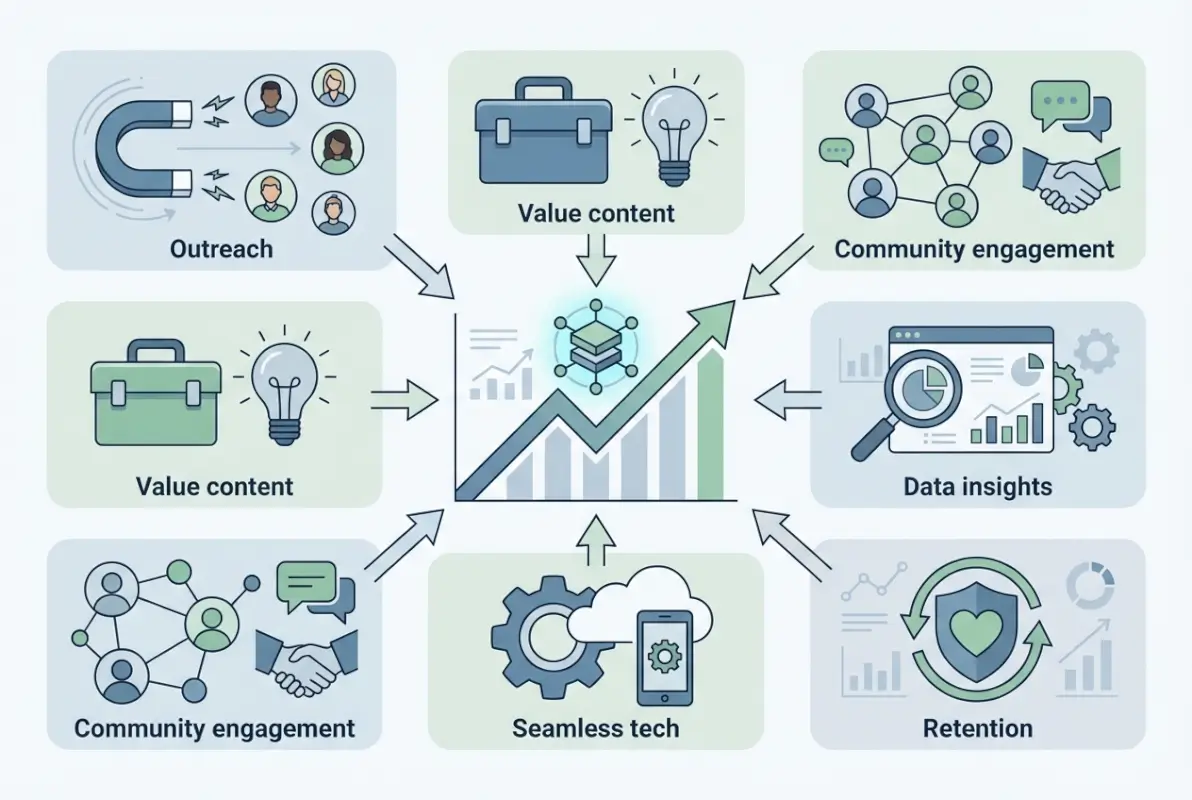
I worked with a regional service provider directory that was struggling to convert free listings to paid memberships despite offering “premium badges” and “featured placement.” We restructured their tiers around functional benefits: the enhanced tier added appointment scheduling integration and automated email responses, while the premium tier included a customer relationship management tool and monthly performance reports. Conversion rates tripled within sixty days because businesses could now justify the expense based on time savings and operational improvements, not just hoped-for visibility gains.
Strategic Pricing Based on Member Value
Pricing should reflect both the value you provide and what your target market can afford. A directory of enterprise software vendors can command $500-1,000 monthly fees because a single qualified lead might be worth $50,000+. A directory of local service providers needs pricing closer to $50-150 monthly because their average transaction values are much lower.
Rather than setting arbitrary price points, work backward from member economics. If your typical member generates $5,000 in revenue from a new customer and your directory delivers 2-3 qualified leads per month, you can justify $200-300 monthly pricing because the ROI is clear and compelling. When determining strategies for pricing preschool business directory listings or any specialized niche, understanding the unit economics of your members is essential for sustainable monetization.
Beyond Subscription: Alternative Revenue Models
Monthly subscriptions work well for many directories, but alternative models often generate higher revenue with better member satisfaction. Commission-based pricing (taking a percentage of transactions facilitated through the directory) aligns your success directly with member success. Lead generation fees (charging only when a qualified inquiry is generated) makes ROI calculation simple for members.
Sponsored content and educational partnerships represent another substantial revenue stream. Rather than banner ads that users ignore, create valuable content (industry reports, how-to guides, webinars) sponsored by relevant service providers. A directory of restaurants might create a guide to “Building a Successful Loyalty Program” sponsored by point-of-sale system providers—delivering value to members while generating sponsor revenue.
Secret #5: Real-Time Data Accuracy Without Manual Overhead
Nothing kills directory credibility faster than outdated information. Users who discover incorrect hours, disconnected phone numbers, or closed businesses lose trust in the entire directory—not just that single listing. Yet manual verification of thousands of listings is impossible without massive overhead that destroys your business model.
The solution lies in automated verification systems and member self-service tools. Implement automated phone number verification that periodically calls listed numbers to confirm they’re still active. Use API integrations with business data providers to flag listings where information has changed. Create alerts when a business’s website goes offline or social profiles become inactive. These automated systems catch 80% of data accuracy issues without human intervention.

For the remaining 20% that require human judgment, create efficient review workflows rather than trying to verify everything manually. When automated systems flag a potential issue, route it to a quick review queue where staff can validate the concern and contact the member if needed. This targeted approach maintains data quality while keeping overhead manageable as your directory scales.
Member Self-Service and Automated Updates
The directories with the best data accuracy are those that make it trivially easy for members to update their own information. Implement a dashboard where businesses can modify hours, add photos, update service descriptions, and respond to reviews without needing to contact support. When members have direct control, they keep information current because it serves their interests.
Take this a step further with proactive update prompts. Send quarterly emails asking members to confirm their information is still accurate, with one-click confirmation if nothing has changed. For businesses that haven’t logged in recently, send reminders highlighting the value of keeping their listing fresh: “Listings with updated information in the last 30 days receive 3x more views.” When adding a add database business directory website to your infrastructure, ensure the architecture supports real-time member updates without creating data conflicts or version control issues.
| Automation Type | Data Quality Impact | Implementation Cost | ROI Timeline |
|---|---|---|---|
| Phone verification | High | Low | Immediate |
| Website monitoring | Medium | Low | 1-2 months |
| Business data API | High | Medium | 2-3 months |
| Member self-service portal | Very high | Medium | Immediate |
| Social profile sync | Medium | High | 3-6 months |
Data Quality as Competitive Advantage
Most directory operators view data accuracy as a cost center—something to minimize while staying above a threshold of acceptability. The most successful directories flip this perspective and treat data quality as their primary competitive moat. When users know your directory has the most current, accurate information, they return even when alternatives exist.
Publish data quality metrics prominently: “98.7% of listings verified within the last 90 days” or “Average listing accuracy score: 94/100.” This transparency builds trust while creating internal accountability for maintaining standards. It also creates a natural barrier to entry—competitors who want to match your quality must invest in similar verification infrastructure, which takes time and capital most can’t justify.
Secret #6: Community Engagement Creates Sustainable Growth
The fundamental difference between directories that thrive and those that stagnate is whether they create genuine community or simply host listings. A community-driven directory benefits from network effects—each new member makes the directory more valuable for existing members, creating organic growth momentum that paid advertising can’t replicate.
Building community requires moving beyond passive listings to active participation mechanisms. Discussion forums organized around industry challenges, member-generated content showcasing expertise, collaborative resources that members build together, and networking events (virtual or in-person) that facilitate real relationships. These features transform your directory from a database into a platform where professional relationships form and strengthen.
The chamber of commerce directory I mentioned earlier succeeded by reimagining their directory as a community hub. They added a forum where members could ask for vendor recommendations, created monthly virtual networking sessions for specific industries, and featured member success stories highlighting businesses that had grown through directory connections. Within six months, active engagement increased 340%, and member retention improved from 68% to 89%. The directory became valuable not just for visibility but for the relationships it facilitated.
Fostering Genuine Member Interactions
Community features fail when they’re bolted onto directories as afterthoughts without considering what would actually motivate participation. Generic forums with categories like “General Discussion” and “Announcements” generate minimal engagement because they lack specific purpose or value. Instead, create targeted interaction opportunities around clear member needs.
For a directory of home service contractors, create forums organized around specific challenges: “Dealing with difficult clients,” “Pricing strategies for seasonal work,” “Marketing on a tight budget.” These focused topics encourage participation because they address real problems members face. A directory of independent consultants might organize discussions around industry verticals—members can seek advice, share client insights (without violating confidentiality), and form referral relationships with complementary specialists.
Recognition Systems That Drive Participation
Gamification elements can increase engagement when implemented thoughtfully, but many directories create point systems that feel arbitrary and manipulative. Effective recognition systems highlight genuine contributions rather than rewarding activity for activity’s sake. “Most Helpful Member” badges for users whose forum answers receive the most upvotes create more value than “10 Posts” badges that reward volume over quality.
Consider recognition tiers that unlock tangible benefits rather than just symbolic status. Members who contribute high-quality answers in forums might earn enhanced listing features, spotlight positions in newsletters, or speaking opportunities at directory events. This creates a virtuous cycle where active participation generates business value, motivating continued engagement from both contributors and the members who benefit from their expertise.
When working to understand how to start business directory step by step guide processes, building community features into your initial architecture is far easier than retrofitting them later. Plan for member interaction from the beginning, even if you don’t activate all features immediately.
Bringing It All Together: Your 90-Day Action Plan
Understanding these six secrets intellectually is useful, but implementation determines actual results. Rather than trying to execute everything simultaneously (which typically leads to half-completed initiatives that deliver no value), use a phased approach that builds momentum through early wins.
Weeks 1-2: Foundation and Baseline
Start by auditing your current state against the six secrets. Which elements are you executing well? Where are the biggest gaps? Establish baseline metrics for the KPIs you’ll use to measure improvement: listing completeness rate, verification percentage, user engagement metrics (session duration, searches per visit), conversion rates from free to paid tiers, and member retention rates.
Fix critical technical issues that undermine trust: broken links, outdated contact information, slow page loads, mobile usability problems. These quick fixes often deliver disproportionate impact because they remove friction that’s actively driving users away. Use this period to implement basic verification for all new listings going forward, even if you can’t immediately retroactively verify existing entries.
Weeks 3-6: Enhanced Discovery and Quality
Focus this phase on improving how users find what they need and ensuring what they find is valuable. Implement or enhance natural language search that interprets intent rather than just matching keywords. Add or improve filters for the attributes that matter most in your niche (for wedding vendors: style, budget range, and availability; for B2B service providers: industry expertise, company size served, and engagement model).
Create listing quality standards and begin working through existing entries to bring them up to standard—or remove them if businesses won’t cooperate. It’s better to have fewer high-quality listings than numerous sparse profiles that disappoint users. During this phase, launch member self-service tools that allow businesses to update their information without contacting support.
Weeks 7-12: Community and Monetization
With solid foundations in place, add community features that make sense for your niche. Start small with one or two high-value interaction opportunities rather than building out a complete community platform. Monitor engagement closely and iterate based on what actually drives participation rather than what you assumed would work.
Review and optimize your monetization model. Are your tier benefits clearly differentiated? Do they solve real business problems for members? Test pricing variations with new members to find the sweet spot between value perception and actual willingness to pay. When implementing proven tactics advertise business directory listings to members, focus messaging on specific outcomes and ROI rather than generic visibility promises.
Moving Forward With Confidence
Building a thriving membership directory isn’t about implementing every possible feature or chasing the latest technology trends. It’s about consistently executing on fundamental principles: delivering genuine value, building trust through verification and quality, facilitating meaningful connections, and aligning monetization with member success.
The directories that succeed in competitive markets aren’t necessarily those with the biggest budgets or most features—they’re the ones that deeply understand their niche, relentlessly focus on member value, and continuously refine based on real-world usage patterns rather than assumptions. Start with the fundamentals, measure systematically, and optimize based on data rather than opinions.
Your directory doesn’t need to be perfect to launch or to grow. It needs to be valuable enough that members actively choose to participate and users trust the information they find. Focus on getting those elements right, and growth becomes organic rather than forced—members recruit other members because the directory genuinely makes their business more successful.
Take Action Today
Don’t wait for perfect conditions to implement these strategies. Pick one secret from this guide and execute it this week:
- Audit your listing quality and set new standards for completeness
- Implement one verification mechanism to build trust
- Add natural language search or improve your filtering capabilities
- Restructure one membership tier around operational value, not just visibility
- Create a single high-value community feature and promote it to existing members
Frequently Asked Questions
What defines a thriving membership directory versus an average one?
Thriving directories create genuine value loops where member participation makes the directory more valuable for everyone. They maintain high data quality standards, implement trust mechanisms like verification and complete profiles, facilitate actual business connections rather than just listings, and demonstrate measurable ROI for paid memberships. Average directories are essentially databases—thriving ones are communities.
How do I choose the right niche for starting a membership directory?
Evaluate potential niches on three dimensions: market accessibility (can you reach these businesses efficiently?), monetization potential (do they have budget and motivation to pay for membership?), and verification feasibility (can you confirm credentials or quality?). Look for industries with existing active communities but no dominant directory—this indicates demand without entrenched competition. Start narrow and expand later rather than launching broadly.
What monetization models work best for membership directories?
Tiered subscription models work well when each tier solves distinct business problems (not just offering “more visibility”). Commission-based pricing aligns your success with member success. Lead generation fees make ROI calculation simple for members. Sponsored content and educational partnerships provide alternative revenue without degrading user experience. The best model depends on your niche—B2B directories can charge more than B2C, and transaction-based industries suit commission models better than service providers.
How important are user reviews and verification for directory success?
Reviews and verification are critical trust signals that directly impact both user engagement and member satisfaction. Directories with verification processes and authentic reviews can charge premium prices and achieve higher user retention because they solve the fundamental trust problem in online directories. Implement basic verification (email, business documentation, credential checking) from day one, and require verified customer relationships for reviews to maintain authenticity.
Can AI really improve directory search and recommendations?
AI-enhanced features like natural language search, collaborative filtering, and personalized recommendations can increase engagement by 40-60% compared to traditional filtering alone. You don’t need sophisticated machine learning—basic natural language processing and rule-based personalization deliver substantial improvements. Focus on understanding search intent, implementing smart result ranking, and showing “similar to what you viewed” recommendations as your first AI enhancements.
What are common mistakes that hurt directory SEO and user experience?
Common mistakes include duplicate content across listings, slow page loads from unoptimized images, poor mobile experience, incomplete or outdated information, overly complex navigation that confuses users, and generic meta descriptions that don’t attract clicks. Technical issues like missing schema markup, improper canonicalization, and poor internal linking structure also damage SEO performance. Fix technical foundations before investing in content marketing or link building.
How can I ensure data accuracy without massive manual overhead?
Implement automated verification systems like phone number checking, website monitoring, and business data API integrations to flag potential issues. Create member self-service portals where businesses can update their own information with direct incentives to keep it current. Use proactive update prompts (quarterly confirmation emails) to maintain freshness. Focus manual review on flagged issues rather than trying to verify everything—automated systems catch 80% of problems without human intervention.
Which metrics indicate healthy directory growth and engagement?
Track both engagement metrics (active monthly users, session duration, searches per visit, listing views, member-to-member connections) and business metrics (listing growth rate, free-to-paid conversion rate, average revenue per member, retention rate, customer acquisition cost). Profile completeness rate and verification percentage indicate quality standards. A healthy directory shows steady growth in all categories with retention rates above 75% and free-to-paid conversion above 8-12%.
Should I focus on getting more listings or improving existing listing quality?
Quality trumps quantity in almost every scenario. A directory with 100 comprehensive, verified, engaged members will outperform one with 1,000 sparse, unverified listings. Users lose trust when they encounter incomplete information or outdated contacts, damaging your directory’s reputation regardless of total listing count. Focus on quality first—set standards, verify entries, and require complete profiles. Growth happens organically when your quality reputation spreads.
How long does it typically take to build a profitable membership directory?
Most directories require 12-18 months to reach sustainable profitability, with the first 6 months focused on establishing quality standards and initial member recruitment, months 6-12 on refining monetization and improving engagement, and months 12-18 on scaling operations. Niche directories in underserved markets can sometimes achieve profitability in 6-9 months. The timeline depends heavily on your niche, competition, and whether you’re building from scratch or revitalizing an existing directory.
What’s the ideal free versus paid member ratio for sustainability?
Successful directories typically maintain 15-25% paid membership rates among active listings. Below 10% suggests your paid tiers don’t provide sufficient value or are priced incorrectly. Above 30% might indicate your free tier is too limited, potentially suppressing growth. The optimal ratio depends on your monetization model—commission-based directories can sustain lower conversion rates than subscription-only models. Focus on maximizing lifetime value rather than just conversion rate.
Was this article helpful?