How to Create a Business Directory Website: Complete 2025 Development Guide

Generating summary...
Building a business directory website isn’t just about creating a list of companies—it’s about constructing a digital ecosystem that serves real needs while generating sustainable revenue. After launching my first directory with minimal technical knowledge in 2019, I learned that success depends more on strategic planning than coding expertise. That small project, which started with 50 manually-added businesses, eventually grew to over 2,000 listings and became a consistent income source.
The business directory model has evolved significantly. Today’s successful directories combine sophisticated search functionality, user-generated reviews, map integration, and monetization strategies that go far beyond simple paid listings. Whether you’re targeting local service providers, specialized industry professionals, or niche communities, understanding the modern directory landscape is essential before writing a single line of code.
TL;DR – Quick Takeaways
- Platform selection matters – WordPress with directory plugins offers the best balance of flexibility and ease for most creators
- Start narrow, expand later – Niche directories outperform general ones in both user engagement and monetization
- Data quality drives value – Implement verification processes from day one to build trust
- Multiple revenue streams – Successful directories combine paid listings, featured placements, and advertising
- SEO is non-negotiable – Structured data, local optimization, and proper schema markup determine visibility
Understanding Modern Business Directory Websites
A business directory website serves as a curated database connecting consumers with businesses, services, or professionals within a specific niche or geographic area. Unlike search engines that crawl the entire web, directories provide focused, organized access to verified listings with enhanced information like reviews, photos, hours, and contact details.

The fundamental value proposition works both directions. For users searching for services, directories offer filtered results, comparative information, and social proof through reviews—all in one place. For listed businesses, directories provide visibility, credibility through association, and lead generation opportunities they couldn’t achieve independently.
Modern directories fall into several categories, each with distinct characteristics. Local directories focus on geographic areas (cities, regions, states) and aggregate businesses across multiple industries. Niche directories serve specific industries like restaurants, healthcare providers, or wedding vendors regardless of location. Vertical directories combine both approaches, targeting specific industries within defined geographic boundaries—think “organic food suppliers in the Pacific Northwest.”
User intent when visiting directories differs from general search behavior. People arrive with specific needs—they’re comparing options, checking reviews, verifying business information, or seeking contact details. This high-intent traffic converts better than casual browsers, making directories valuable for both users and listed businesses.
For directory operators, monetization opportunities include paid listing upgrades, featured placements that boost visibility, subscription models for ongoing premium features, advertising space for related businesses, and data partnerships with larger platforms. According to U.S. Census Bureau business data, there are over 33 million small businesses in the United States alone, representing massive potential for well-executed directory platforms.
Why Directory Websites Remain Relevant
Despite the dominance of major search engines and social media platforms, business directories maintain strong relevance for several reasons. They provide curated, quality-controlled information that users trust more than unverified search results. The specialized nature of directories means they can optimize for specific user needs that general platforms serve inadequately.
Directories also fill gaps in local search, particularly for smaller businesses that lack resources for comprehensive digital marketing. A well-maintained directory listing can be a small business’s primary online presence, especially in less digitally-mature industries.
The review and comparison functionality within directories creates network effects—more reviews attract more users, which attracts more businesses, which generates more reviews. This virtuous cycle, once established, creates defensible competitive advantages that are difficult for new entrants to overcome.
Strategic Planning: Defining Your Directory Concept
Before touching any technology, successful directory creators spend significant time on strategic planning. This foundational work determines whether your directory will struggle to gain traction or find product-market fit quickly.

Start by identifying a specific niche where you can provide genuine value. Ask yourself: What industry or geographic area do I understand deeply? Where are existing directories falling short? What underserved communities or business types need better representation? The more specific your focus, the easier it becomes to build authority and attract both businesses and users.
I once analyzed 15 competitor directories over three weeks before launching my own, a process that felt tedious at the time but saved countless hours of trial-and-error. The insights revealed which features users valued most, what price points businesses would accept, and where competitors had blind spots I could exploit.
| Directory Type | Example Niche | Monetization Potential | Competition Level |
|---|---|---|---|
| Geographic Local | Austin small businesses | High | High |
| Industry Vertical | Wedding photographers nationwide | Medium-High | Medium |
| Niche Professional | Certified arborists | Medium | Low |
| Lifestyle/Values | Eco-friendly businesses | Medium | Low-Medium |
Determining Monetization Strategy Early
Many directory creators make the mistake of building first and thinking about revenue later. This backwards approach often results in platforms that users love but can’t sustain financially. Define your monetization model during the planning phase, as it influences technical architecture, feature prioritization, and business outreach strategies.
The most common monetization approaches include tiered listing options where basic listings are free but enhanced listings with additional features cost monthly or annual fees. Understanding how much to charge for featured business directory listings requires analyzing competitor pricing while considering your target market’s budget constraints.
Featured placement fees generate revenue by offering prominent positioning in search results or on category pages. These premium spots typically cost more than enhanced listings because of their visibility advantages. When implementing this model, ensure transparency about what “featured” means to maintain user trust.
Advertising space can supplement listing revenue, either through display ads for related businesses or through ad networks like Google AdSense. However, balance is critical—excessive advertising degrades user experience and can drive traffic away.
Data Governance and Trust Framework
User trust depends on data quality and transparency. From your first listing, establish clear policies about verification, moderation, and data accuracy. Will you manually verify every business? Allow self-claimed listings? Require documentation for certain claims?
Create explicit terms of service covering user-generated content like reviews, business owner rights to claim and manage listings, dispute resolution processes for negative reviews or incorrect information, and data privacy and usage policies complying with regulations like GDPR.
According to Google’s helpful content guidelines, search engines increasingly prioritize trustworthy sources with clear authorship and expertise. Implementing verification badges, editorial oversight, and transparent moderation signals quality to both users and search algorithms.
Technical Architecture and Platform Selection
Choosing the right technical foundation for your directory involves balancing development speed, customization flexibility, ongoing maintenance requirements, and budget constraints. Each approach has distinct tradeoffs that align better with different creator profiles and project goals.
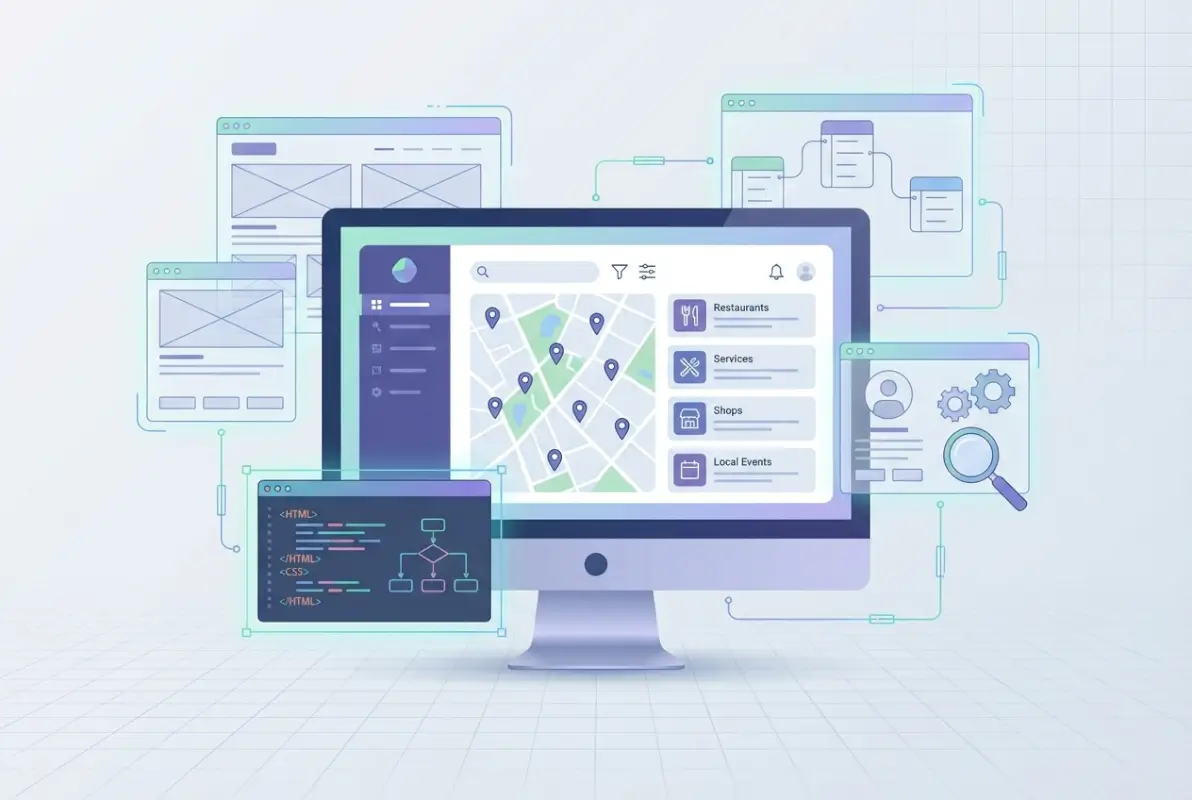
WordPress with directory plugins represents the most popular choice for good reason. The platform powers approximately 43% of all websites according to W3Techs technology usage statistics, and specialized plugins like GeoDirectory, Business Directory Plugin, or Directories Pro transform WordPress into a full-featured directory platform.
This approach offers extensive customization through themes and plugins, large developer communities providing support and add-ons, reasonable costs with many quality free and premium plugins, and familiar interfaces that reduce learning curves. The main limitation is that you’re still constrained by WordPress architecture and plugin capabilities.
Directory-Specific Platforms
Specialized directory platforms like Brilliant Directories or similar services provide turnkey solutions designed specifically for directory websites. These platforms include directory-specific features out of the box such as built-in payment processing, membership management, and advanced search functionality pre-configured for directories.
The advantages include faster launch times, dedicated support teams familiar with directory challenges, and regular updates with directory-relevant features. However, you’ll face higher monthly costs compared to self-hosted solutions, limited customization compared to open-source options, and potential platform lock-in that makes migration difficult.
For creators wanting to launch quickly without technical expertise, these platforms make sense. For those wanting maximum control and willing to invest time in setup, self-hosted WordPress offers better long-term flexibility.
Essential Technical Components
Regardless of platform choice, certain technical components are non-negotiable for successful directories. The listings data model forms your foundation—how you structure business information, categories, custom fields, and relationships between data elements.
Plan for scalability from the beginning. A data structure that works for 100 listings may cause performance issues at 10,000 listings. Consider how you’ll handle multiple categories per business, hierarchical category structures, custom attributes by industry, geographic data for mapping, and media attachments like photos and videos.
Search functionality makes or break user experience. Users expect to filter by multiple criteria simultaneously—location radius, category, price range, ratings, hours of operation. Implement auto-suggest for search terms, faceted search allowing refinement of results, and saved searches for registered users.
Map integration has become standard, with users expecting visual location browsing. Google Maps API remains the most popular option, though alternatives like Mapbox offer more customization. Ensure your map implementation includes clustering for areas with many businesses, custom markers indicating business types, and mobile-responsive touch controls.
Review and rating systems require careful design. Consider whether to allow anonymous reviews or require registration, how to handle business owner responses to reviews, dispute mechanisms for fraudulent reviews, and review verification to prevent fake submissions.
Performance and Scalability Considerations
Directory websites handle significant data volumes and complex queries, making performance optimization critical. Implement caching at multiple levels—page caching for static content, object caching for database queries, and CDN delivery for media files.
Database indexing becomes crucial as your directory grows. Ensure proper indexes on frequently-queried fields like categories, locations, and ratings. Regular database optimization prevents query slowdown as your listing count increases.
Mobile performance deserves special attention since over 60% of local searches occur on mobile devices. Implement responsive design that adapts to various screen sizes, optimize images for mobile bandwidth, and consider progressive web app features for app-like experiences without app development costs.
Content Strategy and SEO for Directory Success
Technical implementation matters little if users can’t find your directory. SEO strategy for directories differs from typical websites because you’re optimizing thousands of individual listing pages plus category pages, location pages, and editorial content.

Start with on-page optimization for your core directory pages. Each category should have unique, valuable descriptions (not just lists of businesses), relevant keywords in titles and headings, and internal linking to related categories and popular listings. Location pages require similar treatment with localized content that provides value beyond just displaying businesses.
According to Google’s SEO Starter Guide, structured data implementation dramatically improves how search engines understand and display your content. Implement schema.org markup for Local Business, Organization, Review, and AggregateRating types.
Structured Data and Rich Results
Proper schema markup enables rich results in search listings—star ratings, business hours, price ranges, and other enhanced information that increases click-through rates. For each business listing, implement LocalBusiness schema including name, address, phone, geo-coordinates, business hours, price range, and aggregate rating.
Category pages benefit from BreadcrumbList schema showing hierarchy, CollectionPage schema indicating it’s a list of businesses, and proper canonicalization to prevent duplicate content issues.
Test your schema implementation using Google’s Rich Results Test tool to ensure proper formatting. Errors in structured data can prevent rich results from appearing, significantly impacting your organic visibility.
| Page Type | Primary Schema | Key Properties | SEO Impact |
|---|---|---|---|
| Business Listing | LocalBusiness | Name, address, phone, hours, rating | High – enables rich results |
| Category Page | CollectionPage | Name, description, breadcrumb | Medium – improves understanding |
| Review Section | Review + AggregateRating | Rating value, review count, author | High – displays stars in SERP |
Internal Linking Architecture
Directory sites offer unique internal linking opportunities. Create bidirectional links between related categories (e.g., “Plumbers” links to “HVAC Contractors”), contextual links from listing content to relevant categories, location-based links connecting geographic pages, and featured business showcases on high-traffic pages.
Implement breadcrumb navigation showing the hierarchy from homepage through category to individual listing. This aids both user navigation and search engine crawling while providing additional internal linking.
I learned the importance of strategic internal linking after noticing that certain valuable category pages received almost no organic traffic. Adding contextual links from popular pages and implementing automated related-category suggestions increased those pages’ organic visits by over 200% within three months.
Content Marketing for Directory Growth
Beyond optimizing directory pages themselves, content marketing drives awareness and attracts links. Consider publishing industry guides relevant to your directory niche, local area spotlights if you’re geographically focused, business owner interviews providing value to both businesses and consumers, and “best of” lists highlighting quality directory listings.
This editorial content serves multiple purposes including attracting organic traffic through informational keywords, providing value that encourages social sharing and backlinks, positioning your directory as an industry authority, and creating opportunities for featured businesses to participate.
When implementing content strategy, remember that Google increasingly prioritizes helpful, user-focused content over keyword-stuffed pages. Write primarily for humans, with SEO optimization secondary to providing genuine value.
Listing Management and Data Quality Operations
The operational side of running a directory—acquiring, verifying, and maintaining business listings—often receives less attention than it deserves during planning phases. However, these processes determine whether your directory becomes a trusted resource or a spam-filled disappointment.

Data intake can occur through multiple channels, each requiring different handling. Manual addition by your team ensures highest quality but doesn’t scale well beyond a few hundred listings. Self-submission by businesses scales better but requires robust verification to prevent spam.
Bulk imports from existing databases or datasets accelerate initial population but require careful data cleaning. I once imported 800 businesses from a public dataset, only to discover that about 30% had closed or moved. The cleanup took longer than manually adding quality listings would have.
Verification Workflows
Implement tiered verification based on listing type and claimed benefits. Basic free listings might require only email confirmation, while paid listings should undergo phone or documentation verification. Featured listings warrant the highest scrutiny since they receive prominent placement.
Verification processes can include email confirmation with unique links, phone verification through automated or manual calls, business documentation review (licenses, registration), physical mail verification with unique codes, and social media or website verification checking claimed URLs.
Maintaining Data Quality at Scale
As directories grow, maintaining data accuracy becomes increasingly challenging. Businesses close, move, change phone numbers, and update hours—keeping up with these changes requires systematic approaches.
Implement automated monitoring where possible, such as broken website link detection, phone number validation, hours-of-operation consistency checks, and duplicate listing detection. Schedule regular audits of high-traffic listings quarterly, and lower-traffic listings annually.
Encourage businesses to claim and manage their listings through self-service portals. This distributes maintenance responsibility while providing businesses with control over their information. The add database business directory website functionality should allow businesses to update information easily without requiring admin intervention.
User feedback provides valuable data quality signals. Enable reporting mechanisms allowing users to flag incorrect information, closed businesses, or inappropriate content. Review and act on these reports promptly to maintain trust.
Privacy and Data Protection Compliance
Directories handle significant amounts of business and consumer data, creating privacy obligations. Even if you’re not explicitly subject to GDPR or CCPA, adopting their principles builds user trust and prepares you for potential future regulation.
Implement clear data collection notices explaining what information you collect and why, user consent mechanisms for non-essential data collection, data access and deletion tools allowing users to view and remove their data, and security measures protecting stored data from unauthorized access.
For business listings, consider whether you need explicit consent to list businesses. In most cases, publicly-available business information (name, address, phone) doesn’t require permission, but including additional details might. Consult legal counsel about your specific situation and jurisdiction.
Monetization Implementation and Revenue Optimization
With your directory built and listings populated, sustainable monetization turns your project from hobby into business. Most successful directories implement multiple revenue streams, reducing dependence on any single source while maximizing overall income potential.
Paid listing tiers form the foundation for most directories. Structure offerings so that free basic listings provide value (encouraging adoption) while paid tiers offer compelling upgrades worth purchasing. Consider pricing models like monthly subscriptions ($10-50/month), annual subscriptions ($100-400/year), or one-time lifetime listings ($200-1,000).
When developing pricing preschool business directory listings or whatever your niche involves, research competitor pricing, survey potential customers about willingness to pay, and calculate your value proposition compared to alternative marketing channels.
Featured placement generates significant revenue with minimal additional cost. Businesses pay for priority positioning in search results, category page highlights, homepage features, or “top picks” badges. These placements are scarce resources—you can only feature so many businesses per page—justifying premium pricing.
Conversion Optimization for Paid Listings
Simply offering paid listings doesn’t guarantee purchases. Optimize conversion through clear value communication showing exactly what paid features provide, visual before/after comparisons of free versus paid listings, social proof with testimonials from satisfied paying businesses, free trials allowing businesses to experience premium features risk-free, and easy upgrade paths with prominent calls-to-action.
I found that offering 14-day free trials for premium listings converted at nearly 3x the rate of direct sales. Businesses experienced increased visibility and leads during the trial, making the decision to continue nearly automatic.
| Revenue Stream | Implementation Complexity | Revenue Potential | Best For |
|---|---|---|---|
| Paid Listings | Low | High | All directories |
| Featured Placements | Low | Medium-High | Competitive niches |
| Display Advertising | Low | Low-Medium | High-traffic directories |
| Affiliate Marketing | Medium | Medium | Product-adjacent niches |
| Lead Generation | High | High | Service-based directories |
Alternative Monetization Models
Beyond traditional paid listings, consider innovative approaches aligned with your niche. Lead generation models charge businesses per qualified lead received through your directory, common for high-value services like home contractors or professional services.
Marketplace commissions work when your directory facilitates transactions. Take a percentage of bookings, purchases, or service fees processed through your platform. This aligns your incentives with business success but requires more complex technical implementation.
Data licensing becomes viable for larger directories with comprehensive, verified datasets. Other platforms, apps, or services may pay for access to your business data, though ensure you have legal rights to license this information.
Sponsorships and partnerships generate revenue from businesses wanting association with your directory. Category sponsorships, event partnerships, or co-marketing arrangements provide value to sponsors while diversifying your revenue.
Business Outreach and Sales
Even the best monetization structure fails without effective outreach to businesses. Implement proven tactics advertise business directory offerings through personalized email campaigns to relevant businesses, phone outreach for high-value prospects, partnership with business associations or chambers of commerce, content marketing demonstrating value to business owners, and referral programs incentivizing existing customers to recommend your directory.
When reaching out, emphasize concrete benefits rather than features. Instead of “unlimited photos,” explain “showcase your work with a full gallery that helps customers visualize your services.” Quantify value when possible: “businesses with premium listings receive an average of 5.3x more profile views.”
Launch, Growth, and Ongoing Optimization
Launching your directory marks a beginning, not an end. Sustainable success requires ongoing attention to content quality, user experience, technical performance, and strategic growth initiatives.
Pre-launch preparation determines initial momentum. Seed your directory with 100-300 quality listings before public announcement—directories with minimal listings appear untrustworthy and fail to provide user value. These initial listings can be manually added, incentivized through early adopter discounts, or populated through partnerships.
Beta testing with select users provides invaluable feedback before full launch. Recruit 20-50 people matching your target audience to use the directory and provide structured feedback. Watch actual users navigate your interface—their confusion highlights issues you’ve become blind to through familiarity.
Launch Promotion Strategy
Effective launch promotion combines multiple channels to build initial awareness and traffic. Local SEO optimization ensures your directory appears for relevant geographic searches—claim your Google Business Profile, build citations in relevant directories, and optimize for local keywords.
Content marketing at launch should include announcement posts explaining your directory’s unique value, industry-specific guides establishing expertise, and “featured business” spotlights that businesses will share with their networks.
Social media presence builds community around your directory. Share new listings, spotlight interesting businesses, post industry news, and engage with comments. While social media rarely drives sustained traffic, it builds brand awareness and provides customer service channels.
Partnerships accelerate growth more effectively than any single tactic. Connect with business associations, chambers of commerce, industry groups, local media, and complementary service providers. A single partnership with a respected organization can provide instant credibility and access to hundreds of potential listings.
Paid advertising, while requiring budget, jumpstarts traffic while organic efforts mature. Google Ads targeting relevant keywords, Facebook ads targeting business owners in your niche, and retargeting campaigns converting visitors who didn’t immediately engage all contribute to growth.
Post-Launch Maintenance and Updates
Neglecting maintenance is the most common reason promising directories stagnate. Schedule regular tasks including weekly review moderation and spam removal, monthly data quality audits verifying information accuracy, quarterly feature updates based on user feedback, and annual strategic reviews assessing overall direction.
Monitor key performance indicators tracking directory health such as total listings and growth rate, active versus inactive listings, user engagement metrics (time on site, pages per session), conversion rates for paid listings, organic search traffic trends, and revenue per listing.
These metrics reveal what’s working and what needs attention. Declining engagement despite growing listings might indicate data quality issues. High traffic but low conversion suggests problems with your value proposition or pricing.
Regular content updates keep your directory feeling fresh and provide reasons for return visits. Add new categories as your directory expands, publish blog content relevant to your niche, update design elements periodically, and feature different businesses to maintain variety.
Technical Optimization and Performance
As traffic and listing counts grow, technical optimization prevents performance degradation. Regular performance audits identify slow pages, inefficient queries, or resource bottlenecks. Tools like Google PageSpeed Insights, GTmetrix, or WebPageTest provide actionable recommendations.
Database optimization becomes increasingly important with scale. Archive or remove outdated listings, optimize database indexes, and consider database caching solutions for frequently-accessed data.
Security maintenance protects your directory and user data. Keep your platform, plugins, and dependencies updated with security patches, implement regular backups with tested restoration procedures, monitor for suspicious activity or attempted breaches, and maintain SSL certificates for encrypted connections.
Accessibility audits ensure your directory serves all users regardless of disability. Follow WCAG guidelines from W3C including keyboard navigation support, screen reader compatibility, sufficient color contrast, and clear form labels.
Advanced Strategies for Competitive Advantage
Once your directory achieves basic functionality and early traction, advanced strategies create defensible competitive advantages that prevent competitors from simply copying your success.
Rich search experiences differentiate your directory from simpler competitors. Implement dynamic filtering allowing users to combine multiple criteria, saved searches with email alerts for new matching listings, comparison tools letting users view multiple businesses side-by-side, and AI-powered recommendations suggesting businesses based on user behavior.
Community features transform your directory from static database into engaging platform. Discussion forums where users discuss businesses or industry topics, Q&A sections where businesses answer common questions, and user-generated guides or lists create network effects that compound value over time.
API access opens revenue opportunities while extending your directory’s reach. Other apps or services might pay for API access to your business data, or you could offer free API access with attribution to build brand awareness.
The how to start business directory step by step guide for businesses should help them maximize their presence, which ultimately benefits your directory through richer listings and happier customers.
International expansion or additional verticals provide growth once you’ve achieved success in your initial niche. However, resist expanding too early—depth in one niche typically outperforms shallow presence in multiple areas.
Frequently Asked Questions
How do I create a business directory website without coding skills?
Use WordPress with directory-specific plugins like GeoDirectory, Business Directory Plugin, or Directories Pro. These provide complete directory functionality through user-friendly interfaces requiring no coding. Alternatively, specialized platforms like Brilliant Directories offer fully-managed solutions. Most creators successfully build directories with zero coding knowledge by choosing appropriate tools and following documentation carefully.
What is the best monetization strategy for a new directory?
Start with tiered listings offering free basic profiles and paid enhanced listings with additional features like photos, videos, and priority placement. This attracts initial businesses through free listings while generating revenue from those wanting extra visibility. Add featured placements once you have sufficient traffic to make premium positioning valuable. Introduce advertising only after establishing strong user traffic and trust.
How many listings should I have before launching publicly?
Aim for at least 100-300 quality listings before public launch to provide user value and appear established. Users distrust nearly-empty directories and won’t return. Seed your directory through manual addition, early adopter incentives, or data partnerships. Quality matters more than quantity—200 accurate, complete listings outperform 500 sparse or outdated ones.
What features are essential for a business directory website?
Essential features include advanced search with location and category filters, detailed business profiles with contact information and media, user review and rating systems, interactive map integration, mobile-responsive design, business claim and management tools, payment processing for paid listings, and admin dashboard for moderation. Start with these core features rather than adding unnecessary complexity early.
How do I handle fake reviews or spam on my directory?
Implement multi-layered protection including requiring user registration for reviews, email verification before review publication, automated spam detection filtering obvious spam, manual moderation review for flagged content, and business response capabilities allowing owners to address concerns. Display clear review policies and enforce them consistently. Consider requiring verified purchase or service use before allowing reviews.
Should I focus on a specific niche or create a general directory?
Focus on a specific niche for better results. Specialized directories establish authority faster, rank better for targeted keywords, attract more engaged users, and convert paid listings at higher rates. General directories compete with established giants and struggle to differentiate. Choose an underserved niche where you can become the definitive resource rather than competing broadly.
How long does it take to build a profitable directory website?
Expect 12-24 months from launch to consistent profitability for most directories. The first 3-6 months focus on building initial listings and traffic. Months 6-12 involve refining features and beginning monetization. Year two typically sees sustainable revenue growth. Some directories achieve profitability faster in high-demand niches, while others require longer runway. Patience and persistence matter more than quick wins.
What hosting requirements do directory websites need?
Directory sites require more robust hosting than typical websites due to database complexity and traffic volume. Start with quality shared hosting for directories under 1,000 listings, upgrade to VPS hosting for 1,000-10,000 listings, and consider dedicated or cloud hosting beyond 10,000 listings. Prioritize providers offering SSD storage, adequate RAM, regular backups, and scalability options.
How do I get businesses to claim and complete their listings?
Create compelling incentives including free listing claims with immediate control over information, prominent “claim this business” buttons on unclaimed listings, email outreach explaining benefits to businesses with incomplete profiles, and limited-time promotions for premium upgrades. Emphasize benefits like increased visibility, customer engagement through reviews, and lead generation rather than technical features.
What legal considerations apply to business directory websites?
Key legal considerations include terms of service defining user and business rights and responsibilities, privacy policies explaining data collection and usage, review moderation policies protecting against defamation, intellectual property rights for business logos and content, data protection compliance with regulations like GDPR or CCPA, and business license requirements depending on your monetization model. Consult legal counsel about your specific situation and jurisdiction.
Build Your Directory With Confidence
Creating a successful business directory website combines strategic planning, thoughtful technical implementation, and sustained operational commitment. The directories that thrive don’t necessarily have the most advanced features or largest budgets—they serve specific audiences exceptionally well, maintain rigorous data quality standards, and continuously improve based on user feedback.
Ready to Start Building?
The most successful directory creators start with clear vision but remain flexible enough to adapt as they learn what their audience truly values. Don’t wait for perfect conditions—begin with solid fundamentals and improve continuously.
Your first step is defining your niche and validating demand. Everything else builds from that foundation.
Remember that directory success comes from persistence more than perfection. Each improvement enhances experience for both businesses and users, creating growth momentum that compounds over time. The digital landscape has never been more favorable for launching specialized directories serving specific communities effectively, and the tools available today make implementation accessible to creators at any technical level.
Was this article helpful?