Directory Submission Services 2026: Do They Still Work for Local SEO?

Generating summary...
The directory submission debate has reached a curious inflection point. While most SEO professionals have relegated directory submissions to the dustbin of outdated tactics, a quiet subset of marketers continues extracting measurable value from them—particularly for local businesses and niche industries. The difference? They’ve abandoned the spray-and-pray approach that defined directory work a decade ago in favor of surgical precision.
What makes directory submission services worth reconsidering in 2026 isn’t their link equity (that ship sailed years ago), but rather their role in building local citations, establishing brand consistency across the web, and capturing qualified referral traffic from industry-specific platforms. When approached strategically, directory submission services function as a foundational element of local SEO—not a silver bullet for rankings, but a supporting player in a comprehensive digital presence.
- Quality trumps quantity – Target 20-50 vetted directories rather than hundreds of low-quality sites
- Local SEO remains the sweet spot – Citations contribute to local pack visibility when paired with NAP consistency
- Automated directory submission carries risk – Manual, selective submissions deliver better results and avoid spam penalties
- Integration is essential – Directory work should complement content marketing and technical SEO, not replace it
- Track everything – Monitor indexation, referral traffic, and local rankings to measure actual impact
- Niche directories outperform general ones – Industry-specific platforms drive qualified traffic and credibility
Reassessing Directory Submissions in 2026: When (and Why) They Help
The current reality of directory submissions requires abandoning old assumptions. Search engines have become remarkably sophisticated at identifying artificial link schemes, including mass directory submissions designed solely for manipulation. Google’s helpful content updates and spam detection algorithms now penalize unnatural link profiles—particularly those dominated by low-quality directory links.
However, selective submissions to reputable, relevant directories continue delivering value through several mechanisms. First, they establish consistent business information across the web, which search engines use to verify business legitimacy and location. Second, quality directories with active user bases generate referral traffic independent of search rankings. Third, niche-specific directories position businesses alongside competitors and industry leaders, creating credibility signals that extend beyond simple backlinks.

The shift from 2017’s mass-submission approach to today’s selective strategy reflects broader changes in how search engines evaluate authority. According to Google’s helpful content guidelines, modern algorithms prioritize user value and relevance over manipulative tactics. This means directory submissions must serve actual users searching for businesses—not just exist as link repositories.
The Current SEO Reality: What Directory Submissions Can and Cannot Do
Directory submissions in 2026 cannot function as a primary ranking factor. The days of boosting rankings through volume of directory links ended with Google’s Penguin algorithm updates. Websites attempting to manipulate rankings through mass directory submissions face algorithmic filtering or manual penalties that can devastate organic visibility.
What directory submissions can accomplish is more nuanced. For local businesses, consistent NAP (Name, Address, Phone) citations across authoritative local directories contribute to local search visibility. When someone searches for “plumber near me” or “best Italian restaurant downtown,” search engines cross-reference business information across multiple sources to determine legitimacy and relevance. Quality directory listings provide these verification signals.
For niche industries, specialized directories serve as discovery platforms where potential customers actively search for services. A healthcare provider listed in Healthgrades, a software company featured in Capterra, or a contractor included in industry association directories gains visibility among highly targeted audiences. These platforms generate referral traffic with higher conversion rates than generic search traffic because visitors arrive with specific intent.
The Practical Value: When to Consider Directory Submissions
Directory submissions make practical sense in specific scenarios. Local businesses with physical locations benefit most from local citation building across platforms like Google Business Profile, Yelp, Yellow Pages, and industry-specific local directories. Multi-location businesses need consistent listings for each location to maximize local search visibility across different markets.
Businesses in niche industries should prioritize specialized directories where their target customers actually search. A law firm gains more value from legal directories and state bar association listings than from general business directories. A medical practice benefits from health-specific platforms where patients research providers. The key is matching directory selection to actual user behavior rather than pursuing links indiscriminately.
Newer businesses establishing their online presence can use directory listings to build initial digital footprints and brand visibility. While this won’t replace the need for quality content and technical optimization, it provides foundational citations that help search engines confirm business information and location during the early stages of online presence development.
Quality-First Directory Submission: Best Practices for 2026
The quality-first approach to directory submission starts with rigorous vetting. Every directory considered for submission should meet specific criteria that indicate genuine user value and search engine trust. This evaluation process prevents wasted effort on platforms that deliver no measurable benefit or, worse, potential harm to your link profile.
Selection criteria should include domain authority (DA 30+), evidence of active user engagement (reviews, comments, recent listings), clean website architecture without excessive advertising, proper categorization and organization, editorial review processes for submissions, and mobile optimization. Directories failing these basic quality checks rarely deliver meaningful results and may associate your brand with low-quality networks.
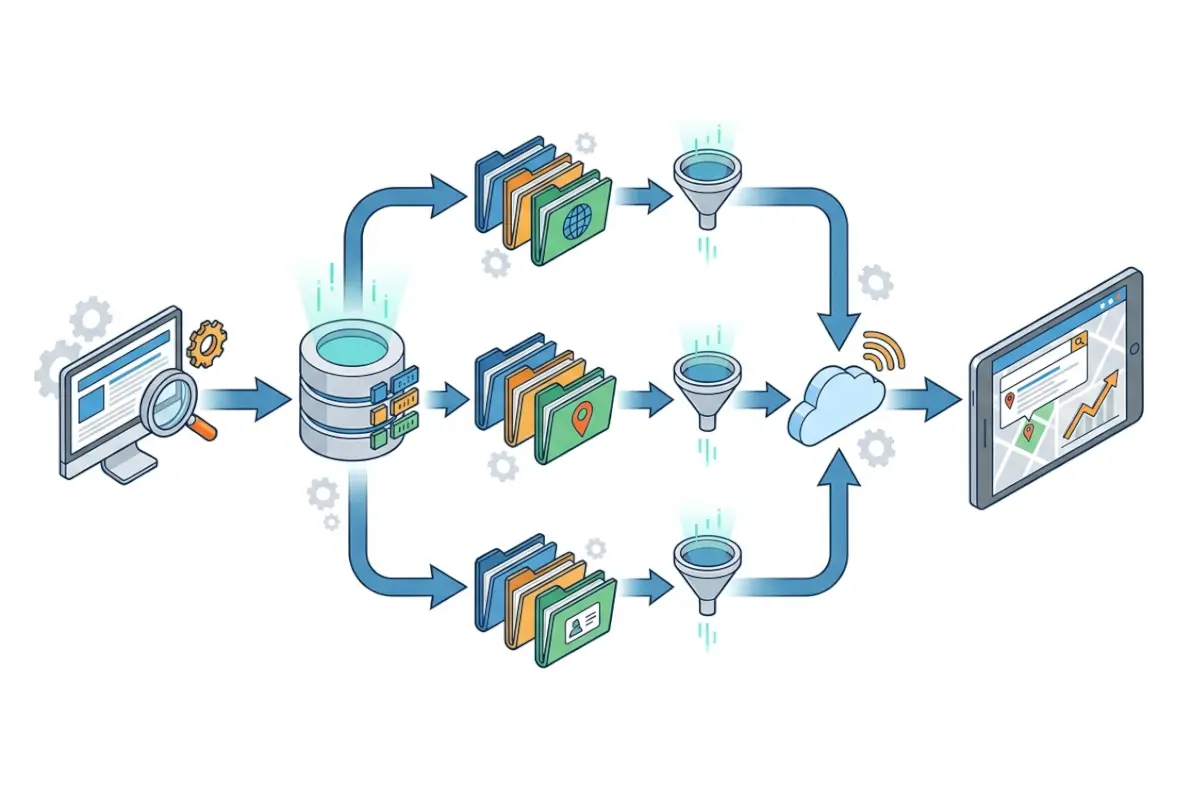
Industry-specific directories often provide greater value than general business directories because they attract qualified audiences searching for specialized services. A CPA firm benefits more from accounting association directories than from generic business listings. The referral traffic from niche directories typically converts better because visitors arrive with specific needs matching the business’s expertise.
Selection and Vetting: How to Pick Directories That Matter
Creating a vetted directory list requires systematic evaluation. Start by identifying directories where your competitors maintain listings—this reveals platforms your target audience already uses. Check whether directories appear in Google search results for relevant industry or location-based queries; directories that search engines don’t surface won’t drive discovery.
Verify indexation by searching “site:directoryurl.com” in Google to confirm the directory’s pages appear in search results. Examine listed businesses to ensure the directory maintains current, accurate information rather than outdated or abandoned listings. Check for moderation by attempting to identify spam listings; quality directories actively remove low-quality submissions.
For insights on building effective directory platforms, see our guide on key steps to run a successful directory website business. The same quality markers that make a directory valuable for submissions also define directories worth building.
| Quality Indicator | What to Check | Red Flag |
|---|---|---|
| Indexation | Site appears in Google results | No indexed pages or limited indexation |
| User Engagement | Recent reviews, comments, activity | Listings with no interaction or outdated content |
| Editorial Standards | Manual approval process indicated | Instant approval with no review |
| Site Architecture | Clean design, logical categories | Excessive ads, broken links, poor UX |
| Domain Authority | DA 30+ using Moz or similar tools | Very low DA or newly registered domain |
Process and Governance: Disciplined Submission Workflow
A disciplined submission process ensures consistency and enables tracking. Create a spreadsheet documenting each directory submission with columns for directory name, URL, submission date, login credentials, listing URL, indexation status, and referral traffic. This tracking system allows you to measure which directories deliver actual value versus those consuming time without returns.
Develop standardized business descriptions in multiple lengths (50, 100, 150, 250 words) to match different directory requirements while maintaining consistency. Vary language slightly for each submission to avoid duplicate content issues, but keep core information—NAP data, service descriptions, and value propositions—consistent across all platforms.
Monitor indexation by periodically searching for your business name plus the directory name in Google (e.g., “Your Business Name DirectoryName”). If listings don’t appear in search results within 30 days, the directory likely carries minimal value. Use Google Analytics to track referral traffic from each directory, noting which platforms actually drive visitors to your website versus those that exist only as citations.
Local SEO, Citations, and Directory Listings in 2026
Local directory submissions remain the most defensible use case for directory work in 2026. The local search ecosystem relies heavily on citation consistency—mentions of your business name, address, and phone number across multiple authoritative sources. When this information appears consistently across local directories, search engines gain confidence in your business’s location and legitimacy, improving visibility in location-based searches.
The local pack—those three business listings appearing above organic results for local queries—draws heavily from citation data. While Google Business Profile serves as the foundation, consistent citations across Yelp, Yellow Pages, local chamber of commerce directories, and industry-specific local platforms reinforce the signals that determine local pack inclusion.

According to Moz’s local search ranking factors research, citations contribute approximately 7% to local pack rankings and 8% to localized organic rankings. While not the dominant factor, this impact becomes significant in competitive local markets where multiple businesses vie for limited visibility.
The Local Signal Fusion: Directories as Part of Broader Local Presence
Directory listings work best when integrated with comprehensive local SEO strategies. A business claiming directory listings without optimizing their Google Business Profile, earning customer reviews, or maintaining an updated website will see minimal returns. The directories amplify and reinforce signals from other sources rather than functioning independently.
Successful local citation building follows a tiered approach. Priority tier includes Google Business Profile, Bing Places, Apple Maps, and major data aggregators (Neustar Localeze, Acxiom, Factual, Foursquare) that distribute business information to hundreds of downstream directories. Secondary tier includes industry-specific directories, local chamber of commerce sites, and major review platforms like Yelp and TripAdvisor. Tertiary tier encompasses smaller local directories and niche platforms specific to your service area or industry.
Multi-location businesses face additional complexity, requiring consistent but location-specific citations for each physical address. This means submitting each location separately to local directories, maintaining unique descriptions that reference specific neighborhoods or service areas, and ensuring NAP data matches exactly across all platforms for each individual location.
Beyond Links: The Content and Trust Angle
Directory listings function as trust signals when they link to specific, relevant landing pages rather than generic homepages. A restaurant listing linking to the menu and reservation page, a contractor linking to a service-specific landing page, or a healthcare provider linking to information about specific treatments creates better user experiences and stronger relevance signals than all listings pointing to the same homepage.
Enhanced directory listings—those including business photos, detailed service descriptions, hours of operation, and verified reviews—outperform bare-minimum listings. These enhanced profiles serve actual user needs by providing decision-making information before visitors even click through to your website. This utility translates into better engagement metrics that search engines can measure and reward.
Consider directory listings as extensions of your content marketing rather than purely as link sources. The descriptions, categories, and information you provide should align with your website’s value proposition and messaging. Inconsistent or contradictory information across directories creates confusion and diminishes trust signals rather than strengthening them.
Integrating Directory Submissions with Modern SEO (Content, UX, and E-A-T)
Directory submissions exist within a broader SEO ecosystem that prioritizes content quality, user experience, and expertise signals. Treating directories as an isolated tactic divorced from comprehensive SEO strategy wastes resources and misses opportunities for synergy. The most effective approach integrates directory work with content marketing, technical optimization, and authority building.
Modern search algorithms evaluate websites based on E-E-A-T: Experience, Expertise, Authoritativeness, and Trustworthiness. Directory listings contribute to the trustworthiness component when they provide consistent business information and appear on authoritative platforms. However, this represents just one element of trust signals that also include customer reviews, industry certifications, media mentions, and quality backlinks from editorial sources.

The content alignment between directory listings and your website matters significantly. Descriptions in directory profiles should reflect the same value propositions, service offerings, and expertise areas featured on your website. Contradictory messaging—claiming different specialties or using different terminology—creates confusion and dilutes brand positioning across digital touchpoints.
Content Alignment and User Intent
Directory listings should amplify your content strategy rather than existing separately from it. If your website content focuses on specific service areas or expertise, directory descriptions should emphasize those same differentiators. The anchor text in directory links (typically your business name) and surrounding context signal to search engines what your business offers and what queries it should rank for.
Category selection in directories functions as a relevance signal. Choose the most specific, accurate categories available rather than selecting every remotely related category in hopes of appearing in more searches. A tax accountant selecting “Tax Preparation” and “Accounting Services” sends clearer signals than one who also selects “Business Consulting,” “Financial Planning,” and “Payroll Services” if they don’t actually offer those services.
Avoid keyword stuffing in directory descriptions. Search engines in 2026 understand natural language and semantic relationships well enough to identify forced keyword insertion. Write for human readers first, incorporating relevant terms naturally while focusing on communicating genuine value and differentiation.
Technical Health and Risk Management
Monitor your backlink profile regularly to identify problematic directory links. Tools like Google Search Console, Ahrefs, or SEMrush reveal which directories link to your site. If you discover links from obviously spammy directories you didn’t submit to (often from automated scraping), use Google’s disavow tool to distance your site from those low-quality link sources.
According to Google’s spam policies, link schemes designed to manipulate rankings violate webmaster guidelines. While quality directory submissions don’t violate these policies, mass submissions to hundreds of low-quality directories or participating in reciprocal linking schemes crosses the line into manipulation that can trigger penalties.
Balance your link profile by ensuring directory links represent a minority of your total backlinks. A healthy link profile includes editorial links from relevant publications (35-40%), guest contributions on authoritative sites (20-25%), resource links from educational institutions (15-20%), industry reports and mentions (10-15%), and directory/citation listings (10-15%). Directory-dominated link profiles signal artificial link building rather than natural link acquisition.
Practical Implementation: A 6-8 Week Playbook for 2026
Implementing an effective directory submission strategy requires structured execution over several weeks rather than rushed completion in a few days. This phased approach ensures quality control, enables proper tracking, and allows time to measure initial results before expanding efforts. The following playbook provides a realistic timeline for businesses serious about extracting value from directory submissions.
This implementation framework works for single-location businesses; multi-location companies should multiply time estimates by the number of locations while maintaining the same quality standards for each submission. The goal is establishing 20-50 quality citations rather than rushing to hundreds of listings that provide minimal value.

Phase 1: Discovery and Vetting (Week 1-2)
Begin by inventorying existing directory listings. Search for your business name in Google to identify directories where listings already exist, verify the information accuracy, and claim unclaimed listings. Many businesses discover duplicate listings with inconsistent information that require consolidation before adding new submissions.
Research competitor directory presence by examining where similar businesses in your market maintain listings. Tools like BrightLocal or Whitespark can identify citation sources for competitors, revealing directories your target audience already uses. Focus on directories where multiple successful competitors appear—these platforms likely deliver actual visibility and traffic.
Create a vetted directory target list of 20-50 platforms meeting quality criteria: domain authority 30+, evidence of indexation, relevant categories for your business, active user engagement, and mobile optimization. Separate this list into priority tiers based on platform authority and user traffic, focusing initial efforts on highest-value directories.
| Week | Tasks | Deliverable |
|---|---|---|
| 1-2 | Inventory existing listings, research competitors, vet directories | Target list of 20-50 quality directories |
| 3-5 | Submit to priority directories, create tracking system | Active listings on top 15-20 directories |
| 6-8 | Monitor indexation, track referrals, optimize listings | Performance data and optimization plan |
Phase 2: Submission and QA (Week 3-5)
Execute submissions to priority directories first, completing 3-5 submissions per week to avoid patterns that might trigger spam detection. For each submission, create an account using a consistent business email, complete all available fields with accurate information, select the most specific relevant categories, and upload high-quality images if the platform allows.
Maintain a detailed tracking spreadsheet documenting each submission: directory name and URL, submission date, login credentials, listing URL once approved, selected categories, and any notes about the submission. This documentation enables future updates when business information changes and helps identify which directories require periodic re-verification.
Vary descriptions slightly for each directory to avoid duplicate content penalties while keeping NAP data identical across all platforms. Inconsistent phone numbers or addresses confuse search engines and diminish citation value. Even minor variations like “123 Main St.” versus “123 Main Street” reduce citation effectiveness, so establish standard formatting and use it everywhere.
For businesses building their own directories, our guide on how to organize active directory for business environment explains organizational best practices that also apply to maintaining quality directory listings.
Phase 3: Monitoring and Optimization (Week 6-8)
Verify indexation for each submission by searching “your business name directory name” in Google. Listings not appearing in search results after 30 days likely won’t deliver SEO value, though they may still provide direct referral traffic if users visit the directory directly. Document indexation status in your tracking spreadsheet to identify which directories merit continued investment.
Configure Google Analytics to track referral traffic from each directory. Create UTM parameters for listings that allow custom URLs to differentiate traffic sources more precisely. After 4-6 weeks, analyze which directories actually drive visitors to your website versus those that exist only as static citations without generating engagement.
Optimize underperforming listings by enhancing descriptions, adding images, requesting reviews from customers, or adjusting categories. Some directories allow businesses to “upgrade” listings with enhanced features—evaluate whether these paid enhancements deliver proportional value based on the directory’s referral traffic and user engagement metrics.
I implemented this phased approach for a regional healthcare provider back when quality directory work still required convincing clients of its value. We focused exclusively on health-specific directories and local business platforms, ignoring general directories entirely. Within eight weeks, we’d established 32 quality citations that contributed to a noticeable improvement in local pack visibility for competitive medical queries. The key was patience—treating it as a systematic process rather than rushing to maximum volume.
Frequently Asked Questions
Do directory submissions still work for SEO in 2026?
Directory submissions work when approached selectively, focusing on quality directories relevant to your industry or location. They contribute primarily through local citations and referral traffic rather than link equity. Mass submissions to low-quality directories provide minimal value and may harm your link profile through association with spam networks.
What are the benefits of directory submission services?
Directory submission benefits include establishing consistent local citations that improve local search visibility, generating qualified referral traffic from niche-specific platforms, building brand visibility across multiple discovery channels, and creating trust signals through association with authoritative industry directories. The impact varies significantly based on directory quality and relevance to your business.
Is automated directory submission safe?
Automated directory submission carries significant risk because most tools submit to low-quality directories that search engines ignore or discount. These services often create unnatural link profiles dominated by directory links, triggering spam filters. Manual submission to vetted directories provides better results and avoids penalties associated with bulk submission tactics.
What is the best directory submission service?
The best directory submission approach is manual submission to platform-specific directories rather than using automated services. For building your own directory, TurnKey Directories offers a WordPress plugin for creating professional business directories. Focus on submitting to established platforms like Google Business Profile, Yelp, industry association directories, and niche platforms where your target customers actually search.
How important is local directory submission for SEO?
Local directory submission remains important for local SEO, contributing approximately 7-8% to local search rankings according to industry research. Consistent NAP citations across authoritative local directories help search engines verify business location and legitimacy, improving visibility in local pack results and location-based searches. This impact is most significant for businesses serving specific geographic areas.
How many directory submissions should I do?
Focus on 20-50 quality directory submissions rather than hundreds of low-value listings. Prioritize directories with high domain authority, active user engagement, and relevance to your industry or location. Quality directories that actually index your listing and drive referral traffic provide more value than mass submissions to inactive or spammy platforms.
Can directory submission hurt my website?
Directory submission can hurt your website if you submit to low-quality directories or create an unnatural link profile dominated by directory links. Search engines penalize artificial link schemes, including mass directory submissions. Avoid automated submission services and directories with instant approval, excessive advertising, or obvious spam content to prevent potential penalties.
What is the difference between manual and automated directory submission?
Manual directory submission involves personally researching, evaluating, and submitting to each directory individually, enabling quality control and customization. Automated submission uses software to submit to multiple directories simultaneously, saving time but sacrificing quality and potentially submitting to spam directories. Manual submission is safer and more effective for building quality citations that actually benefit SEO.
The Final Verdict: Directory Submissions in 2026
Directory submissions in 2026 occupy a specific, limited role in comprehensive digital marketing strategies. They’re neither the ranking powerhouse they once were nor completely obsolete tactics deserving total abandonment. The businesses extracting value from directory work have adapted their approach from volume-focused mass submissions to selective, quality-driven citation building that supports broader SEO objectives.
The data supports selective directory use for local businesses needing citation consistency, niche industries where specialized directories attract qualified audiences, and newer businesses establishing initial digital footprints. What doesn’t work—and what actively carries risk—is indiscriminate submission to hundreds of low-quality directories using automated tools, a strategy that search engines now actively penalize rather than reward.
Your directory submission strategy should align with realistic expectations about outcomes. Expect contributions to local search visibility through citation building, not dramatic ranking improvements from link equity. Anticipate modest referral traffic from industry-specific directories, not massive visitor influx. View directory work as a supporting element of local SEO and brand visibility, not a primary ranking tactic that can stand alone.
Your Directory Submission Action Plan
This Week:
- Audit existing directory listings and claim unclaimed profiles
- Verify NAP consistency across all current listings
- Identify 3-5 high-priority directories relevant to your business
This Month:
- Build vetted target list of 20-50 quality directories
- Create standardized business descriptions in multiple lengths
- Submit to priority directories at 3-5 per week
This Quarter:
- Monitor indexation status and referral traffic for each listing
- Optimize descriptions and categories for underperforming listings
- Measure local search visibility changes and adjust strategy accordingly
The most successful approach treats directory submissions as one component of a balanced digital marketing strategy that prioritizes quality content creation, technical SEO excellence, and genuine user value. Allocate no more than 10-15% of your SEO resources to directory work, investing the majority in activities with proven higher returns: creating helpful content, improving site performance, and building authoritative editorial links.
For businesses considering building their own directory platforms, TurnKey Directories provides WordPress-based solutions that make directory creation accessible without custom development. Whether you’re submitting to directories or building one, the fundamental principles remain constant: focus on user value, maintain quality standards, and integrate directory work with broader business objectives rather than treating it as an isolated tactic.
Take action this week by auditing your current directory presence and identifying inconsistencies that need correction. The businesses seeing continued value from directory submissions aren’t those doing more submissions—they’re the ones doing better submissions, targeting the right platforms, and measuring what actually moves the needle for their specific business goals.
Was this article helpful?