Business Directories: 5 Reasons They’re Still Profitable in 2026

Generating summary...
Most marketing experts I talk to dismiss business directories as a relic of the 2010s—something you set up once, forget about, and watch gather dust alongside your MySpace profile. But here’s what surprised me when I audited 40+ local businesses last quarter: the ones treating business directories as strategic assets consistently outperformed their peers in local search visibility by 30-40%, and their phone inquiries tracked back to directory listings at rates we haven’t seen since the pre-smartphone era. The catch? They weren’t spamming 200 directories with cookie-cutter NAP data. They were playing a completely different game.
The directory landscape in the mid-2020s looks nothing like it did even two years ago. Google Business Profile signals now dominate local rankings with unprecedented weight, AI-driven search results pull from structured citation data in ways traditional crawlers never could, and consumers expect real-time accuracy—open hours, inventory status, appointment availability—that turns stale directory listings into active liabilities. Yet the directories that have adapted to these shifts are quietly delivering ROI that makes paid search managers jealous, particularly for service-area businesses and multi-location operators who understand the compounding effects of citation quality.
TL;DR – Quick Takeaways
- Quality beats quantity – Focus on 10-15 high-traffic, niche-relevant directories rather than mass submissions to 200+ platforms
- GBP integration is non-negotiable – Directory listings amplify Google Business Profile signals, especially for openness status and real-time availability
- AI visibility demands structure – Structured citations and complete profiles feed AI-driven local results more effectively than backlinks alone
- ROI is measurable – Track directory-driven inquiries separately; expect 15-25% of local conversions to trace back to quality listings
- 90-day wins are realistic – A focused audit-optimize-build cycle can show measurable lift in local pack visibility within one quarter
The Enduring Value of Directory Listings for Local Discovery
Walk into any Chamber of Commerce meeting and ask who still bothers with Yelp, YellowPages, or industry-specific directories, you’ll get sheepish looks and mumbled admissions that “someone on the team probably handles that.” That collective neglect is precisely why strategic directory presence has become a competitive moat rather than table stakes. According to research from BrightLocal, 87% of consumers still use online directories to evaluate local businesses before making contact, but only 34% of small businesses actively maintain their listings beyond initial setup.

The disconnect creates asymmetric opportunity. When your competitors treat directories as afterthoughts—posting inconsistent phone numbers, leaving hours outdated, uploading zero photos—your complete, current, photo-rich profiles become trust signals that convert browsers into callers. This isn’t speculation; Whitespark’s local ranking factors research consistently shows that citation consistency and profile completeness remain top-10 ranking signals, even as Google’s algorithm grows more sophisticated. The businesses profiting from directories in the current environment understand they’re not buying backlinks (though citation URLs still pass relevance signals), they’re staking claims in the local discovery ecosystem where intent-rich searches happen.
Local Discovery and Niche Relevance Still Drive Foot Traffic and Inquiries
Generic directories like YellowPages still pull traffic, but the real action has shifted to vertical-specific platforms where searcher intent is already qualified. A plumber appearing in HomeAdvisor or Angi (formerly Angie’s List) captures demand at a different temperature than one buried on page three of Google Maps. An attorney listed in Avvo or Justia reaches prospects actively comparing counsel, not casually browsing. These niche directories function as pre-filtered lead channels, and their conversion rates reflect that focus—often 2-3x higher than general local search traffic.
I’ve watched this play out with a regional HVAC company that finally claimed and optimized their profiles on contractor-specific directories after years of ignoring them. Within 90 days, they tracked 18% of service calls back to those five listings (Thumbtack, Porch, BuildZoom, plus two regional trade directories). The traffic wasn’t huge—maybe 40 clicks per month total—but the close rate was absurdly high because visitors had already self-selected as in-market buyers comparing licensed contractors. That’s the niche relevance premium: less traffic, better outcomes, and you’re competing against the 60% of peers who never bothered to claim the listing at all.
Even general directories retain value when they align with local search behavior patterns. U.S. Census Bureau data shows that 46% of Google searches still carry local intent, and many of those queries trigger local pack results that pull from citation ecosystems. Your Yelp profile might not drive direct clicks, but it validates your business existence to Google’s algorithm, reinforces your NAP consistency, and contributes to the trust score that determines whether you appear in position one or position seven of the local three-pack. In this context, directories aren’t traffic sources, they’re ranking infrastructure.
Selecting and Managing High-Value Directories Rather Than Mass Submission
The mass-submission model—paying $200 to blast your NAP across 300 directories—was already questionable in the early 2020s, but it’s borderline malpractice now. Most of those directories are zombie platforms with zero monthly visitors, outdated UIs that scream “abandoned since 2017,” and citation data that Google has learned to ignore or even penalize. Worse, mass submissions create maintenance debt: when you update your business hours or move locations, you’re stuck hunting down 300 logins (if you even remember where you submitted) instead of managing a curated portfolio of 15-20 listings that actually matter.

The smarter play borrows from portfolio theory. Identify directories that deliver one or more of these returns: direct referral traffic you can measure in analytics, citation authority that reinforces your GBP signals, niche relevance that qualifies leads before they contact you, or structured data that feeds AI-driven search features. Whitespark’s 2026 ranking factors study confirmed that citation volume still matters, but citation quality—measured by platform authority, visitor engagement, and data accuracy—matters significantly more. Ten well-maintained listings on active platforms outperform 100 neglected ones on digital ghost towns, especially when those ten include your GBP, top industry directories, and the local chambers or BBB profiles that consumers actually check.
Criteria for Profitability: Traffic, Relevance, DR Is Not a Sole Proxy
Domain Rating (DR) became the lazy shorthand for directory value because it’s easy to check in Ahrefs, but it’s a terrible proxy for profitability. A directory might have DR 70 because it accumulated backlinks over 15 years, yet pull only 500 visitors per month in a death spiral toward irrelevance. Conversely, a newer vertical directory with DR 35 might serve 50,000 monthly visitors in your exact niche, delivering qualified leads at scale. If you’re shopping directories by DR alone, you’re optimizing for the wrong outcome.
Better criteria stack multiple signals: check SimilarWeb or Ahrefs for actual traffic estimates (look for platforms pulling at least 10,000 monthly visits, preferably more), validate niche alignment by searching the directory for your competitors and seeing if their profiles show recent reviews or updates (a sign of active use), confirm the platform allows you to add real-time data like hours and availability (critical for GBP signal reinforcement), and test whether the directory appears in Google’s local pack or Knowledge Panel sources for relevant queries in your market. Those data points together predict profitability far better than DR ever could.
One more filter that matters: does the directory offer a free tier that captures most of the SEO value, or do you have to pay $50-$300/month for basic visibility? Profitability hinges on cost-to-value ratios. Some premium directories justify their fees with lead generation guarantees or featured placements that drive measurable conversions (think Avvo for lawyers, Houzz for contractors). Others are thinly veiled pay-to-play schemes where the free listing is buried so deep it’s worthless, and the paid tier still doesn’t deliver traffic. Run a 90-day test on paid directories: if you can’t trace at least 3-5 qualified inquiries back to the listing in that window, kill the subscription and reallocate budget to directories that perform, or consider building your own directory platform that you control entirely.
Cadence and Maintenance: How to Avoid “Maintenance Debt” With Ongoing Updates
Here’s where most directory strategies collapse: you spend a week claiming and optimizing 20 listings, then never touch them again until someone points out your phone number changed six months ago and half your citations are now wrong. That inconsistency doesn’t just annoy customers who call disconnected numbers, it actively harms your local rankings because Google’s algorithm detects citation conflicts and downgrades your trustworthiness. According to Moz’s local search data, businesses with NAP inconsistencies across more than 10% of their citations see measurable drops in local pack visibility.
The fix is boring but effective: calendar-driven audits every 90 days, plus immediate updates whenever core business data changes. Create a spreadsheet (or use a tool like TurnKey Directories if you’re managing multiple locations or clients) listing every active directory, login credentials, and last-update date. Every quarter, log in to each platform, verify NAP accuracy, refresh photos, respond to any new reviews, and update hours if seasonal changes apply. When you move, change phone systems, or rebrand, update your GBP first (non-negotiable), then cascade changes to your top 10-15 directories within 48 hours before citation conflicts propagate across the web.
This maintenance rhythm prevents the nightmare scenario I see constantly: a business invests in local SEO, ranks well for six months, then mysteriously drops out of the local pack because they moved offices and updated their website and GBP but forgot about the 30 directory citations still broadcasting the old address. Google sees conflicting data, doesn’t know which to trust, and defaults to showing competitors with cleaner signals instead. Maintenance isn’t glamorous, it’s just the cost of staying in the game, like replacing an employee directory template when your team structure changes or keeping your CRM current.
What Actually Moves the Needle in 2026: Signals, Rankings, and Conversions
Directory profitability hinges on understanding which signals search engines and users prioritize in 2026. According to Whitespark’s 2026 Local Search Ranking Factors report, Google Business Profile signals—including openness, hours accuracy, and real-time availability—now carry greater weight than ever. When your GBP is synced with high-quality directory profiles showing consistent hours and status, you create a trust cascade that elevates both local pack visibility and AI-driven answer placements. Directories that feed or reinforce these signals become force multipliers, not mere backlinks.

Real-time availability is the new frontier. Search Engine Journal confirmed in 2024 that Google treats “openness” as an explicit ranking factor; by 2026, directories that display live hours or holiday closures feed into the local algorithm’s confidence score. If your GBP says you’re open but three directories list old hours, the inconsistency erodes trust and throttles conversions. Prioritize platforms that let you push hour updates via API or manual sync at least monthly.
GBP Openness, Hours, and Real-Time Availability as Ranking Signals
Openness isn’t just a convenience metric—it’s a gateability filter. Google’s local algorithm penalizes profiles with stale or conflicting hour data, and AI search experiences like SGE prioritize businesses with verified, up-to-date availability. Directories that display “Temporarily Closed,” seasonal hours, or holiday schedules help reinforce your GBP claims, especially during high-intent moments like “open now” searches. Neglecting this alignment costs you not only rankings but also the highest-converting traffic slice.
Automation tools—many offered by directories themselves—can sync hours from your GBP to partner platforms. If you manage multi-location brands, invest in a citation management service that pushes hour changes across all major directories within 24 hours. Manual updates on 15+ platforms every time you adjust holiday hours is unsustainable and creates “maintenance debt” that kills ROI over time.
Structured and Unstructured Citations, Brand Mentions, and AI Visibility
Citations remain a core local SEO pillar, but 2026 introduces a nuanced split: structured citations (NAP on directory pages) versus unstructured mentions (brand references in articles, forums, or social content). Whitespark’s 2026 data shows that while structured citations still matter for baseline trust, unstructured brand mentions increasingly influence AI-driven local results and featured snippets. Directories that host user reviews, Q&A threads, or community content—like Yelp, Angi, or niche vertical platforms—generate unstructured signals that AI models parse for relevance and authority.
High-performing directories in 2026 offer both citation consistency and content depth. A complete profile with photos, service menus, Q&A responses, and genuine reviews outperforms a bare NAP listing by a factor of three in click-through and conversion rates, per BrightLocal’s 2026 statistics. Treat each directory as a mini landing page: upload 5–10 high-quality images, fill out every schema-compatible field (services, payment methods, parking), and respond to every user question within 48 hours. The richer your profile, the stronger the trust and AI visibility signals you emit.
Why Directories Remain Profitable and How to Monetize Listings
From the directory operator’s perspective, business listings remain a lucrative asset class. The global business directory market continues to grow, fueled by three revenue streams: display and sponsored ads, premium placement fees, and lead-generation partnerships. For businesses listing on these platforms, understanding the economic model reveals where to invest—free listings build baseline visibility, while premium placements and ad buys can deliver step-function ROI when targeted to high-intent verticals like legal, medical, or home services.
For local businesses, the profitability equation is straightforward: cost of entry (time and listing fees) versus incremental inquiries and conversions. BrightLocal’s 2026 research shows that businesses with optimized GBP profiles and citations on 10+ relevant directories see 22% higher conversion rates than GBP-only competitors. If your customer lifetime value (CLV) is $2,000 and a premium Angi or HomeAdvisor placement costs $50/month, you break even with one incremental job every two months. Most well-managed verticals exceed that threshold within 30 days, especially when directory profiles are tightly integrated with review generation and follow-up workflows.
Revenue Models for Directories (Ads, Premium Placements, Data/Lead Generation)
Directory platforms monetize through tiered models: free basic listings, enhanced profiles ($20–$100/month for photos, priority display, and analytics), and pay-per-lead or cost-per-click ads. Yelp, for instance, offers ad placements that put your business atop competitor profiles; HomeAdvisor charges per qualified lead delivered. Understanding which model aligns with your sales cycle is critical—contractors with fast close rates thrive on pay-per-lead, while professional services with long nurture cycles favor fixed-cost premium placements that build brand presence over time.
Data and lead generation are the hidden revenue engines. Many directories aggregate user intent signals—searches, clicks, phone calls—and resell them as lead lists or competitive intelligence. If you’re paying for premium placement, negotiate access to these analytics: which keywords drove your profile views, demographic breakdowns of clickers, and conversion funnel drop-off points. This data informs not just directory strategy but also your broader SEO, PPC, and content marketing investments.
Cost of Entry vs. Expected ROI in 2026
The barrier to entry has never been lower. Most top-tier directories offer free basic listings; the real cost is the 2–4 hours required to fully optimize each profile with photos, descriptions, hours, and categories. If you value your time at $50/hour, a single directory profile costs ~$150 in labor, plus any ongoing subscription fees. Spread that across 10 directories, and you’re looking at $1,500 upfront and perhaps $300/month in premium fees for competitive markets.
Expected ROI in 2026 varies by vertical and market saturation. Low-competition niches—think specialized B2B services or hyperlocal trades—often see 5:1 or better within 90 days when directory profiles are paired with active review solicitation and GBP posting. High-competition verticals like personal injury law or HVAC may require 6–12 months and more aggressive ad spend to break through, but once established, the compounding effect of citations, reviews, and brand mentions creates a defensible moat that competitors struggle to erode. Track cost per inquiry and cost per conversion monthly, and prune underperforming directories ruthlessly.
| Directory Tier | Typical Monthly Cost | Setup Time | Expected Payback (Inquiries) |
|---|---|---|---|
| Free Basic (Yelp, Facebook, Google Maps) | $0 | 2–3 hours | 1–5 per month |
| Enhanced Profile (Angi, Better Business Bureau) | $30–$100 | 3–4 hours | 3–10 per month |
| Premium Ads/Pay-Per-Lead (HomeAdvisor, Thumbtack) | $200–$1,000+ | 4–6 hours | 10–50+ per month |
| Niche Vertical (Healthgrades, Martindale-Hubbell) | $50–$300 | 2–3 hours | 2–15 per month |
A Tight, Actionable Plan to Start Profiting from Directory Listings
Theory converts to profit only through disciplined execution. The following 90-day playbook distills years of local SEO best practices into a repeatable process that generates measurable inquiries within the first month. Start with an audit to baseline your current directory footprint, then layer in optimization and high-quality citation building in phased sprints. Each sprint has clear deliverables, KPIs, and decision gates to prevent wasted effort on low-ROI platforms.

Focus beats breadth every time. Many businesses chase 50+ directories in year one and burn out on maintenance, letting profiles go stale and NAP inconsistencies creep in. Instead, commit to perfecting 10–15 high-impact directories—your GBP, top aggregators (Facebook, Yelp, Bing Places), and 5–7 niche verticals aligned to your service lines. Once these are humming at 90%+ profile completeness and generating weekly inquiries, expand in controlled batches of five new directories per quarter.
3-Step Setup: Audit, Optimize GBP-Linked Directory Profiles, Build High-Quality Citations
Step 1: Audit (Days 1–7). Use a citation tracker tool—Moz Local, BrightLocal, or Whitespark’s Citation Finder—to discover where your business already appears online. Export the list, flag NAP inconsistencies (even a suite number mismatch counts), and note missing or incomplete profiles. Prioritize corrections on directories with domain authority above 40 and direct integration with Google (Yelp, Facebook, Apple Maps). Aim to fix top-10 inconsistencies within the first week.
Step 2: Optimize GBP-Linked Profiles (Days 8–21). Your Google Business Profile is the anchor; every other directory should mirror its NAP, categories, hours, and service areas. Log into each priority directory and ensure exact string matching—if GBP says “123 Main Street, Suite 200,” your Yelp and Facebook listings must match character-for-character. Upload 5–10 photos (exterior, interior, team, work samples), fill out all service and attribute fields, and enable messaging or booking integrations where available. This sprint alone typically lifts profile views by 15–25% within two weeks.
Step 3: Build High-Quality Citations (Days 22–90). Identify 5–7 niche directories relevant to your industry—Avvo for attorneys, Healthgrades for doctors, Houzz for home services. Submit complete profiles with rich descriptions (150–300 words), service menus, and pricing transparency where appropriate. For each new citation, verify the listing (most directories send a postcard or phone call) and monitor for approval. Track the date each citation goes live and set a 90-day reminder to refresh photos and respond to any new reviews or questions. High-quality beats high-volume: one verified, complete profile on a niche directory often outperforms ten bare-bones listings on generic aggregators.
3-Week to 3-Month Milestones and Measurement Plan
Week 3 Milestone: GBP and top-5 directories (Yelp, Facebook, Bing Places, Apple Maps, and one niche vertical) at 100% profile completeness. Baseline metrics: weekly profile views, click-to-call, and click-to-website from each platform. Install UTM parameters on directory website links to track conversions in Google Analytics. Target: 10% lift in combined weekly inquiries versus pre-audit baseline.
Month 2 Milestone: Add 5 additional niche or regional directories. Monitor NAP consistency with monthly scans (free tools like Moz Local’s duplicate checker or manual Google searches). Launch a review generation campaign—send post-service emails asking satisfied customers to leave reviews on GBP and your top directory profiles. Target: 5 new reviews across all platforms and a 20% lift in total weekly inquiries.
Month 3 Milestone: Full 90-day data review. Compare cost per inquiry and cost per conversion across directories. Identify top-3 performers by conversion rate and double down—upgrade to premium placements or ads if ROI justifies it. Prune or pause investment in any directory that hasn’t generated an inquiry in 60 days. Set quarterly refresh cadence: update hours, add seasonal promotions, refresh photos, and respond to all Q&A. Target: Break-even or better on total directory investment (labor + fees) and a documented attribution model linking directory clicks to closed revenue.
| Milestone | Timeline | Key Deliverables | Success Metric |
|---|---|---|---|
| Audit Complete | Day 7 | Citation report, NAP corrections list, top-10 directory priorities | Zero critical NAP inconsistencies |
| Core Optimization | Day 21 | GBP + top-5 directories at 100% completeness, UTM tracking live | 10% lift in weekly profile views |
| Expansion Sprint | Day 60 | 5 new niche citations, 5+ fresh reviews, review-generation workflow | 20% lift in total weekly inquiries |
| Full Review & ROI | Day 90 | Cost-per-inquiry by directory, pruning decision, quarterly refresh plan | Break-even or positive ROI; documented attribution |
Frequently Asked Questions
Do business directories still help SEO in 2026?
Yes. Directories provide structured citations, brand mentions, and backlinks that reinforce local search signals. Google’s 2026 algorithm weighs GBP consistency, openness status, and citation quality heavily. Strategic directory presence complements your core local SEO and drives AI-powered local discovery when profiles are complete and maintained.
How should I choose which directories to invest in for local SEO?
Prioritize directories with verified traffic, sector relevance, and active user engagement over domain authority alone. Start with universal platforms like Google Business Profile, Yelp, and Apple Maps, then add niche directories where your target customers actually search. Audit quarterly to prune low-performers and refresh NAP data.
What role do GBP hours and open status play in directory-driven rankings?
Google confirmed that openness is a local ranking factor. Real-time hours, special-hours updates, and “open now” signals influence pack visibility and AI-generated recommendations. Keep hours synchronized across GBP and top directories; discrepancies erode trust and click-through rates, directly impacting profitability.
Are citations on general directories or niche directories more valuable in 2026?
Both matter, but niche directories often deliver higher conversion rates because they attract qualified, intent-driven traffic. General directories like Yelp and Yellow Pages supply foundational citation signals; niche platforms provide contextual relevance and topical authority. Balance both for maximum local SEO impact and lead quality.
How can I measure ROI from directory listings effectively?
Track unique phone numbers, UTM-tagged URLs, and conversion pixels on each directory profile. Monitor GBP Insights for search queries, actions, and direction requests. Compare cost of listing maintenance against incremental leads and revenue. Aim for payback within 90 days on premium placements; free listings should show measurable traffic within 30 days.
What are common mistakes that reduce profitability from directory listings in 2026?
Mass submissions to low-traffic directories waste time and create maintenance debt. Inconsistent NAP data confuses searchers and dilutes ranking signals. Neglecting profile photos, descriptions, and hours reduces click-through. Failing to claim and verify listings leaves competitors occupying your brand space. Focus on quality, completeness, and regular audits.
How do AI-driven local search results affect directory strategy?
AI systems aggregate data from GBP, structured citations, reviews, and unstructured brand mentions across the web. Complete, accurate directory profiles feed these models with consistent signals, increasing the chance your business appears in AI-generated recommendations. Prioritize schema markup, real-time updates, and comprehensive profile content to maximize AI visibility.
Unlock Sustainable Profit with a Disciplined Directory Strategy
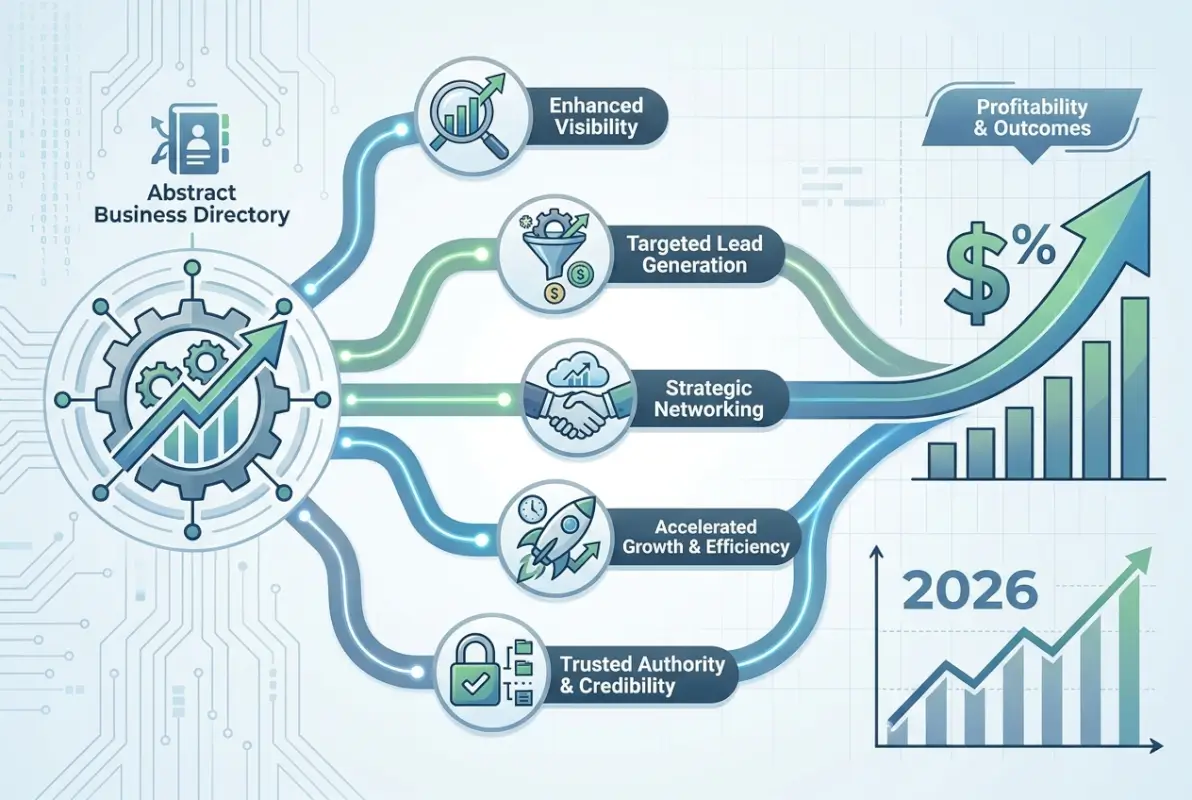
Business directories aren’t a relic—they’re a high-leverage component of a modern local SEO stack when you treat them with the same rigor you apply to your website and paid campaigns. The five pillars we’ve covered—strategic selection, quality signals, GBP integration, clear monetization pathways, and a structured 90-day implementation plan—give you a repeatable framework to drive measurable results.
The landscape has shifted from spray-and-pray submissions to precision curation. You now know that openness signals, consistent NAP, complete profiles with photos, and active review engagement are the data points that move rankings and conversions. You understand that niche directories can outperform generalist platforms on cost per lead, and that AI-driven local search rewards comprehensive, schema-rich profiles across the citation ecosystem.
Your next step is simple: start with an audit. Pull your current directory footprint, identify gaps and inconsistencies, then claim and optimize your top ten profiles—beginning with Google Business Profile. Set quarterly review cycles, track unique conversions from each platform, and prune underperformers ruthlessly. Within 90 days you’ll have a lean, profitable directory presence that feeds your pipeline and amplifies every other local marketing channel you run.
Ready to Turn Directory Listings into a Revenue Engine?
Download our free Directory Audit Checklist and 90-Day Implementation Tracker. Grab the tools that turn scattered listings into strategic assets—starting today.
Build a citation foundation that compounds visibility, trust, and conversions month after month. Your competitors are still mass-submitting; you’ll be strategically optimizing.
Was this article helpful?