
Top Digital Marketing Software Tools: 2025 Directory & Buyer’s Guide
Opens a Google-translated copy of this article in a new tab.
The digital marketing software landscape has transformed dramatically over the past few years. What started as simple email automation tools have evolved into comprehensive marketing clouds that integrate CRM, analytics, AI-powered optimization, and cross-channel orchestration in single platforms. The challenge isn’t finding marketing software anymore—it’s cutting through the noise to identify which tools actually deliver measurable ROI for your specific business needs.
Most marketers waste countless hours evaluating platforms based on feature checklists rather than business outcomes. I learned this the hard way after implementing three different “all-in-one” solutions over five years, only to discover that the most expensive option wasn’t necessarily the most effective. The real game-changers are platforms that seamlessly integrate with your existing workflows, provide actionable insights without requiring a data science team, and scale naturally as your organization grows. The digital marketing software market now exceeds $56 billion globally, yet according to Salesforce research, 68% of marketing teams still struggle to connect their tools effectively.
TL;DR – Essential Digital Marketing Software Insights for 2025
- Unified marketing clouds dominate: Salesforce Marketing Cloud, HubSpot, and Adobe Experience Cloud lead with integrated CRM, automation, and analytics
- AI is now table stakes: Predictive analytics, content generation, and automated optimization are standard features across top platforms
- Integration trumps features: The best tool isn’t the one with the most capabilities, but the one that connects seamlessly with your existing tech stack
- Cost extends beyond subscriptions: Account for implementation, training, and integration expenses when evaluating total ownership costs
- Cross-channel attribution is critical: Modern platforms must track customer journeys across email, social, search, and web touchpoints
- Specialized tools still matter: Most successful marketing teams combine a central platform with best-in-class tools for SEO (Semrush), social (Hootsuite), or analytics
- Data governance drives selection: Privacy compliance features (GDPR, CCPA) are now essential evaluation criteria
The Current Landscape of Digital Marketing Software in 2025–2026
The digital marketing software ecosystem has consolidated around a few dominant paradigms. Instead of managing separate tools for email, social media, analytics, and advertising, businesses now gravitate toward integrated platforms that orchestrate entire customer journeys from a unified interface. This shift reflects the reality of modern consumer behavior—people interact with brands across multiple touchpoints before making purchase decisions, and marketers need systems that can track and respond to these complex paths.
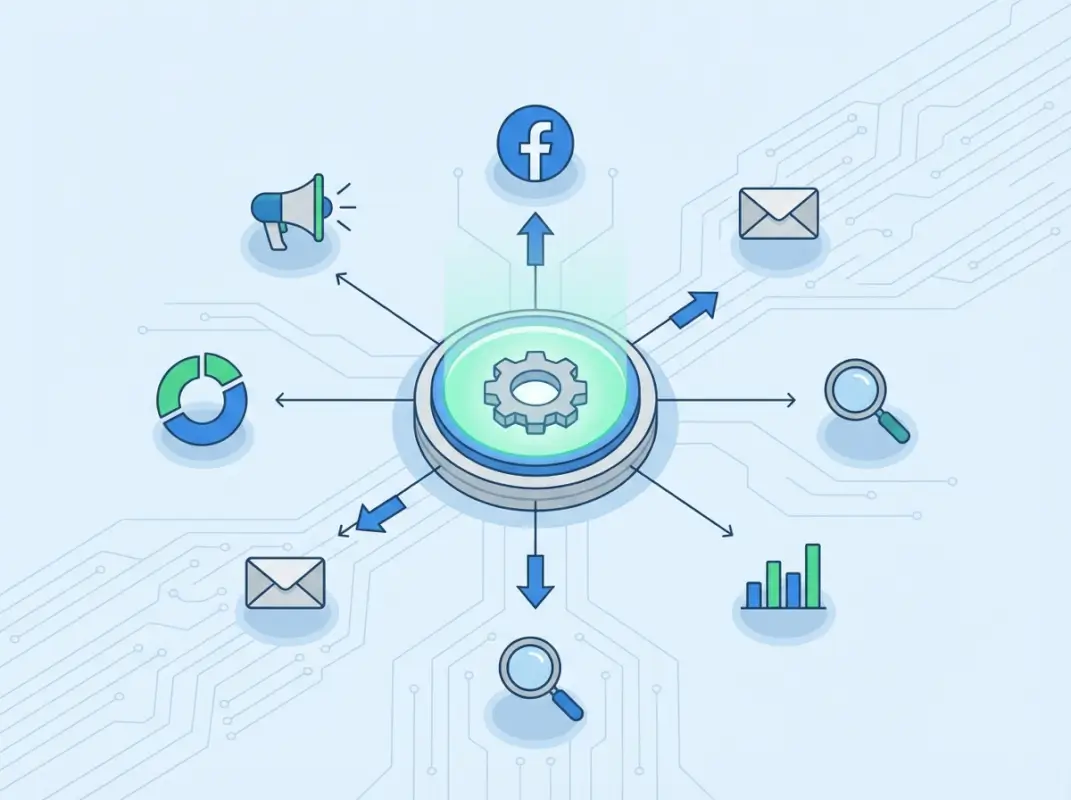
The most significant evolution isn’t just feature expansion but fundamental architectural changes. Modern digital marketing software tools now operate as true marketing clouds, combining customer data platforms (CDPs) with execution engines and analytics layers. Salesforce Marketing Cloud, for example, processes over 2 trillion customer interactions annually, while HubSpot manages more than 184,000 businesses through its integrated CRM and marketing automation platform. These aren’t just email tools with extra features tacked on—they’re purpose-built systems designed for enterprise-scale personalization and attribution.
What All-in-One Marketing Clouds Now Offer
Today’s comprehensive marketing software directory entries reveal a consistent pattern: leading platforms now bundle five core capabilities that were previously sold as separate products. First, customer relationship management (CRM) forms the foundation, maintaining unified customer profiles that track every interaction across channels. HubSpot pioneered this approach by offering free CRM as an entry point, creating a natural pathway to their paid marketing and sales tools.
Second, marketing automation extends far beyond simple email sequences. Modern workflows trigger based on behavioral signals—website visits, content downloads, social media engagement, or product usage patterns. These systems can automatically nurture leads through complex decision journeys without manual intervention. Third, content management and creation tools help teams produce, organize, and distribute content across channels. Adobe Experience Cloud particularly excels here, offering integrated digital asset management alongside campaign execution.
Fourth, analytics and attribution capabilities have become increasingly sophisticated. Rather than simply reporting which campaigns generated leads, advanced platforms now use machine learning to model customer journeys and assign credit across touchpoints. G2’s 2025 rankings consistently highlight attribution accuracy as a key differentiator among top digital marketing software options. Fifth, AI-powered optimization runs continuously in the background, testing variations, predicting outcomes, and adjusting campaigns automatically to improve performance.
AI, Data, and Automation: How Tools Deliver Faster ROI
Artificial intelligence has transitioned from marketing buzzword to essential infrastructure across the digital marketing software list. The most impactful AI applications don’t replace human marketers but augment their capabilities in three specific areas. First, predictive analytics forecast which leads are most likely to convert, which customers are at risk of churning, and which content topics will resonate with specific audience segments. Salesforce Einstein, for instance, analyzes billions of data points to generate lead scores and recommended next actions.
Second, content generation and optimization tools now draft subject lines, generate social media variations, and even produce first-draft copy for emails and landing pages. While human oversight remains essential, these capabilities can reduce content production time by 40-60% according to early adopters. Semrush recently integrated AI writing assistants directly into their content marketing toolkit, as detailed in TechRadar’s comprehensive review, allowing marketers to generate SEO-optimized content outlines and drafts within the same platform they use for keyword research.
Third, automated optimization continuously tests and refines campaigns without manual intervention. Rather than running traditional A/B tests that require weeks of planning and analysis, modern platforms deploy multivariate testing across email subject lines, send times, creative variations, and audience segments simultaneously. The best systems learn from these experiments and automatically apply winning combinations to future campaigns, creating a flywheel effect where performance improves over time with minimal human input.
Ranking and Evaluation: How to Judge Top Tools in a Directory
Selecting the right digital marketing software companies requires a systematic evaluation framework rather than relying on vendor marketing materials or superficial feature comparisons. The most successful implementations I’ve witnessed started with clear assessment criteria aligned to specific business outcomes. Too many organizations get distracted by impressive demos showcasing capabilities they’ll never actually use, while overlooking critical factors that determine long-term success.
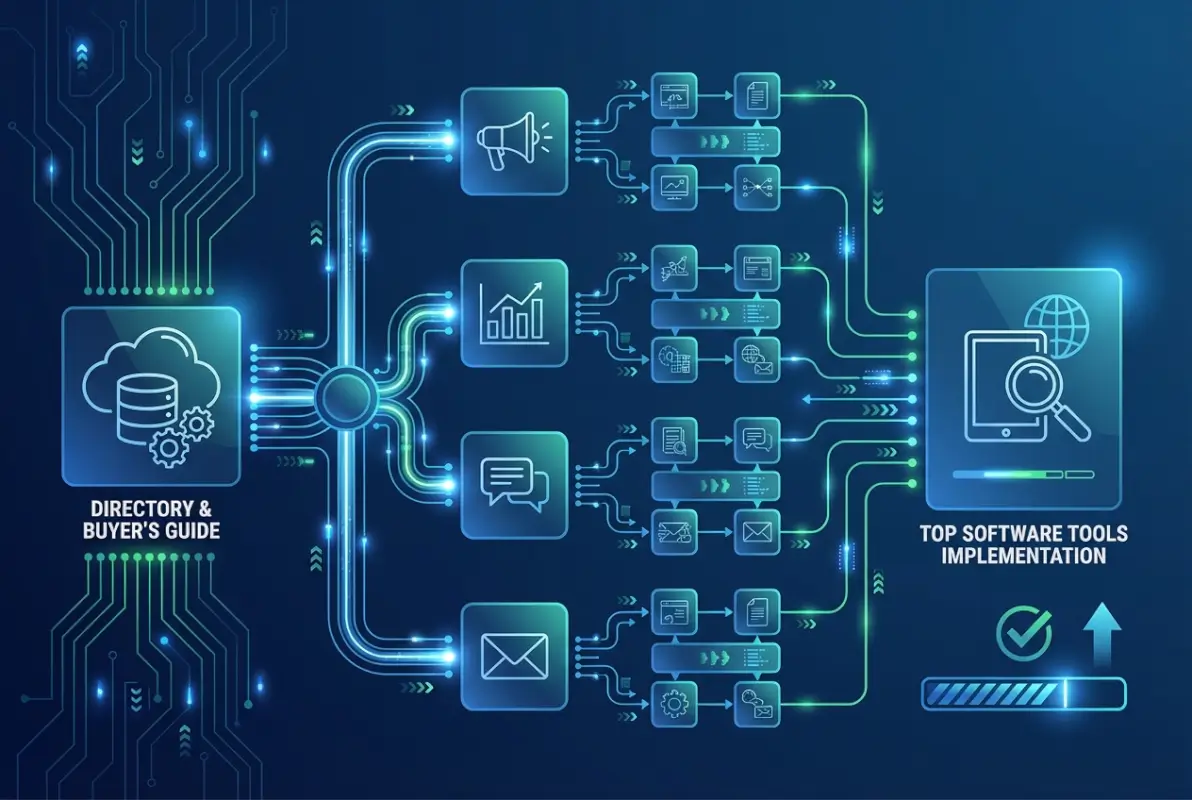
The first evaluation dimension is integration breadth and depth. A platform might offer impressive standalone capabilities, but if it can’t bidirectionally sync data with your CRM, e-commerce system, customer support platform, and business intelligence tools, you’ll end up with data silos that undermine the entire value proposition. Ask vendors specific questions: How many pre-built connectors do you offer? What data refresh frequency do these integrations support? Can we maintain a single source of truth for customer data across systems?
Core Evaluation Criteria
Beyond integration capabilities, data governance and compliance features have emerged as critical evaluation factors. With privacy regulations expanding globally—GDPR in Europe, CCPA in California, LGPD in Brazil—marketing platforms must provide granular consent management, automated data retention policies, and comprehensive audit trails. The best systems make compliance a natural byproduct of normal operations rather than requiring separate processes.
| Evaluation Dimension | What to Assess | Red Flags |
|---|---|---|
| Integration Architecture | Pre-built connectors, API flexibility, data sync frequency | Requires custom development for common tools |
| Data Governance | Consent management, retention policies, audit trails | Compliance features sold as expensive add-ons |
| Ease of Use | Time to productivity, training resources, user satisfaction scores | Requires IT involvement for routine tasks |
| Total Cost of Ownership | Subscription + implementation + training + integrations | Unclear pricing tiers or hidden usage fees |
| Scalability | Performance at 10x volume, feature expansion path | Major platform migration required for growth |
Total cost of ownership extends far beyond subscription fees. When evaluating a platform like HubSpot’s Professional tier at $800/month or Adobe Marketing Cloud’s enterprise pricing, factor in implementation expenses (often 2-3x annual subscription cost for complex deployments), ongoing training requirements, potential integration development, and the opportunity cost of team time during adoption. I’ve seen organizations select “cheaper” platforms only to spend more on custom development and workarounds than they would have paid for a more expensive but better-integrated solution.
What Top-Performing Articles Emphasize
The most valuable software directory marketing resources focus on real-world ROI metrics rather than feature specifications. Forbes Advisor’s marketing software analysis consistently highlights case studies showing specific business outcomes—lead quality improvements, conversion rate increases, or team efficiency gains—rather than just listing capabilities.
Cross-channel attribution capabilities deserve particular scrutiny. Can the platform accurately track a customer who discovers your brand through organic search, engages with social media content, downloads a whitepaper via email, and later converts through a paid search ad? The ability to connect these dots and understand which touchpoints actually influence purchase decisions separates truly valuable platforms from those that simply generate activity reports. Modern attribution models use machine learning to assign weighted credit across the entire customer journey, providing insights that simple last-click or first-click attribution models completely miss.
Updated Entries to Watch in The Top 10 Digital Marketing Software Landscape
The digital marketing software solutions landscape continues to evolve rapidly, with established players expanding capabilities while new entrants target specific market gaps. Rather than ranking platforms by arbitrary scores, it’s more valuable to understand how each solution positions itself and which use cases it serves best. The right choice depends entirely on your organization’s size, technical resources, existing technology stack, and specific marketing objectives.

Salesforce Marketing Cloud maintains its position as the enterprise standard for organizations requiring sophisticated multi-channel orchestration at scale. Recent expansions include enhanced AI-powered journey optimization and deeper integration with Salesforce’s broader ecosystem of sales, service, and commerce clouds. The platform excels when your organization already uses Salesforce CRM and needs to coordinate complex customer journeys across email, mobile, social, advertising, and web channels. However, smaller organizations often find both the pricing (typically $40,000+ annually) and complexity prohibitive without dedicated Salesforce administrators.
2025–2026 Entrants and Notable Shifts
HubSpot continues expanding beyond its roots as an inbound marketing platform to challenge Salesforce as a comprehensive marketing cloud. The platform’s strength lies in its intuitive interface and integrated approach—marketing, sales, service, and CMS tools share a unified customer database without requiring complex integration work. Recent additions include enhanced predictive lead scoring, expanded social media management capabilities, and improved revenue attribution reporting. HubSpot works particularly well for mid-market B2B companies that prioritize ease of use and want to align marketing and sales teams around shared data.
Adobe Experience Cloud (incorporating the former Marketing Cloud and Analytics Cloud) dominates for organizations requiring enterprise-scale personalization and analytics. Adobe’s acquisition of Marketo strengthened its B2B marketing automation capabilities, while native integration with Creative Cloud enables sophisticated content production workflows. The platform’s standout feature is Adobe Sensei, an AI framework that powers everything from predictive audiences to automated content optimization. However, maximizing Adobe’s capabilities typically requires dedicated technical resources and substantial implementation investment.
Google Marketing Platform offers unmatched integration with Google’s advertising ecosystem, making it essential for organizations heavily invested in Google Ads, YouTube advertising, or Display & Video 360. The platform combines analytics (Google Analytics 360), tag management, data visualization (Looker Studio), and campaign management tools in an integrated suite. While not as comprehensive as Salesforce or Adobe for email marketing or marketing automation, Google’s attribution and audience insights capabilities are industry-leading for advertising-focused strategies.
Semrush has evolved from purely an SEO tool into a comprehensive content marketing and competitive intelligence platform. The addition of AI-powered content creation tools, social media management, and advertising research capabilities makes it particularly valuable for content-driven marketing strategies. While not a replacement for marketing automation platforms like HubSpot or Marketo, Semrush excels at the research and planning phases of marketing—identifying opportunities, analyzing competitors, and optimizing content for search visibility.
Mailchimp continues to serve small to mid-sized businesses with increasingly sophisticated automation capabilities at accessible price points. Recent expansions include enhanced segmentation based on predicted customer lifetime value, improved A/B testing functionality, and expanded e-commerce integrations. The platform’s strength remains its balance of power and usability—sophisticated enough for advanced marketers while remaining accessible to small business owners without dedicated marketing teams.
Industry Benchmarks and Updated Content Needs
Pricing structures across digital marketing software companies have shifted toward usage-based models rather than simple per-user subscriptions. HubSpot, for example, now prices primarily based on the number of marketing contacts in your database, with additional charges for certain advanced features. This shift makes cost comparisons more complex but often provides better alignment between spending and business value—you pay more as your marketing database grows and (presumably) generates more revenue.
Deployment considerations have simplified as cloud-native architectures become universal. Unlike five years ago when on-premise vs. cloud deployments represented meaningful tradeoffs, virtually all modern digital marketing platforms list entries now operate as SaaS solutions with minimal infrastructure requirements from customers. The more relevant deployment question now concerns data residency—whether the platform can store customer data in specific geographic regions to comply with local regulations.
For organizations building custom directory or marketplace solutions, TurnKey Directories offers WordPress-based platforms that integrate naturally with popular marketing automation tools. This approach provides the flexibility of a custom-built directory with the ecosystem benefits of the WordPress platform, including extensive plugin compatibility and straightforward integration with tools like HubSpot, Mailchimp, or Google Analytics.
SEO, Content, and Keyword Optimization for the Digital Marketing Software Directory
Creating a high-performing marketing software directory requires strategic alignment between content structure, keyword targeting, and user intent. The most successful directory pages don’t simply list tools—they provide contextual information that helps visitors make informed decisions while satisfying search engine ranking factors. This balance between user value and technical optimization determines whether your directory attracts consistent organic traffic or languishes in search obscurity.
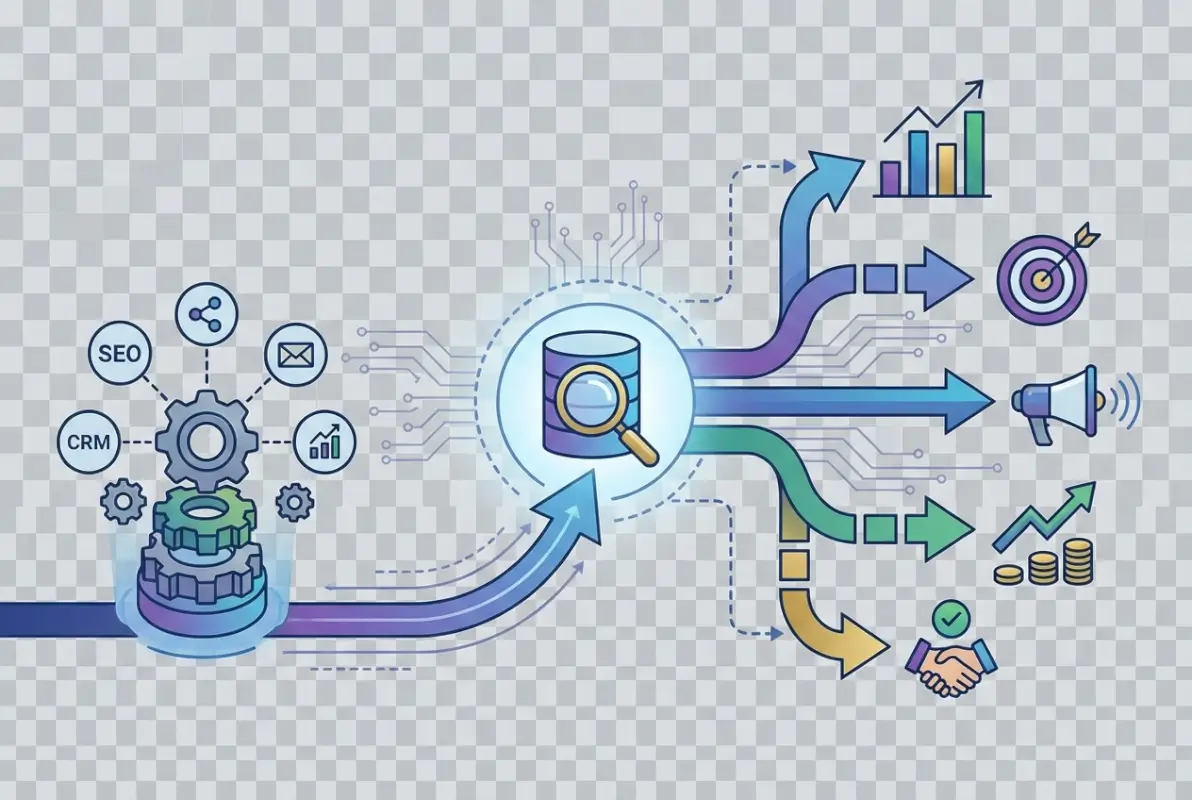
The keyword landscape for digital marketing software reveals clear patterns in search behavior. High-volume terms like “digital marketing software” (394 impressions) and “digital marketing software tools” (201 impressions) indicate broad research intent, while more specific phrases like “digital marketing software companies” (75 impressions) suggest visitors further along in their evaluation process. The challenge lies in 0% click-through rates across these terms, indicating that current content isn’t compelling enough to earn clicks despite ranking for impressions.
Keyword Strategy Aligned with Current GSC Data
The solution starts with title tag optimization. Rather than generic titles like “Digital Marketing Software Tools,” high-performing pages use specific, benefit-focused formulations: “Top Digital Marketing Software Tools: 2025 Directory & Buyer’s Guide.” This approach incorporates the primary keyword while adding temporal relevance and value propositions that increase click probability. The extraordinary impression count for “software directory marketing” (1,363 impressions) without any clicks suggests a major opportunity—users searching this term aren’t finding current results compelling enough to click.
Within content structure, strategic keyword placement in H2 and H3 headings significantly impacts both rankings and user experience. Headers like “What All-in-One Marketing Clouds Now Offer” and “Ranking and Evaluation: How to Judge Top Tools” incorporate semantic variations of core terms while directly addressing user questions. This approach satisfies both search algorithms looking for topical relevance and visitors scanning for specific information.
| Keyword Cluster | Monthly Impressions | Optimization Strategy |
|---|---|---|
| digital marketing software | 394 | Primary keyword in title, first paragraph, 2+ H2s |
| software directory marketing | 1,363 | Dedicated section on directory best practices |
| top 10 marketing software | 202 | Ranked list format with comparison table |
| digital marketing software list | 122 | Comprehensive categorized list with filters |
| marketing software directory | 28 | Featured in title and meta description |
First-paragraph optimization proves particularly crucial for directory pages. Search engines give substantial weight to early content, while visitors decide within seconds whether a page merits their attention. The opening paragraph should incorporate the primary keyword naturally while immediately communicating the page’s unique value. Rather than “Welcome to our directory of digital marketing software tools,” more effective openings provide immediate insights: “The digital marketing software landscape has consolidated around integrated platforms that combine CRM, automation, and AI-powered analytics—here’s how to navigate your options.”
Content Gaps to Close
Competitive analysis reveals several content elements common among top-ranking digital marketing tools and softwares pages that many directories lack. First, interactive filtering and comparison tools significantly improve user engagement and time-on-site metrics. Rather than static lists, high-performing pages allow visitors to filter by company size, budget, primary use case, or specific features. These interactive elements also create natural opportunities for additional keyword targeting through filter labels and categories.
Second, inclusion of ROI calculators or assessment tools provides genuine utility while capturing email addresses for lead generation. A simple questionnaire that asks about company size, current marketing challenges, and budget constraints can recommend specific platforms while demonstrating immediate value to visitors. This approach transforms passive content consumption into active engagement, sending positive signals to search algorithms while building your email list.
Third, integration maps showing how different platforms connect with popular business tools address a critical evaluation criterion often overlooked in generic directories. A visual representation showing which marketing automation platforms integrate with Salesforce, which work best with Shopify, or which offer native WordPress connections helps visitors quickly identify compatible options. This content directly serves searcher intent behind queries like “digital marketing software companies” where visitors are evaluating specific solutions.
Practical Guide for Readers: How to Use the Directory to Choose Tools
Navigating a comprehensive digital marketing software list effectively requires a systematic approach rather than simply browsing alphabetically or selecting the first familiar name. The most successful tool selections I’ve witnessed followed a consistent process: define requirements first, then evaluate options against specific criteria, and finally validate choices through hands-on testing before committing to multi-year contracts.

Start by documenting your current marketing workflow and identifying specific pain points. Are you spending excessive time manually segmenting email lists? Struggling to attribute conversions to specific marketing activities? Unable to personalize content based on customer behavior? Each pain point translates to a specific capability requirement—list-building automation, cross-channel attribution, or behavioral personalization. This exercise creates a prioritized feature checklist that guides directory navigation far more effectively than browsing generic category pages.
A Reader-Friendly Decision Flow
The first decision point involves choosing between integrated platforms versus best-of-breed point solutions. Integrated platforms like HubSpot or Salesforce Marketing Cloud offer comprehensive capabilities with unified customer data, simplified vendor management, and consistent user experiences. However, they often compromise on depth in specific areas—their SEO tools might not match Semrush’s sophistication, or social media management might lag behind specialized platforms like Hootsuite.
Best-of-breed approaches select the strongest tool for each function—Semrush for SEO, Mailchimp for email, Hootsuite for social media—then integrate them through APIs or iPaaS platforms like Zapier. This strategy maximizes capability depth but creates integration complexity, potential data inconsistencies, and vendor management overhead. For most mid-market organizations, a hybrid approach works best: select an integrated platform for core functions (email, automation, basic analytics), then supplement with specialized tools for areas requiring advanced capabilities.
| Decision Factor | Assessment Questions | Recommended Approach |
|---|---|---|
| Company Size | Under 50 employees, 50-500, or 500+? | Small: single platform; Mid: core + specialists; Enterprise: marketing cloud |
| Technical Resources | Do you have dedicated marketing ops or IT support? | Limited resources: prioritize ease of use over raw power |
| Primary Channel | Email, social, search, or multi-channel? | Select platforms with proven strength in your dominant channel |
| Existing Tech Stack | What CRM, CMS, and e-commerce tools are locked in? | Prioritize native integrations with existing systems |
| Budget Reality | What’s total available budget including implementation? | Reserve 40% of budget for setup, training, and integrations |
Integration requirements deserve particular attention when evaluating directory entries. Before shortlisting any platform, verify that it offers native or pre-built integrations with your existing CRM, e-commerce platform, customer support system, and analytics tools. “Integration available” often means “technically possible through custom API development”—a far cry from turnkey connectivity that synchronizes data automatically. Request specific integration documentation during vendor demos rather than accepting vague assurances.
Actionable Next Steps and How to Act on the Update
Once you’ve identified 2-3 finalist platforms from the directory, invest time in hands-on testing rather than relying solely on vendor demonstrations. Most enterprise software providers offer proof-of-concept periods or limited trials—insist on these before signing contracts. During testing, focus on your specific use cases rather than exploring every feature. Can you actually build the automated workflows you need? Does the reporting provide insights that drive decisions, or just data dumps requiring additional analysis?
Involve end-users early in the evaluation process. The most common implementation failure I’ve witnessed stems from executive or IT-driven selections that don’t account for actual user needs and capabilities. If your marketing team finds the interface confusing during a trial, that won’t improve after purchase—it will simply mean low adoption and underutilized capabilities. Schedule testing sessions with the marketers who will use the platform daily, not just management who will oversee it.
For organizations building marketplace or directory platforms themselves, consider solutions like TurnKey Directories, which offers WordPress-based directory software with built-in marketing integrations. This approach provides greater control than SaaS directory solutions while maintaining compatibility with popular marketing automation tools through WordPress’s extensive plugin ecosystem.
Frequently Asked Questions
What is the difference between marketing software and digital marketing software?
Marketing software broadly encompasses any tools supporting marketing activities, including traditional channels like print or events. Digital marketing software specifically focuses on online channels—email, social media, search, web, and mobile. Most modern platforms concentrate exclusively on digital channels given their measurability and ROI potential.
What should I look for in a digital marketing software directory entry?
Prioritize entries that detail integration capabilities with popular business tools, provide transparent pricing information including implementation costs, include verified customer reviews from similar-sized organizations, and demonstrate specific use cases or success metrics. Avoid directories offering only feature checklists without context about which features actually drive results.
Which digital marketing tools are best for cross-channel attribution?
Google Marketing Platform, Salesforce Marketing Cloud, and Adobe Experience Cloud lead in cross-channel attribution capabilities. These platforms use machine learning to track customer journeys across email, social, search, display, and web touchpoints, assigning weighted credit across the entire conversion path rather than relying on last-click or first-click models.
How often should I update my directory entries?
Review directory entries quarterly at minimum, with immediate updates following major product releases, pricing changes, or significant vendor developments. Establish a lightweight update workflow that monitors vendor announcements and user review sites, then schedules regular content refreshes to maintain accuracy and search visibility.
Are there any free or freemium digital marketing tools worth listing?
HubSpot offers robust free CRM and basic marketing tools suitable for small businesses. Mailchimp provides free plans for up to 500 contacts. Google Analytics, Google Search Console, and Google Business Profile deliver essential analytics and local SEO capabilities at no cost. These freemium offerings provide genuine value while creating natural upgrade paths as businesses grow.
What external sources provide reliability for tool comparisons?
G2, Gartner Peer Insights, and Capterra aggregate thousands of verified user reviews across business software categories. Forrester and Gartner publish detailed Wave and Magic Quadrant reports evaluating enterprise marketing platforms. Industry publications like Forbes Advisor and TechRadar offer independent reviews. Always consult multiple sources and prioritize reviews from organizations similar to yours in size and industry.
How much does top digital marketing software cost?
Entry-level platforms like Mailchimp or Buffer start at free to $50 monthly for basic features. Mid-tier solutions like HubSpot Professional or Semrush range from $400-1,200 monthly. Enterprise platforms like Salesforce Marketing Cloud or Adobe Experience Cloud typically exceed $40,000 annually with custom pricing based on usage, contacts, and required features.
Which platforms cover all aspects of digital marketing in one place?
TurnKey Directories provides comprehensive WordPress-based directory solutions with integrated marketing capabilities. HubSpot offers the most accessible all-in-one platform covering email, social, SEO, content, automation, and CRM. Salesforce Marketing Cloud and Adobe Experience Cloud provide enterprise-scale integration across all digital channels. However, most organizations achieve better results combining a core platform with specialized tools for advanced needs in areas like SEO or social listening.
Ready to Build Your Marketing Technology Stack?
The right digital marketing software transforms marketing from guesswork into measurable science. Start by documenting your specific pain points and required integrations, then systematically evaluate platforms against these criteria rather than feature lists. Invest in hands-on testing with actual team members before committing to contracts. Remember that the most expensive or feature-rich platform isn’t always the best choice—the winning selection integrates seamlessly with your existing systems, matches your team’s capabilities, and demonstrably improves the metrics that matter most to your business. Whether you choose an integrated marketing cloud or assemble best-of-breed tools, success ultimately depends on consistent execution more than software selection.
Was this article helpful?