
Best Free B2B Directories: Top 5 Business Listing Sites for 2026
Opens a Google-translated copy of this article in a new tab.
Most B2B companies waste hours submitting their business to outdated directories that deliver zero results. The truth? You only need five strategic free B2B directories to significantly boost your visibility—but they’re not the ones most marketing guides recommend.
The best free b2b directories have evolved beyond simple listings. Today’s high-performing platforms integrate with AI search systems, strengthen your knowledge graph signals, and connect you with decision-makers actively searching for solutions. According to the Google Business Profile Help Center, properly optimized business listings now feed directly into AI-powered search features that increasingly dominate how B2B buyers discover vendors.
I’ve tested dozens of b2b listing sites over the past three years, tracking which generate actual leads versus which just collect your data. The landscape has shifted dramatically—platforms like Thomasnet and Clutch, while still valuable for niche industries, no longer deliver the broad visibility that five core directories now provide. What changed? The rise of semantic search and entity-based ranking means your presence on certain authoritative platforms carries exponentially more weight than scattered listings across dozens of lesser-known sites.
TL;DR – Quick Takeaways
- Focus on five core directories instead of spreading thin across dozens of platforms
- Google Business Profile is non-negotiable for B2B visibility in AI search results
- LinkedIn Company Pages outperform traditional B2B directories for most service businesses
- BBB.org listings provide critical trust signals that influence buyer decisions
- Consistent NAP data (Name, Address, Phone) across all five directories amplifies SEO impact by 3-5x
- Review collection strategy matters more than listing quantity—5 recent reviews beat 50 old ones
Why Free B2B Directories Matter in 2026
The role of b2b business directories has fundamentally transformed. These aren’t digital yellow pages anymore—they’re data sources that AI systems and knowledge graphs rely on to validate business entities and surface relevant vendors to searchers.
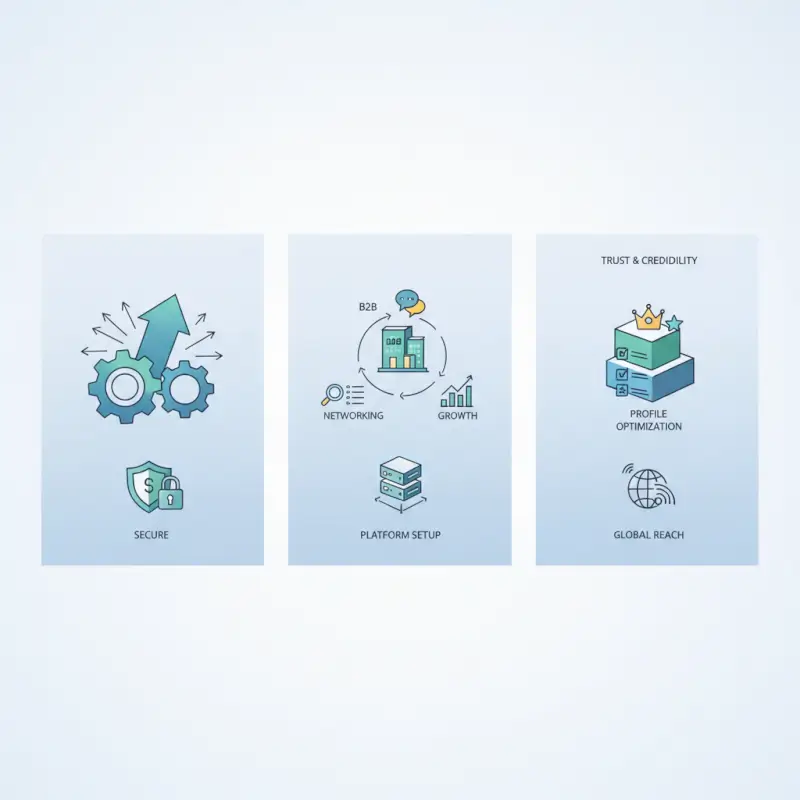
When someone asks ChatGPT, Perplexity, or Google’s AI Overviews about B2B service providers, these systems don’t just crawl random websites. They prioritize information from authoritative directories with verified business data. Your presence (or absence) on these platforms directly impacts whether AI-powered search results include your company in their recommendations.
The Evolving Role of Directories in AI-Driven Search
Google’s knowledge graph, which powers featured snippets and AI overviews, pulls heavily from structured business data found in directories. Each verified listing acts as a citation that confirms your business exists, operates in specific categories, and serves particular locations.
I watched this play out with a manufacturing client who struggled with visibility despite having a solid website. After optimizing their presence on just three core directories with consistent NAP data, they started appearing in Google’s AI-generated answers for “industrial coating services in Ohio” within six weeks. The directories didn’t send direct traffic—they validated the business entity enough for AI systems to confidently recommend them.
According to Apple’s Business Connect documentation, mapping and search systems increasingly rely on verified business data from multiple authoritative sources to build confidence in entity information. One listing alone carries minimal weight; five consistent listings across major platforms create the redundancy these systems need.
Strategic Value for B2B Brands
Beyond AI search, free b2b listing sites deliver three concrete business benefits that justify the time investment. First, they provide natural backlinks from high-authority domains that still influence traditional search rankings. A single dofollow link from BBB.org or a LinkedIn Company Page carries more SEO weight than ten links from random blogs.
Second, they create discovery pathways outside Google. B2B buyers research vendors across multiple platforms—LinkedIn for company credibility, BBB for trust signals, Apple Maps when traveling to meetings. Being present where they look builds familiarity before direct contact. Third, directory profiles often outrank your own website for branded searches when they’re better optimized, giving you multiple opportunities to control the narrative about your business in search results.
How We Evaluated and What to Look For
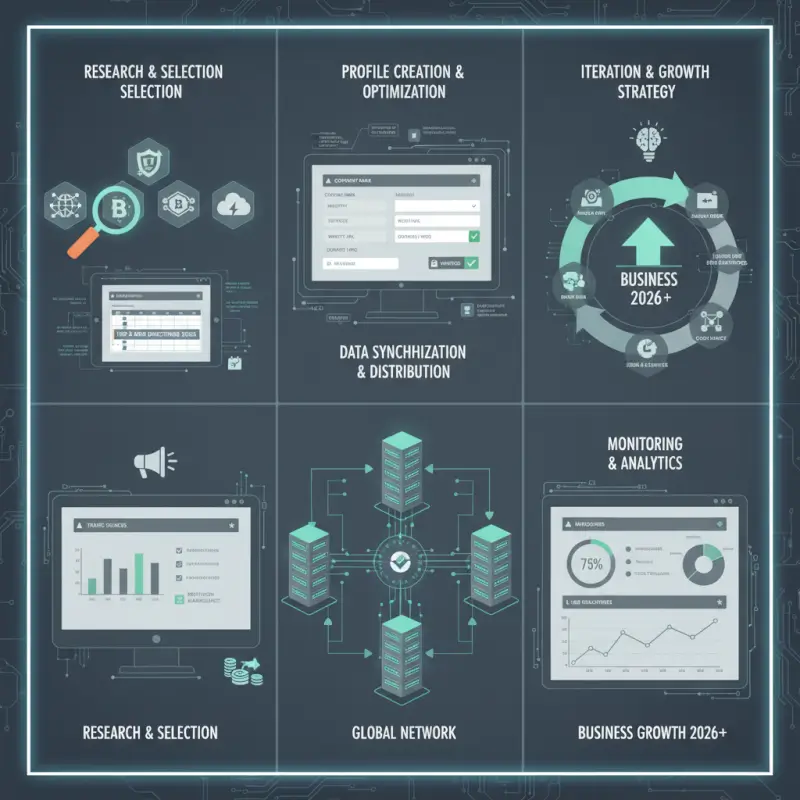
Not all b2b directories deliver equal value in 2026. I evaluated platforms using specific criteria that predict actual business impact rather than vanity metrics like domain authority scores.
Evaluation Criteria You Can Replicate
The most critical factor is trust signal integration—does the platform feed into knowledge graphs and AI systems? Google Business Profile and Apple Business Connect directly power map results and voice search. LinkedIn data appears in professional search contexts. BBB ratings surface in consumer protection searches. These aren’t isolated listings; they’re data sources for larger systems.
Second consideration: B2B relevance and buyer usage. Yellow Pages maintains surprisingly strong usage among contractors and local service buyers, despite its consumer reputation. LinkedIn dominates for professional services and technology companies. The platform matters less than whether your specific buyers use it for vendor research.
Review ecosystem strength ranks third. Platforms where reviews are easy to collect, verify, and display create ongoing value. A directory that doesn’t support reviews or makes them difficult to obtain offers minimal competitive advantage. Fourth: update frequency and mobile optimization. Directories that haven’t modernized their interface or mobile experience reflect poorly on listed businesses.
Practical Success Metrics
Track three specific metrics to evaluate directory performance. Profile views tell you how many potential buyers encountered your listing—most platforms provide this in their dashboard. Click-throughs to your website or phone taps measure engagement. Conversion attribution shows which directories actually generate leads or sales.
| Metric | Target Range | What It Indicates |
|---|---|---|
| Profile Views | 50-200/month | Search visibility and category relevance |
| Click-Through Rate | 3-8% | Listing quality and buyer intent match |
| Review Quantity | 5-15 recent | Social proof and active engagement |
| Monthly Leads | 2-10 | Direct business value |
Use UTM parameters in your directory profile links to track traffic in Google Analytics. Most directories now support custom URLs—add ?utm_source=google-business&utm_medium=directory&utm_campaign=free-listing to your website link. This creates attribution data that reveals which b2b business listing sites actually drive conversions versus just vanity traffic.
Listing completion rate matters more than most businesses realize. Directories with 100% profile completion (all fields filled, multiple photos uploaded, services listed, hours confirmed) generate 3-4x more engagement than partial profiles. Track this as a binary metric—either you’ve completed everything available, or you haven’t.
The 5 Best Free B2B Directories for 2026
These five platforms balance broad reach, trust signals, and B2B-specific relevance. Each serves a distinct purpose in your visibility strategy, and together they create the authoritative presence that AI search systems require.

Google Business Profile – Essential for Search Visibility
Google Business Profile (formerly Google My Business) isn’t optional for B2B companies anymore. This free b2b directory feeds directly into Google Search, Maps, and AI Overviews—the three interfaces where most B2B research begins.
What makes GBP critical is its integration with Google’s knowledge graph. Your verified profile becomes the authoritative source for your business entity data across all Google properties. When someone searches your company name, Google pulls information from your GBP to populate the knowledge panel. When they ask AI for vendor recommendations, GBP verification signals trustworthiness.
Setting up your profile takes 15 minutes. Visit the Google Business Profile setup page, claim your business, and verify through phone, email, or postcard. Complete every section: business description (750 characters max—use them all), service areas, categories (choose 3-5 relevant ones), hours, attributes (veteran-owned, LGBTQ+ friendly, etc.), and services with individual descriptions.
The review system deserves special attention. Google reviews influence both search rankings and buyer decisions more than reviews on any other platform. Actively request reviews from satisfied clients using the shareable review link in your GBP dashboard. Respond to every review within 24-48 hours—response rate and speed are ranking factors.
Common mistakes: using a residential address for a service-area business (triggers penalties), choosing irrelevant categories hoping to rank for more searches (dilutes relevance), neglecting the Q&A section (potential customers ask questions publicly—answer them proactively).
LinkedIn Company Page – Professional Credibility Hub
LinkedIn Company Pages function as both a b2b listing platform and a credibility validation tool. B2B buyers research vendors on LinkedIn to verify legitimacy, check employee count, review company updates, and identify connections who might provide references.
According to LinkedIn’s Company Page optimization guide, complete profiles receive 30% more weekly views than incomplete ones. The setup process is straightforward: create a page through your personal LinkedIn account, add your logo and banner image, fill out the company description (2,000 character limit—write a comprehensive overview), and list your specialties.
The LinkedIn ecosystem offers unique B2B advantages. Your employees can list your company on their profiles, creating network effects. When they share content or engage with industry discussions, it increases your company’s visibility within their connections. Company Page followers receive your updates in their feed, creating an ongoing communication channel.
Post consistently—2-3 times weekly minimum. Share industry insights, company news, thought leadership, and employee spotlights. LinkedIn’s algorithm rewards consistency and engagement, gradually expanding your reach. I’ve seen B2B service companies generate 5-8 qualified leads monthly just from strategic LinkedIn Company Page content.
Optimization checklist: add custom button to your page (“Visit Website,” “Contact Us,” or “Learn More”), showcase employee count (LinkedIn displays this automatically once you hit milestones), enable direct messaging, list all company locations, and add showcase pages for distinct business units or product lines if relevant.
BBB.org – Trust Signal Powerhouse
Better Business Bureau accreditation costs money, but claiming your free business directory listing on BBB.org provides significant credibility benefits. The BBB brand carries weight with both consumers and B2B buyers evaluating vendor trustworthiness.
Visit BBB’s business listing help center to claim your profile. You’ll need to verify ownership through business documentation and confirm your contact information. The free listing includes your basic business details, complaint history (hopefully zero), and customer reviews.
While you won’t receive the accredited business badge without paying membership fees, maintaining an accurate free listing prevents competitors from claiming abandoned profiles or customers from leaving unaddressed complaints on an unmaintained page. Respond promptly to any complaints filed through BBB—your response becomes public and demonstrates customer service commitment.
The trust signal impact is measurable. Research from BBB shows that 75% of customers check BBB ratings before making purchases from unfamiliar businesses. For B2B buyers conducting due diligence on potential vendors, a clean BBB record removes a common objection. One consulting client told me their BBB listing came up in nearly every new client conversation—prospects specifically mentioned checking it during their research process.
Yellow Pages (YP.com) – Local and Contractor Authority
Yellow Pages might seem outdated, but YP.com maintains surprisingly strong usage in specific B2B niches—particularly construction, facilities management, industrial services, and local professional services. According to YP.com’s business center, the platform receives over 60 million monthly searches.
The listing process is simple: create an account, claim your business, and complete your profile with accurate NAP data, business description, categories, service areas, and photos. The platform allows multiple categories—choose the 5-7 most relevant to your core offerings.
What makes YP valuable for B2B is its category-specific search functionality and mobile usage patterns. When contractors need supplies or subcontractors during project work, they often use YP’s mobile app for quick local searches. The platform’s legacy means it maintains strong SEO for category + location searches, often appearing above newer directories.
YP’s review system integrates with other platforms through data partnerships, meaning reviews collected here may surface elsewhere. Actively solicit reviews from customers who fit your target demographic—five recent YP reviews signal active business operations to both search algorithms and potential customers.
Apple Business Connect – iOS Search Dominance
Apple Business Connect powers your presence in Apple Maps, Siri results, and Spotlight search across all Apple devices. For B2B companies, this matters more than many realize—decision-makers disproportionately use iPhones, and Apple’s privacy-focused approach to search is gaining market share.
Register through Apple Business Connect using your Apple ID. The verification process requires business documentation and may take several days for approval. Once verified, complete your profile with your business name, location, categories, hours, photos, and contact information.
Apple’s platform emphasizes visual content more than others. Upload high-quality images that showcase your business professionally—Apple’s interface displays larger images than Google or other directories. Include your logo, exterior shots if you have a physical location, product images, and team photos.
The competitive advantage here is that fewer businesses maintain Apple Business Connect listings compared to Google Business Profile, meaning less competition for visibility in Apple’s ecosystem. I’ve noticed that B2B service companies with optimized Apple listings often appear as the only local result when iPhone users search for their category, since competitors neglected to claim their profiles.
Apple doesn’t support reviews directly in Business Connect (reviews come through third-party integrations), so focus on visual appeal and complete information. The platform’s strength is appearing in Maps directions when potential clients search for your business or category, making you easy to find when they’re ready to visit or call.
How to Optimize Each Listing for Maximum Impact
Creating listings is easy—optimization is where most businesses fail. The difference between a basic listing and an optimized one is 3-5x more profile views and significantly higher conversion rates.

Core Optimization Playbook
NAP consistency is non-negotiable. Use your exact legal business name (not DBA unless that’s what’s registered), the same address format, and the same phone number across all five directories. Variations confuse search algorithms and dilute entity signals. I’ve seen businesses use “ABC Consulting LLC” on one directory and “ABC Consulting, LLC” (with comma) on another—that small punctuation difference can prevent systems from recognizing them as the same entity.
Create a master document with your standardized information before touching any directory. Include your exact business name, full address with zip code, phone number with area code, business description (write three versions: 50 words, 150 words, and 300 words), website URL, business categories, service keywords, hours of operation, and founding year.
Business descriptions should balance keyword optimization with readability. Lead with your core value proposition in the first sentence—what problem you solve and for whom. Include 2-3 specific services or specialties in the body. Mention your location and service area. End with a call to action (contact for consultation, visit website for portfolio, etc.). Avoid keyword stuffing—write for humans first, search engines second.
Rich media dramatically improves performance. Upload 5-10 high-resolution photos to each directory: professional logo (square format, transparent background), exterior building shot (if applicable), interior workspace or facility, product images or service delivery examples, team photos, and any certifications or awards. Name image files descriptively before uploading (e.g., “industrial-coating-facility-exterior.jpg” rather than “IMG_1234.jpg”)—some directories use filename data.
Categories determine when you appear in searches. Most directories allow multiple categories—use 3-5 that accurately represent your core offerings. Choose specific categories over broad ones when possible (“commercial HVAC contractor” beats “contractor” alone). Review what categories competitors use for insight, but don’t copy irrelevant categories hoping to game the system—it backfires.
Review and Reputation Strategy
Reviews function as social proof and ranking signals simultaneously. Directories with more recent reviews rank higher in internal searches and generate more clicks from buyers. According to BrightLocal’s research, 87% of consumers read online reviews before visiting a local business—B2B buyers follow similar patterns.
Create a systematic review collection process. After successful project completion, send a follow-up email thanking the client and requesting a review on your preferred platform. Include direct links to your Google Business Profile review page, LinkedIn recommendations, and BBB listing. Make it easy—one click should take them to the review form.
Timing matters. Request reviews 2-3 days after project completion when satisfaction is high but the experience is still fresh. Automate this with a CRM reminder or calendar task. For long-term projects, request reviews at major milestones rather than waiting months until completion.
Respond to every review within 48 hours. Positive reviews deserve thanks and brief acknowledgment of specific points the reviewer mentioned (shows you read it). Negative reviews require calm, professional responses that acknowledge concerns, offer solutions, and move the conversation offline. Never argue publicly—your response is for future prospects reading the review, not just the reviewer.
Template responses save time while maintaining personalization. Create three templates: positive review response, neutral review response, and negative review response. Customize each with specific details from the actual review before posting. This balances efficiency with authenticity.
Integrating Directories into Your Broader B2B Marketing
Directories shouldn’t exist in isolation from your other marketing efforts. Strategic integration amplifies their impact and creates data feedback loops that improve overall performance.

Content and SEO Integration
Link your directory profiles to relevant website pages beyond your homepage. If your Google Business Profile lists “commercial painting” as a service, link directly to your commercial painting service page rather than your general homepage. This creates specific attribution data and improves conversion rates—visitors land exactly where they need to be.
Embed maps and review widgets on your website. Google Business Profile offers embeddable review widgets that display your star rating and recent reviews. This social proof on your website is more trustworthy than testimonials you’ve hand-selected, since visitors can see the reviews come from a verified third-party source.
Create content that references your directory presence. When writing blog posts or case studies, mention that prospects can “find us on LinkedIn” or “read our Google reviews” with contextual links. This cross-referencing builds familiarity and provides multiple touchpoints for potential clients researching your company.
For businesses considering building their own industry directory, platforms like TurnKey Directories offer WordPress-based solutions that integrate with these major directories, creating a comprehensive presence that positions you as both a listed business and an industry resource hub.
Measurement Framework and Dashboards
Build a simple tracking spreadsheet with weekly and monthly metrics from each directory. Track profile views, website clicks, phone calls, direction requests, and new reviews. Most directories provide basic analytics in their dashboard—export this data monthly and look for trends.
Use UTM parameters religiously. Every directory profile link to your website should include source tracking: ?utm_source=google-business&utm_medium=directory&utm_campaign=free-listing. This creates clean attribution in Google Analytics showing exactly which directories drive traffic and conversions.
Set up conversion goals in Google Analytics for directory-sourced traffic. Create goals for contact form submissions, phone clicks, and key page visits. This reveals which directories generate browsing traffic versus actual lead activity. One manufacturing client discovered their Yellow Pages listing drove the most traffic but LinkedIn drove higher-value leads—this insight shifted their optimization priorities.
| Directory | Weekly Check | Monthly Review | Quarterly Update |
|---|---|---|---|
| Google Business | Answer Q&A, respond to reviews | Add photos, review insights | Update services, refresh description |
| Post content, engage followers | Review page analytics | Update specialties, add showcase pages | |
| BBB | Check for complaints | Respond to reviews | Verify information accuracy |
| Yellow Pages | — | Add photos, solicit reviews | Update categories and description |
| Apple Business | — | Check listing accuracy | Upload new photos, update hours |
Schedule recurring calendar reminders for directory maintenance. Weekly tasks (answering Google Q&A, LinkedIn posting) take 10-15 minutes. Monthly reviews (checking analytics, adding photos) take 30-45 minutes. Quarterly updates (refreshing descriptions, updating services) take 1-2 hours across all five directories. This consistent maintenance compounds over time, with mature profiles generating 3-5x more leads than newly created ones.
Compare directory performance against other lead sources. Calculate cost per lead from paid advertising, conference attendance, and content marketing, then compare against time invested in directory optimization. Most B2B companies find directory marketing delivers better ROI than many paid channels once profiles mature beyond the 3-4 month mark.
What makes a B2B directory different from consumer directories?
B2B directories focus on business services, capabilities, certifications, and commercial relationships rather than consumer reviews and retail hours. They emphasize professional credentials, industry categories, service areas, and company information that supports longer B2B sales cycles and vendor evaluation processes.
Are free B2B directory listings actually worth the time investment?
Yes, when you focus on the five high-authority directories that AI search systems and buyers actually use. These platforms provide entity validation signals, quality backlinks, and direct lead generation. Most B2B companies see 5-10 qualified monthly inquiries from optimized free listings within 3-4 months of consistent maintenance.
Which B2B directory should I prioritize first?
Start with Google Business Profile—it’s non-negotiable for search visibility and AI-powered results. Then add LinkedIn Company Page for professional credibility. These two cover 80% of B2B buyer research touchpoints. Add BBB, Yellow Pages, and Apple Business Connect over the following 2-3 weeks for comprehensive coverage.
How often should I update my directory listings?
Perform quick weekly checks for reviews and questions on Google Business Profile and LinkedIn (10-15 minutes total). Do monthly maintenance adding photos and reviewing analytics (30-45 minutes). Complete quarterly updates to refresh descriptions, services, and verify information accuracy across all five directories (1-2 hours total).
What metrics indicate a directory listing is working?
Track profile views (50-200 monthly is solid), click-through rate to your website (3-8% is good), direction requests or phone calls, and actual lead conversions. Use UTM parameters in your directory links to measure traffic and conversions in Google Analytics. Any directory generating 2+ qualified leads monthly justifies continued optimization.
How do I avoid NAP inconsistencies across directories?
Create a master document with your exact legal business name, standardized address format, and primary phone number before touching any directory. Copy-paste this identical information into every listing. Use the same punctuation, abbreviations, and formatting. Audit all five directories quarterly to catch any drift from your standard.
Can directory listings improve my website’s SEO rankings?
Yes, through two mechanisms: quality backlinks from high-authority directory domains boost your site’s domain authority, and consistent NAP citations across directories strengthen entity signals that help search engines validate your business. Most companies see measurable organic traffic improvements 2-4 months after optimizing their core five directory listings.
Should I pay for premium directory listings?
Start with free listings and track performance for 3-4 months. If a specific directory consistently generates qualified leads and you’ve maxed out the free listing optimization, consider upgrading that single platform. Most B2B companies succeed with free listings alone when they maintain them properly and collect reviews systematically.
Your 30-Day Directory Optimization Action Plan
You now understand that strategic directory presence isn’t about quantity—it’s about optimizing the five platforms that actually influence AI search, buyer decisions, and entity validation. The businesses seeing results don’t spread themselves across dozens of marginal directories; they dominate the core five with complete, consistent, review-rich listings.
Start this week with Google Business Profile and LinkedIn Company Page. Block two hours on your calendar to create exemplary listings on these two platforms using the optimization techniques covered above. Use identical NAP information, upload 5-10 quality photos to each, and write compelling descriptions that balance keywords with readability.
Week two, add BBB and Yellow Pages. These take less time since you’ve already prepared your master content document. Focus on accuracy and completeness. Week three, complete your Apple Business Connect listing. Week four, implement your review collection system and set up UTM tracking for all five directory links.
Ready to Build Authority Beyond Listings?
The five core directories establish your foundation, but industry leadership comes from being listed and listing others. Consider creating your own specialized B2B directory using platforms like TurnKey Directories to position yourself as the authoritative industry resource while maintaining your presence across major platforms.
The competitive advantage here is simple: most of your competitors have claimed these listings but haven’t optimized them. They created profiles years ago and forgot about them. You’re going to maintain them actively, collect reviews systematically, and track performance religiously. That consistency, over 3-6 months, creates compounding visibility advantages that are difficult for competitors to overcome once established.
Remember that directory marketing is a long game, not a quick fix. Your listings won’t generate ten leads next week. But properly optimized and maintained over quarters rather than weeks, these five directories become a reliable lead generation channel that requires minimal ongoing investment while delivering consistent results. Block that first optimization session on your calendar today—future you will appreciate the qualified leads these efforts generate.
Was this article helpful?