How to Download an Online Directory: 6 Simple Methods
Downloading an online directory shouldn’t feel like cracking a vault, yet many professionals waste hours wrestling with stubborn web platforms, anti-scraping defenses, and jumbled data exports. Here’s something most guides won’t tell you upfront: the “best” method isn’t always the most technical one. I’ve seen Fortune 500 teams burn weeks on custom scraper code when a simple built-in CSV export was sitting right in the platform’s admin panel. The real skill lies in matching your method to the directory’s structure, your technical comfort zone, and—crucially—the legal and ethical boundaries of the data you’re after. Whether you’re grabbing 200 local business listings for a marketing campaign or pulling 50,000 industry contacts for competitive analysis, this guide breaks down six practical methods to download an online directory, complete with real-world gotchas, compliance checkpoints, and post-download cleanup strategies that actually work.

TL;DR – Quick Takeaways
- Six distinct methods exist – from manual copy-paste (under 500 records) to API pipelines and third-party aggregators, each suited to different directory sizes and access models.
- Start with built-in exports – before reaching for scraping tools, check if the platform offers CSV/JSON export; saves time, respects terms of use, and delivers cleaner data.
- Legality and terms of use are non-negotiable – always review robots.txt, terms of service, and privacy policies; violating them can trigger IP bans, legal notices, or unusable data.
- Data quality trumps speed – raw downloads often contain duplicates, broken fields, and inconsistent formatting; budget time for deduplication, normalization, and validation checks.
- Automation beats one-off hacks – for directories that update frequently, set up repeatable workflows (API sync, scheduled scraper runs) rather than manual re-downloads every month.
Method 1 — Manual Copy-Paste and Save-as Techniques
Manual copy-paste sounds archaic in an era of AI and automation, but it remains the go-to for micro-projects where the overhead of tooling outweighs the task itself. Think of it as the Swiss Army knife approach: you open the directory page in a browser, highlight rows of data, copy them into a spreadsheet, and repeat across a handful of pages. This method shines when you’re dealing with under 500 records, static HTML tables, or one-off research tasks where you’ll never touch that directory again. The beauty lies in its simplicity—no API keys, no scraper configs, no risk of triggering anti-bot systems because you’re behaving exactly like a human reader.

However (and this is a big caveat), manual methods fall apart fast when directories use infinite scroll, JavaScript-rendered content, or dynamic filters that hide data until you click through multi-step wizards. I once tried copying physician listings from a state medical board directory that loaded records via AJAX calls, only the visible ten rows would paste into Excel, leaving me with a fraction of the dataset and no clean way to grab the rest without manually clicking “Load More” 87 times. That’s when you know it’s time to graduate to a better method.
When This Works Well (Small Directories, One-Off Tasks)
Manual copy-paste is ideal for directories with fewer than 1,000 records, especially if they’re presented in simple HTML tables or list views. Local chamber of commerce member lists, small professional association rosters, or niche hobby group directories often fall into this category. The key advantage: you maintain complete control over what you grab. You can eyeball each entry as you go, skip irrelevant records, and spot formatting quirks in real time. For compliance-sensitive projects (like medical or legal directories where each record must be verified), this human-in-the-loop approach actually reduces error rates compared to automated scrapes that blindly ingest everything.
Step-by-Step Guide: Copy, Paste, and Structure
Start by opening the directory in a modern browser (Chrome, Firefox, Edge). Navigate to the first page of listings and identify the data rows—look for repeating patterns like name, address, phone, category. Select the visible rows by click-dragging or using keyboard shortcuts (Ctrl+A on the table element if it’s isolated). Copy the selection (Ctrl+C or Cmd+C) and paste into a blank spreadsheet. Immediately check that columns align correctly; if they don’t, you may need to paste as plain text first, then use “Text to Columns” or delimiter splitting to separate fields.
Move to the next page (if pagination exists) and repeat the copy-paste cycle. As you accumulate rows, keep an eye out for header rows sneaking into your dataset—many directory sites repeat column headers at the top of each page, so you’ll need to manually delete those duplicate header lines before you finish. Once all pages are captured, save the spreadsheet in your preferred format (CSV for universal compatibility, XLSX if you need to preserve formulas or multi-sheet workbooks). Finally, do a quick sanity check: sort by name or ID to spot duplicates, scan for empty cells in critical fields, and confirm the record count matches your expectation from the directory’s page counter (e.g., “Showing 1–50 of 237 results”).
Pros and Cons (Accuracy, Time, and Rate Limits)
The upside of manual methods is near-zero technical barrier and maximum transparency—you see exactly what you’re getting. There’s no risk of a scraper misinterpreting JavaScript variables or API pagination logic, because you’re grabbing only what’s rendered on screen. Rate limits are a non-issue since you’re clicking and scrolling at human speed, well below any anti-bot threshold. This makes manual copy-paste one of the safest approaches from a terms-of-service perspective, provided you’re not violating explicit “no copying” clauses (rare but they exist).
The downside? Time and scalability. Copying 50 records takes a few minutes, 500 might take an hour with breaks, but 5,000 becomes an all-day ordeal that invites repetitive strain injuries and transcription errors. Formatting drift is another pain point—some directories mix text and images in table cells, use nested divs instead of clean tables, or inject ads between rows. When you paste those into a spreadsheet, you get broken layouts that require tedious manual cleanup. And if the directory updates frequently, you’re stuck re-doing the entire manual process every time you need fresh data, which is unsustainable for ongoing projects.
| Aspect | Manual Copy-Paste | Automated Methods |
|---|---|---|
| Setup Time | ~5 minutes | 30–120 minutes |
| Ideal Record Count | < 1,000 | > 1,000 |
| Accuracy | High (human review) | Varies (config-dependent) |
| Repeatability | Low (must redo manually) | High (scriptable) |
| Terms-of-Use Risk | Minimal | Moderate to High |
Method 2 — Built-in Export Features from Directory Platforms
Before you spin up a scraper or dive into API documentation, pause and ask: does this directory platform already offer an export button? You’d be surprised how often the answer is yes—tucked away in account settings, admin dashboards, or behind a “Download” icon that blends into the UI. Platforms like Yelp for Business, local government business listing sites, industry association portals, and SaaS directory products routinely include CSV, JSON, XLSX, or XML export capabilities for account holders. These exports are purpose-built, meaning they include all standard fields (name, address, phone, category, URL, metadata) in a clean, predictable structure. No parsing headaches, no missing data from hidden DOM elements, no CAPTCHA walls.
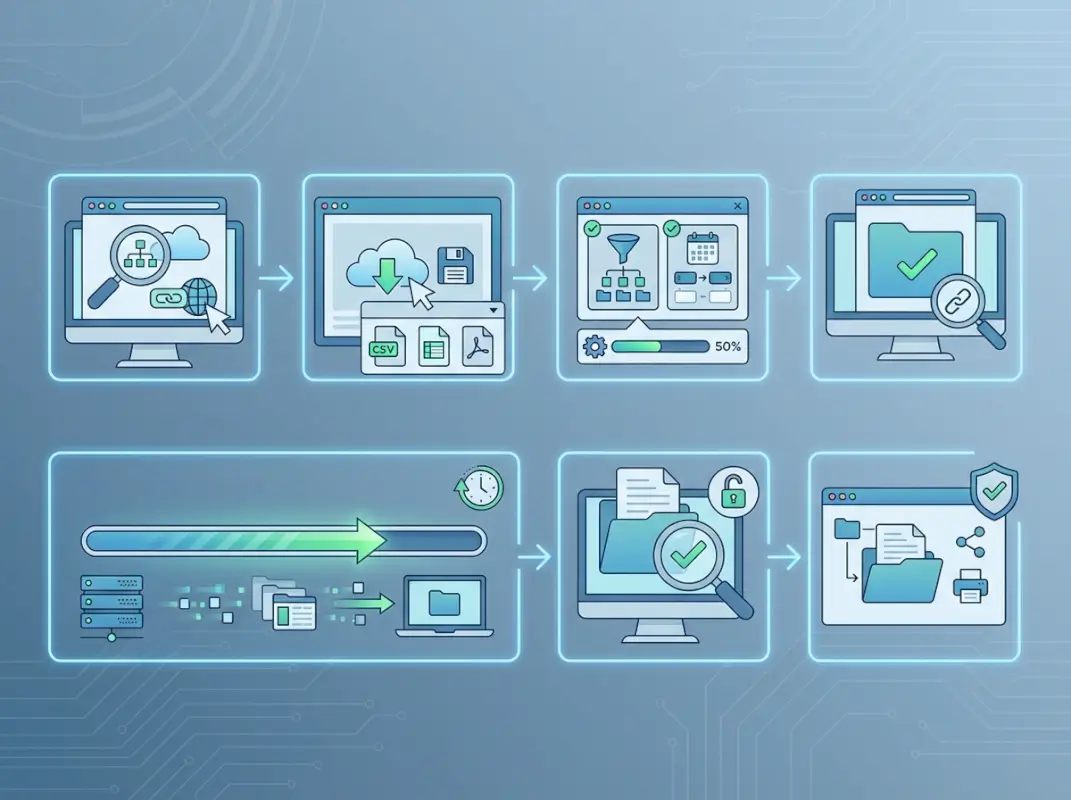
The catch is access control. Many directories gate exports behind paid tiers, verified membership, or admin privileges. A free public user might see listings but lack the “Export All” option, while premium subscribers get one-click downloads. If you’re working with a directory you already pay for (think CRM integrations, trade association databases, or enterprise directories), this method is your fastest path to a complete dataset. Even if the export isn’t perfect—maybe it’s paginated in chunks of 1,000 records, or the CSV uses semicolon delimiters instead of commas—you’re still miles ahead of manual methods or scraping from scratch.
Export Formats (CSV, JSON, XLSX, XML)
Different platforms favor different formats based on their technical stack and intended audience. CSV (Comma-Separated Values) is the universal standard: lightweight, human-readable, and compatible with every spreadsheet tool and database on the planet. Use CSV when you need maximum portability and don’t care about preserving complex metadata like nested categories or multi-language fields. JSON (JavaScript Object Notation) is preferred by modern web APIs and developer-focused platforms; it handles nested structures elegantly (e.g., an array of contact numbers per business) and integrates seamlessly into Python, Node.js, or any programming workflow. If the directory serves developers or offers an API-tied export, you’ll likely see JSON as an option.
XLSX (Excel) exports are common on business-oriented directories because they support multiple sheets, cell formatting, and embedded formulas. They’re great if you plan to do pivot analysis or share the data with non-technical stakeholders who live in Excel. Just be aware that XLSX files are binary and slightly less portable than CSV or JSON for scripting purposes. Finally, XML (eXtensible Markup Language) shows up in government datasets, healthcare directories, and legacy enterprise systems. It’s verbose and harder to read than JSON, but it’s still machine-parseable and useful if the directory adheres to a specific schema standard (like NIEM for public safety records or HL7 for medical directories).
How to Locate Export Options (Account Settings, Admin Dashboards, API-Tied Exports)
Export buttons rarely announce themselves with flashing neon signs. Start by logging into your account (if the directory requires one) and heading to your profile or account settings page. Look for sections labeled “Data Export,” “Download,” “Backup,” or “Tools.” On platforms like Angie’s List or professional directories, the export feature might live under a “Reports” tab or inside a bulk-actions menu when you select multiple listings. If you manage the directory (e.g., you’re an admin of a chamber of commerce member portal), check the admin dashboard for “Export Members” or “Generate CSV” options—these are often segregated from the public-facing interface.
For directories with official APIs, the export might be API-driven rather than a GUI button. You’d visit the API documentation (usually at example.com/api or example.com/developers), find the endpoint that lists all records (often /api/v1/listings or similar), and authenticate with an API key or OAuth token. The response is typically JSON, which you can save as a file or pipe into a script. Some platforms blend both approaches: a GUI export that triggers an API call under the hood, delivering a download link via email once the export job completes. If you’re stuck, try searching the platform’s help docs for keywords like “export,” “download,” “CSV,” or “bulk data”—or reach out to their support team; they’re usually happy to point paying customers to export features.
Handling Large Exports (Pagination, Rate Limits, Incremental Exports)
Even when a directory offers exports, size constraints can complicate things. A platform with 100,000 records might cap each export at 10,000 rows to prevent server overload, forcing you to run multiple exports with different filters or date ranges. This is called pagination in the API world or “batch exports” in GUI terms. The workflow becomes: export records 1–10,000, then 10,001–20,000, and so on, finally merging all CSV files into one master dataset. Tools like csvkit (command-line) or Python’s pandas library make merging painless, but you need to plan for it upfront.
Rate limits are another wrinkle. If the export runs through an API, you might hit a cap of, say, 100 requests per hour or 10,000 records per day. Exceeding that threshold triggers HTTP 429 errors (“Too Many Requests”) or temporary IP bans. The solution: throttle your requests. If you’re scripting the export, insert delays (e.g., wait 1 second between API calls) and respect the Retry-After header if you get rate-limited. For GUI exports, you may need to wait between downloads—annoying but necessary to stay compliant with the platform’s terms. Incremental exports are a smarter long-term strategy: instead of re-downloading the entire directory monthly, configure an export that pulls only new or updated records since your last sync (often filterable by “modified_since” timestamp in APIs). This reduces data volume, speeds up processing, and keeps your local copy fresh without redundant work.
Method 3 — Web Scraping Tools (No-Code / Low-Code)
When a directory lacks export buttons and manual copy-paste feels like digital archaeology, web scraping tools bridge the gap. Modern no-code and low-code scrapers have democratized data extraction, you don’t need to be a Python wizard to pull thousands of records from a complex directory. These tools work by letting you point and click on webpage elements (like business names, addresses, phone numbers) to teach the scraper what data to grab, then they crawl through multiple pages automatically, extracting the same pattern on each one. Think of it as recording a macro that runs across the entire directory instead of repeating your manual clicks ad nauseam.
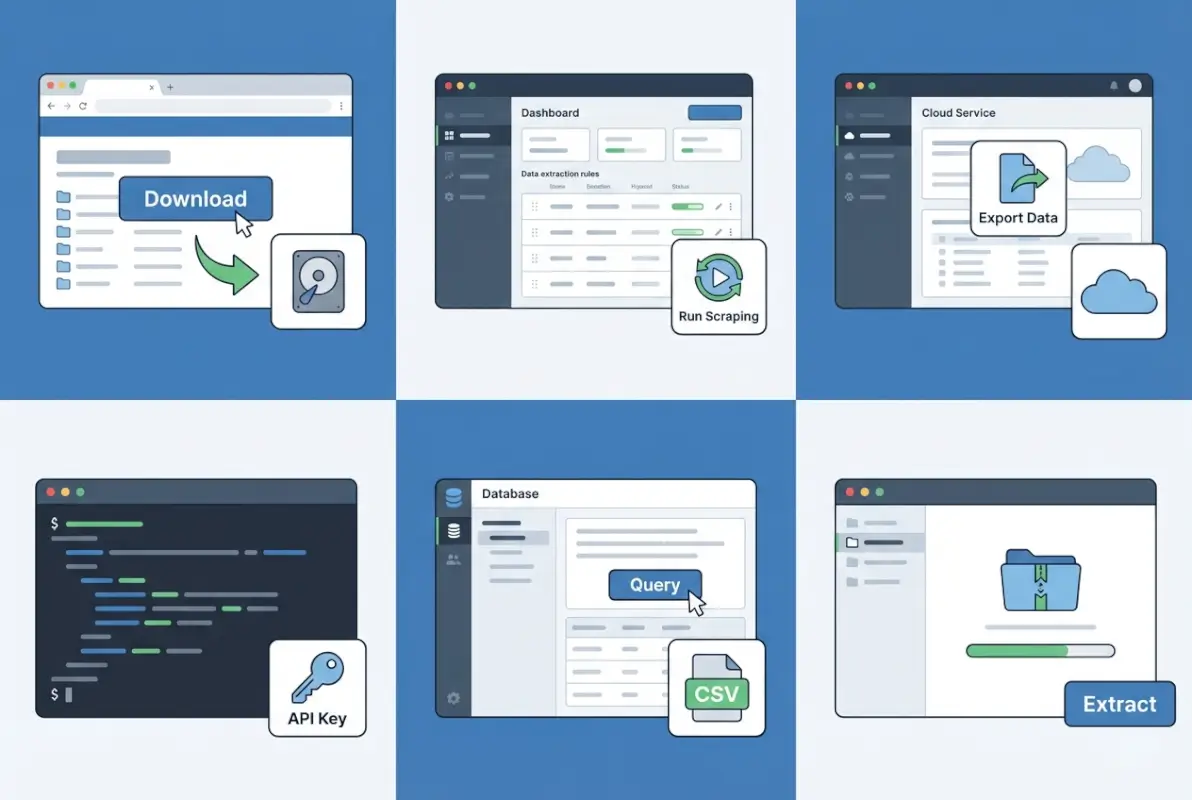
Popular options in this space include browser extensions like Web Scraper (Chrome), point-and-click platforms like Octoparse and ParseHub, and cloud-based services that handle JavaScript rendering and CAPTCHA challenges for you. The learning curve is measured in hours rather than weeks, making them accessible to marketers, researchers, and small business owners who need data but don’t have engineering teams on standby. That said, scraping is a double-edged sword: it’s powerful and flexible, but it also raises legal and ethical questions we’ll tackle in detail below.
Popular No-Code / Low-Code Scrapers (Point-and-Click Extractors)
The no-code scraper market has matured significantly in recent years, offering robust feature sets without requiring you to write a single line of code. Web Scraper (Chrome extension) is a favorite for lightweight projects; you define selectors (CSS or XPath) by clicking on elements, configure pagination rules, and export to CSV or JSON. It runs inside your browser, so it inherits your login sessions (handy for directories behind authentication) and handles JavaScript-rendered content automatically. The free tier is generous, though cloud-based scheduling and API access require a paid plan.
Octoparse targets mid-sized projects with its desktop client and cloud scrapers. It offers templates for popular sites (Amazon, LinkedIn, etc.), though custom directories require manual setup. The visual workflow builder lets you configure loops, conditionals, and data cleaning steps in a drag-and-drop interface—think of it as a flowchart for your scraping logic. ParseHub competes on similar turf, with a strong emphasis on handling AJAX and infinite scroll. Its free plan allows up to five scraping projects, making it ideal for testing before committing to a subscription.
For enterprise needs, Apify and Scrapy Cloud (built on the Scrapy framework) offer hybrid low-code/code-optional platforms. You can start with pre-built actors (Apify’s term for scraper templates) and customize them with JavaScript or Python if needed. These platforms excel at scale—think millions of records, rotating proxies, and CAPTCHA-solving integrations—but they assume a bit more technical comfort than pure no-code tools. The right choice depends on your directory’s complexity and your tolerance for configuration tweaks versus coding.
Setting Up Careful Scraping: Selectors, Delays, and Politeness
A scraper is only as good as its selectors—the patterns it uses to identify data on the page. Most tools let you pick elements visually, clicking on a business name to auto-generate a CSS selector like .listing-title or div.business-card h2. Always test your selectors on multiple listings to ensure they’re robust; if the directory uses inconsistent class names or IDs, a selector that works on page one might fail on page ten. XPath selectors offer more precision (e.g., //h2[@class='name']/text()) but have a steeper learning curve. Whichever you choose, validate the extracted data row-by-row in a sample export before unleashing the scraper across thousands of pages.
Delays are your scraper’s manners card. Hammering a directory with 100 requests per second screams “bot” and will get you blocked faster than you can say “rate limit.” Configure random delays between page loads—typically 1–3 seconds for small directories, 5–10 seconds for larger or more restrictive ones. Some tools call this “throttling” or “wait time”; use it generously. Politeness also means respecting the site’s robots.txt file (a plain-text file at example.com/robots.txt that specifies which paths bots can crawl). While not legally binding in most jurisdictions, ignoring robots.txt can violate the Computer Fraud and Abuse Act in the U.S. or similar laws elsewhere if combined with circumventing access controls.
Compliance and Anti-Scraping Considerations
Web scraping occupies a legal gray zone in many countries. In the U.S., the landmark hiQ Labs v. LinkedIn case (2022) affirmed that scraping publicly accessible data doesn’t violate the Computer Fraud and Abuse Act, but that ruling doesn’t give you carte blanche to ignore terms of service or circumvent technical barriers like CAPTCHAs or login walls. Europe’s GDPR adds another layer: scraping personal data (names, emails, phone numbers) from EU residents without a lawful basis (consent, legitimate interest, etc.) can trigger hefty fines. The safest path is to scrape only publicly available, non-personal data (business names, addresses, categories) or anonymize/aggregate personal fields immediately.
On the technical side, many directories deploy anti-scraping defenses: CAPTCHAs, IP rate limiting, fingerprinting (tracking mouse movements, browser headers), and honeypot traps (invisible links that only bots click). Sophisticated scrapers counter with rotating residential proxies, headless browsers that mimic human behavior, and CAPTCHA-solving services (2Captcha, Anti-Captcha). While these workarounds are technically feasible, they often violate the directory’s terms and escalate the ethical stakes. A pragmatic middle ground: scrape at modest speeds, use a single IP (or a small pool), and avoid aggressive evasion tactics. If the directory blocks you despite polite behavior, that’s a signal to explore official channels—API access, data partnerships, or licensed datasets from aggregators who’ve already negotiated the legal groundwork.
Keep detailed logs of your scraping activity (URLs visited, timestamps, selectors used) in case you need to demonstrate good faith or troubleshoot issues later. And always, always review the directory’s privacy policy: if it explicitly states “data not for commercial use” or “scraping prohibited,” you’re on thin ice regardless of technical feasibility. When compliance is mission-critical (e.g., using directory data for regulated industries like finance or healthcare), consult legal counsel before proceeding. The OWASP Foundation offers useful resources on ethical web scraping practices if you want to dive deeper.
Method 4 — API Access and Data Feeds
Application programming interfaces (APIs) and structured data feeds represent the gold standard for downloading directory data programmatically. When a directory platform offers an official API, you gain access to clean, machine-readable data with predictable schemas and built-in update mechanisms. This method is ideal for medium to large directories where you need regular updates, high data quality, and formal terms of service that permit commercial use.
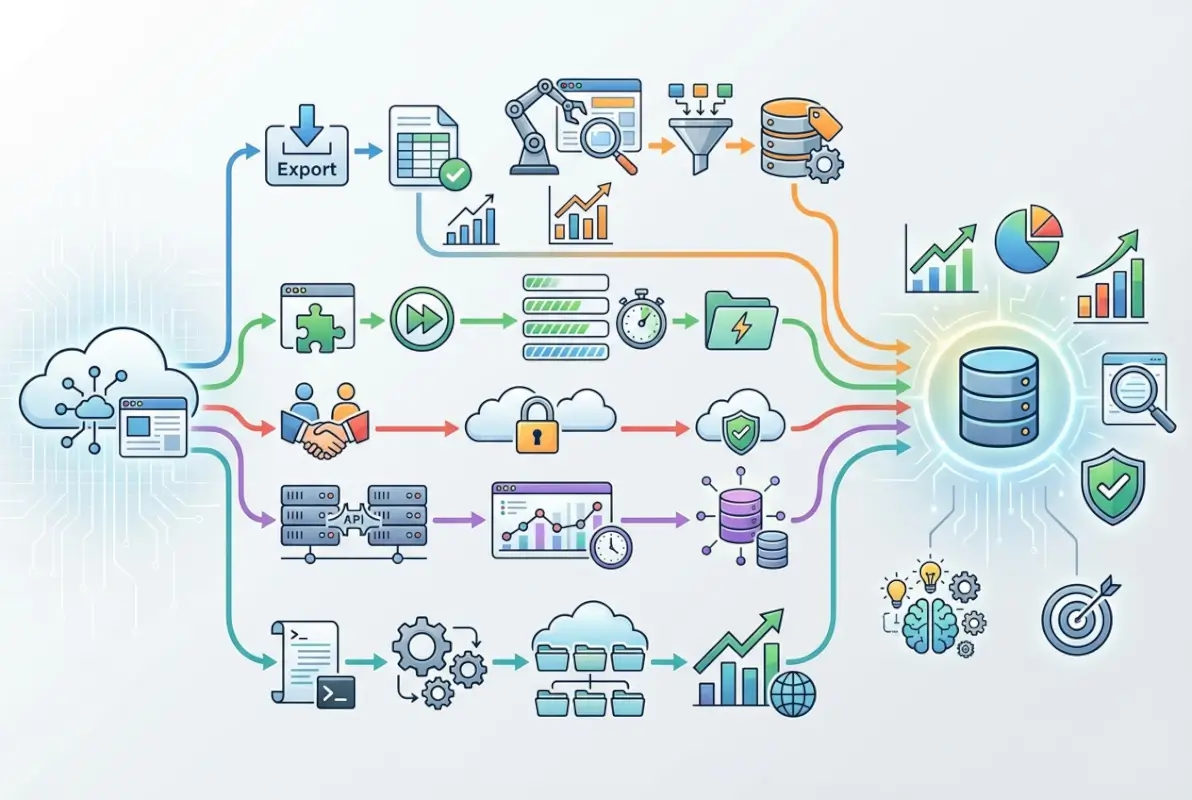
The first step is determining whether the directory offers a public API or requires an application process. Many business directories, government data portals, and industry platforms publish API documentation openly. Look for links labeled “Developer,” “API,” “Data Access,” or “For Developers” in the site footer or account settings. Government directories often publish APIs under open data initiatives; for example, the U.S. federal portal at api.data.gov aggregates machine-readable endpoints across dozens of agencies. Once you locate the documentation, note any rate limits, authentication requirements, and supported data formats (typically JSON or CSV).
When Directories Offer Official APIs or Data Feeds
Official APIs provide several advantages over scraping or manual methods. They deliver data in a consistent schema, often with versioning to track changes over time. Fields are clearly labeled and types are documented (strings, integers, dates, geocoordinates), reducing post-download cleanup. APIs also respect the platform’s infrastructure: rate limits and pagination controls distribute load and prevent overload. Many directories include metadata in API responses—timestamps, source IDs, and change flags—that simplify incremental updates and version control.
Common scenarios where APIs excel:
- Government and civic directories: Public sector portals (business registries, health inspections, permits) often publish open APIs under freedom-of-information mandates.
- Industry platforms: Trade associations and chambers of commerce sometimes offer member-directory APIs with permission-based access.
- Enterprise SaaS directories: CRM platforms, marketing databases, and lead-generation services frequently expose API endpoints to paying subscribers.
- Geospatial and mapping directories: Location-based services (points of interest, business listings) typically use APIs to enable real-time lookups and updates.
If the directory does not advertise an API, check whether it offers RSS/Atom feeds, sitemaps with structured data, or data-dump archives. These alternatives can serve as quasi-APIs for batch downloads.
Authentication, Rate Limits, and Data Formats (JSON, CSV)
Most APIs require authentication to track usage and enforce quotas. The two most common schemes are:
| Authentication Type | How It Works | When to Use |
|---|---|---|
| API Key | You register an application and receive a unique alphanumeric key that you pass in headers or query strings with each request. | Public or low-security APIs; simple read-only endpoints. |
| OAuth 2.0 | You authenticate on behalf of a user or application, receiving a short-lived access token that you refresh periodically. | User-scoped data, enterprise APIs, platforms requiring fine-grained permissions. |
Always store credentials securely (environment variables, secret managers) and never commit them to version control. Review the API’s rate limits—typically expressed as requests per minute or requests per day. Exceeding these limits may result in temporary bans or throttled responses. Design your scripts to respect limits: introduce delays between requests, handle 429 “Too Many Requests” responses gracefully with exponential backoff, and cache responses when appropriate.
Most modern APIs return data in JSON format, which is lightweight, human-readable, and easy to parse in any programming language. A typical JSON response for a directory listing might look like:
{
  "listings": [
    {
      "id": "12345",
      "name": "Acme Hardware",
      "address": "123 Main St, Springfield, IL 62701",
      "phone": "+1-217-555-0199",
      "category": "Hardware Store",
      "latitude": 39.7817,
      "longitude": -89.6501,
      "updated_at": "2025-03-15T08:30:00Z"
    }
  ],
  "pagination": {
    "next_page": 2,
    "total_pages": 50
  }
}
Some APIs also support CSV output for direct import into spreadsheets. If both formats are available, choose JSON for programmatic workflows (scripts, pipelines) and CSV for quick one-off analysis in Excel or Google Sheets.
Example Workflows: Pull-and-Update Pipelines, Incremental Syncing
Once authenticated, you can build repeatable workflows that fetch directory data on a schedule and integrate it into your systems. Here are two common patterns:
Pattern 1: Full Refresh
Download the entire directory each time (useful for small to medium datasets or when change tracking is unavailable). Store each snapshot with a timestamp, compare against the previous version, and flag new, updated, or deleted records. This approach is simple but may waste bandwidth and processing if the directory is large and changes infrequently.
Pattern 2: Incremental Sync
Many APIs support filtering by update timestamp (e.g., updated_since=2025-03-01). On your first run, download all records and note the latest updated_at value. On subsequent runs, request only records updated after that timestamp. Merge the delta into your local copy, updating existing records and adding new ones. This pattern minimizes data transfer and processing time, making it ideal for large directories with frequent updates.
A typical pull-and-update script might run daily via cron or a scheduler (Windows Task Scheduler, cloud functions). Pseudocode for an incremental sync looks like:
last_sync = read_last_sync_timestamp()
response = api.get("/listings", params={"updated_since": last_sync})
for record in response["listings"]:
    upsert_into_database(record)
write_last_sync_timestamp(response["max_updated_at"])
Always log each run (timestamp, record counts, errors) and set up alerts for failures or anomalies (sudden drop in record count, API downtime). This ensures you catch issues early and maintain data continuity.
Method 5 — Crawlers, Download Managers, and Batch Grabbers
When a directory lacks an official API or export feature but spans dozens or hundreds of pages, automated crawlers and download managers become practical tools for batch harvesting. These utilities navigate page links, download HTML, and optionally extract data—all without manual intervention. This method sits between point-and-click scraping (Method 3) and full API access (Method 4), offering flexibility for mid-size directories and repeatable workflows.

Crawlers work by following hyperlinks: you provide a starting URL (the directory’s index page), and the crawler discovers and downloads linked pages up to a specified depth. Download managers extend this by handling concurrency, retries, and deduplication. Both tools respect robots.txt by default (though this can be overridden) and can be configured to introduce polite delays between requests. For directories organized as paginated lists or hierarchical categories, crawlers efficiently collect all pages without manual clicks.
Using Download Managers for Multi-Page Harvesting
Download managers—originally designed for bulk file downloads—can harvest directory pages when configured correctly. Popular open-source and commercial options include:
- Wget: Command-line tool available on Linux, macOS, and Windows. Supports recursive downloads, rate limiting, and user-agent customization.
- cURL: Another command-line staple, often used in scripts to fetch individual pages or API endpoints in a loop.
- HTTrack: GUI-based website copier that mirrors entire sites locally, preserving directory structure and links.
- Scrapy: Python framework for building custom crawlers with fine-grained control over navigation, parsing, and data export.
For a simple directory harvest with Wget, you might run:
wget --recursive --level=2 --wait=2 --limit-rate=200k \
     --user-agent="MyBot/1.0 (+http://example.com/bot.html)" \
     --accept-regex="/directory/category/" \
     https://example.com/directory/
This command crawls up to two levels deep, waits two seconds between requests, limits bandwidth to 200 KB/s, and only downloads pages matching the category URL pattern. Always set a descriptive user-agent so site administrators can contact you if needed.
After downloading pages, you can parse the HTML locally using the same selectors and extraction logic described in Method 3. Because the files are now on disk, you can experiment with different parsing strategies without hitting the live site repeatedly.
Managing Redirects, Errors, and Deduplication
Real-world crawling encounters many edge cases:
| Challenge | Solution |
|---|---|
| Redirects (301, 302) | Follow redirects automatically (most tools do by default) and log final URLs to detect canonical pages. |
| HTTP errors (404, 500) | Retry 5xx errors with exponential backoff; skip 404s but log them for investigation. |
| Duplicate URLs | Normalize URLs (remove tracking parameters, fragments) and maintain a visited set to avoid re-downloading. |
| Infinite loops (calendar pages, session IDs) | Set a maximum crawl depth and use URL pattern filters to exclude non-directory pages. |
| Rate limiting by the server | Detect 429 responses or sudden slowdowns; increase inter-request delay or pause the crawl temporarily. |
URL deduplication is critical: many directories generate multiple URLs for the same listing (e.g., /listing?id=123 and /listing/123/acme-hardware). Normalize URLs by stripping query parameters unless they affect content, and use canonical link tags when present. Store a hash of page content to detect true duplicates even when URLs differ.
Monitor your crawler’s progress with logs that capture timestamp, URL, status code, and response size. If error rates spike or the crawler stalls, investigate anti-bot measures (see next subsection).
Scripting Approaches for Repeatable Downloads
For directories that update regularly, scripting turns a one-time crawl into a repeatable pipeline. A basic Python script using the Requests library and BeautifulSoup might look like:
import requests
from bs4 import BeautifulSoup
import time

base_url = "https://example.com/directory"
visited = set()

def crawl_page(url):
    if url in visited:
        return
    visited.add(url)
    response = requests.get(url, headers={"User-Agent": "MyBot/1.0"})
    if response.status_code != 200:
        return
    soup = BeautifulSoup(response.text, "html.parser")
    # Extract data here
    for link in soup.select("a.next-page"):
        next_url = link["href"]
        time.sleep(2)  # Polite delay
        crawl_page(next_url)

crawl_page(base_url)
For larger projects, consider frameworks like Scrapy, which handle concurrency, retries, and middleware (user-agent rotation, proxy support) out of the box. Scrapy spiders define start URLs, parse methods, and item pipelines that export data to CSV, JSON, or databases. A minimal Scrapy spider skeleton:
import scrapy

class DirectorySpider(scrapy.Spider):
    name = "directory"
    start_urls = ["https://example.com/directory"]

    def parse(self, response):
        for listing in response.css("div.listing"):
            yield {
                "name": listing.css("h2::text").get(),
                "address": listing.css("span.address::text").get(),
            }
        next_page = response.css("a.next::attr(href)").get()
        if next_page:
            yield response.follow(next_page, self.parse)
Run the spider with scrapy crawl directory -o listings.json to export all extracted items to a JSON file. Scrapy’s settings allow you to configure download delays, concurrent requests, and auto-throttling to adapt to server responsiveness.
⚠️ Anti-Bot Defenses
Many directories deploy anti-scraping measures: CAPTCHAs, JavaScript challenges (Cloudflare, PerimeterX), IP-based rate limits, and fingerprinting. If your crawler is blocked, first verify you are complying with robots.txt and terms of service. If blocking persists despite polite behavior, consider requesting official API access or exploring Method 6 (outsourcing). Aggressive circumvention (rotating proxies, headless browsers with evasion scripts) may violate terms and legal boundaries.
Method 6 — Outsourcing or Third-Party Data Aggregators
Sometimes the most efficient path to a clean, compliant directory dataset is to purchase or license it from a specialized data vendor. Third-party aggregators invest in infrastructure, legal agreements, and quality assurance to compile directories from multiple sources, deduplicate records, and enrich fields with additional metadata. This method trades upfront cost for speed, legal clarity, and data quality—ideal when internal resources are limited or when licensing is complex.
When to Consider a Data Service or Custom Aggregation
Outsourcing makes sense in several scenarios:
- Comprehensive coverage: You need a national or global directory that aggregates data from dozens of sources (government registries, industry lists, web directories). Building this in-house would require months of integration work.
- Legal clarity: The target directory’s terms prohibit scraping or downloading, but a licensed vendor has negotiated redistribution rights.
- Time constraints: You need the data within days, not weeks, and lack the expertise to build scrapers or API clients.
- Enriched data: Vendors often append firmographic data (employee count, revenue estimates), technographic signals (website platform, contact software), or intent signals that raw directories lack.
- Ongoing updates: You require monthly or weekly refreshes, and the vendor maintains pipelines to detect changes and deliver deltas automatically.
Common providers include business-intelligence platforms (Dun & Bradstreet, ZoomInfo, Clearbit), local-business aggregators (Factual, Foursquare Places), and niche data brokers serving specific industries (healthcare, legal, education). Open-data initiatives and government portals sometimes partner with aggregators to distribute curated datasets under permissive licenses.
Evaluating Data Quality, Licensing, and Cost
Not all data vendors are equal. Before committing, evaluate these dimensions:
| Dimension | What to Check |
|---|---|
| Accuracy | Request a sample dataset and verify a random subset of records against known sources. Look for error rates below 5% for critical fields (phone, address). |
| Freshness | Ask how often the vendor updates their data. Monthly is standard; weekly or real-time is premium. |
| Coverage | Confirm geographic scope (national, regional, global) and completeness (percentage of target population included). |
| Licensing | Review permitted uses (internal analytics, marketing, redistribution). Some licenses prohibit resale or public display. |
| Pricing | Compare per-record, subscription, or enterprise pricing. Factor in update frequency and support costs. |
| Support & SLAs | Check for documented service-level agreements (uptime, response times) and technical support channels. |
Licensing terms vary widely. Some vendors offer perpetual licenses (one-time purchase, use forever) while others require annual renewals. Enterprise agreements may bundle data with analytics tools, CRM integrations, or API access. Always clarify whether you can store the data indefinitely, share it with partners, or merge it with other datasets.
Cost structures typically fall into three buckets:
- Per-record or per-field: Pay a small fee (cents to dollars) for each listing or enriched field. Economical for small projects but expensive at scale.
- Subscription: Monthly or annual fee for unlimited access to a defined dataset (e.g., all businesses in a state). Predictable budgeting and good for ongoing needs.
- Enterprise custom: Negotiate a tailored package with guaranteed freshness, custom enrichment, and dedicated support. High upfront cost but maximizes quality and compliance.
Examples of Typical Deliverables (Cleaned Datasets, Metadata, Provenance)
When you engage a data vendor, expect deliverables that go beyond raw scrapes:
- Cleaned and normalized records: Standardized addresses (USPS or international postal formats), validated emails and phone numbers, deduplicated entries.
- Enrichment fields: Industry codes (NAICS, SIC), geocoordinates, website technologies, social media profiles, employee counts, revenue bands.
- Metadata and provenance: Source attribution (which directories contributed each record), last-verified timestamps, confidence scores for each field.
- Change logs: Delta files showing new, updated, and deleted records since the last delivery, enabling efficient incremental updates.
- Documentation: Data dictionaries describing each field, sample queries, and integration guides for popular CRM and analytics platforms.
Premium vendors also provide match-and-append services: you supply a list of companies or addresses, and they return enriched records with additional fields. This is particularly useful when you have partial data and need to fill gaps.
Before finalizing a contract, run a pilot with a small subset of data. Load it into your systems, test integrations, and measure the impact on your workflows. If the quality and fit are strong, scale up; if not, negotiate adjustments or explore alternative vendors.
Methodology and Best Practices for All Methods
Regardless of which method you choose—manual copy-paste, export features, scraping, APIs, crawlers, or outsourcing—certain best practices apply universally. This section consolidates legal, technical, and operational guidance to ensure your directory downloads are compliant, high-quality, and maintainable over time.
Legal, Privacy, and Terms-of-Use Considerations
Downloading directory data without permission can expose you to legal risk, even when the data is publicly visible. Always begin by reviewing the directory’s terms of service (ToS) or terms of use. Look for clauses that explicitly permit or prohibit automated access, bulk downloads, or commercial reuse. If the ToS is silent or ambiguous, contact the directory owner to request clarification or formal permission.
Key legal and ethical checkpoints:
- Robots.txt compliance: Check
https://example.com/robots.txtto see which paths are disallowed for automated agents. Respect these rules unless you have explicit written permission to override them. - Copyright and database rights: In the EU and some other jurisdictions, databases enjoy sui generis protection. Extracting substantial portions may require a license, even if individual facts are not copyrightable.
- Personal data and privacy: If the directory includes personal information (names, emails, phone numbers of individuals), ensure your use complies with GDPR (EU), CCPA (California), or other privacy laws. Obtain consent if required, and implement data-minimization and security measures.
- Computer Fraud and Abuse Act (CFAA) in the U.S.: Unauthorized access to computer systems—including scraping past technical barriers or ignoring ToS—can trigger civil or criminal liability under the CFAA. Recent case law (hiQ Labs v. LinkedIn) has narrowed some interpretations, but risk remains.
- Attribution and provenance: When permitted to use directory data, cite the original source and respect any attribution requirements (e.g., “Data sourced from Example Directory, licensed under CC BY 4.0”).
If you are unsure, consult legal counsel before proceeding. The cost of a brief legal review is far lower than the cost of litigation or reputational damage.
Data Quality Checks: Deduplication, Normalization, and Validation
Raw directory exports often contain errors, duplicates, and inconsistent formatting. Implement these quality checks immediately after download:
| Check | How to Perform |
|---|---|
| Deduplication | Identify duplicates by exact match on key fields (name + address) or fuzzy match (Levenshtein distance, phonetic algorithms). Remove or merge duplicates, keeping the most complete record. |
| Address normalization | Use postal-authority APIs (USPS Address Validation, Google Maps Geocoding) to standardize addresses and append geocoordinates. |
| Phone validation | Parse phone numbers into E.164 international format using libraries like libphonenumber. Flag invalid numbers. |
| Email verification | Check syntax with regex, verify domain MX records, and optionally use third-party validation services to detect disposable or invalid addresses. |
| Completeness | Calculate the percentage of records with non-null values for critical fields. Flag records missing required fields (e.g., name, address). |
| Outlier detection | Identify anomalies (e.g., phone numbers with too many digits, addresses outside expected geographies) and review for data-entry errors. |