5 Methods to Extract Emails from an Online Directory for Outreach
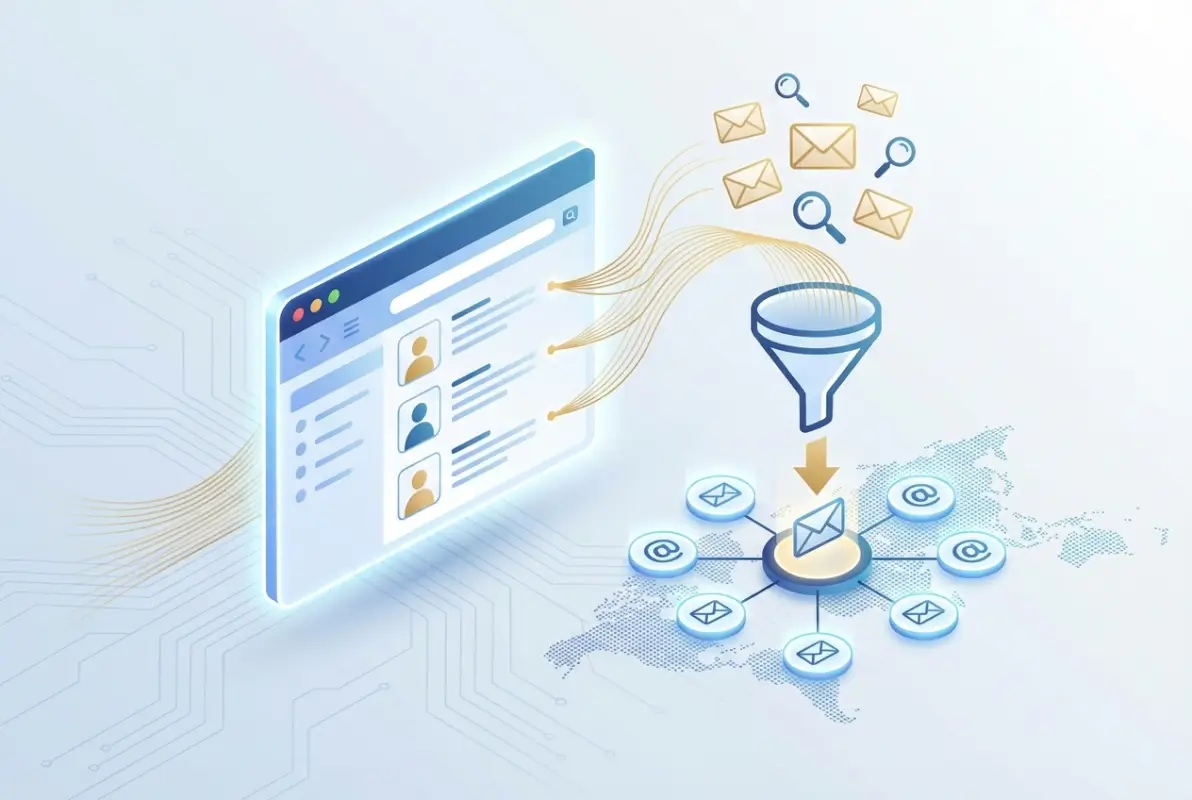
TL;DR – Quick Takeaways
- Legal compliance is non-negotiable – CAN-SPAM and privacy laws require explicit consent, clear sender identity, and easy opt-out mechanisms
- Permission-based methods win – Opt-in list building dramatically outperforms scraping for deliverability and engagement
- Verification is your safety net – Email validation tools reduce bounce rates and protect sender reputation
- Authentication matters more than ever – DKIM, DMARC, and SPF alignment are critical for inbox placement in 2024 and beyond
- Shortcuts damage long-term success – Non-consensual email extraction harms deliverability, sender reputation, and can trigger legal penalties
Here’s something most email outreach guides won’t tell you upfront: extracting emails from online directories isn’t inherently illegal, but it’s walking a tightrope between legitimate lead generation and regulatory nightmares. The difference between sustainable outreach and spam-folder oblivion often comes down to one word—consent.

I remember when a colleague scraped 10,000 emails from a professional directory thinking they’d struck gold. Three weeks later, their domain was blacklisted, their sender reputation tanked, and they faced a potential CAN-SPAM violation. That expensive lesson crystallized an important truth: the methods you use to extract emails matter just as much as what you do with them afterward.
The landscape for email outreach has shifted dramatically. Global inbox placement hovers around 84% on average, meaning roughly one in six emails never reaches its intended recipient—and that’s with legitimate senders. When you add questionable extraction methods into the mix, those odds get significantly worse. Mailbox providers have tightened authentication requirements, users are more privacy-conscious, and regulators are actively enforcing anti-spam laws.
This guide breaks down five methods for extracting emails from online directories, but with a critical twist: we’re prioritizing approaches that respect consent, maintain deliverability, and keep you on the right side of the law. Whether you’re building a B2B outreach campaign or connecting with potential collaborators, understanding these methods—and their compliance implications—is essential for long-term success.
Method 1: Direct Directory Search with Explicit Opt-In Signals
Not all publicly posted emails carry the same permission signals. The smartest extraction method starts with directories where users have explicitly made their contact information available for professional networking, business inquiries, or collaboration. Think industry association member directories, university faculty pages, or verified business listings that include clear contact-me indicators.

The key differentiator here is context and intent. When a professor lists their email on a university faculty page with “available for research collaboration” or a consultant displays contact details in a professional services directory, they’re signaling openness to relevant outreach. That’s fundamentally different from scraping contact info from a general web page where no such signal exists.
Here’s how to approach this method responsibly: First, identify directories that align with your outreach purpose. If you’re reaching out to higher education professionals, official university directories are far better sources than generic email databases. Look for B2B directories that serve specific industries or professional communities where members expect to receive relevant business communications.
Second, document your collection process meticulously. Note where each email came from, what consent signals were present (visible email with “contact for opportunities” language, for instance), and the date collected. This documentation becomes critical if you ever need to demonstrate compliance with anti-spam regulations.
Third, verify emails immediately after collection. Use syntax checks and MX record validation to ensure addresses are technically valid before adding them to your outreach list. This protects your sender reputation and prevents wasted effort on defunct addresses.
The compliance angle matters tremendously here. Under CAN-SPAM requirements, you must provide truthful sender identification, a clear subject line, and an obvious unsubscribe mechanism in every message. Even if someone’s email is publicly posted, you still need to honor these requirements. The FTC’s CAN-SPAM guidelines make it clear that publicly available contact information doesn’t exempt you from compliance obligations.
Pros of this method include higher quality contacts who are generally more receptive to relevant outreach, lower risk of spam complaints when messages align with the directory’s purpose, and better deliverability compared to mass-scraped lists. You’re working with people who’ve taken the step of listing themselves in a professional context, which is a meaningful consent signal.
The cons? Interpreting “publicly posted” versus “intended for outreach” requires judgment calls, and you’ll encounter outdated contacts or emails that no longer reflect someone’s current position. Directory information often goes stale, particularly in fast-moving industries, so you’ll need ongoing maintenance to keep lists fresh.
One practical reality: even with clear consent signals, deliverability isn’t guaranteed. Industry benchmarks show that permission-based emails still face challenges reaching inboxes, which is why combining directory extraction with strong authentication (DKIM, DMARC, SPF) and careful sender reputation management is essential.
Method 2: Email Discovery via Professional Networking Profiles
Professional networking platforms have created a unique ecosystem where many users explicitly display contact information as part of their professional branding. LinkedIn profiles with visible email addresses, portfolio websites with “hire me” contact forms, and professional bios that include email for business inquiries all represent potential extraction sources—but with significant caveats.
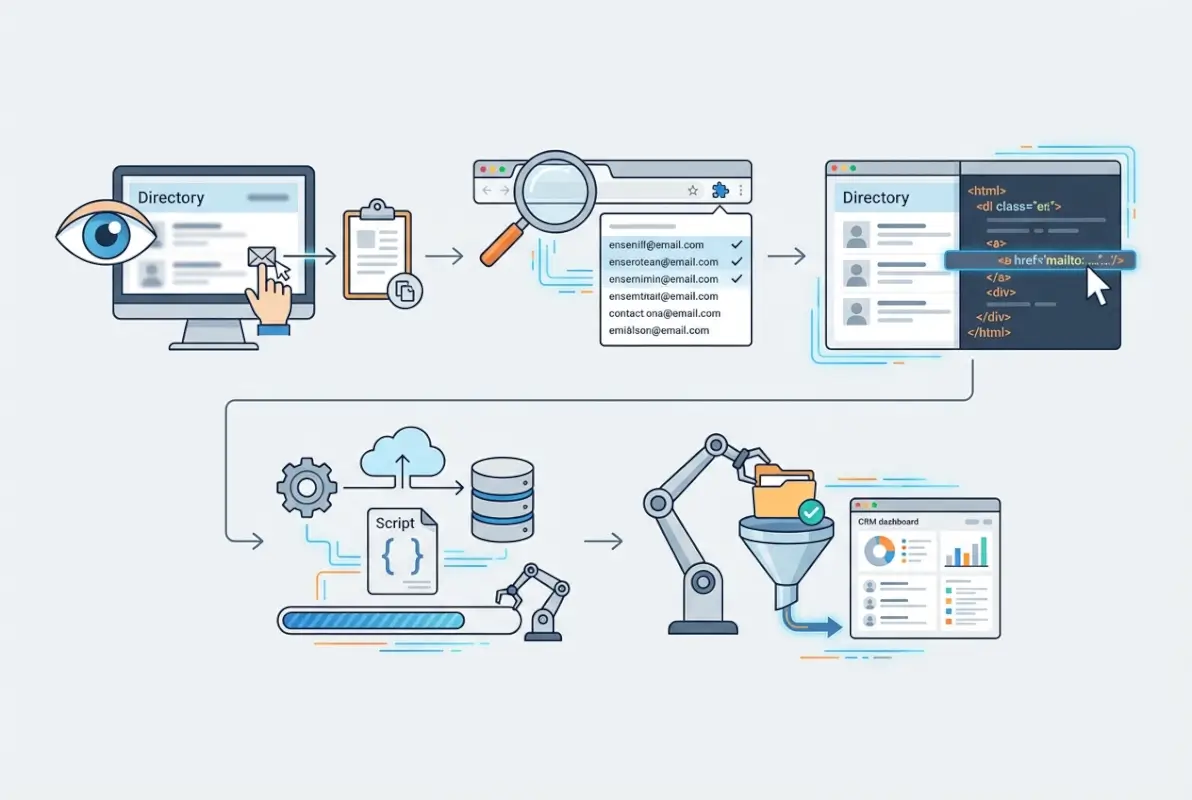
The first major consideration is platform terms of service. Most professional networks explicitly prohibit scraping or automated data collection in their user agreements. Violating these terms can result in account suspension, legal action, or both. Even if you’re manually collecting visible information, you need to understand the boundaries set by the platform you’re using.
When done within permissible boundaries, profile-based email discovery works best when paired with enrichment and verification services. Here’s a responsible workflow: identify professionals whose publicly visible profiles indicate openness to relevant outreach (consultants, freelancers, business owners who list contact details), verify their role and organization fit for your campaign, then use email verification tools to confirm address accuracy before any outreach.
The verification step is critical because profile information often becomes outdated as people change jobs, companies restructure, or professionals update their public presence. A verification service checks deliverability without actually sending a message, protecting your sender reputation from the bounce rates that come with invalid addresses.
Document your consent boundaries carefully. If someone’s profile says “open to consulting opportunities” and you’re offering consulting work, that alignment matters. If their profile says “media inquiries only” and you’re pitching a product, you’re crossing a line that will likely result in spam complaints and damage your deliverability.
The advantage of profile-based discovery is the professional intent that’s often baked into these platforms. People maintain professional profiles specifically to be found for business purposes, which creates a higher baseline receptivity compared to cold outreach from random sources. When your message aligns with their stated interests or professional focus, engagement rates can be substantially higher than generic email blasts.
However, the risks are real. Platform policies create legal exposure if you violate terms of service. Unclear consent can tank deliverability if recipients mark messages as spam. And even well-intentioned outreach can backfire if you misjudge whether someone’s profile signals genuine openness to the type of message you’re sending.
A practical middle ground involves using business directory listings that aggregate professional profiles with explicit opt-in for business contact, rather than scraping individual platform profiles. These curated sources often have clearer permission frameworks and reduce platform policy risks.
Method 3: Email Enrichment Tools with Public Records and Strict Opt-In Framing
Email enrichment services fill a specific gap in lead generation: taking partial information (name and company, for instance) and appending missing contact details from various public and proprietary sources. When used responsibly, these tools can dramatically improve targeting without resorting to broad scraping tactics.
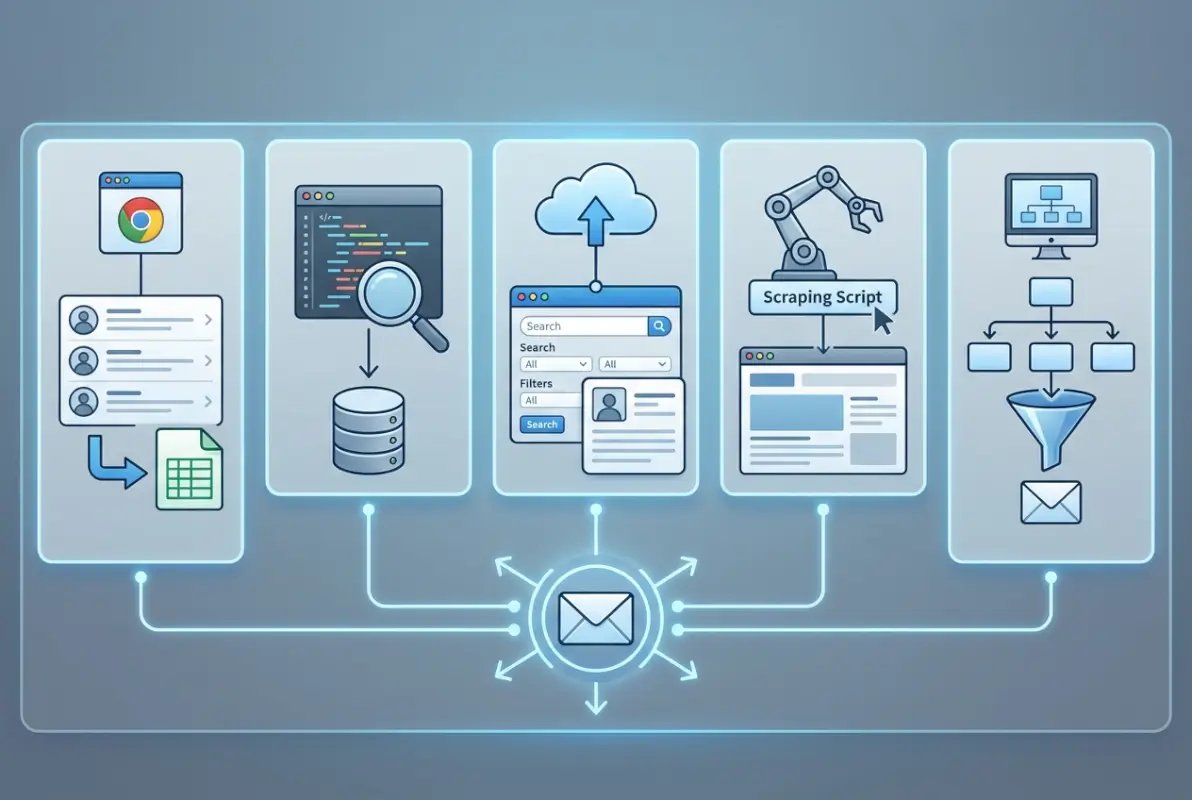
The landscape of enrichment providers varies considerably in data quality, sourcing transparency, and compliance practices. Reputable vendors source from public business records, professional registrations, and opt-in databases while emphasizing data minimization—only appending information that’s legitimately needed and legally permissible for your stated purpose.
Here’s how responsible enrichment works: you start with a base list of people or organizations you’ve identified through legitimate means (event attendees who consented to follow-up, website visitors who downloaded content, contacts referred by existing customers). You then use an enrichment tool to fill in missing fields like job title, direct email, or company size to improve targeting and personalization.
The critical compliance piece is ensuring that your use of enriched data aligns with opt-in expectations or has a legitimate business basis under applicable privacy laws. In practice, this means implementing double opt-in or confirmed permission wherever possible, particularly when the enriched contacts didn’t explicitly provide their information to you initially.
| Enrichment Approach | Compliance Level | Deliverability Risk |
|---|---|---|
| Enriching existing opt-in lists | High (clear consent) | Low |
| Appending public business records | Medium (legitimate interest) | Medium |
| Purchasing enriched cold lists | Low (questionable consent) | High |
One often-overlooked aspect of enrichment is data provenance documentation. You need clear records of where your enriched data originated, what permission basis you’re relying on, and how you’re maintaining compliance with CAN-SPAM and privacy regulations. This isn’t just bureaucratic box-checking—it’s essential protection if you ever face an enforcement inquiry or need to demonstrate compliance to a mailbox provider investigating spam complaints.
The advantages of enrichment tools include the ability to build more complete prospect profiles without manual research, improved personalization that can boost engagement rates, and faster scaling compared to one-by-one contact collection. When you’re working with thousands of contacts, enrichment becomes practically necessary for efficient operations.
But the risks center on overreach and unclear consent. Many enrichment providers aggregate data from sources that don’t necessarily signal permission for commercial outreach. Using enriched data for cold emails without any prior relationship or legitimate business connection substantially increases spam complaint risk and can devastate sender reputation.
When evaluating enrichment vendors, prioritize those that are transparent about data sources, offer clear data retention policies, and actively support compliance with privacy regulations. Ask about their data refresh cycles (stale data kills deliverability), verification processes, and whether they offer consent-signal indicators that help you gauge permission levels for different types of outreach.
Method 4: Email Verification and Validation on Legitimate List-Building
Here’s where we shift from extraction to construction. Rather than pulling emails from external sources, this method focuses on building permission-based lists through your own opt-in mechanisms—then using verification tools to maintain list hygiene and maximize deliverability. It’s slower but dramatically more sustainable than scraping approaches.
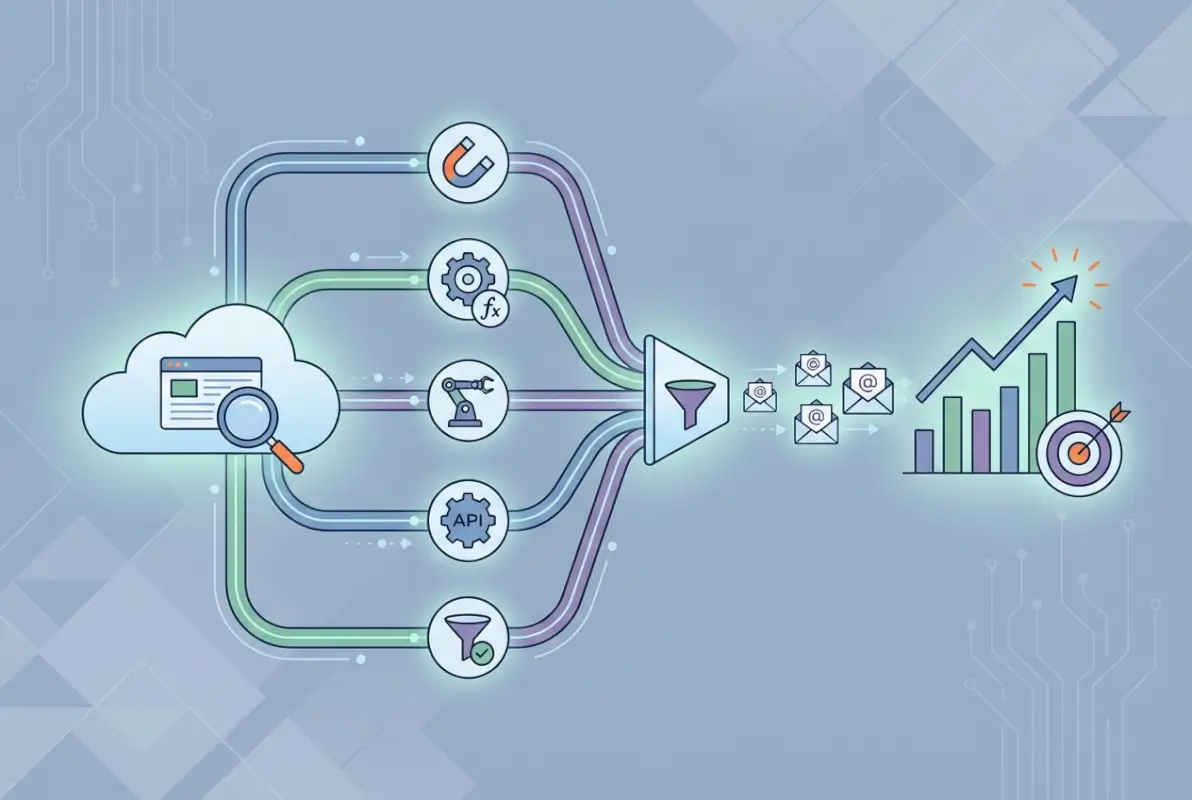
The foundation is creating clear, valuable opt-in paths that give people genuine reasons to share their email addresses. Content downloads (whitepapers, guides, templates), webinar registrations, newsletter subscriptions, free tool access, and event sign-ups all represent legitimate consent-building mechanisms when you’re transparent about how you’ll use the email address.
Double opt-in—requiring new subscribers to confirm their email through a verification link—adds an extra consent layer that significantly reduces list quality issues. Yes, you’ll lose some percentage of sign-ups who don’t complete confirmation, but the subscribers who do confirm are substantially more engaged and less likely to generate spam complaints. For senders concerned about deliverability and reputation, double opt-in is worth the trade-off.
Once you’ve built an opt-in list, verification services become essential maintenance tools. Email verification checks for syntax errors, validates that domains have active mail servers, identifies disposable email addresses, and flags addresses with histories of spam complaints or hard bounces. Running verification before your first send—and periodically thereafter—protects your sender reputation from the damage that invalid addresses inflict.
In my experience, one of the biggest mistakes new email marketers make is neglecting list hygiene. They build a list of 5,000 subscribers over six months, then send a campaign without verification and watch their bounce rate spike to 15%. Mailbox providers see that bounce pattern and downgrade sender reputation, which tanks inbox placement for future campaigns. The verification step isn’t optional—it’s fundamental to sustainable email outreach.
The advantages of this approach are compelling: highest compliance with anti-spam laws because you have explicit consent, better deliverability metrics because recipients expect and want your messages, lower spam complaint rates, and stronger long-term ROI as engaged subscribers become customers and advocates. When you’re working with business directories or professional networks, offering clear value in exchange for contact information builds trust that carries through to conversions.
The downside is speed. Building a quality opt-in list of 10,000 subscribers might take a year or more, depending on your traffic and conversion optimization. That’s painful when competitors are sending to scraped lists of 100,000 addresses. But here’s the reality: their deliverability will crater, their domain reputation will suffer, and they’ll face escalating compliance risks, while your smaller, engaged list generates consistent ROI with minimal regulatory exposure.
Maintaining ongoing permission-based practices requires setting up preference centers where subscribers can manage what they receive, honoring unsubscribe requests immediately (you have 10 business days under CAN-SPAM, but doing it instantly builds trust), and monitoring engagement metrics to identify subscribers who’ve disengaged so you can either re-engage them or remove them from active campaigns.
Method 5: Directory Partnerships and Permission-Based Outreach Campaigns
The most sophisticated extraction method isn’t really extraction at all—it’s partnership. By forming relationships with directory owners, industry associations, or professional communities, you can gain access to contact lists with built-in consent mechanisms that protect both you and the recipients.

Here’s how directory partnerships typically work: an industry association maintains a member directory and offers sponsored outreach opportunities to relevant service providers. Members have explicitly opted in to receive information about industry-related products, services, or opportunities when they joined the association. You partner with the association, craft a message aligned with members’ interests, and the association either sends on your behalf or provides you with a permission-based list segment.
The key differentiator is that consent originates from the directory or association relationship, not from direct interaction with you. This requires careful governance to ensure the partnership agreement clearly specifies permissible use, message frequency limits, and unsubscribe handling. Without these guardrails, even well-intentioned partnerships can generate spam complaints that damage everyone’s reputation.
Establishing these partnerships requires negotiation, formal agreements, and often financial investment (sponsorships, membership fees, or revenue sharing). But the compliance and deliverability benefits can be substantial compared to DIY extraction. You’re tapping into a pre-qualified audience that’s already engaged with the directory or association’s content and has consented to receive relevant communications.
Compliance governance becomes a shared responsibility in these partnerships. You need to ensure that all campaigns include clear sender identification (yours, the directory’s, or both), truthful subject lines, and prominent unsubscribe options. The partnership agreement should specify who handles unsubscribe requests, how quickly they’re processed, and how unsubscribe lists are shared to prevent accidental re-contact.
One practical challenge is aligning your outreach messaging with the directory’s permissible use policies. If you’ve partnered with a professional association that allows members to receive educational content but prohibits aggressive sales pitches, you need to respect that boundary even if it limits your conversion tactics. Violating those boundaries damages the partnership, generates complaints, and can get you blacklisted from future opportunities.
The scalability advantages are significant. A single partnership with a large industry directory might give you access to tens of thousands of relevant contacts with clear permission signals, dramatically accelerating your outreach compared to building an opt-in list contact-by-contact. And because the directory or association has ongoing relationships with members, deliverability tends to be higher than cold outreach from unknown senders.
From a legal standpoint, these partnerships need to comply with CAN-SPAM just like any other commercial email. The FTC actively enforces CAN-SPAM requirements and has brought actions against businesses that misuse directory relationships or fail to honor unsubscribe requests. Clear documentation of consent provenance, partnership terms, and compliance procedures protects you if enforcement questions arise.
Thinking about setting up an online directory yourself? The partnership model works both ways—becoming the directory owner or association gives you direct access to opt-in member lists while creating partnership revenue opportunities with other businesses seeking audience access.
Best Practices for Deliverability and Ethics
Across all five methods, certain foundational practices determine whether your email outreach succeeds or fails. These aren’t optional nice-to-haves, they’re essential infrastructure that protects sender reputation, maximizes inbox placement, and keeps you compliant with increasingly strict anti-spam enforcement.
Start with a permission-first mindset in everything you do. Before adding any email address to your outreach list, ask yourself: does this person expect to hear from me, have they consented (explicitly or implicitly) to receive this type of message, and would they perceive this email as valuable or as spam? If the answers create any doubt, don’t send. The cost of spam complaints and deliverability damage far exceeds the potential benefit of one additional recipient.
Implement double opt-in wherever possible, especially for new subscriber acquisition. The two-step verification process filters out fake addresses, bots, and low-intent sign-ups while creating clear consent documentation that protects you in compliance audits. Yes, you’ll see lower absolute subscriber counts compared to single opt-in, but engagement metrics and deliverability will be substantially better.
Make unsubscribe mechanisms visible, functional, and immediate. CAN-SPAM gives you 10 business days to process opt-out requests, but best practice is to honor them within hours. Every day someone stays on your list after requesting removal increases spam complaint risk. And don’t try to hide unsubscribe links in tiny gray text at the bottom of emails—prominent, easy unsubscribe options actually reduce spam complaints because people will opt out instead of clicking the spam button.
Email verification hygiene should be ongoing, not one-time. Addresses decay over time as people change jobs, companies restructure, or individuals abandon old email accounts. Run verification before every major campaign and consider periodic list cleaning (quarterly for active lists, monthly for high-volume senders) to remove addresses that have become invalid or disengaged.
Authentication technology—DMARC, DKIM, and SPF—has shifted from optional to mandatory for serious email senders. Major mailbox providers now use authentication as a primary signal for inbox placement decisions. Without proper authentication, even legitimate permission-based emails may get filtered to spam simply because providers can’t verify sender identity.
Setting up authentication requires technical configuration but isn’t tremendously complex. SPF records tell receiving servers which IP addresses are authorized to send email for your domain. DKIM adds a digital signature that verifies message integrity. DMARC builds on both to specify how receivers should handle authentication failures. Together, these protocols dramatically improve deliverability and protect your domain from spoofing.
Monitor your sender reputation actively through tools that track IP reputation scores, domain reputation, and blocklist status. Catching reputation issues early—before they cascade into major deliverability problems—gives you time to identify and fix the root cause (invalid addresses, spam complaints, content issues) before damage becomes severe.
Documentation and governance sound bureaucratic, but they’re essential protection in an environment where enforcement is real and penalties can be substantial. Maintain clear records of consent sources, data provenance, partnership agreements, and compliance procedures. If you ever face an FTC inquiry or need to demonstrate compliance to a mailbox provider investigating complaints, these records are your defense.
Consider where you’re sourcing your contact data. If you’re looking at places to buy business directory databases, vendor selection matters enormously. Reputable providers are transparent about sourcing, offer clear consent indicators, and support compliance rather than promising unrealistic results from questionable data.
Frequently Asked Questions
Is it legal to extract emails from online directories for outreach?
Legal frameworks vary by jurisdiction, but in the U.S., CAN-SPAM governs commercial email and requires truthful sender identification and easy opt-out mechanisms regardless of how you obtained addresses. Publicly posted emails don’t exempt you from compliance. Misusing data or ignoring consent can trigger enforcement actions and penalties from the FTC or other regulators.
What is the best practice for email outreach to avoid spam filters?
Use opt-in lists with explicit consent, verify all addresses before sending, authenticate your domain with DKIM/DMARC/SPF, personalize content to increase engagement, and provide a clear unsubscribe option in every message. Deliverability benchmarks show that permission-based approaches with strong authentication perform substantially better than mass-scraped lists.
How can I verify emails without violating privacy rules?
Use reputable email verification services that check technical validity without storing personal data beyond what’s needed for verification. Ensure you have a legitimate basis (consent or legitimate business interest) for contacting recipients before verification. Document your data sources and maintain clear records of permission signals to demonstrate compliance.
What are the risks of scraping emails from directories?
Major risks include violating platform terms of service, triggering privacy law penalties, generating high bounce rates that damage sender reputation, increasing spam complaints that tank deliverability, and facing potential CAN-SPAM enforcement actions. Even when technically possible, scraping without clear consent creates long-term deliverability and legal exposure that outweighs short-term list growth.
Should I rely on DIY scraping or use enrichment and verification tools?
Prefer consent-based enrichment from reputable vendors and focus on opt-in list-building rather than DIY scraping. Professional enrichment tools offer better data quality, built-in compliance features, and verification capabilities that protect sender reputation. Scraping is risky unless clearly within permissible consent-based contexts with strong permission signals.
What is the current state of email deliverability?
Industry benchmarks indicate approximately 84% average inbox placement for legitimate commercial email, meaning roughly one in six messages fails to reach inboxes even with proper practices. Authentication requirements have tightened significantly, with DKIM/DMARC/SPF becoming effectively mandatory for major mailbox providers. Consent-based sending correlates strongly with better deliverability compared to purchased or scraped lists.
Are there regulatory penalties for improper email outreach?
Yes, CAN-SPAM violations can result in penalties up to $51,744 per email for knowing violations. The FTC actively enforces requirements including truthful header information, clear sender identification, honest subject lines, and functional unsubscribe mechanisms. Recent enforcement actions have targeted businesses that ignore opt-out requests or use deceptive practices in commercial email.
How does double opt-in improve list quality?
Double opt-in requires new subscribers to confirm their email address through a verification link, which filters out typos, fake addresses, bots, and low-intent sign-ups. This reduces bounce rates, improves engagement metrics, creates clear consent documentation for compliance purposes, and signals to mailbox providers that your subscribers genuinely want your messages—all of which boost deliverability.
What role does authentication play in modern email delivery?
DMARC, DKIM, and SPF authentication have become critical factors in inbox placement decisions. Major providers use these protocols to verify sender identity and detect spoofing. Without proper authentication, even legitimate permission-based emails may be filtered to spam. Authentication also protects your domain reputation from abuse by preventing unauthorized senders from spoofing your domain.
Can I use publicly posted emails for any type of outreach?
Not necessarily. Context and consent signals matter enormously. An email posted on a professional profile with “media inquiries only” doesn’t imply permission for sales prospecting. Even publicly available contact information requires compliance with CAN-SPAM, including clear sender identity and easy unsubscribe options. Best practice is to align your outreach with the stated purpose or context where the email was posted.
Building Sustainable Email Outreach That Actually Works
The methods we’ve covered represent a spectrum from highest-risk (untargeted scraping) to highest-compliance (opt-in list building and directory partnerships). Your choice of approach will shape not just your immediate campaign results but your long-term sender reputation, deliverability, and legal exposure.
If there’s one insight to take away, it’s this: shortcuts in email extraction create long-term costs that far exceed short-term gains. A scraped list of 50,000 addresses might seem like a goldmine until bounce rates tank your sender reputation, spam complaints get your domain blacklisted, and mailbox providers start filtering everything you send to spam. Meanwhile, a carefully built opt-in list of 5,000 engaged subscribers delivers consistent inbox placement, higher engagement, and sustainable ROI.
The regulatory landscape isn’t getting more permissive—enforcement of CAN-SPAM and privacy laws is increasing, mailbox providers are tightening authentication and consent requirements, and users are more privacy-conscious than ever. Building your outreach infrastructure on consent-based practices isn’t just ethical, it’s practically necessary for long-term viability.
Start by auditing your current email practices. How are you acquiring addresses? Do you have clear consent signals? Is your authentication properly configured? Pick one method from this guide that aligns with your current capabilities and compliance comfort level, then run a small pilot campaign.
Measure deliverability metrics (inbox placement, bounce rates, spam complaints), engagement (open rates, click rates, conversions), and compliance signals (unsubscribe rates, complaint rates). Use those metrics to refine your approach before scaling.
The most successful email outreach combines multiple approaches—building your own opt-in lists for owned audience development, using enrichment tools to improve targeting on permission-based contacts, forming directory partnerships for scalable access to relevant audiences, and maintaining rigorous verification and authentication practices across everything you send.
Don’t treat email extraction as a one-time project. It’s an ongoing system that requires continuous list hygiene, permission management, authentication monitoring, and compliance governance. The investment in doing it right pays dividends in deliverability, engagement, and peace of mind that you’re not building your business on a foundation of regulatory risk.
Start small, start compliant, and scale what works. Your future sender reputation—and your business—will thank you.