How to Launch a Profitable Home-Based Business Directory in 2025: Complete Step-by-Step Guide
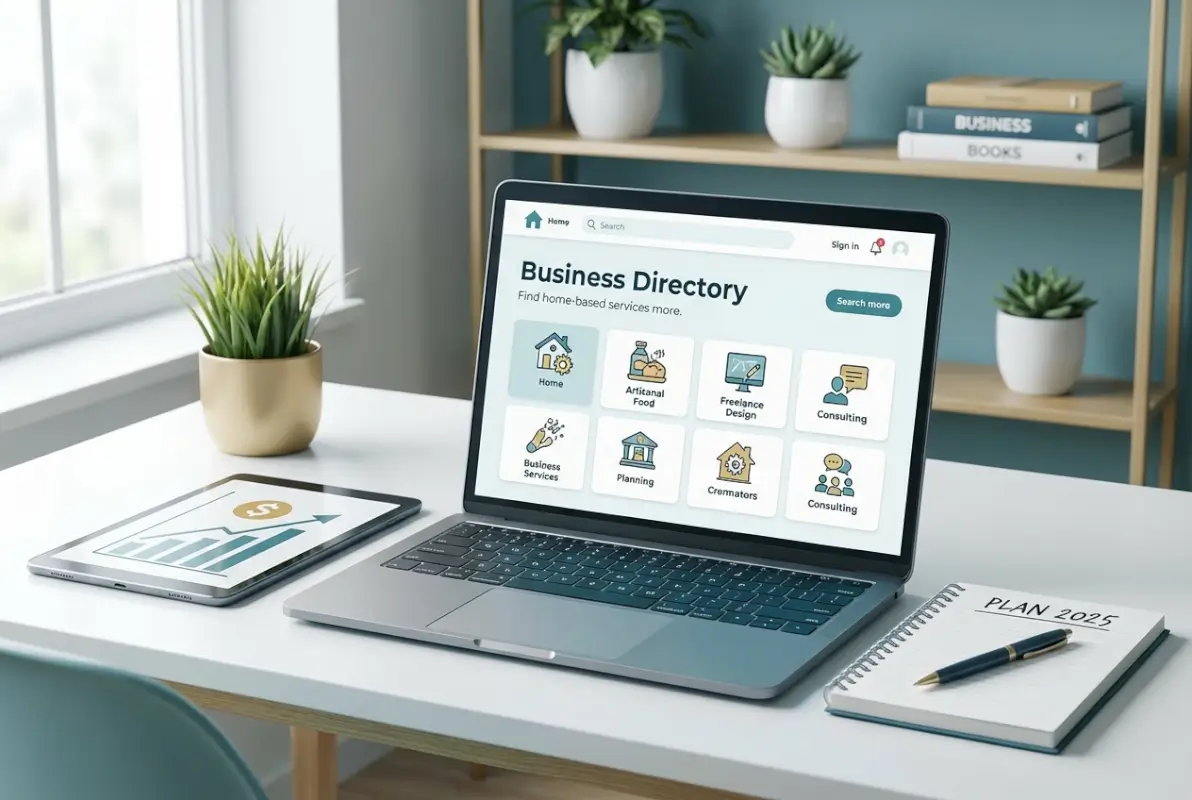
Starting a home-based business directory represents one of the most scalable, low-overhead ventures you can launch from your living room. With over 36.2 million small businesses operating in the United States, the demand for organized, trustworthy directories has never been stronger. What makes this opportunity particularly compelling isn’t just the sheer market size—it’s that most existing directories are outdated, cluttered with bad data, and optimized for a desktop world that no longer exists. The competitive landscape is ripe for disruption by someone willing to build a focused, mobile-first directory that actually serves a specific niche.

Unlike generic business advice that pushes you toward competing with Yelp or Yellow Pages, the real profit lies in specialization. I’ve watched entrepreneurs transform $500 initial investments into $5,000+ monthly revenue streams by targeting underserved markets like accessible vacation rentals, plant-based restaurants, or eco-friendly contractors. The secret? They stopped thinking about directories as databases and started viewing them as community hubs that connect people with exactly what they need.
TL;DR – Quick Takeaways
- Niche specialization beats broad competition – Target specific, underserved markets rather than general business categories
- Multiple revenue streams from day one – Combine subscriptions, featured placements, and advertising for stability
- Mobile-first is non-negotiable – Over 60% of directory searches happen on mobile devices
- Data quality determines success – Regular verification systems build trust and set you apart from outdated competitors
- 6-12 month profitability timeline – Most focused directories reach positive cash flow within their first year
- Leverage existing platforms – WordPress with directory plugins offers the best balance of cost and flexibility
Understanding the Home-Based Business Directory Opportunity
The home based business directory landscape has evolved dramatically over the past few years. According to the U.S. Census Bureau’s small business data, nonemployer businesses (solo operations typically run from home) now represent a significant portion of the entrepreneurial ecosystem. These businesses desperately need visibility but often lack the budget for traditional advertising—creating perfect conditions for affordable directory listing models.
What most people miss is that the barrier to entry isn’t technical expertise or massive capital—it’s strategic focus. I remember talking with an entrepreneur who spent six months building a “comprehensive” directory for all businesses in her city, only to find herself competing with established players who had decade-long head starts. She pivoted to focus exclusively on wheelchair-accessible venues and restaurants, and within four months had become the go-to resource for that community. Her monthly revenue jumped from zero to $3,200 because she dominated a specific niche completely.

The current market dynamics favor specialized directories for several reasons. First, Google’s algorithm increasingly prioritizes domain authority within specific topics rather than general business listings. Second, users themselves are becoming more sophisticated—they’re not just searching for “restaurants” anymore, they’re looking for “vegan restaurants with outdoor seating” or “gluten-free bakeries near me.” Third, businesses are willing to pay premium prices for visibility in directories that attract their exact target customers rather than general traffic.
Why Now Is the Perfect Time
The convergence of several trends makes this moment particularly opportune for launching a directory business. Mobile-first indexing means Google prioritizes the mobile version of your site, and most legacy directories were built for desktop. Voice search is exploding, favoring directories with clear, structured data. Local search intent has intensified—people want specific solutions in their immediate area, not nationwide listings that require endless filtering.
Additionally, the rise of subscription fatigue among small businesses means they’re looking for value-driven marketing channels rather than expensive, complicated platforms. A well-executed directory that delivers consistent customer inquiries at a reasonable monthly price becomes an easy “yes” in their marketing budget. When key steps launch successful business directory planning begins, understanding these market forces shapes every subsequent decision.
Selecting Your Profitable Niche
Niche selection isn’t just important—it’s the single decision that will determine whether your directory thrives or languishes in obscurity. The mistake most aspiring directory owners make is choosing niches based on personal interest rather than market validation. You need both passion and proof of demand.
Start by identifying markets that meet four critical criteria: sufficient search volume (at least 1,000 monthly searches for core terms), manageable competition (3-5 weak competitors rather than 10+ established ones), businesses with healthy marketing budgets ($500+ average customer transaction value), and upward growth trends over the past 2-3 years. Use tools like Google Trends to spot these patterns before committing resources.
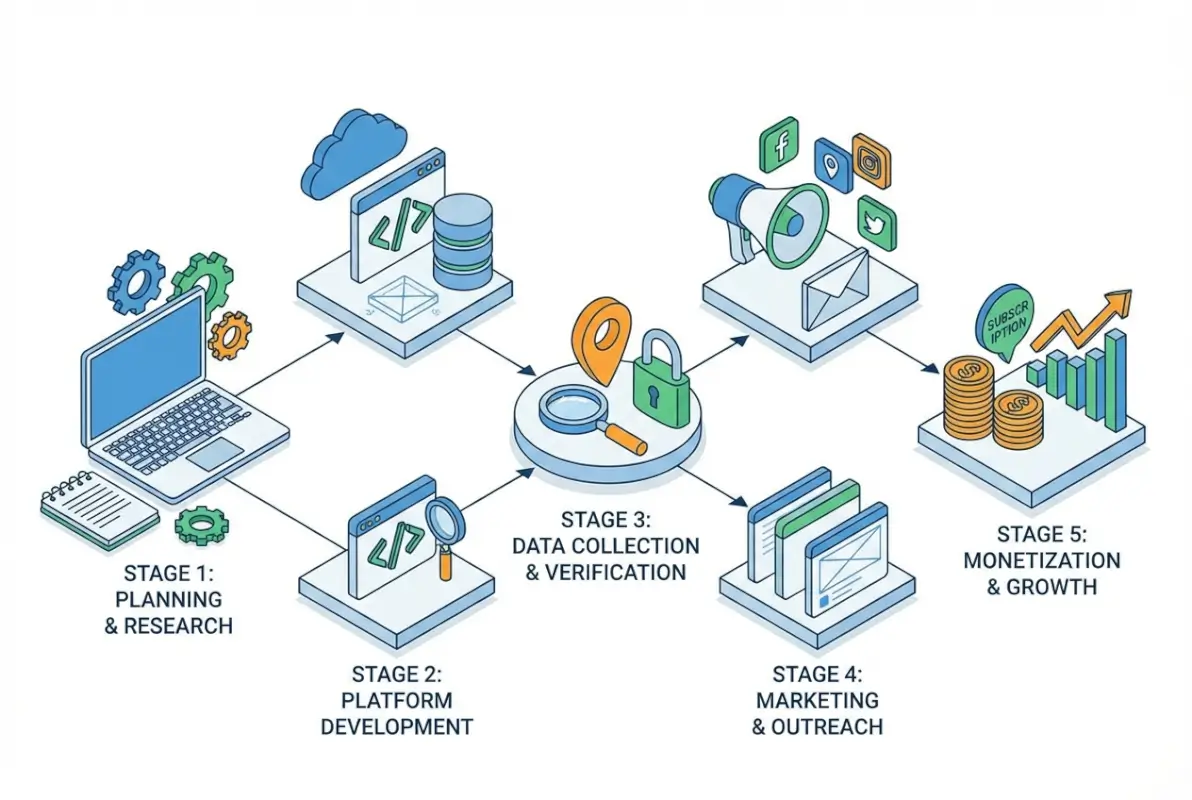
The most profitable directory niches often exist at the intersection of demographic shifts and industry evolution. For example, aging baby boomers have created explosive demand for senior care services, adaptive home modifications, and specialized healthcare practitioners. Meanwhile, millennial parents are seeking eco-friendly children’s products, inclusive childcare options, and family-friendly entertainment venues. These aren’t just theoretical opportunities—they’re proven markets where focused directories are generating substantial revenue.
| Niche Category | Market Size | Competition Level | Profit Potential |
|---|---|---|---|
| Accessible Services | High | Low | $4-7K/month |
| Plant-Based/Vegan | Medium-High | Medium | $3-5K/month |
| Pet Services | Very High | High | $5-8K/month |
| Eco-Friendly Contractors | Medium | Low | $6-10K/month |
| Specialty Healthcare | High | Medium | $7-12K/month |
Validation Framework That Actually Works
Before investing time and money, validate your niche through systematic research. Create a spreadsheet tracking monthly search volumes for your core keywords, identify the top 5-7 competing directories (noting their strengths and glaring weaknesses), and reach out to 10-15 businesses in your target niche asking about their current marketing challenges. This last step is crucial—real conversations reveal pain points that keyword research alone never will.
I learned this lesson when researching a potential directory for local fitness instructors. The keyword data looked promising, but conversations with actual instructors revealed they were drowning in lead generation platforms that charged per inquiry. What they actually wanted was affordable, ongoing visibility without performance pressure. That insight shaped the entire monetization model, leading to higher conversion rates because the offering matched genuine market needs rather than assumed ones.
Building Your Directory Foundation
The technical foundation you choose will impact everything from your launch timeline to your monthly operating costs. For most home-based directory businesses, WordPress combined with a specialized directory plugin offers the ideal balance. This approach lets you launch quickly (often within 2-4 weeks) while maintaining enough flexibility to customize as your business evolves. When considering create thriving local business directory options, evaluate platforms based on total cost of ownership, not just initial price.
Your platform needs to handle several core functions seamlessly: user registration and profile management for businesses, payment processing for subscriptions or one-time fees, advanced search with filters relevant to your niche, review systems that build trust without creating moderation nightmares, and robust SEO capabilities including schema markup for local businesses. Don’t skimp on mobile responsiveness—according to Google’s SEO fundamentals, mobile-friendliness directly impacts search rankings.

I initially made the mistake of choosing a cheap, limited platform to “test the concept” before committing to something better. This backfired spectacularly when I needed to add features like tiered pricing and featured placements—the platform couldn’t support them, forcing a complete rebuild that cost three times more than starting with the right solution. Learn from my expensive lesson: invest in a flexible foundation from day one, even if it costs a few hundred dollars more upfront.
Essential Features vs Nice-to-Haves
Prioritize ruthlessly during initial development. Your launch version needs rock-solid basics, not fancy bells and whistles. The must-have features include mobile optimization (non-negotiable), location-based search with map integration, basic listing profiles with photos and descriptions, simple payment gateway integration, and SSL security for trust and SEO. Everything else—video uploads, advanced analytics dashboards, social media integration—can wait until you’ve validated demand and started generating revenue.
This phased approach saved one of my clients thousands of dollars. Instead of spending $5,000 building everything they imagined, they launched with core features for $1,200, validated the concept with real paying customers, then reinvested early revenue into Phase 2 features that customers actually requested. The final product was better because it reflected real user needs rather than assumptions, and the entire project was cash-flow positive by month four.
Monetization Strategies That Drive Revenue
The most successful directories combine multiple revenue streams rather than relying on a single source. This diversification creates stability—if advertising revenue dips, subscription income compensates. The core monetization approaches include subscription models (monthly or annual fees for enhanced listings), one-time listing fees, featured placement charges that boost visibility in search results, banner advertising for relevant products or services, and affiliate partnerships with complementary service providers.
When implementing proven strategies monetize business directory approaches, timing matters enormously. Many directory owners wait until they have substantial traffic before introducing paid options—this is backwards. Build monetization into your model from launch, offering founding member discounts if needed, but establish from day one that your directory is a premium service worth paying for.

The hybrid free-to-paid model works beautifully for most directories. Offer basic listings at no cost to build your database quickly and create value for users (comprehensive coverage matters). Then charge for enhanced features like additional photos, video content, featured placement in search results, detailed analytics, and priority customer support. This approach converts about 15-25% of free users to paid tiers if the value proposition is clear and the upgrade process is frictionless.
Pricing Psychology and Tier Structure
Most successful directories use three-tier pricing: a free basic option, a mid-level paid tier at $29-49 monthly, and a premium tier at $79-149 monthly. This structure leverages classic pricing psychology—most customers gravitate toward the middle option, feeling it offers good value without being wasteful. The premium tier anchors the middle price as reasonable while capturing high-value customers who want maximum visibility.
| Tier | Price | Key Features | Conversion Rate |
|---|---|---|---|
| Basic | Free | Name, category, contact info | 60-70% |
| Standard | $39/mo | Photos, reviews, description | 20-25% |
| Premium | $89/mo | Featured placement, video, badges | 10-15% |
Don’t undervalue your service by pricing too low. I’ve seen directory owners charge $9.99 monthly because they felt guilty asking for more, only to discover that businesses didn’t take the directory seriously at that price point. When they raised prices to $39 monthly, conversion rates barely changed but revenue nearly quadrupled. Businesses understand customer acquisition costs—if your directory delivers qualified leads, $39-79 monthly represents tremendous value compared to other marketing channels.
Marketing and Growth Strategies
Even the best-designed directory fails without effective promotion. Your marketing strategy needs to attract both sides of the marketplace—businesses to list and users to search. SEO forms the foundation of sustainable directory growth because organic search traffic compounds over time without ongoing ad spend. Focus on both national terms relevant to your niche and local search phrases that capture immediate intent.
Content marketing accelerates SEO while establishing your authority. Create comprehensive guides related to your niche that naturally lead readers toward using your directory as the solution. For a wedding vendor directory, articles like “How to Choose a Wedding Photographer: 15 Questions to Ask” attract engaged couples actively planning weddings, then guide them toward your curated directory of vetted photographers. This approach has proven essential for proven tactics grow business directory implementation across competitive markets.

Email marketing remains surprisingly effective for directories despite what you might read about declining engagement rates. The key is segmentation—send different content to businesses versus consumers, and tailor messages based on behavior and interests. A simple welcome sequence for new business listings that educates them on optimizing their profile can increase paid conversions by 30-40%. Meanwhile, a monthly newsletter to directory users featuring seasonal recommendations or new additions keeps them engaged and returning regularly.
Strategic Partnerships and Community Building
Partnerships multiply your reach without multiplying your costs. Identify complementary businesses and organizations serving your target audience—if you’re building a pet services directory, partner with local pet stores, veterinarians, animal shelters, and pet-focused social media influencers. Offer them value (perhaps affiliate commissions or co-marketing opportunities) in exchange for promoting your directory to their audiences.
I’ve watched a client grow from 50 to 500 listings in three months through strategic partnerships alone. They built a directory for eco-friendly home service providers, then partnered with environmental nonprofits, green building councils, and sustainable living bloggers. Each partnership brought dozens of qualified businesses eager to list, while simultaneously driving traffic from environmentally-conscious consumers. The partnerships cost nothing except time to establish relationships and create win-win arrangements.
Scaling and Maintaining Your Directory
A directory business requires ongoing attention to remain valuable and competitive. Data quality separates trusted directories from abandoned ones—implement systems for quarterly business verification, prompt removal of closed businesses, and regular testing of all site functionality. Users lose faith instantly when they call three businesses from your directory and discover two have disconnected numbers. That broken trust is nearly impossible to rebuild.
Automation becomes essential as you scale beyond 100-200 listings. Manually processing every listing submission, renewal reminder, and customer inquiry becomes unsustainable quickly. Invest in tools that automate listing approval workflows, subscription management and payment processing, basic customer support through chatbots, email marketing sequences, and data verification reminders. When considering locate perfect business directory growth opportunities, automation infrastructure determines how far you can scale without hiring a large team.
Outsourcing non-core tasks allows you to focus on strategy and growth rather than getting buried in operations. A virtual assistant handling listing verification and basic administration costs $600-800 monthly but frees 15-20 hours of your time weekly. A freelance content writer producing blog posts and social media content for $400-600 monthly drives SEO growth without requiring your constant attention. These investments typically generate 3-5x returns within six months by enabling you to focus on revenue-generating activities.
Knowing When and How to Expand
Geographic expansion follows naturally once you’ve achieved success in one market. If your directory works well in one city, replicating the model in similar-sized nearby cities requires less effort than your initial launch. You already understand the business model, have refined your processes, and can leverage existing content and partnerships. Just be cautious about expanding too quickly—it’s better to dominate three cities completely than to have weak presence in ten.
Frequently Asked Questions
What is a home-based business directory and how does it work?
A home-based business directory is an online platform that organizes and lists businesses within specific categories or niches, helping consumers find services while providing visibility to businesses. You create the directory using platforms like WordPress, businesses pay for listings or premium placements, and users search your directory for solutions to their needs. Revenue comes from subscriptions, advertising, and featured listings.
How profitable can a home-based business directory be?
Most focused directories reach $3,000-8,000 monthly revenue within 12-18 months, with top performers exceeding $10,000-15,000 monthly. Profitability depends heavily on niche selection, with specialized markets outperforming general directories. Initial investment ranges from $500-2,000 for setup, making the ROI attractive compared to traditional businesses requiring significant inventory or equipment.
What are the best monetization models for an online directory?
The most effective approach combines multiple revenue streams: monthly subscription tiers ($29-149/month) for enhanced listings, featured placement fees for top search positions, banner advertising from relevant businesses, affiliate partnerships with complementary services, and lead generation fees for qualified customer inquiries. Diversification protects against market fluctuations and maximizes revenue potential from your traffic.
How do I attract listings quickly and maintain quality?
Start by manually adding 50-100 verified businesses to create immediate value for users, then reach out directly to businesses highlighting the traffic opportunity. Offer founding member benefits like extended free trials or discounted annual subscriptions. Implement automated verification workflows that periodically confirm business information remains current, and establish clear listing standards that maintain directory credibility over time.
What is the typical pricing for directory listings and featured placements?
Standard paid listings typically range from $29-79 monthly depending on features included and your niche’s value proposition. Featured placements command premium prices of $89-149 monthly or more for maximum visibility. Annual payment options offering 15-20% discounts improve cash flow and reduce churn. Pricing should reflect what businesses spend on alternative marketing channels like Google Ads.
How important are reviews and trust signals for directory success?
Reviews and trust signals are absolutely critical—they’re often the deciding factor between your directory and competitors. Implement verified review systems that prevent spam while encouraging genuine feedback, add business verification badges for listings you’ve personally confirmed, and showcase testimonials from satisfied users prominently. These elements build credibility that converts both listings and searches into loyal users.
What data structure and taxonomy should I use for a local business directory?
Organize your directory using a hierarchical category structure that mirrors how users naturally think about your niche, implement location-based taxonomy with city, region, and neighborhood levels, use schema markup for local businesses to enhance search visibility, and create custom fields capturing niche-specific attributes. Test your taxonomy with real users before launching to ensure it makes intuitive sense.
How do I optimize a directory page for local SEO?
Include city and region names in page titles and headings naturally, implement local business schema markup with complete NAP information, create location-specific landing pages for each geographic area you serve, encourage reviews from local customers, build citations on relevant local websites, and ensure every listing includes accurate location data with map integration. Mobile optimization is non-negotiable for local searches.
What are common mistakes to avoid when launching a directory?
The biggest mistakes include choosing overly broad niches that pit you against established competitors, waiting too long to implement monetization, neglecting mobile optimization, launching with insufficient initial listings, ignoring data quality and verification, underpricing your services, and trying to build every feature before validating demand. Start focused, launch lean, and expand based on real user feedback and revenue validation.
How can I ensure compliance and safety for user-generated listings?
Implement multi-layer moderation including automated spam filters, manual review of new listings before publication, clear terms of service and community guidelines, CAPTCHA and email verification to prevent bot submissions, established processes for handling disputes and fraudulent listings, and regular audits of existing content. Respond quickly to abuse reports and maintain transparent policies about what qualifies for listing inclusion.
Taking Action: Your Directory Launch Roadmap
Building a profitable home-based business directory isn’t just theoretically possible—it’s a proven path that hundreds of entrepreneurs have successfully walked. The difference between those who succeed and those who abandon their directories after a few months comes down to strategic focus, consistent execution, and willingness to adapt based on real market feedback rather than assumptions.
Start this week by researching 5-10 potential niches using the validation framework outlined above. Don’t rush this step—your niche selection determines everything that follows. Once you’ve identified a promising market with sufficient demand and manageable competition, invest in the right technical foundation rather than trying to save a few hundred dollars with inadequate platforms. Remember that your directory is a business asset that should generate returns for years, so build something sustainable from day one.
Your 90-Day Launch Timeline
- Days 1-14: Complete niche validation, competitive analysis, and business model planning
- Days 15-30: Set up technical platform, design initial pages, and configure payment systems
- Days 31-45: Add first 50-100 verified listings manually to create immediate user value
- Days 46-60: Launch marketing campaigns targeting both businesses and consumers
- Days 61-90: Optimize based on early feedback, refine pricing, and scale what’s working
The journey won’t always be smooth—you’ll encounter technical hiccups, businesses who don’t immediately see the value, and periods where growth feels frustratingly slow. Push through these moments by staying focused on the value you’re creating for both businesses and consumers in your chosen niche. Every trusted directory started with zero listings and zero traffic; the difference is that successful ones kept going until they reached critical mass.
Your opportunity to build something genuinely valuable begins right now. The market conditions favor focused directories, the technology is more accessible than ever, and businesses desperately need affordable visibility solutions. Take the first step today—choose your niche, validate the demand, and start building the foundation of your directory business. Six months from now, you’ll be grateful you began.