Will County Business Directory: 7 Cities to Prioritize for Business Growth in 2025

Generating summary...
What if I told you that one of the most overlooked business corridors in the Chicagoland area sits just 40 miles southwest of downtown Chicago, offering the perfect storm of logistics infrastructure, affordable real estate, and rapidly expanding workforce pipelines? Will County has quietly positioned itself as a powerhouse for entrepreneurs and established businesses alike, yet it remains surprisingly under the radar compared to its Cook County neighbors. The region’s strategic location at the intersection of I-55, I-80, and I-57 creates unmatched distribution advantages, while recent economic development initiatives have transformed formerly industrial cities into diverse commercial hubs that savvy business owners are capitalizing on right now.
Understanding the what is business directory listing essential facts becomes crucial when you realize that Will County’s business landscape isn’t uniform—certain cities dramatically outperform others based on industry sector, workforce availability, and local government support. This deep dive reveals which seven municipalities deserve your immediate attention and why your business growth strategy in 2025 should prioritize these specific locations over dozens of other county options.
TL;DR – Quick Takeaways
- Strategic positioning – Will County’s transportation infrastructure creates logistics advantages unmatched in the Midwest corridor
- Seven key cities – Joliet, Bolingbrook, Romeoville, Plainfield, Lockport, Crest Hill, and New Lenox each offer distinct industry advantages
- Cost advantages – Operating expenses run 30-40% lower than Cook County while maintaining Chicago market access
- Workforce growth – The county’s 690,000+ population provides expanding talent pools across manufacturing, healthcare, and logistics
- Business incentives – Enterprise zones, TIF districts, and workforce training grants significantly reduce startup and expansion costs
- Industry specialization – Each target city has developed specific sector strengths that align with different business models
Why Will County Represents a Business Growth Opportunity in 2025
The economic fundamentals driving Will County’s business appeal have only strengthened over the past 24 months. According to Will County Government economic data, the region maintained unemployment rates 23% below state averages while experiencing wage growth of 4.2% annually in specialized sectors—significantly outpacing neighboring counties. This resilience stems from a diversified economic base that doesn’t rely on a single industry or employer for stability.
What sets Will County apart from other Chicagoland expansion markets is the convergence of three critical factors: infrastructure maturity, talent accessibility, and cost efficiency. The county sits at the epicenter of North America’s freight rail network, with CenterPoint Intermodal and other major facilities processing over 2 million containers annually. This logistics backbone attracted $8.7 billion in warehouse and distribution investments since 2020, creating a ripple effect of supplier businesses, service providers, and ancillary operations.
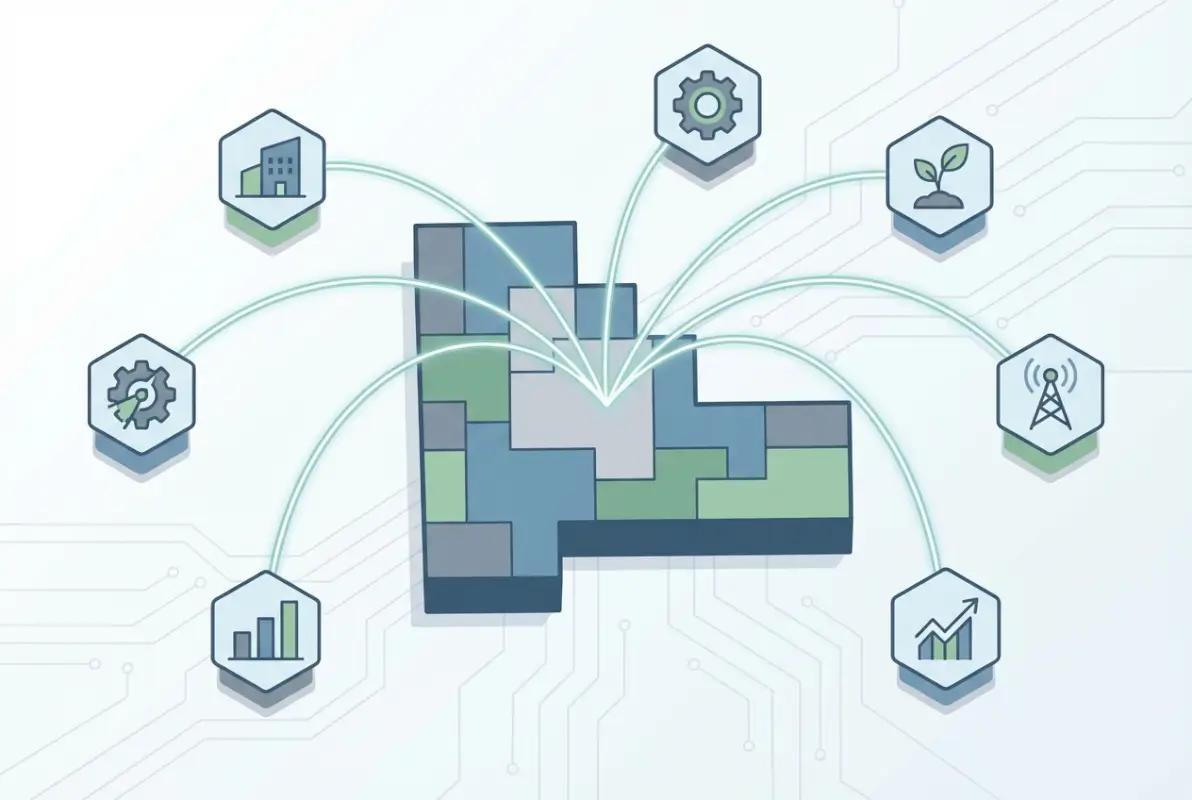
I remember consulting with a manufacturing client who initially dismissed Will County as “too far from Chicago.” After running the numbers, we discovered they’d save $180,000 annually in property costs alone while cutting employee commute times by an average of 22 minutes—their turnover dropped by 34% within the first year of relocation. That’s the kind of practical advantage that doesn’t show up in generic economic reports but transforms business operations on the ground.
The residential growth trajectory in Will County creates expanding consumer markets that retail and service businesses can’t ignore. Population increased by 87,000 residents between 2015 and 2023, with demographic data showing particularly strong growth in the 25-44 age bracket—prime consumers with disposable income. This isn’t speculative growth; housing development continues at pace with 12,000+ residential units in various stages of construction throughout the county’s target cities.
Economic Indicators Driving Business Decisions in Will County
Understanding the macro-level economic forces shaping Will County helps business owners identify which cities and sectors offer the strongest growth potential. The Illinois Department of Commerce and Economic Opportunity has designated multiple areas within Will County as high-priority development zones, bringing state-level resources and incentives to complement local programs.
Manufacturing and logistics continue as foundational pillars, accounting for 32% of county employment with a robust 5.8% annual growth rate. However, the healthcare sector has emerged as the fastest-growing industry at 7.2% annually, driven by expansions at Silver Cross Hospital, AMITA Health, and multiple specialty care facilities. This healthcare boom creates opportunities not just for medical practices but for the entire ecosystem of support businesses—medical equipment suppliers, pharmaceutical services, specialized cleaning, healthcare IT, and professional services.
| Industry Sector | Employment Share | Annual Growth | Key Advantage |
|---|---|---|---|
| Manufacturing & Logistics | 32% | 5.8% | Intermodal rail access, highway network |
| Healthcare Services | 18% | 7.2% | Major hospital expansions, aging demographics |
| Retail & Consumer Services | 24% | 3.4% | Growing residential base, strong incomes |
| Education & Training | 12% | 4.1% | Multiple higher ed institutions, workforce programs |
| Professional Services | 14% | 6.1% | Following corporate expansions into region |
The education sector deserves special attention for businesses targeting workforce development or family-oriented services. Joliet Junior College, Lewis University, and the University of St. Francis produce thousands of graduates annually in healthcare, business, and technical fields—creating a renewable pipeline of entry-level and mid-career talent. School districts throughout the county rank above state averages in both performance and funding, which directly correlates with household income stability and consumer spending power.
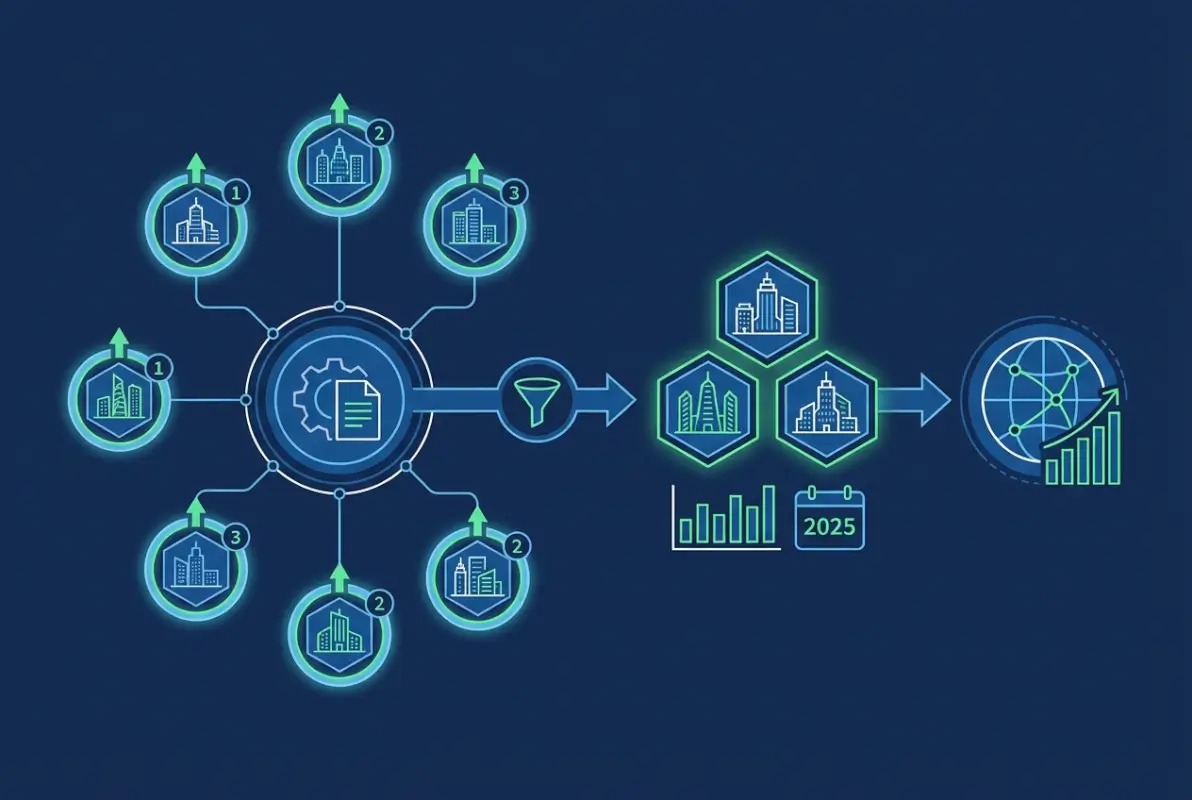
The 7 Cities to Prioritize for Will County Business Growth
Not all Will County municipalities offer equal opportunity. The local business directory guide principles become especially important when you realize that regulatory environments, infrastructure quality, and business support systems vary dramatically across city boundaries. These seven cities have demonstrated consistent business-friendly policies, infrastructure investment, and economic momentum that separate them from the county’s 40+ other municipalities.
Each city profile below includes specific growth indicators, ideal business types, and practical considerations for market entry. Understanding these distinctions helps avoid the costly mistake of choosing a location based solely on real estate costs without considering workforce access, regulatory complexity, or market alignment.

Joliet: Industrial Heritage Meets Modern Commerce
As Will County’s largest city and county seat with a population exceeding 150,000, Joliet functions as the region’s economic anchor. The city’s industrial corridors along I-80 and I-55 house advanced manufacturing operations in food processing, metal fabrication, and chemical production. What many business owners overlook is Joliet’s downtown revitalization—the area that was largely abandoned fifteen years ago now features specialty retail, craft breweries, and professional services targeting the city’s growing millennial workforce.
Healthcare represents Joliet’s fastest-growing sector, with AMITA Health Saint Joseph Medical Center and Silver Cross Hospital driving demand for medical practices, healthcare IT services, and specialized equipment suppliers. The casino entertainment complexes (Hollywood Casino and Harrah’s) generate tourism traffic that supports hospitality businesses often struggling in smaller suburban markets.
Enterprise zones in Joliet offer substantial tax incentives—businesses can receive property tax abatements up to 10 years plus sales tax exemptions on building materials and equipment. The city’s economic development department maintains streamlined permitting processes compared to neighboring municipalities, though you’ll still navigate more bureaucracy than in smaller Will County cities.
Best for: Advanced manufacturing, healthcare services, hospitality, industrial suppliers, professional services targeting mid-sized businesses
Bolingbrook: Retail and Distribution Powerhouse
Bolingbrook’s 75,000+ residents benefit from superior highway connectivity that makes the city a natural hub for retail and distribution operations. The Promenade Bolingbrook outdoor mall anchors a retail corridor drawing consumers from across the southwest suburbs, creating high-traffic opportunities for specialty retailers and restaurants that can differentiate from chain competition.
The city’s industrial parks attract a diverse mix—WeatherTech’s headquarters represents the high-end manufacturing segment, while numerous distribution centers leverage Bolingbrook’s I-55 and I-355 access for regional logistics. Commercial lease rates average $15-22 per square foot for retail space in prime locations, still 25-30% below comparable Cook County properties.
What surprised me during a recent site visit was the concentration of pharmaceutical and medical device companies that have established operations in Bolingbrook’s business parks. This cluster creates opportunities for specialized B2B service providers—calibration services, quality control consulting, regulatory compliance specialists—that struggle to find sufficient client density in smaller markets.
Best for: Retail (especially experiential concepts), distribution and warehousing, pharmaceutical suppliers, business services requiring frequent Chicago access
Romeoville: Industrial Operations with Residential Growth
Romeoville transformed from a purely industrial community to a balanced market serving both business and residential needs. The 40,000+ population continues expanding with new residential developments that create retail and service opportunities, while the industrial parks along I-55 maintain the manufacturing and logistics base that built the village’s economy.
The Lewis University Airport provides a distinctive advantage—businesses requiring frequent executive travel or air cargo services find Romeoville significantly more convenient than alternatives requiring trips to Midway or O’Hare. The village government has consistently demonstrated business-friendly policies, with expedited permitting for projects meeting economic development criteria.
Industrial lease rates in Romeoville ($7-11 per square foot) offer compelling value compared to Joliet or Bolingbrook, making it particularly attractive for businesses in growth phases where cost control remains critical but professional infrastructure can’t be compromised.
Best for: Light manufacturing, logistics operations, businesses requiring aviation access, retail serving growing residential base
Plainfield: Affluent Demographics and Small Business Culture
Plainfield’s explosive growth from rural community to 45,000+ residents created one of Will County’s most attractive retail and service markets. The village’s household income levels exceed county averages by 18%, supporting premium retailers and service providers that struggle in more moderate-income markets. When exploring business directory ID what it is why you need one, Plainfield’s streamlined business registration processes stand out as particularly entrepreneur-friendly.
The historic downtown district has been reimagined as a specialty retail and dining destination, with village programs supporting façade improvements and business development. The family-oriented demographic particularly favors educational services, youth activities, and family dining concepts. A children’s enrichment center owner I spoke with opened her first location in Plainfield and expanded to three locations within 30 months based purely on demographic alignment.
Best for: Specialty retail, family-oriented services, educational businesses, premium dining concepts, professional services targeting affluent households
Lockport: Historic Character Creates Destination Appeal
Lockport’s 25,000 residents support a unique business environment where historic preservation meets contemporary commerce. The downtown canal district attracts tourism traffic through the Illinois & Michigan Canal National Heritage Corridor designation, creating built-in foot traffic for specialty retailers, galleries, and dining establishments that benefit from destination appeal rather than convenience shopping patterns.
Beyond its historic core, Lockport offers modern industrial capacity along the I-355 corridor with property costs below Joliet or Bolingbrook rates. This dual character—heritage tourism downtown, contemporary industrial on the periphery—creates opportunities for diverse business types within a single municipality.
The city’s façade improvement programs and TIF district incentives specifically target businesses complementing Lockport’s historic character. If your retail or dining concept emphasizes authenticity and craftsmanship rather than convenience and price competition, Lockport’s built environment provides inherent marketing advantages you’d spend heavily to create elsewhere.
Best for: Experiential retail, specialty dining, cultural businesses, light industrial operations seeking I-355 access, service businesses targeting heritage tourism visitors
Crest Hill: Strategic Location with Cost Advantages
Often overlooked by businesses fixated on larger cities, Crest Hill’s 20,000+ population belies its strategic significance. The city’s position adjacent to Joliet provides access to Will County’s largest consumer and employment market while offering property costs 15-25% below Joliet’s prime commercial districts.
Transportation infrastructure access rivals any Will County location—I-55 and I-80 intersect within Crest Hill’s borders, creating exceptional logistics advantages. The Weber Road corridor has experienced substantial commercial development over the past five years, with national retailers validating the market while creating co-tenancy opportunities for complementary businesses.
The city’s regulatory environment is notably accommodating for light industrial and commercial operations that might face restrictions in more residential-focused communities. Zoning flexibility combined with supportive economic development staff creates faster project timelines than typical in the region.
Best for: Distribution operations, light manufacturing, businesses serving Joliet market from lower-cost location, commercial services requiring highway visibility
New Lenox: Healthcare and Education Drive Growth
New Lenox’s transformation from bedroom community to business destination centers on healthcare and education sectors. The 27,000+ population continues expanding with above-average household incomes, while Silver Cross Hospital’s presence created a medical district with growing opportunities for healthcare practices, wellness services, and medical support businesses.
Education infrastructure includes Providence Catholic High School, Lincoln-Way Community High School District facilities, and multiple elementary schools that rank above state averages—creating demand for educational support services, tutoring, youth enrichment, and family services. The education focus attracts families with college-bound students, supporting premium service providers and specialty retailers.
The village’s I-80 corridor offers highway visibility and access for businesses serving both Illinois and Indiana markets—a geographic advantage particularly valuable for service businesses with regional client bases.
Best for: Healthcare practices and services, educational businesses, family-oriented retail, professional services, businesses requiring I-80 corridor visibility
Practical Steps to Leverage Will County Business Directories
Understanding which cities to target means nothing without a systematic approach to establishing visibility and credibility in local markets. Business directories serve as critical digital infrastructure—most consumers and B2B buyers research businesses through local directories before making contact, yet most business owners treat directory listings as afterthoughts rather than strategic marketing assets.

The data around directory impact is compelling. Research from BrightLocal indicates that 87% of consumers read online reviews before visiting a local business, and businesses with complete, consistent directory information across platforms generate 58% more revenue than competitors with incomplete listings. For Will County businesses specifically, appearing in city-specific and county-wide directories creates multiple discovery paths for customers at different stages of their search process.
Start with foundational directories that establish baseline visibility across search platforms. Google Business Profile remains non-negotiable—the platform drives the majority of local search traffic and provides direct customer interaction through reviews, questions, and booking features. Bing Places and Apple Maps similarly feed their respective search ecosystems, though Google dominates market share in most business categories.
City-Specific Directory Strategies
Each of the seven priority cities maintains municipal-level business directories or chamber of commerce listings that provide credibility signals beyond pure SEO value. Joliet Chamber of Commerce membership includes directory placement reaching local businesses and residents actively seeking service providers. Bolingbrook’s village website maintains a business directory specifically designed to connect residents with local companies, while Plainfield’s Chamber emphasizes downtown businesses through specialized promotion programs.
The hotfrog business directory reasons get listed asap extend beyond simple visibility—directory listings create backlinks that improve domain authority, provide structured data that search engines use for knowledge panels, and establish NAP (name, address, phone) consistency that builds trust with both algorithms and humans.
| Directory Type | Primary Value | Update Frequency | Cost |
|---|---|---|---|
| Google Business Profile | Local search visibility, reviews | Weekly | Free |
| Chamber directories | Local credibility, networking | Quarterly | $200-600/year |
| Industry-specific platforms | Qualified leads, expertise positioning | Monthly | Varies widely |
| Municipal directories | Resident discovery, local authority | Annually | Free-$100 |
| Regional business platforms | B2B connections, broader reach | Quarterly | $100-500/year |
Optimizing Directory Content for Maximum Impact
Most businesses populate directory listings with minimal information—business name, address, phone number, maybe a generic description. This approach wastes the opportunity to differentiate from competitors and provide search engines with rich content that improves ranking signals. A comprehensive directory strategy requires treating each major listing as a mini landing page optimized for specific search queries.
Business descriptions should incorporate location-specific keywords naturally while addressing customer search intent. Rather than “We provide accounting services,” a more effective description reads: “Full-service accounting firm serving Joliet and Will County small businesses, specializing in manufacturing and healthcare sectors with same-day consultations available.” The enhanced version includes location terms (Joliet, Will County), industry specializations, and a differentiating service element—all factors that improve both search visibility and conversion rates.
Categories and tags deserve strategic attention. Most directory platforms allow multiple category selections, but business owners typically choose only the primary category. Selecting all relevant categories expands the query types triggering your listing. An HVAC company might list under “HVAC Contractor,” “Furnace Repair,” “Air Conditioning Service,” “Commercial HVAC,” and “Emergency HVAC Service”—each category captures different search intents and customer segments.
Building a Sustainable Local Visibility Strategy
Creating directory listings represents just the foundation of local visibility. Sustainable competitive advantage requires ongoing optimization, review management, and content development that reinforces your position in target cities. The businesses that dominate local search results in Will County don’t simply have better products or services—they’ve systematically built digital infrastructure that search algorithms reward.

Review generation should be systematic rather than sporadic. According to BrightLocal’s annual consumer survey, 77% of consumers “always” or “regularly” read reviews when browsing for local businesses, and the volume of reviews correlates directly with conversion rates. Businesses with 50+ reviews convert at substantially higher rates than competitors with fewer than 10 reviews, regardless of average star rating (within reasonable ranges).
The key to sustainable review generation is building it into your customer experience workflow rather than treating it as a separate marketing activity. Point-of-sale systems can trigger automated review requests after completed transactions. Service businesses can include review requests in follow-up communications after project completion. The timing matters—requests sent within 24-48 hours of positive experiences generate 3-4x higher response rates than requests sent weeks later.
Content marketing aligned with local search behavior compounds visibility over time. Most businesses in Will County create generic content applicable anywhere, missing opportunities to rank for location-specific queries with lower competition. A roofing company publishing “5 Signs You Need Roof Repair in Plainfield IL” or “How Joliet’s Climate Impacts Commercial Roofing Lifespan” captures search traffic that generic content misses while demonstrating local expertise that builds trust.
Leveraging Business Incentives and Resources
Will County and its municipalities offer substantial incentive programs that most business owners either don’t know exist or assume they won’t qualify for. These programs can dramatically reduce expansion costs and ongoing operating expenses, but they require proactive application rather than automatic qualification.
Enterprise Zones provide the most widely applicable incentives, with designated areas in Joliet, Bolingbrook, and several other target cities. Qualifying businesses receive property tax abatements (typically 50-100% reduction for 10 years), sales tax exemptions on building materials and equipment, and utility tax exemptions. The qualification criteria focus on job creation and capital investment rather than business size—even relatively small operations creating 5-10 jobs can qualify if they meet investment thresholds.
Tax Increment Financing districts operate in designated redevelopment areas, with municipalities using projected property tax increases to fund infrastructure improvements and business assistance. TIF participation typically requires larger capital investments than Enterprise Zone qualification, but the infrastructure improvements can dramatically enhance property values and operational efficiency.
Workforce training grants through the Illinois Workforce Investment Board provide reimbursement for employee training costs in qualifying industries. Manufacturing, healthcare, and technology businesses frequently qualify, with grants covering 50-75% of training expenses up to specified limits. The application process requires documentation of training programs and employee participation, but the direct cost reduction makes the administrative burden worthwhile for businesses with substantial training needs.
Frequently Asked Questions About Will County Business Growth
Which Will County city offers the lowest business operating costs in 2025?
Crest Hill and New Lenox consistently provide the lowest commercial lease rates, with industrial space averaging $5-8 per square foot and retail $10-16 per square foot. These cities offer significant savings compared to Bolingbrook or Joliet while maintaining strong transportation access and growing customer bases. However, operating costs extend beyond real estate—workforce availability, utility rates, and local incentive programs should factor into total cost calculations.
How do Will County business incentives compare to Cook County programs?
Will County’s incentive programs typically offer more accessible qualification criteria and faster approval processes than Cook County equivalents. Enterprise Zone benefits in Will County municipalities include 10-year property tax abatements up to 100%, while Cook County programs often require larger job creation commitments and offer shorter benefit periods. The practical advantage stems from less competition for incentive allocation and more responsive economic development staff.
What industries show the strongest growth potential in Will County through 2026?
Healthcare services lead with 7.2% annual growth driven by hospital expansions and aging demographics. Advanced manufacturing in food processing and medical equipment shows 5.8% growth. E-commerce fulfillment operations continue expanding at 6%+ annually due to transportation infrastructure advantages. Professional services follow corporate expansions with 6.1% growth. These sectors create ripple effects supporting supplier businesses and service providers.
How long does it typically take to establish a business in Will County?
Timeline varies by municipality and business type. Standard retail or office operations in business-friendly cities like Plainfield or Crest Hill typically complete permitting in 4-6 weeks. Manufacturing or food service operations requiring health inspections and specialized permits may take 8-12 weeks. Joliet’s larger bureaucracy sometimes extends timelines to 10-14 weeks for complex projects. Working with municipal economic development offices can expedite processes considerably.
Are coworking spaces available for startups in Will County?
Yes, though options remain more limited than in Cook County. Joliet’s Innovation and Entrepreneurship Center at Joliet Junior College provides startup resources and workspace. Private coworking spaces operate in Joliet, Bolingbrook, and Plainfield, with monthly costs ranging $150-400 depending on amenities and location. Several municipalities offer small business incubators through economic development programs, though spaces are competitive and often require application processes.
What workforce size and skill levels exist in Will County?
Will County’s workforce exceeds 340,000 residents, with 62% holding post-secondary credentials. The skill mix emphasizes practical technical capabilities in manufacturing, logistics, healthcare, and business services. Joliet Junior College, Lewis University, and University of St. Francis produce thousands of graduates annually in high-demand fields. The county’s position between Chicago and central Illinois provides access to broader talent pools for specialized requirements.
How do I choose between Joliet and Bolingbrook for a retail business?
Joliet offers larger population (150,000+ vs 75,000+) but more competitive retail environment and older infrastructure in many areas. Bolingbrook provides superior highway access and higher household incomes but greater chain competition. Consider your target demographic—Joliet suits value-oriented concepts and diverse customer bases, while Bolingbrook fits premium retailers and convenience-focused shoppers. Visit during peak hours to assess traffic patterns and competitive positioning.
What are the best resources for researching Will County business opportunities?
Start with the Will County Government business resources page for official incentive information and economic data. Municipal economic development departments provide city-specific guidance and often offer free site selection assistance. Local chambers of commerce (Joliet, Bolingbrook, Plainfield, etc.) offer networking and market intelligence. The Illinois Department of Commerce and Economic Opportunity provides statewide programs and data.
How can I optimize my business for local search in multiple Will County cities?
Create dedicated landing pages on your website for each city you serve, with city-specific content including neighborhoods, projects, and community involvement. Ensure NAP (name, address, phone) consistency across all directory listings. Build separate Google Business Profile listings for each physical location. Generate reviews mentioning specific cities. Publish blog content addressing city-specific customer needs and questions. Join chambers of commerce in target cities for local backlinks.
What makes a Will County business directory listing effective?
Complete all available fields with keyword-rich descriptions incorporating location and industry terms. Select all relevant business categories, not just your primary classification. Add high-quality photos showing your location, work examples, and team. Respond to all reviews promptly and professionally. Post regular updates through available features (Google Posts, etc.). Include specific service areas covering target cities. Ensure consistency with your website NAP information. Monitor and update quarterly to maintain accuracy and relevance.
Taking Action on Your Will County Business Strategy
The difference between businesses that thrive in Will County and those that struggle often comes down to intentional city selection and systematic visibility building. The seven priority cities—Joliet, Bolingbrook, Romeoville, Plainfield, Lockport, Crest Hill, and New Lenox—each offer distinct advantages that align with specific business models, but those advantages only materialize when you match your operational requirements to city capabilities rather than making location decisions solely on real estate costs.
Start by conducting site visits during different times of day to assess traffic patterns, customer demographics, and competitive intensity. Schedule meetings with municipal economic development staff to identify available incentives and navigate regulatory requirements. Connect with local chambers of commerce to understand market dynamics and build relationships with complementary businesses. These foundational steps create the local knowledge that transforms market entry from guesswork into strategic execution.
Your Will County Growth Roadmap
Within the next 30 days, complete these high-impact activities: Visit your top three target cities during morning, afternoon, and evening hours to observe customer patterns. Schedule consultations with at least two municipal economic development offices to discuss available incentives. Claim or optimize your Google Business Profile for each physical location. Join the chamber of commerce in your primary target city. Research competitor visibility in local directories and search results to identify gaps you can exploit.
The businesses capturing market share in Will County’s growing economy aren’t necessarily better operators—they’re business owners who recognized opportunity early and executed systematically. Your competitive advantage window is now, while many categories remain undersaturated compared to Cook County markets.
Was this article helpful?