How to List Your Company in Business Directories: 7 Proven Strategies

Generating summary...
Most business owners treat directory listings like a checkbox exercise—claim your Google Business Profile, maybe toss up a Yelp page, and call it done. But here’s the truth nobody talks about: the companies dominating local search in 2025 aren’t just listed everywhere; they’re strategically positioned in the right directories with meticulously maintained profiles that function as distributed storefronts across the web. While your competitors are playing the volume game, submitting to every free directory they can find, smart businesses are building fortress-like citation ecosystems that Google can’t ignore. This isn’t about gaming the system—it’s about understanding that business directories have evolved from simple link-building tools into sophisticated trust signals that directly influence how search engines and customers perceive your legitimacy.
TL;DR – Quick Takeaways
- Quality trumps quantity – Focus on authoritative, relevant directories rather than blasting your info across hundreds of low-value sites
- NAP consistency is non-negotiable – Inconsistent business information across directories actively hurts your local SEO rankings
- GBP is your anchor – Google Business Profile should be your most complete, frequently updated listing that other directories reference
- Maintenance matters more than setup – Quarterly audits and prompt updates separate businesses that rank from those that don’t
- Directory listings compound over time – The citation velocity and consistency you build now pays dividends for years
Understanding Which Directories Actually Matter for Your Business
The directory landscape has fragmented dramatically over the past few years. What used to be a straightforward decision—list on Yellow Pages, call it done—has exploded into thousands of options ranging from hyper-local chamber directories to industry-specific platforms that most business owners have never heard of. The critical mistake I see repeatedly is business owners either ignoring directories entirely (thinking they’re outdated) or submitting to every free directory they can find through automated services.

Neither approach works. Search engines have become sophisticated enough to differentiate between authoritative citations and spam submissions, which means your directory strategy needs the same level of thought you’d give to any other marketing channel. The real question isn’t “should I be in directories?” but rather “which directories deliver the specific outcomes my business needs?”
General-Purpose vs. Niche-Specific Directories
General directories like Google Business Profile, Yelp, and Better Business Bureau cast a wide net and matter for virtually every business type. These platforms have earned algorithmic trust through years of consistent data quality, robust verification processes, and genuine user engagement. When search engines crawl your business information, they weight signals from these established directories more heavily than newer or less authoritative sources.
Niche directories, on the other hand, provide context. If you’re a dentist, a listing in Healthgrades carries more relevance than a generic business directory. For restaurants, platforms like OpenTable and TripAdvisor aren’t just directories—they’re discovery and booking engines that potential customers actively use. The strategic approach involves anchoring your presence in the major general directories while layering in 3-5 highly relevant niche directories that your specific customer base actually uses.
Local vs. National Directories
Local directories—chamber of commerce sites, regional business associations, city-specific platforms—carry disproportionate weight for businesses serving defined geographic areas. A plumber in Austin benefits more from a listing in the Austin Chamber of Commerce directory than a national directory that dilutes local relevance. These local directories often have strong domain authority for geo-specific searches and signal to search engines that your business has genuine community ties.
National directories provide baseline credibility and broader reach, particularly useful if you serve customers across multiple regions or want to establish authority in your industry category regardless of location. The balance depends entirely on your business model: brick-and-mortar retail leans heavily local, while B2B professional services may prioritize industry-specific national directories.
Setting Measurable Goals for Your Directory Presence
Here’s where most businesses fail before they start: they treat directory listings as a setup-and-forget task rather than a measurable marketing channel. Without clear goals, you can’t determine ROI, prioritize maintenance efforts, or identify which directories actually deliver value versus which are wasting your time.

Start by defining what success looks like. Are you trying to increase phone calls from local searchers? Do you need more foot traffic to your physical location? Are you building brand awareness in a new market? Each goal demands a different directory strategy. For example, if you’re focused on directory applications that drive direct business growth, you’ll prioritize directories with high user engagement over passive citation sources.
Traffic, Leads, and Consistency Wins
The immediate metrics—clicks, calls, direction requests—are easy to track through platforms like Google Business Profile Insights. But the compound effect of directory presence manifests differently. Consistent citations across multiple directories create a reinforcing signal that tells search engines your business is legitimate, stable, and trustworthy. This isn’t about any single directory driving massive traffic; it’s about the cumulative weight of consistent information across the web.
| Goal Type | Primary Metric | Best Directory Focus |
|---|---|---|
| Immediate Leads | Calls, form submissions | High-traffic consumer directories (Yelp, Bing Places) |
| Local SEO Rankings | Map pack visibility, organic position | Citation consistency across top 20 local directories |
| Brand Protection | NAP accuracy, duplicate suppression | Data aggregators (Neustar, Factual) + major platforms |
| Industry Authority | Profile completeness, review quantity | Niche-specific professional directories |
I remember working with a regional HVAC company that obsessed over getting listed in 300+ directories through an automated service. After six months, they had almost no measurable improvement in rankings or calls. When we stripped back to 25 carefully selected directories—focusing on local relevance and complete profiles with photos and service descriptions—their map pack visibility improved within 60 days. The difference wasn’t volume; it was strategic alignment and maintenance quality.
Brand Protection and NAP Consistency
One of the most underappreciated benefits of proactive directory management is brand protection. Without claiming and maintaining your listings, you’re vulnerable to outdated information, competitor hijacking (yes, it happens), and user-generated errors that spread across the citation ecosystem. When someone updates your business hours incorrectly on one platform, that misinformation can cascade through data aggregators to dozens of other directories.
NAP consistency—ensuring your Name, Address, and Phone number are identical across all listings—isn’t just best practice; it’s foundational to local SEO. Search engines use these data points to verify business identity and build confidence in your legitimacy. Inconsistencies create ambiguity: is “ABC Plumbing Inc.” the same business as “ABC Plumbing”? Is the business at 123 Main St or 123 Main Street? These small variations dilute your citation strength and can actually harm rankings.
Creating a Prioritized Listing Plan That Works
Without a systematic approach, directory management becomes overwhelming fast. The key is building a tiered system that focuses your energy on high-impact activities while maintaining baseline presence elsewhere. This isn’t about perfection—it’s about strategic resource allocation that matches your business goals and available time.
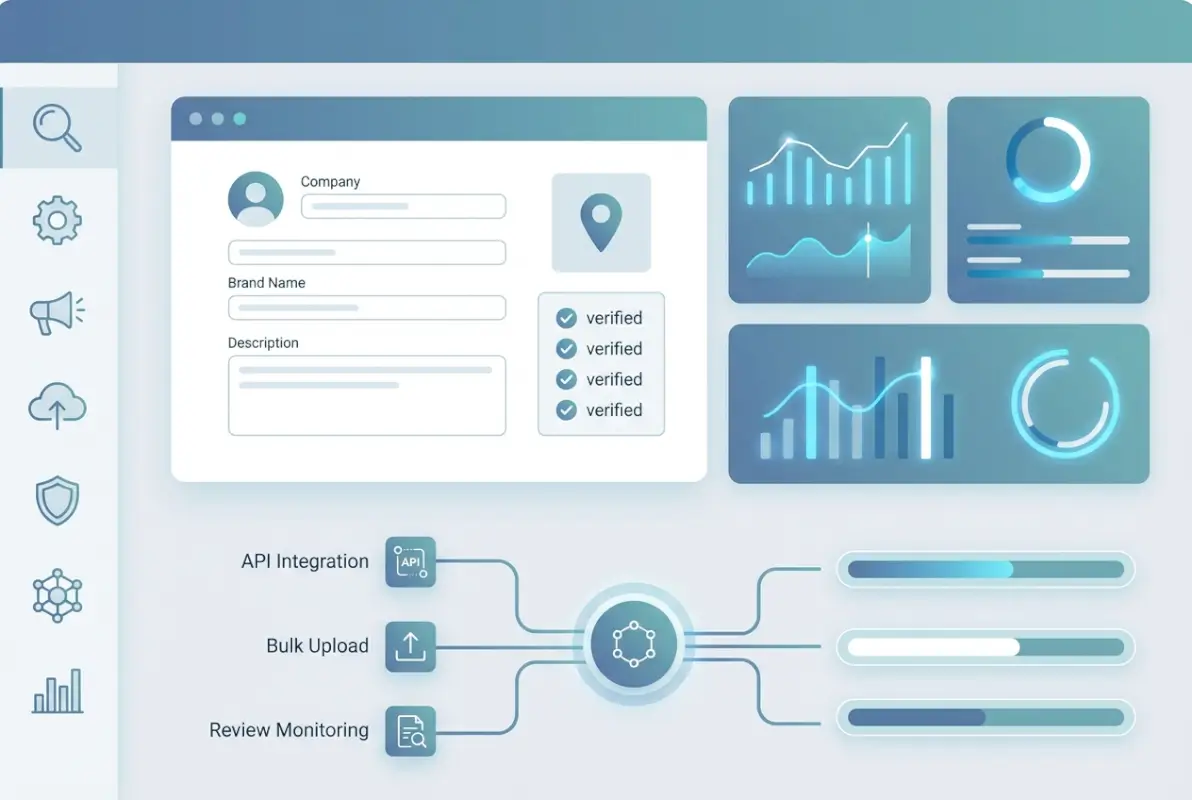
Your tier-one directories (typically 5-10 platforms) should receive weekly attention: monitoring reviews, posting updates, adding photos, responding to questions. These are your money-makers—the directories that actually drive discovery and conversions. For service businesses, this often means Google Business Profile, Yelp, and maybe one or two industry-specific platforms. For retail, you might include platforms with strong foot-traffic integration like Apple Maps and Waze.
Selection Criteria: Relevance, Authority, Traffic, and Freshness
Not all directories deserve your attention. Evaluate potential platforms across four dimensions. Relevance: Does this directory serve your target customer base or industry? A B2B software company has no business spending time on consumer review platforms. Authority: Does the directory have established domain authority and search engine trust? Newer directories or those with poor content quality won’t move the needle. Traffic: Do actual humans use this directory to find businesses? Some directories exist purely for SEO link schemes and deliver zero referral value. Freshness: Is the directory actively maintained and updated? Outdated directories signal low quality to both users and search engines.
Run each potential directory through this filter before investing time in a complete profile. If a directory fails on two or more dimensions, it’s likely not worth your effort. You can find robust free business directory listings that genuinely boost visibility if you’re selective about platform quality rather than chasing every free option that exists.
Resource Allocation: Time, Maintenance, and Updates
Be realistic about maintenance bandwidth. A complete directory strategy might involve 20-30 platforms, but you can’t deeply manage all of them continuously. Structure your efforts in tiers: weekly for top 5 platforms, monthly for next 10, quarterly audits for the rest. This ensures your most valuable listings stay fresh and responsive while baseline information remains consistent everywhere else.
Assign clear ownership if you have a team. The worst scenario is everyone assuming someone else is managing directory listings, leading to abandoned profiles with unanswered reviews and outdated information. Whether it’s you as the owner, a marketing coordinator, or an external agency, one person should own the directory management checklist and be accountable for quarterly reporting on directory performance metrics.
Compliance and Risk Management for Directory Listings
The directory ecosystem isn’t entirely benign. Low-quality directories, duplicate listings, and data aggregator errors create ongoing risk that requires active management. I’ve seen businesses lose significant ranking positions because duplicate Google Business Profiles split their review count and confused local search algorithms about which listing was legitimate.
The biggest risk factors include: submitting to spammy directories that exist purely for link schemes (search engines may penalize these associations), creating duplicate listings on the same platform (splits your signals and confuses users), inconsistent information across directories (erodes search engine confidence), and abandoned profiles (unanswered negative reviews damage reputation and rankings).
Avoiding Low-Quality and Spammy Directories
If a directory promises to submit your business to “500+ directories for $49,” run away. These services typically include outdated directories, link farms, and platforms that provide zero value while potentially exposing your business to association with low-quality web neighborhoods. Search engines are sophisticated enough to identify these patterns and may discount or penalize citations from known spam sources.
Red flags for questionable directories include: no editorial standards or verification process, directories filled with obviously fake or abandoned listings, excessive advertising that overwhelms actual content, outdated design and non-mobile-responsive interfaces, and absence of genuine user engagement (no reviews, questions, or activity).
Brand-Safe Practices for Profiles and Categories
Category selection deserves more thought than most businesses give it. Choose categories that accurately reflect your primary services and match how customers actually search for businesses like yours. Keyword-stuffing categories or selecting irrelevant categories to game the system can backfire—search engines recognize these patterns and may demote listings that appear to manipulate categories.
Keep descriptions honest and valuable rather than keyword-stuffed. Modern search algorithms prioritize natural language and user value over keyword density. A clear, compelling description that explains what makes your business unique will outperform a robotic paragraph jammed with search terms. For detailed guidance on optimizing specific platforms, understanding how to list your business on Yelp for free provides a solid template that applies to most directory optimization efforts.
Maintaining NAP Consistency and Profile Hygiene
NAP consistency isn’t sexy, but it’s the foundation everything else builds on. When your business name, address, and phone number vary across directories, you’re essentially asking search engines to guess which version is correct. This ambiguity directly translates to lower local search rankings because algorithms can’t confidently associate all your citations with a single business entity.

The challenge intensifies if you’ve ever moved locations, changed phone numbers, or rebranded. Legacy listings with old information persist indefinitely unless you actively claim and update them. Data aggregators compound this problem by distributing outdated information to downstream directories faster than you can manually correct individual listings.
How to Audit and Fix Inconsistencies
Start with a comprehensive audit. Google your business name in quotes along with your city to find existing listings. Check major aggregators (Neustar Localeze, Factual, Infogroup) and top directories (Google Business Profile, Apple Maps, Bing Places, Yelp, Facebook). Document every variation you find: abbreviated vs. full business name, suite number vs. no suite number, different phone formats, and old addresses.
Create a master document with your official NAP format—the exact way you want your information to appear everywhere. This becomes your single source of truth. Common formatting decisions include: using “Street” vs. “St.”, including or omitting suite numbers, phone number format (dashes, parentheses, or spaces), and legal business name vs. DBA or trade name.
Systematically update each listing to match your master format. Prioritize high-authority directories and data aggregators first, since corrections there will cascade to other platforms over time. For directories where you can’t directly edit (some niche platforms source data from aggregators), submit correction requests through official channels and follow up if changes don’t appear within 30 days.
Key Fields That Demand Accuracy
Beyond basic NAP, several fields significantly impact both user experience and search visibility. Business hours must be absolutely current—nothing frustrates customers more than showing up to a closed business that listed incorrect hours. Update holiday hours seasonally and any COVID-related or temporary schedule changes immediately. Website URL should always point to your primary domain (not a social media page or third-party booking platform) to consolidate traffic and authority signals. Service areas or delivery zones define your geographic relevance for searches, particularly important for service businesses without physical storefronts.
Visuals That Actually Convert
Directory listings with photos receive significantly more engagement than those without—we’re talking 2-3x higher click-through rates on average. But generic stock photos or low-quality smartphone snapshots won’t cut it. Your visual strategy should include: exterior and interior photos showing your physical space (if applicable), product or service photos demonstrating your work quality, team photos that humanize your brand, and action shots showing your business in operation.
Google Business Profile specifically benefits from video content, with 360-degree virtual tours providing additional engagement signals. Update photos seasonally or whenever you renovate, launch new products, or want to highlight special offerings. Fresh visual content signals active management and gives users confidence they’re seeing current, accurate representations of your business.
Platform-Specific Optimization Strategies
While consistency across directories matters, each platform has unique features and algorithms that reward platform-specific optimization. A generic, copy-paste approach leaves significant value on the table. The businesses dominating local search understand that Google Business Profile optimization differs meaningfully from Yelp optimization, which differs from industry-specific directories.

This section breaks down the nuances of major platforms so you can extract maximum value from each channel without spreading yourself impossibly thin. The key is understanding which features actually move metrics versus which are time-wasting bells and whistles.
Google Business Profile: Your Local SEO Foundation
GBP isn’t just another directory—it’s the dominant force in local search. Businesses with claimed, optimized GBP listings rank higher in map pack results (the gold standard of local visibility) and appear in more local search queries. The platform has evolved from a simple business card to a sophisticated marketing channel with posts, messaging, booking, and product catalogs.
Verification is non-negotiable. Google offers several methods (postcard, phone, email, video) depending on business type, but you must complete verification to unlock full profile functionality and appear in search results. Once verified, focus on category accuracy—your primary category carries the most weight for relevance matching, so choose the option that best represents your core business, not what you wish you were.
Attributes deserve special attention because they help Google match your business to specific search intents. If you offer “wheelchair accessible entrance,” enable that attribute so you appear when users search for accessible businesses. Service businesses should list all service areas accurately to appear in searches for each location served. Restaurants need menus uploaded; hotels need amenities listed. These granular data points improve match quality for long-tail searches that often have higher conversion intent.
Reviews represent the most impactful GBP ranking factor you can directly influence. Volume, velocity (how quickly you earn new reviews), and rating all contribute to local pack rankings. Respond to every review—positive and negative—within 24-48 hours when possible. Your responses are public and demonstrate active management, but they also create additional keyword-rich content associated with your listing. A thoughtful response to a negative review often signals higher quality than deleting or ignoring criticism.
Yelp, TripAdvisor, and Industry-Specific Platforms
Yelp remains influential for certain business categories (restaurants, home services, personal care) despite its contentious relationship with some business owners. The platform’s review filter aggressively removes what it considers suspicious reviews, which frustrates businesses but maintains user trust in the platform. Don’t try to game Yelp’s system—it rarely works and can result in penalization.
Instead, focus on earning organic reviews from actual customers who regularly use Yelp. The platform rewards businesses that provide excellent experiences to active Yelp users over those trying to artificially inflate ratings. Your Yelp profile should be complete (all sections filled, photos current) and actively maintained. The step-by-step process for listing your business on Yelp through simple, free steps applies equally to most review-focused platforms.
TripAdvisor dominates travel and hospitality, with similar dynamics to Yelp regarding review authenticity. Hotels and restaurants can’t afford to neglect this platform since travelers actively use it for decision-making. Beyond basic listing optimization, TripAdvisor rewards businesses that engage with reviews, upload quality photos, and keep information current.
Industry-specific directories vary wildly in quality and influence. Healthcare providers should prioritize platforms like Healthgrades and Zocdoc. Legal professionals benefit from Avvo and Martindale-Hubbell. The common thread is that these platforms attract users with specific intent related to your industry, making them higher-value traffic sources than generic directories.
Data Aggregators and Citation Ecosystems
Most business owners have never heard of data aggregators, yet these platforms indirectly control much of their directory presence. Aggregators like Neustar Localeze, Factual (now part of Foursquare), and Infogroup collect business data and distribute it to hundreds of downstream directories, apps, and services. A single correction in an aggregator can fix inconsistencies across dozens of listings you don’t even know exist.
The challenge is that aggregators aren’t consumer-facing directories. They’re B2B data platforms that license information to other services. Many local SEO tools and services manage aggregator submissions for you, which is often worth the investment for businesses serious about citation consistency. If you’re managing manually, focus on claiming and correcting listings on major aggregators first, then work down to individual directories.
Building and Leveraging Social Proof Through Reviews
Reviews have evolved from nice-to-have testimonials to critical ranking factors and conversion drivers. The quantity, recency, and quality of your reviews directly influence both search visibility and user trust. Businesses with robust review profiles convert significantly higher than competitors with sparse or outdated reviews, all else being equal.
The review acquisition strategy should be systematic, not random. You need a repeatable process for identifying happy customers and making it easy for them to leave reviews. This might be a follow-up email after service completion, a QR code on receipts, or a simple verbal ask after positive interactions. The key is making it frictionless—every additional step or click reduces completion rates.
Collecting Reviews Without Violating Platform Policies
Most directories prohibit incentivizing reviews (offering discounts or payments in exchange for reviews) and gating review requests (only asking happy customers to review). The policies exist to maintain review authenticity and user trust. Violations can result in profile penalties or removal, so stay within guidelines even if competitors appear to be bending rules.
The compliant approach involves asking all customers for feedback and making it equally easy to leave positive or negative reviews. You can ask in person, via email, through SMS, or with printed materials—but the request should be neutral. “We’d love your feedback on Google” is compliant; “If you loved our service, please leave us a 5-star review” crosses into gating territory on most platforms.
Responding to Reviews: The Art of Public Customer Service
Your review responses are as important as the reviews themselves. Prospective customers read how you handle both praise and criticism as indicators of your business values and customer service quality. A gracious response to a 5-star review shows appreciation; a professional, solution-oriented response to a 1-star review demonstrates accountability.
For negative reviews, respond quickly (ideally within 24 hours), acknowledge the customer’s experience without being defensive, apologize for shortcomings even if you disagree with some details, and offer to make things right offline. The goal isn’t winning an argument—it’s demonstrating to the 100 prospective customers reading that exchange that you take feedback seriously and work to resolve issues.
Avoid generic, copy-paste responses. Each review deserves a personalized reply that references specific details from their experience. This personalization signals genuine engagement rather than automated reputation management. It takes more time, but the authenticity shows.
Operational Systems for Sustainable Directory Management
The difference between businesses that maintain strong directory presence and those whose listings gradually decay into outdated, abandoned profiles is system design. Without clear processes, ownership, and recurring checkpoints, directory management falls through the cracks as soon as you get busy with operations.
Build directory management into your regular business rhythm rather than treating it as a one-time project. This means assigned responsibilities, checklists, and calendar reminders that ensure listings get the attention they need without relying on anyone’s memory or motivation on any given day.
Roles, Responsibilities, and Accountability
Designate one person as directory owner—the single point of accountability for ensuring listings stay current, reviews get responses, and audits happen on schedule. This might be you as owner, a marketing coordinator, an administrative team member, or an external agency, but someone needs to own the outcome.
The owner’s responsibilities include: monitoring reviews across all platforms and responding within 48 hours, updating any business information changes (hours, services, contact info) within 24 hours across all directories, conducting quarterly audits of listing accuracy and completeness, tracking directory-sourced leads and conversions in your CRM, and reporting on directory performance metrics in monthly or quarterly marketing reviews.
If you’re delegating this to a team member, provide clear documentation (your master NAP format, brand voice guidelines for review responses, platform login credentials in a password manager) and regular check-ins to ensure the system is working. The worst outcome is assuming someone is managing directories when they’ve actually been neglected for months.
Tools and Workflows That Scale
Manual management works when you’re in 10-15 directories, but beyond that, you need tools to maintain sanity. Options range from free spreadsheet tracking to full-featured local SEO platforms that monitor citations, track reviews, and alert you to changes. The right tool depends on your budget, scale, and technical comfort.
At minimum, create a spreadsheet tracking: directory name, URL to your listing, login credentials (stored securely), last update date, and review count/rating. Set quarterly calendar reminders to review this spreadsheet and verify each listing is accurate. This low-tech approach works surprisingly well for small businesses with limited directory presence.
| Management Approach | Best For | Typical Cost |
|---|---|---|
| Manual (spreadsheet + calendar) | Single-location businesses, 10-20 directories | Free (time investment only) |
| Local SEO platform (Moz Local, BrightLocal) | Multi-location or businesses wanting automation | $50-300/month depending on locations |
| Agency management | Businesses preferring outsourced expertise | $500-2000+/month including broader local SEO |
| Enterprise platform (Yext, Reputation.com) | Large multi-location brands, franchises | Custom pricing, typically $1000+/month |
For review monitoring, Google Alerts can notify you of new reviews on some platforms, but many businesses find dedicated review monitoring tools worth the investment since they aggregate all platforms into a single dashboard and send immediate notifications for new reviews (enabling faster response times).
30-60-90 Day Launch Timeline
If you’re starting from scratch or overhauling a neglected directory presence, work in phases to avoid overwhelm. Days 1-30 (Foundation): Audit existing listings and document inconsistencies. Create your master NAP document. Claim and optimize Google Business Profile to completion. Set up monitoring systems (spreadsheet or tool). Days 31-60 (Expansion): Identify and claim 10-15 high-priority directories (major general + relevant niche). Submit corrections for inconsistencies found in audit. Begin systematic review collection process. Days 61-90 (Optimization): Add remaining secondary directories. Update all listings with complete information, photos, and descriptions. Establish quarterly audit schedule. Review initial metrics and adjust strategy.
This phased approach prevents the paralysis that comes from trying to do everything at once while ensuring your most important platforms get attention first. You might discover targeted business directory recommendations for maximum exposure specific to your industry as you progress through this timeline.
Understanding the Local SEO Context for Directory Listings
Directory listings don’t exist in isolation—they’re one element of a broader local SEO ecosystem. Search engines use citations as trust signals to verify business legitimacy and determine local relevance, but they consider citations alongside dozens of other ranking factors including website authority, content quality, user engagement signals, and link profile.
The role of citations has evolved over the years. Early local SEO strategies focused heavily on citation quantity—the more directories listing your business, the better. Modern algorithms have matured to prioritize citation quality and consistency over volume. A business with accurate listings in 30 authoritative directories will outperform one with inconsistent information across 300 low-quality directories.
How Citations Influence Local Pack Rankings
The local pack (the map-based results appearing at the top of local searches) represents premium visibility that drives significant traffic. Businesses appearing in the pack earn disproportionate clicks compared to organic results below. Citation signals contribute to pack rankings through several mechanisms: they verify business legitimacy (consistent NAP across trusted sources), they establish local relevance (citations from local directories signal genuine community presence), and they provide proximity signals (service areas and location data help match businesses to geographic searches).
But citations alone won’t get you into the pack. Google’s local algorithm weighs prominence (how well-known your business is, largely driven by reviews and links), relevance (how well your business matches the search query, influenced by categories and content), and proximity (how close you are to the searcher or search location). Citations primarily impact the prominence element while supporting relevance through consistent category and description information.
Expected Outcomes and Realistic Timelines
Set realistic expectations. Citation building and directory optimization deliver results over months, not days. You might see some immediate impact from claiming and optimizing Google Business Profile, but the compound effect of consistent directory presence typically manifests over 3-6 months as search engines index updated information and attribute increased trust to your business entity.
What success looks like varies by market competition. In low-competition areas, comprehensive directory optimization might move you from page 2 to the local pack within 60-90 days. In competitive markets, the same efforts might improve your position from #8 to #4 in the pack over six months—incremental gains rather than overnight transformation, but still valuable given the conversion difference between top pack positions and positions below.
Common Pitfalls That Undermine Directory Strategies
Even with good intentions, businesses repeatedly make avoidable mistakes that waste effort or actively harm their directory presence. Learning from common pitfalls helps you sidestep problems that have derailed countless directory strategies before yours.
The most frequent mistake is abandonment after initial setup. Business owners claim listings, fill in basic information, then never touch them again. Months or years later, information is outdated, reviews go unanswered, and competitors with actively managed listings outrank them. Directory management is ongoing, not one-time.
Mistakes to Avoid
Inconsistent information across platforms: Each variation of your business name, address, or phone creates ambiguity that dilutes citation value. Decide on a single format and stick to it everywhere. Choosing irrelevant categories: Selecting categories based on what you wish you ranked for rather than what accurately represents your business confuses both users and algorithms. Category accuracy improves match quality for relevant searches. Ignoring review management: Unanswered reviews—especially negative ones—signal abandonment and hurt both rankings and conversions. Every review deserves acknowledgment.
Submitting to low-quality directories en masse: Quantity over quality rarely works. Directory submissions to irrelevant or spammy platforms can dilute authority signals and expose your brand to association with low-quality web neighborhoods. Creating duplicate listings: Multiple listings on the same platform (often happening accidentally when previous employees or agencies set up profiles) split your review count and confuse algorithms about which listing is legitimate. Using P.O. boxes instead of physical addresses: Most directories require physical addresses; P.O. boxes signal low permanence and aren’t eligible for local pack rankings on most platforms.
Best Practices Recap
The businesses succeeding with directory strategies share common practices: they prioritize the directories their actual customers use rather than chasing every platform, they maintain rigorous NAP consistency as a non-negotiable standard, they treat directory profiles as living assets requiring regular updates and engagement, they respond to all reviews promptly and professionally, they measure outcomes through analytics and adjust based on data, and they integrate directory management into broader local SEO and marketing strategies.
This isn’t about perfection—it’s about sustained attention and incremental improvement. A systematic approach to directory management compounds over time as search engines increasingly trust your business information and users encounter your brand across multiple touchpoints.
Quick-Start Checklist for Week 1-4
Week 1: Create master NAP document with exact formatting you’ll use everywhere. Audit existing online presence (Google your business, check major directories). Document all inconsistencies found. Claim Google Business Profile if not already claimed; begin verification process. Week 2: Complete Google Business Profile optimization (categories, attributes, photos, description, hours, services). Submit NAP corrections to data aggregators (Neustar, Factual/Foursquare, Infogroup). Identify 10 high-priority directories for your business (major general + niche-specific). Week 3: Claim and optimize priority directories with complete information matching master NAP. Upload photos and fill all available fields. Set up review monitoring (Google Alerts or dedicated tool). Week 4: Establish review collection process for customers. Create response templates for common review scenarios. Set quarterly audit reminders. Identify additional 10-15 secondary directories for next phase.
Frequently Asked Questions
Do I really need to list my business in online directories?
Yes, directory listings remain essential for local SEO and business credibility. They provide consistent NAP signals that search engines use to verify legitimacy, create discovery opportunities on platforms where customers actively search, and build cumulative trust through multiple third-party validations of your business. The key is strategic selection rather than indiscriminate volume.
Which directories should I prioritize for a small business?
Start with Google Business Profile as your foundation, then add 3-5 major general directories (Yelp, Bing Places, Apple Maps, Facebook) followed by 3-5 industry-specific directories where your actual customers search. Local directories like chamber of commerce sites add geographic relevance. Avoid spreading too thin across hundreds of directories; focus on the 15-25 that deliver measurable value.
How often should I audit and update my directory listings?
Conduct comprehensive audits quarterly to verify accuracy and completeness across all platforms. Update information immediately (within 24 hours) whenever business details change—address, phone, hours, or services. Monitor and respond to reviews continuously, ideally within 48 hours. This regular cadence keeps your listings fresh and maintains search engine confidence in your data.
Will directory listings boost my SEO and local traffic?
Directory listings contribute to local SEO through citation signals and direct referral traffic, though they work best as one component of a broader strategy. Consistent, high-quality directory presence improves local pack rankings over 3-6 months when combined with strong Google Business Profile optimization, website authority, and review accumulation. The impact varies by market competition and implementation quality.
How should I handle reviews on directory listings?
Respond to every review—positive and negative—within 24-48 hours with personalized, professional replies. Thank positive reviewers specifically for details they mentioned. For negative reviews, acknowledge concerns without defensiveness, apologize for shortcomings, and offer to resolve issues offline. Your responses demonstrate active management to both search engines and prospective customers reading them.
Are there risks listing in directories?
Yes, low-quality or spammy directories can dilute your authority and associate your brand with questionable platforms. Duplicate listings on the same platform split signals and confuse search engines. Inconsistent information across directories actively harms rankings. Abandoned profiles with outdated information or unanswered negative reviews damage both visibility and reputation. Mitigate these risks through selective platform choice and regular maintenance.
How do Google Business Profile and other directories interact for local ranking?
Google Business Profile serves as your primary local signal and typically carries the most ranking weight. Other directories reinforce GBP by providing consistent NAP verification across multiple authoritative sources. When search engines see identical business information on GBP, Yelp, Bing Places, and industry directories, they gain confidence in data accuracy and increase your business’s trust score for local searches.
Can I automate directory submission and management?
Automated submission services exist but often submit to low-quality directories that provide minimal value. For initial submission, selective manual claiming delivers better quality control. Management tools that aggregate listings into dashboards and automate monitoring (alerting you to needed updates) provide value without the quality risks of automated submission services. Reserve automation for maintenance, not initial strategy.
What’s the difference between citations and directory listings?
Citations refer to any online mention of your business NAP information—whether in directories, on websites, in local blogs, or news articles. Directory listings are a specific type of structured citation where your business appears in an organized database. Directories provide more controllable, consistent citations than unstructured mentions, making them valuable for local SEO even beyond direct traffic they generate.
Should I pay for premium directory listings?
It depends on the platform and your goals. Premium listings on high-traffic, relevant directories (like upgraded Yelp profiles or industry-specific directory features) can deliver ROI through increased visibility and lead generation. Evaluate based on whether the directory drives actual customer traffic, whether premium features meaningfully increase visibility, and whether cost aligns with lead value from that channel. Avoid paying for link value alone—focus on directories real humans use.
Take Control of Your Local Visibility Today
Directory listings represent one of those rare marketing channels where consistent execution matters more than creative genius. You don’t need to outsmart competitors with groundbreaking tactics—you just need to systematically maintain accurate, complete profiles across the directories that actually matter to your customers. The businesses dominating local search results aren’t doing anything magical; they’re simply doing the fundamentals reliably while competitors let their listings decay.
Start with a realistic scope. Identify your 10 highest-impact directories this week, claim them if you haven’t already, and commit to weekly attention for your top-tier platforms and quarterly audits for everything else. Set calendar reminders so maintenance happens automatically rather than relying on memory. Assign clear ownership if you have a team, or block specific time weekly if it’s just you.
The compound effect of this steady effort manifests over months as search engines increasingly trust your business information and customers encounter your brand across multiple touchpoints. This isn’t about overnight transformation—it’s about building a sustainable competitive advantage that grows stronger while competitors’ abandoned profiles gradually lose relevance. Your three-month-from-now self will thank you for the systems you put in place today.
Was this article helpful?