6 Simple Steps to Make an Online Directory That Drives Revenue

Generating summary...
Most people launch online directories backwards. They build first, then wonder why no one visits—and why no one pays. The truth is, a profitable directory isn’t about listing every business in town; it’s about solving a specific problem for a narrow audience and monetizing the solution from day one. The directories that succeed in the next few years won’t be the biggest; they’ll be the most focused, the most valuable, and the most deliberate about revenue. In this guide, you’ll get a practical, repeatable blueprint to build an online directory that drives real revenue, not vanity metrics.
TL;DR – Quick Takeaways
- Niche focus beats broad coverage – narrow directories monetize faster than general ones
- Revenue must be designed in – don’t wait to “add monetization later”
- Quality listings > quantity – verified, rich data converts visitors into customers
- Multiple revenue streams reduce risk – blend ads, featured listings, and premium tiers
- SEO and content drive free traffic – directories that rank organically scale profitably
- Automation enables growth – manual curation doesn’t scale; smart workflows do
Step 1 — Define Your Niche and Value Proposition
The first mistake most directory builders make is trying to be everything to everyone. A general business directory in a major city sounds appealing until you realize you’re competing with Yelp, Google Maps, and a dozen local chambers of commerce. Instead, the directories that gain traction and revenue quickly are hyper-focused on a single vertical or audience. Think “sustainable home service providers in the Pacific Northwest” or “verified dog trainers using positive reinforcement methods.”
Choose a Focused Vertical and Audience
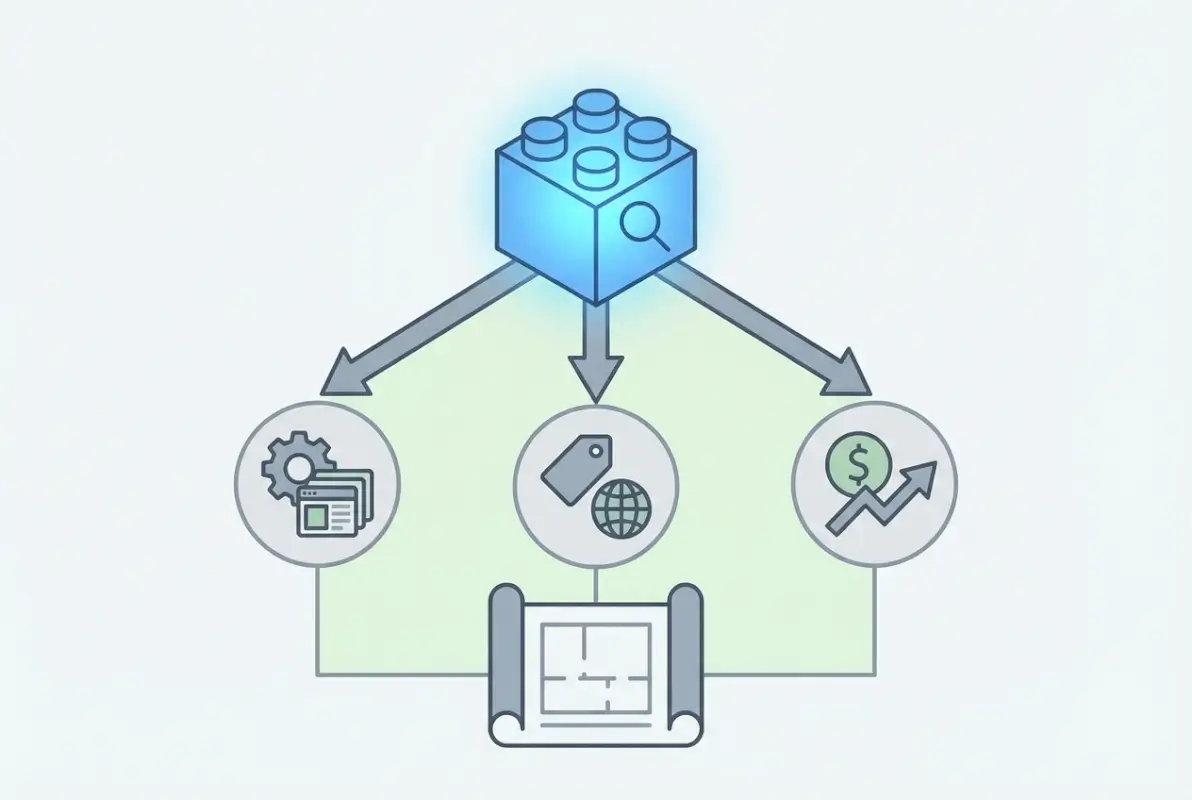
Your niche should sit at the intersection of three factors: a problem you understand, an audience willing to pay for solutions, and a gap in existing directories. Ask yourself: What specific group of buyers struggles to find trustworthy providers? What segment of service providers would pay to reach those buyers? If you can’t answer both questions clearly, your niche isn’t defined enough.
For example, a directory of small business directories for targeted exposure works because it solves a real pain point: startups and local businesses want visibility without the cost of major ad platforms. The narrower your focus, the easier it is to communicate value—and the faster you can build authority.
Map Distinct Value: Why Users List, Why Users Visit, and Why Businesses Pay
A profitable directory delivers value to three groups, and you need to articulate what each gets. Providers list because you drive qualified leads or enhance their credibility. Visitors come because you curate better options than a Google search. Advertisers pay because your audience converts. If any side of this triangle is weak, monetization stalls.
Write down one sentence for each: “Providers list here because…” “Visitors search here because…” “Businesses pay us because…” If those sentences feel vague, spend more time refining your positioning before you write a line of code.
Competitive Landscape Quick Audit
Spend a few hours analyzing the top three or four existing directories or listing sites in your space. What do they do well? Where are the gaps? Look at their pricing pages—are they offering only banner ads, or do they have tiered listing upgrades? Check their content strategy—are they ranking for long-tail local queries, or just sitting on a domain name? Most importantly, read reviews and complaints. Unhappy users of incumbent directories tell you exactly what to build.
Step 2 — Build a Scalable Data Model and Listings
Your directory’s core asset is data—not the design, not the brand, but the quality and structure of your listings. If your data model is messy, monetization becomes nearly impossible because users can’t find what they need, and businesses won’t pay to be lost in the noise. A scalable data model means structured fields, consistent taxonomies, and a plan to keep information fresh over time.
Core Data Schema for Listings
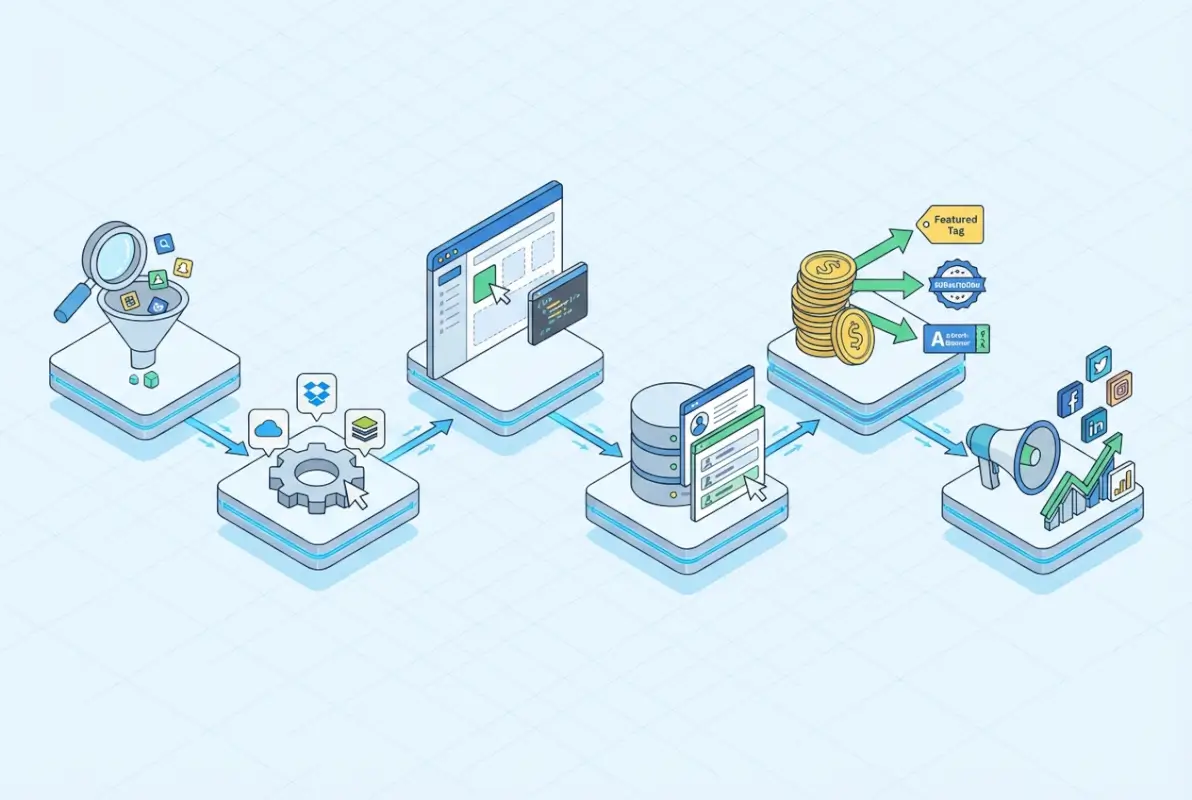
Start with the minimum viable fields: business name, category, location (address, city, state, zip, coordinates), contact info, website, and description. Then add fields that support conversion and monetization: hours of operation, pricing range, services offered, photos, and customer reviews. Use dropdown menus and checkboxes wherever possible to enforce consistency—free-text fields lead to chaos.
For location-based directories, geocoding is non-negotiable. Lat/long coordinates enable map views and radius searches, both of which increase engagement. For service-based directories, tagging by service type and pricing tier lets users filter quickly. The goal is a schema that supports both user discovery and your future monetization levers (featured placements, category sponsors, etc.).
Data Quality, Verification Workflows, and Editorial Guidelines
Unverified listings kill trust and revenue. Implement a basic verification workflow: require email confirmation, phone verification, or manual review before listings go live. For premium tiers, offer enhanced verification badges—these become a revenue product later. Create editorial guidelines for descriptions (no all-caps, no spammy keywords) and enforce them with automated checks or manual review queues.
Data quality isn’t a one-time task; it’s an ongoing process. Set up automated checks for dead links, duplicate entries, and outdated phone numbers. Consider using OWASP guidelines for input validation to prevent spam and malicious submissions. Clean data compounds in value; dirty data compounds in cost.
Import Strategies
Manually adding listings one by one doesn’t scale. Seed your directory with bulk imports from public data sources (government registries, industry associations, open datasets), partner feeds, or scraped data (where legally permissible). Many US business directory databases offer free or low-cost access for initial seeding.
Once you have a base layer of listings, prioritize quality over quantity for manual additions. Reach out to top-tier providers in your niche and offer free enhanced profiles in exchange for accurate data and photos. These anchor listings improve credibility and give you case studies for future outreach.
Listing Standards That Support Conversions
A directory that monetizes well has listings that convert visitors into customers. That means rich descriptions (at least 150 words), high-quality photos (minimum three per listing), verified contact info, and ideally customer reviews. Offer listing templates or guides to help providers create compelling profiles—many small businesses struggle with this, so guidance becomes a value-add.
For categories where pricing transparency matters (like contractors or consultants), encourage providers to share pricing ranges. Users filter by budget, and providers who share pricing get more qualified leads. That transparency becomes a premium feature: basic listings might hide pricing, while paid tiers display it prominently.
Step 3 — Create a Revenue-Focused Site Architecture
Site architecture isn’t just about navigation—it’s about guiding users toward actions that generate revenue. Every page should have a clear purpose: drive a search, trigger an upgrade, or convert a visitor into a lead. The best directory architectures layer free utility on top of paid enhancements, making monetization feel like natural progression rather than a paywall.

Pricing Models to Consider
Most successful directories blend multiple revenue streams. Here are the core models:
- Freemium listings with paid upgrades: Free basic profiles, paid featured placements, enhanced profiles with extra photos/videos, and priority in search results.
- Sponsored placements and ads: Sell category sponsorships, homepage banners, or contextual ads within search results. Keep ad density low to maintain trust.
- Premium tiers and subscriptions: Monthly or annual subscriptions for advanced features like lead forwarding, analytics dashboards, or unlimited photo uploads.
- Job boards or classifieds: If your niche involves hiring (healthcare, tech, trades), charge for job postings or resume access.
- Affiliate and referral revenue: Earn commissions by linking to booking platforms, e-commerce, or related services.
| Revenue Model | Best For | Typical Pricing |
|---|---|---|
| Freemium + Featured Listings | Service directories, local businesses | $29–$199/month |
| Category Sponsorships | High-competition niches | $200–$1,000/month |
| Job Postings | Professional directories | $99–$499/post |
| Lead Generation / Referrals | High-ticket services (legal, B2B) | $50–$500/lead |
Don’t launch with all models at once. Pick one primary model (usually freemium + featured listings) and one secondary (ads or sponsorships). Test pricing, gather feedback, then add complexity.
UX Patterns That Support Monetization
Your homepage should funnel users into search immediately—no lengthy intros or mission statements. Search results should clearly differentiate free and paid listings (visual hierarchy, badges, top placement). Every listing page should have a call-to-action: “Claim this listing,” “Upgrade to featured,” or “Contact us to sponsor this category.”
For providers, the upgrade path must be obvious. Show what they’re missing: “Your listing had 47 views last month. Featured listings average 312 views. Upgrade now.” Use scarcity (“Only 2 featured spots left in this category”) and social proof (“Join 89 other providers who upgraded this month”).
Scalable CMS and Plugins for Directories
WordPress with a directory plugin (like Directorist or GeoDirectory) is the most common starting point because it’s affordable, flexible, and SEO-friendly. Ensure your theme is mobile-responsive, fast-loading, and supports structured data. For creating a business directory in WordPress, plugins like FindAll offer solid schema and listing management out of the box.
If you expect rapid growth or complex filtering, consider headless CMS architectures or custom-built platforms. But most directories don’t need that complexity at launch—premature optimization kills more directories than lack of features.
Step 4 — Drive Traffic Through Content, SEO, and Partnerships
A directory without traffic is just a database. The fastest, most sustainable way to drive traffic is organic search—and that means treating your directory like a content site, not just a listing platform. Every category page, location page, and guide is an SEO asset that can rank and convert.

Content Strategy Linked to Listings
Don’t just list businesses; write about them. Create category-level guides (“Top 10 Dog Trainers in Austin”), comparison content (“Certified vs. Non-Certified Trainers: What to Know”), and educational articles that answer common user questions. Link from these articles to relevant listings, and you’ll drive both traffic and conversions.
Each listing should also function as a mini-landing page optimized for long-tail searches like “[business name] reviews” or “[service] near [city].” Encourage providers to add rich descriptions and FAQs—this content helps you rank and helps them convert.
SEO Best Practices for Directory Sites
Directories have a natural SEO advantage: lots of pages, location-specific URLs, and user-generated content. But you need to do the technical work. Implement schema markup (LocalBusiness, Organization, Review) on every listing. Generate dynamic meta titles and descriptions for category and location pages. Ensure your site is fast (under 2 seconds load time) and mobile-friendly.
Internal linking is critical. Link category pages to subcategories, location pages to nearby locations, and individual listings to related listings. This creates a web of relevance that search engines reward. Tools like Google’s Search Essentials provide clear guidelines on structured data and crawlability.
For directories focused on SEO and business listings that boost rankings, on-page optimization and backlinks from listed businesses become a flywheel: more listings mean more links, which means better rankings, which mean more traffic and more listings.
Community and Partnerships for Seed Traffic
Don’t wait for organic traffic to ramp up. Partner with industry associations, local chambers, or niche communities to promote your directory. Offer free featured listings to influential providers in exchange for social shares and testimonials. Sponsor relevant podcasts or newsletters and include a call-to-action for providers to claim their free listing.
Community engagement also builds your email list. Capture emails at every interaction—newsletter signups, listing claims, upgrade inquiries—and nurture those leads with helpful content and upgrade offers. A directory with 500 engaged email subscribers can monetize faster than one with 5,000 unengaged visitors.
Automated Outreach and Listing-Seed Programs
Manually emailing every potential listing is slow. Use automation tools to send personalized outreach at scale. Segment by category, location, or business size, and tailor your pitch: “We’ve added your business to [Directory Name]. Claim your free listing and see how we’re driving [X leads/month] to similar providers.”
Incentivize early adopters with lifetime discounts or free featured placement for the first 90 days. Early momentum compounds—providers see results, refer peers, and your directory gains credibility faster.
Step 5 — Onboard, Engage, and Retain Listings
Getting a provider to list once is good; keeping them engaged and paying over time is how you build sustainable revenue. Retention hinges on demonstrating value consistently—through lead delivery, visibility metrics, and responsive support. A directory that feels like a ghost town won’t retain paid subscribers, no matter how good the SEO is.

Outreach Framework for Initial Listings
Start with a seed list of 50–100 high-quality providers in your niche. Reach out personally (not via form spam) and offer them a free enhanced listing in exchange for feedback and a testimonial. These early adopters become your case studies and your proof of concept for paid tiers.
Once you have 20–30 active listings, shift to semi-automated outreach. Use tools like Mailchimp or HubSpot to segment prospects and send sequences that educate, then ask for the listing. Include social proof (“Join 89 other providers already listed”) and scarcity (“Limited featured spots available”).
Listing Verification and User-Generated Content
User-generated content—reviews, photos, Q&A—drives engagement and SEO. Encourage visitors to leave reviews by making it frictionless: one-click star ratings, optional text, and no account required. Moderate reviews to prevent spam, but don’t delete negative feedback unless it violates clear guidelines (profanity, false claims, etc.). Authentic reviews build trust, even when they’re mixed.
For photos, incentivize providers to upload high-quality images by showing them the impact: “Listings with 3+ photos get 2.5x more clicks.” Offer photo upload as a premium feature, or make it free but prominent.
Retention Techniques
Send monthly performance emails to listed providers: “Your listing had 142 views and 8 clicks last month. Upgrade to featured and reach an estimated 350+ views.” Show trending searches in their category and suggest content updates to rank better. Remind them of renewal deadlines with a discount offer (“Renew now and save 15%”).
For paid subscribers, offer quarterly business reviews: a short PDF summarizing their traffic, leads, and competitive standing. This level of service justifies higher pricing and reduces churn. One of the reasons business directories matter for startups is that they provide measurable ROI—make that ROI visible.
Vendor and Advertiser Relationships
Treat your top-paying advertisers and featured listers like partners, not transactions. Schedule quarterly check-ins to discuss performance, gather feedback, and explore upsell opportunities. If a category sponsor isn’t getting results, help them optimize their listing or offer a different placement. Long-term relationships are more profitable than constant churn.
Build a simple dashboard where advertisers can log in and see real-time metrics: impressions, clicks, leads generated. Transparency builds trust and justifies renewal.
Step 6 — Monetize at Scale and Optimize for Revenue
By now, you have a focused niche, quality listings, steady traffic, and engaged providers. It’s time to layer on monetization systematically and optimize for maximum revenue per visitor. Scaling revenue isn’t about inventing new models—it’s about refining pricing, expanding to adjacent categories, and automating everything that doesn’t require human judgment.
Implement Monetization Engines
If you started with freemium + featured listings, add category sponsorships next. Identify your top five highest-traffic categories and reach out to the top three providers in each. Offer exclusive category sponsorship: their logo at the top of the page, first position in results, and inclusion in email newsletters. Price it at 3–5x the cost of a featured listing.
Layer in display ads carefully. Use contextual ad networks (Google AdSense, Media.net) or direct-sold banner placements. Keep ad density low—one banner per page maximum—to avoid degrading user experience. If your niche supports it, test affiliate placements: recommend related tools or services and earn commissions.
Diversify Revenue Streams
Single-revenue-stream directories are fragile. If Google updates its algorithm or a competitor undercuts your pricing, you’re stuck. Diversify by adding:
- Lead generation: Capture contact forms on listings and sell leads to providers (pay-per-lead or bundled packages).
- Premium content: Offer research reports, buyer guides, or webinars for a one-time fee or subscription.
- Events or conferences: Host virtual or in-person events for your niche and charge for tickets or sponsorships.
- White-label or licensing: If your data model and tech stack are solid, license your platform to other niches or regions.
Each revenue stream should complement the others. Lead generation supports featured listings (providers pay more when they get measurable ROI). Events drive engagement and new listings. Licensing turns your operational knowledge into passive income.
Analytics: Track Metrics That Drive Revenue
Vanity metrics (total visits, total listings) feel good but don’t predict revenue. Focus on:
- Listing view-through rate: What percentage of visitors click on a listing?
- Upgrade conversion rate: What percentage of free listings convert to paid?
- Revenue per listing: How much does each listing generate over its lifetime?
- Churn rate: What percentage of paid subscribers don’t renew?
- Cost per acquisition (CPA): How much does it cost to acquire a new paying provider?
Use Google Analytics and your CMS dashboard to track these metrics weekly. Set targets and run A/B tests on upgrade CTAs, pricing pages, and email campaigns. Small improvements compound quickly at scale.
Automation and Outsourcing
Manual work doesn’t scale. Automate listing approvals with rule-based checks (email verification, duplicate detection). Use scheduled scrapers or API integrations to refresh data (hours, addresses, phone numbers) automatically. Set up drip email campaigns for onboarding, engagement, and renewal.
For tasks that require judgment—content moderation, customer support, sales calls—hire freelancers or part-time help. A directory generating $5,000/month can afford a VA at $1,000/month to handle routine tasks, freeing you to focus on growth and partnerships. According to research from MIT Sloan Review on data monetization, the most scalable data businesses automate curation and focus human effort on high-value relationships.
Optional Advanced Modules
Niche-Specific Monetization Tactics
Different verticals unlock different revenue levers. Healthcare directories can charge for telemedicine integrations or patient review syndication. Real estate directories monetize through mortgage referrals or property alert subscriptions. B2B directories sell intent data (who searched for what) to listed vendors. Identify what your niche values most and build products around it.
Data Monetization Angles for Directories
Your directory collects valuable behavioral data: search patterns, popular categories, geographic demand. Aggregate and anonymize this data, then sell insights to industry players. For example, a directory of fitness studios could sell a quarterly report on trending workout types by region. This requires careful attention to privacy laws (GDPR, CCPA), but when done ethically, data products can generate high-margin recurring revenue.
Affiliate and Cross-Promotion Strategies
Partner with complementary services and earn referral fees. A directory of wedding vendors could partner with registry platforms, honeymoon booking sites, or event insurance providers. Promote these partners in your newsletters, on thank-you pages after listing submissions, or as contextual recommendations on listing pages. Affiliate revenue is passive once relationships are established.
Automation Tooling for Ongoing Scalability
Use tools like Zapier or Make to connect your directory to CRMs, email platforms, and analytics dashboards. Trigger workflows when a listing is claimed, when a subscriber churns, or when traffic to a category spikes. Monitor competitors with automated alerts (new listings, pricing changes) and adjust your strategy in real time. The less manual intervention required, the more you can focus on strategic growth.
Go-To Template for Your Directory’s Revenue Playbook
6- or 12-Month Rollout Plan
Month 1–2: Define niche, build data model, seed 50–100 listings, launch MVP site. Focus on quality over scale. Month 3–4: Launch content strategy, implement basic SEO, start outreach for listing claims. Month 5–6: Introduce first paid tier (featured listings), test pricing, gather feedback. Month 7–9: Expand content, add category sponsorships, optimize conversion funnels. Month 10–12: Diversify revenue (ads, lead gen, events), automate retention workflows, hire part-time help.
Quick-Start Listing-Seed Checklist
Identify 10 key categories. Find 5–10 providers per category via Google, industry associations, or LinkedIn. Send personalized outreach offering free enhanced listing. Follow up twice if no response. Once listed, ask for testimonial and social share. Repeat weekly until you have 100+ listings.
Common Pitfalls and How to Avoid Them
Pitfall #1: Launching without a monetization plan. Solution: Design revenue into your architecture from day one. Pitfall #2: Trying to compete with generalist directories. Solution: Go narrow and deep. Pitfall #3: Ignoring data quality. Solution: Implement verification and regular audits. Pitfall #4: Expecting instant traffic. Solution: Build SEO systematically and use partnerships for early momentum.
Sample Pricing Ladder and Feature Matrix
Free Tier: Basic listing, contact info, 1 photo. Standard Tier ($29/mo): Enhanced profile, 5 photos, priority support. Featured Tier ($99/mo): Top search placement, badge, analytics dashboard. Category Sponsor ($299/mo): Exclusive category placement, newsletter inclusion, dedicated account rep.
FAQ
What is an online directory, and how does it generate revenue?
An online directory is a curated database of businesses or services organized by category, location, or niche. Revenue comes from premium listing upgrades, featured placements, advertising, lead generation, and subscriptions. Successful directories solve a specific search problem better than general platforms.
Which monetization model is best for a new directory?
Start with a freemium model: offer free basic listings and charge for featured placements or enhanced profiles. This lowers barriers to entry, builds your database quickly, and lets you test pricing with minimal risk. Add secondary revenue streams (ads, sponsorships) once traffic grows.
How many listings are needed to start earning revenue?
You can start monetizing with as few as 50–100 quality listings if your niche is focused and traffic is targeted. The key is demonstrating value to providers—show them leads, visibility metrics, or competitive advantage. Scale revenue by adding listings and optimizing conversion, not just volume.
How long does it take to monetize a directory site?
Most directories generate their first revenue within 3–6 months if they execute a focused niche strategy, seed quality listings quickly, and drive traffic through SEO and partnerships. Reaching $5,000/month typically takes 9–12 months with consistent effort and iterative optimization.
What are the biggest mistakes to avoid when starting an online directory?
Avoid launching too broad (niche focus is critical), neglecting data quality (dirty data kills trust), waiting too long to monetize (design revenue in from day one), and relying solely on paid traffic (organic SEO is essential for profitability). Also avoid manual workflows that don’t scale.
How do I ensure data accuracy for listings?
Implement verification workflows (email/phone confirmation), use automated checks for dead links and duplicates, establish editorial guidelines, and schedule regular data audits. Encourage providers to claim and update their own listings, and moderate user-generated content (reviews, photos) consistently.
Should I focus on ads, subscriptions, or featured listings first?
Featured listings should be your primary focus at launch. They’re easier to sell (clear value proposition), don’t require high traffic volumes, and align with provider incentives. Add subscriptions once you have recurring engagement, and introduce ads only when traffic justifies it without degrading user experience.
What KPIs matter most for a directory business?
Track listing view-through rate (how many visitors engage with listings), upgrade conversion rate (free to paid), revenue per listing, subscriber churn rate, and cost per acquisition. These metrics predict long-term profitability better than vanity metrics like total visits or total listings.
How can partnerships boost directory revenue?
Partnerships with industry associations, local chambers, and niche communities drive credibility and seed traffic. Offer them co-branded landing pages or revenue shares. Partner with complementary services for affiliate revenue. Strategic partnerships accelerate growth without heavy marketing spend.
Are there legal or compliance considerations for listing data?
Yes. Comply with data privacy laws (GDPR, CCPA) if you collect personal information. Implement terms of service and privacy policies. Moderate user-generated content to avoid liability. If scraping public data, ensure it’s legally permissible. Consult legal counsel for high-risk verticals like healthcare or finance.
Conclusion
Building a profitable online directory isn’t about being the biggest—it’s about being the most useful to a specific audience and monetizing that value deliberately. If you followed this 6-step framework, you now have a blueprint: define a narrow niche, build clean scalable data, architect for revenue from day one, drive organic traffic through SEO and content, engage and retain listings with measurable value, and optimize monetization systematically.
The directories that win in the next few years will be the ones that treat listings as products, providers as customers, and data as a strategic asset. They’ll blend multiple revenue streams, automate relentlessly, and iterate based on metrics—not guesses. Don’t try to build everything at once. Pick one revenue model, test it with 50 listings, measure what works, then scale. The compounding effects of quality data, engaged users, and optimized conversion will do the rest.
Your move: choose your niche this week, seed your first 10 listings, and launch a simple landing page. Revenue doesn’t wait for perfection—it rewards momentum and focus.
Was this article helpful?