7 Proven Business Directory Monetization Strategies for 2026

Generating summary...
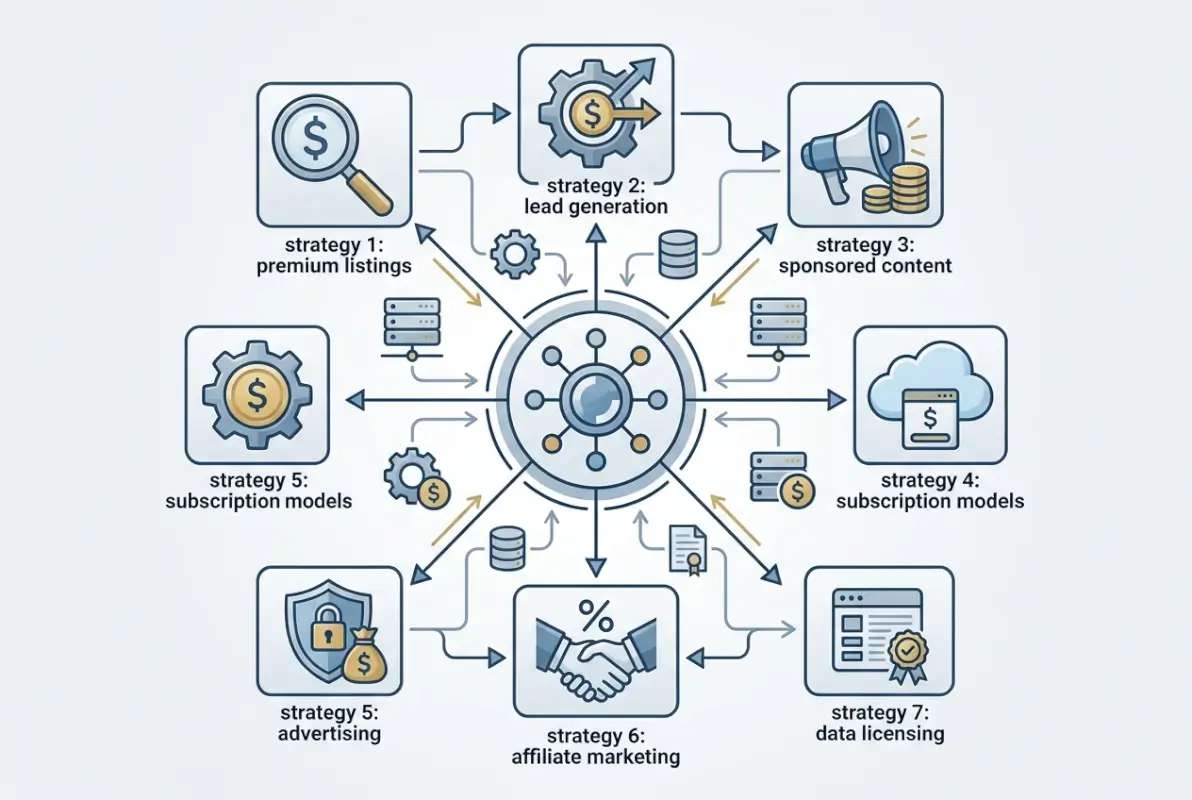
If you’re running a business directory in 2026, you’ve probably wondered how much revenue you’re leaving on the table. While most directory operators rely solely on paid listings, the smartest players are stacking multiple revenue streams—subscriptions, lead generation, API licensing, and more—to build predictable, scalable income. Here’s what almost nobody tells you: the directories that win don’t just monetize harder; they monetize smarter by aligning each revenue model to specific user segments and behaviors. In this guide, we’ll break down the seven proven business directory monetization strategies that actually work, with concrete implementation tactics you can deploy this quarter.
TL;DR – Quick Takeaways
- Hybrid monetization wins – Combine subscriptions, lead fees, ads, and data licensing to diversify revenue and reduce dependency on any single stream
- Start with tiered listings – Premium listing subscriptions provide predictable cash flow and are easiest to implement as your foundation
- Lead generation scales with quality – Pay-per-lead models can drive higher ARPU but require robust validation and transparent metrics
- Data is your hidden asset – API licensing and data-as-a-service unlock high-margin recurring revenue once your directory reaches critical mass
- User experience comes first – Every monetization tactic must deliver clear value without overwhelming users or eroding trust
The business directory landscape has evolved dramatically. What used to be simple yellow-page listings are now sophisticated data platforms serving multiple stakeholders—small businesses hunting for visibility, consumers searching for trusted providers, and developers seeking structured business data. The monetization opportunity is enormous, but only if you understand which models fit your traffic patterns, user intent, and competitive positioning.
Most directory operators make one critical mistake: they pick a single monetization method and stick with it, even when it caps their growth. The reality is that different user segments respond to different value propositions. Some businesses gladly pay monthly for premium placement; others only convert on performance-based pricing. Meanwhile, your aggregated data might be worth thousands to the right B2B buyer. Let’s explore how to capture all of that value systematically.
Subscription and Premium Listings
Subscription-based premium listings form the backbone of sustainable directory revenue. Businesses pay a recurring fee—monthly or annually—for enhanced profile features, priority placement in search results, richer media capabilities, and performance analytics. The model works because it’s simple to understand, easy to budget for SMBs, and provides immediate value through increased visibility. Most successful directories offer tiered pricing: a free basic listing to drive volume and SEO, a mid-tier premium option with enhanced features, and an enterprise package with white-glove support and advanced analytics.

The beauty of subscriptions is predictability. Unlike one-time listing fees or volatile ad revenue, recurring subscriptions let you forecast cash flow with confidence and plan hiring, marketing, and product development accordingly. They also create natural upsell opportunities—when a business sees tangible ROI from a basic premium listing, upgrading to a higher tier becomes an easy conversation. According to research from Statista’s digital advertising insights, subscription models in online platforms show significantly higher customer lifetime value compared to transaction-based models.
The challenge is demonstrating ongoing value. Businesses will churn if they don’t see leads, traffic, or engagement metrics that justify the monthly cost. That’s why the best directory operators bundle premium listings with transparent analytics dashboards showing profile views, click-throughs, and lead conversions. Some even rotate featured placement weekly so every premium subscriber gets a turn in the spotlight, reducing the perception that only the biggest spenders get visibility.
Pricing your tiers requires market research and testing. For profitable business directory niche markets you’re targeting, look at what competitors charge and what local businesses typically spend on digital marketing. A good starting point: free basic listings, premium at $29-79/month, and enterprise at $199-499/month. The key is clear feature differentiation—premium should include logo upload, photo galleries, social links, and priority in category pages, while enterprise adds API access, dedicated support, and homepage rotation.
One often-overlooked best practice is the upgrade path. Make it trivially easy for free users to sample one premium feature (say, a 14-day trial of enhanced placement) and then convert with one click. Similarly, let premium users test enterprise features before committing. Friction kills conversions, so your WordPress directory platform should handle upgrades seamlessly—tools like TurnKey Directories make tier management and payment processing straightforward without custom development.
Lead Generation and Pay-Per-Lead (PPL)
Lead generation flips the value equation: instead of charging businesses a flat subscription fee, you charge only when you deliver a qualified lead—a phone call, form submission, or quote request from a real potential customer. This performance-based model aligns your incentives directly with business outcomes, which makes it incredibly attractive to advertisers and can command premium pricing when lead quality is high. The challenge is validating lead quality and avoiding the perception that you’re just sending unqualified tire-kickers.
Pay-per-lead works best in high-intent verticals—legal services, home improvement, financial advisors, medical specialists—where a single qualified lead can be worth hundreds or even thousands of dollars. For education directories helping families find the right school, each enrollment inquiry has clear monetary value to the institution. You can charge $20-150+ per lead depending on industry and geography, and businesses will gladly pay because they only spend money when they receive a sales opportunity.
Implementing PPL requires robust lead-tracking infrastructure. You need to capture lead source, timestamp, contact info, and ideally some indication of intent or need. Many directories use CRM integration and lead scoring to filter out low-quality submissions before billing the business. Transparency is critical—provide a dashboard showing every lead delivered, its status (new, contacted, converted), and any disputes or refunds. Businesses trust pay-per-lead models when they can audit the data themselves.
One smart hybrid approach is bundling lead generation with premium subscriptions. Offer a base subscription that includes enhanced listing features, then layer on pay-per-lead as an optional add-on or as included leads up to a cap (e.g., premium tier includes 5 leads/month, then $X per additional lead). This gives businesses predictable baseline costs with upside tied to actual performance, and it smooths your revenue—you’re not purely dependent on lead volume, which can fluctuate seasonally.
The biggest pitfall is sending low-quality leads and damaging trust. If you’re aggregating contact forms from your directory, implement CAPTCHA, email verification, and behavioral signals (time on page, pages visited) to weed out bots and spam. Consider a short qualification question (“What’s your project timeline?” or “What’s your budget range?”) to filter intent. According to insights from Forrester’s B2B marketing research, lead quality matters far more than lead volume for long-term client retention and satisfaction.
Some directories also experiment with pay-per-click (PPC) or pay-per-call models, where businesses pay for clicks to their website or tracked phone calls. These can work well for lower-ticket services where lead-to-sale conversion happens offline. The key is choosing the metric that best reflects real user intent and business value in your niche. When managing these listings at scale—especially if you’re syndicating to platforms like eBay or similar marketplaces—automation and clear attribution become essential.
3) Advertising, Sponsorships, and Featured Spots
How it works
Display ads, sponsored listings, home-page takeovers, and category sponsorships monetize traffic and impressions by offering advertisers targeted visibility. Directory operators sell “featured” spots to premium partners who want guaranteed placement above organic results, often charging a flat monthly rate or CPM basis. This model scales with traffic and allows flexible pricing tiers—from single-category sponsorships to site-wide campaigns—so advertisers can match spend to reach.
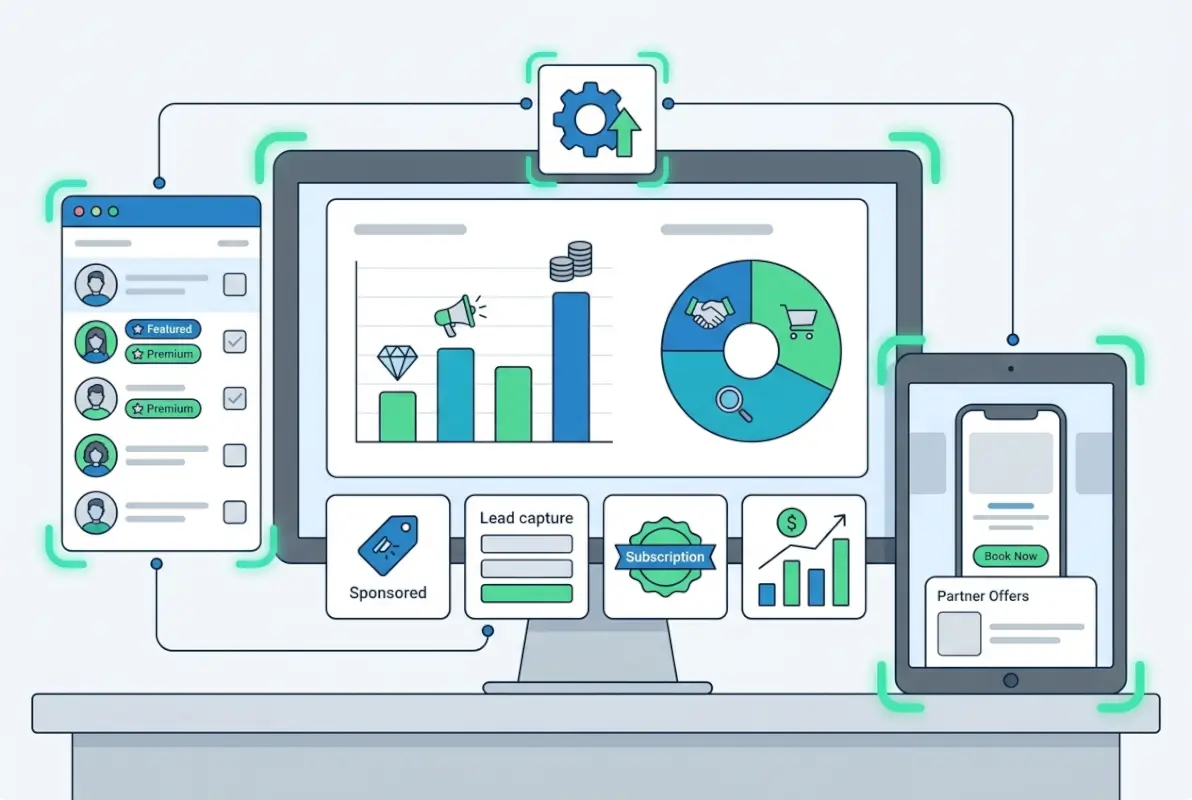
Sponsored content and native ads blend seamlessly into user flows when executed well, driving higher engagement than traditional banner units. Directories with high-intent traffic can command premium rates because visitors actively search for solutions, making ad placements highly relevant. Performance metrics like click-through rate, conversion tracking, and viewability give advertisers clear ROI, justifying higher budgets and longer commitments.
Pros/Cons and best practices
On the upside, advertising revenue scales with growth and carries high margins since incremental impressions cost almost nothing to serve. Advertiser ROI tends to be strong when targeting is precise, and multi-format options (banners, carousels, video) offer creative flexibility. Sponsorships can also attract large-ticket enterprise clients willing to pay for exclusive category ownership or homepage visibility.
The downside is user-experience risk: too many ads or misaligned placements degrade trust and increase bounce rates. Ad saturation can also cannibalize organic listing clicks, reducing perceived value for free or basic-tier users. Balancing inventory against user satisfaction requires careful A/B testing and editorial discipline to avoid turning the directory into a low-quality ad farm.
Best practices include relevance-based targeting, clear “Sponsored” labels, and regular performance reports to advertisers. Combine display ads with non-intrusive sponsored content—such as editorial spotlights on featured businesses—to add genuine user value. Cap ad density per page, rotate featured spots to avoid staleness, and use heat-map analytics to optimize placement without overwhelming the core browsing experience.
| Ad Format | Typical Pricing | User Impact |
|---|---|---|
| Banner/Display | CPM ($2–$20) | Moderate if frequency-capped |
| Sponsored Listing | Flat monthly ($100–$1,000+) | Low when labeled clearly |
| Category Sponsorship | Exclusive monthly ($500–$5,000+) | Low; enhances relevance |
| Homepage Takeover | Daily/weekly rate ($200–$2,000+) | High if overused; test carefully |
4) Data-as-a-Service (DaaS) and API Licensing
How it works
Directories aggregate rich, structured business data—categories, locations, ratings, hours, metadata—and license access to developers, apps, or partner networks via APIs or bulk data feeds. Customers pay for programmatic access, either through tiered usage plans (requests per month) or enterprise licenses for white-label embedding. This turns the directory’s data asset into a recurring revenue stream that scales with partner adoption and API call volume.

API products typically offer a free tier with low rate limits to attract developers, then charge for higher-volume or premium endpoints (real-time updates, enriched fields, verified listings). Enterprise clients may negotiate custom SLAs, dedicated support, and data refresh guarantees. Because data licensing requires minimal marginal cost to serve, gross margins can exceed 80 percent once infrastructure and documentation are in place.
Pros/Cons and best practices
The upside is high-margin recurring revenue that compounds as partners integrate more deeply and usage grows. API licensing also expands the directory’s ecosystem: every third-party app or service embedding your data drives back-referrals and brand visibility. Data monetization diversifies revenue away from listing fees and ads, insulating the business against single-channel risks.
The cons are data quality, governance, and privacy obligations. Poor data hygiene—stale listings, duplicate records, missing fields—erodes partner trust and triggers churn. Licensing also demands robust legal terms, usage monitoring, and compliance with privacy frameworks (GDPR, CCPA). Building and maintaining API infrastructure, documentation, developer portals, and support channels require upfront engineering and ongoing operational investment.
Best practices start with clean, well-documented data schemas and versioned API endpoints that follow RESTful or GraphQL conventions. Establish tiered plans (free, growth, enterprise) with transparent rate limits and overage pricing. Invest in developer onboarding: clear guides, sandbox environments, and code samples reduce time-to-first-call and improve retention. Enforce data-quality controls—automated validation, user-reported flagging, periodic audits—and publish uptime SLAs to build confidence.
| API Tier | Monthly Price | Rate Limit | Support Level |
|---|---|---|---|
| Free (Developer) | $0 | 1,000 requests/mo | Community forum |
| Growth | $99–$299 | 50,000 requests/mo | Email support, SLA 99% |
| Enterprise | Custom ($1,000+) | Unlimited or custom | Dedicated account manager, 99.9% SLA |
5) Hybrid Models, Affiliate/Partnership Revenue, and Ancillary Services
How it works
A hybrid monetization strategy layers multiple revenue streams—subscriptions, lead generation, ads, data licensing, affiliate commissions, and value-added services—to maximize customer lifetime value and capture revenue at different touchpoints. For example, a directory might offer free basic listings, charge for premium tiers, earn affiliate commissions when users book services through partner links, and sell marketing bundles (SEO audits, social-media setup) as ancillary services. This approach diversifies income, reduces reliance on any single channel, and addresses varied customer willingness-to-pay.

Ancillary services extend monetization beyond the listing itself: onboarding consultations, analytics dashboards, reputation-management tools, and white-label reporting for enterprise clients. Affiliate partnerships with SaaS providers (CRM, payment processors, booking systems) generate recurring revenue-share when listed businesses adopt those tools. By bundling complementary services, directories become full-service platforms rather than mere listing databases, increasing switching costs and customer stickiness.
Pros/Cons and best practices
Diversification reduces revenue concentration risk and smooths cash flow: subscription churn can be offset by ad growth, and seasonal affiliate dips balanced by steady API licensing. Multi-stream models also expand total addressable market by serving different buyer personas—small businesses may prefer pay-per-lead, while enterprises value data licensing and concierge onboarding. Revenue per user climbs as customers engage across tiers and add-ons.
The downside is architectural and operational complexity: each stream requires distinct pricing, billing, support workflows, and compliance checks. Channel conflict can arise if, for instance, affiliate partners compete with premium listing upsells, or if ads undermine organic listing visibility. Complexity also taxes customer comprehension—too many SKUs or opaque bundling confuses buyers and slows decision-making.
Best practices emphasize clean incentive alignment and transparent accounting. Map each revenue stream to a customer segment and buying stage, ensuring upsells feel natural rather than opportunistic. Use unified dashboards so users see all services in one place, and bundle strategically—offer a “Pro Package” combining premium listing, lead allocation, and analytics rather than forcing à la carte choices. Gradually introduce new streams (one per quarter) to avoid overwhelming existing customers, and instrument performance analytics to optimize the mix based on margin, churn, and user satisfaction.
| Revenue Stream | Typical Contribution | Best Customer Segment |
|---|---|---|
| Premium Listings | 40–50% | SMBs seeking visibility |
| Advertising/Sponsorships | 20–30% | Brands with marketing budgets |
| Lead Generation (PPL) | 10–20% | High-value service providers |
| API/Data Licensing | 5–15% | Developers, app ecosystems |
| Affiliate/Ancillary | 5–10% | Growth-stage businesses |
Frequently Asked Questions
How do directory websites typically monetize in 2026?
Directory websites typically monetize through a blend of subscription-based premium listings, pay-per-lead models, display advertising and sponsorships, API licensing for data access, and hybrid affiliate partnerships. This multi-stream approach balances predictable recurring revenue with performance-based growth opportunities, allowing directories to maximize lifetime value across different customer segments.
What is the best monetization model for a new directory in 2026?
New directories should start with a freemium foundation offering basic listings to drive traffic, then layer a tiered premium subscription for enhanced features. Once traffic validates market fit, test secondary streams like lead generation or category sponsorships. Add API licensing and data monetization later as data quality and audience scale mature.
How can a directory maximize listing revenue without harming user experience?
Use transparent, tiered pricing that clearly communicates value at each level, and ensure sponsored placements are highly relevant to user intent. Limit ad density, prioritize editorial integrity, and rotate featured listings to maintain trust. Provide robust analytics to paying businesses so they see tangible ROI, which sustains willingness to pay.
Are data APIs a viable revenue stream for local directories?
Yes, when paired with strong data governance, clean schemas, and reliable uptime. API licensing enables directories to monetize aggregated business data at scale, serving developers, apps, and partner platforms. Success depends on consistent data quality, clear licensing terms, and compliance with privacy regulations to build trust with API consumers.
What are common pitfalls to avoid with directory monetization?
Common pitfalls include ad overload that degrades user experience, misaligned or low-quality sponsored content, opaque pricing structures that erode trust, and insufficient data quality controls. Avoid launching too many revenue streams simultaneously, as complexity can confuse users and dilute brand positioning. Always prioritize transparency and user value over short-term revenue spikes.
Can a directory combine subscription and lead-generation models?
Absolutely. Hybrid models that pair base subscription revenue with performance-based lead fees are increasingly common and effective. The subscription provides predictable cash flow and funds platform development, while pay-per-lead aligns incentives and rewards high-performing listings. Clear terms prevent channel conflict and ensure businesses understand the value of each component.
Should directories offer free listings or require payment from the start?
Start with free basic listings to build critical mass, attract organic traffic, and establish market presence. Once you have meaningful user engagement and proven value, introduce premium tiers with advanced features, analytics, and priority placement. This freemium approach lowers barriers to entry while creating a clear upgrade path for businesses seeing results.
How do sponsorships and advertising differ in directory monetization?
Advertising typically involves display units, banners, or programmatic placements sold on impression or click basis. Sponsorships are more curated partnerships where a brand sponsors a category, homepage takeover, or premium content placement for a fixed fee or duration. Sponsorships often deliver higher CPMs and deeper brand integration than standard display ads.
Build Your Sustainable Revenue Engine
The most resilient directories in 2026 share a common trait: they orchestrate multiple revenue streams into a cohesive monetization architecture that serves users, listed businesses, and the platform itself. The seven strategies outlined here—subscriptions and premium listings, lead generation and pay-per-lead, advertising and sponsorships, data-as-a-service and API licensing, and thoughtful hybrid models—are not mutually exclusive. In fact, the strongest operators layer these approaches strategically, starting with a predictable subscription foundation and progressively activating performance-based and data-licensing streams as traffic, trust, and data quality mature.
Your next steps are straightforward. First, map your current and potential revenue streams against your directory’s stage: early-stage platforms should prioritize free-to-premium listing tiers and a single high-value advertising or sponsorship pilot; growth-stage directories can test lead generation and introduce API access; mature directories should optimize hybrid models and explore ancillary services like premium onboarding or marketing automation. Second, establish transparent pricing and feature matrices so businesses understand exactly what they get at each tier, and ensure your analytics demonstrate clear ROI. Third, invest in data quality and governance from day one—reliable, clean data is the foundation for sustainable API licensing and trusted lead generation.
Ready to Monetize Smarter?
Start by auditing your current listings and traffic quality, then design a three-tier pricing model with clear feature differentiators. Pilot one performance-based stream—either pay-per-lead or a category sponsorship—and measure conversion and retention over 90 days. Use the insights to refine your pricing, layer additional streams, and build a revenue engine that scales with your directory’s growth.
The directories that win in 2026 are the ones that deliver measurable value at every price point and continuously refine their monetization mix based on real user and business data.
Don’t wait for perfect traffic numbers or complete feature parity. Launch your monetization strategy with clear hypotheses, test rigorously, and iterate based on feedback from both users and listed businesses. The hybrid, data-informed approach detailed in this guide gives you a proven roadmap—now it’s time to apply it to your unique market, audience, and competitive positioning. Take action today, measure relentlessly, and build a directory business that thrives on sustainable, diversified revenue.
Was this article helpful?