5 Best Education Directories to Find Schools in 2025 (Complete Guide)

Generating summary...
Choosing the right school—whether for your child’s kindergarten years or your own graduate studies—shouldn’t feel like navigating a maze blindfolded. Yet with over 130,000 K-12 schools and 4,000+ postsecondary institutions across the United States alone, that’s exactly how many families describe the process. I remember watching my sister spend three frustrated weeks cold-calling schools across two states during her relocation, only to discover that comprehensive education directories could have delivered better results in a single afternoon.
The challenge isn’t just the sheer volume of options—it’s the scattered, inconsistent information across individual school websites, outdated local listings, and conflicting data sources. Education directories solve this by aggregating verified school data into searchable, comparable formats. But here’s what most families miss: not all directories pull from the same sources, update on the same schedules, or serve the same purposes. Using the wrong directory—or worse, relying on a single source—can lead you to overlook perfect-fit schools or waste time on options that don’t match your actual needs.
TL;DR – Quick Takeaways
- Government directories (NCES, state portals) provide the most accurate baseline data but lack subjective insights
- Consumer directories (GreatSchools, Niche) add parent reviews and ratings but require careful interpretation
- Specialized directories serve niche needs (international programs, online learning, specific curricula)
- Cross-verification across 2-3 directories catches outdated listings and reveals data discrepancies
- Data freshness matters more than comprehensiveness—a smaller directory with monthly updates beats a massive one last refreshed two years ago
- The five essential resources covered here form a complete toolkit for any school search scenario
Understanding the Education Directory Landscape in 2025–2026
Education directories have evolved far beyond simple school address listings. Today’s platforms function as sophisticated data aggregators, pulling from government databases, school-submitted profiles, standardized test repositories, and user-generated reviews to create multidimensional school portraits. According to NCES data and school statistics, the median public school now reports over 40 distinct data points annually—from student-teacher ratios to free lunch eligibility rates to AP course offerings—all of which feed into various directory platforms.
The directory ecosystem breaks into four distinct categories, each serving different trust and detail requirements. Government portals prioritize accuracy and standardization but often lack the qualitative context parents crave. Nonprofit directories balance official data with mission-driven accessibility features. Consumer-facing platforms emphasize user experience and comparative tools, sometimes at the expense of data verification rigor. Specialized directories serve niche segments—think Montessori-only databases or international baccalaureate program finders—with depth that general directories can’t match.
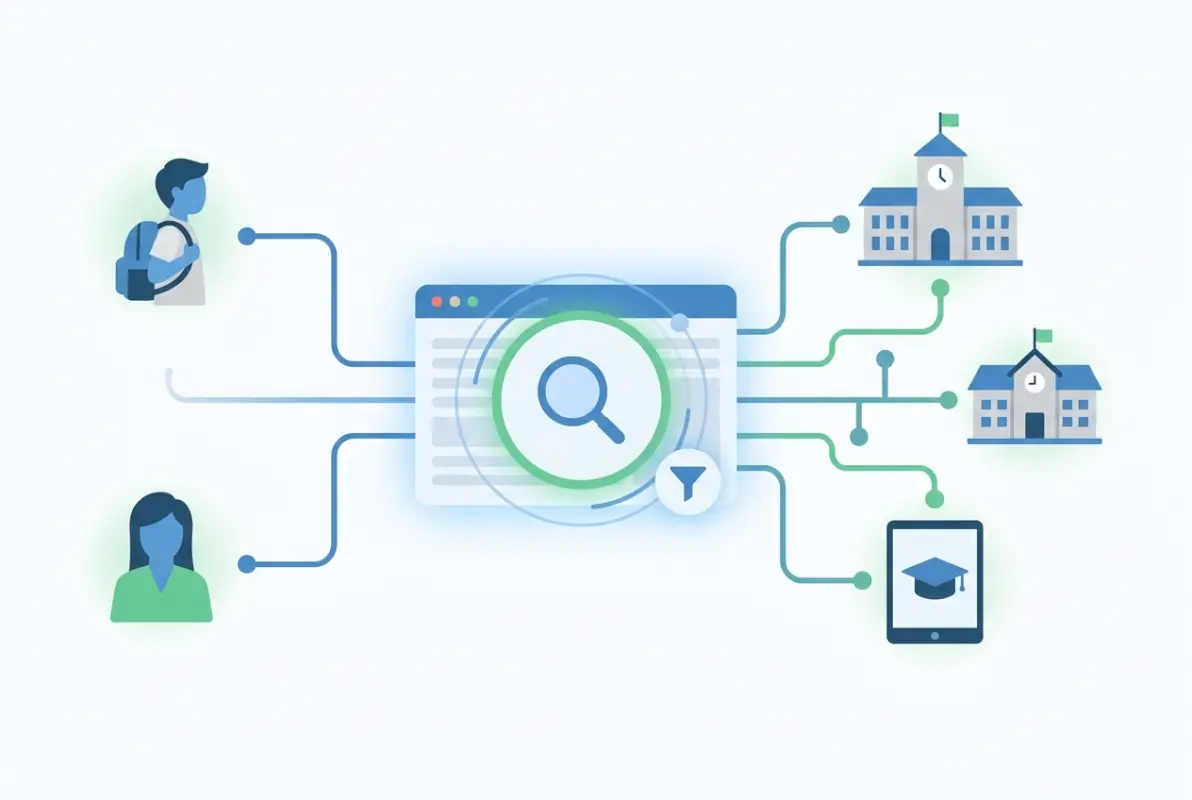
Why does category selection matter? Because each type makes different trade-offs between completeness, currency, and credibility. A state education department portal might update enrollment figures within weeks of the school year starting, while a popular consumer directory could be working from last year’s submission. Understanding these differences prevents you from treating all directory data as equally reliable or current.
Key Players and Categories
Government Data Portals: Federal (NCES College Navigator, ED.gov school finder) and state-level directories pull directly from administrative records. These sources define the accuracy baseline—if a government portal contradicts a consumer directory, trust the government source for factual elements like enrollment counts, teacher credentials, or accreditation status.
Nonprofit School Directories: Organizations like GreatSchools operate in a hybrid space, combining Department of Education statistics with proprietary rating systems and community-submitted reviews. Their nonprofit status generally means less commercial bias than for-profit platforms, though rating methodologies still warrant scrutiny.
Consumer Review Platforms: Niche, Private School Review, and similar sites prioritize user experience and subjective insights. They excel at capturing school culture and parent satisfaction but require careful interpretation—selection bias heavily influences which families leave reviews.
Specialized Program Directories: When you need a school offering International Baccalaureate, Classical education, or specific special education services, generalist directories often disappoint. Program-specific databases maintained by accrediting bodies or curriculum organizations provide authoritative listings that broader directories miss.
Current Statistics and Trends
Research from Pew Research education trends indicates that 68% of parents consult online school directories before making enrollment decisions, up from 42% a decade ago. But here’s the critical insight most coverage misses: the average parent consults 3.2 different directories before finalizing a school choice, suggesting that no single platform fully meets user needs.
Directory usage patterns reveal distinct search phases. Initial broad searches (“elementary schools near me”) happen on consumer-friendly platforms with strong mapping features. Mid-stage comparison shopping gravitates toward directories with side-by-side school comparison tools. Final verification before enrollment applications overwhelmingly happens on official government portals and school district sites—parents instinctively recognize the need to confirm critical details at authoritative sources.
The NCES reports that 94% of public schools now provide standardized profile data through the Common Core of Data collection, creating unprecedented baseline consistency for directory platforms to build upon. Private schools show more variation, with roughly 73% maintaining current profiles across major directories according to industry estimates.
How to Use Education Directories Effectively (5 Resources in Focus)
Effective directory use follows a funnel approach: cast a wide net initially, then systematically narrow based on non-negotiable criteria before deep-diving into finalists. This prevents two common mistakes—prematurely eliminating good-fit schools through overly restrictive initial filters, and wasting time evaluating schools that fundamentally don’t match your needs.
Start by identifying your 3-5 non-negotiable requirements. These might include geographic boundaries (commute tolerance), program essentials (language immersion, STEM focus), access needs (disability accommodations, transportation options), or philosophical alignment (religious affiliation, teaching methodology). Everything else becomes a nice-to-have that informs final selection but shouldn’t filter out schools during initial searches.
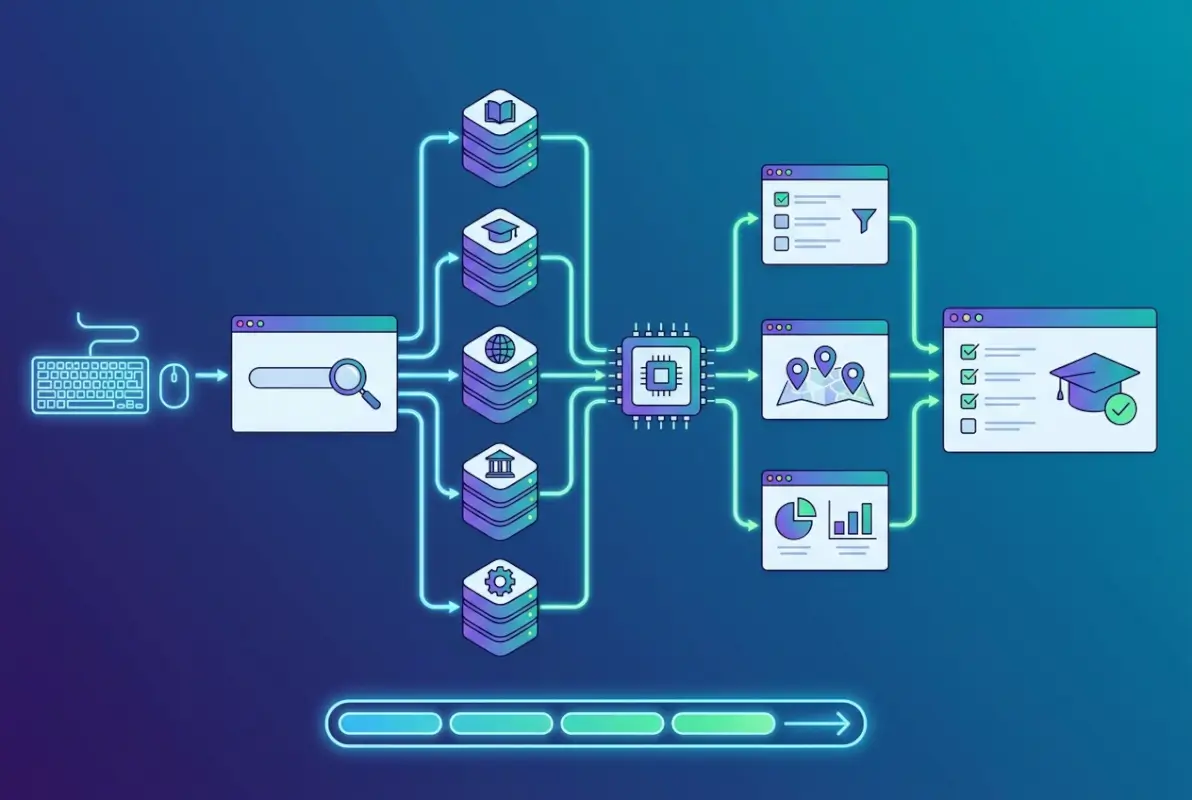
Most directories allow you to save school profiles or export comparison data—use these features aggressively. I typically recommend creating a simple spreadsheet with schools as rows and your priority factors as columns, populating cells as you gather data across multiple directories. This systematic approach reveals patterns that browsing alone misses, like a school that ranks mid-tier on test scores but excels on growth metrics and parent satisfaction.
Clear, Actionable Workflow to Compare Directories
Begin with a government directory (NCES or your state portal) to generate an initial list of schools meeting basic criteria: location, grade levels, and public vs. private status. Note enrollment figures, accreditation status, and any red flags like probationary accreditation or significant year-over-year enrollment drops.
Next, run the same geographic search on a consumer directory like GreatSchools or Niche. Compare the school lists—any institution appearing in the government database but missing from the consumer directory deserves investigation (it might be new, closing, or poorly represented in review platforms). For schools appearing in both, note rating discrepancies and read the methodology explanations.
For specialized needs, consult program-specific directories. If you need French immersion, don’t trust general directories—go to the American Association of Teachers of French school directory. Need a school with robust dyslexia support? The International Dyslexia Association maintains a specialized school database. These niche directories often reveal programs that general platforms miscategorize or omit entirely.
Export or snapshot data for side-by-side evaluation. Most directories allow PDF downloads of school profiles or have print-friendly versions. Create a comparison document with 5-10 schools, pulling the same data points from each: student-teacher ratio, test score trends (not just current scores), program offerings, extracurriculars, and recent parent reviews. This structured comparison makes trade-offs explicit—maybe School A has better test scores but School B shows stronger growth and offers the robotics program your child craves.
Data Quality and Trust Signals
Look for “last updated” timestamps on school profiles. Data older than the current academic year should be verified directly with schools before influencing decisions. The U.S. Department of Education data transparency guidance recommends that families confirm critical information (tuition, program availability, admission requirements) directly with institutions rather than relying solely on directory listings, regardless of the directory’s reputation.
Trust signals to prioritize: direct school website links (lets you verify information at the source), clearly cited data sources (“enrollment figures from NCES 2024 data”), transparent update schedules (“profiles refreshed quarterly”), and moderated user reviews (platforms that remove fake reviews or flag unverified accounts produce more reliable qualitative data).
Red flags include missing basic identifiers (street addresses, phone numbers), program listings that contradict school websites, tuition figures wildly different from official sources, and directories that require payment before revealing basic information. I once encountered a directory listing a high school’s average SAT score 200 points higher than the school’s own published data—a discrepancy explained by the directory’s outdated information and the school’s recent demographic shifts.
The 5 Essential Resources for Finding Schools
These five directories represent the minimum toolkit for comprehensive school research. Each excels in specific areas while maintaining acceptable baseline accuracy across core data points. Using all five provides redundancy that catches errors and reveals complete pictures that single sources miss.

| Directory | Primary Strength | Best Use Case | Update Frequency |
|---|---|---|---|
| NCES Databases | Verified federal data | Baseline fact-checking | Annual (fall) |
| State Education Portals | Local accuracy | Public school deep-dives | Quarterly to annual |
| GreatSchools | Parent reviews + ratings | K-12 culture insights | Continuous (reviews) |
| Niche | Student experience data | College + K-12 comparisons | Annual (data), continuous (reviews) |
| Program-Specific Directories | Niche program authority | Specialized curriculum needs | Varies by organization |
Resource 1: U.S. Department of Education and NCES Data Portals
The National Center for Education Statistics operates the gold-standard databases for U.S. schools. The College Navigator tool for postsecondary institutions and the Elementary/Secondary Information System for K-12 schools pull directly from mandatory federal reporting, making them the most reliable sources for factual data like enrollment counts, demographics, financial information, and graduation rates.
NCES excels at apples-to-apples comparison because every school reports data using identical definitions and timeframes. When GreatSchools says a school enrolls 650 students and NCES says 612, trust NCES—they’re using official October headcount data while other sources may rely on school-provided estimates or outdated information.
Limitations include less user-friendly interfaces than commercial directories, minimal qualitative information (no reviews or culture insights), and annual update cycles that can lag current reality by several months. Use NCES for establishing baseline facts, not for understanding day-to-day school experience.
Resource 2: State Education Portals and Department Directories
Every state maintains an education department website with school directories, often with more current data than federal sources and additional state-specific metrics. California’s School Dashboard, Texas’s Academic Accountability reports, and New York’s School Report Cards exemplify state portals that go beyond basic NCES data to include state assessment results, college readiness indicators, and detailed program inventories.
State portals prove invaluable for public school research because they’re the authoritative source for state-specific programs, magnet school applications, district boundary maps, and transportation policies. Many states now include school climate surveys and chronic absenteeism data that federal databases don’t capture.
The catch: interface quality and data comprehensiveness vary dramatically by state. Some states offer sophisticated search tools and downloadable datasets; others provide barely-functional school finders with minimal filtering options. Private schools often receive cursory coverage in state portals, making them less useful for families considering independent schools.
Resource 3: GreatSchools and Consumer Review Directories
GreatSchools dominates the K-12 consumer directory space, offering school ratings, parent reviews, and comparative tools wrapped in an accessible interface. The platform combines Department of Education data with proprietary equity-focused ratings and millions of user-contributed reviews, creating a more holistic school portrait than data-only directories provide.
The GreatSchools rating system (1-10 scale) considers test scores, student progress, college readiness, and equity indicators. Understanding the methodology matters—a school rated 6 overall might score 8 on equity and 9 on student progress while posting middling test scores. For families who value growth over absolute achievement, that profile might signal an excellent fit.
Parent reviews on GreatSchools require critical reading. Selection bias heavily favors very satisfied and very dissatisfied families—the content middle rarely posts. Look for review patterns rather than individual opinions, and weight recent reviews more heavily than those from several years ago. A school with 50 reviews averaging 3.5 stars tells you more than one with 5 reviews averaging 5 stars.
Resource 4: Niche and Holistic Student Experience Platforms
Niche expanded beyond college rankings to become a comprehensive K-12 and higher education directory emphasizing student experience factors—academics, diversity, extracurriculars, facilities, food quality, and social life. The platform’s strength lies in its extensive student and parent surveys combined with Department of Education statistics, creating multidimensional school profiles.
Niche excels for families prioritizing fit over raw academic rankings. The platform assigns letter grades across a dozen categories, making it easy to spot schools that align with your priorities even if they don’t top overall ranking lists. A school graded A+ for arts, A for academics, and B+ for diversity might be perfect for a student passionate about theater, even if it ranks #15 overall in the district.
User-generated content forms Niche’s backbone, creating the same selection bias concerns as other review-dependent platforms. The platform’s proprietary grading methodology also sometimes produces counterintuitive results—a school with strong test scores but poor survey responses might receive lower grades than raw data suggests. Always cross-reference Niche assessments with objective data sources.
Resource 5: Program-Specific and International School Directories
When you need schools offering specific curricula, accreditations, or educational philosophies, generalist directories consistently disappoint. Instead, consult directories maintained by authorizing or accrediting bodies. The International Baccalaureate Organization maintains the definitive IB World School directory. The Montessori Accreditation Council for Teacher Education lists accredited Montessori programs. The Association of Christian Schools International, the Friends Council on Education (Quaker schools), and the American Montessori Society each maintain authoritative directories for their school types.
For families considering international schools or study abroad, the Council of International Schools and the Association for the Advancement of International Education operate comprehensive databases with rigorous accreditation verification. These directories prevent the common mistake of enrolling in unaccredited international programs that home countries won’t recognize.
Program-specific directories often include details that general platforms miss—like whether an IB school offers only the Diploma Programme or also the Primary Years and Middle Years Programmes, or whether a Montessori school is AMS-accredited or simply Montessori-inspired. This granularity matters when program authenticity drives your school choice.
Verifying Data Quality and Trustworthiness
Directory data quality issues fall into three categories: outdated information (once accurate, now stale), submission errors (schools providing incorrect data), and methodology artifacts (rating systems producing misleading scores). Catching these problems requires active verification rather than passive acceptance of published information.
The most common quality issue? Simple staleness, where directories display last year’s data without clear labeling. A school might have added a robotics program, expanded language offerings, or hired a new principal—changes that fundamentally alter its profile but won’t appear in directories until the next update cycle. This is why the final verification step before enrollment applications should always involve direct school contact or website consultation.

Cross-Checking Strategies
Develop a three-source verification rule for any decision-critical information. Before ruling out a school because a directory says it lacks a program you need, check (1) the school’s official website, (2) a second directory, and (3) ideally a direct call or email to the school. I’ve seen families nearly eliminate perfect-fit schools based on directory errors that would have been caught with simple verification.
For quantitative data like test scores or graduation rates, government sources should override consumer directories when discrepancies appear. If NCES reports a 92% graduation rate and GreatSchools shows 87%, the NCES figure comes from mandatory federal reporting while GreatSchools may be displaying older cached data.
Geographic boundary verification deserves special attention. Many directories show school service areas or catchment zones based on outdated maps or simplified approximations. For public schools where attendance depends on residential address, always confirm boundaries through official district sources—especially in areas with recent redistricting or new school openings.
User review authenticity varies by platform. Look for directories that require account verification, moderate reviews for fake submissions, and display reviewer status (current parent, alumnus, teacher). Niche and GreatSchools both flag verified reviewers, adding credibility weight to those opinions versus anonymous submissions.
Distinguishing Completeness from Accuracy
A complete directory profile lists all available data fields; an accurate profile fills those fields with correct, current information. Many directories achieve high completeness through school self-reporting without robust verification mechanisms, creating polished-looking profiles containing subtle errors.
Watch for internal consistency signals. If a directory profile shows 20 AP courses offered but lists only 4 in the detailed course catalog, something’s wrong—either the summary figure is aspirational or the course list is incomplete. If average class size is listed as 15 but student-teacher ratio is 28:1, those numbers don’t reconcile (unless most teachers don’t lead classes, which warrants investigation).
Tuition and fee information on private school directories frequently lags reality by a year or more. Schools typically set next year’s tuition in early spring, but directory updates may not happen until fall. Always treat directory-listed tuition as approximate and verify current figures directly with schools’ admissions offices before making financial decisions.
Accreditation status deserves independent verification through accrediting agency websites rather than directory claims alone. Organizations like AdvancED/Cognia, the Western Association of Schools and Colleges, and the New England Association of Schools and Colleges maintain searchable databases of accredited institutions—check these directly for schools where accreditation matters to you.
Use Cases, Localized Examples, and Implementation Advice
Theory becomes useful only when applied to real search scenarios. Here’s how to deploy education directories for common family situations and institutional needs, with specific workflow recommendations for each case.

Family Decision Cases
New Student Scenario (Kindergarten or First School Entry): Start with GreatSchools or your state education portal to generate a list of schools within acceptable commute distance. Filter by key factors like full-day kindergarten availability, before/after care programs, and language immersion if desired. Pull parent reviews to gauge culture and communication quality—new families particularly benefit from schools with strong parent onboarding and clear expectations. Verify enrollment procedures and deadline dates through district websites, as directory information often oversimplifies complex lottery or catchment systems.
Transfer Student Scenario (Mid-Education Switch): Prioritize directories that show credit transfer policies and placement procedures—critical factors that general directories often omit. For high school transfers, verify that AP, IB, or dual enrollment credits will transfer by consulting both the sending and receiving schools directly. The College Board’s AP course ledger and IB’s school directory help confirm that your current coursework will be recognized. Use Niche’s student review sections to understand how schools integrate transfer students—some schools actively support transitions while others leave transfers to navigate independently.
Specialized Program Search (Gifted, Special Education, Performing Arts): Generalist directories consistently underreport specialized program availability and quality. Instead, start with program-specific directories maintained by advocacy or professional organizations. The National Association for Gifted Children, Council for Exceptional Children, and National Association of Schools of Music maintain directories with detailed program descriptions that consumer platforms lack. Cross-reference these specialized findings with state education portals to confirm that listed programs still operate and accept new students—specialized programs sometimes close or reach capacity without updating external directories.
School Visibility and Data Management
Educational institutions themselves benefit from understanding directory ecosystems. Schools should claim and maintain profiles across the five essential directories outlined here, treating directory presence as part of enrollment marketing infrastructure. Outdated or incomplete directory listings send negative signals to prospective families—if a school can’t keep basic contact information current, what does that suggest about organizational competence?
Schools should designate a staff member (often in admissions or communications) to quarterly audit major directory listings, updating program changes, contact information, and annual data submissions. Many directories allow schools to claim their profiles and submit corrections directly, but schools must initiate this process—directories rarely proactively reach out for updates.
For schools managing their own online directories or considering building one, platforms like TurnKey Directories offer WordPress-based solutions designed specifically for educational organizations. These tools help schools maintain accurate, searchable listings that integrate with broader directory ecosystems while retaining control over data presentation. Whether you’re a district maintaining a school finder, a consortium building a specialized program directory, or an educational association serving member institutions, purpose-built directory software provides the structure and automation that spreadsheets and static web pages can’t match.
Understanding directory submission cycles helps schools time announcements strategically. New programs, facility improvements, or achievement recognitions should be added to key directories immediately through school-initiated updates rather than waiting for annual data collection cycles. This proactive approach ensures prospective families encounter current information during active search periods.
Frequently Asked Questions
What is the best education directory for finding accredited schools in the United States?
The National Center for Education Statistics (NCES) provides the most comprehensive, verified database of accredited U.S. schools at all levels. For K-12 schools, NCES’s Elementary/Secondary Information System includes accreditation status for public and private institutions. For colleges and universities, the College Navigator tool shows regional and specialized accreditation from recognized agencies, updated annually from mandatory federal reporting.
How can I verify that a school listing in a directory is up to date?
Check the “last updated” timestamp on school profiles, typically found at the bottom of listings. For critical information like tuition, program availability, or admission requirements, cross-reference with the school’s official website and contact the admissions office directly. Government directories (NCES, state education portals) generally update annually in fall, while consumer directories may refresh continuously but with varying verification rigor across different schools.
Which directories should I trust for private or international schools?
For private U.S. schools, combine NCES data with directories from accrediting organizations like AdvancED or regional associations (NAIS, ISACS). For international schools, the Council of International Schools and Association for the Advancement of International Education maintain authoritative databases with verified accreditation status. Always confirm accreditation directly through accrediting agency websites rather than relying solely on school-reported information in general directories.
How do I compare schools across multiple directories efficiently?
Create a comparison spreadsheet with schools as rows and your priority criteria as columns. Pull the same data points from each directory—enrollment, test scores, program offerings—and note discrepancies for verification. Use each directory’s export or print features to capture full profiles, then systematically compare side-by-side. This structured approach reveals patterns and trade-offs that sequential browsing obscures, helping identify best-fit schools beyond superficial rankings.
How often should I refresh directory-based research during the admissions cycle?
Check directories weekly during active search periods, as schools update programs and admission requirements throughout the year. Set up saved searches or alerts on platforms that offer them for schools on your shortlist. During peak admissions seasons, verify critical deadline and requirement information directly with schools monthly, as directory listings often lag real-time changes in application procedures or program availability.
What criteria should I prioritize when filtering education directories?
Start with non-negotiables: location (commute tolerance), grade levels needed, and fundamental program requirements (language immersion, special education services). Add filters incrementally while monitoring how results change—overly restrictive initial searches eliminate good options. Save nice-to-have factors like specific extracurriculars or facility features for final comparison stages rather than initial filtering, allowing you to discover schools that excel overall despite missing one preferred feature.
How can I use NCES or state portal data to supplement consumer directory findings?
NCES and state portals provide authoritative baseline data for fact-checking consumer directory claims. When a consumer directory highlights a school’s strengths, verify supporting statistics through NCES—test score trends, graduation rates, and demographic data. State portals often include metrics consumer directories omit, like chronic absenteeism rates or school climate survey results, adding depth to culture assessments based on user reviews.
How do I evaluate online versus on-campus programs when using education directories?
Verify online program accreditation through the same agencies that accredit traditional programs—regional accreditors for colleges, state approval for K-12. Look for directories that distinguish between fully online, hybrid, and on-campus options, as program structure significantly affects student experience. Consult specialized online learning directories maintained by quality organizations rather than relying on general directories, which often provide minimal detail about instructional delivery, technology requirements, or synchronous versus asynchronous formats.
Take Action on Your School Search Today
The right school exists for every student—the challenge lies in discovering it amid thousands of options with incomplete, scattered information. Education directories transform this challenge from overwhelming to manageable by aggregating verified data, enabling systematic comparison, and revealing schools you’d never discover through word-of-mouth alone. But directories are tools, not oracles, they inform decisions rather than making them for you.
Your path forward: Select 2-3 directories from the five essential resources covered here based on your specific needs. Start with a government source (NCES or your state portal) to establish factual baselines, add a consumer directory (GreatSchools or Niche) for culture insights and comparison tools, and consult specialized directories for any program-specific requirements. Build your comparison framework before you start browsing—knowing your non-negotiables prevents both premature elimination of good fits and time-wasting deep-dives into fundamentally unsuitable schools.
Remember that the best school isn’t necessarily the highest-ranked one in any directory—it’s the institution that aligns with your student’s learning style, your family’s values and logistics, and your educational goals. Directory data illuminates options and facilitates comparison, but school visits, direct conversations, and trusting your instincts complete the decision process that data alone can’t finish.
Start Your Evidence-Based School Search
Download our free School Comparison Worksheet to organize findings across multiple directories, or begin exploring with the NCES College Navigator and your state education portal today. The perfect educational fit is discoverable—you now have the tools to find it.
Systematic research beats guesswork. Every time.
Was this article helpful?