Are Online Directories Profitable? 6 Factors That Impact Revenue Potential

Generating summary...
Most online directories fail within their first year—not because they lack traffic, but because they never crack the profitability code. Here’s what almost nobody talks about: a directory with 10,000 monthly visitors can be a goldmine or a money pit, depending entirely on six specific levers that determine whether you’re building a sustainable business or just an expensive hobby. The difference between a directory that generates $5,000 per month and one that barely covers hosting costs often comes down to understanding unit economics, monetization architecture, and the subtle psychology of what makes business owners willing to pay premium prices for visibility.
I remember consulting with a niche attorney directory that was getting decent traffic but hemorrhaging money on customer acquisition. The founder couldn’t understand why a competing general legal directory with similar visitor numbers was reportedly profitable while his specialized platform wasn’t. The answer lay not in traffic volume but in monetization intensity and the quality of intent behind each click (something we’ll explore in depth below).
The landscape has shifted dramatically in recent years. Rising customer acquisition costs, evolving advertising technology, and a fundamental shift toward performance-based revenue models have rewritten the rules for directory profitability. Generic Yellow Pages-style directories now compete directly with Google’s local search results, while niche directories that solve specific problems—connecting homeowners with verified contractors, or patients with specialized medical providers—can command premium pricing and build defensible moats.
TL;DR – Quick Takeaways
- Profitability depends on six core factors – traffic quality, niche focus, monetization mix, listing quality, competitive differentiation, and operational scalability all determine revenue potential
- Niche directories typically outperform general ones – focused audiences command higher CPMs and conversion rates despite lower absolute traffic numbers
- Diversified revenue streams win – directories relying solely on listing fees face volatility; combining premium placements, lead generation, and value-added services creates stability
- Unit economics matter more than traffic – a directory with 5,000 high-intent visitors can outperform one with 50,000 casual browsers if monetization is properly structured
- Time to profitability ranges from 6-18 months – with the right niche selection, platform choice, and go-to-market strategy determining where you fall in that range
Core Economics of Online Directories
Understanding directory economics starts with recognizing that you’re essentially operating a two-sided marketplace—you need both supply (business listings) and demand (users searching for those businesses). The profitability equation balances the cost of acquiring and serving both sides against the revenue you can extract from the transaction. According to U.S. Census Bureau data on business patterns, successful directory businesses typically achieve 40-60% gross margins once they reach operational scale, but getting there requires navigating a tricky chicken-and-egg problem.

Most directories burn cash in their first 12-18 months building critical mass on both sides. You’re simultaneously investing in SEO to attract users while cold-calling or running ads to convince businesses to list. The winners figure out how to minimize this burn period through clever bootstrapping—offering free basic listings to build supply quickly, then layering on premium monetization once search traffic validates demand. The losers spend themselves into oblivion trying to compete with established players on their home turf.
Platform choice matters more than most founders realize. Using a specialized WordPress directory plugin like TurnKey Directories can reduce initial development costs from $20,000-50,000 to under $1,000, fundamentally changing your path to profitability. That’s capital you can redirect toward customer acquisition or content creation instead of burning on custom code. I’ve seen founders waste months building features that directory platforms offer out of the box—time they could’ve spent actually selling listings.
Revenue Streams and Pricing Models
The most successful directories stack multiple revenue streams rather than relying on a single source. Basic listing fees create a foundation—think $50-200 annually for a standard profile—while premium placements, enhanced visibility, and featured positions command 2-5x premiums. According to research from Statista on digital marketplace economics, tiered pricing models convert 15-25% of free users to paid accounts when the value proposition is clear and the upgrade path is frictionless.
Beyond basic listings, smart directories monetize through lead generation (charging per quote request or connection), display advertising (though this has become less lucrative), affiliate partnerships with complementary services, and value-added features like video profiles, analytics dashboards, or priority customer support. The key is matching your monetization mix to your audience’s willingness to pay—B2B directories can often charge $500-2,000 annually because the customer lifetime value they deliver is proportionally higher.
Cross-sell opportunities emerge once you have paying customers. A contractor who pays $200 for a premium listing might gladly add video testimonials for $100 more, or analytics showing how many views and clicks their profile generates for another $50. Each incremental service carries minimal marginal cost but stacks revenue per customer, directly improving unit economics. The mistake most directories make is underpricing their premium tiers—they anchor to competitor pricing instead of calculating the actual value they deliver in leads and visibility.
Cost Structure and Margins
Your cost structure determines whether your directory can actually be profitable at scale. Fixed costs include hosting (which should be negligible unless you’re operating at massive scale), your platform subscription or development costs, and core staff like a community manager or customer support. Variable costs scale with volume—payment processing fees (typically 2.9% + $0.30 per transaction), content moderation as listings grow, and most critically, customer acquisition costs for new paying listings.
The profitability tipping point arrives when your customer acquisition cost (CAC) drops below the lifetime value (LTV) of a paying listing by a comfortable margin—ideally 3:1 or better. Early-stage directories might spend $150 in sales effort and marketing to acquire a customer paying $100 annually, making each sale unprofitable in isolation. But if that customer renews for three years and upsells to premium features, the unit economics flip positive. Organic search traffic becomes your greatest asset here because it delivers leads at near-zero marginal cost once your SEO foundation is established.
Scalability lives in the details of your operations. Self-serve onboarding where businesses can create and pay for listings without human intervention fundamentally changes your cost structure compared to requiring sales calls for every customer. Automated content moderation, template-based listing pages, and streamlined support through FAQs and chatbots all reduce the variable cost per listing. The directories that achieve strong margins build systems that handle 100 listings with the same effort as 10, allowing revenue to scale while costs remain relatively flat.
6 Factors That Impact Revenue Potential
Revenue potential for online directories isn’t determined by a single variable but by how well you execute across six interconnected dimensions. These factors work multiplicatively, not additively—being mediocre at all six yields far worse results than being exceptional at three and adequate at the others. The frameworks outlined below come from analyzing dozens of directory business models, from failed ventures that never found product-market fit to thriving platforms generating six figures monthly.
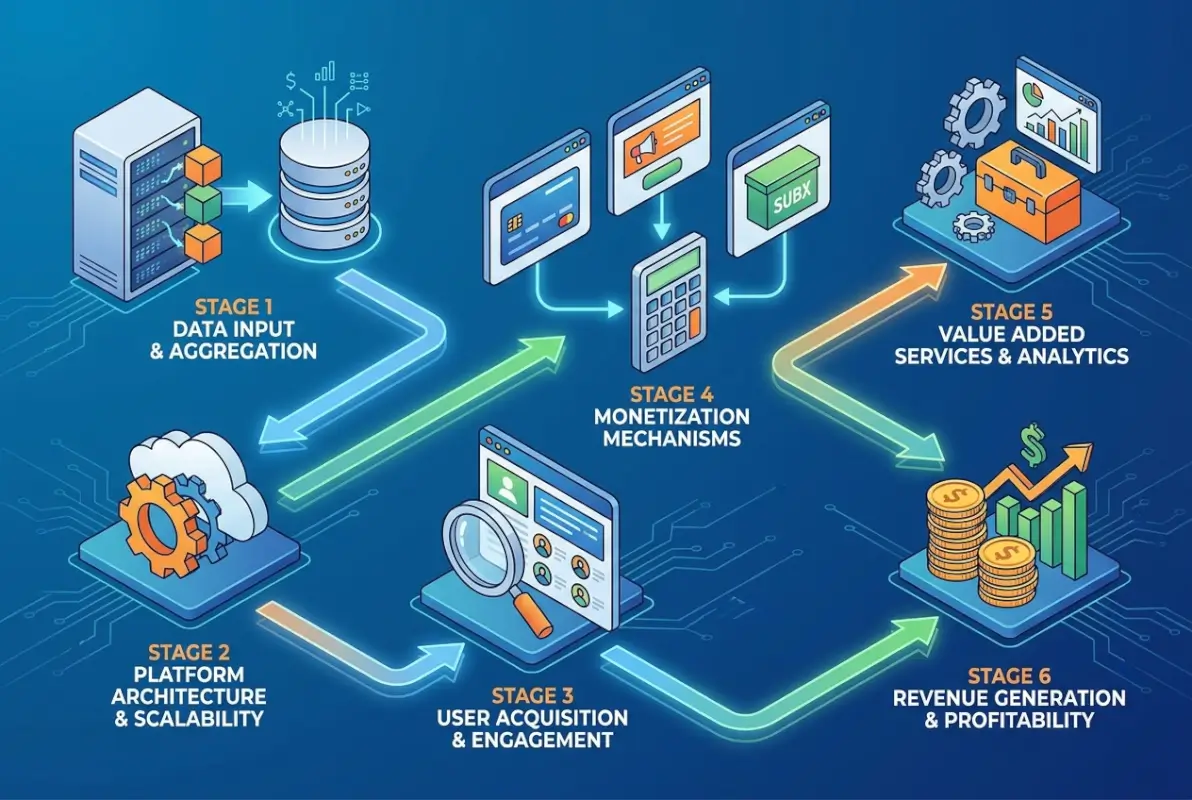
Understanding these factors helps you diagnose exactly where your directory is underperforming. If you’re getting traffic but no conversions to paid listings, you likely have a traffic quality or value proposition problem. If you’re getting paying customers but can’t scale beyond manual sales, your operational scalability needs work. Each factor represents both a potential constraint and an optimization opportunity, which is why successful directory operators obsess over these specific levers.
1) Traffic Quality and Audience Intent
Not all directory traffic is created equal, and this might be the single most important lesson struggling directory owners need to internalize. Ten thousand visitors from viral social media will generate a fraction of the revenue of 1,000 visitors from Google searches with commercial intent like “find licensed electrician near me” or “compare business insurance providers.” Intent-driven traffic converts at 5-15x the rate of casual browsers because these visitors are actively solving a problem right now and willing to engage with your listings.
Local search intent carries particularly high value because it combines specificity with urgency. Someone searching “emergency plumber Chicago” represents immediate revenue potential—both for the plumbers competing for visibility and for your directory if you can deliver that lead. Geographic specificity also reduces competition; you’re not fighting every contractor directory in existence, just those serving Chicago plumbers. This is why local SEO optimization has become table stakes for profitable directory operations.
Measuring traffic quality requires looking beyond vanity metrics like total visitors. Track bounce rate by traffic source, time on site, pages per session, and most importantly, conversion to inquiry or paid listing by channel. You’ll often discover that 80% of your valuable traffic comes from 20% of your sources—typically organic search for high-intent keywords. Double down on what works rather than trying to artificially inflate traffic numbers with sources that don’t convert. I’ve consulted with directories that cut their total traffic by 30% by killing low-quality channels, only to see revenue increase because they focused resources on traffic that actually converted.
2) Niche vs. General Directories
The strategic choice between building a niche or general directory fundamentally shapes your profitability trajectory. General directories benefit from scale—more categories mean more potential traffic and listings—but face intense competition from Google’s local results, Yelp, and category-specific giants. Your differentiation has to come from superior user experience or novel features, which requires substantial capital and time. Niche directories sacrifice absolute traffic volume but command higher monetization rates because you’re serving a specific audience with specific needs that general platforms don’t address well.
Consider the economics: a general business directory might charge $100 annually for a premium listing because businesses can list on dozens of competing platforms. A specialized medical provider directory targeting a specific specialty can charge $500-1,200 because there are only 2-3 credible alternatives, and the qualified patient leads they deliver justify premium pricing. According to analysis from Forrester Research on B2B marketplaces, niche directories in high-value verticals achieve 3-7x higher revenue per listing than horizontal platforms.
Niche selection requires balancing audience size against monetization potential. A directory of enterprise software vendors has a smaller addressable market than a directory of restaurants, but software vendors might pay $2,000 annually versus $150 for a restaurant listing. The sweet spot combines sufficient market size (at least 5,000-10,000 potential listings in your target geography or category) with high willingness to pay (B2B services, professional services, or categories where customer lifetime value is high). Avoid niches that are either too small to sustain a business or too commoditized to command premium pricing.
3) Monetization Mix and Diversification
Relying exclusively on listing fees makes your directory vulnerable to market downturns and competitive pressure. The most resilient directories build 3-4 distinct revenue streams that address different customer needs and willingness to pay. Beyond basic and premium listings, lead generation revenue (charging per qualified inquiry) aligns your incentives with your customers—you succeed when they get valuable leads. This performance-based model often commands higher total revenue per customer than flat subscription fees.
Sponsored content and native advertising represent underutilized opportunities for many directories. Businesses will pay $500-2,000 for an educational article or guide that positions them as experts while providing genuine value to your audience. This works particularly well in professional services categories where trust and expertise matter more than price. Affiliate partnerships with complementary services—a contractor directory partnering with tool suppliers or insurance providers—can generate 10-20% of total revenue with minimal effort once partnerships are established.
White-label and API access open B2B revenue channels that many directory operators overlook. Other websites, apps, or platforms might pay monthly fees to embed your directory data or use your matching algorithms. A successful home services directory could license its contractor verification process and rating system to insurance companies or real estate platforms. These B2B revenue streams tend to be stickier and higher-margin than consumer-facing monetization, though they require a certain scale before they become viable. Platform flexibility matters here—using extensible directory software makes it easier to add new revenue streams without rebuilding your entire platform.
Best Practices and Practical Playbook for Profitability
Build a compelling value proposition for listings
Directory profitability rests on convincing business owners that a premium listing delivers measurable ROI—increased visibility, qualified leads, and conversions that justify the investment. Clear proof points, such as click-through rate dashboards, lead volume reports, or comparison charts showing premium versus free listing performance, make the case for upgrading. Test premium features in cohorts: featured placements, enhanced profile media (photo carousels, video embeds), or priority ranking in search results.

Use social proof and testimonials directly on pricing pages to reduce buyer hesitancy. Showcase case studies where a business saw a 30% lift in inquiries after adding video or sponsoring a category. Transparent analytics—session counts, contact form submissions, map clicks—turn an opaque listing fee into a quantifiable marketing channel. When listed businesses understand their return, upsells to annual plans or add-on services (SEO-optimized landing pages, appointment booking widgets) flow naturally.
Freemium tiers help acquire listings at scale while reserving high-value features for paid upgrades. Offer basic presence for free—name, address, phone, hours—and gate lead-capture forms, multimedia, or top-of-search positioning behind a paywall. This two-sided funnel builds database density (more listings improve SEO and user experience) while converting high-intent businesses into revenue. A/B test pricing thresholds and feature bundles to optimize conversion without cannibalizing perceived value.
Finally, align sales messaging with the specific pain point of each vertical. A healthcare directory might emphasize patient trust through verified credentials and review scores, while a B2B supplier directory highlights lead quality and procurement decision-maker access. Tailored value propositions increase willingness to pay and reduce churn, since businesses see the directory as a specialized channel rather than a commodity listing site.
Optimize for SEO and content asset leverage
Each listing page acts as a long-tail keyword landing page—optimize URLs (e.g., /plumbers-dallas/acme-plumbing), title tags, and structured data (LocalBusiness schema, Aggregate Rating) to capture organic search traffic. High-quality directories rank for “[service] near me” and “[category] in [city]” queries, driving intent-rich visitors who convert at higher rates than broad-match display traffic. Encourage listings to add rich media, detailed descriptions, and FAQs; Google favors comprehensive entity pages with E-E-A-T signals.
User-generated content—reviews, Q&A threads, and ratings—compounds SEO value over time. Moderate submissions to filter spam, but publish authentic feedback quickly; fresh, relevant content signals topical authority. Internal linking between related categories, geographies, and featured businesses distributes link equity and guides crawlers through the site architecture. Strategic use of “Related listings” and “Popular in [category]” modules reduces bounce rates and increases session depth, both positive ranking factors.
Invest in category and city landing pages with editorial overviews, trend reports, or “Top 10” roundups. These hub pages attract backlinks from local blogs and news outlets, boosting domain authority. Structured content calendars—seasonal guides, industry spotlights—keep the directory fresh and position it as a knowledge resource, not merely a passive index. Over time, compounding organic traffic lowers customer acquisition cost and raises profitability per listing.
Monitor Core Web Vitals and mobile usability; Google’s page experience update penalizes slow, janky sites. Lazy-load images, cache aggressively, and serve responsive layouts. A fast, frictionless experience increases time on site and conversions, directly impacting revenue from both premium listings and advertising impressions.
Case Landscape and Competitive Insights
High-level takeaways from leading industry write-ups
Practitioner analyses converge on a few core themes: niche directories with strong lead-generation capabilities and premium monetization layers outperform broad, undifferentiated platforms. Vertical focus—legal services, healthcare providers, B2B suppliers—allows for specialized features (credentialing, RFQ workflows, compliance badges) that justify higher listing fees and command advertiser budgets. General directories, while benefiting from scale and SEO mass, face intense competition from Google Local and marketplace platforms, requiring diversified revenue streams (display ads, affiliate partnerships, white-label licensing) to sustain margins.
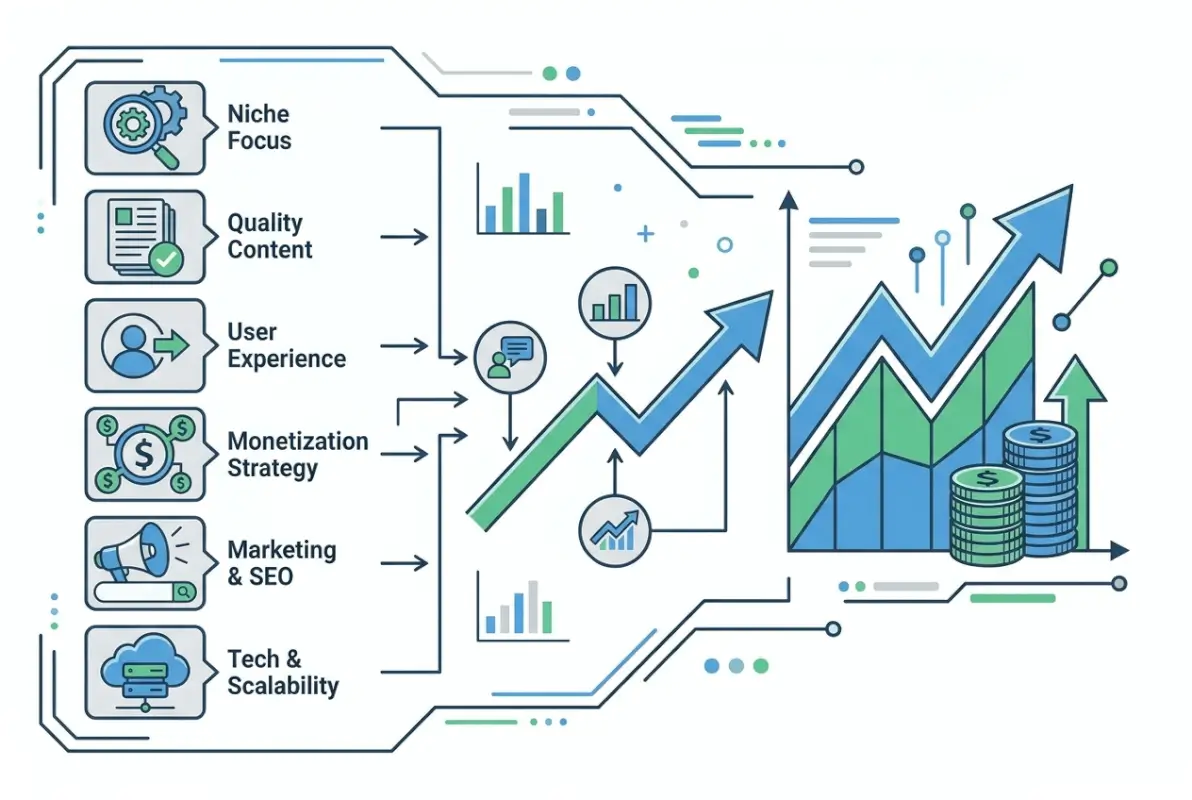
Several guides highlight tiered pricing as the most effective revenue model: a free tier for broad coverage, a mid-tier subscription for enhanced visibility (featured placement, media galleries), and an enterprise tier with lead-routing, API access, or co-marketing opportunities. Directories that bundle value-added services—video production, reputation management, local SEO audits—see higher average revenue per account (ARPA) and reduced churn. Cross-sell and upsell opportunities emerge naturally when the platform becomes a business-critical marketing channel rather than a static listing.
Real-world case patterns show early profitability (12–18 months) for directories that launch with a clear niche, strong SEO foundations, and an engaged founding cohort of listings. Broad directories often take longer (24–36 months) to reach breakeven, relying on advertising scale and strategic partnerships to offset higher customer acquisition costs. Competitive differentiation—whether through API-driven data feeds, integration with CRM and scheduling tools, or exclusive content partnerships—creates defensible moats that improve long-term revenue stability.
Industry write-ups also caution against over-reliance on a single revenue stream. Directories that depend solely on listing fees are vulnerable to economic downturns and competitive undercutting; those that blend subscriptions, lead-gen fees, display ads, and affiliate commissions weather market fluctuations more effectively. The consensus recommendation is to pilot multiple monetization channels early, measure unit economics rigorously, and double down on the highest-margin, most scalable mix.
| Directory Type | Time to Profitability | Dominant Revenue Stream | Key Differentiator |
|---|---|---|---|
| Niche B2B (e.g., industrial suppliers) | 12–18 months | Premium listings, lead-gen fees | RFQ workflows, API integrations |
| Professional services (legal, healthcare) | 12–24 months | Subscription tiers, verification badges | Credentialing, review moderation |
| Local services (home repair, events) | 18–24 months | Featured placements, display ads | Geo-targeted SEO, mobile UX |
| General / broad directories | 24–36 months | Display ads, affiliate partnerships | Scale, SEO authority, multi-vertical |
Risk Factors and Warning Signs
Market saturation, driving quality traffic, and price pressure
Entering a crowded category—restaurants, general business listings—without a defensible wedge invites margin compression and user indifference. When multiple directories compete for the same listings and audience, businesses see little incremental value and resist paying for duplicative presence. Without strong differentiation—exclusive content, proprietary data, superior UX—new entrants struggle to acquire listings cost-effectively, pushing customer acquisition cost above lifetime value and delaying or preventing profitability.

Driving quality, intent-driven traffic is harder than it appears. Broad SEO or paid campaigns may inflate visitor counts, but low-intent users rarely convert or engage with listings. Directories that optimize for vanity metrics—total sessions, page views—often miss the underlying unit economics: revenue per visitor, conversion rate to contact or inquiry. Price pressure intensifies when listings discover they receive negligible leads; churn rises, and the directory must discount or add features to retain accounts, eroding margins further.
Commoditization risk looms large for directories that rely solely on listing fees without value-added services. If businesses perceive the directory as interchangeable with free alternatives (Google My Business, social media profiles), they default to the zero-cost option. Sustainable profitability requires either network effects (critical mass that makes the directory indispensable), proprietary tools (booking, CRM integrations), or superior lead quality that justifies recurring payments. Directories that fail to evolve beyond basic yellow-pages functionality face shrinking revenue and eventual obsolescence.
Finally, algorithmic and platform risk—changes to Google’s local pack, shifts in social referral traffic, or new marketplace entrants—can abruptly disrupt traffic sources and monetization levers. Directories overly dependent on a single channel (organic search, a partnership with a major platform) are vulnerable to sudden revenue drops. Diversification across traffic sources (direct, email, social, partnerships) and revenue streams (subscriptions, ads, leads, affiliate) mitigates this exposure but requires disciplined execution and ongoing experimentation.
Frequently Asked Questions
How do online directories make money?
Online directories generate revenue through multiple streams: premium listing fees, featured placements, display or native advertising, lead generation commissions, subscription tiers, and value-added services like video profiles or analytics dashboards. Diversifying monetization reduces reliance on any single income source and improves overall profitability.
Are niche directories more profitable than general directories?
Yes, niche directories typically achieve higher profitability per visitor because they attract highly targeted audiences with strong purchase intent. This enables premium pricing for listings and advertising, while general directories compete on scale and often face lower conversion rates and pricing pressure from larger competitors.
What is the typical time to profitability for an online directory?
Most directories reach profitability within twelve to twenty-four months, depending on niche, traffic quality, and monetization strategy. Faster timelines occur when directories launch with pre-existing audiences, strong SEO foundations, or partnerships that drive early listing adoption and premium upgrades.
What monetization strategies have the best ROI for directories?
Lead generation and premium listings deliver the highest ROI because they align payment directly with value delivered to advertisers. Subscription tiers with recurring revenue also perform well, offering predictable cash flow and lower churn when paired with measurable outcomes like increased inquiries or visibility.
How important is listing quality and verification for profitability?
Listing quality and verification are critical for profitability because they build user trust, improve engagement, and justify premium pricing. Verified listings with complete profiles, reviews, and media assets convert at significantly higher rates, encouraging businesses to pay for enhanced placements and upgraded features.
Can directories sustain revenue with free listings?
Directories can sustain revenue with free listings by monetizing through advertising, affiliate partnerships, and data licensing, but this model demands substantial scale. Most successful directories use a freemium approach, offering basic free listings while charging for premium placement, analytics, or lead generation features.
What are the biggest risks for online directories in 2026?
The primary risks include market saturation in popular niches, rising customer acquisition costs, competition from search engines and AI-powered discovery tools, and commoditization of basic listings. Directories must differentiate through vertical specialization, trust signals, and integrated workflows to remain competitive.
How do premium listings impact overall revenue and user experience?
Premium listings drive significant revenue uplift by providing enhanced visibility, priority placement, and additional features that businesses value. When implemented thoughtfully, they improve user experience by surfacing high-quality, responsive providers, creating a win-win that justifies the premium price point.
Your Path to Directory Profitability Starts with Strategic Focus
The evidence is clear: online directories can be highly profitable when built on the right foundation. Success hinges on understanding your six core profitability drivers, choosing a well-defined niche with strong demand signals, and implementing a diversified monetization strategy that scales with your audience. The directories that thrive through 2026 will be those that deliver measurable value to both users and listing businesses, anchored by trust signals, quality content, and compelling ROI metrics.
Rather than chasing broad, saturated markets, focus your energy on a vertical where you can demonstrate deep expertise and unique value. Test premium listing features early and measure conversion rigorously. Build your traffic acquisition engine around SEO fundamentals and intent-driven keywords, treating each listing as a mini landing page that attracts qualified searchers. As you scale, layer in lead generation, subscription tiers, and value-added services to stabilize revenue and reduce dependence on any single stream.
The competitive landscape rewards operators who combine strategic niche focus with disciplined execution. Whether you are launching a new directory or optimizing an existing one, apply the six-factor framework outlined in this guide to audit your current position and identify the highest-leverage improvements. Measure cohort economics, track listing upgrade rates, and iterate based on what your data reveals about customer acquisition cost and lifetime value.
Ready to Build a Profitable Directory?
Take the six-factor profitability framework and apply it to your directory idea this week. Identify your niche, define your premium listing value proposition, and map out your first three revenue streams. The best time to start was yesterday—the second best is today.
Focus on one vertical, deliver undeniable value, and let your metrics guide your growth.
Profitability does not happen by accident. It results from deliberate choices about audience, pricing, and operations, validated through continuous testing and refinement. The landscape ahead is favorable for well-executed directories that prioritize quality, trust, and measurable outcomes. Position your directory at the intersection of strong demand and defensible differentiation, and you will build a sustainable, profitable business that compounds in value over time.
Was this article helpful?