How Much Do Directories Charge? 5 Pricing Models & Factors to Consider

Generating summary...
If you’re thinking about launching a directory business—or trying to squeeze more revenue from one you already run—you’ve probably asked yourself: What should I actually charge? The answer isn’t simple, because modern directories monetize in wildly different ways. Some charge a one-time listing fee and call it a day. Others layer on subscriptions, premium placements, verification badges, analytics dashboards, and pay-per-lead models—all in the same platform. The truth is, pricing isn’t just about covering costs; it’s the lever that determines who signs up, who sticks around, and whether your directory becomes a sustainable asset or a side project that fizzles out. In this guide, we’ll walk through the five core pricing models directory operators use, the factors that move pricing up or down, and a decision framework to help you pick (or refine) the model that fits your market, your niche, and your growth stage.
TL;DR – Quick Takeaways
- Five main models – directories typically use subscription/tiered pricing, pay-per-listing, freemium with add-ons, hybrid approaches, or evolve their pricing as they mature.
- Subscription models deliver predictable revenue but require ongoing value to justify renewals; pay-per-listing lowers commitment but can create income volatility.
- Freemium strategies build broad user bases fast, then monetize through upgrades like verification, analytics, and premium placements.
- Hybrid models combine tiers with listing fees and add-ons to stabilize revenue while capturing upside from high-value advertisers.
- Pricing maturity matters—new directories often start free or low-cost, then migrate to tiered subscriptions as they demonstrate ROI; clear value propositions and measurable results accelerate this transition.
Subscription and Tiered Pricing: The Recurring-Revenue Backbone
Subscription pricing is the bedrock of SaaS revenue models, and it works just as well for directories. The core idea: charge a recurring fee (monthly or annual) for access to a tier of features. Most operators build three to five tiers—think Basic, Professional, Premium—each unlocking more visibility, analytics, support, or premium placements. This model mirrors how business directories make money by converting free or low-tier users into paying subscribers over time.
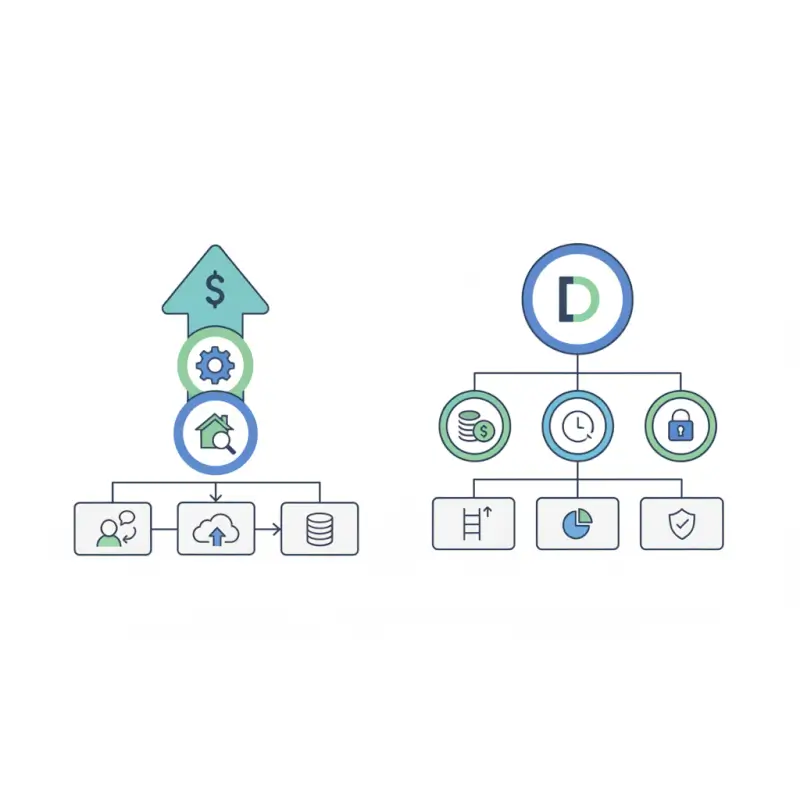
Research on digital-content monetization shows that tiered subscriptions excel when customers perceive a clear ladder of value. According to ScienceDirect’s analysis of freemium versus subscription strategies, willingness to pay increases when each tier offers 4–6 distinct features that matter to the buyer—like enhanced search placement, verified badges, lead analytics, or dedicated account support. In practice, directory operators using platforms like TurnKey Directories often structure tiers around these levers: free or basic listings get organic placement, mid-tier subscribers get analytics and featured badges, and premium tiers unlock top-of-category slots and API access.
The big advantage? Predictable cash flow and stronger customer relationships, since you’re delivering value every month. The downside is churn risk: if subscribers don’t see measurable ROI—more leads, more visibility, more conversions—they’ll cancel. That means you need to continuously deliver on your promise, updating features and proving value through data (click-through rates, lead counts, conversion metrics).
Tiered subscriptions work best when your directory serves a relatively stable audience that values ongoing features (analytics, support, updates) over one-time placements. They’re less effective in transactional markets where advertisers want to dip in and out without recurring commitments.
Pay-Per-Listing and Pay-Per-Lead Models: Lower Commitment, Higher Friction
Pay-per-listing is the original directory revenue model: charge once for each business or service added to your index. Many classified listing sites still use this approach, sometimes layering on optional upgrades (featured placement, highlighted badges, extended duration). Pay-per-lead takes it further: you only charge when a visitor clicks, calls, or submits a lead form—essentially performance-based pricing.
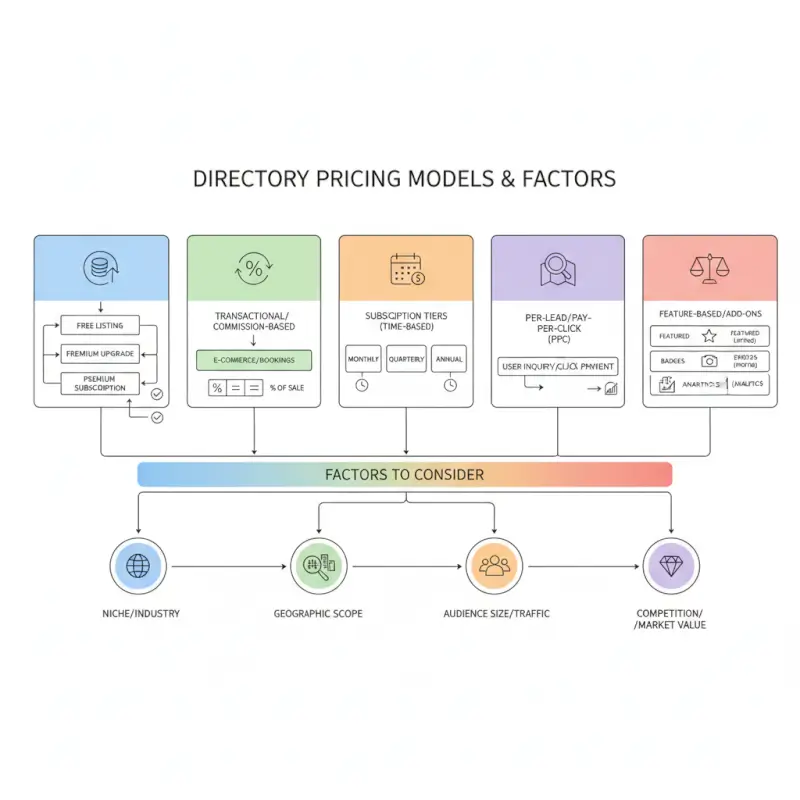
The appeal is simplicity and low commitment. Advertisers don’t need to commit to a monthly subscription; they pay for what they use. According to BacklinkLog’s pricing page, pay-per-listing models range from $10 to $100+ per entry depending on niche, category prominence, and optional add-ons like analytics or verification. For directory owners, this model scales revenue with volume—more listings mean more income—but it also introduces income volatility. If you rely solely on one-time fees, you’ll need a constant stream of new advertisers to maintain cash flow.
Pay-per-lead pricing (common in lead-gen directories for lawyers, contractors, or real estate) shifts the risk: advertisers pay only when they get a qualified lead, which sounds fair but requires robust tracking, fraud prevention, and lead-quality guarantees. Research from Statista on digital advertising trends indicates that performance-based models typically command lower per-action fees than subscription models, because advertisers spread risk across many channels.
The cons? Income irregularity, potential price wars (if competitors undercut per-listing fees), and weaker customer relationships since there’s no recurring touchpoint. These models work best for directories targeting occasional or transactional advertisers (real estate agents listing a single property, event organizers posting one-time promotions) or niches where ROI is immediate and measurable.
In my experience running early-stage directories, pay-per-listing was the easiest entry point—low friction, quick revenue—but it became a treadmill. Without recurring income, every month started at zero. That’s why many operators eventually migrate to hybrid models (covered below) that blend one-time fees with subscription upsells.
Freemium with Add-Ons (Free Core, Paid Upgrades)
Core concept and typical add-ons
Freemium directories offer basic listings at no cost, attracting a broad user base and lowering the barrier to entry for businesses uncertain about paid placement. Revenue comes from optional upgrades: verified badges, enhanced analytics dashboards, featured positioning in search results, and advertising boosts that place listings at the top of category pages. This model works especially well when the free tier delivers genuine value—accurate contact information, basic descriptions—while clearly demonstrating what paid tiers unlock.

Common add-ons include priority customer support, integration with CRM or marketing automation tools, and detailed traffic reports that show how visitors found and engaged with a listing. Many freemium directories also sell advertising packages—banner placements, newsletter sponsorships, or retargeting pixels—to monetize the audience that arrives for free listings. The key is ensuring each paid feature solves a real pain point (such as proving ROI to internal stakeholders or standing out in a crowded category) so that users self-select into the tier that matches their growth stage.
Pros, cons, and when it’s effective
The primary advantage of freemium is rapid user acquisition: businesses can test the directory risk-free, and the operator builds a large index quickly, which in turn attracts more searchers and advertisers. Network effects compound as more listings improve search relevance, driving organic traffic that justifies paid upgrades. On the downside, conversion rates from free to paid can be modest—often 2–5 percent in mature freemium markets—meaning operators must scale the free tier efficiently and invest in onboarding flows that highlight upgrade benefits early.
Freemium thrives when the directory serves a market with heterogeneous willingness to pay: solopreneurs or startups happy with free exposure, mid-sized firms willing to pay for analytics and badges, and enterprises seeking full-service packages with API access and dedicated account management. Research on freemium and add-on strategies shows that clear feature differentiation and demonstrable ROI are critical to converting free users into paying subscribers (ScienceDirect, 2025). If the free tier is too generous, users have little incentive to upgrade; if too restrictive, they won’t engage long enough to see value.
Hybrid & Multi-Model Approaches (Tiered + Listing Fees)
Core concept and why combine models
Hybrid directories blend subscription tiers for baseline access with pay-per-listing charges for premium placements or time-sensitive campaigns, sometimes layering a free tier to attract first-time users. This multi-model approach captures recurring revenue from subscribers who value ongoing visibility and analytics, while also monetizing one-time advertisers who want to promote a seasonal offer or new product launch without committing to an annual plan. The combination stabilizes cash flow—subscriptions provide a revenue floor—while listing fees and add-ons capture upside from high-intent buyers.

For example, a local-services directory might offer a free basic listing, a $29/month “verified pro” subscription with enhanced profile features, and a $199 one-time “featured placement” that pins a business to the top of search results for 30 days. This structure appeals to hobbyists (free), growing businesses (subscription), and established companies running targeted promotions (one-time listing fee). Industry observations confirm that directories using hybrid models often see higher average revenue per user because they serve multiple buyer personas and purchase occasions (Turnkey Directories).
Pros, cons, and implementation notes
The main benefit is revenue diversification: if subscription renewals dip in a slow quarter, one-time listing sales can cushion the shortfall, and vice versa. Hybrids also allow operators to test pricing elasticity—raising or lowering listing fees without affecting subscriber trust—and to bundle packages (e.g., “12 months subscription + 2 free featured placements”) that increase perceived value and reduce churn. The downside is complexity: customers may struggle to compare a $50/month subscription with a $300 one-time fee, and support teams must manage multiple billing cycles and feature entitlements.
Implementation requires clear documentation of what each pricing component includes, transparent upgrade and downgrade paths, and billing infrastructure that handles both recurring and one-off charges. Many directory platforms now support hybrid billing natively, tracking subscription status alongside per-listing credits or tokens. Operators should monitor metrics by revenue stream—subscription MRR, one-time listing revenue, add-on attach rates—to identify which model drives the most profitable growth and where to invest product development.
| Revenue Stream | Typical Share in Hybrid Model | Primary Advantage |
|---|---|---|
| Subscriptions | 50–70 % | Predictable recurring revenue |
| One-time listing fees | 20–35 % | Revenue upside from campaigns |
| Add-ons & upgrades | 10–15 % | High-margin upsells |
Quick-Launch vs Established Markets: Pricing Maturity (2024–2026)
How pricing evolves as a directory scales
New directories often begin with low or zero listing fees to build critical mass: free listings attract early adopters, generate content for search engines, and create social proof that draws more businesses and searchers. As traffic and engagement grow, operators introduce tiered pricing—first as optional upgrades (verified badges, analytics), then as mandatory plans for new entrants while grandfathering legacy free users. This phased approach validates willingness to pay before locking in a full pricing structure, reducing the risk of alienating the founding community.

Established directories with mature audiences can command higher prices because they deliver proven ROI: measurable leads, conversion data, and brand association. Pricing maturity also means more sophisticated segmentation—enterprise plans with API access and white-label options, mid-market tiers with advanced analytics, and self-serve plans for small businesses. Research on monetization evolution shows that directories typically move from usage-based or one-time fees toward subscription and tiered models as they scale, aligning revenue with ongoing platform improvements and customer success efforts (ScienceDirect, 2024).
What drives speed to revenue parity
The faster a directory can demonstrate concrete business outcomes—qualified leads, phone calls, form submissions, or sales—the sooner it can raise prices and introduce premium tiers. Clear value propositions, such as “businesses in our directory see 3× more inquiries than organic search alone,” backed by case studies and testimonial data, accelerate pricing maturity. Efficient onboarding that walks new listers through profile optimization, keyword selection, and performance tracking also shortens the time to first value, making users more willing to pay for continued access.
Competitive density and niche focus matter too: a directory serving a highly specialized vertical (for example, certified industrial suppliers) can reach revenue parity faster than a broad general directory because niche buyers have fewer alternatives and higher deal values. Operators should track leading indicators—activation rate (percentage of signups who complete profiles), engagement rate (logins per month), and net promoter score—to gauge when the market will support a price increase or new tier. Transparent communication about pricing changes, coupled with grandfather clauses or migration incentives, preserves trust and minimizes churn during transitions.
Frequently Asked Questions
How do directory pricing models differ across industries?
Niche directories in professional services or B2B sectors typically use higher subscription tiers or pay-per-lead models, while consumer directories often rely on freemium with advertising add-ons. Vertical specificity drives pricing power, allowing specialized directories to charge premium rates for targeted, high-intent audiences.
Is a subscription model more stable than pay-per-listing for directories?
Yes, subscriptions generate predictable monthly recurring revenue and longer customer relationships, making cash flow more stable. Pay-per-listing can spike with promotions but often produces irregular income. Many directories combine both to balance stability with upside from high-value listings.
What features typically justify higher-priced directory tiers?
Premium placements, verified badges, performance analytics dashboards, priority support, and enhanced media allowances all command higher pricing. Directories that offer lead tracking, guarantee updated listings, or provide exclusive visibility in search results can price significantly above basic tiers.
How can a new directory test pricing without losing early adopters?
Launch with a free or low-cost tier to build your user base, then introduce premium tiers with clear value upgrades. Use A/B testing for feature bundles and price points, and grandfather early supporters at legacy rates to maintain trust while validating willingness to pay.
What are common pitfalls when switching pricing models in a directory business?
Poor communication, removing features customers rely on, and abrupt price jumps alienate users. Always communicate value changes early, offer migration incentives, honor existing contracts, and phase rollouts to segment customers. Test changes with a small cohort before full implementation.
Should directories charge for basic listings or keep them free?
Starting with free basic listings attracts volume and builds network effects, while paid-only models limit scale but signal quality and commitment. Most successful directories offer free entry with clear, valuable upgrade paths to premium features, balancing reach with monetization.
What metrics should directory owners track to optimize pricing?
Monitor customer acquisition cost, activation rate by tier, monthly recurring revenue per user, churn by plan, lifetime value, and conversion rates from free to paid. Track feature engagement to identify which upgrades justify higher pricing and which are underutilized.
Can hybrid pricing models confuse customers or improve conversion?
Hybrid models can improve revenue if clearly communicated, offering subscription stability plus one-time listing fees for high-value opportunities. Confusion arises when tier benefits overlap or pricing logic is opaque. Use simple naming, visual comparison charts, and transparent feature mapping to maintain clarity.
Your Next Move: Turn Pricing Into Your Competitive Edge
Directory pricing is not a one-size-fits-all decision. The five models we’ve explored—subscription tiers, pay-per-listing, freemium with add-ons, hybrid approaches, and pricing maturity strategies—each serve different business goals, market maturity levels, and customer expectations. Your choice should reflect the unique value you deliver, the ROI you can demonstrate, and the stage of your directory’s growth.
Start by mapping your value proposition to a clear pricing structure. If you’re launching, consider a low-friction entry with free or low-cost listings to build network effects, then layer on paid tiers that unlock measurable benefits like analytics, priority placement, or verified badges. If you’re scaling or established, test tiered subscriptions that stabilize revenue while offering premium add-ons for high-intent advertisers. Track acquisition, activation, retention, and revenue per tier religiously—your data will tell you which features justify upgrades and which price points convert best.
Don’t be afraid to iterate. The directories that thrive in competitive markets are those that listen to customer feedback, run controlled pricing experiments, and evolve their models as their value proof grows. Grandfather loyal customers when you raise prices, communicate changes transparently, and always tie pricing shifts to tangible improvements in service or ROI.
Ready to Optimize Your Directory Pricing?
Apply the frameworks in this guide to audit your current pricing, identify gaps in value delivery, and design a tiered structure that converts visitors into paying customers. Test one pricing change this quarter—whether it’s introducing a new premium tier, adding an analytics dashboard upgrade, or piloting a freemium model—and measure the impact on activation and lifetime value.
Your pricing is your product’s promise. Make it clear, make it valuable, and make it work for you.
The directories that win are those that treat pricing as a strategic lever, not a static number. Use the data, frameworks, and real-world examples in this guide to craft a pricing strategy that fuels sustainable growth, strengthens customer relationships, and turns your directory into a revenue engine. Now go build it.
Was this article helpful?