How Online Directories Make Money: 6 Revenue Streams Revealed
Generating summary...
Most online directory owners make a critical mistake: they launch with a single revenue model—usually free listings plus a handful of ads—and wonder why they can’t scale past a few hundred dollars a month. The directories that actually build sustainable six-figure businesses? They layer 3-5 complementary revenue streams from the start, treating monetization like a portfolio rather than a single bet. Premium listings anchor the model, but lead generation, data licensing, and API access create the multiplier effects that turn a side project into a real asset. If you’re building or running a directory and relying on just one income source, you’re leaving serious money on the table—and missing the structural advantage that makes directories so powerful in the first place.
TL;DR – Quick Takeaways
- Multi-stream monetization outperforms single-source models — successful directories layer premium listings, lead generation, ads, data services, and partnerships to hit sustainable revenue targets.
- Start with premium listings, then layer — validate willingness to pay with tiered placements first, then add leads, ads, and data services as traffic and trust grow.
- Data and API revenue are underutilized — anonymized listing data, analytics, and API access create high-margin, recurring B2B revenue that scales with inventory.
- Typical successful directories use 3-5 revenue methods — early wins come from premium listings; maturity brings ad sales, lead monetization, and ecosystem upsells.
- Balance user experience with monetization — overloading visitors with offers or misaligned pricing destroys trust and conversion rates faster than any single tactic can recover.
Revenue Streams Overview and Why They Work
Single-stream monetization is a fragile foundation. When you rely entirely on one revenue source—say, display ads or basic paid listings—you’re at the mercy of algorithm changes, seasonal demand swings, and competitive undercutting. Directories that thrive treat monetization as a system: premium listings provide predictable recurring revenue, lead generation aligns incentives with business outcomes, advertising scales with traffic, and data services unlock high-margin B2B opportunities. Each stream reinforces the others, creating a portfolio effect that smooths volatility and compounds growth.
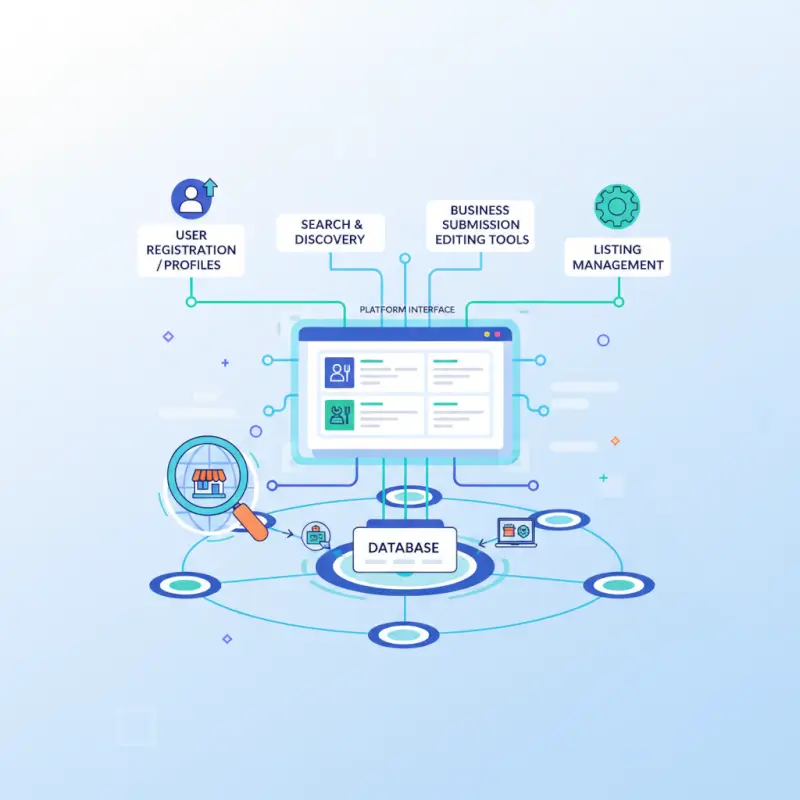
The rationale is straightforward: traffic, trust, and willingness to pay converge across multiple channels. Early-stage directories often start with paid listings and premium placements because they’re easy to explain and validate demand quickly. Once you’ve proven businesses will pay for visibility, you can introduce lead generation (charging per qualified inquiry), display or sponsored placements, and eventually data licensing or API access. According to Statista, digital advertising revenue models continue to grow across local and vertical search platforms, but the highest-margin opportunities come from data and integration services that enterprise customers pay recurring fees to access.
Timing matters. Most successful directories introduce their second revenue stream within 6-9 months of launch, once they have enough listings and traffic to justify performance-based models. Waiting too long means you miss compounding opportunities; adding too many streams too early confuses users and dilutes focus. The sweet spot is a phased rollout: premium listings first, then leads or ads, then data or affiliate partnerships as inventory and audience mature.
Why Layered Monetization Outperforms Single-Stream Models
Single-stream directories face existential risk. If Google tweaks its algorithm and your organic traffic drops 40%, ad revenue plummets overnight. If a competitor undercuts your listing prices, you lose customers with no fallback. Layered monetization spreads risk across uncorrelated revenue channels: premium listing subscriptions provide stable monthly recurring revenue (MRR), lead generation scales with inquiry volume, advertising rides traffic fluctuations, and data licensing creates high-margin upside that’s insulated from consumer-facing volatility.
The psychology matters too. Businesses evaluating your directory assess value differently depending on their needs: some want visibility (premium placements), others want qualified leads (pay-per-inquiry), and enterprise partners want access to your data (API licensing). By offering multiple value propositions, you capture willingness to pay across segments that wouldn’t convert on a single offer. Research from Forrester shows that multi-channel B2B platforms see 2-3x higher customer lifetime value (LTV) than single-service competitors, because each additional revenue stream increases switching costs and deepens integration into customers’ workflows.
Early-stage tuning often starts simple: tiered premium listings (basic, featured, premium) let you test price sensitivity and measure conversion rates without complex infrastructure. Once you’ve validated that businesses will pay for visibility, you can add performance-based models—leads, CPC ads, or affiliate commissions—that align your revenue with outcomes rather than just placement. The compounding effect is real: a directory earning $2,000/month from premium listings can often double that within six months by layering in lead generation and display ads, because the same traffic and listings inventory monetizes through multiple channels simultaneously.
How Top Directories Structure Revenue Layers (Typical Mix and Pacing)
Successful directories typically layer 3-5 methods over 12-24 months. The progression looks like this: months 0-6 focus on premium listings and basic subscriptions (validating willingness to pay and building listing inventory), months 6-12 introduce lead generation or sponsored placements (monetizing inquiries and high-intent traffic), and months 12-24 add data services, API access, or affiliate partnerships (capturing B2B and ecosystem revenue). TurnKey Directories powers hundreds of niche directory sites using this phased approach, with many operators reporting that their third and fourth revenue streams contribute 30-40% of total revenue once fully ramped.
Typical early wins include premium listings because they’re conceptually simple and require minimal custom development. A three-tier model—basic (free or $10/month), featured ($30-50/month with priority placement and enhanced media), and premium ($75-150/month with top-of-category placement, analytics, and support)—covers most market segments and lets you test pricing without heavy infrastructure. As listings grow, you layer in lead generation: charge businesses $5-25 per qualified inquiry or booking, depending on vertical and geography. According to U.S. Census Bureau small business data, local service providers spend an average of $400-1,200/month on lead generation across all channels, so directories that deliver high-quality, intent-based leads can command premium pricing and align incentives with business outcomes.
The mix matters. A well-balanced mature directory might derive 40% of revenue from subscriptions (recurring, predictable), 30% from leads or performance ads (scales with traffic), 20% from display advertising or affiliate partnerships (leverages brand reach), and 10% from data services or API licensing (high-margin, B2B). This isn’t a hard rule—vertical directories in high-LTV niches (legal, medical, B2B) often skew toward leads and data, while general local directories lean more on ads and premium placements—but the principle holds: diversify across recurring, performance, and data streams to build a resilient revenue base that compounds as your inventory and audience grow.
| Revenue Stream | Typical Launch Timeline | Typical % of Revenue (Mature) |
|---|---|---|
| Premium Listings / Subscriptions | Months 0-6 | 35-45% |
| Lead Generation / Pay-Per-Lead | Months 6-12 | 25-35% |
| Display Ads / Sponsored Placements | Months 6-12 | 15-25% |
| Data Licensing / API Access | Months 12-24 | 5-15% |
| Affiliate / Ecosystem Partnerships | Months 12-24 | 5-10% |
Premium Listings and Subscriptions
Premium listings are the bedrock of directory monetization because they’re simple to explain, easy to price, and directly tied to a business’s most pressing need: visibility. A free or basic listing gets a business into your directory; a premium listing puts them at the top of search results, category pages, and featured carousels where high-intent users look first. The value proposition is immediate—more visibility equals more clicks, inquiries, and conversions—and businesses in competitive categories will pay meaningful recurring fees for that advantage. According to practitioner data from directory pricing models, typical premium listing fees range from $30-150/month depending on niche competitiveness, geography, and the level of enhanced features included (analytics, media galleries, priority support).
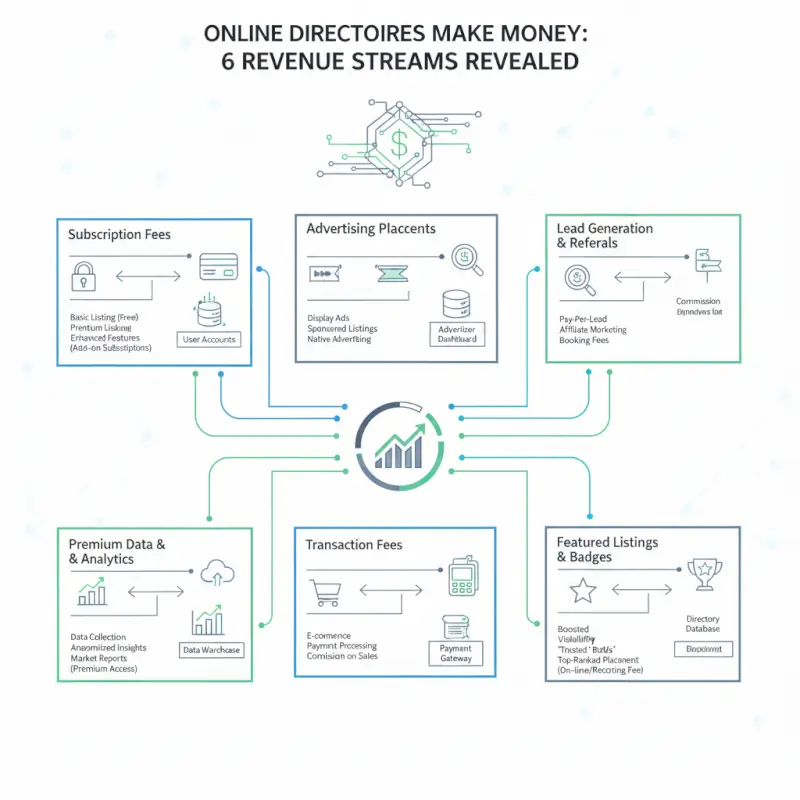
Tiered pricing is the lever that captures willingness to pay across market segments. A three-tier structure works for most directories: Basic (free or $10/month, standard listing with contact info and minimal media), Featured ($30-60/month, priority placement in category pages, enhanced photos/videos, and basic analytics), and Premium ($75-150/month, top-of-page placement, unlimited media, detailed analytics, and expedited support). Each tier aligns price with incremental value, so businesses self-select based on budget and competitive intensity. In practice, 10-20% of listings typically convert to paid tiers if you’ve built enough traffic and trust—so a directory with 500 total listings might have 50-100 paying subscribers generating $1,500-6,000/month in recurring revenue before layering any additional streams.
Premium placements command higher click-through rates (CTR) because they occupy prime real estate: top-of-category carousels, homepage featured sections, and search result headers. Industry benchmarks from Google Business profiles and similar local discovery platforms show that top-three placements capture 50-70% of all clicks in a given category, which means businesses competing for visibility in high-value verticals (legal, medical, home services) will pay significantly more for guaranteed top placement. The key is transparency: show businesses exactly where their listing will appear, provide sample CTR or inquiry data from similar placements, and offer a trial period (30-60 days) so they can measure ROI before committing to annual subscriptions.
Premium Listings, Tiers, and Featured Placements
The mechanics of premium listings are straightforward: businesses pay a recurring fee (monthly or annual) for enhanced visibility and features that free listings don’t receive. The most effective premium placements include top-of-category positioning (appearing in the first 3-5 results when users browse or search a category), featured badges or labels (visual indicators that signal trustworthiness and priority), enhanced media galleries (unlimited photos, videos, or virtual tours), and priority support (faster response times and dedicated account management). Each feature incrementally increases perceived value, which justifies higher pricing and improves conversion rates among businesses evaluating whether to upgrade.
Featured placements work because they exploit user behavior: visitors scan the top of a page first, and studies from Nielsen Norman Group show that the first three results on any search or category page capture the majority of attention and clicks. By offering guaranteed top-three placement as part of a premium tier, you’re selling a concrete outcome (more visibility) rather than a vague promise (better exposure). Businesses can calculate ROI: if a featured placement costs $50/month and generates 10 additional inquiries worth $500 each in potential revenue, the payback is immediate. Transparency drives conversion—show sample CTR data, provide testimonials from other premium subscribers, and offer a money-back guarantee if businesses don’t see measurable lift in inquiries within the first 60 days.
Tiered pricing also creates natural upgrade paths. A business might start with a free or basic listing to test the directory’s quality, then upgrade to Featured once they see initial traction, and eventually move to Premium when they’re competing aggressively in a high-value category. This staged adoption reduces friction and spreads customer lifetime value over multiple conversion events. Many successful directories report that 20-30% of Featured subscribers eventually upgrade to Premium within 12 months, especially if you offer proactive outreach (email nudges highlighting increased competition or seasonal demand spikes) and data-driven recommendations (showing them how much incremental traffic or inquiries a Premium placement would deliver based on their category and location).
Subscriptions and Membership Models
Subscriptions are the foundation of predictable, recurring revenue in directory businesses. Instead of one-time fees or ad-hoc upgrades, a membership model locks in monthly or annual payments that smooth cash flow, improve customer lifetime value (LTV), and create compounding growth as you add new subscribers each month. The value proposition is simple: businesses pay a recurring fee in exchange for sustained visibility, enhanced features, and ongoing support that free listings don’t receive. According to directory revenue models, mature directories with 500+ listings and strong subscription adoption can generate $3,000-10,000/month in recurring revenue before layering in leads, ads, or data services.
Membership models also unlock upsell and cross-sell opportunities. Once a business is paying $50/month for a featured listing, you can introduce add-ons: premium analytics dashboards ($10-20/month extra), enhanced media packages (professional photos or video production for $100-300 one-time), verification or trust badges ($15-30/month), and priority support tiers ($25-50/month for dedicated account management). Each add-on increases average revenue per user (ARPU) and deepens the relationship, making it harder for competitors to poach your subscribers. Industry data shows that directories offering 2-3 meaningful add-ons see 15-25% higher ARPU than those with a single flat subscription, because customers self-select the features they value most and pay incrementally for each.
Annual subscriptions deserve special attention because they lock in revenue upfront and significantly reduce churn. Offer a meaningful discount—typically 15-20%, or “2 months free” on annual plans—to incentivize prepayment, then use that cash to reinvest in traffic acquisition, content, and product improvements. Directories with 60%+ annual prepay rates enjoy much healthier unit economics: lower churn (annual subscribers renew at 70-85% vs. 60-75% for monthly), reduced payment processing fees (one transaction vs. twelve), and better CAC payback (you recover acquisition costs in month one instead of spreading them over 12 months). The trade-off is upfront pricing sensitivity—some businesses balk at paying $600 up front even if the monthly equivalent is $50—so offer both options and use urgency tactics (limited-time annual discounts, expiring offers) to nudge fence-sitters toward annual commitments.
3) Data Services, Analytics, and API/Integration Revenue
Data licensing and market insights
Once a directory accumulates thousands of listings and consistent user traffic, the aggregate data becomes a product in its own right. Anonymized metrics—search trends, category popularity, geographic demand spikes, and user behavior patterns—can be packaged and sold to advertisers, market researchers, or enterprise customers seeking competitive intelligence. This revenue stream is particularly attractive because marginal delivery costs are low; the same dataset can be licensed to multiple buyers with minimal incremental effort.

Pricing models range from one-time reports to recurring subscriptions for dashboards or data feeds. Niche directories (legal, healthcare, B2B services) often command premium rates because their data is harder to replicate. Leading directories license aggregated insights to agencies planning local campaigns or brands entering new markets. Privacy regulations require careful anonymization and explicit user consent where applicable, but well-structured data services can add five to fifteen percent of total revenue without cannibalizing core listing or lead-generation income.
Operationally, data licensing requires infrastructure to extract, anonymize, and deliver insights at scale. Many directories start by offering simple PDF reports or CSV exports, then graduate to API-driven feeds or live dashboards as enterprise demand grows. Trust and compliance are critical; directories must document data provenance and usage rights to avoid regulatory or reputational risk. When executed well, data services diversify revenue, insulate the directory from listing-churn volatility, and position the platform as an industry intelligence hub rather than a simple listing portal.
API access and data integrations
API-based revenue opens directories to the broader software ecosystem. Marketing tools, CRM platforms, and booking systems often need curated business listings, category taxonomies, or review data to power their own features. By offering tiered API access—rate-limited free plans for developers, and paid tiers for production use—directories monetize their structured data repeatedly. Enterprise API customers typically pay recurring fees based on call volume, data freshness, or feature access, creating high-margin, predictable revenue streams.
Integration partnerships extend the model further. A directory might white-label its listings feed into a partner’s app, share revenue from co-branded experiences, or license its search and filtering logic as an embeddable widget. These arrangements spread the directory’s data footprint while generating licensing fees or revenue shares. The technical lift is significant—stable uptime, documentation, and support are table stakes—but once deployed, API revenue scales with minimal human intervention. Directories serving specialized verticals (medical, legal, technical services) often find API revenue outpaces display advertising because enterprise buyers value authoritative, structured data.
Best practices include versioned endpoints, transparent rate limits, comprehensive documentation, and sandbox environments for integration testing. Pricing tiers commonly map to monthly API calls, data freshness guarantees (real-time versus daily batch), and premium features like enriched metadata or sentiment-scored reviews. Directories should monitor usage closely to detect abuse and adjust pricing as datasets grow in value. Strategic API partnerships can also accelerate listing acquisition if partners contribute back updated or new listings, creating a virtuous cycle of data quality and monetization.
4) Affiliate Partnerships and Ecosystem Upsells
Affiliate programs and cross-sell opportunities
Affiliate revenue leverages the directory’s audience to earn commissions on third-party services. When a listed business clicks through to a recommended scheduling tool, booking platform, or local SEO service, the directory collects a percentage of the sale or a fixed referral fee. This model works best when the directory curates a short list of high-quality partners that genuinely solve pain points for its users. Overloading listings with generic affiliate banners erodes trust and click-through rates; selective, contextual recommendations convert far better.

Common affiliate categories include appointment software (Calendly, Acuity), payment processors, reputation-management platforms, and marketing tools. Directories typically negotiate custom commission rates (15–30 percent on SaaS subscriptions) and may receive recurring payouts for the lifetime of the referred customer. Some directories embed partner trials directly into premium listing packages, so businesses upgrading to a paid tier receive a free month of a complementary service. This bundling increases perceived value, boosts premium conversions, and generates affiliate commissions simultaneously.
Operationally, affiliate partnerships require tracking pixels, unique referral codes, and regular reconciliation with partner dashboards. Directories should disclose affiliate relationships to maintain transparency and comply with advertising standards. Performance varies by vertical; service-based directories (home repair, legal, health) often see higher affiliate uptake because those businesses need robust booking and CRM systems. Directories that provide onboarding guidance—”Here’s how to connect your new scheduling tool to your profile”—improve activation rates and earn more recurring commissions over time.
Ecosystem-level upsells and value-added services
Beyond third-party affiliates, directories can build proprietary upsells that enhance the listing experience. Analytics dashboards showing profile views, search rankings, and click sources are a natural premium feature. Enhanced media packages—additional photos, video uploads, virtual tours—command one-time or recurring fees. Verification badges and trust signals (background checks, certification icons) add credibility and can be sold as annual renewals. Some directories offer AI-powered recommendation widgets or chatbots that answer visitor questions, positioning these tools as premium add-ons rather than standard features.
Bundling multiple value-added services into tiered plans simplifies purchasing decisions and increases average revenue per user (ARPU). A “Pro” tier might include analytics, five extra photos, a verification badge, and priority support for a single monthly price. An “Enterprise” tier adds API access, custom branding, and dedicated account management. These tiers reduce friction compared to à-la-carte pricing and encourage businesses to stay at higher plan levels to retain access to bundled features. Directories should A/B test bundle compositions and pricing to find the sweet spot between perceived value and willingness to pay.
Implementation requires a modular back-end so features can be enabled or disabled per listing without manual intervention. Self-service upgrade flows—where businesses click “Upgrade to Pro” and immediately unlock features—maximize conversion and minimize support overhead. Directories should track feature adoption within each tier to identify underused services and either improve onboarding or retire low-value features. Regularly refreshing the upsell menu with new tools (e.g., SMS appointment reminders, social-media auto-posting) keeps premium tiers attractive and reduces churn as businesses grow accustomed to the ecosystem.
5) Strategic Partnerships, API Economy, and Scale Considerations
Partner and enterprise alliances
Strategic partnerships extend a directory’s reach and monetization beyond its own website. Co-marketing agreements with industry associations, chambers of commerce, or media outlets can drive bulk listing sales or co-branded directory pages. White-label opportunities allow partners to embed the directory’s search and listing functionality into their own platforms under their brand, generating licensing fees or revenue shares. These arrangements leverage the directory’s infrastructure while tapping into the partner’s audience, creating win-win scenarios that accelerate growth and diversify income sources.

Enterprise alliances often involve deeper integrations. A national franchise network might license the directory’s platform to manage all franchisee listings, paying an annual enterprise fee plus per-location charges. Regional tourism boards or trade associations may co-fund directory development in exchange for prominent branding and member access. These deals typically include custom feature development, dedicated support, and data-sharing agreements. Pricing is negotiated based on listing volume, customization scope, and the partner’s distribution power, with contracts running multiple years to justify the integration investment.
Operationally, strategic partnerships demand robust legal frameworks, clear revenue-share terms, and technical APIs that can handle white-label branding and multi-tenant data isolation. Directories should establish partnership tiers—referral, reseller, and enterprise—with corresponding support levels and commission structures. Regular business reviews ensure both parties capture value; for example, a partner may commit to a minimum listing count or marketing spend in exchange for exclusivity in their vertical. Done well, these alliances can contribute 10–25 percent of revenue while positioning the directory as infrastructure rather than a standalone destination.
Scale, risk, and pricing dynamics
As directories grow, pricing and monetization decisions become more complex. High-traffic directories can command premium advertising rates and lead fees because conversion probabilities are higher. Conversely, niche directories with smaller audiences must rely on higher per-listing ARPU—charging more for premium placements and subscriptions—to reach sustainable revenue. Churn risk increases if businesses don’t see ROI from their listings, so directories must continuously demonstrate value through analytics, testimonials, and case studies that link directory presence to customer acquisition.
Segmentation refines pricing strategy. A directory might charge less in emerging markets or for new categories to stimulate supply, then raise prices as those segments mature. Dynamic pricing—adjusting lead fees based on real-time demand or competition—can optimize revenue but requires sophisticated systems and transparent communication to avoid alienating users. Directories should model multiple scenarios: if average listing revenue drops by 10 percent, can affiliate and data-services income compensate? If traffic doubles, can infrastructure and support scale without proportional cost increases? Stress-testing revenue mix and unit economics reveals which streams are resilient and which are vulnerable to market shifts.
Risk management includes diversifying income sources so no single stream exceeds 50 percent of revenue. Over-reliance on advertising exposes the directory to ad-market downturns; over-reliance on premium listings makes it vulnerable to listing churn. Layering lead generation, data services, API revenue, and affiliate income creates a balanced portfolio that smooths cash flow and reduces existential risk. Directories should set quarterly revenue-mix targets and monitor them alongside traditional KPIs like monthly active users and listing count. Regular pricing audits—benchmarking against competitors and surveying customers—ensure the directory remains competitively positioned as the market evolves.
| Scale Stage | Primary Revenue Focus | Secondary Streams | Key Risk |
|---|---|---|---|
| Launch (0–500 listings) | Premium listings | Minimal; test affiliates | Demand validation |
| Growth (500–5,000 listings) | Premium + lead gen | Display ads, affiliates | Churn management |
| Scale (5,000+ listings) | Ads + lead gen | Data services, API, partnerships | Market saturation |
Frequently Asked Questions
What is an online directory, and how does it generate revenue?
An online directory is a curated database of businesses or professionals organized by category, location, or specialty. It generates revenue through premium listings, lead generation, display advertising, data services, affiliate commissions, and subscription memberships that businesses pay for visibility and customer connections.
What are premium listings and featured placements, and why do businesses pay for them?
Premium listings and featured placements put businesses at the top of search results and category pages, increasing visibility and click-through rates. Businesses pay for these positions because enhanced exposure directly correlates with more inquiries, bookings, and customer conversions compared to free basic listings.
How do lead generation and referral fees work in directory ecosystems?
Lead generation and referral models charge businesses only when a qualified inquiry, booking, or contact is delivered. The directory captures user requests through forms or calls, routes them to matching providers, and earns a per-lead fee or percentage commission, aligning platform incentives with business outcomes.
Can directories earn money from data and analytics, and what are typical pricing models?
Yes, directories monetize anonymized or aggregated data on user behavior, search trends, and market insights through licensing to advertisers, researchers, and enterprise clients. Pricing typically follows subscription tiers for reports, API access fees for integrations, or custom project fees for bespoke data packages.
Is it necessary to have multiple revenue streams, and how should a new directory stage monetization?
Multiple revenue streams reduce risk and maximize lifetime value per listing. Start with premium listings to validate willingness to pay, then layer in lead generation and display ads as traffic grows. Add data services and API access once you have sufficient inventory and proven user engagement.
How long does it take to start earning money from a directory, and what are typical timelines?
Early revenue from premium listings can arrive within three to six months if you focus on a tight niche and active outreach. Meaningful cash flow typically requires twelve to eighteen months as you build listing inventory, organic traffic, and trust signals that drive conversions across multiple revenue channels.
What are best practices to balance user experience with monetization?
Keep premium placements clearly labeled, limit ad density to preserve page speed and readability, and maintain high listing quality standards. Test pricing tiers iteratively, solicit user feedback, and track engagement metrics to ensure monetization enhances rather than degrades the search and discovery experience.
How do strategic partnerships and white-label opportunities drive directory revenue?
Strategic partnerships and white-label deals let directories license their platform or data to enterprise clients, associations, or co-branded ventures. Revenue comes from licensing fees, co-marketing revenue shares, or custom integration projects that extend the directory’s reach beyond its own website and user base.
Your Roadmap to Sustainable Directory Revenue
Building a profitable online directory isn’t about picking one revenue stream and hoping for the best. The most resilient platforms layer premium listings, lead generation, display advertising, data services, affiliate partnerships, and strategic integrations to create diversified, defensible income. Each stream reinforces the others: premium placements fund better content, lead quality attracts higher-value advertisers, and aggregated data opens new B2B opportunities.
Start small. Validate demand with a simple premium listing tier, measure conversion, and refine your value proposition. As traffic and trust grow, introduce complementary streams—leads for performance-focused clients, ads for brand exposure, and data services for enterprise buyers. Test pricing aggressively, track per-listing ARPU and churn, and double down on channels that deliver the highest lifetime value.
The directory landscape is evolving rapidly. AI-driven recommendations, real-time booking integrations, and API economies are reshaping what users expect and what businesses will pay for. Directories that adapt their revenue models to these shifts—blending traditional listings with modern data services and ecosystem partnerships—will capture disproportionate value over the next few years.
Ready to Turn Your Directory Into a Revenue Engine?
Apply the six-stream framework today: premium listings, subscriptions, lead generation, advertising, data services, and strategic partnerships. Start with one, scale with discipline, and layer new streams as your audience and authority grow.
Map your niche, validate willingness to pay, and build the infrastructure to capture value at every stage of the customer journey. The opportunity is yours—execute with clarity, measure relentlessly, and adapt as the market evolves.
External resources for deeper learning: Explore eDirectory’s monetization guide for premium listing strategies, TurnKey Directories’ multi-stream playbook for layered revenue approaches, and aDirectory’s revenue-model breakdown for technical implementation details. For real-world benchmarks, review Yelp’s annual filings and Localogy’s coverage of local services revenue trends.
Was this article helpful?