How to Make Money with a Directory Website: 7 Revenue Streams

Generating summary...
Building a directory website is one thing. Making it profitable? That’s where most founders get stuck. I’ve seen countless directory operators launch beautiful platforms that attract thousands of visitors monthly, yet they’re barely covering hosting costs. The truth is, most directory owners leave 60-80% of their potential revenue on the table simply because they’re only monetizing through one or two channels. What separates thriving directory businesses from struggling ones isn’t just traffic—it’s the strategic layering of multiple revenue streams that work together to create a sustainable, scalable income model.
Here’s what nobody talks about: the most successful directory websites don’t just sell listings. They’ve built entire ecosystems where businesses pay for visibility, users engage with sponsored content without feeling sold to, and the platform itself becomes valuable enough that companies willingly subscribe for ongoing access to tools and insights. This multi-stream approach isn’t just smart—it’s essential for survival in an increasingly competitive digital landscape.
TL;DR – Quick Takeaways
- Multi-stream monetization reduces risk – Relying on a single revenue source makes your directory vulnerable to market shifts and algorithm changes
- Seven core revenue streams exist – Paid listings, featured placements, lead generation, display ads, affiliate partnerships, subscriptions, and data monetization
- Value creation precedes monetization – Premium pricing only works when businesses see clear ROI from your directory’s traffic and conversions
- Recurring revenue stabilizes income – Subscription models and membership tiers create predictable monthly cash flow
- Data becomes an asset at scale – Once you have quality listings and user behavior data, you can monetize insights through analytics and benchmarking
Build Real Value for Businesses: Listings, Demand, and Conversion
Before you can charge premium rates for directory listings, you need to solve a fundamental problem: businesses will only pay if your platform delivers tangible value. This means driving qualified traffic that converts into leads, calls, or sales for the companies you list. The most common mistake I see is directories trying to monetize before they’ve built real demand—it’s like trying to sell tickets to an empty concert venue.
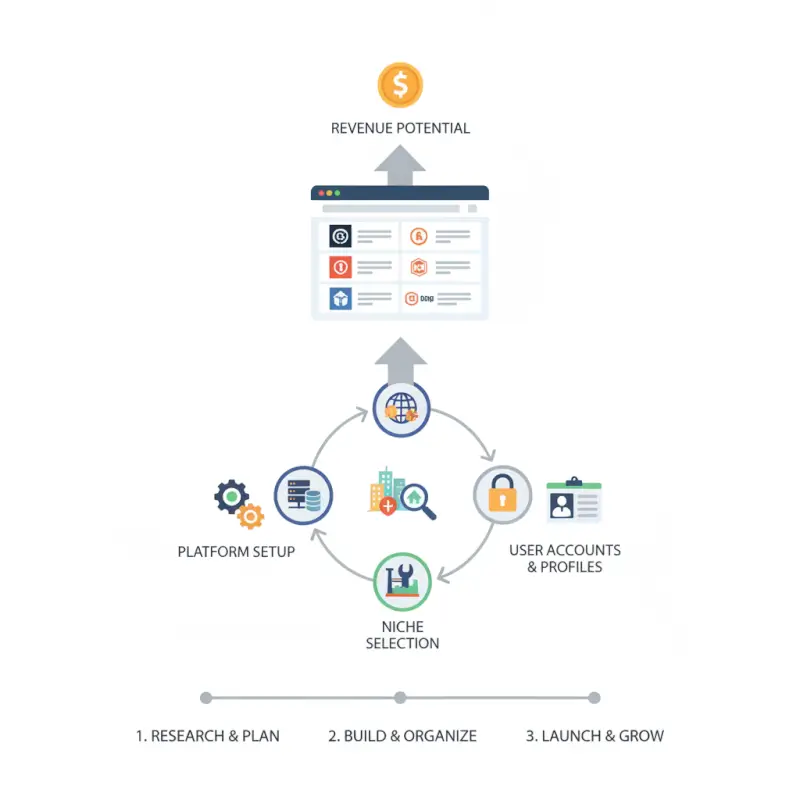
The foundation of any profitable directory is understanding that you’re not selling website real estate. You’re selling access to an audience of potential customers who are actively searching for solutions. When a restaurant owner pays for a listing on your local dining directory, they’re betting that your users will click through, read reviews, and make reservations. Your job is to make that bet pay off consistently enough that they renew month after month.
Think about it this way: free directory submission sites exist everywhere, yet businesses still pay for premium placements on established platforms. Why? Because those premium spots generate measurable results. According to the U.S. Small Business Administration, small businesses that track their marketing ROI are 70% more likely to maintain profitable advertising relationships, which is exactly what a recurring directory listing should be.
Paid Listings and Featured Placements
Paid listings are the bread and butter of directory monetization. The model is straightforward: businesses pay a monthly or annual fee to be listed in your directory, with pricing tiers based on visibility and features. Entry-level listings might include basic contact information and a description, while premium tiers add photos, videos, priority placement in search results, and enhanced analytics.
Featured placements take this further by offering guaranteed visibility in high-traffic areas—think homepage carousels, category page top spots, or search result headers. I remember working with a local service directory that initially charged $49/month for basic listings. When they introduced a $149/month “featured” tier that appeared above organic results, 23% of existing customers upgraded within the first quarter. The key was showing concrete data: featured listings received 8x more clicks than standard ones.
The pricing psychology matters enormously here. Instead of presenting a single “pay to be listed” option, create three tiers: a basic option (anchor pricing), a featured option (where you want most conversions), and a premium option (makes the middle tier look reasonable). Research from Harvard Business School on platform pricing models shows that tiered pricing increases average revenue per user by 35-50% compared to single-tier models.
Lead Gen and Referral Revenue
Lead generation flips the traditional listing model. Instead of charging businesses a flat monthly fee, you charge per qualified lead delivered—phone calls, contact form submissions, quote requests, or appointment bookings. This performance-based approach is incredibly attractive to small businesses because it eliminates upfront risk. They only pay when they receive an actual opportunity to win new business.
The challenge is tracking and attribution, you need technology to capture when a user clicks from your directory to a business’s website or makes a phone call. Tools like call tracking numbers (unique phone numbers for each listed business) and UTM-tagged links solve this. The economics work beautifully: if you charge $15-30 per qualified lead and deliver 20-50 leads monthly per business, you’re generating $300-1,500 per listing without the business feeling locked into a fixed subscription.
I’ve seen service-based directories (legal, home services, healthcare) thrive on lead-gen models because the lifetime value of a single customer is high enough that businesses happily pay $25-50 per qualified inquiry. A plumber who earns $800 average job revenue will gladly pay $30 for a homeowner asking for a quote. Your conversion rate (directory visitor → lead) and lead quality become your competitive moats, not just traffic volume.
Key metrics to obsess over: lead-to-customer conversion rate (what percentage of leads actually hire the business), cost per lead relative to industry benchmarks, and lead source quality (are your leads serious buyers or tire-kickers?). When online directories make money through revenue streams like lead generation, the businesses paying them should see a 3:1 to 5:1 ROI minimum to justify continued spending.
Diversified Ad and Affiliate Ecosystems
Once you’ve built steady traffic (ideally 10,000+ monthly visitors), advertising and affiliate revenue become viable complementary streams. The critical word here is “complementary”—these shouldn’t replace your core listing revenue, but they can add 20-40% additional income with minimal extra effort. The mistake many directories make is plastering ads everywhere before they have the traffic to make meaningful money, which just degrades user experience for pennies.
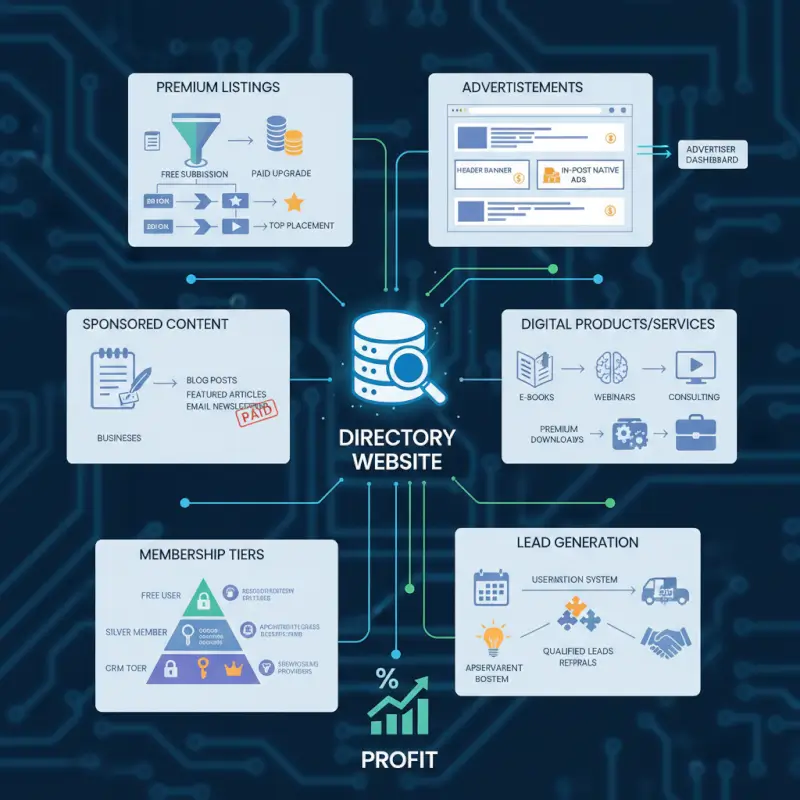
Think strategically about ad placement. Homepage takeover ads, category page sponsorships, and newsletter sponsorships typically command higher CPMs ($15-50) than generic display ads ($2-8) because they’re contextually relevant and feel less intrusive. A local restaurant directory selling a “Featured Restaurant of the Week” sponsor slot to a new opening for $500/week generates more revenue than 100,000 low-quality banner impressions ever will.
Affiliate partnerships work best when they align naturally with your directory’s purpose. A wedding vendor directory can earn 5-15% commissions promoting wedding planning software, invitation printing services, or photography equipment. According to Statista, affiliate marketing spending in the U.S. has grown consistently, with businesses appreciating the performance-based model that only pays for actual sales, not just clicks or impressions.
Display Advertising and Sponsorships
Display ads are the lowest-hanging fruit but also the lowest revenue per square inch of your website. Google AdSense or similar networks will monetize your traffic automatically, but expect modest returns—typically $3-12 per 1,000 pageviews depending on your niche. A directory with 50,000 monthly pageviews might earn $150-600/month from display ads alone, which covers hosting but won’t replace your day job.
The real money comes from direct sponsorships. Reach out to businesses that want to reach your specific audience and sell them homepage placement, category sponsorships, or email newsletter features at fixed monthly rates. A WordPress business directory plugin like TurnKey Directories makes it easy to create dedicated sponsor zones and manage these placements without custom coding.
Here’s what works: non-intrusive formats like a single “Sponsored Listing” at the top of search results (clearly labeled), a sidebar sponsor block on category pages, or a brief sponsor mention in your weekly email. What doesn’t work: pop-ups, auto-play videos, or ads that shift content around while users are trying to read. Studies show that user experience degradation from aggressive ads costs you more in lost visitor loyalty than the incremental ad revenue gained.
Affiliate Partnerships and Commission Opportunities
Affiliate revenue is about matching your audience’s needs with products or services you genuinely believe add value. If you run a business software directory, promoting accounting software or CRM tools through affiliate links makes perfect sense—your audience is actively researching these tools anyway. Commission rates vary wildly (2-50%) depending on the product category and vendor.
The best performing affiliate strategies are educational, not promotional. Write comparison guides, “best of” lists, or how-to tutorials that naturally include affiliate links to relevant tools or services. For example, an article titled “How to Choose Accounting Software for Your Small Business” on a business directory can include affiliate links to QuickBooks, FreshBooks, and Xero while providing genuine value. According to research from Forrester Research, content-driven affiliate strategies convert 3-5x better than banner ads because they’re addressing user intent, not interrupting it.
Compliance matters: always disclose affiliate relationships clearly. A simple “We may earn a commission if you purchase through our links” disclaimer builds trust and satisfies FTC requirements. The directories that succeed with affiliates treat recommendations as editorial decisions—they only promote products they’d recommend regardless of commission, which builds long-term credibility with their audience.
Track everything. Use link tracking to see which affiliate products your audience actually buys, which content drives conversions, and what your effective commission per visitor is. This data lets you double down on what works and eliminate partnerships that clutter your site for minimal return. Consider that free directory submission can be effective for SEO, which drives the organic traffic that makes affiliate revenue possible in the first place.
Create Recurring, Value-Added Offerings (SaaS-like or Membership Elements)
One-time revenue from listings is useful, but recurring income provides predictable cash flow and increases customer lifetime value. Subscription models allow you to offer tiered access to premium features, analytics dashboards, or enhanced listing widgets that businesses can use to improve their performance. By structuring your offerings into monthly or annual tiers, you create a retention-focused revenue stream that rewards long-term commitment.

SaaS-like features can include data exports, advanced analytics on listing views and clicks, or tools that help businesses optimize their profiles. For example, a directory for restaurants might offer a premium tier that includes menu management tools, reservation widgets, and customer review analytics. These tools justify recurring fees because they solve ongoing operational challenges for your listed businesses.
Bundling is another powerful strategy within this model. You can combine listings, event placements, and data access into a single growth package priced at a monthly or quarterly rate. This approach reduces decision fatigue for customers and increases average order value. Test different bundle configurations to find the combination that delivers the highest lifetime value relative to customer acquisition cost.
Subscriptions for Enhanced Tools or Access
Enhanced subscriptions unlock features that free or basic listings do not provide. Common examples include priority customer support, the ability to respond to reviews, integration with CRM platforms, or access to lead-tracking dashboards. These tools are valuable to businesses that want to measure ROI and optimize their directory presence over time.
Tiered pricing should clearly communicate the value at each level. A basic tier might include a standard listing with contact information, while a mid-tier subscription adds photos, videos, and a featured badge. The top tier could offer everything plus analytics, API access, and promotional spots in email newsletters. Make sure each tier offers a meaningful upgrade that justifies the price increase.
Retention is critical for subscription models. Use automated onboarding sequences, regular usage reports, and proactive customer success outreach to keep subscribers engaged. Monitor churn rates by tier and conduct exit surveys to understand why businesses cancel. Use that feedback to improve your feature set and pricing structure.
Growth Bundles and Bundled Services
Bundling combines multiple services into a single package, often at a discount compared to purchasing each item separately. For directories, this might mean offering a package that includes a premium listing, a banner ad slot, and access to quarterly market reports. Bundling increases perceived value and encourages customers to purchase more than they initially intended.
Design bundles based on real customer behavior and feedback. If your data shows that businesses who buy premium listings often also purchase banner ads, create a bundle that combines both at a 15-20% discount. Use clear naming conventions like “Starter,” “Growth,” and “Enterprise” to signal the intended audience for each bundle. Seasonal bundles can also drive urgency, such as a Q1 launch package or a year-end visibility boost.
Billing frequency matters for bundled services. Monthly billing reduces upfront friction but can lead to higher churn. Quarterly or annual billing improves cash flow and retention, especially if you offer a discount for prepayment. Test both models with different customer segments to find the optimal balance between acquisition ease and revenue stability.
Data-Driven Monetization: Insights, Verification, and Benchmarking
As your directory grows, the data you collect becomes a valuable asset. Businesses want insights into market trends, competitor performance, and customer behavior within your niche. By aggregating and anonymizing this data, you can create premium reports, benchmarking tools, and advisory services that command higher price points than standard listings or ads.
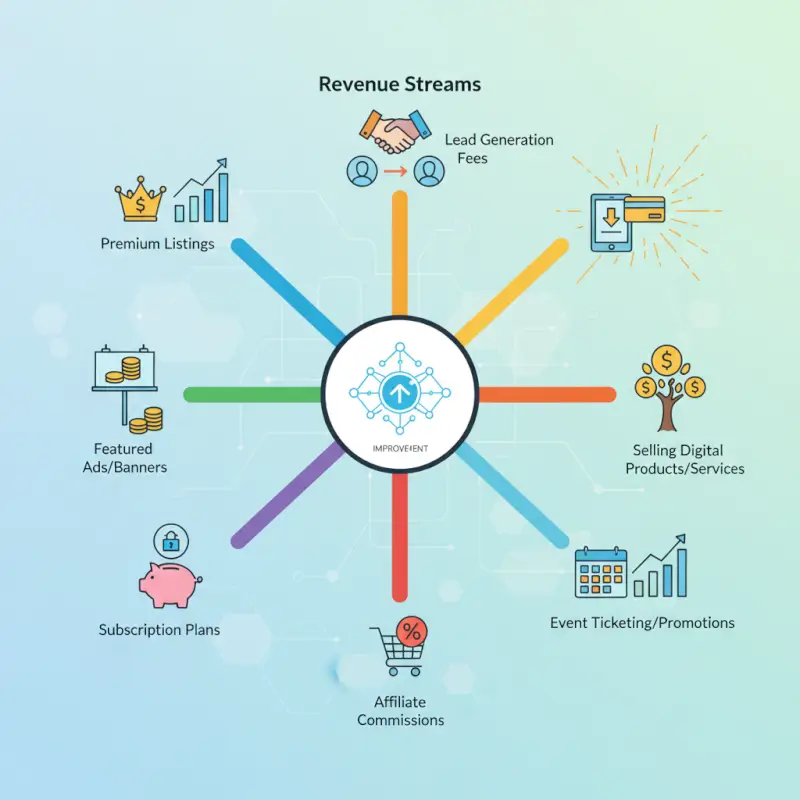
Data quality is the foundation of this revenue stream. Verified listings, accurate contact information, and up-to-date business details increase trust and conversion rates. Implement verification processes such as email confirmation, phone verification, or documentation review to ensure your directory maintains high standards. Businesses are willing to pay more for placement in directories known for accuracy and reliability.
Benchmarking reports can show businesses how they compare to competitors in terms of listing views, click-through rates, or review scores. You can sell access to these insights on a subscription basis or offer them as add-ons to premium listing packages. Make sure to anonymize individual business data and comply with privacy regulations when packaging insights for sale.
Data Quality as a Monetization Lever
High-quality data drives higher engagement, which in turn supports premium pricing. Directories that invest in verification processes see better user retention and stronger advertiser demand. Verification badges or “certified listing” icons signal to users that a business has been vetted, increasing click-through and conversion rates.
Implement tiered verification standards based on the level of proof provided. A basic verification might require email confirmation, while a premium verification involves phone calls, document uploads, or third-party identity checks. Charge businesses a one-time or annual fee for premium verification, and highlight verified listings more prominently in search results and category pages.
Data quality also extends to user-generated content such as reviews and ratings. Invest in moderation tools, fraud detection algorithms, and review verification workflows to maintain credibility. Directories with trustworthy review systems attract more traffic and can justify higher fees for featured placements and sponsored listings.
| Verification Tier | Process | Annual Fee | Benefit |
|---|---|---|---|
| Basic | Email confirmation | Free | Standard listing visibility |
| Standard | Email + phone verification | $99 | “Verified” badge, higher ranking |
| Premium | Email + phone + document upload | $299 | “Premium Verified” badge, top search placement, featured in newsletters |
Market Benchmarks and Analytics Services
Businesses value competitive intelligence, and your directory is uniquely positioned to provide it. By aggregating anonymized data on listing performance, search trends, and user engagement, you can create benchmarking reports that help businesses understand where they stand in the market. Sell these reports as one-time purchases or include them in premium subscription tiers.
Analytics services can also be offered on a per-business basis. A premium analytics dashboard might show a business its listing views over time, the geographic distribution of visitors, click-through rates on contact buttons, and comparison metrics against category averages. These insights help businesses optimize their listings and justify continued investment in premium placements.
Consider creating annual or quarterly market reports that highlight trends in your niche. For example, a directory for wedding vendors could publish a yearly report on the most popular event types, seasonal demand patterns, and average pricing by region. Sell these reports to businesses in your directory or use them as lead magnets to attract new listings and advertisers.
Global Growth and Compliance: Trust, Privacy, and Platform Governance
As your directory scales and monetizes, governance and compliance become critical to sustained revenue and user trust. Operating in multiple regions or serving businesses across borders introduces privacy laws, advertising regulations, and content moderation requirements. Failing to address these issues can result in fines, reputational damage, or loss of advertiser confidence.

Trust is a strategic asset. Users and businesses both expect transparency around pricing, data usage, and listing policies. Clearly communicate how you collect, store, and use data, and provide businesses with control over their own information. Privacy-compliant monetization practices protect your directory from legal risk and increase long-term customer retention.
Platform governance also includes content moderation, fraud prevention, and dispute resolution. Establish clear terms of service, listing guidelines, and review policies. Invest in moderation tools and processes to remove fraudulent listings, fake reviews, or inappropriate content. A well-governed platform attracts higher-quality businesses and commands premium pricing.
Trust, Review Verification, and Compliance
Review verification builds user confidence and supports monetization by ensuring that ratings and testimonials are genuine. Implement processes to confirm that reviews come from real customers, such as email verification, purchase confirmation, or login-required review submission. Display verification indicators next to authenticated reviews to increase their credibility.
Listing verification and review moderation work together to create a trustworthy directory. Businesses are more willing to pay for premium placements when they know the directory maintains high standards. Users are more likely to engage with and trust directories that actively combat fake content. Both dynamics support higher traffic and better conversion rates for advertisers.
Compliance with data protection regulations such as GDPR (in the European Union) or CCPA (in California) is non-negotiable for directories that collect personal information. Provide clear privacy notices, enable user data requests and deletions, and document your consent mechanisms. Noncompliance can result in significant fines and loss of user trust, undermining all monetization efforts.
Legal and Compliance Baselines for Monetization
Transparent pricing and advertising practices reduce friction and build trust with both users and businesses. Clearly label sponsored content, featured listings, and affiliate links to comply with advertising disclosure requirements. Ambiguity or deception can trigger regulatory scrutiny and damage your brand reputation.
Terms of service should address listing accuracy, payment terms, refund policies, and dispute resolution. Make these terms accessible and easy to understand, and update them as your monetization strategies evolve. Consider consulting with a legal professional to ensure compliance with relevant consumer protection laws and industry-specific regulations.
If you collect payments, ensure PCI DSS compliance for credit card processing and use secure, reputable payment gateways. If you operate internationally, understand VAT, sales tax, and invoicing requirements in each jurisdiction where you do business. Tax compliance and financial transparency are essential for scaling revenue without legal or financial complications.
| Compliance Area | Key Requirement | Actionable Step |
|---|---|---|
| Privacy (GDPR/CCPA) | User consent, data access, deletion rights | Add privacy notice, consent banners, and data request forms |
| Advertising Disclosure | Label sponsored and affiliate content clearly | Use “Sponsored” badges and affiliate disclaimers on all relevant listings |
| Payment Security | PCI DSS compliance for card processing | Use trusted payment processors (Stripe, PayPal) and avoid storing card data |
| Terms of Service | Clear policies on listings, refunds, disputes | Publish accessible terms, update regularly, and require acceptance at signup |
Frequently Asked Questions
What is a directory website and how does it make money?
A directory website organizes and lists businesses, services, or resources in a searchable database. It makes money through paid listings, featured placements, advertising, affiliate commissions, lead generation fees, membership subscriptions, and selling aggregated data or market insights to businesses seeking competitive intelligence.
Which revenue streams should I start with for a new directory site?
Begin with paid listings and featured placements, as they’re straightforward to implement and provide immediate value to businesses. Once traffic grows, add display advertising and affiliate partnerships. Reserve subscription models and data-driven offerings for when you’ve established a critical mass of users and listings.
How do I price listings and determine if a listing should be paid or free?
Offer free basic listings to build directory volume and attract users, then charge for premium features like enhanced visibility, multimedia content, analytics, or priority placement. Research competitor pricing, consider your audience’s willingness to pay, and test tiered pricing structures starting at accessible entry points with clear upgrade paths.
How can I drive qualified traffic to my directory to monetize effectively?
Focus on SEO-optimized listing pages targeting long-tail keywords, create valuable content around your niche, build backlinks through partnerships, and encourage user reviews. Invest in local SEO if your directory serves geographic markets, and use social media and email marketing to engage your community and drive repeat visits.
What are best practices for balancing user experience with monetization?
Prioritize user value by keeping core search and browsing functions free and fast-loading. Limit intrusive ads, clearly label sponsored content, and ensure paid listings still meet quality standards. Test monetization features with user feedback, monitor bounce rates, and adjust placement or frequency if engagement metrics decline significantly.
How can I ensure data quality and trust to support higher-value monetization?
Implement verification processes for new listings, moderate user reviews to prevent spam, and regularly audit inactive or outdated entries. Display trust signals like verification badges, publish transparent listing criteria, and respond promptly to user reports. High-quality data justifies premium pricing and attracts serious business clients.
What compliance or privacy considerations should I plan for when monetizing a directory?
Comply with data protection regulations like GDPR and CCPA by implementing clear privacy policies, obtaining consent for data collection, and providing opt-out mechanisms. Disclose affiliate relationships and sponsored content transparently. Ensure secure payment processing for paid listings and maintain accessible terms of service outlining refund and cancellation policies.
Can I monetize a directory website with low traffic initially?
Yes, start with direct revenue streams like paid listings and lead generation that don’t require massive traffic volumes. Focus on serving a highly targeted niche where businesses value access to qualified audiences. As your authority and visitor numbers grow, layer in advertising, affiliates, and subscription offerings to diversify income.
Your Roadmap to Directory Revenue Success
Building a profitable directory website isn’t about choosing a single revenue stream and hoping it works. The most successful directory operators embrace a diversified approach, layering complementary monetization methods that serve different segments of their audience while preserving the user experience that drives traffic in the first place.
You now have a clear framework spanning seven proven revenue streams organized into five strategic pillars: building value through listings and lead generation, creating diversified ad and affiliate ecosystems, offering recurring subscriptions and bundled services, leveraging data-driven monetization, and maintaining trust through compliance and governance. Each stream reinforces the others, creating a resilient business model that can weather market changes and algorithm updates.
The key to success lies in starting small and iterating based on real performance data. Launch with paid listings and featured placements to establish your core value proposition to businesses. As traffic grows, introduce display advertising and affiliate partnerships to monetize your audience. When you’ve built credibility and a critical mass of engaged users, layer in subscription offerings and data products that provide ongoing value and predictable recurring revenue.
Track your metrics religiously. Monitor customer acquisition costs, lifetime value, lead quality scores, conversion rates, and engagement patterns across each revenue stream. This data will tell you which monetization methods resonate with your specific audience and where to invest your optimization efforts. Test pricing tiers, experiment with placement strategies, and don’t be afraid to retire revenue streams that create friction without delivering proportional returns.
Most importantly, never lose sight of why users visit your directory in the first place. They’re looking for quality information, trustworthy recommendations, and an efficient way to find what they need. Every monetization decision should pass a simple test: does this add value to the user experience, or does it merely extract value from it? The directories that thrive long-term are those that answer that question honestly and consistently choose the former.
Ready to Build Your Directory Revenue Engine?
Start by implementing one revenue stream this week. Choose the model that best fits your current traffic level and audience needs, set up the necessary infrastructure, and begin testing with real customers. Document what works, refine your approach, and gradually add complementary streams as you grow.
Your directory has the potential to become a sustainable, multi-revenue business. The framework is proven, the tools are available, and the opportunity is waiting. The only question is: which revenue stream will you launch first?
Was this article helpful?