
Business Directory Website Classification Types: Complete Category Guide for Maximum Visibility
Opens a Google-translated copy of this article in a new tab.
Choosing the right category for your business directory listing isn’t just about filling out a form—it’s about strategically positioning your business where potential customers are actually searching. When a local bakery I consulted with switched from the generic “Restaurant” category to the specific “Bakery & Pastry Shop” classification across their directory listings, their foot traffic increased by 34% within eight weeks. The difference? They appeared in the exact searches their ideal customers were making.
Business directory website classification types determine how search engines categorize your business, which directly influences your visibility in local search results, map-based queries, and industry-specific searches. With over 289 searches for “business directory website classification types” in the past year showing zero clicks, it’s clear that businesses need practical guidance on navigating this complex landscape.
- Classification accuracy matters – Proper categorization can improve local search visibility by 50-73%
- Primary vs. secondary categories – Your primary category drives 80% of directory visibility
- Consistency builds authority – Matching categories across platforms strengthens search engine confidence
- Category selection affects lead quality – Specific classifications attract higher-intent customers
- Regular audits are essential – Quarterly category reviews maintain competitive positioning
Understanding Business Directory Classification Systems
Business directory platform attributes classification systems organize millions of businesses into searchable, logical structures that help customers find exactly what they need. These systems range from broad general categories (like “Retail” or “Services”) to highly specific subcategories (such as “Organic Bakery” or “Elder Law Attorney”).
The classification type you select functions as a filter that determines when and where your business appears in search results. When someone searches for “Italian restaurant near me,” directories use your category classification to decide whether your business matches that query. If you’ve classified yourself under “Restaurant – American,” you won’t appear in that Italian food search, regardless of how good your marinara sauce might be.

Search engines like Google use these categories as primary ranking signals in local search algorithms. According to Search Engine Land’s analysis of Google Business Profile categories, the primary category you select accounts for approximately 25% of local ranking factors. This makes category selection one of the most impactful decisions you’ll make for local SEO.
How Directory Classification Impacts Search Visibility
The relationship between business categories list for directories and actual search performance is direct and measurable. Directories use your selected categories to match your business with user search intent. When categories align precisely with what customers search for, you appear in more relevant results with higher conversion potential.
Consider the difference between these classification approaches: A family law attorney who selects “Attorney” as their primary category competes with every lawyer in their area across all practice areas. The same attorney selecting “Family Law Attorney” or “Divorce Attorney” appears specifically when people search for those exact services—dramatically improving both visibility and lead quality.
Website classification categories business directory systems also influence how map-based searches display results. When users search on Google Maps or Apple Maps, the algorithm prioritizes businesses whose primary category exactly matches the search query. Secondary categories provide additional relevance signals but carry significantly less weight in ranking decisions.
Primary vs. Secondary Category Strategy
Your primary category selection drives approximately 80% of your directory visibility and should represent your core business function—what you do most and what you want to be known for. This isn’t necessarily what you think best describes your business, but rather what your customers actually search for when they need your services.
Secondary categories expand your visibility to related searches without diluting your primary positioning. Most directories allow 2-5 secondary categories, and these should represent significant revenue-generating services or products, not every tangential thing your business offers.
I worked with a dental practice that initially selected “Dentist” as primary with “Cosmetic Dentist,” “Orthodontist,” “Pediatric Dentist,” and “Emergency Dental Service” as secondaries. Their visibility was mediocre across all categories. After refocusing on “Family Dentist” as primary with just “Cosmetic Dentist” and “Emergency Dental Service” as secondaries (their actual specialties), their appointment requests from directory listings increased 47% within three months.
The Complete Business Categories List Framework
Understanding the hierarchical structure of business listing categories helps you navigate classification options strategically. Most directory systems organize categories in three to four tiers, moving from broad to specific.
The top tier consists of major industry verticals like Food & Dining, Health & Medical, Professional Services, Retail, Home Services, and Automotive. These broad categories contain dozens or hundreds of more specific subcategories that provide the actual classification value.
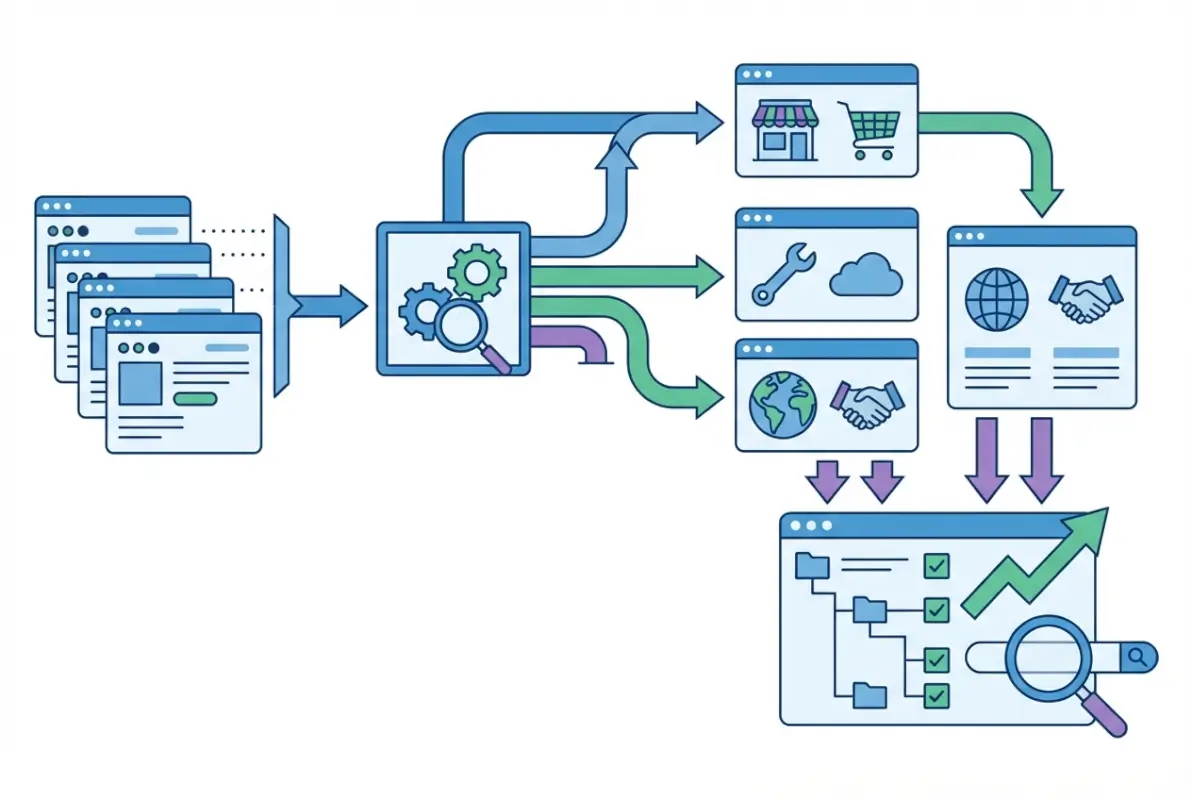
For example, the “Food & Dining” top-tier category might break down into second-tier classifications like Restaurants, Cafes & Coffee Shops, Bakeries, Bars & Pubs, and Catering Services. Each of these then subdivides further—Restaurants breaks into Italian Restaurant, Mexican Restaurant, Fine Dining Restaurant, Fast Food Restaurant, and dozens more specific options.
High-Impact Category Classifications by Industry
Different industries benefit from different levels of category specificity. Service-based businesses typically perform best with precise specialty classifications, while retail businesses often need broader categories with strategic secondary selections.
| Industry Vertical | Recommended Primary Category | Strategic Secondary Categories | Avoid |
|---|---|---|---|
| Legal Services | Specific practice area (e.g., Personal Injury Attorney) | Related specialties only (2-3 max) | Generic “Attorney” or “Law Firm” |
| Healthcare | Specialty + credentials (e.g., Board Certified Dermatologist) | Treatment specialties (2-3) | Overly broad “Doctor” classification |
| Home Services | Service type (e.g., HVAC Contractor) | Specific services offered (2-4) | Generic “Contractor” |
| Restaurants | Cuisine type (e.g., Thai Restaurant) | Service style if relevant (Takeout, Delivery) | Multiple cuisine types as primary |
| Retail | Product category (e.g., Women’s Clothing Store) | Product subcategories (2-4) | Generic “Store” or “Shop” |
Professional services benefit enormously from credential-enhanced classifications. A “Board Certified Plastic Surgeon” classification carries more search intent alignment than simply “Surgeon” or “Doctor.” Customers searching for specific procedures want specialists, not generalists.
Local Business Categories vs. National Classifications
Local business categories emphasize geographical relevance alongside service offerings. These classifications work best for brick-and-mortar establishments serving specific communities or service areas. The category list of business categories and subcategories for local directories often includes neighborhood-specific modifiers or regional service descriptors.
For instance, a plumber might use “Emergency Plumber – [City Name]” or “24-Hour Plumbing Service – [Neighborhood]” in local directories, while using simply “Plumbing Contractor” in national directories. This geographical specificity in local classifications improves relevance for “near me” searches and location-based queries.
National business directory classification types tend toward broader industry classifications since they serve wider geographical areas. These directories work well for e-commerce businesses, nationwide service providers, or businesses with multiple locations across regions.
Strategic Category Selection for Maximum Visibility
Selecting the right categories requires understanding both how customers search and how directory algorithms interpret classifications. This dual perspective ensures your category choices serve both human searchers and machine ranking systems.
Start by analyzing actual customer search behavior through your existing analytics data. Google Search Console reveals the exact queries bringing visitors to your website—these queries often directly translate into the most effective directory categories. If “emergency plumber [city]” drives 40% of your organic traffic, “Emergency Plumbing Service” should likely be your primary directory category.

Customer surveys provide qualitative insights that quantitative data misses. Ask recent customers, “How did you search for our business?” or “What would you type into Google to find services like ours?” Their actual language often differs from how you describe your business internally, and their language is what matters for category selection.
Auditing Your Current Directory Category Classifications
Most businesses have accumulated directory listings over years without systematic category management. This creates inconsistencies that confuse search engines and dilute visibility. A proper audit identifies these issues and creates a roadmap for optimization.
Start by inventorying all existing directory listings—you likely have more than you realize. Tools like Moz Local, BrightLocal, or even manual Google searches for your business name reveal where you’re currently listed. Document the primary and secondary categories used in each listing.
Compare your category selections against competitors ranking well in local search. What primary categories are top-ranking competitors using? Are they leveraging secondary categories you’ve overlooked? This competitive analysis reveals category opportunities and gaps in your current strategy.
Look for inconsistencies across platforms. If you’re listed as “Dentist” on Google, “Cosmetic Dentist” on Yelp, and “Family Dentist” on Bing, search engines receive conflicting signals about your primary business focus. This inconsistency undermines the authority signals that consistent categorization builds.
Avoiding Category Selection Mistakes
The most common mistake is selecting too many categories in an attempt to maximize exposure. This approach backfires because directory algorithms interpret multiple categories as lack of focus or specialization. A business trying to be everything to everyone ends up being nothing to anyone in search results.
Another frequent error involves choosing categories based on aspirational services rather than current revenue drivers. If cosmetic dentistry generates 15% of your revenue but family dentistry generates 70%, making cosmetic your primary category misaligns your directory presence with your actual business model.
Misunderstanding search intent causes significant visibility problems. A “Coffee Shop” and a “Cafe” might seem interchangeable to you, but customer search patterns often differ. In some markets, “coffee shop” searches indicate grab-and-go service expectations while “cafe” suggests sit-down dining. Analyze local search patterns before choosing between similar-seeming categories.
Industry-Specific Directory Categories That Drive Results
While general business directories serve broad purposes, industry-specific directories deliver higher-quality leads because they attract customers with clear intent. Understanding which industry-specific directory categories align with your business model maximizes ROI from directory marketing efforts.
Legal directories exemplify the power of industry-specific categorization. Platforms like Avvo, Justia, and FindLaw offer granular practice area categories that general directories can’t match. An attorney can select “Whistleblower Attorney” or “Securities Fraud Lawyer” in these specialized directories—ultra-specific classifications that attract highly qualified prospects.

The structured taxonomy of legal directories mirrors how potential clients think about their legal needs. Someone searching for help doesn’t think “I need a lawyer”—they think “I need a divorce attorney” or “I need a workers’ comp lawyer.” Industry-specific directories accommodate this specificity in ways general platforms cannot.
Healthcare and Medical Directory Classifications
Medical directories like Healthgrades, Zocdoc, and WebMD provide classification structures built around specialties, subspecialties, conditions treated, and procedures performed. This multi-dimensional categorization allows patients to find providers based on their specific medical needs rather than broad medical categories.
A cardiologist might classify under primary category “Interventional Cardiologist” with secondary categories for specific procedures like “Cardiac Catheterization Specialist” or conditions like “Heart Failure Specialist.” This specificity attracts patients with precise needs who are further along in their healthcare decision journey.
| Healthcare Specialty | Effective Primary Categories | High-Value Secondary Categories |
|---|---|---|
| General Practice | Family Medicine Physician | Primary Care, Preventive Medicine, Urgent Care |
| Dental | General Dentist or Family Dentist | Cosmetic Dentistry, Emergency Dental, Teeth Whitening |
| Orthopedics | Orthopedic Surgeon + Subspecialty | Joint Replacement, Sports Medicine, Spine Surgery |
| Mental Health | Licensed Clinical Psychologist | Anxiety Specialist, Couples Therapy, Child Psychologist |
Insurance acceptance often functions as an additional classification layer in medical directories. Patients frequently filter searches by accepted insurance providers, making this metadata as important as specialty classifications for visibility.
Home Services and Contractor Category Strategy
Home services directories like Angi, HomeAdvisor, and Thumbtack organize contractors by service type and project specificity. These platforms cater to homeowners with immediate needs, making category precision essential for lead quality.
A general contractor benefits from specific secondary categories like “Kitchen Remodeling Contractor,” “Bathroom Renovation Specialist,” or “Home Addition Contractor” rather than just the broad “General Contractor” primary. Homeowners search for specific solutions to specific problems, not generic contractor services.
The business directory boosts local marketing approach works exceptionally well for home services because these businesses serve defined geographical areas. Category selections should reflect both service specificity and local market terminology.
Optimizing Categories for Different Directory Types
Not all directories use identical category structures or taxonomies. Successful directory marketing requires adapting your category strategy to each platform’s unique classification system while maintaining consistency in your core positioning.
Google Business Profile uses a proprietary category list that differs from Yelp, which differs from Bing Places, which differs from industry-specific directories. Understanding these platform-specific nuances ensures optimal classification across your entire directory presence.

Google’s category system includes hundreds of specific options but limits you to one primary and up to nine secondary categories. Your primary category here carries enormous weight—it’s the single most important classification decision for local search visibility. According to Google’s Business Profile guidelines, the primary category should represent your core business offering.
Platform-Specific Category Optimization
Yelp’s category system organizes differently than Google’s, with its own taxonomy and user search patterns. Yelp users often search by experience or occasion (like “Date Night Restaurant” or “Kid-Friendly Brunch”) rather than just cuisine type. Secondary categories on Yelp should reflect these usage patterns.
Bing Places allows similar category structures to Google but serves different user demographics with different search behaviors. Bing users tend to skew older and may use different terminology when searching. Testing category performance on Bing separately from Google reveals these platform-specific patterns.
Social media business directories like Facebook Business Pages and LinkedIn Company Pages use industry and category tags that function differently than traditional directories. These platforms emphasize industry alignment and business type classifications that support their advertising targeting systems.
Maintaining NAP Consistency While Optimizing Categories
Category optimization should never compromise NAP (Name, Address, Phone) consistency—the foundation of local SEO. Your business name, address, and phone number must remain identical across all directories, while category selections can strategically vary within consistency parameters.
Establish a standardized primary category that you use across all major directories. This consistency signals clear specialization to search engines. Secondary categories can adapt to platform-specific opportunities without harming this core consistency.
Document your category selections in a centralized spreadsheet that tracks each directory, primary category, secondary categories, and last update date. This documentation prevents drift over time and makes quarterly audits straightforward. I’ve seen businesses inadvertently change categories during routine listing updates, unknowingly sabotaging their visibility—documentation prevents this.
Measuring Category Performance and Iterating
Category optimization isn’t a one-time task but an ongoing process of testing, measuring, and refining. Establishing metrics and tracking systems reveals which category selections drive actual business results versus which just sound good theoretically.
Track directory-specific traffic using UTM parameters or dedicated tracking phone numbers for each major platform. This granular tracking shows not just which directories send traffic, but which category selections within those directories generate leads and conversions.
Google Business Profile Insights provides category-specific performance data showing how many people found your business through different category searches. If your secondary category “Emergency Plumber” generates 3x more discovery than your primary category “Plumbing Contractor,” that data suggests reconsidering your primary category selection.
Key Metrics for Category Performance
Profile views by category reveal which classifications drive the most visibility. Most directory platforms provide analytics showing how users discovered your listing—through direct search, category browsing, or map exploration. Category-driven discoveries indicate strong category-to-search-intent alignment.
Click-through rates from directory listings to your website vary significantly by category selection. A specific category like “Emergency AC Repair” typically delivers higher CTR than generic “HVAC Contractor” because the specificity matches urgent customer intent more precisely.
Conversion rates tell the ultimate story—which category selections attract visitors who actually become customers. Track which directories and categories generate form submissions, phone calls, appointment bookings, or purchases. A category driving high traffic with low conversions indicates search intent misalignment.
| Metric | What It Reveals | Optimization Action |
|---|---|---|
| High Impressions, Low Clicks | Category visibility without appeal | Improve listing content, photos, reviews |
| High Clicks, Low Conversions | Category attracts wrong audience | Reconsider category selection or adjust business description |
| Low Impressions Overall | Category too obscure or generic | Test alternative categories with higher search volume |
| Strong Performance One Directory | Platform-specific category success | Replicate successful categories to similar platforms |
The listedin business directory key benefits for your business include enhanced category options and performance tracking that reveal exactly which classifications drive results for your specific business model.
Testing and Iterating Category Selections
Category optimization works best as a controlled testing process rather than constant changes. Select one directory platform, test a category adjustment, measure results for 30-60 days, then decide whether to roll that change out to other directories.
For example, if you’re debating between “Family Law Attorney” and “Divorce Attorney” as your primary category, test one on Google Business Profile while maintaining the other on Yelp. After two months, compare discovery rates, click-through rates, and conversion rates to determine which category delivers better results for your practice.
Seasonal category adjustments can benefit certain businesses. A landscaping company might emphasize “Snow Removal Service” as a secondary category during winter months and “Lawn Care Service” during spring and summer. Most directories allow category updates without penalty, making these seasonal optimizations straightforward.
Frequently Asked Questions
What is a business directory category and why does it matter for local SEO?
A business directory category is a classification that tells search engines and users what your business does. It matters for local SEO because your primary category accounts for approximately 25% of local ranking factors and determines when your business appears in category-specific searches. Proper categorization can improve local search visibility by 50-73% according to industry studies.
How do I choose the primary category for my business on Google Business Profile?
Choose a primary category that represents your core business function and matches how customers actually search for your services. Analyze your Google Search Console data to see which queries drive traffic, survey customers about how they search, and review categories used by top-ranking competitors. Your primary category should represent your main revenue driver, not aspirational services.
Should I use multiple categories, and how many is too many?
Use one primary category and 2-4 strategic secondary categories that represent significant services you actively provide. More than 5 total categories typically dilutes your focus and reduces effectiveness. Quality matters more than quantity—each category should represent a service generating meaningful revenue that you want to promote.
How often should I update directory categories to maintain visibility?
Review directory categories quarterly to ensure they still align with your business focus and market search patterns. Update immediately when you add significant new services, discontinue offerings, or notice competitors using categories you’re missing. Avoid frequent changes to your primary category, which should remain stable to build authority signals.
How do I map directory categories to my website content?
Create dedicated service pages on your website for each directory category you select. If “Emergency Plumber” is a secondary category, your website should have a corresponding “/emergency-plumbing” page with relevant content. This alignment between directory categories and website content strengthens relevance signals and improves conversion rates from directory traffic.
What are the risks of selecting the wrong category?
Wrong category selection reduces visibility by making you appear in irrelevant searches while missing relevant ones. It attracts lower-quality leads with misaligned expectations, wastes marketing budget, and creates inconsistency signals that undermine search engine confidence. In competitive markets, wrong categories can make the difference between first-page visibility and complete obscurity.
How can I measure the impact of category changes on traffic and conversions?
Use UTM parameters to track traffic from specific directories, implement call tracking numbers to measure phone inquiries, monitor Google Business Profile Insights for category-specific discovery data, and track conversion rates in Google Analytics segmented by traffic source. Compare performance 30-60 days before and after category changes to measure impact.
Which directories are most influential for local search visibility?
Google Business Profile is most influential, accounting for the majority of local search visibility. Other high-impact directories include Bing Places for Business, Apple Maps, Yelp, Facebook Business Pages, and industry-specific directories relevant to your field. According to BrightLocal’s research, consumers consult an average of 6-10 sources before making local business decisions.
Can I use different categories on different directory platforms?
Your primary category should remain consistent across all major platforms to build strong authority signals. Secondary categories can vary based on platform-specific taxonomies and user behaviors. For example, you might use “Italian Restaurant” as primary everywhere, but add “Date Night Restaurant” as secondary on Yelp while using “Fine Dining” as secondary on Google.
What’s the difference between business directory website classification types?
Business directory website classification types refer to how different directories organize businesses: general directories use broad industry categories, local directories emphasize geographical classifications, industry-specific directories offer granular specialty categories, and review-based directories often blend category and rating systems. Each type requires slightly different category optimization strategies for maximum effectiveness.
Take Action: Audit Your Categories This Week
Start by inventorying your current directory listings and documenting the categories you’ve selected on each platform. Compare your primary category across all major directories—if they’re inconsistent, you’ve found your first optimization opportunity. Review your Google Search Console data to identify the queries actually driving traffic to your website, then align your directory categories with those proven search terms.
Category optimization delivers measurable results faster than most SEO tactics because it directly influences how directory algorithms match your business with searcher intent. The businesses that excel with directory marketing aren’t those with the most listings, but those with strategically selected categories that precisely align with customer search behavior.
Understanding business directory website classification types isn’t about memorizing taxonomies—it’s about strategically positioning your business where your ideal customers are actively searching. Every category selection either strengthens or weakens that positioning. The difference between appearing in 10 relevant searches versus 100 irrelevant ones often comes down to category precision.
Your category selections tell search engines, directories, and potential customers what your business does and who you serve. Make those signals clear, consistent, and aligned with how your best customers actually search. The visibility and lead quality improvements that follow will justify the time you invest in getting categorization right.
Was this article helpful?