Free Business Directory Listing: Complete Guide to Getting Started

Generating summary...
Most business owners are sitting on a goldmine they don’t even realize exists. While everyone’s scrambling to throw money at Facebook ads and Google PPC campaigns, there’s a massive opportunity hiding in plain sight—one that costs absolutely nothing and can drive qualified traffic to your business starting today.
Free business directory listings are one of the most underutilized marketing channels available, yet they consistently deliver results that paid advertising can only dream of matching on a per-dollar basis. I’ve watched countless small businesses transform their online presence simply by claiming and optimizing profiles they didn’t even know existed. The best part? Unlike paid ads that stop working the moment your budget runs dry, directory listings keep working for you 24/7, building authority and trust with both customers and search engines.
What makes this even more powerful is that most of your competitors are either completely ignoring directories or doing such a mediocre job that you can leapfrog them with just a few hours of strategic work. This guide will show you exactly how to harness free business directory listings to boost your visibility, credibility, and bottom line—without spending a single cent on advertising.
TL;DR – Quick Takeaways
- Directory listings are free visibility multipliers – They boost your presence across search engines and help customers find you through multiple channels
- NAP consistency is critical – Your Name, Address, and Phone must match exactly across all platforms to maximize local SEO impact
- Quality beats quantity every time – Ten well-optimized listings on authoritative directories outperform 100 sloppy submissions to questionable sites
- Complete profiles convert better – Listings with photos, detailed descriptions, and current information see 3-5x higher engagement rates
- It’s an ongoing process, not a one-time task – Regular updates and review management keep your listings performing at their peak
Why Free Directory Listings Still Matter in 2026
Let me guess—you’re wondering if business directories are even relevant anymore. After all, doesn’t everyone just Google everything these days? Here’s what most people miss: when someone Googles “plumber near me” or “best Italian restaurant downtown,” guess what dominates those results? Directory listings.
The reality is that directories have evolved far beyond the digital Yellow Pages most people imagine. They’re now sophisticated platforms that feed directly into search engine algorithms, particularly for local searches. When Google tries to determine which businesses to show in the coveted “local pack” (those three listings with the map), it looks at citation consistency across multiple directories as a major trust signal.
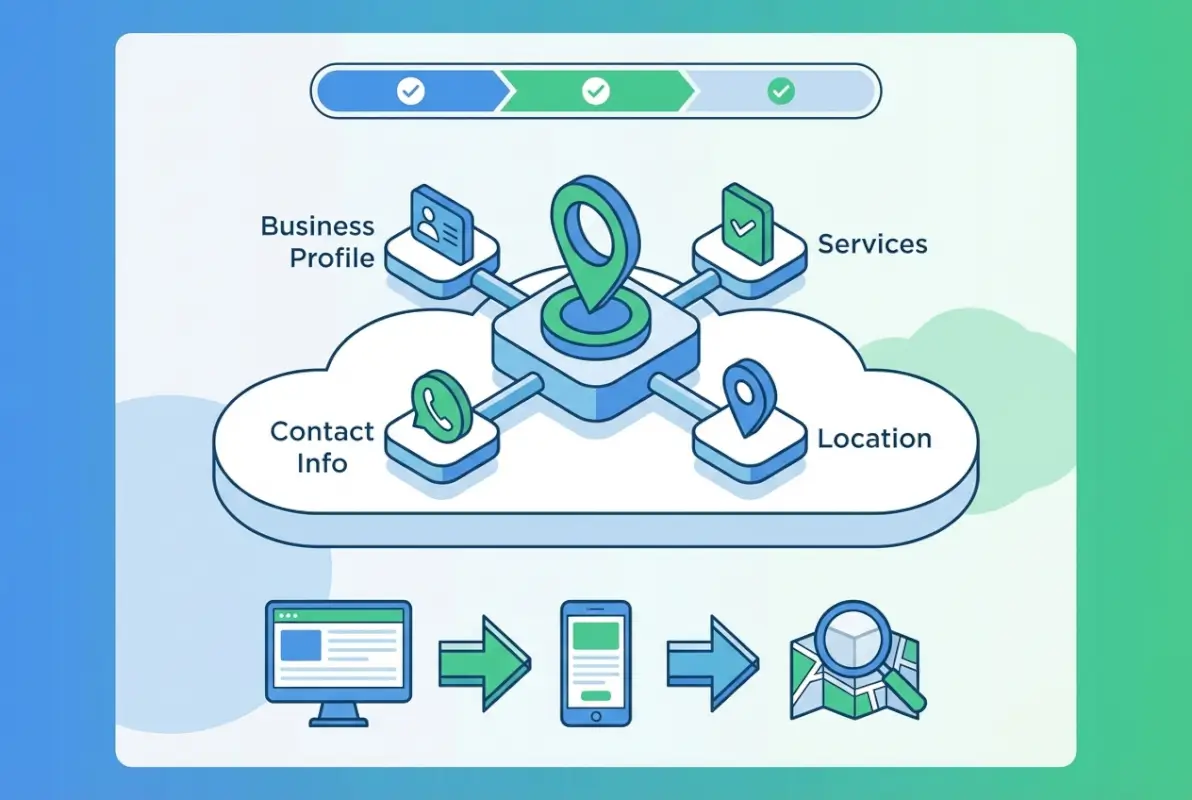
But the benefits extend well beyond SEO. Every directory listing creates another doorway through which customers can discover your business. Think about it—someone might start their search on Yelp, check prices on Yellow Pages, read reviews on Facebook, and verify your hours on Google Business Profile before ever visiting your website. If you’re not present and optimized on these platforms, you’re invisible to that entire discovery journey.
The Local SEO Connection You Can’t Ignore
Here’s something most business owners don’t fully grasp: search engines use citations (mentions of your business name, address, and phone number) as verification that your business is legitimate and located where you claim. The more consistent these citations appear across authoritative directories, the more confident Google becomes in ranking you for local searches.
I worked with a dental practice that was struggling to appear in local search results despite having a decent website. After we claimed and optimized their listings across 15 high-quality directories with perfectly consistent information, their Google Business Profile ranking jumped from position 12 to position 3 in the local pack within just eight weeks. The phone started ringing more, and they tracked a 34% increase in new patient inquiries—all without changing anything else about their marketing.
According to Google Business Profile and local SEO best practices, maintaining accurate business information across the web is a fundamental ranking factor for local search visibility.
The Trust and Credibility Factor
Beyond the technical SEO benefits, directory listings build consumer confidence in ways that your own website simply can’t. When potential customers see your business listed on established platforms like the Better Business Bureau, Yelp, or industry-specific directories, it signals legitimacy. You’re not just some random website that popped up yesterday—you’re a verified business that trusted platforms have vetted and listed.
Reviews play a massive role here too. Most quality directories include review functionality, giving satisfied customers a platform to publicly validate your business. These third-party testimonials carry more weight than anything you could say about yourself on your own website.
How to Get Started with Free Business Directory Listings
Getting started with directory listings doesn’t require technical expertise or a massive time investment. What it does require is a methodical approach and attention to detail. Rushing through this process with inconsistent information will actually hurt more than help, so let’s break down the right way to do this.
The biggest mistake I see businesses make is trying to submit to every directory they can find as quickly as possible. This shotgun approach leads to inconsistent information, incomplete profiles, and wasted effort on low-quality directories that provide zero value. Instead, think quality over quantity from day one.

Step 1: Create Your Master Business Information Document
Before you submit to a single directory, create a standardized information sheet that you’ll use consistently everywhere. This should include:
- Exact business name – Use the same format everywhere (including or excluding “LLC”, “Inc.”, etc.)
- Complete address – Same format, abbreviations, suite numbers
- Phone number – Same format (dashes, parentheses, or spaces)
- Website URL – Include or exclude “www” consistently
- Business hours – Including any special holiday hours
- Business categories – Primary and secondary categories you’ll select
- Short description – 25-50 words for limited fields
- Long description – 150-300 words for full profiles
- Service area – Geographic coverage if applicable
- Payment methods accepted
- Social media profiles – URLs to all your active accounts
Save this document somewhere easily accessible. You’ll reference it constantly as you build out your directory presence. The key is using exactly the same information every single time—even small variations can hurt your SEO.
Step 2: Prioritize High-Impact Directories
Not all directories are created equal. Some carry significant authority and traffic, while others are essentially digital ghost towns that provide zero value (and might even harm your SEO if they’re spammy enough).
| Directory Type | Priority Level | Why It Matters |
|---|---|---|
| Google Business Profile | Critical | Directly impacts Google search and Maps results |
| Apple Maps | High | Default for iPhone users (40%+ of mobile searches) |
| Yelp | High | Massive user base, especially for local services |
| Facebook Business Page | High | Social discovery and review platform |
| Bing Places | Medium | Powers Microsoft search ecosystem |
| Industry-specific directories | Medium-High | Highly targeted audience, niche authority |
| Chamber of Commerce | Medium | Local credibility and networking |
Start with the critical and high-priority directories first. Get those completely dialed in before moving to medium-priority options. This focused approach ensures you’re building a strong foundation rather than spreading yourself too thin across dozens of mediocre platforms.
Step 3: Claim and Verify Existing Listings
Here’s something that catches a lot of business owners off guard: listings for your business might already exist, created by the directories themselves or by customers. Before creating new listings, search for your business on each directory to see if you already have a presence.
If you find existing listings, claim and verify them rather than creating duplicates. Most directories have a “Claim this business” or “Are you the owner?” option that starts the verification process. This usually involves receiving a phone call, text message, or postcard with a verification code.
Step 4: Complete Every Single Field
This is where most businesses leave massive value on the table. They rush through the setup process, filling in only the required fields and skipping everything optional. Big mistake.
Directories reward complete profiles with better visibility in their search results. Google Business Profile, for example, explicitly shows a “profile completeness” percentage and gives more prominent placement to fully completed listings. But beyond algorithmic benefits, complete profiles simply convert better because they answer more customer questions upfront.
Spend the extra 10 minutes per directory to add:
- Multiple high-quality photos (exterior, interior, products, team)
- Detailed service or product descriptions
- Business attributes (wheelchair accessible, parking available, etc.)
- Payment methods accepted
- Links to your menu, price list, or service catalog
- Special offers or promotions
- COVID-19 updates or other timely information
Yes, this takes longer than just filling in your name and address. But the difference in results is night and day.
Choosing the Right Directories for Your Business
With thousands of business directories out there, how do you decide which ones deserve your time and which ones to skip entirely? The answer comes down to relevance, authority, and audience alignment.
General directories like Google Business Profile and Yelp should be on everyone’s list, but the real competitive advantage often comes from industry-specific directories that your competitors might be overlooking. A contractor listed on HomeAdvisor and Houzz is more likely to capture high-intent leads than one who only shows up in generic directories.

Industry-Specific Directories Pack More Punch
Think about where your ideal customers actually look when they’re ready to buy. Patients searching for doctors check Healthgrades and Zocdoc. People planning vacations browse TripAdvisor. Homeowners looking for contractors visit Angie’s List and Thumbtack. If you’re only listed on general directories, you’re missing the people who’ve already self-selected into your target market.
Here are some high-value niche directories worth considering:
- Healthcare: Healthgrades, Zocdoc, Vitals, WebMD
- Legal: Avvo, Justia, FindLaw, Lawyers.com
- Home Services: HomeAdvisor, Thumbtack, Houzz, Porch
- Restaurants: OpenTable, Zomato, TripAdvisor, The Infatuation
- Hotels & Travel: TripAdvisor, Booking.com, Expedia, Hotels.com
- Automotive: Cars.com, Edmunds, CarGurus, AutoTrader
- Real Estate: Zillow, Trulia, Realtor.com, Redfin
Research which directories rank well when you Google for services in your industry. If they’re showing up in search results, they’re worth being on.
Red Flags: Directories to Avoid
Not every directory is worth your time. Some are poorly maintained, spammy, or might even hurt your SEO. Watch out for these warning signs:
If a directory looks sketchy, trust your instinct and skip it. You’re better off spending that time optimizing listings on quality platforms than creating profiles on digital ghost towns.
Local and Regional Directories Matter More Than You Think
Don’t overlook local directories just because they’re smaller than national platforms. Your local Chamber of Commerce directory, city business listing pages, and regional tourism websites often carry significant weight for local searches—and they’re usually completely free.
These local directories might not drive massive traffic individually, but they contribute to citation building and often appear in “near me” searches for people in your immediate area. Plus, they’re typically easy to get listed on since they’re actively seeking local businesses to add.
Optimizing Your Directory Listings for Maximum Impact
Creating a directory listing is just the beginning. Optimization is where average listings become high-performing marketing assets. The difference between a basic listing and an optimized one can literally be the difference between getting overlooked and getting calls.
I’ve seen businesses with identical services, in the same city, get wildly different results from their directory presence. The difference? One took the time to optimize while the other just checked the box and moved on.

Write Descriptions That Actually Sell
Most business descriptions on directories are painfully generic: “Family-owned business serving the area for 20 years with quality service.” Yawn. That could describe ten thousand businesses.
Your description needs to communicate what makes you different and why someone should choose you. Include specific details about your specialties, unique processes, or notable achievements. Use language your customers actually use when searching for your services.
Compare these two descriptions for a landscaping company:
Generic: “Professional landscaping services for residential and commercial properties. Quality work at affordable prices. Call for a free estimate.”
Optimized: “Drought-resistant native landscaping specialists serving Austin since 2008. We design and install water-saving gardens that thrive in Texas heat while cutting water bills by up to 40%. Our licensed landscape architects have transformed over 1,200 properties with sustainable, low-maintenance designs featuring native Texas plants. Free consultations include soil analysis and customized plant recommendations.”
Notice how the optimized version includes specific benefits, credentials, quantifiable results, and addresses common customer concerns (water usage, maintenance)? That’s what converts browsers into customers.
Photos Make or Break Directory Performance
Listings with professional photos get dramatically more engagement than those without. We’re talking 3-5x more clicks, calls, and direction requests. Yet tons of businesses either skip photos entirely or upload low-quality images that make them look unprofessional.
Here’s what to include:
- Exterior shots – Help customers recognize your location
- Interior photos – Show your space, creating familiarity
- Product/service photos – Demonstrate what you offer
- Team photos – Put faces to the business, build trust
- Action shots – Show your work in progress
- Results photos – Before/after if applicable
You don’t need a professional photographer for every shot, but images should be well-lit, in focus, and properly composed. Smartphone cameras are good enough if you pay attention to lighting and framing.
Categories and Keywords Matter
Most directories let you select business categories—and choosing the right ones directly impacts who finds you. Your primary category should be exactly what you do, while secondary categories can capture additional services you offer.
Don’t just pick the broadest category. If you’re a personal injury attorney, don’t just select “Attorney”—choose “Personal Injury Attorney” as your primary category. The more specific you are, the better you’ll match with high-intent searches.
For descriptions and service listings, work in keywords naturally—the terms customers actually use when searching. But avoid keyword stuffing (it looks spammy and directories often penalize it). Write for humans first, search engines second.
Encourage and Respond to Reviews
Reviews are social proof on steroids. A business with 50+ positive reviews will consistently outperform a competitor with no reviews, even if the competitor has better credentials or pricing. Reviews matter that much.
Create a system for requesting reviews from satisfied customers. This could be a follow-up email after service, a text message with a direct link, or a simple ask in person. Make it as easy as possible—include direct links to your preferred review platforms.
Just as important as getting reviews is responding to them—both positive and negative. Thank people for positive reviews and address negative ones professionally and constructively. Potential customers often judge businesses more on how they handle criticism than on the criticism itself.
According to research on local SEO industry benchmarks and directory impact, review velocity (how frequently you get new reviews) and your response rate both factor into local search rankings.
Maintaining Your Directory Presence
Here’s where most businesses completely drop the ball. They spend hours setting up directory listings, then never touch them again. Meanwhile, their hours change, they add new services, their phone number updates—but none of this gets reflected in their directory profiles.
Outdated information doesn’t just frustrate customers who show up when you’re closed or call disconnected numbers. It actively harms your local SEO because search engines see conflicting information and lose confidence in your data accuracy.

Create a Maintenance Schedule
Set calendar reminders to review your top directory listings quarterly. This doesn’t have to be a massive project—most businesses can audit their top 10 directories in under two hours every three months.
During these reviews, verify:
- NAP information is still current and consistent
- Hours are accurate (including holiday hours)
- Photos are recent and seasonal where appropriate
- Services and descriptions reflect current offerings
- Special offers or promotions are up-to-date
- New reviews have been responded to
For your most critical directories (Google Business Profile, industry-specific platforms), check in monthly or even weekly to stay on top of new reviews and engagement opportunities.
Monitor Your Directory Analytics
Many major directories provide insights into how your listing performs. Google Business Profile offers detailed analytics showing searches, views, calls, direction requests, and website clicks. Use this data to understand which directories drive the most value and where to focus your optimization efforts.
| Metric | What It Tells You | How to Improve It |
|---|---|---|
| Views | How many people see your listing | Improve categories, keywords, and review count |
| Clicks | Engagement level with your listing | Add photos, complete all fields, update regularly |
| Calls | Direct lead generation | Optimize description, showcase reviews |
| Direction Requests | Foot traffic potential | Verify accurate address, add parking info |
| Website Visits | Interest in learning more | Compelling description, strong CTAs |
Track these metrics over time to identify trends. If you notice declining engagement, it might be time to refresh your photos or update your description. If one directory consistently outperforms others, consider investing more time optimizing that platform.
Handle Duplicate Listings Aggressively
Duplicate listings are a common problem that can seriously undermine your directory strategy. When multiple listings exist for the same business, it splits your reviews, confuses customers, and dilutes your SEO benefit.
Regularly search for your business name to identify duplicates. When you find them, most directories offer a way to report duplicates or merge listings. This process can be time-consuming (sometimes requiring verification of ownership for multiple listings), but it’s worth the effort to consolidate everything under one authoritative profile.
Common Mistakes That Kill Directory Performance
Even well-intentioned businesses sabotage their own directory efforts through easily avoidable mistakes. Learning from others’ errors is way less painful than making them yourself.
Inconsistent NAP Information
This is the cardinal sin of directory listings. If your business is listed as “ABC Plumbing Inc.” on one directory and “ABC Plumbing” on another, with slight address variations across platforms, search engines don’t know which information to trust. This confusion can torpedo your local search rankings.
Pick one exact format for your name, address, and phone number, then use it everywhere without deviation. Not sometimes with a period after “Inc” and sometimes without. Not sometimes with Suite 200 and sometimes with Ste 200. Exactly the same, every single time.
Set It and Forget It Mentality
Businesses that create listings and never update them are leaving money on the table. Stale information, unanswered reviews, and outdated photos signal that your business might not even be operating anymore.
Directories reward active, engaged businesses with better visibility. Regular updates—even small ones like adding a seasonal photo or updating your description—signal that you’re a real, operating business worthy of prominent placement.
Ignoring Negative Reviews
When a negative review appears and you ignore it, you’re essentially telling future customers that you don’t care about customer satisfaction. Even if the review is unfair or inaccurate, silence makes you look bad.
Respond professionally to every negative review. Acknowledge the customer’s experience, apologize where appropriate, and offer to make things right. This shows potential customers that you care and gives important context to anyone reading the review.
Skipping the Photos
Listings without photos get dramatically lower engagement. This isn’t a minor detail—it’s a major conversion factor. If adding photos seems like too much work, remember that businesses with photos see 42% more requests for directions and 35% more clicks to their website.
You can start with just 3-5 good photos and add more over time. Something is infinitely better than nothing.
Advanced Directory Strategies
Once you’ve mastered the basics, there are some advanced tactics that can squeeze even more value from your directory presence.
Use Directory Listings for Content Distribution
Many directories allow you to post updates, articles, or announcements. Google Business Profile has a posts feature, as do platforms like Facebook and LinkedIn. Use these to share new products, special offers, events, or helpful content.
These posts keep your listing fresh and give potential customers another reason to engage with your profile. They also create additional opportunities to show up in search results for specific queries.
Leverage Special Offers and Promotions
Directories that support special offers or coupons can drive significant conversion lift. When someone is comparing multiple options, a clear promotion can tip the decision in your favor.
These don’t have to be massive discounts—even a free consultation, complimentary add-on service, or small percentage off can differentiate you from competitors who aren’t offering anything.
Build a Review Acquisition System
The businesses with the most reviews aren’t just lucky—they have systems. This might be as simple as a templated email sent after every job, or as sophisticated as automated text messages with direct review links.
The key is making it absurdly easy for customers to leave reviews. Include direct links to your preferred platforms, and don’t be shy about asking. Most satisfied customers are happy to leave a review—they just need to be reminded and given an easy path to do so.
For guidance on building directory platforms themselves, business directory boosts local marketing offers insights into how directories function from the platform side.
Track Attribution
Understanding which directories actually drive business helps you prioritize your efforts. Use unique phone numbers (tracking numbers) for different directories if possible, or simply ask new customers how they found you and track responses.
Google Analytics can show referral traffic from directories if you’ve properly configured your tracking. Look for patterns in which directories send the most qualified traffic, not just the most traffic overall.
Integrating Directories with Your Broader Marketing
Directory listings shouldn’t exist in isolation—they’re most powerful when integrated with your other marketing channels.
Link from Your Website
Many businesses forget to link to their directory profiles from their own website. Adding a simple “Find us on” section with links to your Google, Yelp, and other major profiles helps customers find you on their preferred platform and can even boost your directory rankings.
Promote in Email Signatures and Marketing Materials
Include links to your Google Business Profile or industry-specific directory in email signatures, business cards, and marketing materials. This makes it easy for people to leave reviews and increases the visibility of your directory presence.
Cross-Promote Between Platforms
Use your social media accounts to encourage reviews on your directory listings. Share positive reviews (with permission) on your social channels. This creates a virtuous cycle where your different online presences reinforce each other.
The SBA guidance on building an online business presence emphasizes this integrated approach across multiple platforms rather than relying on any single channel.
Frequently Asked Questions
What exactly is a free business directory listing?
A free business directory listing is an online profile of your business in a categorized database that doesn’t charge for basic inclusion. These platforms list your business name, address, phone number, website, and other key information to help customers find you. Examples include Google Business Profile, Yelp, and industry-specific directories. Unlike paid advertising, these listings remain active indefinitely without ongoing costs.
How many business directories should I submit to?
Quality matters far more than quantity. Start with 10-15 high-authority directories relevant to your business, focusing on Google Business Profile, Apple Maps, major industry-specific platforms, and local directories. Only expand beyond this once you’ve fully optimized these core listings. Submitting to hundreds of low-quality directories wastes time and can actually harm your SEO rather than help it.
Can directory listings really improve my search rankings?
Yes, directory listings significantly impact local search rankings through citation building. When search engines see consistent business information across authoritative directories, it verifies your legitimacy and location, directly influencing your position in local search results. Businesses with strong directory presence consistently rank higher in the local pack and map results for relevant searches.
How long does it take to see results from directory listings?
Initial results typically appear within 1-3 months, though this varies by competitive landscape and directory authority. You might see improved search visibility and directory-referred traffic within weeks, while sustained ranking improvements generally develop over 3-6 months. The key is consistent optimization and maintenance rather than expecting instant results.
Should I use the same description on every directory?
While your core NAP information must be identical everywhere, you can tailor descriptions to fit each directory’s character limits and audience. Create short and long versions of your description from the same base content, emphasizing aspects most relevant to each platform’s users. Just ensure the fundamental facts and messaging remain consistent across all variations.
What should I do about negative reviews on directory sites?
Always respond professionally and promptly to negative reviews, ideally within 24-48 hours. Acknowledge the customer’s experience, apologize if appropriate, and offer to make things right offline. Never get defensive or argumentative. Your response demonstrates to future customers that you care about satisfaction and handle problems professionally, often converting a negative into a trust signal.
How often should I update my directory listings?
Review your top directory listings quarterly at minimum, with immediate updates whenever business information changes. Monitor and respond to reviews weekly on your most important platforms. Refresh photos and descriptions every 3-6 months to signal active management. Regular updates tell search engines your business is active and operational, improving your visibility.
Are industry-specific directories worth the effort?
Absolutely. Industry-specific directories often drive higher-quality leads than general directories because users have already self-selected into your market. A contractor listed on HomeAdvisor reaches people actively seeking home services, while a listing on a general directory captures broader but less qualified traffic. Prioritize niche directories relevant to your industry alongside major general platforms.
Can I delete old or duplicate listings myself?
Most directories allow you to claim and manage listings, including requesting deletion of duplicates. The process varies by platform—some let you merge duplicates while others require contacting support. It can be time-consuming but is essential for consolidating your reviews and maintaining consistent information. Regularly audit for duplicates and address them promptly.
Do directory listings help if I don’t have a physical location?
Yes, though your approach differs slightly. Service-area businesses without storefronts can still benefit from directory listings by focusing on service area rather than physical address. Many directories accommodate this with service area business designations. You’ll get less benefit from foot-traffic features but still gain from search visibility, credibility, and review capabilities.
Your Action Plan for Directory Success
Free business directory listings represent one of the highest-ROI marketing investments available—and it doesn’t even require actual money, just strategic time investment. The businesses that win with directories are those that approach them systematically rather than haphazardly.
Start today by claiming your Google Business Profile if you haven’t already (seriously, stop reading and do this right now if it’s not done). Then create your master information document with perfectly consistent NAP details. Identify your top 10 target directories based on authority and relevance to your business. Set aside a few hours this week to create or optimize listings on your highest-priority platforms.
Take Action Now
Your competitors are either ignoring directories or doing them poorly. This is your opportunity to dominate local search and capture customers they’re missing.
- Claim your Google Business Profile today if you haven’t
- Create a master information sheet with consistent NAP details
- Identify your top 10 target directories this week
- Block time to complete 2-3 listings per week until you’ve covered the essentials
- Set quarterly calendar reminders for maintenance reviews
Remember that directory management is ongoing, not one-and-done. The businesses that maintain their listings, respond to reviews, and regularly update information will consistently outperform those who create profiles and abandon them. Build this into your regular marketing routine just like you would social media or email marketing.
The opportunity is sitting right in front of you. Thousands of potential customers are searching for exactly what you offer on platforms where you might not even exist yet—or worse, where you exist but look neglected and unprofessional compared to competitors who’ve taken the time to optimize.
Start small, be consistent, and watch as these free marketing assets compound over time into a powerful visibility engine that works for your business 24/7.
Was this article helpful?