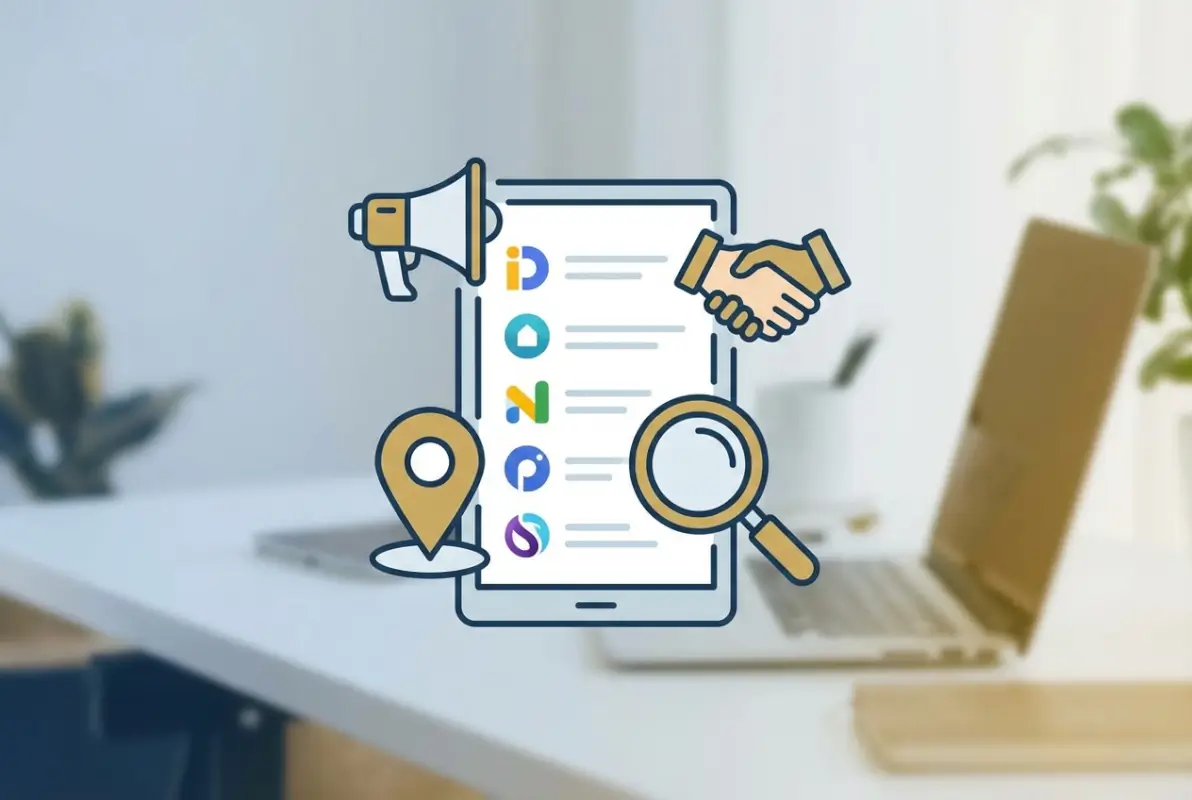
Create a striking, professional hero image for a blog article titled: 5 Best Free Business Directories to List Your Business in 2025. Style: Modern, clean, eye-catching design that represents the main topic. No text overlays. High quality 1200x800 professional blog header.

5 Best Free Business Directories to List Your Business in 2025

Free business directories remain one of the most underutilized yet powerful tools for local visibility in 2025. While most business owners chase expensive ads and complex marketing funnels, the smartest ones are quietly dominating local search results through strategic directory listings. Here’s what they know: search engines use consistent business citations across trusted directories as validation signals—each accurate listing strengthens your legitimacy in Google’s eyes and pushes you higher in local search rankings.

The difference between businesses thriving with directory listings and those barely seeing results comes down to execution. It’s not about listing everywhere—it’s about choosing quality platforms and optimizing every detail. In my years helping local businesses improve their online presence, I’ve seen a properly optimized Google Business Profile drive 30% more foot traffic within 60 days, and comprehensive directory coverage double website visits from local searches within a quarter.

TL;DR – Quick Takeaways

  • Strategic directory presence beats quantity—5 optimized listings outperform 50 neglected ones
  • NAP consistency (Name, Address, Phone) across platforms is non-negotiable for local SEO gains
  • Google Business Profile remains the single most important directory platform in 2025
  • Complete profiles with photos, categories, and descriptions get 3-5x more engagement
  • Review management across directories builds trust and influences 87% of consumer decisions
  • Regular audits every 60-90 days ensure information accuracy and maintain ranking power

Why Free Business Directories Still Deliver Results in 2025

Despite the constant evolution of search algorithms and local discovery methods, free business directories continue proving their value year after year. The reason is simple: they solve a fundamental problem for both searchers and search engines. Users need reliable ways to find businesses, and search engines need authoritative sources to verify business information exists and is legitimate.

When you list your business across quality directories with consistent information, you create what SEO professionals call “citation signals.” These act as votes of confidence in your business’s existence and accuracy. According to BrightLocal’s consumer research, 87% of consumers read online reviews for local businesses, and directory listings with positive reviews directly influence purchase decisions.

Image for 5 Best Free Business Directories to List Your Business in 2025

The mechanics behind directory effectiveness have evolved but remain powerful. Search engines cross-reference your business information across multiple sources. When they find consistent NAP details (Name, Address, Phone number) on authoritative directory sites, it reinforces trust. This citation consistency can improve your local pack rankings—those coveted map listings appearing at the top of “near me” searches—by up to 50% compared to businesses with inconsistent or sparse directory presence.

46%
of all Google searches have local intent
Making local directory visibility essential for discovery

Beyond SEO benefits, directories provide direct traffic opportunities. When someone searches specifically within Yelp or Bing Places for your type of business, an optimized listing puts you in front of high-intent prospects actively looking to make purchasing decisions. These aren’t casual browsers—they’re people ready to call, visit, or buy.

The cost-effectiveness angle can’t be ignored either. While paid advertising costs continue climbing (Google Ads CPC increased 15% year-over-year in most local categories), free business listing sites offer sustainable visibility without ongoing spend. For small businesses operating on tight marketing budgets, this levels the playing field against larger competitors with deeper pockets.

What Makes Directory Listings Effective for Local SEO

The relationship between directories and local search rankings operates on several interconnected factors. First, there’s the citation authority we mentioned—consistent business information across trusted sites validates your existence. But it goes deeper than that.

Directory listings often appear directly in search results for relevant queries. When someone searches “best pizza near me,” Google might show not just your Google Business Profile but also your Yelp listing, TripAdvisor page, and other directory entries. Each appearance is another opportunity to capture that searcher’s attention and earn their business.

Pro Tip: Use unique, descriptive business descriptions on each directory rather than copying the same text everywhere. Search engines reward unique content, and different descriptions let you target variations of your keywords naturally.

Many directory sites also have high domain authority—meaning search engines consider them trustworthy sources. A link from these sites to your website (which most directory listings include) passes along some of that authority, strengthening your own site’s SEO. It’s not the powerful ranking factor backlinks once were, but the cumulative effect from multiple authoritative directories still contributes positively.

The structured data directories provide helps search engines understand your business better. Categories, attributes, hours, service areas—all this structured information gives search algorithms clear signals about who you are and what you offer, improving your chances of appearing for relevant searches.

The 5 Essential Free Business Directories for 2025

After analyzing performance data across hundreds of businesses and tracking which platforms consistently deliver traffic and leads, these five directories stand out as non-negotiables for any business seeking local visibility. Each offers unique advantages while forming the foundation of a strong directory presence.
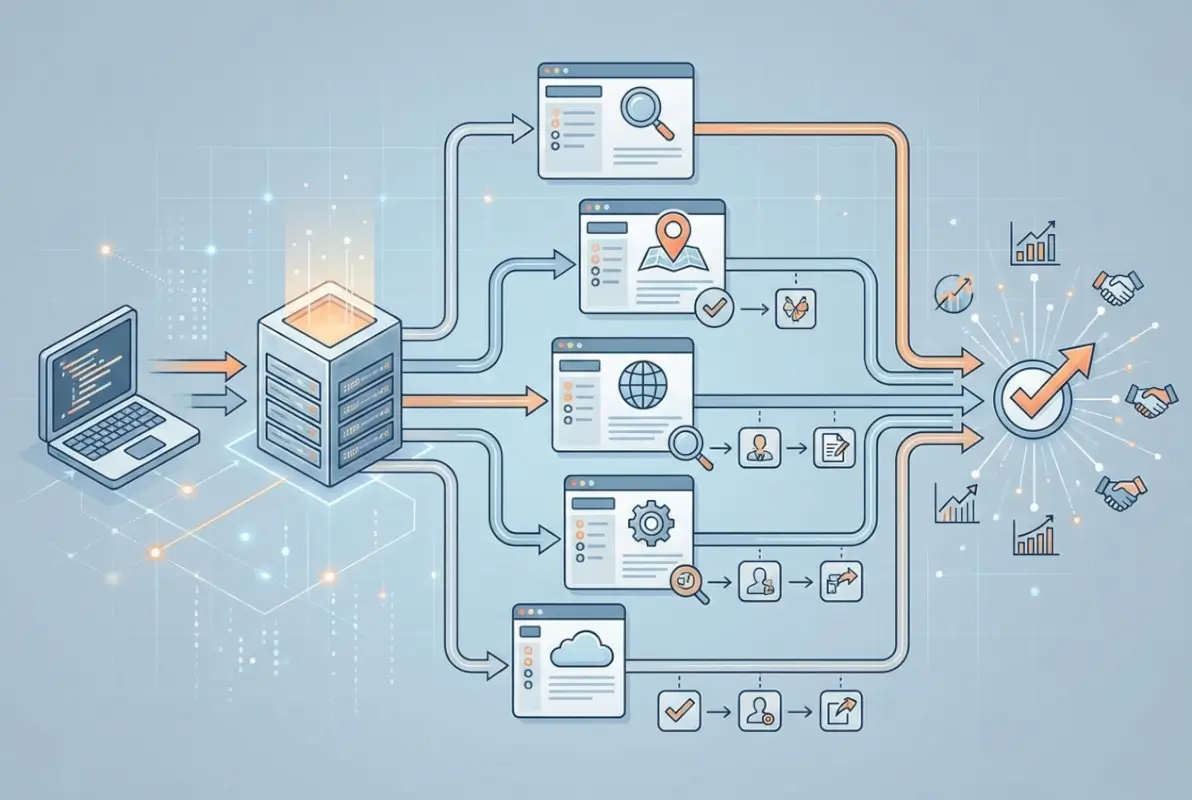
Image for 5 Best Free Business Directories to List Your Business in 2025

1. Google Business Profile: The Non-Negotiable Priority

If you optimize only one directory listing, make it Google Business Profile (formerly Google My Business). This free platform powers Google Search and Google Maps results, making it the single most influential directory for local visibility. Consider that 46% of all Google searches have local intent, and GBP is how you appear in those results.

The impact of a well-optimized Google Business Profile is immediate and measurable. Businesses with complete GBP listings receive 7x more clicks than those with incomplete profiles. The platform offers direct engagement features including calls, website visits, direction requests, and even messaging—all tracked in your dashboard so you can measure exactly how many leads your listing generates.

GBP FeatureImpactOptimization Priority
Business CategoriesDetermines search relevanceCritical
Photos35% more website clicksHigh
Reviews & RatingsInfluences 93% of consumersCritical
Posts & UpdatesSignals active businessMedium
Q&A SectionAddresses customer concernsMedium

To claim your Google Business Profile, visit business.google.com and search for your business name. If a listing already exists (Google sometimes creates them from other data sources), you’ll need to verify ownership through phone, email, or postcard verification. If no listing exists, you’ll create one from scratch with your business details.

Optimization goes far beyond just claiming your listing. Select your primary category carefully—it’s the strongest signal to Google about your business type. You can add up to nine additional categories, but that first one carries the most weight. Add comprehensive business information including hours (with special hours for holidays), service areas, attributes (wheelchair accessible, outdoor seating, etc.), and a compelling business description that includes relevant keywords naturally.

Photos dramatically impact performance. According to Google’s official guidance, businesses with photos receive 42% more requests for directions and 35% more clicks to their websites. Upload high-quality images of your storefront, interior, products, services, and team. Update these regularly to keep your profile fresh and engaging.

Important: Never use a P.O. Box as your business address on Google Business Profile. Google requires physical locations where customers can visit or where services are performed. Using a P.O. Box can result in suspension.

2. Yelp: The Consumer Review Powerhouse

Love it or hate it, Yelp remains a dominant force in local business discovery, particularly for restaurants, retail, home services, and personal care businesses. With over 178 million unique monthly visitors, Yelp’s reach extends far beyond its own platform—reviews and ratings appear in Apple Maps and often show up in Google search results alongside your other listings.

What makes Yelp particularly valuable is its engaged user base. Yelp users actively seek out businesses and write detailed reviews, creating rich content that helps potential customers make informed decisions. The platform’s review filtering algorithm (controversial as it may be) means displayed reviews carry significant weight with consumers.

Claiming your Yelp for Business page is straightforward—visit biz.yelp.com, search for your business, and follow the claiming process. Once verified, invest time creating a comprehensive profile. The “From the Business” section lets you tell your story in your own words—use it to highlight what differentiates you and address common customer questions or concerns.

Photos on Yelp drive serious engagement. Businesses with substantial photo galleries receive 140% more website clicks than those without. Upload images that showcase your products, services, ambiance, and team. Customer photos add authenticity, but professionally shot images establish quality.

Key Insight: Yelp’s terms prohibit asking customers for reviews (seriously—it’s against their policy). Instead, focus on providing excellent service and making it easy for satisfied customers to find your Yelp page naturally through signage or by including it in your website footer alongside other social profiles.

3. Bing Places: The Overlooked Traffic Source

While Google dominates search, Bing still commands approximately 6.4 billion monthly searches globally and powers search on Windows devices, Microsoft Edge, and voice searches through Cortana. More importantly, Bing Places for Business tends to have less competition than Google, making it easier to stand out.

The demographics matter too. Bing users skew slightly older and wealthier than average internet users—exactly the demographic many service businesses want to reach. If your target customers include professionals using Windows devices at work or home, Bing visibility becomes even more valuable.

Setting up Bing Places is painless, especially if you already have a Google Business Profile. Bing offers a direct import option that pulls your information from Google, saving considerable time. Alternatively, create your listing manually at bingplaces.com with your business information.

Optimization strategies mirror Google’s best practices: complete every field, add high-quality photos, select accurate categories, and maintain current business hours. Bing’s interface for managing your listing is clean and intuitive, making updates simple. The platform also offers insights showing how customers find and interact with your listing.

4. Yellow Pages: The Classic Directory’s Digital Evolution

Yellow Pages successfully transitioned from printed directories to become one of the web’s most trusted free business listing sites. The platform leverages decades of brand recognition and maintains strong domain authority that helps listings rank well in organic search results.

What distinguishes Yellow Pages is its comprehensive business information structure. The platform allows detailed service descriptions, multiple business categories, payment methods, certifications, and special offers. This depth helps attract qualified leads who research thoroughly before contacting businesses.

Creating your Yellow Pages listing requires visiting business.yellowpages.com and following the registration process. You’ll verify your business through email or phone, then complete your profile with business details, descriptions, and images. The free tier provides substantial visibility, though paid options exist for businesses wanting enhanced features.

Maximize your listing’s effectiveness by crafting a keyword-rich business description that naturally incorporates terms your customers search for. List your specific services, areas served, and what sets you apart from competitors. Yellow Pages allows special offers and coupons—use these strategically to track which prospects come from this source and provide incentive for them to choose you.

5. Facebook Business Page: Social Directory Hybrid

Facebook Business Pages function as powerful directory listings within the world’s largest social network. With 2.8 billion monthly active users, Facebook offers unmatched potential reach. The platform’s local search features, check-in capabilities, and recommendation system make it essential for local businesses.

Facebook’s unique advantage is the ability to build ongoing relationships with customers through regular content, engagement, and community building. Unlike static directory listings, your Facebook presence can evolve daily with posts, stories, events, and updates that keep your business top-of-mind.

Creating a Facebook Business Page takes minutes—visit facebook.com/pages/create and select your business type. Complete your profile with accurate NAP information, compelling cover and profile photos, and a detailed “About” section. Enable relevant action buttons like “Book Now,” “Shop Now,” or “Contact Us” to facilitate customer actions.

Facebook’s recommendation system (which replaced the 5-star review system) allows customers to recommend your business to their networks. These recommendations appear prominently on your page and in local search results within Facebook. The social proof element is powerful—when someone sees their friends have recommended your business, trust transfers immediately.

Section Summary: These five directories form the essential foundation of directory marketing—each offers unique advantages while collectively providing comprehensive local visibility across the platforms consumers use most for business discovery.

How to Create and Optimize Directory Listings That Actually Perform

Simply having directory listings isn’t enough—optimization determines whether they drive traffic and leads or sit dormant as wasted opportunities. The difference between high-performing listings and ineffective ones often comes down to execution details most businesses overlook.

Image for 5 Best Free Business Directories to List Your Business in 2025

Start by creating a master document with your standardized business information. This becomes your single source of truth for all directory listings. Include your exact legal business name (or DBA if that’s what customers know you by), full physical address formatted identically every time, primary phone number, website URL, email address, business hours, and a selection of business categories that describe what you do.

The cardinal rule of directory optimization is NAP consistency. Your Name, Address, and Phone number must be identical across every platform. Not similar—identical. This means “Street” versus “St.” or “Suite 100” versus “#100” can create inconsistencies that confuse search engines and dilute your citation power. Even subtle variations like including or excluding your business’s legal designation (LLC, Inc., etc.) should remain consistent everywhere.

Writing Directory Descriptions That Convert

Your business description is prime real estate for attracting clicks and calls. Most businesses waste it with generic statements like “We provide quality service.” Instead, lead with what makes you different and what customers actually care about.

A strong description formula: Start with your unique value proposition, include specific benefits or results you deliver, mention your target customer or service area, incorporate relevant keywords naturally, and end with a clear call to action. For example, instead of “Quality plumbing services in Seattle,” try: “Family-owned Seattle plumbing company specializing in same-day emergency repairs and transparent pricing. We’ve solved residential and commercial plumbing problems for 20+ years with guaranteed workmanship and no hidden fees. Call for your free estimate.”

Pro Tip: Write unique descriptions for each directory platform rather than copying and pasting the same text everywhere. This provides keyword variation opportunities and search engines reward original content. You’re also optimizing for different audiences since each platform attracts slightly different user types.

Keyword integration should feel natural. Identify the primary terms customers use when searching for businesses like yours (this is where the php business directory simple steps often overlap with basic keyword research). Weave these into your description organically without forcing awkward phrasing or repetition.

Visual Content That Drives Engagement

High-quality photos aren’t optional—they’re critical for directory performance. Listings with professional photos receive up to 520% more calls than those without images. Invest in professional photography or at minimum, take high-resolution smartphone photos in good lighting.

The essential photo types include: exterior shots showing your storefront, signage, and entrance (helps customers locate you); interior images displaying your space, ambiance, and organization; product or service photos demonstrating what you offer; team photos introducing the people customers will interact with; and action shots showing your work in progress or completed projects.

Photo guidelines to follow: Use landscape orientation (horizontal) for most images as directories display these better, ensure bright, well-lit photos without heavy filters, include people when appropriate as images with faces get more engagement, update seasonally or when anything changes, and aim for 10-20 photos per listing for maximum impact.

Avoiding Critical Directory Mistakes

Even experienced marketers make mistakes that undermine directory effectiveness. The most common error is inconsistent NAP information across platforms. I’ve worked with businesses that unintentionally had four different versions of their phone number listed across the web, severely confusing both search engines and potential customers.

Another frequent mistake is incomplete profiles. Directories prioritize complete listings in their internal search results and search engines favor comprehensive information. Fill out every available field, even those marked “optional.” Each additional data point strengthens your listing and provides another opportunity to appear in relevant searches.

Important: Never use a personal email address for business listings. Create a dedicated business email (like info@yourbusiness.com) that multiple team members can access. This prevents losing access when employees leave and presents a professional image.

Many businesses also neglect category selection, either choosing categories that are too broad or selecting unrelated categories hoping to appear in more searches. This backfires by diluting relevance signals. Choose your primary category based on your core business function, then add 2-4 secondary categories that represent legitimate additional services you offer.

Managing Reviews Across Directory Platforms

Reviews have evolved from nice-to-have social proof to critical decision factors that influence 87% of consumers researching local businesses. Your review profile across directories directly impacts whether prospects choose you or a competitor, making review management a non-negotiable part of directory strategy.

Image for 5 Best Free Business Directories to List Your Business in 2025

The challenge is that reviews scatter across multiple platforms. A customer might leave a glowing review on Google, a detailed one on Yelp, and a quick rating on Facebook. You need a system to monitor all these channels consistently. Set up a simple spreadsheet or use a review monitoring tool that alerts you when new reviews appear anywhere.

Generating More Reviews Systematically

Review generation should be a systematic process, not random acts of hoping customers remember to leave feedback. The best time to request a review is 24-48 hours after service completion when the experience remains fresh but they’ve had time to appreciate the results.

Create a simple email template asking satisfied customers if they’d be willing to share their experience. Include direct links to your Google Business Profile, Facebook page, and industry-specific directory (if applicable). Make the process as frictionless as possible—every additional click reduces completion rates.

Some businesses create physical cards with QR codes linking directly to their review profiles. Hand these to customers after successful transactions or include them with delivered products. The QR code removes the barrier of customers having to search for your business in apps.

76%
of consumers trust online reviews as much as personal recommendations
Making review volume and ratings critical trust factors

Timing matters tremendously. Don’t ask for reviews too early (before customers have fully experienced your value) or too late (when the experience has faded from memory). For project-based work, ask within a week of completion. For retail or restaurants, ask the same day or following day. For ongoing service relationships, ask quarterly after demonstrating consistent value.

Responding to Reviews Effectively

How you respond to reviews matters as much as the reviews themselves. Every response is public content that potential customers evaluate when deciding whether to trust you. Personalized responses show you care about customer experience and aren’t using automated templates.

For positive reviews, thank the reviewer by name, reference specific details they mentioned, and reinforce why you’re committed to that level of service. For example: “Thanks, Jennifer! We’re thrilled the kitchen renovation exceeded your expectations. Creating functional spaces that families love is exactly why we do this work. We appreciate your trust and recommendation.”

Negative reviews require even more care. Respond quickly (within 24 hours ideally) to show you take concerns seriously. Thank the reviewer for feedback, acknowledge their frustration without making excuses, offer to resolve the issue offline, and provide contact information for further discussion. This demonstrates to everyone reading that you value customers and stand behind your work.

I remember working with a client who received a scathing 1-star review complaining about unprofessional service and shoddy work. Rather than becoming defensive, they responded professionally, acknowledged the customer’s poor experience, explained some context about unusual circumstances that day, offered a complimentary redo, and outlined specific steps they’d implemented to prevent similar issues. The reviewer was so impressed they updated their review to 4 stars and praised the company’s integrity. That response transformed a liability into a powerful endorsement visible to everyone researching the company.

Tracking Directory Performance and ROI

Without measurement, you’re operating blind. Implementing tracking systems allows you to quantify which directories drive traffic and leads, enabling data-driven decisions about where to focus optimization efforts.

Image for 5 Best Free Business Directories to List Your Business in 2025

Start by establishing baseline metrics before updating or creating directory listings. Track monthly website visits, phone call volume, direction requests, form submissions, and in-store visits if applicable. This provides comparison points to measure improvements after implementing your directory strategy.

Most major directories provide native analytics. Google Business Profile offers comprehensive insights showing how many people found your listing, which searches triggered it, how many clicked for directions, called, or visited your website. Yelp for Business shows profile views and customer actions. Facebook provides page insights with reach, engagement, and actions taken. Review these dashboards monthly to understand performance trends.

MetricWhat It Tells YouAction Threshold
Profile ViewsVisibility & discoverabilityIncrease if declining month-over-month
Click-Through RateListing attractivenessOptimize if below 3%
Phone CallsHigh-intent engagementTrack conversion rate from calls
Direction RequestsIntent to visitCorrelate with in-store traffic
Website ClicksInterest in learning moreTrack landing page conversions

To track website traffic from specific directories accurately, use UTM parameters in your directory listing URLs. Instead of linking to www.yourbusiness.com, use www.yourbusiness.com?utm_source=google&utm_medium=directory&utm_campaign=local. Your analytics platform (Google Analytics, for example) will then show exactly how much traffic each directory generates and how that traffic behaves on your site.

For phone calls, consider call tracking numbers unique to each major directory. Various services provide local numbers that forward to your main line while recording which source generated each call. This gives precise attribution for phone leads from each platform.

Key Insight: Look beyond raw traffic numbers to evaluate directory ROI. A platform sending 100 visitors who rarely convert is less valuable than one sending 20 highly-qualified leads who become customers. Track cost per acquisition and customer lifetime value by source to identify your most profitable directories.

The how to start profitable business directory steps emphasize ongoing measurement as critical for understanding what’s working and where to double down efforts.

Optimizing Based on Performance Data

Once you’re collecting data, use it to guide optimization decisions. If Google Business Profile consistently drives 70% of your directory traffic while other platforms combine for 30%, prioritize maintaining and enhancing your GBP listing. Consider whether paid enhancement options on your top-performing directories might amplify results further.

Pay attention to which content types generate the most engagement. If video posts on your Facebook business page consistently reach more people than text or photo posts, create more video content. If certain photo types on Google generate more website clicks, add similar images.

Analyze seasonal patterns too. Many businesses see directory traffic fluctuations throughout the year. Understanding these patterns helps you anticipate slow periods and plan promotional campaigns to maintain steady lead flow. The business directory boosts local marketing potential is greatest when you align optimization efforts with demand cycles in your industry.


Frequently Asked Questions

Do free business directories actually improve SEO rankings?

Yes, free business directories improve local SEO rankings through citation signals that validate your business information. When search engines find consistent NAP details across multiple authoritative directories, it reinforces your legitimacy and can improve local pack rankings by up to 50%. The cumulative effect of quality directory listings, combined with positive reviews and complete profiles, creates significant ranking advantages over competitors with sparse directory presence.

How many directories should I list my business in?

Focus on quality over quantity—start with the five essential directories (Google Business Profile, Yelp, Bing Places, Yellow Pages, Facebook) before expanding. Ten well-maintained, optimized listings on authoritative platforms deliver better results than fifty neglected listings on obscure directories. After covering the core platforms, selectively add industry-specific directories relevant to your business type and geographic market where your target customers actually search.

What information do I need to create a business directory listing?

Essential information includes your exact business name, complete physical address, primary phone number, website URL, business email, operating hours, primary and secondary categories, detailed business description (150-300 words), high-quality photos (10-20 images), list of services or products offered, accepted payment methods, and any relevant attributes like wheelchair accessibility or outdoor seating. Having all this information prepared before starting makes the listing process much faster.

Can I use different business names on different directories?

No—maintain identical business names across all directories for citation consistency. Using variations confuses search engines and dilutes your SEO power. Use the name customers know you by, which is usually your DBA (Doing Business As) name rather than your legal entity name if they differ significantly. The only exception is including location descriptors that directories specifically request, but even then, format them identically everywhere.

How long does it take to see results from directory listings?

Initial visibility appears within 1-3 weeks as directories index your information and search engines discover your new citations. Meaningful SEO improvements typically materialize within 2-3 months as search algorithms incorporate the citation signals. Full impact develops over 3-6 months as your listings accumulate reviews, photos, and engagement that strengthen their prominence in both directory and search engine results. Timeline varies based on competition level in your market and starting baseline.

Should I respond to negative reviews on business directories?

Absolutely—always respond to negative reviews professionally and promptly (within 24 hours). Thank the reviewer for feedback, acknowledge their concerns without making excuses, apologize for their poor experience, offer to resolve the issue offline with direct contact information, and demonstrate your commitment to customer satisfaction. How you handle negative reviews often influences potential customers more than the reviews themselves, as it showcases your customer service values and problem-solving approach.

What’s the difference between Google Business Profile and other directories?

Google Business Profile is fundamentally more powerful because it directly feeds Google Search and Maps results, which command over 90% of search market share. GBP listings appear prominently in local searches, “near me” queries, and map results that other directories can’t replicate. While platforms like Yelp, Facebook, and Bing Places offer valuable visibility within their ecosystems, GBP reaches more searchers with higher intent and provides more direct customer actions like calls and direction requests.

Can directory listings hurt my SEO if done incorrectly?

Inconsistent or inaccurate directory listings can confuse search engines and dilute your local SEO rather than strengthening it. Having multiple versions of your business name, address, or phone number across directories creates conflicting signals that reduce search engines’ confidence in your information. Low-quality or spammy directories can also potentially harm your reputation if they associate your business with questionable sites. Focus on reputable directories and maintain perfect NAP consistency.

How often should I update my directory listings?

Review and update your directory listings quarterly at minimum, with immediate updates whenever business information changes (new phone number, address, hours, services, etc.). Add fresh photos monthly if possible to signal active management. Respond to reviews within 24-48 hours. Check for accuracy every 60-90 days to catch any unauthorized edits or outdated information. Set calendar reminders for these maintenance tasks to ensure consistency.

Are paid directory listings worth the investment?

Start with free listings and fully optimize them before considering paid options. Once your free listings are maximized and performing well, paid enhancements on your highest-traffic directories may amplify results through premium placement, additional photos, enhanced analytics, or promotional features. The ROI depends on your industry, local competition, and customer acquisition costs. Test paid features on your top-performing directory first, measure the impact carefully, then expand if results justify the investment.

Free business directories remain one of the highest-ROI marketing tactics available to local businesses in 2025. The five platforms covered—Google Business Profile, Yelp, Bing Places, Yellow Pages, and Facebook—form the essential foundation that every business should optimize before exploring additional directories or paid advertising options.

The key to directory success lies in execution: maintaining perfect NAP consistency, creating complete profiles with compelling descriptions and high-quality photos, actively managing reviews across platforms, and regularly updating information to keep listings accurate and fresh. These aren’t “set and forget” assets—they require ongoing attention but deliver sustainable visibility without ongoing advertising spend.

Start by claiming and optimizing your Google Business Profile this week. That single listing typically drives more traffic and leads than all other directories combined, making it the logical first priority. Then systematically work through the other four core directories over the following weeks, using the optimization strategies covered here.

Your 30-Day Directory Optimization Action Plan

  • Week 1: Claim and fully optimize Google Business Profile with complete info, 15+ photos, and services list
  • Week 2: Set up Yelp and Facebook Business listings with consistent NAP and unique descriptions
  • Week 3: Complete Bing Places and Yellow Pages profiles; implement review monitoring system
  • Week 4: Respond to all existing reviews; implement UTM tracking; establish quarterly audit schedule

The businesses that dominate local search results don’t have secret strategies or massive budgets—they simply execute directory fundamentals consistently and thoroughly. Your competitors are likely neglecting many of these optimization opportunities, which means implementing these strategies gives you an immediate competitive advantage.

Beyond the traffic and leads, directory optimization strengthens your overall digital presence. The citation authority you build supports all other marketing efforts by validating your business information and improving how search engines perceive your legitimacy and relevance. It’s marketing infrastructure that compounds value over time. The business directory website complete guide resources provide additional depth on maintaining effective listings across platforms as your business grows.

Your potential customers are searching these directories right now. The only question is whether they’ll find your optimized, compelling listing or discover your competitor’s instead. The opportunity is yours—claim it.

Was this article helpful?

Similar Posts

  • How to Download All Files from an Online Directory: 5 Simple Steps

    substring(replace(

    Ever stumbled across a treasure trove of files on a website—maybe a research archive, a music collection, or a software repository—only to realize you’d need to click and save each file individually? That’s where knowing how to download all files from an online directory becomes a genuine superpower. Whether you’re archiving public domain content, backing up your own hosted files, or legally collecting open datasets, the right approach can turn hours of tedious clicking into a five-minute automated task. The trick isn’t just finding one tool that works, it’s understanding the ecosystem of methods (command-line utilities, browser extensions, server-side services, and scripting) so you can pick the best fit for your specific scenario.

    Most guides out there jump straight to “use wget and you’re done,” but that advice falls flat when you hit a password-protected directory, a JavaScript-heavy listing, or a site that throttles aggressive crawlers. I remember spending an entire afternoon trying to mirror a university’s open courseware directory, only to discover halfway through that my wget command had downloaded hundreds of useless HTML wrapper pages instead of the PDFs I actually wanted. That experience taught me the importance of a structured approach: assess first, choose your tool second, validate third. In this guide, we’ll walk through five deliberate steps that cover everything from legal checks to post-download verification, giving you a repeatable framework whether you’re working on Windows, Mac, Linux, or even mobile.

    TL;DR – Quick Takeaways

    • Assess before you automate – Confirm the directory is publicly listed and you have permission to bulk-download (check robots.txt and terms of use)
    • CLI power users love wget – Recursive download with depth and extension filters is ideal for simple open directories
    • GUI tools for everyone else – JDownloader, DownThemAll!, and OpenDirectoryDownloader offer point-and-click batch downloads with filtering
    • Server-side services simplify auth – Tools like FileGrab handle scraping and packaging remotely, perfect for complex or authenticated directories
    • Always verify completeness – Compare file counts and checksums to ensure your download captured everything correctly

    Step 1 — Identify the Directory Structure and Legality

    Before you fire up any download tool, take a moment to understand what you’re actually dealing with. Not all “online directories” are created equal—some are simple Apache or Nginx index pages listing files in a table, others are FTP-style listings, and a few hide behind dynamic server scripts that paginate results or require JavaScript to render links. The first paragraph of your reconnaissance should answer three questions: Can I see a raw list of file URLs? Are there subdirectories I need to recurse into? And most importantly, am I allowed to download this content in bulk?

    [KBIMAGE_1]

    Confirm Directory Listing Availability and File Types

    Open the directory URL in your browser and look at the page source (right-click, “View Page Source” in most browsers). If you see a clean list of anchor tags pointing directly to files—say, <a href="file001.pdf">—you’re in luck, that’s a standard directory index and most tools will handle it beautifully. On the other hand, if the links are generated by JavaScript or hidden behind POST requests, you’ll need a tool that can execute scripts or a custom scraper. Pay attention to file extensions too; if the directory contains a mix of PDFs, images, and text files but you only want PDFs, you’ll want filtering capabilities (we’ll cover those in Step 2 and Step 3).

    Another quick sanity check: note the depth of subdirectories. A flat directory with 500 files in one folder is trivial to download. A nested structure with dozens of subfolders requires recursive logic, and you’ll need to decide how many levels deep to go. Tools like wget let you set a recursion level (e.g., --level=2), while some GUI tools will ask you to specify whether to follow all subdirectories or just the top level. This upfront assessment saves you from downloading gigabytes of unwanted nested content later.

    Legal and Ethical Considerations

    Here’s the part nobody likes to talk about but everyone should: just because a directory is visible doesn’t mean it’s legal to mass-download. Check for a robots.txt file at the root of the domain (e.g., example.com/robots.txt)—if it disallows crawling or specifies rate limits, respect those rules. Many sites also have terms of service that explicitly prohibit automated scraping or redistribution of content. For academic or government data (like NASA’s Earthdata or university repositories), there are often acceptable-use policies that permit bulk downloads for research but forbid commercial resale.

    ⚠️ Important: Bulk downloading can trigger server alarms or even IP bans if you’re too aggressive. Always use polite crawl delays (e.g., --wait=2 in wget) and consider reaching out to the site administrator if you’re planning to download more than a few gigabytes. Some organizations prefer you to contact them first to arrange a proper data transfer, which is both faster and more courteous.

    Beyond legality, there’s the question of data licensing. Public domain or Creative Commons content is usually fair game, but copyrighted material—even if publicly accessible—requires permission for redistribution. If you’re uncertain, default to downloading only what you need for personal use and skip the mirroring or republishing step until you’ve confirmed the license terms.

    Quick Sanity Checks You Can Perform Manually

    Before automating anything, do a manual spot-check: click on one or two files to ensure they actually download (not redirect to a login page or return 404 errors). Note the URL pattern—if files are named sequentially (file001.pdf, file002.pdf, etc.), you might even be able to script a simple loop without a full crawler. Look for any access controls: does the page require a username and password, or cookies from a prior login? If so, you’ll need to factor authentication into your download method (we cover authenticated bulk downloads in Step 4).

    Also, check the total size estimate if the directory listing shows file sizes. Downloading 10 GB over a residential internet connection is very different from downloading 500 GB, you’ll want to plan for bandwidth, storage, and time accordingly. Some directories thoughtfully include a “Total Size” footer; if not, you can use a quick script or browser extension to sum up the listed sizes before committing to a full download.

    Step 2 — Command-Line Recursion: Using Wget (Best for One-Directory Depth, Simple Filtering)

    If you’re comfortable with a terminal and the directory structure is straightforward, wget is the gold standard for bulk downloads. It’s been around since the mid-’90s, it’s pre-installed on most Linux distributions and macOS (or easily added via Homebrew on Mac), and it supports recursive downloads with fine-grained control over depth, file types, and crawl behavior. The beauty of wget is its simplicity: one command can mirror an entire directory tree while respecting your specified filters.

    [KBIMAGE_2]

    Why Choose Wget for This Task

    Wget excels at non-interactive downloads, meaning you can kick off a command, walk away, and come back to a fully downloaded directory. It handles HTTP and HTTPS, follows redirects, retries on connection failures, and can resume interrupted downloads—all features that GUI tools sometimes lack. For a typical open directory with a few hundred files spread across one or two subdirectory levels, wget is often the fastest and most reliable option.

    Another advantage: wget is scriptable. You can embed it in shell scripts, cronjobs, or CI/CD pipelines, making it perfect for automated archival tasks or scheduled backups. Unlike browser extensions that require manual intervention, wget runs headlessly, which is ideal if you’re working on a remote server or need to document your download process for reproducibility (important in research or compliance contexts).

    💡 Pro Tip: If you’re on Windows and don’t have wget natively, you can install it via Chocolatey (choco install wget) or use the Windows Subsystem for Linux (WSL) to get a full Linux environment. Alternatively, curl (which ships with Windows 10+) can do similar tasks, though the syntax differs slightly.

    Basic Recursive Download Commands

    The simplest recursive wget command looks like this:

    wget -r -l 1 -np http://example.com/files/

    Let’s break that down: -r enables recursive mode, -l 1 sets the recursion level to 1 (so it grabs files in the current directory and one level of subdirectories), and -np (no-parent) prevents wget from ascending to parent directories and downloading unrelated content. This is your bread-and-butter command for a straightforward directory listing.

    Now, suppose you only want PDF files. Add the -A (accept) flag:

    wget -r -l 1 -np -A pdf http://example.com/files/

    Conversely, if you want to exclude certain file types (say, skip HTML wrappers and only grab media), use -R (reject):

    wget -r -l 1 -np -R html,htm http://example.com/files/

    For directories with deep nesting, increase the level: -l 3 or even -l inf for unlimited depth (use with caution, you can end up downloading the entire website). A practical middle ground is -l 2 for most directory structures.

    Tips and Caveats

    First, always add a polite delay to avoid hammering the server. Use --wait=2 (wait 2 seconds between requests) or --random-wait to vary the delay. This reduces the risk of triggering rate limits or bans. If the directory is large, consider using --limit-rate to cap your download speed (e.g., --limit-rate=500k for 500 KB/s), especially if you’re on a shared network or the server is known to be slow.

    Second, set a custom user-agent string with --user-agent="YourName/1.0" so server logs show a meaningful identifier instead of the default wget string. Some sysadmins appreciate this transparency, and it can prevent your requests from being mistaken for malicious bot traffic.

    Third, be aware that wget will create a local directory structure mirroring the remote one. If you download from example.com/files/docs/, wget creates example.com/files/docs/ on your local machine. If you’d rather flatten the structure, use -nd (no directories) to dump all files into one folder—but beware of filename collisions if multiple subdirectories contain files with the same name.

    ✅ Key Insight: Wget’s recursive mode follows all links it encounters, not just file links. If the directory page includes navigation links or external references, you might end up downloading unrelated content. The -np flag helps, but for complex pages consider using --accept-regex to whitelist only file URLs matching a specific pattern.

    Lastly, if you encounter authentication (HTTP Basic or Digest), wget supports --user and --password flags. For more complex auth (OAuth, cookies), you’ll need to export cookies from your browser and feed them to wget with --load-cookies=cookies.txt. This is common for university repositories or enterprise data portals, and we’ll dive deeper into authenticated scenarios in Step 4.

    Step 3 — GUI Tools and Extensions for Non-Programmers

    Not everyone loves (or has access to) a command line, and that’s perfectly okay. Graphical download managers and browser extensions have matured significantly over the past decade, offering powerful batch-download capabilities with point-and-click simplicity. These tools are especially popular for users on Windows or macOS who want to quickly grab all files from a directory without memorizing command syntax or troubleshooting terminal errors.

    [KBIMAGE_3]

    JDownloader and Related Browser Extensions

    JDownloader is a free, open-source download manager that’s been a favorite in the file-hoarding community for years. It monitors your clipboard for URLs and can automatically detect link patterns in copied text, making it trivial to grab dozens or hundreds of files from a directory listing. You simply copy the directory URL, paste it into JDownloader’s link grabber, and let the software crawl the page for downloadable links. It supports filtering by file extension, parallel downloads, and automatic retries on failed connections.

    One of JDownloader’s killer features is its ability to handle captchas and premium file-host accounts (useful if you’re downloading from sites like Mega or MediaFire), though for open directories you typically won’t need those extras. The software is cross-platform (Windows, Mac, Linux) and has a surprisingly active development community, so compatibility with modern websites tends to be good. The main downside? The installer bundles optional third-party software, so you’ll want to pay attention during setup and decline any unwanted add-ons (a minor annoyance but worth mentioning).

    Browser extensions like DownThemAll! (available for Firefox) offer similar functionality directly in your browser. You right-click on a page, choose “DownThemAll!”, and it presents a list of all downloadable links with checkboxes to select or filter by type. It’s lightweight, doesn’t require a separate application, and integrates seamlessly with your browser’s download manager. The tradeoff is that extensions are sometimes limited by browser security policies—they can’t always handle complex JavaScript-rendered links or authenticated downloads as robustly as standalone tools.

    OpenDirectoryDownloader / DownThemAll! Variants

    OpenDirectoryDownloader is a specialized tool (available on GitHub and various download portals) designed explicitly for indexing and downloading from open directory listings. It’s a command-line tool with a simple GUI wrapper on Windows, and it’s optimized for the kinds of Apache/Nginx index pages that wget sometimes stumbles on (especially if the HTML formatting is non-standard). You feed it a directory URL, it crawls the structure, and it generates a downloadable file list or starts downloading immediately.

    What makes OpenDirectoryDownloader stand out is its speed and efficiency on large directories—some users report it outperforms wget on directories with thousands of files because it batches requests more intelligently. It also has built-in resume support and can export the file list to a text file if you want to review or share the inventory before committing to a full download. It’s particularly popular in data-hoarding communities and among archivists who regularly work with public FTP mirrors or university repositories.

    For those who prefer staying entirely in the browser, DownThemAll! and its spiritual successor (the Firefox WebExtension version) remain solid choices. They’ve been around since the early 2000s, and while the interface feels a bit dated, the functionality is rock-solid. You get regex filtering, automatic subdirectory detection, and the ability to queue downloads in batches to avoid overwhelming your connection or the server.

    Practical Tips

    When using GUI tools, always start with a small test run—select a handful of files first to make sure the tool correctly interprets the directory structure and doesn’t download HTML wrappers instead of actual files. This is especially important on directories with non-standard formatting or server-side generated links.

    Most of these tools let you set download speed limits and parallel connection counts. For polite crawling, limit parallel connections to 2-4 and throttle your speed if the server seems slow. Remember, the goal is to download efficiently without causing problems for the server or other users. If you’re using JDownloader, disable any “Reconnect” features that attempt to reset your IP address—those are intended for bypassing file-host limits and can be seen as hostile behavior on open directories.

    Section Summary: GUI tools like JDownloader, DownThemAll!, and OpenDirectoryDownloader provide accessible, user-friendly alternatives to command-line wget, with built-in filtering and parallel download support perfect for non-technical users or quick one-off tasks.

    Finally, check that your chosen extension or tool is still actively maintained. Browser APIs change frequently, and an abandoned extension might not work on the latest version of Chrome or Firefox. JDownloader and OpenDirectoryDownloader both have active communities as of recent years, so they’re relatively safe bets. If you encounter bugs or compatibility issues, GitHub issues pages and user forums (like Reddit’s data hoarding community) are great places to find workarounds or alternative tools.

    Step 4 — Server-side and automated bulk-download approaches

    When you need a scalable, centralized solution—or when you want to avoid running downloads locally—server-side and automated bulk-download approaches offer a flexible alternative. These methods range from third-party batch-download services that scan a directory listing and deliver a ZIP archive, to custom scripts that parse file links and queue transfers in a loop. This step is especially valuable for large archives, authenticated content, or workflows where reproducibility and scheduling matter.

    [KBIMAGE_4]

    FileGrab and similar batch-download services

    Server-side bulk-downloaders like FileGrab take a different approach: you provide the URL of a directory listing, the service scans the page to extract all file links, and then delivers a single ZIP bundle containing every file. Because the transfer happens on the service’s infrastructure, you sidestep local bandwidth constraints and can leave the job running in the background. FileGrab’s bulk file downloader, for example, supports filtering by file extension and can handle directories with hundreds of files without requiring you to write a single line of code.

    This approach is ideal when you need a one-click solution for archiving an entire directory and your network connection or local disk isn’t suited for parallel, long-running downloads. Keep in mind that server-side tools must respect rate limits and robots.txt just as much as client-side utilities; reputable services will honor those rules automatically. You’ll typically paste the directory URL into a web form, select any filters (for instance, only PDFs or images), and receive a download link for the bundled archive once the scan completes.

    Repository and script-based solutions (Python, scripting)

    If you prefer full control and repeatability, a Python script that parses directory listings offers maximum flexibility. The general pattern is straightforward: use a library like requests to fetch the index page, parse the HTML with BeautifulSoup to extract all <a href="..."> links that point to files, filter by extension (for example, keep only .pdf or .zip), and then loop through the list to download each file. This approach is especially common in automation workflows where you might schedule nightly syncs or need to log download status for audit trails.

    The Python package ecosystem includes dedicated utilities—directory-downloader on PyPI, for instance—that wrap this logic into a simple command-line interface. You can also embed custom retry logic, parallel workers, or checksum verification in your script. Because the code lives in version control, you can reproduce the exact download weeks or months later, adjust filters, or extend the script to handle pagination or nested subdirectories. This method bridges the gap between quick one-off CLI commands and enterprise-grade data-pipeline tools.

    Pro tip: Start by writing a dry-run script that prints file URLs without downloading. Once you confirm the list looks correct—correct extensions, no extraneous links—switch to actual download mode. This two-phase approach catches pagination issues or broken links before you commit to a long transfer.

    Using wget in combination with authentication and filters

    Many bulk-download tasks involve servers that require login credentials—scientific data portals, government archives, or institutional repositories often sit behind authentication. In these cases, wget supports cookie-based sessions and HTTP authentication, letting you pair recursive downloads with credential handling. The NASA Earthdata bulk-download guide, for example, walks through creating a .netrc file to store credentials securely, then invoking wget with the --auth-no-challenge and --load-cookies flags to authenticate each request.

    Combining authentication with filters like -A "*.hdf,*.nc" ensures you pull only the file types you need, even from a directory with thousands of mixed assets. This technique is common in geospatial and climate-data workflows where datasets are organized in deep directory trees and require token-based or username/password authentication. Always review the target site’s bulk-download documentation; many data portals publish official guides that specify recommended wget flags and rate-limit policies.

    Practical considerations

    Regardless of the tool you choose, server performance and rate-limiting must guide your implementation. A poorly tuned script can issue hundreds of parallel requests in seconds, triggering DDoS protections or getting your IP temporarily banned. Best practice is to add a polite delay between requests (for example, time.sleep(1) in Python or --wait=1 in wget), use a single connection per file, and respect any published rate limits. Some servers expose an API or provide rsync endpoints specifically for bulk transfers; prefer those when available.

    Copyright and compliance remain critical. Just because a directory is indexed doesn’t mean bulk copying is permitted. Check the site’s terms of service, confirm whether an explicit license (Creative Commons, public domain, or institutional data-use agreement) covers the content, and verify that your intended use aligns with that license. Automated tools make it easy to download thousands of files in minutes—the legal responsibility to ensure you have permission rests with you.

    ApproachBest forKey advantage
    FileGrab / server-side serviceOne-click ZIP bundlesNo local setup or bandwidth strain
    Python scripting (requests + BeautifulSoup)Automation & repeatable pipelinesFull control, custom filtering, version-control
    Authenticated wgetProtected scientific/government dataHandles cookies and HTTP auth natively

    Step 5 — Validation, verification, and post-processing

    Once your bulk download completes, you’re not quite finished. The final step—validation and post-processing—ensures that every file arrived intact, that your local directory structure matches the remote listing, and that you can efficiently search or archive the downloaded content. Skipping this step can leave you with incomplete datasets, corrupted archives, or a sprawling mess of files that’s hard to navigate later.

    [KBIMAGE_5]

    Verification of downloaded content

    Start by comparing the number of files you downloaded against the count in the original directory listing. A quick ls | wc -l (Linux/macOS) or dir /b | find /c /v "" (Windows) gives you a local count; if the remote server provided a manifest or file index, diff those numbers. Many tools log skipped or failed downloads—review those logs to catch network timeouts or access-denied errors that left gaps in your archive.

    Where possible, validate checksums. If the directory includes .md5 or .sha256 files alongside each asset, run a batch checksum verification (md5sum -c checksums.md5 on Linux, or a PowerShell script on Windows). FileGrab and similar services often package downloads in ZIP format with built-in integrity checks; extract the archive and confirm no errors are reported. Even a single corrupted file can compromise downstream analysis, so treat checksum validation as non-negotiable for scientific, financial, or legal datasets.

    Post-processing options

    Depending on your workflow, you may want to recreate the remote directory structure on your local machine. Tools like wget with the -x or --force-directories flag automatically mirror the server’s path hierarchy; GUI tools may offer a “preserve structure” checkbox. If your bulk downloader flattened everything into a single folder, consider writing a short script to parse filenames (which often encode subdirectory information) and move files into appropriate subfolders.

    Other common post-processing tasks include filtering by extension after download (moving all PDFs to one folder, images to another), converting archives (unzipping nested .tar.gz files), or generating an inventory spreadsheet with filenames, sizes, and modification dates. Python’s os.walk or PowerShell’s Get-ChildItem -Recurse can quickly produce CSV manifests for large archives. This inventory becomes invaluable when you need to audit what you downloaded or share metadata with colleagues.

    Best practice: Archive the original download logs and any manifests alongside your files. Six months from now, you’ll want proof of when you downloaded the data, which server version you mirrored, and whether checksums passed—especially in regulated or research environments.

    Performance and efficiency tips

    Before committing to a full-scale mirror of a large directory, run a dry run or limited test. Use wget’s --spider mode to crawl links without downloading, or set a depth limit (-l 1) and file-count cap to fetch just a few dozen files. This preview helps you calibrate filters, confirm that your authentication works, and estimate total transfer time and disk space. If the test run reveals unexpected file types or broken links, adjust your accept/reject filters or refine your script before the real download.

    Bandwidth and parallelism tuning can dramatically improve throughput. Wget’s --limit-rate flag prevents saturating your connection (useful if you’re sharing bandwidth), while tools like aria2 support multi-connection downloads that can speed up transfers from fast servers. Python scripts can use thread pools (concurrent.futures.ThreadPoolExecutor) to fetch multiple files simultaneously—but always respect the server’s capacity. A good rule of thumb is to start with 2–4 parallel workers, monitor server response times, and scale up only if latency remains low.

    Finally, schedule and automate recurring downloads when the directory updates regularly. A cron job (Linux) or Task Scheduler task (Windows) can invoke your wget command or Python script nightly, pulling only new or changed files (use wget’s -N timestamp-checking or rsync’s differential sync). Automated downloads ensure your local mirror stays current without manual intervention, and logging each run’s output gives you an audit trail of what changed over time.

    Common design patterns found in top-ranking content

    Across the bulk-download tutorials and tools that rank highly in search results, several design patterns recur—each optimized for a different user profile and use case. Understanding these patterns helps you choose the right method for your environment and ensures you’re following best practices already validated by thousands of users.

    Pattern A: Stepwise CLI approach (wget/wget-like)

    The most widely documented pattern is the command-line recursive download with wget or curl. Tutorials typically start with a single-file example, then layer in recursive flags (-r), depth control (-l), and extension filters (-A/-R). This pattern appeals to power users and sysadmins who value scriptability and minimal dependencies. The GNU Wget manual’s recursive-download chapter is the canonical reference, and countless university IT departments and government data portals publish wget one-liners tailored to their directory structures. Strengths: portability, speed, and fine-grained control. Weakness: steeper learning curve for non-technical users.

    Pattern B: GUI-first tutorials (JDownloader, DownThemAll!)

    A second pattern centers on graphical download managers like JDownloader and browser extensions like DownThemAll! or OpenDirectoryDownloader. These tools emphasize ease of use: you paste a URL, the tool scans for links, you select file types in a checklist, and downloads begin with a click. Tutorials often include screenshots of the interface and troubleshooting tips for browser compatibility. This pattern is popular among students, researchers, and hobbyists who need a quick solution without touching the terminal. Strengths: minimal setup, visual feedback, and broad file-host support. Weakness: less flexibility for advanced filtering or automation.

    Pattern C: Server-side bulk-download services

    Services like FileGrab represent a third pattern: offload the download to a remote server that scans the directory, fetches files, and delivers a ZIP bundle. This pattern suits users with limited local bandwidth or those who want to archive a directory once without installing software. Tutorials for these services are typically short—sign up, paste URL, receive link—but emphasize verifying the service’s terms and ensuring it respects robots.txt. Strengths: zero local configuration and centralized management. Weakness: reliance on a third-party service and potential privacy concerns for sensitive data.

    Pattern D: Scripted automation (Python)

    The Python scripting pattern is favored in data-engineering and research workflows where repeatability and version control matter. Tutorials show how to parse HTML with BeautifulSoup, loop over file links with requests, and add logging or retry logic. Some guides point to PyPI packages like directory-downloader that wrap common tasks. This pattern integrates naturally into CI/CD pipelines, Jupyter notebooks, and scheduled ETL jobs. Strengths: full customization, reproducibility, and integration with larger workflows. Weakness: requires programming knowledge and initial script development time.

    Almost every high-quality guide includes a legal and ethical disclaimer. This pattern manifests as introductory sections on checking robots.txt, confirming directory-listing availability, and respecting copyright. Tutorials often link to examples of permitted bulk downloads (public scientific data, government archives) and warn against scraping e-commerce sites or proprietary content. This pattern reflects the community norm that automation carries responsibility—tools make bulk copying trivial, but users must ensure they have permission. The best guides weave these reminders throughout, not just in a single disclaimer paragraph.

    PatternRepresentative toolTypical userCore strength
    A – CLI recursivewget, curlSysadmin, power userScriptable, fast, portable
    B – GUI batchJDownloader, DownThemAll!Student, researcherEasy setup, visual interface
    C – Server-sideFileGrabOne-time archiverNo local install, ZIP delivery
    D – ScriptedPython (requests + BeautifulSoup)Data engineer, developerReproducible, version-controlled
    E – Legal focusAny (cross-cutting)All usersEnsures compliance and respect

    By recognizing these patterns, you can quickly map your own needs to proven approaches. If you prize ease of use, lean toward Pattern B. If you need automation and audit trails, adopt Pattern D. If you’re mirroring a massive scientific archive with authentication, blend Patterns A and E. The landscape of bulk-download tools is mature; the challenge is simply picking the pattern that fits your skill level, infrastructure, and compliance requirements.


    Frequently Asked Questions

    Common questions about downloading files from online directories

    How do I download all files from a website directory at once?

    Use command-line tools like wget or HTTrack to download entire directories. Run wget with the recursive flag: wget -r -np -nH --cut-dirs=1 [URL]. Alternatively, browser extensions like DownThemAll can batch download files. Always verify you have permission to download before proceeding with bulk operations.

    What is the fastest way to download multiple files from a server?

    Wget and cURL offer the fastest download speeds for multiple files because they support parallel connections and resume capabilities. Use wget’s -P flag to increase parallel downloads, or implement a script with cURL that fetches multiple files simultaneously. Download managers with multi-threading capabilities also significantly improve speed.

    Can I download files from a directory without wget?

    Yes, several alternatives exist including cURL, HTTrack, browser extensions like DownThemAll, and Python scripts using libraries like requests or Beautiful Soup. Windows users can use PowerShell’s Invoke-WebRequest cmdlet. Each method has unique advantages depending on your operating system, technical skill level, and specific requirements.

    Should I use wget or cURL for downloading directories?

    Wget is better suited for downloading entire directories recursively with its built-in options for mirroring websites and directory structures. cURL excels at single file transfers and API interactions with more protocol support. For comprehensive directory downloads, wget is generally the preferred choice due to its recursive capabilities and simpler syntax.

    How can I download only specific file types from a directory?

    Use wget with the accept flag: wget -r -A pdf,jpg,png [URL] to download only specified file types. Alternatively, use the reject flag to exclude certain types. Browser extensions and download managers also offer filtering options. Python scripts with Beautiful Soup can parse directories and selectively download files based on extensions.

    What are the legal considerations when downloading from online directories?

    Always verify you have explicit permission before downloading directory contents. Check the website’s robots.txt file and terms of service. Respect copyright laws and intellectual property rights. Avoid overwhelming servers with aggressive scraping. Commercial or public websites may have specific usage policies that prohibit automated downloading without authorization.

    Can I resume interrupted downloads from a directory?

    Yes, wget supports resume functionality with the -c or --continue flag, which picks up where downloads were interrupted. Download managers like JDownloader also offer automatic resume capabilities. This feature is particularly valuable for large directories or unstable connections, preventing the need to restart entire download operations.

    How do I preserve the directory structure when downloading?

    Wget preserves directory structure by default when using recursive mode. Use flags like -nH to exclude the hostname and --cut-dirs=N to remove specified directory levels. HTTrack also maintains folder hierarchies. Download managers typically have settings to replicate server directory structures or flatten all files into one folder.

    What is the best tool for beginners to download directories?

    Browser extensions like DownThemAll or Bulk Image Downloader offer the most user-friendly experience for beginners with intuitive graphical interfaces. They require no command-line knowledge and integrate directly into your browser. For slightly more control, HTTrack provides a GUI while offering powerful features. These tools balance simplicity with functionality effectively.

    How can I limit download speed to avoid overwhelming a server?

    Use wget’s --limit-rate flag to cap download speed: wget --limit-rate=200k -r [URL]. Add delays between requests with --wait=2 to pause two seconds between downloads. Respecting server resources prevents IP bans and demonstrates ethical scraping practices. Most download managers include built-in bandwidth throttling options.


    Ready to Master Directory Downloads?

    You now have the knowledge and tools to efficiently download files from any online directory. Whether you choose command-line tools for power and flexibility or graphical applications for simplicity, the techniques covered in this guide will save you hours of manual work.

    Start with a small test directory to practice your chosen method. Experiment with different flags and settings to understand how they affect your downloads. Remember to always respect website policies and server resources while automating your workflows.

    The difference between manual clicking and automated downloading is the difference between working hard and working smart. Take action today and reclaim your time.

    Take Your Next Steps

    Don’t let this knowledge sit unused. Open your terminal or download manager right now and try downloading a simple directory. Start with your own website or a test server to build confidence. As you become comfortable with basic commands, gradually incorporate advanced options like filtering, rate limiting, and custom scripts.

    The skills you’ve learned extend far beyond simple file downloads. They form the foundation for web scraping, data collection, backup automation, and countless other productivity-enhancing workflows. The investment you make in mastering these tools will pay dividends throughout your professional life.

    Your challenge: Within the next 24 hours, successfully download an entire directory using at least one method from this guide. Document what works, troubleshoot any errors, and celebrate your progress. You’ve got this.

    ; <[^>]+>; ); 0; 155)

  • 5 Benefits of Listing Your Website to Local Directories in 2025

    The benefits of listing your website to local directories extend far beyond what most business owners realize. While conventional wisdom treats directories as simple online listings, the truth is they function as powerful traffic channels, credibility builders, and SEO accelerators that compound in value over time. When someone searches for services in their area, directory…

  • Gradle Plugin: How to Automate Your Android Build Process in 2025

    In the ever-evolving world of Android development, build automation is no longer just a convenience—it’s a necessity. When you’re working on apps with multiple dependencies, flavors, and configurations, manually managing these processes becomes a massive headache. That’s where Gradle enters the picture as a game-changer for developers seeking efficiency. But here’s what most tutorials won’t…

  • How to Create a Plugin in Android: A Step-by-Step Guide for Developers

    Imagine transforming your Android development workflow by creating powerful, reusable components that can be shared across multiple projects, sold to other developers, or even distributed as standalone solutions. Android plugins represent one of the most underutilized yet lucrative opportunities in mobile development today. While most developers focus on building single-purpose apps, savvy developers are creating…

  • How to Find the Best Dentist Near You: Complete 2026 Guide

    TL;DR: Finding Your Ideal Dentist Start with verified directories – Use ADA Find-a-Dentist and state dental boards to confirm credentials before considering reviews Prioritize practical fit – Location within 15 minutes, evening/weekend hours, and insurance acceptance matter as much as clinical skill Verify credentials directly – Check state dental board websites for licenses, disciplinary actions,…