Are Business Directories and Phone Books Still Relevant in 2025?

Generating summary...
Remember flipping through those massive yellow pages books, fingers walking through thin paper to find a local plumber or pizza place? That tactile experience of business discovery feels almost quaint now. Yet the fundamental need those directories served—connecting consumers with local businesses—hasn’t disappeared. It’s simply migrated online and become exponentially more powerful.
The question isn’t really whether business directories still matter (spoiler: they absolutely do), but rather how they’ve transformed into something far more sophisticated than their printed predecessors ever were. While traditional phone books gather dust in recycling bins, digital directories have become the invisible infrastructure powering local commerce, influencing everything from Google search rankings to voice assistant recommendations.
TL;DR – Quick Takeaways
- Print directories are essentially obsolete – distribution down 80%+ since 2007, with most consumers never consulting them
- Digital directories are more critical than ever – they drive local SEO, provide trust signals, and influence how search engines rank businesses
- Google Business Profile is non-negotiable – it’s the foundation of local visibility and directly impacts map rankings and local search results
- Consistent NAP data across directories – matching Name, Address, Phone information signals legitimacy to search algorithms
- Reviews and engagement trump static listings – active profiles with fresh photos, responses, and updates dramatically outperform abandoned listings
From Phone Books to Profiles: The Digital Directory Revolution
The first telephone directory appeared in New Haven, Connecticut in 1878—a single page listing just 50 names. By the 1990s, Yellow Pages had evolved into a multi-billion dollar industry, with thick directories landing on doorsteps across America. Businesses paid thousands for prominent placement, and consumers genuinely relied on these annual publications as their primary discovery tool.
Then came the internet, and everything changed—though not as quickly as you might think. The transition happened gradually at first. Early online directories in the late 1990s were essentially digital replicas of their printed counterparts. But around 2005, something shifted. Search engines got smarter, smartphones emerged, and suddenly consumers expected real-time information, not year-old data.

According to research from the Pew Research Center on mobile technology adoption, over 85% of Americans now own smartphones, with the vast majority using them to search for local businesses. This fundamental change in consumer behavior rendered traditional phone books nearly obsolete within a decade.
I remember consulting with a family-owned hardware store in 2011. The owner showed me their $8,000 annual Yellow Pages invoice with genuine pride. “We’ve been in here since 1983,” he said, tapping the full-page ad. When I pulled up his Google search results on my phone—buried on page four, with outdated hours and a wrong phone number—his face fell. That conversation perfectly captured the industry’s transition moment. We canceled the print ad that afternoon and spent the next three months building his digital presence. Within six months, online referrals exceeded what Yellow Pages had ever delivered.
The environmental factor accelerated print’s decline too. Cities like San Francisco and Seattle passed opt-out legislation, allowing residents to refuse unwanted phone books. Suddenly, those “free” directories became costly disposal problems, both environmentally and logistically.
What Digital Directories Offer That Print Never Could
Modern business directories aren’t just digital versions of phone books—they’re interactive marketing platforms with capabilities that would have seemed like science fiction in the Yellow Pages era. Real-time updates mean businesses can change their hours for a holiday and have that information live within minutes. Customer reviews provide social proof that no paid advertisement can match. Analytics show exactly how many people viewed your listing, clicked for directions, or called your business.
| Capability | Print Directories | Digital Directories |
|---|---|---|
| Update Speed | 12-month cycle | Instant, real-time |
| Customer Feedback | None | Reviews, ratings, photos |
| Measurement | Impossible to track | Views, clicks, calls tracked |
| Geographic Targeting | Broad distribution areas | Precise radius targeting |
| Multimedia Content | Static images only | Photos, videos, virtual tours |
| Cost Range | $1,200-$15,000/year | Free to $600/month |
Perhaps most importantly, digital directories integrate with the entire online ecosystem. A strong Google Business Profile feeds into Maps results, voice search responses, and local pack rankings. Yelp reviews influence decision-making across the web. Industry-specific directories like Healthgrades or Avvo have become authoritative sources that shape consumer perceptions in ways general directories never could.
Why Google Business Profile and Local Directories Drive Your Visibility
Here’s something most business owners don’t fully grasp: when someone searches for a local service, Google doesn’t just look at your website. In fact, your website might be the least important factor in local search results. What really matters are the citation signals from business directories—consistent mentions of your business name, address, and phone number across the web.
This is the foundation of local SEO, and it’s why business directories remain absolutely essential. Each time your business appears in a directory with consistent information, it sends a trust signal to search engines. According to research compiled by Moz’s local SEO learning center, these citation signals directly correlate with improved local search rankings.
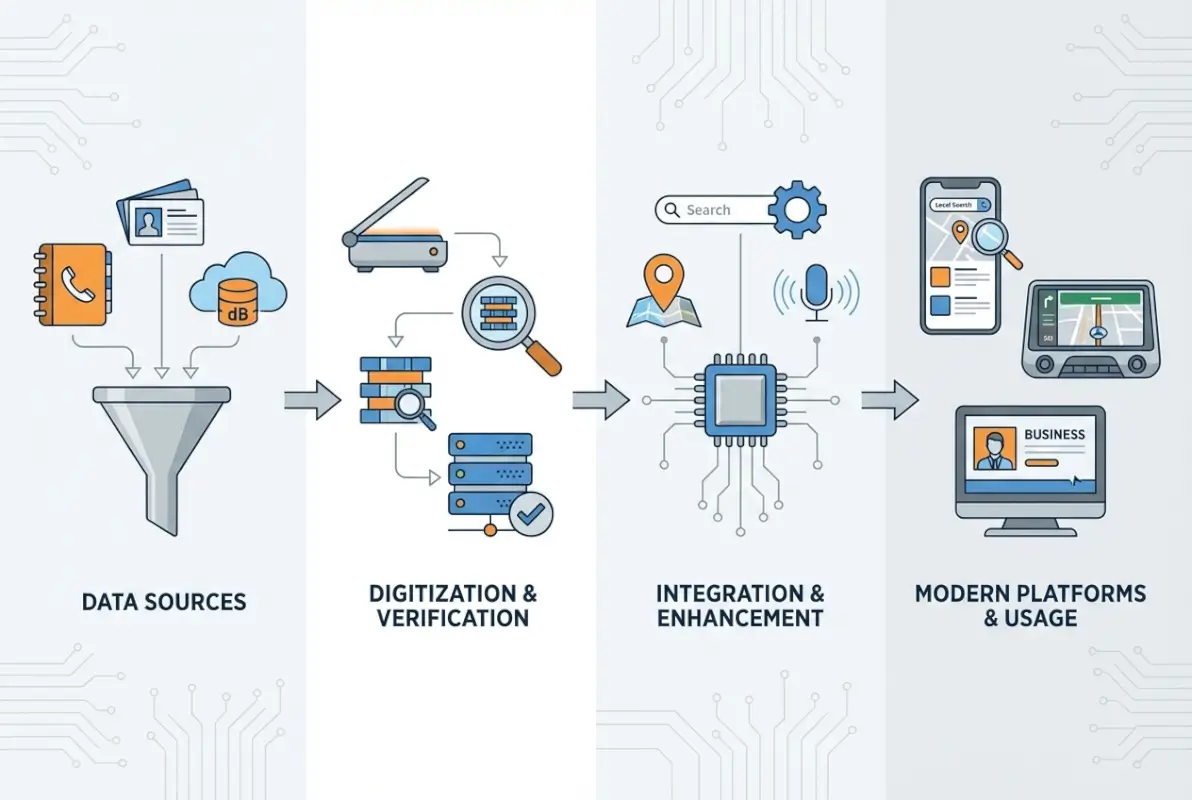
Think of it like reputation building. When Google’s algorithm sees your business listed consistently across 20, 30, or 50 directories, it interprets that as validation. “This business is legitimate, established, and trustworthy,” the algorithm essentially concludes. Conversely, businesses with sparse or inconsistent directory presence struggle to rank, regardless of how good their website might be.
The key benefits for your business extend beyond just search rankings. Directory listings create multiple digital touchpoints where customers can discover you. When someone searches your business name, you want to dominate that first page of results—not leave room for competitors or, worse, negative content to appear prominently.
The Local Search Ecosystem: How It Actually Works
Local search operates on what SEO professionals call the “local pack”—those top three business listings that appear with map pins when you search for something like “pizza near me” or “emergency plumber.” Getting into that coveted local pack requires strong signals from multiple sources, not just a great website.
Google’s local ranking algorithm weighs three primary factors: relevance, distance, and prominence. Relevance comes from your business categories and description. Distance is straightforward geography. But prominence—that’s where directories shine. Prominence measures how well-known your business is, using signals like review quantity and quality, citation consistency across directories, and overall online presence.
A colleague who specializes in local SEO shared a case study that perfectly illustrates this. Two competing dental practices existed within three blocks of each other. Dentist A had a beautiful modern website but sparse directory presence. Dentist B had an older website but maintained verified, consistent listings across 35 directories with robust review profiles. Despite Dentist A’s superior web design, Dentist B dominated local search results and the map pack. When Dentist A finally invested three months cleaning up and building their directory presence, they jumped from position 12 to position 2 in local results—without changing anything else.
Beyond Google: The Multi-Platform Directory Strategy
While Google Business Profile forms the foundation, a comprehensive directory strategy includes multiple platforms. Industry-specific directories often carry more weight for certain searches. Healthgrades matters immensely for medical practices. Avvo dominates attorney discovery. TripAdvisor and OpenTable influence restaurant decisions more than generic directories.
The smart approach? Start with the big three (Google Business Profile, Yelp, Facebook Business), then identify the 5-10 directories most relevant to your specific industry and location. For key benefits and examples of effective directory implementations, focus on quality over quantity—well-maintained listings on relevant platforms beat abandoned profiles scattered across 100 sites.
Mobile-First Discovery: How Consumers Actually Find Businesses Now
The way people discover local businesses has fundamentally transformed, and mobile devices sit at the center of this shift. According to data from the Pew Research Center’s mobile technology research, smartphone ownership among Americans has reached saturation levels, with these devices becoming the primary tool for local business discovery.
This mobile-first behavior has profound implications for business directories. When someone searches on their phone, they’re typically not browsing—they’re on a mission. They need a plumber now, want dinner reservations tonight, or are standing in an unfamiliar neighborhood looking for coffee. This intent-driven behavior makes directory listings exponentially more valuable than traditional advertising ever was.

Mobile searchers interact with directory listings differently too. They tap to call directly from search results. They use one-click navigation to get directions. They read reviews while standing outside your storefront, deciding whether to walk in. This immediacy creates massive opportunities for businesses with optimized listings and significant risks for those without.
Voice search adds another layer to this mobile-first landscape. When someone asks Siri “where’s the closest hardware store” or tells Alexa “find me a pizza place with good reviews,” these assistants pull heavily from business directory data. Businesses with complete, accurate directory profiles win these voice queries; those without essentially don’t exist in voice search results.
The Review Economy: Why User-Generated Content Dominates
Perhaps nothing illustrates the difference between traditional phone books and modern directories better than customer reviews. Print directories could only show paid advertisements—essentially what businesses said about themselves. Digital directories showcase what customers say about businesses, which carries infinitely more weight with consumers.
Reviews function as social proof, risk mitigation, and decision-making shortcuts all rolled into one. Research consistently shows that consumers trust online reviews nearly as much as personal recommendations. A business with 50+ recent reviews and a 4.5-star average will generally outperform a competitor with fewer reviews, even if that competitor has a slightly higher rating.
Smart businesses treat reviews as a two-way communication channel. Responding to reviews—both positive and negative—demonstrates active management and customer care. I’ve watched businesses completely rehabilitate their online reputation not by deleting negative reviews (which isn’t really possible anyway) but by responding professionally and showing how they’ve addressed issues. Those visible improvements often convert skeptics into customers.
Implementing an Effective Directory Strategy for Local Businesses
Understanding why directories matter is one thing; actually leveraging them effectively requires a systematic approach. The businesses winning local search aren’t just listed everywhere—they’re strategically managing their directory presence as a core marketing function.
Start with an audit of your current directory presence. Search for your business name and see what appears. You’ll probably find a mix of claimed listings you control, unclaimed listings that exist but need verification, and incorrect or duplicate listings causing confusion. This audit reveals both opportunities and problems that need fixing.

The foundation is claiming and verifying ownership of listings across all relevant platforms. Google Business Profile should be your first priority—if you do nothing else, get this right. The verification process typically involves receiving a postcard with a verification code at your business address. Yes, it’s old-school, but this friction creates trust signals that help with rankings.
The NAP Consistency Imperative
NAP—Name, Address, Phone—consistency isn’t just recommended; it’s essential for local SEO success. Your business information must appear identically across every directory, your website, and all online mentions. This seems simple but trips up many businesses.
| Element | Wrong Approach | Right Approach |
|---|---|---|
| Business Name | Varying with keywords added | Identical everywhere |
| Address Format | St. vs Street, Ste vs Suite | Pick one format, use everywhere |
| Phone Number | Tracking numbers, multiple lines | Single consistent main number |
| Website URL | www vs non-www variations | Consistent URL format |
After establishing consistent NAP information, focus on completeness. Directory profiles aren’t just digital business cards—they’re marketing real estate. Add comprehensive business descriptions (unique for each platform when possible), upload high-quality photos, specify your service area or hours, list accepted payment methods, and include any relevant attributes or specialties.
Ongoing Management: The Never-Done Task
Directory optimization isn’t a one-and-done project. Search algorithms favor active, current listings over abandoned ones. Set up a monthly routine to review your top 10-15 directory profiles. Update seasonal hours, add new photos, post updates or offers, and—critically—respond to any new reviews.
For businesses running their own directory websites, implementing these same principles helps attract quality business listings and build credibility. A complete guide to business directory strategies provides frameworks for both listing your own business and creating directory platforms.
The analytics available through platforms like Google Business Profile provide valuable insights into how customers interact with your listing. You can see search queries that triggered your profile, whether customers called, requested directions, or visited your website. This data helps refine your directory strategy over time, showing which directories drive the most valuable traffic.
Voice Search, AI, and the Future of Business Discovery
The directory landscape continues evolving rapidly, with emerging technologies reshaping how consumers discover businesses. Voice search represents perhaps the most significant shift since mobile. When people use voice assistants, they phrase queries conversationally: “Alexa, what’s a good Italian restaurant near me?” rather than typing “Italian restaurant Cleveland.”
This conversational style requires directories to adapt. Business descriptions that incorporate natural language patterns and question-based content perform better in voice results. Forward-thinking businesses are optimizing their directory profiles specifically for how people speak, not just how they type.

Artificial intelligence is transforming directories from passive listing services into intelligent recommendation engines. Modern directory platforms don’t just display businesses—they learn user preferences and behavior to make personalized recommendations. If you frequently search for vegetarian restaurants, AI-powered directories note that pattern and adjust future recommendations accordingly.
Augmented reality (AR) integration represents another frontier. Imagine pointing your phone camera down a street and seeing business information, reviews, and special offers overlaid on storefronts in real-time. Early implementations of this technology already exist, and as AR becomes mainstream, directory data will power these experiences.
Preparing Your Business for What’s Next
While specific technologies will continue evolving, the fundamentals remain constant: accurate information, strong reviews, and active management. Businesses positioning themselves for future discovery trends should focus on several areas.
First, ensure your directory profiles include natural language content that matches conversational queries. Instead of just listing “plumbing services,” include phrases like “emergency plumbing available 24 hours” or “same-day water heater repair”—language that mirrors how people actually ask for these services.
Second, invest in review generation and management. As AI becomes more sophisticated at evaluating quality signals, the depth and authenticity of reviews will matter more than ever. Encourage detailed reviews from customers, and respond thoughtfully to show engagement.
Third, explore how businesses add advertising in more native, contextual ways within directory platforms. As these platforms evolve into full-fledged marketing channels, advertising opportunities become more targeted and effective.
Finally, monitor emerging platforms. Just as businesses who claimed early Google Business Profile listings gained advantages, early adopters of new directory platforms and technologies typically benefit from less competition and favorable positioning.
Frequently Asked Questions
Are printed phone books completely obsolete now?
Traditional printed phone books have declined dramatically, with distribution down over 80% since their peak. While not entirely extinct—some rural areas and niche markets still use them—they’ve been almost entirely replaced by digital directories that offer real-time information, reviews, and interactive features that print never could. For most businesses and consumers, printed directories are no longer relevant.
What is the most important business directory to be listed on?
Google Business Profile is unquestionably the most critical directory for local businesses. It directly influences Google Search results, Google Maps rankings, and voice search responses. After GBP, prioritize industry-specific directories relevant to your field (like Healthgrades for medical practices or Avvo for attorneys) and major general directories like Yelp and Facebook Business Pages.
How do business directory listings improve SEO?
Directory listings improve SEO by creating citation signals—consistent mentions of your business name, address, and phone number across multiple authoritative sites. Search engines interpret these consistent citations as validation of your business’s legitimacy, which directly influences local search rankings. Directories also provide valuable backlinks and review signals that further boost search visibility and consumer trust.
Should I pay for directory listings or stick with free options?
Start with free listings on major platforms—Google Business Profile, Yelp, Facebook, and industry-specific directories all offer robust free profiles. Once you’ve optimized these free listings, consider paid options for enhanced visibility on platforms where your target customers are most active. Paid features like promoted listings or premium profiles can provide ROI if the directory drives significant traffic for your industry.
How often should I update my business directory information?
Update listings immediately whenever core information changes—hours, phone numbers, addresses, or services offered. Beyond that, review and refresh your top directory profiles monthly. Add new photos, respond to recent reviews, and post updates or special offers when relevant. Search algorithms favor active listings, so regular engagement signals that your business is current and well-managed.
What information is most important to include in directory listings?
The essential elements are accurate NAP information (Name, Address, Phone), complete business hours including holidays, your website URL, primary and secondary business categories, a detailed business description, high-quality photos, and accepted payment methods. Beyond basics, include service areas, special attributes or certifications, and any information that helps differentiate your business from competitors.
Can inconsistent information across directories hurt my rankings?
Yes, absolutely. Inconsistent NAP information confuses search algorithms and dilutes citation signals. If different directories show varying addresses or phone numbers, search engines may treat these as different businesses, preventing you from building the consolidated trust signals that improve rankings. Consistency across all directories is critical for local SEO success and should be audited regularly.
How important are customer reviews for directory listings?
Reviews are critically important for both search rankings and customer decision-making. Businesses with more reviews and higher ratings consistently rank better in local search results. Reviews also provide social proof that influences purchasing decisions—most consumers read reviews before visiting a business. Focus on generating authentic reviews regularly and responding professionally to all feedback.
Do business directories work for service-area businesses without physical locations?
Yes, directories are highly effective for service-area businesses. Platforms like Google Business Profile allow you to specify service areas without displaying a physical address. This helps you appear in searches across all neighborhoods you serve. Include clear service area descriptions, showcase before-and-after photos of work, and collect reviews from customers in different locations to build broader visibility.
How do I handle duplicate or incorrect listings I didn’t create?
Duplicate and incorrect listings are common issues that hurt your local SEO. For duplicates you control, consolidate them by claiming all versions and redirecting or deleting extras. For listings you don’t control, most directories have processes to claim ownership or report inaccuracies. Document your correct information and work systematically through each platform’s correction process—it’s tedious but essential for consistent citations.
Taking Control of Your Directory Presence
The transformation from printed phone books to dynamic digital directories represents more than a format shift—it’s a fundamental change in how businesses and consumers connect. While those yellow tomes have largely disappeared, the core function they served has become infinitely more powerful, measurable, and strategic.
Business directories in their modern form aren’t optional marketing channels that you might consider alongside other tactics. They’re foundational infrastructure for local visibility, directly influencing whether potential customers can find you when they’re actively looking for your services. The businesses that understand and leverage this reality—maintaining accurate, comprehensive, actively managed directory profiles—gain measurable advantages over competitors who treat listings as afterthoughts.
Your Directory Action Plan This Week
- Audit your current presence: Search for your business name and see what directory listings appear
- Claim and verify your Google Business Profile if you haven’t already—this is non-negotiable
- Fix NAP inconsistencies across your top 10 directory listings—exact matches matter
- Add missing information like photos, detailed descriptions, service areas, and business attributes
- Respond to all outstanding reviews professionally, showing active management
- Identify 5 industry-specific directories relevant to your field and create listings
- Set a monthly calendar reminder to review and update your directory profiles
The beauty of directory optimization is that it’s one of the few marketing investments with compounding returns. Unlike paid advertising that stops working the moment you stop paying, well-maintained directory listings continue generating visibility and leads indefinitely. The work you do this month building and optimizing your directory presence creates value that persists and grows over time.
Whether you’re a solo service provider or a multi-location enterprise, your directory strategy deserves the same strategic attention you give your website, social media, or any other marketing channel. The businesses dominating local search results aren’t necessarily those with the biggest budgets—they’re the ones who understand how local discovery actually works and systematically optimize every element of their directory presence.
Start with the fundamentals: accurate information, complete profiles, and consistent management. As you build that foundation, you can explore advanced tactics like structured data, voice search optimization, and strategic paid placements. The important thing is starting now, because while you’re reading this, your competitors are either claiming their territory in the digital directory landscape or neglecting it entirely. Either scenario creates opportunity for businesses willing to take directory optimization seriously.
Was this article helpful?