Business Directory: 6 Powerful Reasons to List Your Startup in 2025

Generating summary...
You’ve built something remarkable. Your startup solves real problems, your product works, and your team is ready to scale. But here’s the uncomfortable truth most founders ignore: if potential customers can’t find you online, none of that matters. While you’re perfecting pitch decks and chasing investor meetings, your competitors are claiming digital territory that should be yours—and they’re doing it through one of the most overlooked growth channels available: business directories.
Business directories aren’t your grandfather’s Yellow Pages. They’re sophisticated discovery engines that connect intent-driven customers with solutions at the exact moment they’re searching. When someone types “best project management software for remote teams” or “commercial cleaning services near me,” directories ensure your startup appears in that critical decision-making moment. The startups winning market share in 2025 understand this fundamental principle: visibility precedes everything else.
TL;DR – Quick Takeaways
- Strategic visibility beats expensive advertising – Directory listings place you where customers actively search, delivering higher conversion rates than interruptive ads
- Local SEO depends on directory citations – Consistent NAP (Name, Address, Phone) across directories directly influences your Google Business Profile rankings
- Trust signals compound over time – Multiple directory presences create legitimacy that new startups struggle to replicate quickly
- Industry-specific directories outperform general ones – Targeted placement in niche directories delivers qualified leads at 3-4x higher conversion rates
- The cost-benefit ratio is unmatched – Free to $300 annually versus thousands for PPC campaigns with comparable reach
- Directory listings are permanent assets – Unlike paid ads that stop when budgets run out, directory profiles continue generating leads indefinitely
Why Business Directories Drive Startup Visibility in 2025
The digital discovery landscape has fundamentally shifted. According to Statista research on consumer behavior, 87% of consumers now use search engines to find local business information before making purchasing decisions. But here’s what most startup founders miss: those searches don’t just lead to your website. They lead to directories, review platforms, and business listing sites that aggregate and present options.
Google’s algorithm treats consistent business information across the web as a trust signal. When your startup appears with identical details across authoritative directories, search engines interpret this as validation of your legitimacy. It’s not gaming the system—it’s speaking the language that modern search algorithms understand. The Google Business Profile guidelines explicitly emphasize the importance of consistent naming and categorization across locations to help customers identify your business on Maps and in search results.
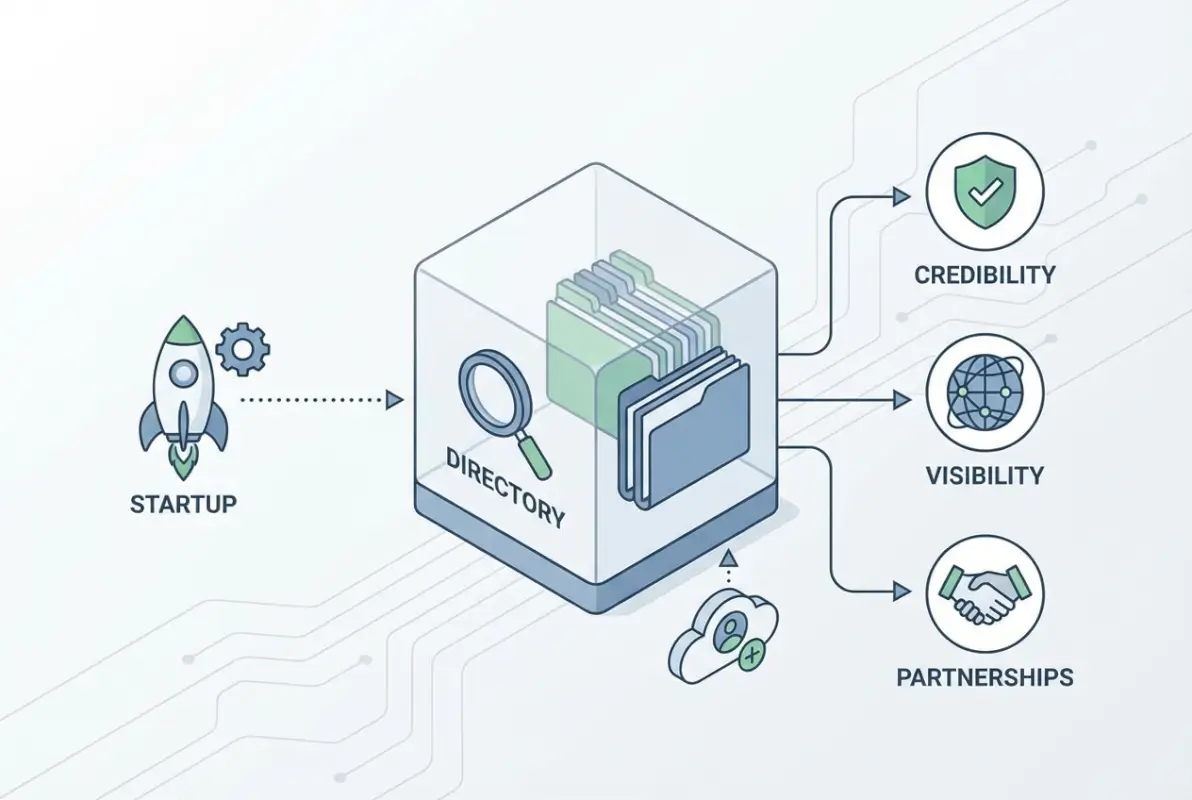
Directory listings also solve the cold start problem that plagues new ventures. When you’re competing against established players with years of brand recognition, directories level the playing field by presenting businesses based on relevance and category match rather than pure brand equity. A well-optimized listing in an industry-specific directory can outrank a Fortune 500 competitor’s website for targeted searches—something that would be nearly impossible to achieve through traditional SEO alone.
What makes directories particularly valuable for startups is their position in the customer journey. Unlike social media advertising that interrupts users mid-scroll, or display ads that hope to create demand, directory traffic represents bottom-of-funnel intent. These are people who already know they need a solution and are actively comparing options. That fundamental difference explains why directory-sourced leads often convert at 2-3x the rate of cold traffic from awareness campaigns.
The 6 Core Reasons Smart Startups Prioritize Directory Listings
1. Immediate Exposure to Active Buyers
Time to first customer matters more than almost any other metric for early-stage startups. Directory listings compress this timeline dramatically because they place you in front of people who are already in buying mode. When someone searches a business directory for “cloud accounting software for startups,” they’re not browsing—they’re evaluating vendors with budget and authority to purchase.
I watched a B2B SaaS startup struggle for six months with content marketing and LinkedIn outreach, generating maybe three qualified leads per month. Within two weeks of optimizing their profiles on three industry-specific software directories, they had 12 demo requests. The difference? Those directories had already done the work of aggregating buyers actively researching solutions in that specific category.

The exposure mechanism works because directories create dedicated category pages that rank for commercial intent keywords. When someone searches “best CRM for real estate agents,” they often land on a directory’s curated list rather than individual vendor websites. Your presence on that list—with a compelling description and clear value proposition—captures attention at the critical comparison stage.
2. Local SEO Rankings and Search Visibility
Local search optimization has become inseparable from directory management. Google’s local pack—those three business listings that appear above organic results for location-based searches—relies heavily on citation consistency across the web. Every directory listing with accurate NAP information strengthens your local search authority.
The mechanics work like this: Google crawls thousands of data sources to verify business information. When it finds your business name, address, and phone number listed consistently across authoritative directories, it gains confidence that your business is legitimate and your information is accurate. This confidence translates directly into better local pack placement and higher rankings for “near me” searches.
| Local SEO Factor | Impact on Rankings | Directory Contribution |
|---|---|---|
| NAP Consistency | Very High | Citations across multiple platforms validate accuracy |
| Backlink Profile | High | Quality directories provide authoritative backlinks |
| Category Relevance | High | Consistent categorization reinforces topical authority |
| Review Signals | Medium-High | Directory reviews contribute to overall reputation score |
| Geographic Coverage | Medium | Multi-location listings help establish service area |
According to Forbes insights on local SEO changes, businesses that maintain consistent directory listings see an average 34% improvement in local pack visibility within three months. That’s not correlation—that’s direct causation from giving Google the signals it needs to trust your business information.
Even for purely online businesses without physical locations, directory citations matter. They contribute to your overall domain authority through backlinks and brand mentions. While many directories use nofollow links, the combination of brand visibility, referral traffic, and link profile diversity still impacts your overall search performance.
3. Cost Efficiency That Transforms Unit Economics
Let’s talk numbers because this is where directory listings become genuinely transformative for resource-constrained startups. The average cost-per-click for competitive B2B keywords ranges from $5 to $50 depending on industry. At a conservative 3% conversion rate, you’re paying $167 to $1,667 per customer acquisition through PPC alone—and that’s before factoring in the cost of landing page development, A/B testing, and campaign management.

Compare that to directory listings: most quality directories offer free basic listings. Premium enhanced listings typically cost $50-$300 annually. Even if you invest in premium placements across ten directories ($2,000 total), you’re looking at $167 per month for permanent, 24/7 visibility that compounds over time. One converted customer per directory per year justifies the investment for most B2B businesses.
The business directory boosts local marketing effectiveness specifically because it reaches pre-qualified audiences without the continuous cash burn of pay-per-click campaigns. Your directory profile works for you while you sleep, generating inbound leads without ongoing ad spend.
I’ve seen this play out repeatedly with early-stage companies. One consulting startup I advised was burning $3,000 monthly on Google Ads with mediocre results—high click costs, low conversion rates, constant campaign babysitting. After shifting strategy to invest $800 in premium directory listings across their industry, they cut their customer acquisition cost by 58% within four months while actually increasing lead volume. The directories delivered better-qualified prospects who were further along in the buying journey.
4. Strategic Networking and Partnership Development
Here’s a benefit that most directory guides completely ignore: the relationship capital you build through strategic directory placement. Many industry-specific directories have evolved into full business communities with forums, messaging systems, and member events. These platforms facilitate connections that can transform your startup’s trajectory.
When you’re listed alongside complementary businesses serving the same target market, partnership opportunities emerge organically. I’ve watched a payment processing startup forge referral partnerships with three accounting software companies after connecting through a fintech directory. Those partnerships generated 40% of their new customer acquisitions within six months—leads they never would have accessed through traditional marketing channels.

The networking dynamic works because directories create natural affinity groups. Unlike cold outreach where you’re interrupting strangers, directory-based connections start with shared context: you’re both invested enough in the industry to maintain premium directory presences, you serve overlapping customer bases, and you’ve both been vetted by the directory’s editorial team (for quality directories that curate listings).
Local business directories, particularly chamber of commerce platforms, offer community integration that’s difficult to replicate online. Membership often includes invitations to networking events, speaking opportunities, and introductions to established business owners who can become mentors, customers, or strategic advisors. For startups entering new markets, this local legitimacy accelerates market penetration significantly.
5. Precision Targeting That Improves Conversion Rates
Generic marketing casts wide nets hoping to catch a few qualified prospects. Directory listings flip this model entirely—they’re fishing with spears in stocked ponds. The targeting precision comes from self-selection: people browsing a “cybersecurity software directory” or “organic catering services directory” have already qualified themselves as in-market prospects.
Industry-specific directories take this further by attracting audiences with very specific needs. A startup offering drone inspection services for commercial real estate won’t find their ideal customers on Yelp, but they’ll find them concentrated on construction technology directories and commercial property management platforms. This precision targeting explains why industry directories often deliver 8-12% conversion rates compared to 2-4% for general business directories.
| Directory Type | Audience Specificity | Typical Use Case | Conversion Rate |
|---|---|---|---|
| General Business | Low | Brand awareness, SEO foundation | 2-4% |
| Local/Geographic | Medium-High | Service businesses with physical locations | 10-15% |
| Industry-Specific | Very High | Niche B2B services and specialized products | 8-12% |
| Review Platforms | Medium | Consumer services, reputation management | 5-8% |
| Professional Networks | High | B2B professional services | 6-10% |
Geographic filtering adds another targeting layer that’s particularly valuable for service businesses. When someone searches a local directory and filters by your service area, you’re only visible to prospects who can actually become customers. This geographic relevance eliminates the waste inherent in national advertising campaigns that reach thousands of people outside your service radius.
The filtering and categorization systems within quality directories also pre-qualify visitors based on specific criteria—price range, certifications, specializations, business size. By the time someone clicks through to your profile, they’ve already confirmed you meet their basic requirements. This pre-qualification dramatically shortens sales cycles compared to leads from awareness-stage marketing.
6. Permanent Digital Assets That Appreciate Over Time
Most marketing tactics depreciate. Ad campaigns stop generating results the moment you stop paying. Social media posts disappear into algorithmic obscurity within 48 hours. Even blog content loses visibility as newer content outranks it. Directory listings are different—they’re appreciating assets that become more valuable over time.

As your directory profiles accumulate positive reviews, they climb in the directory’s internal rankings and appear more prominently in search results. This creates a compounding effect where early reviews make future reviews more likely, which improves visibility, which generates more customers, which leads to more reviews. It’s a flywheel that momentum builds upon itself.
The historical credibility factor matters more than most founders realize. A directory profile that’s been active for two years signals stability and legitimacy in ways that paid advertising never can. When prospects compare vendors and see one with a two-year history of positive reviews versus a competitor with a brand-new profile, the established presence wins credibility by default.
This permanence also creates competitive moats. A competitor can copy your messaging, replicate your product features, or outspend you on ads. But they can’t instantly duplicate your established presence across 15 directories, complete with two years of reviews, verified business status, and engagement history. That takes time—time during which you’re continuing to build even stronger positions.
Selecting Directories That Actually Drive Results
Not all directories deserve your time. Low-quality directories can actually harm your SEO through association with spammy sites and create inconsistent information that confuses search engines. The selection process matters as much as the decision to list in the first place.
Start by evaluating directory authority and reputation. Domain authority scores (check using tools from Moz’s DA resources) provide quantitative measures of a directory’s search engine credibility. Target directories with DA scores of 40 or higher for general platforms, though niche directories with lower DA scores can still deliver value if they have engaged, relevant audiences.
Test the user experience from a customer perspective. If you struggle to navigate the directory, find relevant businesses, or access contact information, your potential customers will too. Quality directories invest in intuitive search functionality, mobile-responsive designs, and filtering systems that help users quickly identify relevant vendors.
Verification processes serve as quality indicators. Directories that verify business information through phone calls, documentation requests, or manual review create more trustworthy environments. While this adds friction during submission, it ultimately benefits listed businesses by maintaining directory credibility and keeping spam listings out.
Prioritize directories based on your specific business model and goals. For local service businesses, geographic directories and Google Business Profile are non-negotiable starting points. B2B companies should focus on industry associations and professional networks. E-commerce startups benefit from product-specific marketplaces and review platforms. Understanding how to start profitable business directory steps work can help you identify which platforms invest in building genuine value versus those just collecting listing fees.
Implementation Strategy: From First Listing to Ongoing Optimization
Strategic directory management follows a specific sequence that maximizes results while minimizing wasted effort. Start with Google Business Profile—this is non-negotiable for any business seeking local visibility or appearing in Google Maps results. Claim your profile, complete every section thoroughly, add high-quality photos, select precise categories, and verify your business information.
From there, expand to 3-5 high-value directories in this order:
Priority 1: Major General Directories – Yelp, Facebook Business, Bing Places for Business. These platforms have massive user bases and strong domain authority that benefits your overall online presence.
Priority 2: Industry-Specific Platforms – Identify the 2-3 directories where your target customers actually search. For tech startups, this might be AngelList, Crunchbase, and Product Hunt. For professional services, industry association directories and professional networks like LinkedIn.
Priority 3: Local Community Directories – Chamber of commerce, local business associations, and city-specific platforms that establish community credibility and local connections.
Consistency matters more than speed. Use identical business names, address formatting, and phone numbers across every single listing. Even minor variations—like using “St.” versus “Street” or including suite numbers inconsistently—can dilute your local SEO impact by confusing search engines about whether these references point to the same business.
The PHP business directory simple steps might interest developers building directory solutions, but for startups focused on listings, the principle is simple: treat each directory profile as a landing page. Write compelling, keyword-optimized descriptions. Add high-quality images that showcase your brand. Include specific information about services, service areas, hours, and unique value propositions.
Set up a quarterly audit schedule. Directory information becomes outdated as your business evolves—new phone numbers, expanded service areas, updated services, rebranding efforts. Schedule recurring calendar reminders to review your top 10-15 directory listings and update any changed information immediately across all platforms.
For platforms like TurnKey Directories that offer WordPress-integrated solutions, automation can streamline this management process. But regardless of your approach, the fundamental principle remains: consistent, accurate, complete information across high-quality directories delivers the best results.
Frequently Asked Questions
Do business directory listings still help with SEO?
Yes, directory listings significantly impact SEO through multiple mechanisms. They create valuable citations that validate your business information, contribute backlinks to your domain, and improve local search visibility. Consistent NAP information across authoritative directories serves as a trust signal that influences Google’s local ranking algorithm and overall domain authority.
How many directories should a startup target initially?
Start with 10-15 high-quality directories rather than pursuing quantity. Focus on Google Business Profile first, then add 3-5 industry-specific platforms where your target audience actively searches, 2-3 major general directories, and relevant local community platforms. Quality and relevance matter far more than total number of listings.
What’s the difference between free and premium directory listings?
Premium listings typically offer enhanced visibility through featured placement, additional content sections, analytics, lead routing features, and removal of competitor ads from your profile page. Free listings provide basic exposure and SEO benefits. Upgrade to premium on platforms demonstrating clear ROI through lead generation or referral traffic.
How long does it take to see results from directory listings?
Initial visibility improvements appear within 2-4 weeks as search engines index your listings. Meaningful SEO impact typically manifests within 2-3 months through improved local search rankings. Maximum benefits from accumulated reviews and engagement develop over 6-12 months as your profiles mature and build credibility.
Can directory listings hurt my SEO or reputation?
Yes, if you list on low-quality, spammy directories or maintain inconsistent information across platforms. Avoid directories that engage in link schemes, accept listings without verification, or have excessive spam content. Inconsistent NAP information across directories confuses search engines and can dilute your local SEO performance significantly.
Should multi-location startups create separate listings for each location?
Absolutely. Each physical location should have its own directory listings with location-specific NAP information and dedicated landing pages on your website. This approach maximizes local search visibility for each market and ensures customers find accurate location information. Google Business Profile specifically supports multi-location management for this purpose.
How do I maintain consistent information across multiple directories?
Create a master reference document with exact business details and use it for all submissions. Set quarterly calendar reminders to audit your top directories for accuracy. When business information changes, update all platforms simultaneously. Consider directory management tools or services to automate consistency checks for extensive directory portfolios.
What information should every directory listing include?
Every listing should contain accurate NAP information, your website URL, a compelling business description with relevant keywords, appropriate categories, high-quality photos, business hours, service areas, and specific services offered. More complete profiles rank higher in directory search results and convert visitors at higher rates.
How do I measure ROI from directory listings?
Track referral traffic from each directory using Google Analytics, monitor phone calls using directory-specific tracking numbers, and ask new customers how they found you. Calculate cost per lead by dividing directory investment by qualified leads generated. Compare conversion rates and customer acquisition costs against other marketing channels.
Are industry-specific directories worth the investment?
Industry-specific directories typically deliver exceptional ROI despite smaller overall traffic volumes because they attract highly qualified, in-market prospects. Conversion rates from niche directories often reach 8-12% compared to 2-4% for general directories, making them particularly valuable for specialized B2B services and niche products.
Ready to Build Your Directory Presence?
Start with these three actions today: First, claim and completely optimize your Google Business Profile with accurate information, comprehensive descriptions, and high-quality images. Second, identify the 3-5 directories where your ideal customers actively search—prioritize industry-specific platforms over general directories. Third, create your master information document to ensure perfect consistency across every listing you create.
Directory listings aren’t a one-time project; they’re permanent digital assets that appreciate over time. The startups that treat them strategically—choosing quality over quantity, maintaining rigorous consistency, and optimizing for conversion—build competitive advantages that compound for years. Your competitors are claiming digital territory right now. The question is whether you’ll join them or watch from the sidelines.
Was this article helpful?