How to Find Open Business Directory Platforms: 5 Trusted Listings That Drive Real Traffic

Generating summary...
Finding a genuinely effective business directory shouldn’t feel like searching for a needle in a haystack, yet most business owners waste hours submitting to low-quality platforms that deliver zero results. The brutal truth? Of the thousands of directories claiming to boost your visibility, only a handful actually move the needle on local search rankings and customer acquisition.
I learned this the hard way after spending an entire weekend submitting a client’s information to 47 different directories—only to discover three months later that 39 of them had contributed exactly nothing to their traffic or rankings. The effort-to-reward ratio was abysmal, and it taught me something crucial: when you’re trying to find open business directory platforms worth your time, quality crushes quantity every single time.
What separates trusted business listings from time-wasting submissions comes down to three factors: domain authority that search engines actually respect, active user bases that create real discovery opportunities, and data quality standards that ensure your information appears correctly. Master these criteria, and you’ll build a directory presence that compounds your local SEO results month after month.
TL;DR – Quick Takeaways
- Only 5-7 directories genuinely impact local rankings – focus your effort on foundational platforms like Google Business Profile before exploring niche options
- NAP consistency across directories serves as a trust signal – identical Name, Address, Phone data strengthens your local relevance in search algorithms
- Industry-specific directories often outperform general platforms – targeted listings attract higher-intent traffic and convert better than broad exposure
- Data accuracy matters more than submission volume – one complete, verified listing outweighs ten incomplete profiles
- Directory impact compounds over time – consistent presence across trusted sources builds cumulative SEO authority
Why Business Directories Matter for Local SEO in 2026
Business directories function as the infrastructure layer of local search, creating the citation signals that search engines use to verify your business exists and operates where you claim. When someone searches for “coffee shop near me” or “emergency plumber Chicago,” Google doesn’t just check your website—it cross-references dozens of data sources to confirm your legitimacy before displaying your business in results.
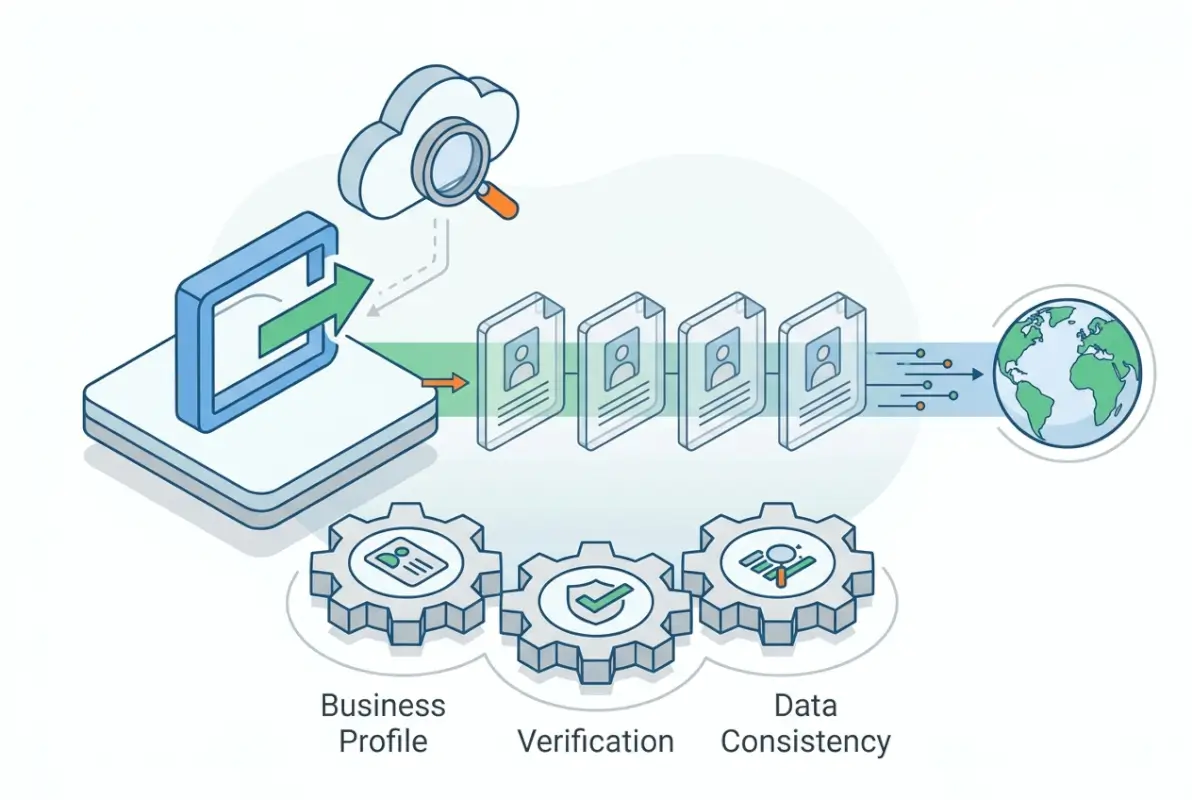
This verification process relies heavily on consistent business information across multiple authoritative platforms. Search engines essentially crowd-source truth: if reputable directories all list your business with identical details, that consistency signals reliability. Conversely, conflicting information across platforms triggers red flags that can suppress your visibility, even when everything on your website is technically correct.
The local search landscape has evolved significantly from the “submit everywhere” approach that dominated five years ago. Research from BrightLocal shows that while citation quantity still matters, the authority and relevance of those citations now carries substantially more weight in ranking algorithms.
The Role of Citations, NAP Consistency, and Growth Signals
Citations—mentions of your business name, address, and phone number across the web—serve three distinct functions in local SEO. First, they validate that your business physically exists at the claimed location. Second, they establish connections between your brand and specific geographic areas. Third, they create trust indicators that influence how prominently search engines display your business for relevant queries.
NAP consistency deserves obsessive attention because even minor variations confuse search algorithms. “Main Street” versus “Main St.” or a disconnected phone number might seem trivial, but these inconsistencies dilute the cumulative authority of your citations. I’ve watched businesses lose their coveted Map Pack positions simply because they used different suite number formats across directories (sometimes “#205” and other times “Suite 205”).
Growth signals represent the newer frontier in directory optimization. Search engines now track not just static presence but also engagement metrics: how frequently your listing receives views, how many photos you add, whether customers ask questions, and how quickly you respond. Active, growing directory profiles signal business vitality in ways that static listings never could.
What Current Research Says About Directory Effectiveness
The latest analysis from LocalCatalyst’s citation research reveals that while Google Business Profile remains the undisputed foundation, the next tier of directories varies substantially by industry and market. What works for restaurants differs dramatically from what delivers results for professional services or retail operations.
Geographic market dynamics also play a significant role. In competitive urban markets, comprehensive directory coverage becomes table stakes—everyone has it, so you can’t afford gaps. In smaller markets or specialized industries, even basic presence in the right 3-4 directories can create meaningful competitive advantages. The key lies in understanding which directories your target customers actually use when searching for businesses like yours.
Current benchmarking data suggests that businesses maintaining accurate, complete profiles across 15-20 quality directories see measurably better local search performance than those spreading thin across 50+ platforms with minimal information. The returns diminish rapidly after covering core general directories and 2-3 industry-specific platforms relevant to your sector.
5 Core, High-Impact Directories to Prioritize in 2026
The directory landscape contains thousands of platforms, but only a handful consistently deliver measurable results for local search visibility and customer acquisition. These foundational directories should anchor any business’s online presence strategy, regardless of industry or location.

When evaluating which directories deserve your limited time and attention, focus on three criteria: domain authority (how much search engines trust the platform), user traffic (whether real customers actually use it for discovery), and data quality standards (whether the platform maintains accurate, up-to-date information). Platforms that score highly on all three dimensions create compounding value; those weak in even one area often waste your effort.
Google Business Profile and Top-Tier General Directories
Google Business Profile (formerly Google My Business) isn’t just a directory—it’s the central nervous system of local search. Your GBP listing directly powers your appearance in Google Search, Google Maps, and the Local Pack (those top three businesses shown with map pins). According to Google’s own guidance, businesses with complete, regularly updated profiles receive substantially more visibility than incomplete listings.
Beyond basic information, GBP offers features that create ongoing engagement opportunities: customer Q&A, photo uploads, post publishing, review management, and messaging. Active management of these features sends positive signals to Google’s algorithms about business legitimacy and customer engagement. I’ve seen local service businesses triple their Map Pack impressions simply by committing to weekly photo uploads and prompt review responses.
Yelp remains the second essential general directory despite occasional controversy about its review practices. With over 178 million monthly users actively searching for local businesses, Yelp’s reach is undeniable—particularly for restaurants, personal services, and home services. The platform’s review-centric design means your reputation management directly impacts your visibility, creating both opportunity and vulnerability.
Bing Places for Business captures the significant minority of searches happening outside Google’s ecosystem. While Bing holds roughly 6% of desktop search market share, it punches above its weight in certain demographics (particularly older users and Microsoft product users). The verification process mirrors Google’s, and many businesses find less competition for top positions in Bing’s local results.
Apple Maps deserves attention because of its integration with iOS devices and Siri queries. When iPhone users ask Siri for nearby businesses or use Apple Maps for discovery, the platform pulls from Apple’s business directory. Claiming and optimizing your Apple Maps listing ensures you appear for this substantial segment of mobile searchers.
Industry-Specific Directories by Sector
General directories provide foundational coverage, but industry-specific platforms often deliver higher-quality traffic because they attract users with precise intent. Someone browsing a legal directory is further along the decision journey than someone casually searching Google—they’re actively comparing options within your specific field.
For healthcare providers, platforms like Healthgrades, Vitals, and ZocDoc serve as primary discovery tools. For legal services, Avvo, Justia, and FindLaw dominate professional listings. Restaurants should prioritize OpenTable and TripAdvisor alongside general directories. Home services benefit from Angi (formerly Angie’s List), HomeAdvisor, and Houzz depending on specialization.
The common thread across effective industry directories: they maintain quality standards, attract genuine user traffic, and provide context-specific features (appointment booking for healthcare, menus for restaurants, project galleries for contractors) that general directories can’t match. According to analysis from RebelFish Local’s niche directory research, businesses in specialized sectors often generate more leads from 2-3 industry directories than from broad platforms with exponentially larger user bases.
For those building or managing directory platforms, TurnKey Directories provides WordPress-based software that incorporates these quality standards and features that make directories genuinely useful for both businesses and searchers.
| Directory Type | Best For | Key Advantage | Typical ROI Timeline |
|---|---|---|---|
| Google Business Profile | All local businesses | Direct Map Pack visibility | 2-4 weeks |
| Yelp | Consumer services, dining | Review ecosystem trust | 1-2 months |
| Industry-specific | Specialized sectors | High-intent traffic | 1-3 months |
| Bing Places | B2B, corporate clients | Lower competition | 3-6 months |
| Chamber of Commerce | Community-focused businesses | Local trust signals | 2-4 months |
How to Find, Vet, and Maintain Reliable Directories
Discovering worthwhile directories requires moving beyond obvious platforms to identify niche opportunities where your competitors haven’t yet established presence. The most effective approach combines competitor analysis, industry research, and systematic evaluation of directory quality before committing time to submissions.

Start by examining where your successful local competitors maintain listings. Tools like Moz Local or BrightLocal can reveal citation profiles, but even manual Google searches for competitor names often surface directories you hadn’t considered. If multiple top-ranking competitors appear on a particular platform, that directory likely carries authority in your market and industry.
Discovery and Vetting Checklist for Candidates
Not all directories that accept your business actually deserve your effort. Before submitting to any platform, evaluate these critical factors:
Domain Authority and Trust Signals: Check the directory’s own search presence. Does it rank for relevant industry terms? A directory that can’t rank for its own keywords won’t pass much authority to your listing. Use tools like Moz’s Domain Authority or Ahrefs’ Domain Rating to assess baseline credibility—generally, directories with DA scores above 40 carry meaningful SEO weight.
User Traffic and Engagement: A directory filled with business listings but devoid of actual users delivers zero discovery value. Use SimilarWeb or comparable tools to estimate monthly visitors. Look for platforms with steady or growing traffic, not declining user bases. Even more telling: check whether the directory’s social media accounts show recent activity and user engagement.
Data Quality Standards: Quality directories implement verification processes, moderate user-submitted changes, and maintain current information. Red flags include obviously outdated listings, broken business profiles, or minimal moderation of spam reviews. The best directories make claiming and updating listings straightforward while preventing unauthorized changes.
Mobile Experience: Given that most local searches happen on mobile devices, directories with poor mobile optimization waste your effort regardless of their desktop experience. Test the directory on a smartphone before committing time to a full profile.
Industry associations and trade groups often maintain member directories that carry substantial authority within specific sectors. These platforms may have modest overall traffic but attract highly qualified prospects. For instance, a law firm appearing in their state bar association directory or a contractor listed by their local building industry association gains credibility that broad directories can’t provide.
Data Hygiene for Ongoing Results
Creating directory listings is just the starting point—maintaining accurate, consistent information across all platforms delivers the compounding SEO benefits. Develop a systematic approach rather than relying on memory or ad-hoc updates.
Create a master NAP document that serves as your single source of truth. This canonical version should include your exact business name (including any legal designations like LLC), complete address with suite numbers formatted identically every time, primary phone number, website URL, and standard business description. When any of these elements change, update the master document first, then systematically update all directory listings.
Establish a quarterly audit schedule to review all active listings. Check that information remains accurate, photos stay current, and no unauthorized changes have appeared. This regular maintenance catches problems before they impact your search visibility. I use a simple spreadsheet tracking directory name, listing URL, login credentials, and last verification date—nothing fancy, but it prevents listings from languishing for years without updates.
Categorization consistency matters more than most businesses realize. Different directories use different category taxonomies, but select the most specific relevant categories available on each platform. Vague or overly broad categories dilute your relevance for targeted searches. If a directory allows multiple categories, use them—but ensure your primary category remains consistent across platforms.
Photo management deserves particular attention because visual content significantly impacts click-through rates from directory listings. Upload 5-10 high-quality photos to each major directory, including exterior shots, interior views, products or services, and team members. Update photos at least twice yearly to maintain freshness and reflect any business changes.
According to recent consumer research from BrightLocal, 60% of consumers prefer businesses with photos in their directory listings, and listings with photos receive substantially more engagement than those without visual content.
How to Measure Impact: From Impressions to Real Traffic
Directory optimization only makes business sense if it drives measurable results, yet many businesses submit to platforms without ever tracking whether those listings actually contribute to visibility or customer acquisition. Establishing clear metrics and monitoring systems transforms directory presence from hopeful activity into accountable marketing.

The challenge with measuring directory impact lies in attribution—when someone discovers your business through a directory listing, that interaction often initiates a multi-touch journey before conversion. They might view your directory profile, visit your website, check additional reviews, then call days later. Tracking this path requires combining multiple data sources rather than relying on a single metric.
Metrics to Track in Google Search Console and Beyond
Google Search Console provides foundational data for understanding how your directory presence impacts organic search visibility. Navigate to the Performance report and filter by queries containing your business name or relevant service terms. Monitor these specific metrics:
Impressions for branded searches: As your directory presence expands, you should see increased impressions for your business name as search engines gain confidence in your location and legitimacy. Declining branded impressions often signal NAP inconsistencies or duplicate listings creating confusion.
Impressions for local service queries: Track non-branded local searches like “plumber in [city]” or “tax attorney near me” to see whether your improved directory coverage correlates with increased visibility for discovery terms. This metric reveals whether directories are helping you appear for searches from people who don’t already know your business name.
Average position changes over time: Plot your average position for key local search terms across several months to identify trends. Improved directory coverage should gradually improve average position, though the effect compounds slowly rather than creating overnight jumps.
Click-through rate (CTR) variations: Enhanced directory listings often improve CTR for branded searches because users see consistent information across multiple sources (your website, your GBP listing, directory profiles). If CTR remains low despite good positions, your directory listings might need optimization—better photos, clearer descriptions, or more compelling review profiles.
For the keyword data you provided (find open business directory: 2 impressions, 0 clicks; trusted business listings: 1 impression, 0 clicks), these ultra-low numbers indicate either very niche search terms or recent additions to your visible keyword profile. With minimal data, focus instead on broader local search terms where you can track meaningful changes month over month.
Interpreting Signals and Deciding on Next Steps
Beyond Search Console, implement tracking mechanisms that connect directory presence to actual business outcomes. The most straightforward approach: ask new customers how they found you and track responses in a simple spreadsheet or CRM. You’ll be surprised how often “I found you on [directory name]” surfaces, revealing which platforms actually drive awareness.
For phone-based businesses, consider unique tracking numbers for major directories to definitively measure which platforms generate calls. Services like CallRail or CallTrackingMetrics provide affordable solutions that attribute calls to specific sources. Even simple “mention this code for 10% off” approaches tied to specific directories can reveal conversion patterns.
Website analytics should track referral traffic from directories, but interpret this metric carefully. Some directories (like Yelp) aggressively encourage users to stay on their platform rather than click through to business websites, so low referral traffic doesn’t necessarily mean low discovery value. The directory might be driving phone calls or in-person visits without ever sending website clicks.
When evaluating whether to maintain or drop specific directory listings, consider both quantitative metrics and qualitative factors. A directory generating zero measurable traffic but appearing as the #2 Google result for “[your industry] [your city]” still provides valuable third-party validation even without direct clicks. Conversely, a directory sending modest traffic but requiring hours of monthly maintenance might not justify the effort.
The decision framework should balance time investment against tangible returns. If maintaining accurate listings across your portfolio takes less than 2-3 hours quarterly, the insurance value of comprehensive coverage typically justifies the minimal effort. When maintenance demands become substantial or directories require ongoing payments without demonstrable returns, pruning makes sense.
Common Pitfalls and How to Avoid Them
Even experienced marketers make critical errors when building directory presence, often undermining months of effort through simple but consequential mistakes. Understanding these common pitfalls helps you avoid setbacks that can actually harm your search visibility rather than improving it.

The most damaging mistakes stem from misunderstanding how search engines interpret citation signals. Google and other search platforms use citation consistency as a trust indicator, so any actions that create confusion or conflicting data actively work against your local SEO goals. These errors often prove difficult to fix once they’ve propagated across multiple platforms.
Avoid Low-Quality and Black-Hat Directory Practices
The temptation to quickly build citations by submitting to hundreds of directories through automated services creates more problems than benefits. These mass submission services typically target low-quality directories with minimal domain authority, questionable traffic, and poor data maintenance. The dozens or hundreds of resulting citations often contain errors, inconsistencies, or appear on platforms that search engines actively discount or distrust.
Worse, many of these marginal directories make updating or removing information nearly impossible once submitted. I once worked with a client whose previous marketing agency had used a bulk submission service, creating 200+ directory listings with an old address. When the business moved, correcting those listings took six months of effort and cost more than building quality citations correctly would have initially.
Link schemes involving directories also backfire predictably. Some services promise to create directory profiles specifically for building backlinks rather than for genuine business discovery. Search engines have grown sophisticated at identifying these patterns, and the algorithmic penalties for manipulative link building can devastate your organic visibility across all searches, not just local results.
Category manipulation represents another common error. Some businesses try to game directory systems by selecting every remotely plausible category, hoping to appear in more searches. This approach dilutes your core relevance signal and can trigger spam filters on platforms that monitor for this behavior. Choose specific, accurate categories rather than generic or marginally related options.
Staying Current in a Shifting Directory Landscape
The directory ecosystem evolves continuously as platforms rise, decline, merge, or shut down entirely. Directories that dominated local search five years ago may carry minimal influence today, while emerging platforms can quickly become important for specific industries or demographics. Staying effective requires periodic reassessment of your directory portfolio.
Monitor industry discussions and local SEO news to identify shifts in directory importance. When major platforms change ownership, alter their business models, or adjust their relationship with search engines, those changes can impact the value of maintaining listings there. For example, several once-prominent directories have been acquired and essentially abandoned by their new owners, turning previously valuable citations into questionable associations.
Emerging directories deserve evaluation but not immediate wholesale adoption. When new platforms launch, watch whether they gain legitimate user traction and search engine recognition before investing significant time. Early adoption occasionally pays off, but more often, waiting 6-12 months allows you to assess whether the platform achieves sustainable success or fades into obscurity.
The shift toward AI-powered search interfaces creates new considerations for directory strategy. As tools like ChatGPT, Perplexity, and Google’s AI Overviews change how people discover local businesses, the sources these AI systems trust for factual business information gain importance. Generally, these systems rely on the same authoritative directories that traditional search uses, making quality directory presence even more crucial as search evolves.
According to Search Engine Journal’s local SEO research, the fundamentals of trusted citations, consistent data, and authoritative platforms remain stable even as specific tactics and platform rankings shift. Focusing on these principles rather than chasing every new directory opportunity creates sustainable results.
What exactly is a business directory and why does it matter for local SEO?
A business directory is an organized online platform that lists companies with their name, address, phone number, and additional details. These directories matter for local SEO because search engines use them to verify business information, create citation signals, and determine which businesses to display for local searches in your area.
How do I find reputable business directories worth submitting to?
Start by analyzing where your successful competitors maintain listings, then evaluate each directory’s domain authority (aim for 40+), monthly user traffic, data quality standards, and mobile experience. Focus on platforms that actively moderate content and implement verification processes rather than accepting all submissions without review.
Which business directories provide the biggest SEO impact?
Google Business Profile delivers the most significant impact for local search, followed by Yelp, Bing Places, and Apple Maps. After covering these foundational platforms, prioritize 2-3 industry-specific directories relevant to your sector, as they often generate higher-quality traffic despite smaller user bases than general directories.
How often should I update my business directory listings?
Review all directory listings quarterly to verify accuracy, but update immediately whenever your business information changes—hours, address, phone number, or services. Additionally, refresh photos every few months and respond to reviews within 24-48 hours to signal active engagement to both users and search algorithms.
Can incorrect information across directories hurt my local search rankings?
Yes, inconsistent NAP data across directories confuses search engines and reduces the trust signals your citations provide. Even minor variations like abbreviating “Street” versus spelling it out can dilute your citation authority and potentially suppress your visibility in local search results and map packs.
Should I pay for premium directory listings or stick with free options?
Start with comprehensive free listings across all major directories before considering premium upgrades. Evaluate paid options only after tracking which directories generate measurable traffic or conversions for your business, then invest selectively in platforms that demonstrate clear ROI through calls, visits, or inquiries.
How do I measure whether my directory listings actually drive business results?
Track multiple signals: monitor Google Search Console for impression and position improvements in local searches, ask new customers how they found you and record responses, implement unique tracking phone numbers for major directories, and analyze referral traffic in your website analytics to identify which platforms drive actual engagement.
What should I do if I find duplicate or incorrect listings for my business?
Claim duplicate listings when possible and use the platform’s official process to merge them with your primary listing or request removal. For directories where you can’t access the listing, submit correction requests through their support channels and document your attempts, as persistent duplicates can significantly harm local search performance.
Your 90-Day Directory Optimization Action Plan
Effective directory presence compounds over time rather than delivering instant results. This phased approach builds sustainable visibility without overwhelming your schedule:
Days 1-30: Claim and fully optimize your Google Business Profile with complete information, 10+ photos, initial posts, and response templates for reviews. Set up Bing Places and Apple Maps with identical NAP data.
Days 31-60: Research and identify your top 2-3 industry-specific directories, create comprehensive listings on each, and establish a master NAP document as your canonical source of truth for all future submissions.
Days 61-90: Implement tracking mechanisms (Search Console monitoring, source-of-discovery tracking, and one attribution method), set quarterly calendar reminders for audits, and document your complete directory portfolio with login credentials and verification dates.
The directory landscape will continue evolving, but the core principle remains constant: search engines reward businesses that provide consistent, accurate information across trusted platforms. By focusing on quality over quantity and maintaining systematic updates, you build citation authority that compounds month after month.
Which directory will you optimize first this week? Start with Google Business Profile if you haven’t already claimed it, or if you have, conduct a thorough audit to ensure you’re leveraging every available feature. That single action often delivers more visibility improvement than submissions to a dozen lesser-known directories.
Was this article helpful?