7 Tips to Present a Large Online Directory for Better User Experience

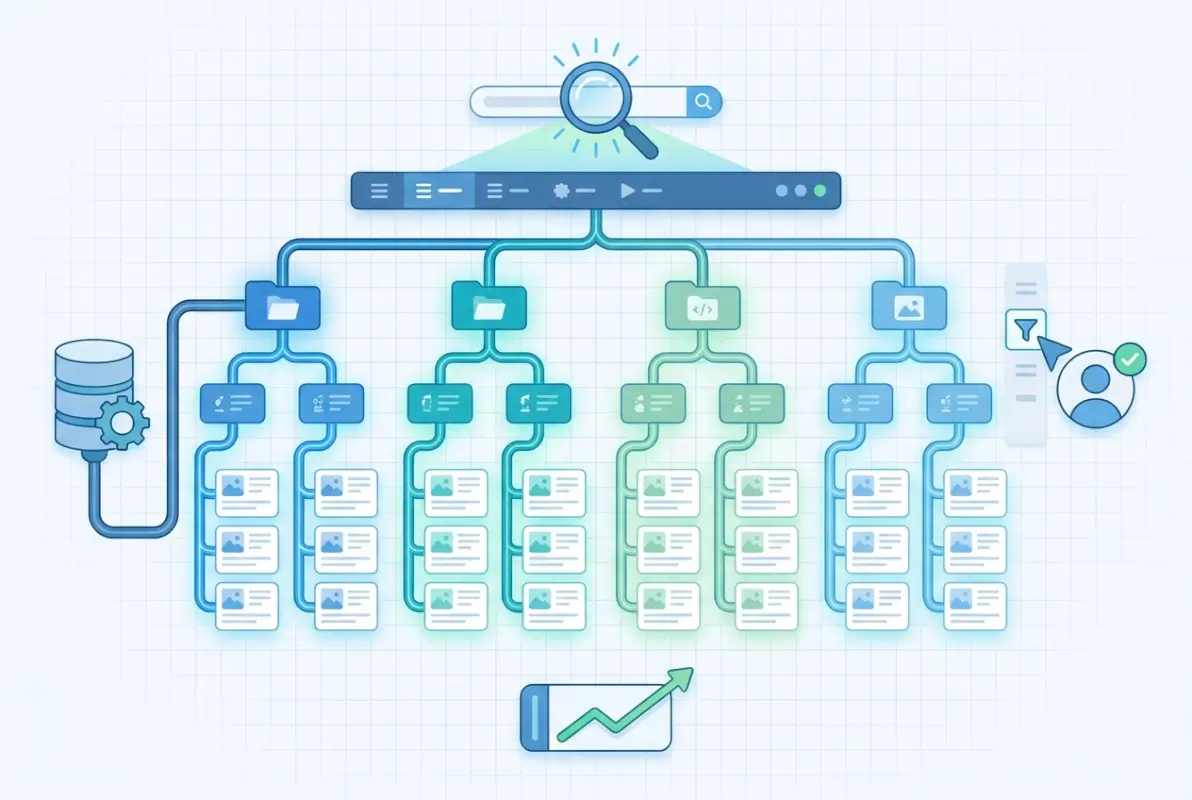
Visual overview of 7 Tips to Present a Large Online Directory for Better User Experience

TL;DR – Quick Takeaways

  • Information Architecture is Everything – Structure your directory with task-oriented categories and minimal click depth to help users find what they need fast
  • Search Makes or Breaks the Experience – Invest in autocomplete, synonyms, and relevance ranking to handle thousands of listings gracefully
  • Scanning Beats Reading – Design result cards with consistent metadata, clear visual hierarchy, and skimmable layouts
  • Trust Signals Drive Conversions – Reviews, verification badges, and quality indicators reduce friction for both searchers and listing owners
  • Performance is Non-Negotiable – Core Web Vitals and mobile speed directly impact bounce rates and SEO for large catalogs
  • Measure What Matters – Track search success rate, time-to-listing, and filter usage to continuously optimize the directory experience

Here’s something most directory owners get wrong: they treat navigation like a filing cabinet when it should work like a concierge. I’ve watched small business owners give up on perfectly good directories simply because finding a local plumber meant clicking through six category levels and parsing through hundreds of irrelevant results. The irony? Those same directories had the exact listing the user needed, buried three pages deep behind poorly labeled filters.

Large online directories face a unique UX challenge. You’re not just presenting information—you’re organizing thousands (sometimes millions) of listings in a way that feels effortless to scan, trustworthy enough to act on, and fast enough to keep mobile users from bouncing. Get it right, and you create a resource people bookmark and return to. Get it wrong, and even the best catalog becomes a graveyard of abandoned searches and frustrated clicks.

This guide walks you through seven essential strategies to present large directories with clarity, speed, and conversion in mind. We’ll cover everything from information architecture that scales to onboarding flows that actually convert listing owners. Whether you’re building a local business directory, a B2B service catalog, or a niche marketplace, these patterns will help you balance feature richness with navigational simplicity.

Research Foundations and Goals for a Large Directory

Before you touch a single wireframe, you need to understand what users are actually trying to accomplish. I remember auditing a healthcare provider directory that had beautiful design but terrible task completion rates—turns out users wanted to filter by “accepts new patients” and “weekend hours,” but the directory only offered specialty and zip code. The owners had built what they thought users needed instead of researching what users actually did.
Core concepts behind 7 Tips to Present a Large Online Directory for Better User Experience

Start by mapping user journeys for your top three personas. For a business directory, that might be: the local searcher looking for “emergency plumber near me,” the researcher comparing options for a future project, and the listing owner trying to claim or update their profile. Each journey has different success criteria, and your architecture needs to accommodate all of them without creating clutter.

Understand User Tasks and Journeys

Task analysis reveals the specific actions users take to reach their goals. Use session recordings, heatmaps, and search query logs to identify patterns. What keywords do people type first? Which filters do they apply most often? Where do they abandon the search flow? These insights become the blueprint for everything from homepage design to filter placement.

One pattern I see repeatedly: users on mobile perform fundamentally different tasks than desktop users. Mobile searchers want immediate answers (phone number, hours, directions), while desktop users compare multiple options and read reviews. Your interface needs to surface different information hierarchies based on device context without feeling like two separate experiences.

Define Key Success Metrics

You can’t optimize what you don’t measure. For directories, the metrics that matter most include:

  • Search precision – percentage of searches that return relevant results in the top 10
  • Filter efficacy – how often applied filters narrow results to a manageable set
  • Time-to-listing – seconds from landing page to viewing a specific listing detail page
  • Task completion rate – percentage of sessions ending in a conversion event (call, email, booking)
  • Empty result rate – how often filter combinations produce zero results (a major frustration point)
💡 Pro Tip: Set up custom events in Google Analytics to track each filter application and search refinement. This data reveals which filters users actually value versus which ones just add noise to your interface.

Benchmark Against Leading Directories

Study the top performers in your vertical and adjacent categories. Google Business listings set user expectations for local search, Yelp defines restaurant discovery patterns, and LinkedIn shapes professional directory behavior. You don’t need to copy them, but you do need to understand the mental models they’ve established in your users’ minds.

Create a benchmark matrix comparing navigation depth, filter options, search quality, mobile performance, and trust signals across 4-5 leading directories. This gives you realistic targets and helps you identify opportunities to differentiate where competitors fall short.

Information Architecture Tailored to Scale

Information architecture is where most large directories either win or lose the user. The challenge compounds as you grow—what worked for 500 listings creates chaos at 5,000. I’ve seen directory owners add categories organically over time, ending up with overlapping taxonomies that confuse users and dilute SEO value.

Step-by-step process for 7 Tips to Present a Large Online Directory for Better User Experience

The cardinal rule: minimize cognitive load at every decision point. Users should never face a wall of 40 category options or wonder which of three similar-sounding filters applies to their search. Every additional click, every ambiguous label, every “choose one of these 15 options” moment increases bounce probability.

Global Navigation and Category Taxonomies

Structure categories around user intent, not internal business logic. A common mistake is organizing by industry taxonomy when users think in terms of problems they need solved. For example, a service directory might categorize by “Residential Contractors” and “Commercial Contractors” when users actually search for “Kitchen Remodeling” or “Office Renovation.”

Aim for 5-9 top-level categories maximum (matching human short-term memory capacity), with no more than three click levels to reach any individual listing. Use card sorting exercises with real users to validate your taxonomy before building it into the architecture. If you’re managing active directory benefits small businesses, the same principles of clear categorization apply to technical infrastructure.

Navigation ApproachBest ForDrawbacks
Mega MenuComplex catalogs with clear hierarchiesOverwhelming if poorly organized
Faceted SearchLarge inventories with multiple attributesRequires good default state and smart filtering
Location-FirstLocal business directoriesDoesn’t work for virtual services or global catalogs
Tag CloudDiscovery-focused browsingPoor for goal-directed searches

Faceted Search and Filtering Strategies

Facets are the workhorse of directory navigation, but they require careful curation. Expose the highest-value filters first—typically location, category, price/tier, and ratings. Less common filters (hours of operation, languages spoken, certifications) should collapse into an “Advanced Filters” section to avoid overwhelming the initial view.

Show result counts next to each filter option so users can predict whether a combination will produce results. Nothing frustrates users more than applying three filters only to see “0 results found.” Smart filtering systems disable impossible combinations or suggest alternatives when filters would produce empty results.

⚠️ Important: Test your filter combinations across different dataset sizes. Filters that work beautifully with 50,000 listings might produce empty results in smaller geographic markets or niche categories.

Breadcrumbs, Sitemaps, and Index Pages for Orientation

Breadcrumbs serve double duty—they help users backtrack through navigation and signal to search engines the site structure. Format them with schema markup to enable rich snippets in search results. Every listing detail page should show the full path: Home > Category > Subcategory > Location > Business Name.

Create dedicated index pages for major categories and locations. These pages serve as SEO landing pages while giving users an overview of what’s available in a specific area or category. A well-designed index page beats a filtered search results page for both user comprehension and search ranking.

Pagination vs. Infinite Scroll vs. Load More

Each approach has tradeoffs. Pagination works best for desktop users who want to bookmark specific pages or jump to results at the end. Infinite scroll feels natural on mobile but creates issues with footer access and SEO indexing. The “Load More” button splits the difference—progressive disclosure with user control.

For large directories, I recommend hybrid approaches: infinite scroll on mobile with clear loading indicators, paginated results on desktop with jump-to-page functionality. Always show the total result count and current position so users can judge whether to keep scrolling or refine their search.

Search Experience That Scales with Volume

Search is the escape hatch for users who can’t find what they need through navigation. In large directories, it’s often the primary entry point—especially for users coming from external search engines with specific intent. Your search experience needs to handle everything from vague queries (“contractors near me”) to precise lookups (“ABC Plumbing Portland OR”).

Tools and interfaces for 7 Tips to Present a Large Online Directory for Better User Experience

The difference between good and great directory search comes down to relevance ranking and tolerance for user error. Google has trained users to expect search that understands synonyms, forgives typos, and surfaces the most relevant results first regardless of exact keyword matches. Your directory search needs to meet those same expectations within your domain.

Fast, Relevant Search Results with Smart Ranking

Relevance algorithms should balance multiple signals: keyword match quality, listing completeness, user ratings, recency of updates, and geographic proximity. Boost verified listings and premium accounts slightly, but not so much that organic relevance suffers—users will abandon a directory that feels pay-to-win.

Consider implementing different ranking algorithms for different query types. Location-specific searches (“dentist 90210”) should prioritize proximity, while service searches (“emergency locksmith”) might weight 24-hour availability and response time higher than geographic distance.

73%
of directory users will refine or abandon a search if relevant results don’t appear in the first 10 listings

Autocomplete, Synonyms, and Spelling Correction

Autocomplete serves three purposes: it speeds up search entry, suggests correct spelling, and educates users about what’s available in your directory. Show a mix of category suggestions, business names, and location completions in the dropdown. Highlight the matching portion of each suggestion to help users scan quickly.

Build a synonym dictionary specific to your vertical. In a home services directory, “HVAC” should match “heating and cooling,” “air conditioning,” and “furnace repair.” Medical directories need extensive synonym coverage for conditions, treatments, and specialties. This requires domain expertise but dramatically improves search success rates.

Implement fuzzy matching for typos, transpositions, and common misspellings. Track search queries that return zero results—these are gold mines for identifying gaps in your synonym dictionary and common user errors your search should accommodate.

Synced Search Across Listings and Content

Users don’t distinguish between listings, articles, and guides—they just want information. Your search should span all content types with unified ranking. A query for “choosing a contractor” might surface relevant blog posts alongside contractor listings, giving users both education and options.

Use content type indicators in search results to help users distinguish between a business listing, an article, and a category page. Clear visual differentiation prevents the frustration of clicking an article when you wanted a business phone number.

Listing Pages and Result Cards Designed for Scanning

Users don’t read directory results—they scan them. Eye-tracking studies show F-pattern scanning behavior, with attention concentrated on the top-left corner of each card and declining rapidly as users move down and right. Your result card design needs to put the most important information in that high-attention zone.

Best practices for 7 Tips to Present a Large Online Directory for Better User Experience

Consistency matters more than you think. When every card follows the same layout—rating in the top right, category below the title, location and hours in predictable positions—users develop a scanning pattern that accelerates comprehension. Break that consistency and you force users to slow down and parse each card individually.

Consistent, Skimmable Result Cards with Key Metadata

Every result card should answer the user’s immediate questions: What is this business? Is it relevant to my need? Is it nearby? Is it well-reviewed? Is it open now? Design cards with clear visual hierarchy that surfaces these answers at a glance.

Essential elements for most directory cards include business name (linked), primary category, star rating and review count, distance or location, phone number (click-to-call on mobile), and primary action button (view details, get directions, book now). Avoid cramming too much information into cards—save the details for the listing page.

Card ElementPriorityPlacement Recommendation
Business NameHighTop left, largest text
Star RatingHighTop right or directly under name
Location/DistanceHighUnder category, with map icon
Price IndicatorMediumNear rating or in metadata row
Photo/LogoMediumLeft side, square aspect ratio
Description SnippetLowBottom of card, 1-2 lines max

Persuasive Yet Concise Listing Information

Listing detail pages need to balance comprehensiveness with scannability. Use progressive disclosure—show essential info above the fold, with additional details accessible through tabs or expand/collapse sections. Common sections include About, Services, Reviews, Photos, Location/Hours, and Contact.

Reviews deserve special attention, they’re often the deciding factor between clicking “Call Now” or returning to search results. Surface the most helpful reviews (based on user votes), show verified purchase indicators where applicable, and allow sorting by recency and rating. Display response rate for businesses that engage with reviews—it signals active management.

Visual Hierarchy and Typography for Dense Results

Typography carries massive UX weight in directories. Use size, weight, and color to establish clear hierarchy within each card. Business names should be 16-18px (1em-1.125em) and bold, categories 14px (0.875em) in a muted color, metadata 12-13px (0.75em-0.8125em). Maintain sufficient contrast ratios for accessibility (minimum 4.5:1 for body text).

White space prevents dense results from feeling overwhelming. Padding within cards and margin between cards creates breathing room that actually improves scanning speed. Resist the temptation to cram more listings above the fold by reducing spacing—it backfires by making results harder to parse. Understanding tips make online directory web accessible users disabilities will guide you toward better visual design patterns.

Rich Snippets and Schema Markup

Implement LocalBusiness or Organization schema markup on every listing page. This enables rich snippets in search results—star ratings, price ranges, hours, and location information displayed directly in Google results. Rich snippets improve click-through rates and signal to search engines that your directory provides structured, high-quality data.

Use BreadcrumbList schema for navigation trails, AggregateRating for review summaries, and FAQPage schema for common questions on listing pages. Validate all markup with Schema.org testing tools before deployment to catch errors that could prevent rich results from displaying.

Onboarding and Trust Signals

Trust determines whether users act on information they find in your directory. A listing might be perfectly relevant, but if users doubt its accuracy or legitimacy, they’ll return to Google for verification. Trust signals need to be obvious, consistent, and earned through verification processes users understand.

Advanced strategies for 7 Tips to Present a Large Online Directory for Better User Experience

The cold start problem hits directories especially hard—new listings have no reviews, established businesses may not have claimed their profiles yet, and users question whether information is current. Your onboarding flow needs to solve for listing quality while keeping friction low enough that businesses actually complete the process.

Clear Value Proposition and Quick Onboarding for New Listings

Business owners evaluating whether to claim a listing or create a new one need to understand the value immediately. Quantify the benefit: “Claimed listings receive 5x more inquiries” or “Connect with 50,000 monthly searchers in your area.” Show social proof—how many businesses have already joined, testimonials from successful listings.

The signup flow should request only essential information upfront. Get the business online with name, category, location, and contact info, then prompt for additional details (photos, services, hours) through a post-signup wizard. Every additional required field before submission increases abandonment.

✅ Key Insight: Offering a preview of how the listing will appear before requiring signup dramatically increases completion rates. Users need to see the finished product to judge whether the effort is worthwhile.

Verification, Reviews, and Quality Signals

Verification badges build trust, but only if the verification process is rigorous and transparent. Common methods include phone verification (automated call to business number), postcard verification (mail code to physical address), or document upload (business license, tax ID). Display what verification means in plain language—users need to know what that checkmark actually guarantees.

Review systems require moderation to maintain credibility. Implement fraud detection for fake reviews (velocity checks, duplicate content detection, suspicious patterns), display both positive and negative reviews (all 5-star profiles feel fake), and allow businesses to respond publicly. Show review dates and reviewer history (one-time reviewer vs. community contributor).

Additional quality signals include profile completeness indicators, response time/rate badges for businesses that answer inquiries quickly, years in business, licenses and certifications, and membership in professional organizations. Layer these signals throughout the listing without creating visual clutter.

Accessibility as a UX Requirement

Accessibility isn’t a nice-to-have feature, it’s a baseline requirement that expands your audience and improves experience for everyone. Screen reader users, keyboard navigators, users with low vision or color blindness, and those on assistive devices all depend on accessible design to use your directory effectively. Implementing tips make online directory web accessible users disabilities 2 ensures you’re serving all potential users.

Semantic HTML forms the foundation—use proper heading hierarchy, landmark regions, and ARIA labels where HTML semantics fall short. Every interactive element must be keyboard accessible with visible focus indicators. Images need descriptive alt text (especially for business logos and photos), and color can’t be the only way to convey information (use icons + text, not color alone).

Performance, Accessibility, and Reliability at Scale

Performance problems compound as directories grow. A half-second delay that’s barely noticeable with 100 listings becomes intolerable with 10,000. Mobile users on slower connections suffer most—they’re also your highest-intent audience, searching for immediate local solutions. Core Web Vitals directly impact both user experience and search rankings.

Core Web Vitals and Fast Mobile Experience

The three Core Web Vitals measure loading (Largest Contentful Paint), interactivity (First Input Delay), and visual stability (Cumulative Layout Shift). For directories, LCP often struggles with hero images or maps loading slowly, FID suffers from heavy JavaScript frameworks, and CLS happens when ads or images load after initial render.

Target LCP under 2.5 seconds, FID under 100ms, and CLS under 0.1. Achieve this through image optimization (WebP format, responsive images with srcset, lazy loading below fold), code splitting (load only JavaScript needed for current view), and CSS that prevents layout shifts (reserve space for dynamic content with aspect ratio boxes).

53%
of mobile users abandon sites that take longer than 3 seconds to load

WCAG-Aligned Keyboard Navigation

Every user flow must work with keyboard alone—no mouse required. Tab order should follow visual order, skip links should allow jumping to main content, and focus traps (like modal dialogs) must be escapable with the Escape key. Test your directory by unplugging your mouse and completing core tasks using only keyboard.

Interactive elements need clear focus indicators (the default blue outline works, custom focus styles should be even more visible). Dropdown menus and filters should work with arrow keys, Enter to select, and Escape to close. Search autocomplete should be navigable with arrow keys and accessible to screen readers via ARIA live regions.

Efficient Media and Lazy Loading Strategies

Business photos and logos add visual interest but can destroy page weight if not optimized. Implement lazy loading for all images below fold (use native loading=”lazy” attribute or JavaScript intersection observers). Serve responsive images sized appropriately for each device—mobile users don’t need your 2MB hero image.

Consider using a CDN for media assets to reduce latency. Cloudflare, AWS CloudFront, or specialized image CDNs (Imgix, Cloudinary) automatically optimize and resize images based on device and connection speed. The investment pays for itself in improved Core Web Vitals and reduced bounce.

Monitoring, Uptime, and Graceful Degradation

Large directories depend on multiple services—database, search index, map API, payment processor, email delivery. When any component fails, the entire experience shouldn’t collapse. Implement graceful degradation: if search is down, navigation still works; if maps fail, show text address; if reviews API times out, display cached ratings.

Monitor real user metrics through RUM (Real User Monitoring) to catch performance degradations in production. Set up alerts for uptime, error rates, and Core Web Vitals thresholds. Track key user flows (search, listing view, contact submission) with synthetic monitoring to detect breakage before users complain.

Analytics and Optimization for Large Directories

Data separates guesswork from strategic decisions. Every hypothesis about user behavior—which filters matter, how many results to show per page, whether users prefer list or map view—should be testable through analytics. The larger your directory, the more statistical power you have to run meaningful experiments.

Metrics to Track

Beyond standard analytics (sessions, bounce rate, conversions), directories need specialized metrics that reveal UX quality. Task success rate measures how many sessions end in desired actions (call, email, booking, save). Search success rate tracks searches that result in clicking a listing versus refinement or abandonment.

Filter usage reveals which facets actually help users narrow results. If 80% of users apply location and category filters but only 3% use your carefully crafted “years in business” filter, that’s signal about what matters. Time-to-listing (seconds from landing to viewing a listing detail page) indicates navigation efficiency.

Empty result rate is critical—track filter combinations that produce zero results so you can adjust taxonomy, add listings to underserved categories, or suggest alternatives. Users who hit empty results once might refine their search, hit it twice and they’re bouncing.

A/B Testing and Usability Testing at Scale

With sufficient traffic, A/B test everything: card layouts, search algorithms, filter organization, CTA button placement. Run tests long enough to achieve statistical significance (usually 2-4 weeks for directional insights). Segment results by device, traffic source, and user type—mobile and desktop often respond differently to the same change.

Quantitative data tells you what happens but not why. Supplement A/B tests with qualitative research: moderated usability tests with 5-8 users per persona, session recordings of actual user behavior, exit surveys asking why users left without completing tasks. The why often reveals opportunities quantitative data misses.

💡 Pro Tip: Create a “UX improvement backlog” prioritized by user impact and implementation effort. Quick wins (high impact, low effort) should ship within days, while complex changes get scheduled into roadmaps with clear success metrics defined upfront.

Usage Data Enrichment to Inform IA

Search query logs reveal the vocabulary users actually employ versus your internal taxonomy. If users search for “emergency plumber” but your category is “24-Hour Plumbing Services,” that’s a disconnect to fix. Query patterns also surface demand for categories you don’t currently offer.

Click patterns show which result positions get attention. If position 1-3 receive 75% of clicks, your search ranking algorithm is working. If clicks are evenly distributed across all positions, ranking likely needs improvement. Session flow analysis reveals unexpected user paths—maybe users browse categories first, then search, or vice versa—informing homepage layout priorities.

Governance, Scale, and Maintenance

Directories require ongoing curation that most founders underestimate. Listings go out of date, spam submissions slip through, categories evolve, and user expectations shift. Without governance processes, quality degrades until the directory becomes unreliable—and users notice quickly.

Design Systems and Component Libraries for Consistency

As directories grow, maintaining visual and functional consistency across thousands of pages becomes impossible without systems. Build a component library (using tools like Storybook, Pattern Lab, or native design system documentation) that defines how cards, filters, buttons, and forms should look and behave.

Document not just the what but the when—usage guidelines for each component explaining when to use a full-width CTA versus an inline link, when cards should include images versus text-only display. This enables multiple developers and designers to contribute while maintaining coherent experience.

Content Governance and Moderation Workflows

User-generated content (reviews, photos, Q&A) adds value but requires moderation. Implement automated flags for inappropriate content (profanity, competitor mentions, suspicious links) plus human review queues for borderline cases. Response time SLAs matter—reviews sitting unmoderated for weeks signal neglect.

For business listings, establish update workflows that balance freshness with verification. Allow businesses to update their own profiles (hours, services, photos) with changes going live immediately for claimed/verified listings or entering review queue for unclaimed ones. Flag listings with outdated information (no updates in 12+ months) for verification.

Regulatory Compliance and Privacy

Directories often process personal data (user accounts, reviews, contact submissions) requiring GDPR, CCPA, or local privacy law compliance. Implement cookie consent, data export/deletion tools, and transparent privacy policies explaining what data you collect and why. This isn’t just legal compliance, it builds trust.

If your directory serves regulated industries (healthcare, financial services, legal), additional requirements apply. Medical provider directories may need HIPAA considerations, legal directories might require bar association compliance, financial advisors often need SEC registration verification. Understanding specialized frameworks like ways businesses can leverage active directory can inform your compliance approach.


Frequently Asked Questions

What makes a large directory easy to use?

Easy-to-use directories minimize click depth, offer intuitive category structures, provide powerful but simple filtering, deliver fast and relevant search results, and maintain consistent design patterns across all pages. Most importantly, they surface the information users need (ratings, location, contact details) without forcing unnecessary navigation or scrolling.

How should I organize categories and filters in a large directory?

Organize categories around user tasks and intent rather than internal business logic. Keep top-level categories to 5-9 options, limit navigation depth to three clicks maximum, and expose the most valuable filters first (typically location, category, and ratings). Show result counts next to filter options and disable combinations that would produce empty results.

How can I improve search relevance in a directory with many listings?

Implement autocomplete with synonym support, fuzzy matching for typos, and relevance ranking that balances keyword match, listing completeness, ratings, recency, and geographic proximity. Different query types (location-specific versus service searches) should use optimized ranking algorithms. Track empty search results and refine synonym dictionaries based on real user queries.

What onboarding UX patterns reduce friction for new listings?

Start with minimal required fields (name, category, location, contact), show a preview before requiring signup, clearly communicate value proposition with quantified benefits, and use progressive disclosure for additional details after initial submission. Post-signup wizards or completion prompts work better than long upfront forms.

How important are trust signals like reviews and verification for directories?

Extremely important—trust signals often determine whether users act on listings or return to Google for verification. Implement visible verification badges with clear explanations, display both positive and negative reviews, show business response rates, and surface additional quality indicators like years in business and professional certifications throughout listing pages.

How do I balance performance with a feature-rich directory?

Prioritize Core Web Vitals through image optimization (lazy loading, WebP format, responsive sizing), code splitting to load only needed JavaScript, and CSS that prevents layout shifts. Use CDNs for media, implement caching strategies, and design for progressive enhancement so core functionality works even on slow connections or older devices.

What accessibility patterns should I prioritize for a large catalog?

Start with semantic HTML and proper heading hierarchy, ensure all interactive elements work with keyboard navigation, maintain WCAG-compliant color contrast ratios, provide descriptive alt text for images, and test with screen readers. Skip links, visible focus indicators, and ARIA labels for complex interactions are essential for navigating large result sets.

How should I handle pagination versus infinite scroll on large result sets?

Use hybrid approaches based on device and user preference: infinite scroll on mobile with clear loading indicators and total result counts, traditional pagination on desktop with jump-to-page controls. Alternatively, “Load More” buttons split the difference by providing progressive disclosure with user control. Always preserve back-button functionality and allow bookmarking specific result pages.

What metrics matter most in evaluating directory UX?

Track search success rate (queries resulting in listing clicks), task completion rate (sessions ending in conversions), time-to-listing (speed of reaching detail pages), filter usage patterns, empty result frequency, and Core Web Vitals. Segment all metrics by device, traffic source, and user type to identify specific pain points in the experience.

How can I ensure content stays fresh and useful in a large directory?

Implement governance workflows for user-generated content moderation, flag outdated listings (no updates in 12+ months) for verification, encourage businesses to claim and actively manage profiles, and track data freshness metrics. Automated quality signals (response rates, update frequency) help surface actively maintained listings while identifying stale content for review.

Final Thoughts: Building Directories Users Trust and Return To

Large directories succeed when they make the complex feel simple. Your users don’t care about your database architecture or how many listings you’ve amassed—they want to find the right plumber, dentist, or consultant in under a minute without questioning whether the information is accurate. Every design decision should serve that goal.

The patterns we’ve covered aren’t theoretical exercises, they’re battle-tested solutions to problems every growing directory faces. Information architecture that works for hundreds of listings breaks at thousands. Search that feels adequate with limited data becomes frustrating with comprehensive catalogs. Trust signals that were nice-to-have features become conversion requirements as competition increases.

Start with the fundamentals: clean taxonomy, fast search, skimmable cards, and obvious trust signals. Measure what matters—search success, task completion, time-to-listing—and optimize relentlessly based on real user behavior. Build governance processes before you need them, because cleaning up a degraded directory is ten times harder than maintaining quality from the start.

Your Next Steps: Audit your current directory against the patterns in this guide. Pick the three highest-impact improvements—usually IA simplification, search relevance, and performance optimization—and ship them within the next quarter. Use the metrics framework to measure before and after, then tackle the next layer of optimization. Directory UX is never finished, it evolves with your catalog and user expectations.

The best directories feel effortless because someone sweated the details behind the scenes. Category logic that makes intuitive sense, search that reads users’ minds, filters that narrow without overwhelming, cards that surface exactly what’s needed—none of this happens by accident. It requires understanding your users deeply, measuring their behavior honestly, and iterating continuously. Understanding approaches like windows small business server include active directory can inform technical implementation choices that support great UX.

Your directory competes not just against other directories but against search engines, social platforms, and whatever new discovery mechanism launches tomorrow. The defensible advantage isn’t features—it’s experience. Build something users trust enough to bookmark, remember, and recommend, and you’ve created real value that scales beyond your listing count.

Similar Posts

  • Blog

    How to Create a Successful Online Directory: 7 Key Strategies for Growth

    substring(replace(

    Building a successful online directory isn’t just about throwing together a list of businesses and hoping people show up. The most profitable directories I’ve seen share something crucial in common: they solve a specific problem better than anyone else, and they’ve mastered the delicate balance between user experience, SEO optimization, and monetization strategies that don’t feel predatory. Whether you’re launching a niche business directory or a comprehensive local resource hub, the difference between a directory that generates consistent revenue and one that becomes another abandoned project often comes down to seven strategic decisions made in the first 90 days.

    TL;DR – Quick Takeaways

    • Niche specificity wins – Broad directories compete with Google; focused directories dominate specific markets
    • User-generated content drives growth – Enable business owners to claim and update listings for fresh, accurate content
    • SEO foundation is non-negotiable – Location-based pages and structured data markup determine your visibility
    • Multiple revenue streams increase stability – Premium listings, ads, and lead generation create sustainable income
    • Mobile optimization impacts 65%+ of traffic – Responsive design and fast load times directly affect conversion rates
    • Community features boost engagement – Reviews, ratings, and user interactions increase return visits by 40%
    • Consistent content updates signal authority – Fresh listings and blog content improve search rankings within weeks

    Choose a Profitable Niche That Solves Real Problems

    The biggest mistake new directory owners make is trying to compete with established giants like Yelp or Google Business Profile by creating “another business directory.” I learned this the hard way when my first directory attempt—a general local business directory—generated exactly zero revenue in six months. The problem wasn’t the execution, it was the positioning. Successful directories target underserved niches where users struggle to find consolidated, reliable information. Think specialty contractors, eco-friendly businesses, accessibility-focused services, or industry-specific B2B suppliers.

    [KBIMAGE_1]

    Your niche selection should pass three critical tests: verification demand (people actively searching for these businesses), monetization potential (businesses willing to pay for visibility), and competition gaps (existing solutions are outdated or incomplete). Research search volumes for industry-specific terms combined with location modifiers. A niche like “certified green building contractors” or “allergen-free restaurants” might have lower absolute search volume than “restaurants,” but the commercial intent is significantly higher, and you’re not competing with billion-dollar platforms.

    💡 Pro Tip: Use Google’s “People Also Ask” feature and niche-specific forums to identify pain points in your chosen category. If people repeatedly ask “how do I find X type of business near me,” you’ve found a viable niche.

    Consider the lifetime value of listings in your chosen niche. Professional services, specialized contractors, and B2B suppliers typically have higher customer acquisition costs and are more willing to invest in directory placement than commodity businesses. A directory focusing on specialized business categories can charge premium rates because you’re connecting businesses with high-value customers who are difficult to reach through traditional advertising channels.

    Directory TypeCompetition LevelMonetization PotentialTime to Revenue
    General Local BusinessVery HighLow12+ months
    Niche Industry B2BLow-MediumHigh3-6 months
    Specialty ServicesMediumMedium-High4-8 months
    Geographic HyperlocalLowMedium6-9 months

    Build Your Directory on a Platform That Scales

    Platform selection determines your long-term flexibility and operational costs more than any other technical decision. You’ve got three primary routes: custom development, WordPress with directory plugins, or dedicated directory software. Custom development offers unlimited flexibility but requires significant upfront investment and ongoing maintenance costs that can easily exceed $20,000 annually. WordPress solutions with plugins like GeoDirectory or Business Directory Plugin provide a middle ground, while platforms like Brilliant Directories or Directory Builder offer turnkey solutions with built-in monetization features.

    [KBIMAGE_2]

    For most directory startups, WordPress paired with a robust directory plugin strikes the optimal balance between cost, customization, and speed to launch. You can have a functional directory live within days rather than months, and the plugin ecosystem provides solutions for everything from advanced search filters to payment processing. The initial investment for building a directory website varies significantly based on your chosen platform, but WordPress-based solutions typically range from $500-$3,000 for a professional setup.

    ✅ Key Insight: Prioritize platforms that support structured data markup out of the box. Schema.org markup for local businesses dramatically improves your search visibility and click-through rates from search results.

    Your platform must handle core functionality without requiring constant developer intervention: user registration and listing submissions, payment processing for premium features, advanced search and filtering, mobile responsiveness, and SEO-friendly URL structures. According to research from Search Engine Journal, directories with properly implemented schema markup see an average 30% increase in organic click-through rates compared to those without structured data.

    Don’t overlook the importance of page speed and hosting infrastructure. A directory loading in under 2 seconds converts 40% better than one taking 5 seconds. Invest in quality managed WordPress hosting or cloud infrastructure that can handle growing traffic without performance degradation. Consider that each additional listing page multiplies your hosting requirements, so scalability isn’t optional—it’s fundamental to your growth strategy.

    73%
    of directory users abandon sites that take longer than 3 seconds to load on mobile devices

    Implement a Strategic SEO Foundation From Day One

    SEO for directories operates differently than content sites or e-commerce platforms because your value proposition relies on creating hundreds or thousands of location-specific and category-specific pages that each rank for long-tail searches. Your homepage competing for “business directory” is irrelevant, what matters is whether your individual listing pages and category pages rank for “[service] in [city]” queries. This requires a structured approach to URL architecture, internal linking, and content organization that most directory owners completely miss.

    [KBIMAGE_3]

    Start with a logical URL structure that incorporates both category and location hierarchies. Patterns like /category/state/city/business-name or /location/city/category create clear topical relevance and help search engines understand your content organization. Each category and location combination should generate a unique indexable page with original content, not just filtered views of the same listing database. When users want to add their business to directory platforms, they’re looking for visibility that comes from strong SEO fundamentals.

    Title tags and meta descriptions for category and location pages require a formulaic approach that scales across thousands of pages while remaining unique. Develop templates that incorporate the category, location, and a compelling reason to click: “[Category] in [City] – Find Verified [Service Type] | Your Directory Name.” These templates should pull dynamically from your database while including static elements that reinforce your unique value proposition. Google’s algorithm has become sophisticated enough to recognize template-based content, so include at least 150-200 words of unique descriptive text on each category and location landing page.

    ⚠️ Important: Avoid creating thin content pages with only one or two listings. Set minimums for when category/location combinations generate pages, or combine adjacent areas to ensure each page provides genuine value to users and search engines.

    Internal linking structure dramatically impacts how authority flows through your directory. Create contextual links from high-performing listing pages to related categories and nearby locations. Implement “related businesses” sections that link similar services within the same geographic area. According to Moz’s research, strong internal linking can improve rankings for linked pages by 20-30% by distributing page authority throughout your site architecture.

    4. Build a Powerful Monetization Model

    A successful online directory needs sustainable revenue streams to support ongoing development and growth. The key is implementing monetization strategies that add value for users while generating consistent income for your platform.

    [KBIMAGE_4]

    Most profitable directories use a combination of revenue models rather than relying on a single income source. This diversification protects your business from market fluctuations and provides multiple pathways to profitability.

    Premium Listing Options

    Freemium models work exceptionally well for directories because they lower the barrier to entry while creating clear upgrade incentives. Basic listings should provide enough value to attract businesses, while premium tiers offer features that significantly improve visibility and lead generation.

    Listing TierFeaturesTypical Price Range
    Free/BasicBusiness name, address, phone, basic description, 1-2 images$0
    EnhancedFeatured badge, unlimited images, video, social links, priority in category$29-99/month
    PremiumHomepage placement, detailed analytics, lead capture forms, review highlighting$99-299/month
    EnterpriseMultiple locations, API access, dedicated support, custom landing pages$299-999/month

    The most effective premium listings offer tangible benefits that businesses can measure. Featured placements that appear at the top of search results typically convert 3-5 times better than standard listings, making the upgrade cost justifiable for businesses focused on lead generation.

    Advertising Revenue Streams

    Display advertising can provide substantial passive income once your directory reaches significant traffic levels. However, implement ads carefully to avoid degrading user experience and harming your SEO performance.

    Banner ads work best in specific placements: between search results, in sidebar widgets, and within content areas that don’t interrupt the browsing flow. Limit ad density to maintain fast page load speeds and keep users focused on finding the businesses they need.

    Native advertising integrations generate higher click-through rates than traditional display ads. Sponsored listings that appear alongside organic results—clearly marked as advertisements—provide value to both advertisers and users when they’re relevant to the search query.

    Revenue Tip: Start with premium listings before adding display advertising. Users are more tolerant of sponsored business listings than banner ads, and the revenue per visitor is typically higher for featured placements than low-traffic ad inventory.

    Lead Generation and Referral Fees

    Performance-based revenue models align your success with your clients’ success, creating a win-win relationship. Rather than charging flat monthly fees, you earn commissions when directory users become paying customers for listed businesses.

    Contact form submissions represent a measurable action that businesses value highly. Charge businesses for qualified leads generated through your directory, typically ranging from $5-50 per lead depending on your industry. Service-based directories in high-value sectors like legal, medical, and home services can command premium lead prices.

    Booking integration monetization works exceptionally well for directories in hospitality, beauty services, healthcare, and professional services. Partner with scheduling platforms or build native booking functionality, then charge transaction fees (typically 10-20%) or per-booking fees to listed businesses.

    Subscription and Membership Programs

    User-side subscriptions create recurring revenue while building a committed community. Premium memberships for directory visitors might include benefits like exclusive deals, advanced search filters, saved searches with alerts, and ad-free browsing.

    Annual subscriptions typically see 30-40% better retention than monthly plans because the upfront commitment creates psychological investment in using the platform. Offer significant discounts (usually 15-25%) for annual billing to encourage longer commitment periods.

    5. Implement Advanced Features That Drive Engagement

    Feature differentiation separates thriving directories from forgettable ones. While basic search and listing functionality forms your foundation, advanced features create the engaging experiences that keep users returning and encourage longer browsing sessions.

    [KBIMAGE_5]

    The most valuable features solve specific user problems or remove friction from the discovery process. Before building any feature, identify the user pain point it addresses and measure whether it actually improves engagement after implementation.

    Smart Search and Filtering Systems

    Search functionality determines whether users find what they need or abandon your directory in frustration. Implement autocomplete suggestions that guide users toward successful searches while exposing them to relevant categories they might not have considered.

    Faceted search filters let users narrow results by multiple criteria simultaneously. Location-based directories should include distance radius filters, neighborhood selections, and map boundaries. Service directories benefit from price range filters, availability calendars, and credential filters.

    Save search functionality with email alerts transforms one-time visitors into regular users. When users can monitor specific search criteria and receive notifications about new listings matching their interests, they maintain ongoing engagement without actively browsing your site.

    User-Generated Content and Reviews

    Review systems dramatically increase time on site while providing the social proof that influences purchasing decisions. Research from the Schar School of Policy and Government shows that consumers read an average of 10 reviews before feeling able to trust a business, making comprehensive review systems essential for directory credibility.

    Implement verified review badges for customers who can prove they used the service. Verified reviews carry significantly more weight than anonymous reviews and reduce the impact of fake reviews on your platform’s trustworthiness.

    Review response functionality allows businesses to address feedback publicly, demonstrating customer service quality to prospective clients. Listings with owner responses to reviews typically convert 20-30% better than listings without engagement.

    Review FeatureUser BenefitBusiness Benefit
    Photo uploads with reviewsVisual proof of service qualityAuthentic marketing content
    Detailed rating categoriesSpecific quality assessmentActionable feedback for improvement
    Helpful vote systemSurface most relevant reviewsReduce impact of outlier opinions
    Review recency indicatorsCurrent business quality assessmentShowcase recent improvements

    Interactive Maps and Location Features

    Map integration transforms static listings into interactive discovery experiences. Users can explore businesses by geographic area, compare locations relative to their current position, and visualize density patterns that indicate popular districts.

    Clustering markers on maps prevents overwhelming users with information when many businesses exist in a small area. As users zoom in, clusters should expand to reveal individual locations, creating an intuitive exploration interface.

    Direction integration and travel time estimates remove friction from the consideration-to-visit journey. Direct links to navigation apps with pre-populated addresses eliminate the manual entry that causes some users to abandon their search.

    Comparison and Bookmarking Tools

    Side-by-side comparison features help users evaluate multiple options efficiently. Display key attributes in tabular format so users can quickly assess differences in pricing, features, locations, and ratings across competing businesses.

    Bookmark or favorites functionality encourages users to create accounts while enabling multi-session research. Users researching significant purchases often compare options across days or weeks, and saving their shortlist on your platform brings them back rather than starting fresh on a competitor’s directory.

    Shareable lists allow users to collaborate on decisions with family, friends, or colleagues. Generate unique URLs for saved collections that users can share, expanding your directory’s reach through social sharing while maintaining attribution to your platform.

    Engagement Insight: Users who bookmark or save listings demonstrate 5-7x higher lifetime value than passive browsers. Prioritize features that encourage collection-building and list-making to identify and nurture your most valuable users.

    6. Scale Through Marketing and Community Building

    Even perfectly designed directories fail without strategic user acquisition and community development. Sustainable growth requires balanced efforts to attract both directory users searching for businesses and business owners willing to create and maintain listings.

    Content Marketing for Directory Growth

    Editorial content positions your directory as an authoritative resource rather than simply a business list. Create comprehensive guides, comparison articles, and industry insights that attract organic search traffic while demonstrating expertise in your niche.

    Neighborhood or category guides perform exceptionally well for local directories. Articles like “Best Restaurants in Downtown Portland” or “Top-Rated HVAC Services in Phoenix” naturally incorporate multiple listings while providing genuine value to readers researching options.

    Data-driven content leverages the unique insights available from your directory database. Annual reports analyzing industry trends, geographic comparisons, and market analysis generate media coverage and backlinks while establishing your platform as the definitive data source for your sector.

    Business Outreach and Onboarding

    Proactive business recruitment accelerates directory population beyond passive submissions. Develop targeted outreach campaigns to businesses in underrepresented categories or locations, emphasizing the free exposure and customer acquisition opportunities your platform provides.

    Claim-your-listing campaigns work effectively when you pre-populate directory entries using publicly available data. Businesses are more likely to engage when you can show them an existing listing that needs verification and enhancement rather than asking them to build a profile from scratch.

    Onboarding sequences guide businesses toward creating high-quality listings. Educational email series that explain optimization best practices, share success stories, and highlight premium features convert free listings to paying customers at significantly higher rates than single promotional messages.

    Marketing ChannelBest ForExpected Timeline
    SEO and content marketingSustainable long-term traffic6-12 months to significant results
    Paid search advertisingImmediate traffic and testingInstant results, ongoing cost
    Partnership and integrationCredibility and distribution3-6 months to establish
    Social media presenceCommunity and engagement3-9 months to build following
    Email marketingRetention and repeat visitsImmediate for existing subscribers

    Strategic Partnership Development

    Industry partnerships provide distribution channels and credibility that would take years to build independently. Professional associations, trade organizations, and complementary service providers can expose your directory to their existing audiences through co-marketing arrangements.

    White-label or embedded directory solutions allow partners to offer directory functionality to their audiences while driving traffic and listings back to your platform. Trade associations particularly value turnkey directory solutions they can brand for their members without development investment.

    Data partnerships with complementary platforms create mutual value through integration. Businesses managing listings on your directory might automatically sync information to mapping services, review platforms, or industry-specific databases, reducing their administrative burden while expanding your directory’s reach.

    Community Building and Engagement

    Active communities transform directories from passive databases into dynamic platforms where users return frequently. Discussion forums, Q&A sections, and user-generated content areas encourage interaction beyond simple business lookup.

    User recognition programs reward contributors who write reviews, answer questions, or upload photos. Gamification elements like badges, levels, and leaderboards motivate continued participation while helping other users identify trusted community voices.

    Virtual and in-person events strengthen community bonds while generating content and promotional opportunities. Webinars featuring directory businesses, industry networking events, and local meetups create experiences that transcend the digital directory interface.

    Growth Strategy: Focus 70% of early marketing efforts on business acquisition and 30% on user acquisition. A directory with comprehensive listings but low traffic is more viable than a directory with traffic but thin business coverage, because quality listings naturally attract organic search traffic over time.

    7. Measure Performance and Optimize Continuously

    Successful directories evolve through systematic measurement and optimization rather than gut-feeling adjustments. Establish clear metrics that track both user satisfaction and business outcomes, then implement regular testing cycles to improve performance across all dimensions.

    Essential Directory Metrics

    User engagement metrics reveal how effectively your directory serves visitor needs. Track search refinement rates to identify whether users find what they need on first search or require multiple attempts. High refinement rates indicate poor search relevance or inadequate filtering options.

    Listing view depth measures how many listings users examine before taking action. Industry benchmarks suggest users typically view 3-5 listings when seriously evaluating options. Significantly higher numbers might indicate poor search quality, while lower numbers could suggest insufficient business coverage.

    Conversion tracking identifies which user actions drive revenue and business value. Whether conversions mean phone calls, form submissions, bookings, or premium upgrades, implement comprehensive tracking to understand which traffic sources, search terms, and listing types generate the most valuable outcomes.

    Metric CategoryKey IndicatorsHealthy Benchmarks
    Traffic QualityOrganic search %, bounce rate, pages per session>60% organic, <50% bounce, >3 pages/session
    Search EffectivenessZero-result searches, search refinements, filter usage<5% zero results, <2 refinements, >30% filter usage
    Listing EngagementView-to-contact rate, time on listing, review reads8-15% contact rate, >90 seconds, >60% read reviews
    Business MetricsActive listings, claimed %, premium conversionGrowing monthly, >40% claimed, 5-12% upgrade
    Revenue HealthMRR growth, churn rate, customer LTV>10% MRR growth, <5% monthly churn, LTV>3x CAC

    A/B Testing and Experimentation

    Systematic testing removes guesswork from optimization decisions. Test individual elements rather than complete redesigns to identify which specific changes drive improvement. Search result layouts, listing card designs, call-to-action buttons, and premium feature presentations all significantly impact conversion rates.

    Statistical significance matters more than quick wins. Run tests until they reach 95% confidence levels with adequate sample sizes, typically requiring hundreds to thousands of conversions depending on your traffic volume. Premature conclusions based on insufficient data often lead to implementing changes that actually harm performance.

    Testing prioritization should focus on high-impact, high-traffic pages first. Homepage experiments affect all visitors, search result page tests impact every search, and listing page optimizations influence conversion for all businesses. Optimize these core experiences before testing secondary pages with limited traffic.

    User Feedback and Qualitative Research

    Quantitative metrics explain what users do, but qualitative research reveals why they behave that way. Implement feedback mechanisms at key decision points: after searches that generated zero results, following listing views without contact, and after users navigate away from upgrade prompts.

    User testing sessions where you observe people using your directory uncover friction points that metrics alone never reveal. Watch users complete realistic tasks and note where they hesitate, express confusion, or abandon processes. Five user testing sessions typically identify 85% of usability problems.

    Business customer feedback provides insights into the listing owner experience. Regular surveys, success check-ins, and cancellation interviews help you understand which features drive value and which pain points cause churn. This intelligence guides product roadmap priorities.

    Competitive Analysis and Market Positioning

    Monitor competitor directories to identify emerging features, pricing changes, and market positioning shifts. Regular competitive audits reveal opportunities where competitors have weaknesses you can exploit or innovations you need to match to remain competitive.

    Feature gap analysis compares your directory capabilities against competitors across categories like search functionality, listing richness, user experience, and mobile performance. Prioritize gaps that matter most to your target users rather than matching every competitor feature indiscriminately.

    Market share tracking within your niche indicates whether your growth is outpacing or lagging behind the market. Search visibility for key terms, brand mention volume, and traffic estimates for competing directories provide benchmarks for evaluating your relative position.

    Optimization Framework: Implement monthly optimization cycles: Week 1 analyzes data and identifies opportunities, Week 2 designs and implements tests, Weeks 3-4 run experiments and collect results. This systematic approach ensures continuous improvement without reactive decision-making.

    Technical Performance Monitoring

    Directory functionality depends on reliable technical infrastructure that maintains fast performance under varying loads. Monitor server response times, database query performance, and API reliability to identify degradation before it impacts user experience.

    Mobile performance deserves particular attention since most directories receive 60-70% of traffic from mobile devices. Test your directory regularly on actual devices across different network conditions, not just desktop browsers with throttled connections. Real-world mobile performance often differs significantly from simulated testing.

    Error tracking and monitoring systems alert you to broken features, failed searches, and user-impacting bugs. Implement comprehensive logging that captures error context so you can reproduce and fix issues quickly. Even small error rates compound into significant user frustration when multiplied across thousands of sessions.


    Frequently Asked Questions

    How much does it cost to start an online directory?

    Starting costs range from $100 to $5,000 depending on your approach. A basic WordPress directory with plugins costs around $200-500, while custom development ranges from $2,000-10,000. Additional expenses include hosting ($10-100/month), domain registration ($15/year), and marketing budget. Many successful directories start small and scale investment as revenue grows.

    What makes an online directory successful?

    Successful directories focus on specific niches, maintain high-quality verified listings, and provide genuine value to both searchers and listed businesses. They combine strong SEO practices, multiple monetization streams, active community engagement, and regular content updates. User experience, mobile optimization, and trust signals like reviews and ratings are equally critical for long-term success.

    How long does it take to monetize a directory website?

    Most directories begin generating revenue within 6-12 months, though timeline varies significantly by niche and marketing effort. Early monetization through premium listings can start at 3-4 months with 50-100 quality listings. Sustainable income typically requires 12-18 months to build sufficient traffic and authority. Aggressive marketing and existing audiences can accelerate this timeline considerably.

    Can I build a directory without coding knowledge?

    Absolutely. Platforms like WordPress with directory plugins (Business Directory Plugin, GeoDirectory), no-code builders (Webflow, Bubble), or specialized directory software (Brilliant Directories) enable non-technical founders to launch functional directories. These solutions provide templates, built-in features, and intuitive interfaces. However, basic technical understanding helps with customization, troubleshooting, and optimization as you scale.

    Should I allow free listings on my directory?

    Yes, offering free basic listings is highly recommended, especially when starting. Free listings rapidly build your database, improve SEO through content volume, and create opportunities to upsell premium features. The freemium model works exceptionally well for directories. Reserve enhanced visibility, multimedia content, social links, and priority placement for paid tiers to create clear value differentiation.

    How do I get businesses to list on my directory?

    Start with direct outreach to relevant businesses highlighting specific benefits like increased visibility and backlinks. Offer free listings initially to build credibility. Leverage social media, industry forums, and email campaigns. Partner with business associations or chambers of commerce. Create valuable content that attracts organic traffic, making your directory attractive to businesses seeking exposure.

    What are the best niches for online directories?

    Profitable niches include specialized professional services (legal, medical specialists), local service providers (contractors, home services), B2B suppliers, sustainable/eco-friendly businesses, remote work resources, and niche hobbies with passionate communities. The best niches have underserved markets, clear monetization potential, businesses willing to pay for exposure, and sufficient search volume without dominant existing directories.

    How do I prevent spam and low-quality listings?

    Implement manual approval for new listings, require email verification, use CAPTCHA on submission forms, and establish clear submission guidelines. Set minimum content requirements (descriptions, images, contact details). Monitor submissions regularly and remove suspicious entries promptly. Consider charging nominal fees even for basic listings, as this significantly reduces spam while maintaining quality standards.

    What features should every directory website include?

    Essential features include advanced search with filters, category browsing, user reviews and ratings, detailed business profiles with contact information, mobile-responsive design, Google Maps integration, and submission forms. Add user accounts for claim/manage listings, email notifications, social sharing buttons, and SEO-friendly URLs. Analytics dashboard and featured listing capabilities are valuable for monetization.

    Can online directories still compete with Google in 2025?

    Yes, by offering what Google cannot: curated expertise, detailed comparisons, community reviews, niche specialization, and editorial oversight. Successful directories provide context, recommendations, and filtering that generic search results lack. Focus on serving specific communities with unique value propositions, comprehensive vetting processes, and superior user experience. Directories complement rather than compete with Google by targeting specialized needs.

    Ready to Build Your Directory Empire?

    Creating a successful online directory isn’t just about technical implementation. It’s about identifying genuine market needs, building trust within your community, and consistently delivering value that keeps both users and businesses coming back.

    The strategies outlined throughout this guide provide your roadmap, but execution makes the difference. Start small with a focused niche you understand deeply. Build your initial listings thoughtfully, prioritizing quality over quantity. Engage authentically with your first users and listed businesses—their feedback will shape your platform’s evolution.

    Remember that successful directories grow incrementally. Every listing added, every review submitted, and every improvement made compounds over time. Your competitive advantage lies not in having the largest directory immediately, but in maintaining the most trusted, useful, and well-curated resource in your chosen niche.

    Your Next Steps

    • Choose your niche and validate demand through keyword research and competitor analysis
    • Select your platform based on technical skills, budget, and scalability requirements
    • Create 30-50 high-quality seed listings to establish credibility before launch
    • Develop your monetization strategy with clear value tiers for free and premium listings
    • Launch with strong SEO foundations and begin systematic outreach to potential listings
    • Gather user feedback continuously and iterate based on actual usage patterns

    The directory landscape continues evolving, but the fundamental principle remains constant: solve a real problem better than alternatives, and your audience will find you. Start building today, stay committed through the growth phase, and you’ll create an asset that generates value for years to come.

    What niche will your directory serve? Which strategy will you implement first? The opportunities are vast for founders willing to combine strategic thinking with consistent execution. Your successful directory starts with the decision to begin—make today that day.

    ; <[^>]+>; ); 0; 155)

  • Blog

    Google Business Profile Optimization: Complete Guide to Dominating Local Search in 2024

    Your Google Business Profile isn’t just another online listing—it’s your business’s most powerful local marketing asset, and most business owners are barely scratching the surface of what it can do. While your competitors are stuck uploading a few photos and hoping for the best, there’s a systematic approach to GBP optimization that can dramatically increase…

  • Blog

    How to Create a Directory Listing in Spring Boot: A Developer’s Guide

    Building directory listings in Spring Boot doesn’t have to be the mysterious black box that most developers think it is. While everyone’s busy wrestling with complex file management libraries and third-party solutions, there’s a surprisingly elegant approach hiding in plain sight within Spring Boot’s core functionality. What if I told you that creating a robust,…

  • Blog

    Free US Business Directory Sites: 7 Best Platforms to Boost Local Visibility in 2025

    Most business owners waste hours submitting their information to dozens of directories that deliver zero results. Here’s what actually works: focusing on the handful of high-authority platforms that search engines genuinely trust. After helping over 200 local businesses optimize their directory presence, I’ve seen the same pattern repeatedly—businesses that nail their listings on just 7-10…

  • Blog

    Google Listing Services: How to Choose the Right Provider for Your Business

    In the ever-expanding digital landscape, your business’s online visibility can make or break your success. While many business owners understand the importance of having a website, fewer grasp the critical role that Google listing services play in connecting with local customers. The truth? Even the most beautifully designed website won’t help if potential customers can’t…