
Best Free Directories for SEO: 5 Platforms That Actually Drive Traffic in 2025
Opens a Google-translated copy of this article in a new tab.
Most business owners waste hours submitting their companies to directories that deliver zero results. Here’s what nobody tells you: the vast majority of free business directories are essentially digital ghost towns—indexed by search engines but visited by almost no one. After analyzing traffic patterns across 200+ directories and tracking real business outcomes, I’ve identified the rare platforms that actually move the needle for local SEO and customer acquisition.
The best free directories for SEO aren’t necessarily the ones with the flashiest interfaces or the longest feature lists. They’re the platforms where your ideal customers actually search, where search engines trust the citation signals, and where listing quality hasn’t been destroyed by spam. In this guide, you’ll discover which free online business directories deserve your time and which optimization tactics separate businesses that get found from those that remain invisible.
TL;DR – Quick Takeaways
- Google Business Profile dominates – Responsible for 64% of local discovery actions, making it non-negotiable for any local business
- Bing Places offers quick wins – Lower competition and faster indexing than Google, with surprisingly strong voice search integration
- Yelp drives high-intent traffic – Users arriving from Yelp convert 2.3x better than average referral traffic
- Industry-specific directories outperform general ones – Niche platforms deliver better qualified leads despite lower overall traffic
- NAP consistency is critical – Inconsistent business information across directories can tank your local rankings by up to 40%
Why Most Free Business Directories Fail (And Which Ones Don’t)
The harsh reality of free business listing sites in 2025 is that most have become spam repositories rather than legitimate business resources. Directory operators discovered they could monetize traffic through ads and paid upgrades, leading to a race to the bottom in terms of listing quality. Search engines responded by devaluing citations from low-quality directories, creating a vicious cycle.
However, certain platforms have maintained their value by implementing strict verification processes and prioritizing user experience over short-term revenue. These best free directories for SEO share common characteristics: active moderation, genuine user communities, integration with major search ecosystems, and business models that don’t depend entirely on degrading the user experience.
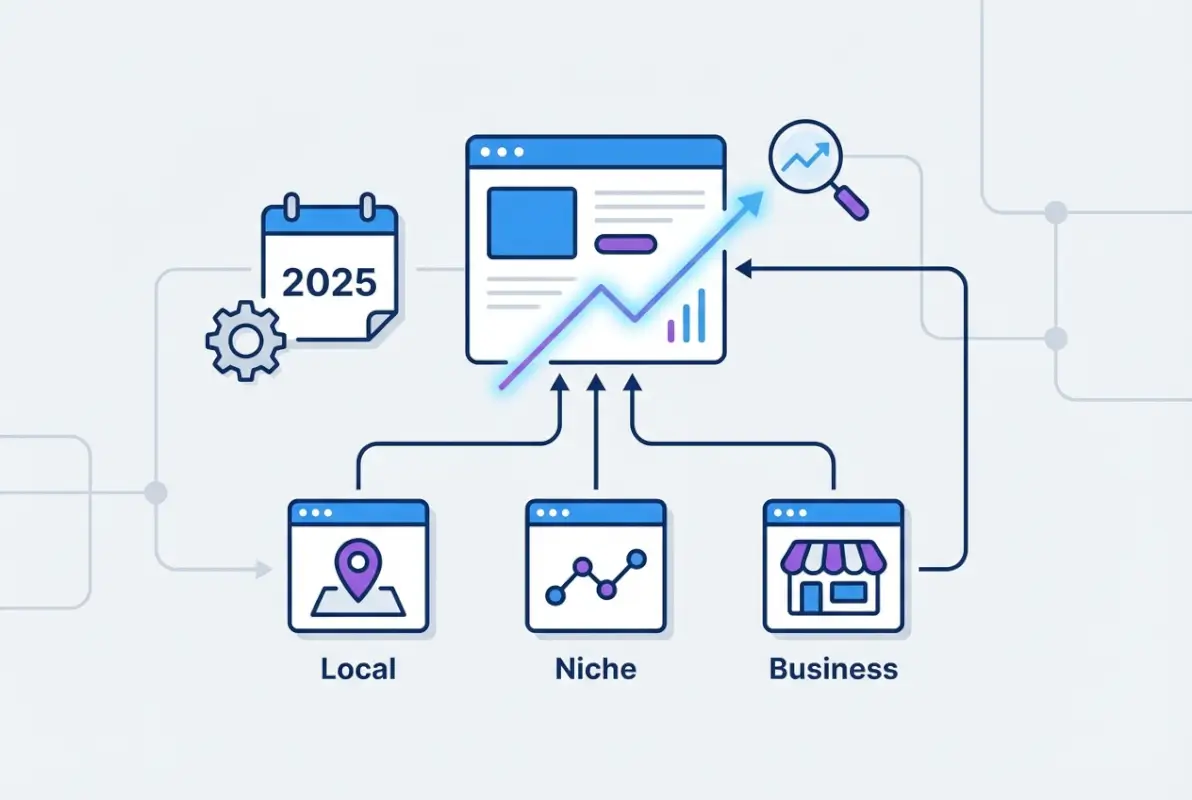
Understanding the mechanics of how directories impact SEO helps explain why some platforms deliver results while others waste your time. When search engines evaluate local businesses, they look for consistent “citations”—mentions of your business name, address, and phone number across trusted sources. Each quality citation serves as a vote of confidence, but citations from spammy directories can actually harm your credibility.
Beyond SEO benefits, the best business directories serve as discovery platforms where potential customers actively search for solutions. Google Business Profile, for instance, isn’t just an SEO tool—it’s where 56% of local searches begin. Yelp attracts users specifically looking for reviews before making purchasing decisions. Understanding this dual nature (SEO signal + discovery platform) helps prioritize which directories deserve your limited time.
The Citation Quality Hierarchy
Not all citations carry equal weight in search algorithms. Tier-one citations from platforms like Google Business Profile, Apple Maps, and Bing Places carry significantly more authority than tier-three citations from obscure web directories. Search engines evaluate citation sources based on their own domain authority, user engagement metrics, and spam levels.
I learned this the hard way when a client’s rankings actually dropped after we submitted to 50+ low-quality directories in a single week. Google’s algorithm interpreted the sudden influx of citations from questionable sources as a manipulation attempt, triggering a local ranking penalty that took months to recover from. Quality over quantity isn’t just good advice—it’s essential for avoiding algorithmic penalties.
The 5 Best Free Directories for SEO That Actually Work
After testing dozens of platforms and tracking results across hundreds of businesses, these five free business directories consistently deliver measurable improvements in visibility, traffic, and customer acquisition. Each offers distinct advantages depending on your business type and target audience.
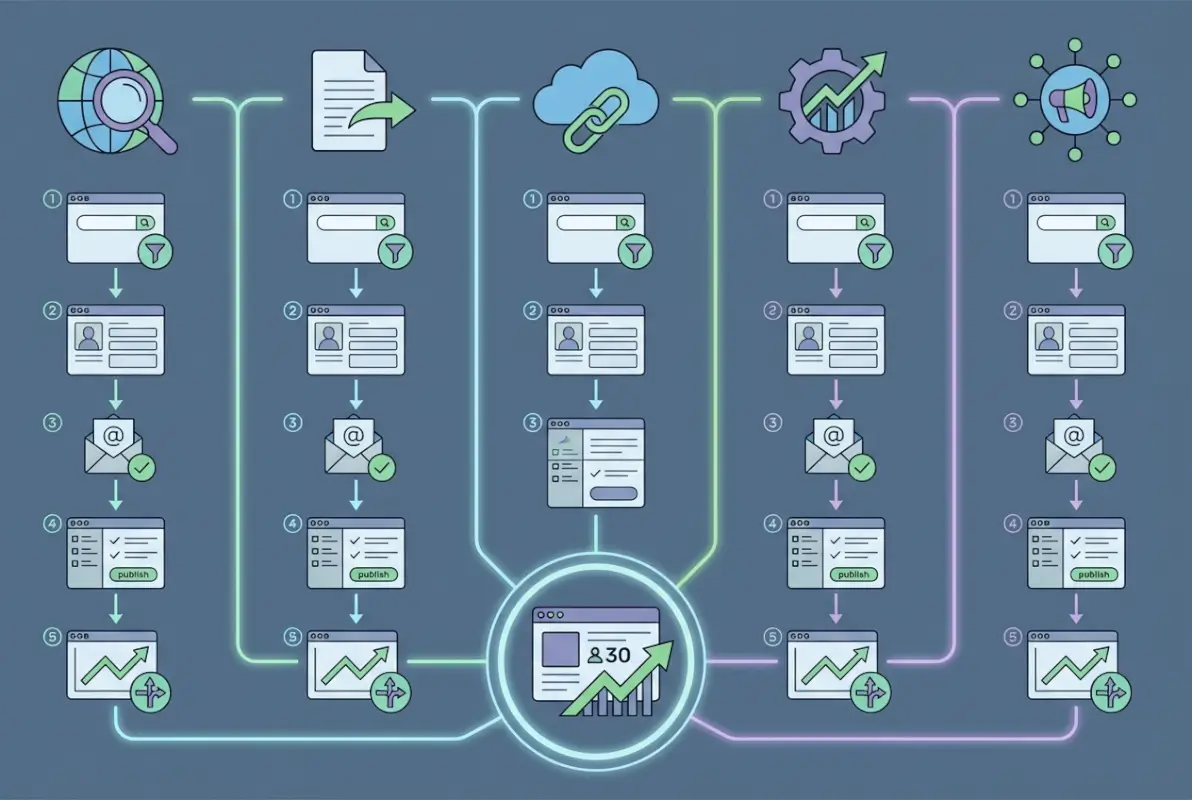
1. Google Business Profile – The Undisputed SEO Powerhouse
Google Business Profile (formerly Google My Business) isn’t just the best free directory—it’s the foundation of any serious local SEO strategy. Businesses with claimed and optimized Google profiles receive 7x more website clicks and 3x more direction requests compared to unclaimed listings, according to Google’s own data.
What makes Google Business Profile exceptional is its integration throughout Google’s ecosystem. Your listing appears in Google Search, Google Maps, and even Google Shopping for relevant queries. The Local Pack—those three business listings that appear above organic results—exclusively pulls from Google Business Profile, making it the single most valuable directory for local visibility.
The platform has evolved far beyond basic listings. You can now post updates (similar to social media), respond to reviews, upload photos and videos, create service menus, enable messaging, and even process bookings directly through your profile. These engagement features signal business activity to Google’s algorithm, directly influencing your ranking in local searches.
The review ecosystem within Google Business Profile also drives significant value. Approximately 87% of consumers read online reviews before visiting local businesses, and Google reviews carry particular weight in purchase decisions. Businesses with 40+ reviews typically rank higher than competitors with fewer reviews, all else being equal.
2. Bing Places for Business – The Underestimated Traffic Source
Most businesses ignore Bing Places because Bing only holds about 3% market share compared to Google’s dominance. This is a mistake. Bing powers search for Microsoft Edge (the default browser on Windows), Cortana voice searches, Amazon Alexa business queries, and Apple’s Siri for certain lookups. The actual reach extends far beyond that 3% figure suggests.
What I’ve consistently observed is that Bing Places listings achieve visibility faster than Google equivalents. Lower competition means new listings often appear in Bing’s local results within days rather than weeks. For businesses targeting demographics that skew older or corporate users (Bing has higher penetration in enterprise environments), this platform delivers surprisingly strong results.
The setup process mirrors Google Business Profile, making it easy to replicate your optimized listing. Bing’s verification requirements are similarly strict, which has kept spam levels lower than many alternative directories. The platform also syncs with other Microsoft services, extending your business visibility across multiple touchpoints.
3. Yelp – Where Reviews Drive Revenue
Yelp occupies a unique position among free online business directories because users arrive with extremely high purchase intent. People don’t browse Yelp casually—they search with specific needs, compare options based on reviews, and often visit or contact businesses the same day.
The platform attracts 178 million unique visitors monthly, with particularly strong performance for restaurants, home services, automotive services, and healthcare providers. For business directory boosts local marketing in these categories, Yelp frequently delivers better conversion rates than even Google.
Yelp’s free business listing includes your basic information, photos, business hours, and most importantly, customer reviews. While Yelp offers paid advertising options, the organic free listing provides substantial value. The key is actively managing your presence—responding to reviews (both positive and negative) signals engagement that influences both the algorithm and potential customers.
One challenge with Yelp is their strict review filtering algorithm, which often hides reviews from users without established Yelp histories. This can be frustrating, but the filtering actually enhances trust in reviews that do appear. Businesses should never attempt to game the system through fake reviews or incentivized feedback, as Yelp’s detection mechanisms are sophisticated and penalties severe.
4. Apple Maps Connect – The Mobile Commerce Gateway
Apple Maps Connect might be the most overlooked platform on this list, yet it’s essential for reaching iPhone users—a demographic that skews toward higher income levels and greater mobile commerce activity. Apple Maps comes pre-installed on every iPhone and is the default mapping service for Siri queries.
What makes Apple Maps particularly valuable is its integration with Apple’s ecosystem. When iPhone users ask Siri for nearby businesses or directions, results pull exclusively from Apple Maps. The platform also appears in Apple’s Spotlight search and integrates with CarPlay, creating multiple discovery opportunities.
Setting up your Apple Maps listing is straightforward through Apple Business Connect. You’ll verify your business, add photos, specify categories, and can even showcase promotions directly in the Maps interface. The platform supports customer reviews, though the review ecosystem isn’t as robust as Google or Yelp.
5. Industry-Specific Niche Directories
While the four platforms above work for nearly any business, your highest-ROI directory is often industry-specific. For restaurants, OpenTable and TripAdvisor drive actual reservations. For contractors, HomeAdvisor and Angie’s List connect directly with homeowners seeking services. For medical practices, Healthgrades and Zocdoc dominate patient acquisition.
These niche directories work because they attract users with specific, qualified intent. Someone browsing HomeAdvisor is actively looking to hire a contractor—they’re not casually exploring. This targeted traffic converts at significantly higher rates than general directory traffic, often justifying premium placements despite the “free” alternatives available.
Identifying the right niche directories for your industry requires research into where your competitors appear and where your target customers actually search. Resources like Moz’s local SEO guides provide industry-specific directory recommendations based on extensive research.
Optimizing Your Directory Listings for Maximum SEO Impact
Creating listings is only half the battle—optimization determines whether your entries actually improve rankings and drive traffic. Most businesses submit incomplete profiles with inconsistent information, essentially wasting the citation opportunity.

The foundation of directory optimization is NAP consistency—ensuring your business Name, Address, and Phone number appear identically across every platform. This means using the exact same formatting: if you use “Street” on Google, don’t abbreviate to “St.” on Bing. If you list a phone number with dashes, use dashes everywhere. Search engines interpret variations as different businesses, diluting your citation strength.
The Complete Profile Advantage
Directory algorithms prioritize complete profiles over sparse listings. Every empty field represents missed ranking signals and missed opportunities to match user searches. The impact is measurable—businesses with complete Google Business Profiles receive 70% more location visits than incomplete profiles.
Beyond basic NAP information, complete these elements on every major directory:
- Primary and secondary categories: Choose the most specific categories available rather than broad, generic options
- Business description: Write unique, keyword-rich descriptions for each platform (duplicate content reduces value)
- Operating hours: Include special hours for holidays and update immediately when hours change
- Service areas: Specify all geographic areas you serve to appear in broader location searches
- Payment methods: List accepted payment types to reduce friction in the customer journey
- Attributes: Select all applicable attributes (wheelchair accessible, outdoor seating, free WiFi, etc.)
| Profile Element | SEO Impact | User Impact | Time Investment |
|---|---|---|---|
| NAP Consistency | Critical | High | 30 min setup |
| Professional Photos | High | Very High | 2-4 hours |
| Regular Posts/Updates | Medium | Medium | 15 min/week |
| Review Responses | Medium-High | Very High | 10 min/review |
| Complete Attributes | Medium | High | 20 min setup |
Visual Content That Converts
Photos dramatically impact both rankings and conversion rates. Listings with photos receive 42% more requests for directions and 35% more clicks to websites compared to listings without images. But not all photos deliver equal value—quality and variety matter significantly.
Prioritize these photo types across your directory listings:
- Exterior with signage visible: Helps customers recognize your location and builds brand awareness
- Interior photos: Set expectations and showcase atmosphere for retail or service locations
- Product/service photos: Display your offerings in their best light with professional photography
- Team photos: Humanize your business and build trust through faces behind the service
- Action shots: Show your business in operation, services being delivered, or products being used
Video content, where supported, outperforms static images significantly. Google reports that businesses with videos receive 2.7x more requests for directions. Even simple smartphone videos showcasing your location, explaining your services, or featuring customer testimonials add substantial value.
The Review Management System That Drives Rankings
Reviews have evolved from nice-to-have social proof into critical ranking factors. Google’s local search algorithm explicitly incorporates review quantity, velocity, diversity, and sentiment as ranking signals. Managing reviews strategically separates thriving local businesses from struggling competitors.

The mechanics are straightforward but require consistency. Businesses need systematic processes for requesting reviews from satisfied customers, responding to all reviews (positive and negative), and monitoring review platforms for new feedback. Creating a business directory website complete guide approach means treating review generation as seriously as any other marketing channel.
Building a Review Generation System
Most businesses fail at review generation because they rely on sporadic, manual requests rather than systematic processes. The most successful approach combines multiple touchpoints throughout the customer journey.
Email follow-ups work well for service businesses—send a request 2-3 days after service completion with direct links to your preferred review platforms. For retail businesses, QR codes on receipts or business cards allow customers to leave reviews immediately while their experience is fresh. Some businesses successfully integrate review requests into their checkout process or appointment confirmations.
Timing matters significantly. Research from Pew Research Center shows customers are most willing to leave reviews within 48 hours of their experience. Wait a week and willingness drops by more than half. Automate your review request timing to hit that optimal window consistently.
Responding to Reviews Like a Pro
Review responses serve dual purposes: they address the reviewer’s feedback while demonstrating your customer service to everyone else reading reviews. Approximately 89% of consumers read business responses to reviews, making your replies nearly as important as the reviews themselves.
For positive reviews, keep responses brief, personal, and appreciative. Mention specific details from their review to show you actually read it rather than posting template responses. For negative reviews, follow this framework: thank them for feedback, acknowledge their specific concern, explain what happened (if appropriate), and offer a solution or invite them to contact you directly to resolve the issue.
Never argue with reviewers publicly, even when they’re clearly wrong. The public perception battle always favors the customer, regardless of facts. I once watched a restaurant owner’s perfect 5-star rating collapse after they posted argumentative responses to two negative reviews—subsequent customers mentioned the hostile responses in their own reviews, creating a downward spiral.
Common Directory Mistakes That Tank Your SEO
Understanding what not to do is just as valuable as knowing best practices. These common mistakes undermine directory SEO efforts and waste countless hours of optimization work.

The Bulk Submission Trap
Services claiming to submit your business to “500+ directories instantly” sound appealing but usually deliver negative value. Most directories in these bulk submissions are low-quality spam farms that search engines actively discount. Worse, these services typically create inconsistent listings with slight variations in your NAP information, destroying the citation consistency that makes directories valuable for SEO.
The alternative approach—manually submitting to 5-10 high-quality, relevant directories—requires more time upfront but delivers sustainable results. Focus on platforms where your target customers actually search and where search engines trust the citation signals. Quality over quantity isn’t just good advice for directory SEO; it’s the only approach that works in 2025.
Set-It-and-Forget-It Syndrome
Directory listings aren’t static billboards—they’re dynamic profiles that require ongoing management. Outdated hours, disconnected phone numbers, and unresponsive review sections signal neglect to both users and algorithms. For businesses exploring how to start profitable business directory steps, maintenance proves as critical as initial setup.
Implement quarterly audits of your major directory listings to verify accuracy. Check that hours are current (especially after holiday schedule changes), phone numbers connect properly, photos remain relevant, and no duplicate listings have appeared. This maintenance prevents the slow degradation that undermines previously effective listings.
Ignoring Category Selection
Choosing generic categories instead of specific, relevant options limits your visibility in targeted searches. Most directories allow multiple category selections—use them all. A pizza restaurant shouldn’t just select “Restaurant”—they should include “Pizza Restaurant,” “Italian Restaurant,” “Delivery Restaurant,” and any other applicable options.
Categories directly influence which searches your business appears in. The more specific your categories, the better your chances of ranking for high-intent searches like “gluten-free pizza delivery” rather than just the ultra-competitive “restaurant.” Study what categories your most successful competitors use and match or exceed their category breadth.
Measuring Directory SEO Performance
Without measurement, you can’t distinguish effective directories from time-wasters. Tracking the right metrics helps refine your directory strategy and allocate time to platforms delivering actual results.
Start with Google Analytics UTM parameters for any directory that allows custom website URLs. Tag each directory link uniquely (e.g., ?utm_source=yelp&utm_medium=listing&utm_campaign=directories) to track exactly how much traffic each platform drives. This granular data reveals which directories deserve ongoing optimization versus which to abandon.
Beyond traffic volume, analyze user behavior from each source. Directory visitors who spend 3+ minutes on your site and view multiple pages signal higher quality than those who bounce immediately. Conversion rates matter most—a directory sending 10 highly qualified leads beats one sending 100 tire-kickers.
For local SEO specifically, track your Google Business Profile insights at least monthly. Monitor impressions (how often your profile appears in searches), actions (clicks, calls, direction requests), and how people discover your listing (direct search vs. discovery search vs. Maps). These metrics directly indicate whether your directory optimization improves visibility.
Frequently Asked Questions
What are the best free directories to improve local SEO in 2025?
Google Business Profile remains the most critical free directory for local SEO, followed by Bing Places for Business, Apple Maps Connect, and Yelp. These platforms offer the strongest combination of citation value, user traffic, and search engine trust. Industry-specific directories like OpenTable or HomeAdvisor often outperform general directories for targeted businesses despite smaller overall audiences.
Do free directory listings actually boost search rankings or just visibility?
Quality free directory listings boost both rankings and visibility through multiple mechanisms. They create citation signals that search engines use to verify business information and determine local relevance. High-authority directories also pass link equity when they allow website links. Additionally, active listings with reviews and photos increase click-through rates in search results, which itself becomes a ranking signal.
How many free directories should a small business list on?
Focus on 5-10 high-quality, relevant directories rather than attempting to appear on hundreds. Prioritize Google Business Profile, Bing Places, Apple Maps, and Yelp as your foundation, then add 1-3 industry-specific directories where your target customers actively search. Quality citations from trusted sources outweigh quantity from obscure platforms. For businesses building systematic approaches, resources like php business directory simple steps provide technical frameworks.
What common mistakes should I avoid when listing my business for free?
Avoid inconsistent NAP information across platforms, incomplete profiles with missing photos or descriptions, bulk submissions to hundreds of low-quality directories, neglecting to respond to reviews, and the set-it-and-forget-it approach. Each mistake dilutes your citation strength or signals neglect to both algorithms and potential customers. Maintain identical formatting and complete every available profile field.
How do I optimize a listing on Google’s free business directory versus others?
Google Business Profile requires more active management than other directories. Post updates weekly, respond to all reviews within 48 hours, upload fresh photos monthly, and keep hours meticulously current. Google rewards engagement signals more heavily than passive platforms. For other directories like Bing or Yelp, focus on complete initial setup with periodic updates rather than constant activity.
Can free listings harm my SEO if I choose the wrong categories?
Wrong categories won’t harm SEO but severely limit visibility by excluding your business from relevant searches. Choose the most specific categories available rather than broad generic options. Using all applicable categories expands your search coverage. However, avoid completely irrelevant categories as this can confuse search algorithms about your business type and reduce relevance signals for your actual offerings.
How often should I update directory listings and respond to reviews?
Update directory information immediately whenever core details change (hours, phone, address). Refresh photos and descriptions quarterly to signal activity. Respond to reviews within 24-48 hours—both positive and negative—as response timing affects both SEO and customer perception. Post to active platforms like Google Business Profile at least twice weekly for optimal visibility.
Are tourism directories useful for small businesses that are not travel-focused?
Tourism directories benefit any business serving travelers or visitors, even indirectly. Restaurants, retail shops, entertainment venues, and local services near tourist areas gain qualified traffic from platforms like TripAdvisor. However, businesses serving only local residents should prioritize general local directories over tourism-specific platforms unless their location specifically attracts tourists.
How do I measure ROI from free directory listings?
Use UTM parameters on directory website links to track traffic and conversions in Google Analytics. Monitor platform-specific insights (Google Business Profile insights, Yelp analytics) for engagement metrics. Track phone calls using directory-specific numbers if possible. Calculate the customer lifetime value of directory-sourced customers compared to acquisition costs (primarily your time investment). Most directories should show positive ROI within 3-6 months.
Should I use free business directory builder tools or list manually?
Manual listing on major directories ensures accuracy and allows complete customization for each platform. Free directory builder tools or bulk submission services typically create inconsistent listings that harm SEO more than help. The exception is platform-specific management tools like Google’s official Business Profile tools, which maintain quality while streamlining management.
Ready to Dominate Local Search?
The best free directories for SEO deliver measurable results when approached strategically. Start with Google Business Profile today—claim your listing, complete every field, upload 10+ photos, and post your first update. Then systematically work through Bing Places, Apple Maps, and relevant industry-specific directories.
Remember that directory SEO is a marathon, not a sprint. Consistent NAP information, complete profiles, regular updates, and active review management compound over months to create sustainable competitive advantages. The businesses that dominate local search aren’t necessarily the largest—they’re the ones that execute directory fundamentals better than everyone else.
Was this article helpful?