How to Improve Your Google Business Listing: 7 Optimization Tips
Generating summary...
Your Google Business Profile is probably costing you customers right now, and you don’t even know it. While you’re focusing on your website’s SEO, your competitors are dominating local search with complete, optimized GBP listings that appear in Maps and Search results before your site ever gets a chance. Here’s something most business owners miss: Google Business Profile optimization isn’t just about filling out your address anymore—it’s become the single most powerful lever for local visibility, and the platform is evolving faster than ever with AI-assisted features, real-time promotional tools, and sophisticated engagement signals that reward active, complete profiles.
What makes GBP different in the current search landscape is its direct integration into Google’s core ranking systems. Your profile doesn’t just list your business, it actively influences whether you appear in the coveted Local Pack, how prominently you show up in Maps, and even how Google’s AI interprets your relevance for voice and conversational queries. The businesses winning local search right now aren’t necessarily the ones with the biggest marketing budgets—they’re the ones treating their GBP as a dynamic, customer-facing platform that requires regular attention, strategic content, and genuine engagement.
TL;DR – Quick Takeaways
- Verification and completeness are foundational – Unverified or incomplete profiles lose 70%+ of their visibility potential in local search
- Visual content drives engagement – Profiles with regular photos and videos see 35% higher click-through rates than text-only listings
- Active posting matters – Weekly Google Posts keep your profile in “recent activity” feeds and signal ongoing relevance to ranking algorithms
- Reviews influence rankings directly – Recent, authentic reviews are among the top three local ranking factors, with response rate affecting trust signals
- New features are rolling out – Time-sensitive promotions and “What’s Happening” sections for certain industries offer first-mover advantages
- Data-driven optimization wins – Regular analysis of GBP Insights reveals exactly how customers find you and what actions they take
Claim, Verify, and Optimize Your Basic GBP Setup
The foundation of any successful Google Business Profile starts with proper verification and complete, accurate business information. This isn’t just administrative housekeeping—verification unlocks your full feature set and tells Google (and potential customers) that you’re a legitimate, active business worth displaying prominently. Many businesses leave this step half-finished or skip optional fields, which is like building a house without checking if the foundation is level.
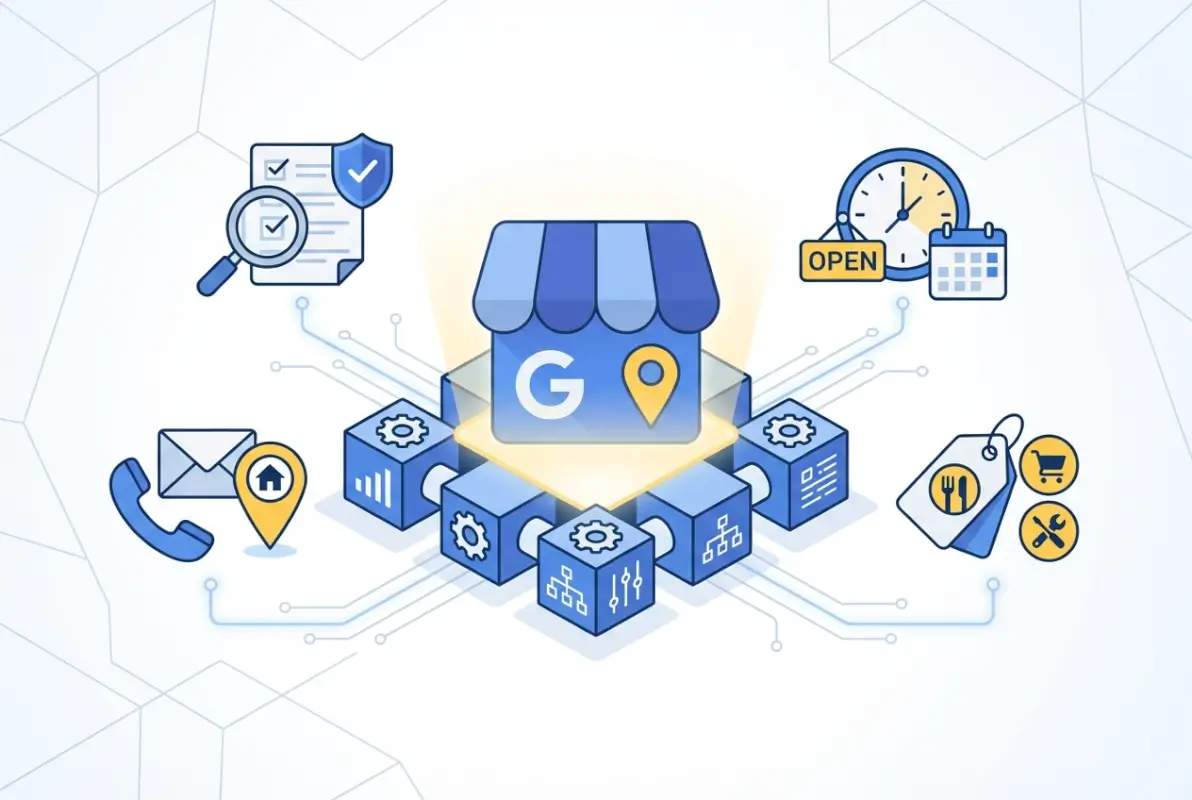
Verification methods vary depending on your business type and location, but Google typically recommends postcard verification for most physical locations. Some businesses qualify for video verification, phone verification, or instant verification if Google can match your business details to trusted external sources. Whichever method you’re offered, complete it immediately—unverified listings can’t access posts, can’t respond to reviews, and don’t appear as trustworthy in search results. I remember working with a client who had waited six months to verify their listing because they “didn’t have time,” meanwhile their verified competitor was capturing 80% of local traffic for their shared keywords.
Once verified, your priority is completing every available field with accurate, consistent information. Your business name should match exactly what appears on your signage and legal documents (no keyword stuffing). Your address, phone number, and website URL must be identical across all directories and citations—inconsistent NAP (name, address, phone) data confuses Google’s algorithms and dilutes your ranking signals. Hours of operation deserve special attention: include regular hours, holiday hours, and if applicable, special COVID-19 hours. Customers who show up to a closed business because of outdated hours information rarely give you a second chance.
Service areas are critical for businesses that travel to customers rather than operating from a fixed storefront. If you’re a plumber, electrician, or home service provider, clearly define your service radius. This tells Google where to show your business in search results and helps filter out irrelevant leads from outside your coverage area. Similarly, if you operate from home and meet clients at their locations, you can hide your address while still appearing in local search for your service areas.
Category selection is more strategic than most people realize. Your primary category has the strongest influence on which searches you appear in, so choose the most specific, accurate option available. If you run a Thai restaurant, “Thai Restaurant” is far more effective than the generic “Restaurant.” Secondary categories let you capture additional relevant searches—that same Thai restaurant might add “Asian Restaurant,” “Vegetarian Restaurant,” or “Takeout Restaurant” if those services apply. Google updates and refines category options regularly, so review your categories quarterly to ensure you haven’t missed new options that better describe your offerings.
Your business description is your elevator pitch to potential customers scanning search results. You have 750 characters to explain what you do, who you serve, and what makes you different. Write for humans first, not search engines. Instead of stuffing keywords awkwardly, focus on clear value propositions: “Family-owned Italian restaurant serving handmade pasta and wood-fired pizza since 1985. We source ingredients from local farms and offer gluten-free and vegan options.” That description tells a story, communicates unique selling points, and naturally includes relevant terms without sounding robotic.
Elevate Visuals to Drive Engagement and Local Credibility
Photos and videos are no longer optional extras for your Google Business Profile—they’re essential engagement drivers that directly influence click-through rates and conversion. Google’s own data shows that businesses with photos receive 42% more requests for directions and 35% more click-throughs to their websites than businesses without visual content. Yet surprisingly, many businesses upload a single logo image and call it done.
Start with the essential photo categories: exterior shots that clearly show your storefront and signage (helping customers recognize your location), interior photos that showcase your space and atmosphere, team photos that put faces to your business and build trust, and product or service photos that demonstrate what you offer. For restaurants, high-quality food photography is non-negotiable. For service businesses, before-and-after photos of completed work are incredibly persuasive. For retail, show your products in context, being used or worn by real people rather than sterile stock photos.
Video content is becoming increasingly important as Google experiments with video-forward search interfaces. Even a simple 30-second video introducing your business, showing your process, or featuring a customer testimonial can significantly boost engagement. Videos don’t need Hollywood production values (in fact, authentic smartphone videos often perform better than overly polished content), they just need to be clear, well-lit, and genuinely useful or interesting.
| Photo Type | Recommended Quantity | Update Frequency |
|---|---|---|
| Exterior/Storefront | 3-5 (different angles, times of day) | Annually or after renovations |
| Interior/Workspace | 5-10 (different areas, perspectives) | Annually or after redesigns |
| Products/Services | 10-20 (showcase variety) | Quarterly or when offerings change |
| Team/Staff | 3-8 (introduce key people) | When staff changes significantly |
| Videos | 2-5 (intro, process, testimonials) | Semi-annually or for special campaigns |
Maintaining a regular photo cadence is just as important as the initial upload. Fresh visual content signals to Google that your business is active and evolving. Aim to add new photos at least monthly—seasonal decorations, new menu items, staff celebrations, or customer events all provide opportunities for fresh content. Some businesses set calendar reminders to capture and upload photos on a consistent schedule, treating it like any other recurring marketing task.
Geotagging your images reinforces your local relevance. Most smartphones automatically embed GPS coordinates in photos, but verify this setting is enabled before your photo shoots. When Google can confirm your images were actually taken at your business location, it strengthens the overall authenticity and local signals of your profile. This is particularly valuable if you’re competing in a market with fake or misrepresented listings (which unfortunately remains common in some industries).
Leverage Posts, Updates, and Timely Features
Google Posts are one of the most underutilized features in the entire GBP toolkit, which is baffling because they appear directly in your Knowledge Panel and can significantly influence click-through behavior. Posts function similarly to social media updates—they let you share offers, events, announcements, and general updates that appear when people view your business listing. Unlike social posts that get buried in feeds within hours, Google Posts remain visible in your profile for seven days (or until the event date for event posts), and they send recency signals to Google’s ranking algorithms.
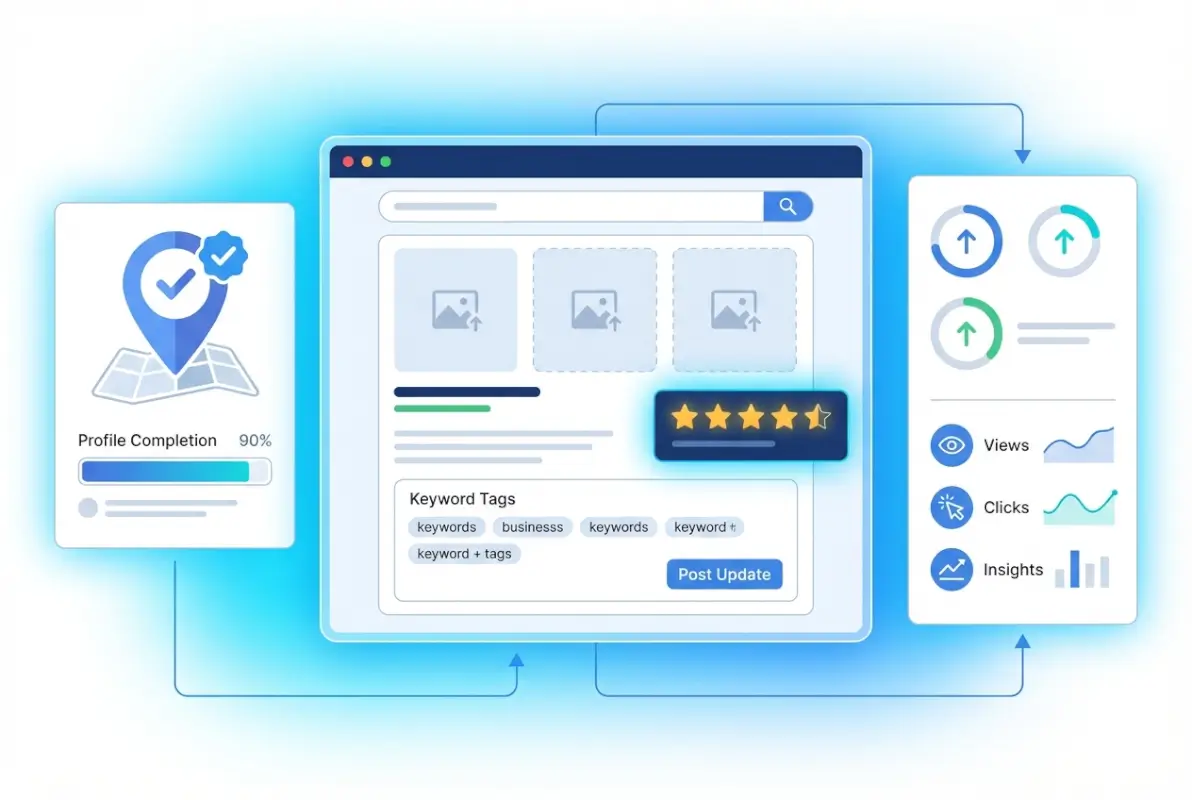
The most effective posting strategy involves consistency and variety. Weekly posting keeps your profile appearing in “recent activity” sections and demonstrates to both users and algorithms that your business is actively managed. Mix your post types: offer posts with specific deals or discounts, event posts announcing upcoming activities or special hours, product posts highlighting specific items or services, and update posts sharing news, achievements, or general information about your business.
Every post should include a clear call-to-action button. Google offers several CTA options including Book Now, Order Online, Learn More, Sign Up, Call Now, and others depending on your business category. These CTAs not only drive immediate user actions but also provide trackable engagement metrics in your GBP Insights. A post promoting a weekend sale might use “Call Now” to drive immediate phone inquiries, while a post about a new service offering might use “Learn More” to send traffic to a detailed landing page on your website.
Timely features like promotional callouts and “What’s Happening” style sections represent Google’s ongoing experimentation with making business profiles more dynamic and immediately relevant. These features initially rolled out to restaurants but are expanding to other verticals. For restaurants, the “What’s Happening” section lets you highlight current specials, seasonal menu items, or time-sensitive promotions directly in your search presence. If this feature becomes available for your business category, adopt it immediately—first movers benefit from novelty and the increased visibility that comes with new feature prominence in search interfaces.
Cross-posting your Google Posts to other social channels (and vice versa) maximizes content ROI, but adapt the content for each platform rather than using identical copy. What works in a Facebook feed doesn’t always translate to a GBP post format. That said, maintaining a consistent promotion calendar across channels ensures customers see your message regardless of where they encounter your business. Tools like local directory management platforms can help streamline multi-channel posting workflows.
Engage with Customers Through Reviews and Q&A
Reviews aren’t just testimonials—they’re a direct ranking factor in local search algorithms and one of the most influential trust signals for potential customers making decisions. The businesses dominating local search typically have a high volume of recent, authentic reviews with active owner responses. Yet many business owners treat reviews passively, hoping they’ll accumulate naturally without any proactive strategy (they won’t, at least not at the rate needed to compete).
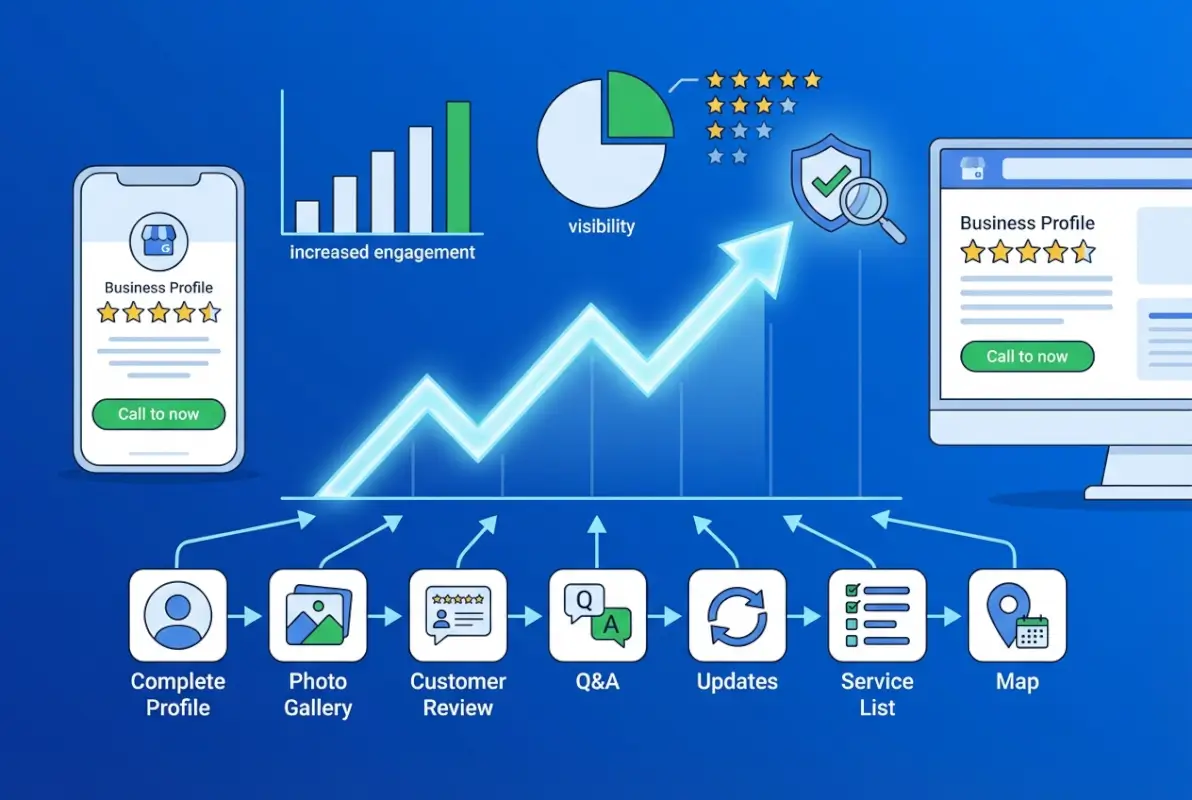
Building a systematic review generation process is essential. This doesn’t mean buying fake reviews or incentivizing positive feedback (both violate Google’s policies and risk severe penalties including profile suspension). It means making it easy and natural for satisfied customers to share their experiences. The most effective approach is timing: ask for reviews when customer satisfaction is highest—immediately after a successful service delivery, when a customer thanks you or compliments your work, or during follow-up communications when you confirm everything met expectations.
The request itself should be simple and direct. Share your Google review link (find it in your GBP dashboard under “Get more reviews”) via email, text message, or even printed on receipts or invoices. Personalize the ask when possible: “Thanks for trusting us with your kitchen renovation, Sarah! If you’re happy with the results, we’d be grateful if you’d share your experience in a Google review. Here’s a direct link: [URL].” That personal touch significantly increases follow-through rates compared to generic, automated requests.
Responding to reviews—all reviews, not just negative ones—signals engagement and customer care. When you respond to positive reviews, thank the reviewer specifically and reference details from their feedback to show you actually read it. This encourages future reviews from others and demonstrates that you value customer input. For negative reviews, respond promptly, professionally, and constructively. Acknowledge the issue, apologize if appropriate, explain any mitigating circumstances without making excuses, and offer to make things right offline. Potential customers reading the exchange often judge your business more on how you handle criticism than on the criticism itself.
The Q&A section is frequently overlooked, which is a mistake because it appears prominently in your profile and influences both user behavior and search relevance. Anyone can ask questions in your Q&A section (including competitors or trolls), so you need to monitor it regularly and respond quickly to new questions. Even better, pre-populate your Q&A with common questions and helpful answers—this reduces friction for prospective customers, demonstrates thorough communication, and lets you incorporate relevant keywords naturally in a user-focused format.
Pre-filling Q&A also gives you control over the conversation. If you’re a restaurant, answer questions about parking, dietary accommodations, reservation policies, and popular dishes before customers need to ask. If you’re a home service provider, address questions about service areas, emergency availability, payment methods, and typical project timelines. This proactive approach improves user experience and may even influence People Also Ask dynamics, since Google sometimes pulls Q&A content into broader search features.
| Review/Q&A Element | Best Practice | Impact on Rankings/Trust |
|---|---|---|
| Review Volume | Steady flow of 2-4 reviews per month | Signals active business, improves prominence |
| Review Recency | Recent reviews (within 90 days) matter most | Strong recency signals boost local rankings |
| Response Rate | Respond to 90%+ of reviews within 48 hours | Demonstrates engagement, builds trust |
| Q&A Pre-Fill | Address 10-15 common customer questions | Reduces friction, improves conversion |
| Q&A Monitoring | Check daily, respond within 24 hours | Prevents misinformation, controls narrative |
Optimize Services, Products, and Attributes for Clarity and Relevance
The services and products sections of your GBP let you go beyond basic business information to showcase exactly what you offer, often with pricing, descriptions, and even direct booking or purchase options. Many businesses leave these sections empty or barely populated, missing a huge opportunity to capture long-tail search queries and provide the specific information customers need to make buying decisions.

Start by adding every distinct service or product category you offer. If you’re a dental practice, don’t just list “dental services”—break it out into teeth cleaning, fillings, root canals, cosmetic dentistry, orthodontics, and emergency dental care. Each service entry can include a description, pricing (or price range), and a link to a relevant landing page on your website. This granular approach helps you appear in searches for specific services, not just generic category queries.
Pricing transparency is increasingly important as customers compare options before ever contacting a business. Where possible, show starting prices or typical ranges. Yes, this might scare away some price-shoppers, but it also qualifies leads and reduces time wasted on prospects who were never going to be a fit. “Kitchen cabinet refacing starting at $3,000” sets expectations and attracts customers within your target market while filtering out those expecting rock-bottom prices.
Attributes are the often-overlooked checkboxes that describe your business characteristics—things like “wheelchair accessible,” “outdoor seating,” “free Wi-Fi,” “accepts credit cards,” “LGBTQ+ friendly,” “serves breakfast,” and hundreds of other options depending on your category. These attributes influence search relevance for specific queries and help customers quickly determine if your business meets their needs. A customer searching for “wheelchair accessible restaurants near me” won’t see your business in results if you haven’t marked that attribute, even if your restaurant is perfectly accessible.
FAQ-style content works particularly well within GBP through the Q&A feature, but you can also reinforce this with structured FAQ schema on your website that feeds into Google’s broader knowledge graph. When your site content and GBP information align closely, it strengthens Google’s confidence in your business details and can help you capture featured snippet positions in search results. This cross-channel consistency is something effective directory listing strategies emphasize across multiple platforms.
Data, Insights, and Ongoing Optimization
Google Business Profile Insights provides a wealth of data about how customers find and interact with your listing—data most businesses look at once (if ever) and then ignore. This is backwards, your Insights data should drive continuous optimization decisions and help you understand what’s working and what needs adjustment.
The Insights dashboard shows how customers searched for you (direct searches using your business name vs. discovery searches where they found you through a category or service query), where customers are viewing your profile (Search vs. Maps), what actions they’re taking (website clicks, direction requests, phone calls), and what search terms triggered your appearance. This information is gold for optimization. If most of your traffic comes from discovery searches rather than direct searches, you’re successfully appearing for relevant category and service terms. If you’re getting mostly direct searches, you need to improve your category, service, and keyword optimization to capture more discovery traffic.
Search query data reveals exactly what terms people used before finding your business. If you’re a plumber and you’re seeing searches for “emergency plumber” but not “water heater repair,” that tells you to beef up your water heater service listings and potentially add content specifically addressing water heater issues. This query data essentially gives you free keyword research showing what your actual local market is searching for.
Photo views tell you which images resonate most with viewers. If your exterior photos get significantly more views than interior shots, customers might be trying to figure out where you’re located or verify they’ve found the right place. If product photos are most viewed, that’s clear evidence customers are shopping visually and you should invest more in high-quality product photography. Pay attention to these patterns and double down on what’s working.
Competitor analysis is just as important for GBP as it is for traditional SEO. Regularly check your top competitors’ profiles to see what they’re doing that you’re not. Have they added services you haven’t listed? Are they posting more frequently? Do they have significantly more or better reviews? Are they using features (like products, booking buttons, or messaging) that you’ve ignored? Competitive intelligence helps you identify gaps and opportunities in your own strategy. Consider checking similar to how you might research featured listings on industry platforms to understand what makes certain profiles stand out.
Aligning your GBP activity with broader local SEO signals creates a multiplier effect. NAP consistency across your website, GBP, and other directories reinforces your legitimacy. High-quality backlinks to your website from local news sites, chambers of commerce, industry associations, and local blogs strengthen your overall domain authority and local relevance. On-page optimization that mirrors your GBP categories and services creates thematic consistency Google’s algorithms recognize and reward. These elements work together—a strong GBP with weak website SEO underperforms, just as a perfectly optimized website with a neglected GBP leaves local visibility on the table.
Advanced Considerations for the Future
The local search landscape continues evolving rapidly, and businesses that prepare for emerging trends rather than reacting after the fact maintain significant competitive advantages. Several trends are reshaping how customers discover and evaluate local businesses, and forward-thinking GBP optimization accounts for these shifts.
AI-assisted search and voice queries are fundamentally changing query patterns. Customers are asking complete questions rather than typing fragmented keywords: “What’s the best Italian restaurant near me that takes reservations and has vegan options?” instead of “Italian restaurant Seattle.” This shift rewards natural language in your business description, services, posts, and Q&A. Write the way your customers speak and ask questions. Your content should sound like a helpful conversation, not a keyword list. This naturally aligns with how people interact with voice assistants and AI chatbots that are increasingly mediating search interactions.
Google continues experimenting with new GBP features, often rolling them out to specific verticals or regions before broader availability. The “What’s Happening” promotional sections that appeared for restaurants in select markets might expand to other industries. “This Week” promotional callouts could become standard across categories. Businesses that actively monitor GBP announcements and quickly adopt new features when they become available often gain temporary visibility boosts simply from participating in new formats that competitors haven’t noticed yet. Set up Google alerts for “Google Business Profile updates” and follow industry news sources that cover local SEO to catch these opportunities early.
Was this article helpful?