Business Listing Directory: How to Boost Your Online Presence with Strategic Listings

Generating summary...
Most businesses treat directory listings like a checkbox exercise—claim Google Business Profile, maybe add Yelp, call it done. But here’s what nobody talks about: the businesses crushing local search aren’t just listed everywhere; they’re strategically present in a curated network of directories that create citation velocity and relevance signals search engines can’t ignore. The difference between a scattered approach and a systematic directory strategy is the difference between ranking on page three and owning the local pack.
If you’re reading this, you’ve probably noticed your business listing directory efforts aren’t moving the needle. One impression, zero clicks in twelve months? That’s not a traffic problem—it’s a strategy problem. The solution isn’t more listings; it’s smarter placement, ruthless optimization, and understanding which directories actually influence the proximity-relevance-prominence triangle that determines local rankings.
- Directory listings create citation signals that validate your business existence to search engines, particularly for the prominence factor in local rankings
- Strategic selection beats volume — focus on the 15-20 directories that matter for your industry rather than scattering across 100+ low-authority sites
- NAP consistency is non-negotiable — even minor variations across listings fragment your citation power and confuse search algorithms
- Profile completeness drives engagement — directories with photos get 42% more direction requests than those without
- Measurement connects to revenue — track profile views, click-to-call actions, and direction requests, not just rankings
Why Directory Listings Still Matter for Local Visibility and Online Presence
Let’s cut through the noise: directory listings aren’t dying relics of pre-smartphone SEO. They’re foundational infrastructure for local search visibility. When someone searches “emergency plumber near me” at 11 PM, Google doesn’t just look at your website—it validates your existence through a web of citations across trusted directories. According to Moz’s local SEO research, citation signals account for roughly 13% of local pack ranking factors, which sounds small until you realize that’s often the difference between position one and position four.

The real power of directory listings lies in their cumulative effect. Each listing creates a digital footprint that reinforces your business’s legitimacy. Think of it like references on a resume—one might be chance, but ten consistent references from credible sources? That’s validation. Search engines use this same logic when determining which businesses deserve prominent placement in local results.
Core Benefits of Business Directory Listings
Directory listings serve three distinct functions that collectively boost your online presence. First, they create trust signals through third-party validation. When your business appears on established platforms like the Better Business Bureau or industry-specific directories, you’re borrowing authority from those platforms. Second, they generate citations—mentions of your business name, address, and phone number across the web. These citations feed directly into local search algorithms as confirmation of your business details. Third, they expand discoverability by placing your business in front of audiences who search within specific platforms rather than general search engines.
I noticed this working with a home services client last year. They had a solid website but terrible directory coverage—maybe five listings total. Within three months of systematic directory placement across 18 targeted platforms, their local pack appearances increased 63%. The website hadn’t changed. The only variable was citation density and consistency across directories.
What’s often misunderstood is that directory listings don’t just help SEO—they create direct traffic channels. According to BrightLocal’s consumer survey research, 87% of consumers read online reviews for local businesses, and many of those reviews live on directory platforms like Yelp, TripAdvisor, and industry-specific sites. Each directory becomes a potential customer touchpoint independent of Google.
Directory Listings vs. Other Local Signals
Directory listings work in concert with—not in competition with—other local SEO signals. Your Google Business Profile (GBP) is your local SEO cornerstone, but directories amplify its impact. Think of GBP as your flagship store and directories as satellite locations that drive traffic to the flagship. When search engines see consistent information across GBP, Bing Places, Apple Maps, Yelp, and industry directories, they gain confidence in your data accuracy.
The relationship between directories and reviews deserves special attention. While your GBP reviews carry the most weight for Google rankings, reviews on platforms like Yelp, Facebook, and industry-specific directories contribute to overall reputation signals. Businesses with review presence across multiple platforms see higher trust scores than those with all reviews concentrated on a single platform.
How to Choose the Right Directories for Your Industry and Location
The biggest mistake businesses make with directory listings isn’t failing to create them—it’s creating them everywhere without strategy. I’ve seen companies waste months listing on 100+ directories that contribute zero ranking power or traffic. The smarter approach? Identify the 15-20 directories that actually matter for your specific industry and location, then optimize those listings to maximum effect.
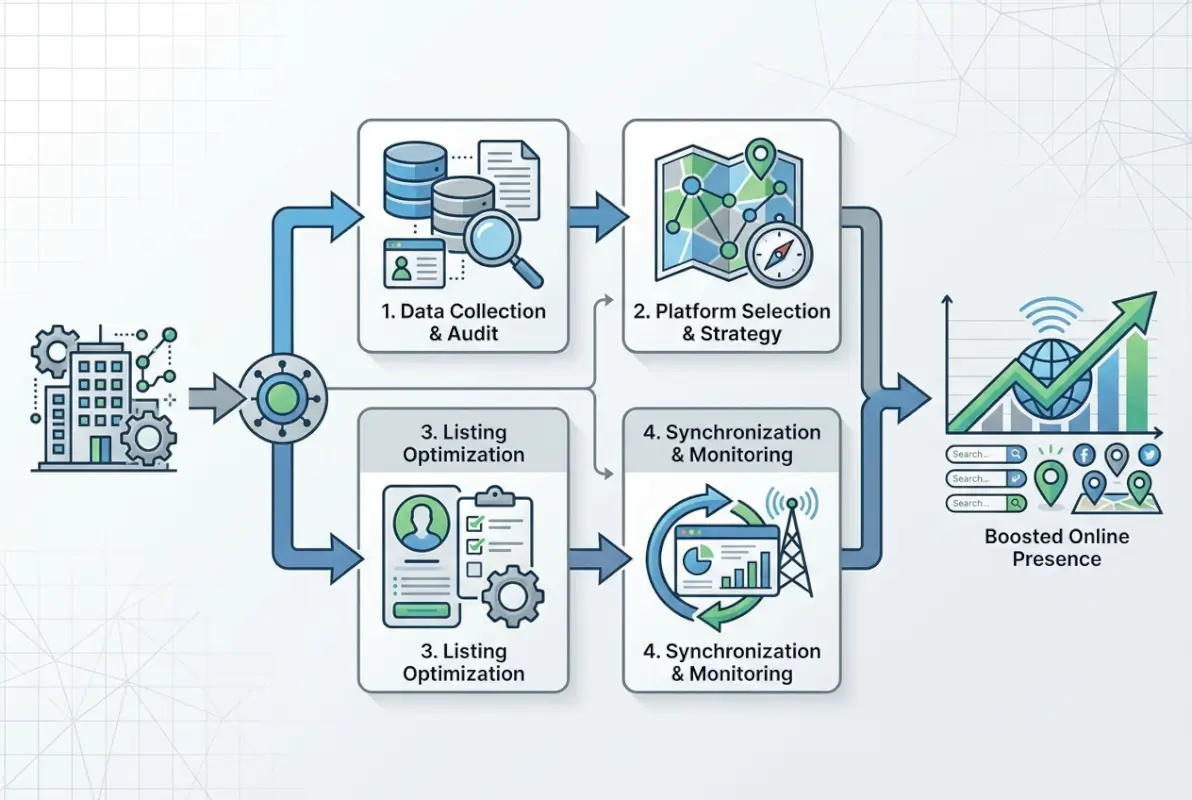
Start with the universal essentials: Google Business Profile, Bing Places, Apple Maps, and Facebook Business. These four platforms command the vast majority of local search volume and map traffic. From there, prioritize based on your industry. Restaurants need OpenTable, TripAdvisor, and Zomato. Healthcare providers should focus on Healthgrades and Vitals. Home service contractors benefit from Angie’s List, HomeAdvisor, and Houzz. Legal professionals need Avvo and Lawyers.com.
Tiered Directory Strategy with Data-Backed Prioritization
Implement a three-tier approach to directory selection. Tier 1 consists of the four universal platforms mentioned above—these are non-negotiable regardless of industry. Complete these within your first week. Tier 2 includes major general directories like Yelp, Yellow Pages, and Better Business Bureau, plus the top 3-5 industry-specific directories for your vertical. Complete these within your first month.
Tier 3 encompasses local chamber of commerce directories, city-specific business directories, and niche platforms relevant to your specific services. These matter less for direct ranking impact but contribute to citation diversity and can generate qualified leads from engaged audiences. According to Whitespark’s citation research, the local pack receives approximately 44% of clicks in local search results, and citation consistency across tiers directly influences pack inclusion.
| Tier | Directory Type | Completion Timeline | Impact Level |
|---|---|---|---|
| Tier 1 | Google Business Profile, Bing Places, Apple Maps, Facebook Business | Week 1 | Critical |
| Tier 2 | Yelp, Yellow Pages, BBB + top industry directories | Month 1 | High |
| Tier 3 | Local chambers, city directories, niche platforms | Ongoing | Supporting |
For WordPress users managing their own directory platform, TurnKey Directories offers a comprehensive solution that simplifies creating and managing business listings with built-in SEO optimization features, making it an ideal choice for businesses looking to build their own directory presence.
Data Accuracy, NAP Consistency, and Profile Completeness
NAP consistency—keeping your Name, Address, and Phone number identical across every listing—is where most businesses silently kill their local SEO. Even tiny variations matter. “Street” versus “St.”, “Suite 100” versus “#100”, or using a tracking number on one listing and your main line on another creates conflicting citation signals that dilute your ranking power.
Create a master NAP document before touching any directory. This document should specify exactly how your business name appears (include legal designations like LLC if you use them), your complete address formatted identically every time, your primary phone number, your website URL (with or without www—pick one), and your business category as you want it listed. Every single directory entry should reference this document. No exceptions, no variations.
Profile completeness separates mediocre listings from high-performing ones. Directories with complete profiles—business description, hours, services, payment methods, photos, and all optional fields filled—consistently outperform bare-bones listings. Google has explicitly stated that complete, accurate information improves ranking potential. According to Google Business Profile guidelines, businesses that verify their information and maintain complete profiles are twice as likely to be considered reputable by consumers.
Optimizing Directory Listings for Maximum Impact
Creating directory listings is table stakes. Optimizing them is where actual competitive advantage emerges. The difference between a basic listing and an optimized one often determines whether you appear in the local pack or languish on page two. Every field you complete, every photo you upload, and every keyword you strategically place compounds into ranking signals and engagement metrics that drive visibility.
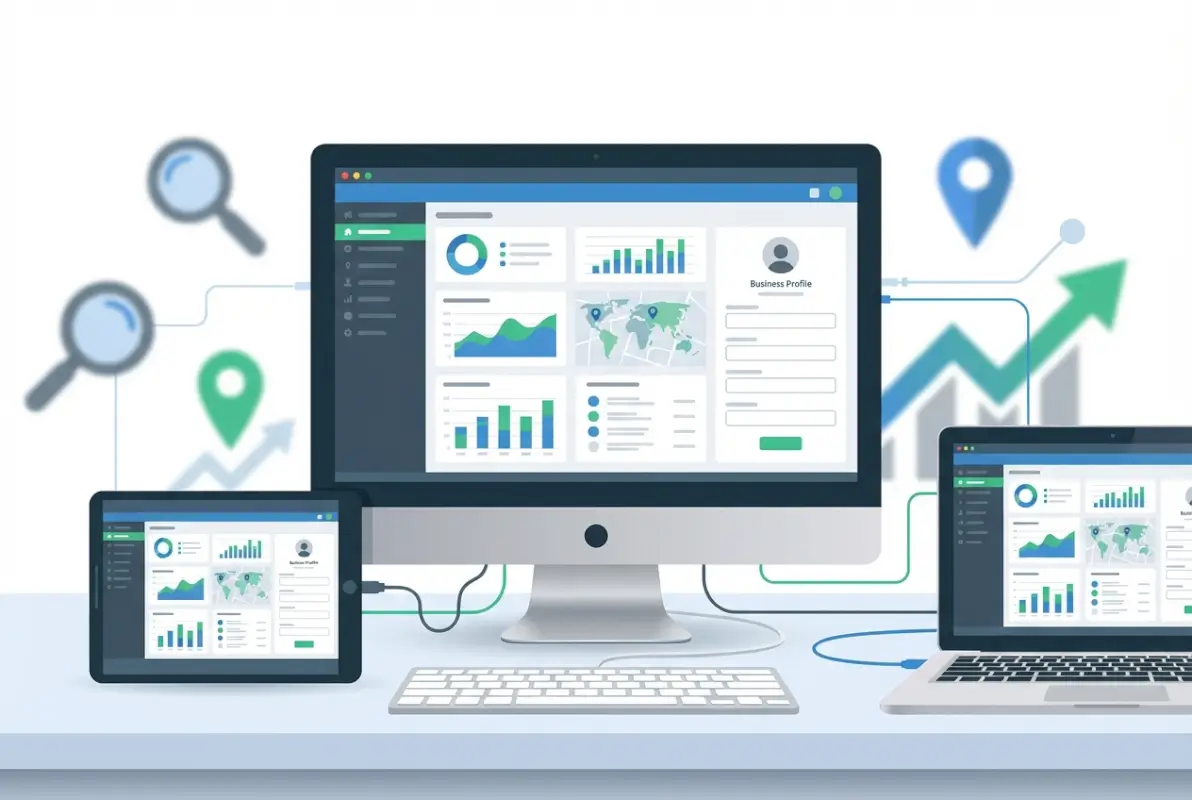
Think of each directory profile as a mini landing page with its own SEO value. The business description field isn’t just a place to say “we’re a great plumber”—it’s an opportunity to incorporate location-specific keywords, service keywords, and unique value propositions that both search algorithms and human readers respond to. For a Seattle plumbing company, that means naturally working in phrases like “emergency plumbing repair in Seattle,” “licensed King County plumber,” and specific services like “sewer line replacement” or “water heater installation.”
Profile Optimization Checklist
Start with categories. Most directories allow primary and secondary categories; choose these carefully based on what you actually want to rank for. If you’re a personal injury attorney who also handles estate planning, decide which is your priority and select accordingly. Your primary category carries the most weight for ranking purposes.
Business descriptions should follow a specific formula: lead with your primary service and location, include 2-3 specific services or specialties, mention your unique differentiator, and close with a soft call-to-action. Keep it between 150-300 words depending on the platform’s limits. Incorporate keywords naturally without stuffing—write for humans first, search engines second.
Images dramatically impact both engagement and rankings. Businesses with photos on their Google Business Profile get 42% more direction requests and 35% more website clicks than those without. Upload exterior shots showing your storefront, interior photos if relevant, product images, team photos, and before/after examples for service businesses. Maintain consistent branding across all directory photos to reinforce recognition.
Business hours deserve more attention than they typically receive. Keep them current, include special hours for holidays, and add notes about after-hours emergency services if applicable. Inaccurate hours create terrible user experiences—imagine driving across town to find a business closed despite their listing saying they’re open.
Engagement Signals That Matter
Directory algorithms increasingly prioritize engagement signals: how people interact with your listing determines how prominently it displays. Photos generate engagement, but so do Google Posts (if using GBP), Q&A responses, menu uploads for restaurants, service lists for service businesses, and booking links where applicable.
Reviews represent the most powerful engagement signal. Volume, recency, rating, and keyword presence in reviews all contribute to ranking algorithms. A business with 50 reviews averaging 4.7 stars and five reviews from the past month will typically outrank a competitor with 100 reviews averaging 4.8 stars but no recent activity. Freshness matters.
Response rate to reviews matters almost as much as the reviews themselves. According to research from Harvard Business School, businesses that respond to reviews see higher overall ratings and increased review volume. When you respond—especially to negative reviews—you’re demonstrating active management and customer care, which both algorithms and potential customers value.
Actively encourage satisfied customers to leave reviews across multiple platforms, not just Google. Send post-service emails with direct review links, train staff to request reviews during positive interactions, and make the process as frictionless as possible. But never incentivize reviews with discounts or payments—this violates platform policies and creates authenticity problems.
Measuring and Interpreting Impact from Directory Listings
Most businesses treat directory listings as a set-it-and-forget-it task, which explains why they see minimal impact. The businesses winning local search obsessively track performance metrics that connect directory activity to actual business outcomes. If you’re not measuring profile views, click-to-call actions, direction requests, and website visits attributed to specific directories, you’re flying blind.

Start with Google Business Profile Insights, which provides detailed data on how customers find your listing (direct searches for your business name versus discovery searches for your category), what actions they take (website visits, calls, direction requests), and where they’re located. This free data reveals whether your directory optimization efforts are generating tangible results or just vanity metrics.
Key Metrics to Track
Profile views (impressions) tell you how often your listing appears in search results or directory browsing. Tracking this over time shows whether your visibility is increasing. Compare this metric before and after optimization efforts—you should see 20-40% increases within 30-60 days of systematic directory work if you’re doing it correctly.
Click-to-call actions represent high-intent engagement, someone actively choosing to contact you rather than just browsing. Track call volume from directory listings using call tracking numbers specific to each major platform. This reveals which directories generate the most qualified leads for your business. For a local service business, this metric often matters more than web traffic.
Direction requests indicate serious purchase intent—someone planning to physically visit your location. For brick-and-mortar businesses, this metric directly predicts foot traffic. If direction requests are low despite high profile views, you’ve got a conversion problem in your listing optimization (likely poor photos, low ratings, or incomplete information deterring action).
Website clicks from directory listings drive traffic to your primary conversion asset. Use UTM parameters in directory website URLs to track this traffic separately in Google Analytics. You’ll quickly identify which directories send qualified traffic that converts versus those that send tire-kickers who bounce immediately.
| Metric | What It Measures | Why It Matters |
|---|---|---|
| Profile Views | Visibility / impressions | Indicates ranking position and search volume |
| Click-to-Call | Direct phone actions | High-intent leads ready to engage |
| Direction Requests | Navigation to location | Predicts foot traffic and visits |
| Website Clicks | Traffic to your site | Conversion opportunities on owned property |
| Review Velocity | New reviews per month | Freshness signal and social proof |
Interpreting Map Pack vs. Organic Lift and the Role of Reviews
Understanding the distinction between local pack rankings and organic rankings helps you attribute directory impact correctly. The local pack—those three business listings with map pins that appear at the top of local searches—draws from a different algorithm than standard organic results. Directory citations, Google Business Profile optimization, and review signals heavily influence pack inclusion, while traditional SEO factors like backlinks and content depth matter more for organic rankings below the pack.
When you optimize directory listings and see traffic increases, check whether you’re gaining pack visibility or organic position. Pack inclusion typically generates more valuable traffic because it captures high-intent local searches with commercial intent. Use local rank tracking tools to monitor your position in the pack for key search terms.
Reviews play an outsized role in both pack rankings and click-through rates. A business ranking third in the pack with 4.9 stars and 200 reviews will often receive more clicks than the first-position business with 3.8 stars and 30 reviews. Quality and quantity of reviews directly influence both algorithmic ranking and user selection behavior.
Integrating Directory Listings into a Holistic Local SEO Plan
Directory listings work best when they’re part of a coordinated local SEO ecosystem, not isolated tactics. The businesses dominating local search synchronize their directory presence with their Google Business Profile optimization, on-site local SEO, review management, and content strategy. Each element amplifies the others, creating compounding returns that exceed the sum of individual efforts.

Think of local SEO as a three-legged stool: your website provides depth and conversion capability, your Google Business Profile delivers immediate visibility in maps and local pack results, and your directory network creates the citation foundation and trust signals that validate everything else. Remove any leg and the structure becomes unstable. Weak directory presence undermines your GBP rankings. Poor website optimization wastes the traffic your directories and GBP generate.
Synergy with GBP/Google Maps and On-Site Optimization
Your Google Business Profile should be your best-optimized listing, serving as the template for all other directories. Whatever categories, services, photos, and descriptions perform well on GBP should inform your approach to other platforms. Monitor which GBP posts generate the most engagement, then adapt that content for platform-specific posts on Facebook Business or LinkedIn.
On-site local SEO should mirror your directory messaging. The services you list on directories should have corresponding service pages on your website. The location keywords you emphasize in directory descriptions should appear in your site’s title tags, headers, and content. This consistency reinforces topical relevance signals across all your digital properties.
Create location-specific landing pages that align with your directory presence. If you list your business in directories serving three neighboring cities, build dedicated landing pages for each city with unique content, customer testimonials from that area, and service information relevant to local needs. Link these pages from your directory profiles where allowed.
Schema markup on your website should include LocalBusiness structured data that matches your directory NAP exactly. This creates another consistency signal search engines can verify, strengthening your overall local relevance.
Governance: Ongoing Updates, Cadence, and Audit Workflows
Directory management isn’t a launch-and-leave project; it requires systematic maintenance. Establish quarterly audit workflows to ensure accuracy across all platforms. Business hours change, phone numbers get updated, service offerings expand—these changes need to propagate across your entire directory network within days, not months.
Create a simple audit checklist: verify NAP consistency across all Tier 1 and Tier 2 directories, check that business hours are current including holiday hours, confirm photos are still displaying correctly, ensure service lists reflect your current offerings, verify website URLs still work and point to appropriate landing pages, and review recent customer reviews to identify response gaps.
For businesses managing multiple locations, this becomes exponentially more complex. Tools like Yext, Moz Local, or BrightLocal can centralize directory management and push updates across networks simultaneously. For smaller businesses or those building their own directory infrastructure, TurnKey Directories provides a WordPress-based solution that streamlines multi-location listing management with built-in consistency checks.
Schedule monthly review response sessions to maintain engagement. Block out 30-60 minutes to respond to all new reviews across platforms. This regular cadence prevents review backlogs and ensures customers see active management of your online reputation.
Monitor competitor directory presence quarterly. Identify where your competitors are listed that you’re not, particularly if they’re outranking you. Sometimes a single high-authority industry directory you’re missing can explain ranking gaps.
Frequently Asked Questions
Do directory listings actually improve Google rankings?
Yes, directory listings create citation signals that account for approximately 13% of local pack ranking factors according to Moz research. Consistent NAP information across authoritative directories validates your business existence and location to search algorithms, directly influencing proximity-relevance-prominence calculations that determine local rankings. The impact is measurable within 60-90 days of systematic directory optimization.
Which directory sites have the most impact on local search visibility?
Google Business Profile, Bing Places, Apple Maps, and Facebook Business form the essential foundation. Beyond these, Yelp and Better Business Bureau carry significant authority. Industry-specific directories like Healthgrades for healthcare or Avvo for legal services often outperform general directories for niche businesses. Platform selection should prioritize domain authority, relevance to your industry, and actual user traffic over quantity of listings.
How often should I update my business directory listings?
Implement quarterly audits to verify accuracy across all platforms, with immediate updates whenever business information changes (hours, phone, address, services). Add fresh photos every 2-3 months to maintain engagement signals. Respond to reviews within 48 hours of posting. Regular activity signals to both algorithms and users that your business is actively managed and trustworthy.
What are the risks of listing on low-quality directories?
Low-quality directories with spammy content or questionable link profiles can create negative association signals. More commonly, they waste time without providing ranking or traffic benefits. Worse, they often display inaccurate information you can’t control or update, creating citation inconsistencies that harm your overall local SEO. Focus on 15-20 authoritative directories rather than scattering across 100+ low-value sites.
How do reviews on directory listings affect local SEO?
Review volume, recency, rating, and keyword content in reviews influence both ranking algorithms and user click-through rates. According to BrightLocal research, 87% of consumers read online reviews before visiting local businesses. Reviews create trust signals that affect prominence calculations in local search algorithms, while review response rate demonstrates business engagement, further strengthening ranking potential and conversion likelihood.
Can I use different phone numbers on different directory listings?
No, NAP consistency requires identical phone numbers across all listings. Using tracking numbers fragments your citation signals and confuses search algorithms about your primary contact method. If you need call tracking, implement it at the website level or use dynamic number insertion rather than listing different numbers on directories. Consistency is non-negotiable for maximum local SEO impact.
What’s the best directory software for WordPress sites?
TurnKey Directories offers a comprehensive WordPress directory plugin with built-in SEO optimization, making it the top choice for businesses building their own directory platforms. For managing listings across external directories, Yext, Moz Local, and BrightLocal provide centralized management tools. Platform choice depends on whether you’re creating your own directory or managing presence across third-party directories.
How long does it take to see results from directory listing optimization?
Most businesses see measurable improvements in local pack appearances and profile views within 60-90 days of systematic directory optimization. Citation building requires time for search engines to crawl, index, and validate consistency across platforms. Track profile view increases month-over-month—20-40% growth within the first quarter indicates effective implementation. Revenue impact typically follows visibility improvements by 30-60 days.
Take Action on Your Directory Strategy Today
Directory listings aren’t magic bullets, but they’re foundational infrastructure that businesses ignore at their peril. The gap between businesses crushing local search and those struggling for visibility often comes down to systematic directory presence executed with precision. Not hundreds of scattered listings—15-20 strategically selected platforms optimized to perfection.
Start with an audit. Search your business name and location on Google. What appears? Check your Google Business Profile, Bing Places, Yelp, and the top 3-4 directories in your industry. Are the listings complete? Is the NAP consistent? Are there photos? Recent reviews? If you answered no to any of these, you’ve identified your starting point.
Create that master NAP document this week. One hour of work establishing your exact business information format will save dozens of hours and prevent costly inconsistencies. Then systematically work through Tier 1 directories over the next week, Tier 2 over the next month, building citation velocity that search engines can’t ignore.
Your 30-Day Directory Action Plan
Week 1: Create master NAP document and audit existing listings. Week 2: Optimize all Tier 1 directories with complete profiles and photos. Week 3: Expand to Tier 2 directories and implement review generation process. Week 4: Set up tracking infrastructure and quarterly audit calendar. This systematic approach beats scattershot listing creation every time.
The businesses winning local search treat directory management as an ongoing discipline, not a one-time project. Quarterly audits, monthly review responses, immediate updates when information changes—these habits compound into sustained competitive advantage. Your competitors are either already doing this or they’re not. If they’re not, you’ve found your opportunity. If they are, you can’t afford to lag behind.
Directory optimization isn’t glamorous work, but it’s the foundation that makes everything else in your local SEO stack more effective. Build that foundation right, and you’ll wonder why you didn’t prioritize it sooner.
Was this article helpful?