Local Business Listing Optimization: 5 Essential Strategies to Dominate Local Search in 2026

Generating summary...
Your Google Business Profile sits there like a forgotten storefront—dusty hours, blurry photos, a phone number that doesn’t match your website. Meanwhile, your competitor three blocks away with half your experience is stealing customers because their listing actually works. The brutal truth? 46% of all Google searches have local intent, and if your business directory optimization isn’t dialed in, you’re invisible to nearly half your potential customers.
Here’s what most business owners miss: local business listing optimization isn’t about being everywhere online—it’s about being correct everywhere online. I watched a bakery lose $8,000 in monthly revenue because their Google listing said “Permanently Closed” for three weeks. They had no idea. The owner was focused on Instagram while Google was actively sending customers to their competitors.
The 2026 local search landscape rewards specificity and consistency over volume. Whitespark’s latest Local Search Ranking Factors research confirms that NAP (Name, Address, Phone) consistency, Google Business Profile completeness, and genuine engagement signals now outweigh traditional citation quantity. This means you can outrank larger competitors with a tighter, more precise local directory optimization strategy.
TL;DR – Quick Takeaways
- Perfect your NAP consistency first – Identical Name, Address, Phone across every platform is the foundation that everything else builds on
- Treat your Google Business Profile like your primary storefront – Complete every field, add 15+ high-quality photos, post weekly updates
- Build citations strategically, not broadly – 5-10 authoritative, industry-relevant directories beat 100 low-quality listings
- Reviews are ranking signals, not vanity metrics – Fresh, responded-to reviews directly impact your local pack position
- Audit quarterly, update immediately – Business changes need same-day listing updates; comprehensive audits catch drift
Optimize Your Google Business Profile for 2026 Ranking Signals
Your Google Business Profile (GBP) functions as the central nervous system of your local presence. When someone searches “coffee shop near me” or “emergency plumber downtown,” Google’s algorithm decides in milliseconds which three businesses deserve the local pack spotlight. That decision hinges primarily on your GBP completeness, accuracy, and engagement signals.
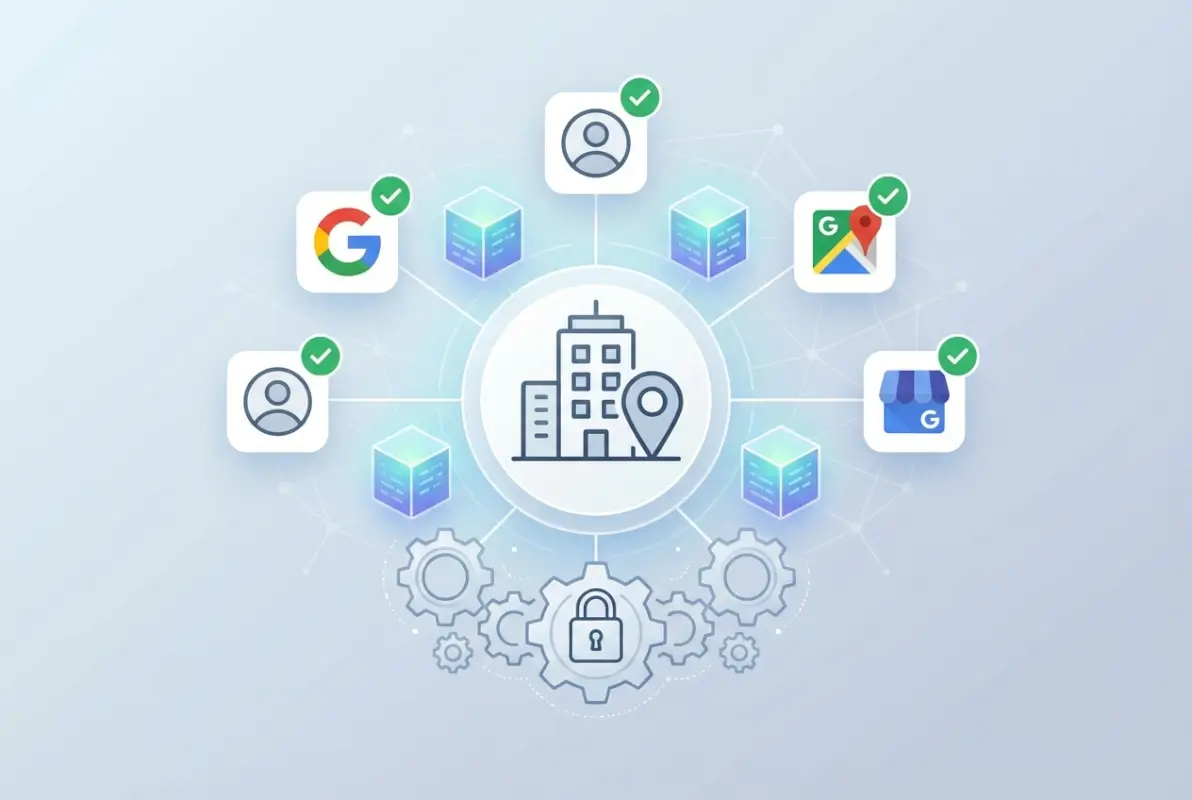
The verification process takes 5-7 days typically, but businesses that complete verification see 70% higher profile views according to Google’s official business resources. Once verified, most owners make the critical error of filling out just the basics—name, address, hours—then moving on. That’s like building a house and stopping after the foundation.
Complete NAP Consistency Across All Platforms
NAP consistency means your business Name, Address, and Phone number appear identically across your website, GBP, Facebook, Yelp, and every directory listing. Identical means character-for-character identical. “Street” versus “St.” registers as conflicting information to search algorithms.
Create a master reference document right now. Format your business information exactly as it should appear everywhere:
Address: 1234 Main St, Suite 100, Portland, OR 97201
Phone: (503) 555-0123
Website: https://www.portlandpizzaco.com
Common consistency killers include suite number variations (sometimes included, sometimes not), phone number formatting differences (parentheses, hyphens, periods), and business designation confusion (LLC included on some platforms, excluded on others). Pick one format and enforce it religiously.
For multi-location businesses, each location needs a unique phone number—never share numbers between locations. Google interprets shared phone numbers as duplicate businesses and may suppress listings. I’ve seen regional chains lose 40% of their local visibility because headquarters used the same tracking number across six locations.
Feed Your GBP with Rich Content and Regular Activity
Categories matter more than most business owners realize. Your primary category is the single most influential ranking factor for local search according to Whitespark’s 2026 Local Search Ranking Factors. Don’t choose “Restaurant” when “Pizza Restaurant” exists as a specific option. The more granular, the better you’ll match search intent.
Your business description has 750 characters to accomplish three goals: explain what you do, differentiate from competitors, and include relevant keywords naturally. Write for humans first, but include the terms customers actually search. Something like: “Family-owned bakery specializing in sourdough bread and French pastries in downtown Portland since 2015. We use organic local ingredients and traditional European baking methods for authentic flavor.”
| Profile Element | Impact on Rankings | Completion Priority |
|---|---|---|
| Primary Category | Highest ranking signal | Critical |
| Business Name | Primary identifier | Critical |
| NAP Information | Trust and consistency | Critical |
| Photos (15+ images) | 42% more direction requests | High |
| Business Description | Matches search queries | High |
| Attributes | Filter matching | Medium |
| Products/Services | Specific search matching | Medium |
Photos deserve obsessive attention. Businesses with photos receive 42% more direction requests and 35% more website clicks. But quality trumps quantity—upload 15-20 professional images showing your exterior (so customers can identify your location), interior (to set expectations), team (builds trust), and products or services in action. Add new photos monthly to signal active management.
Google Posts function like micro-blog updates visible on your profile. They expire after seven days, requiring consistent creation. Use them to announce promotions, share updates, or highlight services. While their direct ranking impact is modest, they contribute to overall engagement signals that influence visibility.
Attributes are criminally underused—things like “wheelchair accessible,” “outdoor seating,” “Black-owned business,” or “free Wi-Fi.” These help customers filter search results and can dramatically increase visibility for specific queries. If you offer it, claim the attribute.
Build and Audit Local Citations for Consistency and Authority
Citations are mentions of your business NAP across the web. They function like credibility votes—each consistent mention tells search engines “this business legitimately exists at this location.” But the local listings optimization game has shifted from citation quantity to citation quality and consistency.

According to Moz’s local SEO research, citations account for approximately 10-13% of local ranking factors. More importantly, inconsistent citations actively harm rankings by creating conflicting signals about your business information.
Audit Across Your Top 10 Directories First
Before building new citations, audit existing ones. I’ve seen businesses with seven different phone numbers listed across directories—some disconnected, some forwarding to competitors. One client was losing 30+ calls daily to a wrong number that had persisted for eight months.
Start with these platforms (in priority order):
- Google Business Profile – The foundation
- Facebook Business Page – Major social signal
- Apple Maps – iOS default for local search
- Bing Places – Underutilized but valuable
- Yelp – High authority, consumer-facing
- Better Business Bureau – Trust signal
- Yellow Pages – Still indexes well
- Industry-specific directories – TripAdvisor for restaurants, Avvo for lawyers, etc.
For each platform, verify that your NAP matches your master template exactly. Check that your hours are current, categories are accurate, and no outdated information persists. Create a spreadsheet tracking each listing’s URL, last update date, and any discrepancies found.
Data aggregators deserve special attention—platforms like Infogroup, Acxiom, Localeze, and Factual feed business information to hundreds of smaller directories. Getting your NAP correct on these four aggregators ensures accurate propagation across their networks. This prevents the whack-a-mole problem where you fix a listing only to have it overwritten by outdated aggregator data weeks later.
Grow a Healthy, Diverse Citation Profile
Once your foundation is solid, expand strategically. Quality beats quantity decisively in local directory optimization. One citation from a high-authority, industry-relevant directory outweighs dozens from low-quality automated submission sites.
Focus on three citation tiers:
Tier 1: Universal platforms (Google, Facebook, Apple Maps, Bing) – Non-negotiable for every business
Tier 2: Industry-specific directories – Where your customers actually search. Restaurants need OpenTable, Zomato, TripAdvisor. Lawyers need Avvo, FindLaw, Justia. Retailers benefit from Merchant Circle and local shopping directories. Identify where your top three competitors appear and prioritize those.
Tier 3: Local and regional directories – Chamber of Commerce, local newspaper business sections, community websites, local blogs. These carry strong local relevance signals despite lower overall authority. They’re particularly valuable for geo-specific searches like “bakery in Pearl District Portland.”
Avoid automated citation services that spam hundreds of low-quality directories. These create cleanup nightmares later and provide minimal ranking benefit. The businesses winning local search in 2026 have 30-50 high-quality, maintained citations rather than 200 abandoned listings scattered across the web.
Looking for a streamlined way to help businesses discover and claim directory listings? Check out our guide on listed directory assistance for approaches that maintain quality standards while scaling citation building.
Directory Listing Optimization for Local Intent and Discoverability
Generic directory listings are invisible. The businesses that dominate local search craft each listing to match how customers actually search—using location-specific language, service-specific keywords, and intent-aligned content.

Think about search behavior. Nobody searches “business that sells things.” They search “organic bakery Pearl District Portland” or “emergency plumber near Providence Park.” Your directory listings need to mirror this specificity.
Craft Listings with Local Relevance and Service Clarity
Every directory listing should answer three questions immediately: What do you do? Where are you? Why should I choose you? Your business description (wherever directories allow expanded content) should weave in location markers and service keywords naturally.
Bad description: “We are a bakery offering fresh bread and pastries made with quality ingredients.”
Optimized description: “Family-owned Pearl District bakery specializing in sourdough bread and French pastries. Serving downtown Portland with organic, locally-sourced ingredients since 2015. Known for our signature rosemary olive oil focaccia and traditional croissants.”
The second version includes location (Pearl District, downtown Portland), specific services (sourdough, French pastries, focaccia, croissants), differentiators (organic, locally-sourced, family-owned), and credibility (since 2015). It matches more search queries while providing actual information customers want.
Service and product listings within directories deserve equal attention. If your GBP allows you to list specific services with descriptions and pricing, fill out every single one. A plumber should list “water heater repair,” “drain cleaning,” “emergency plumbing,” “leak detection”—each as a separate service with a description. This matches long-tail searches that competitors miss.
Location-specific content doesn’t mean keyword stuffing. It means naturally mentioning landmarks, neighborhoods, and geographic areas you serve. “Serving the Pearl District, Northwest Portland, and downtown core” provides more search matching than “Portland-based business.”
Align Structured Data Across Profiles
Structured data is the formatted information search engines use to understand your business. Categories, attributes, hours, service areas—these elements should align perfectly across your GBP, your website’s LocalBusiness schema markup, and your directory listings.
If your GBP primary category is “Pizza Restaurant,” your website schema should specify the same category. If you claim “wheelchair accessible” on Google, that attribute should appear in your Yelp and Facebook listings too. This consistency reinforces your semantic signals according to W3C semantic web standards.
Service areas require special attention for businesses without physical storefronts. HVAC companies, plumbers, landscapers—if you don’t have a location customers visit, don’t list a residential address. Instead, specify your service area cities and zip codes in the designated service area fields. Listing a home address when you don’t accept customers there can trigger Google’s anti-spam filters.
Categories deserve A/B testing when directories allow multiple selections. Your primary category is fixed (choose your most specific option), but secondary categories can experiment. A coffee shop might test “Bakery” versus “Breakfast Restaurant” as a secondary category and track which generates more relevant traffic.
For businesses managing multiple directory platforms or building their own directory site, understanding how to organize active directory for business environment principles helps maintain structured data consistency at scale.
Strategic Review Management as a Core Ranking Signal
Reviews have evolved from social proof into algorithmic ranking factors. Google’s local algorithm now weighs review quantity, recency, velocity, and response rate when determining local pack positions. According to BrightLocal’s consumer research, 87% of consumers read online reviews before visiting local businesses, and review ratings directly influence click-through rates from search results.

But review management isn’t about gaming the system. It’s about systematically encouraging satisfied customers to share experiences, then responding professionally to all feedback—positive and negative.
Build a Review Generation System That Runs Automatically
Businesses with the most reviews didn’t get there by waiting for customers to spontaneously write them. They built frictionless systems that make leaving reviews the natural next step after a positive experience.
Your GBP has a “short name” URL that links directly to your review form (find it in your dashboard settings). This URL should appear everywhere: email signatures, receipts, follow-up texts, business cards, physical signage. Make it a QR code on receipts that customers can scan immediately while the experience is fresh.
Timing determines conversion. Asking for a review three weeks after service gets 10% response rates. Asking within 24 hours gets 40-60% response rates. For restaurants, include the review link in the check presenter. For service businesses, send the request immediately upon project completion. For e-commerce, embed it in shipping confirmation emails.
The request matters. “Leave us a review” is passive and forgettable. “We’d love to hear about your experience—it takes 60 seconds and helps other customers discover us” is specific and benefit-focused. Include the direct link; every additional click reduces conversion by roughly 50%.
Hi [Name], thank you for choosing [Business Name]! We hope you loved [specific service/product]. Would you mind sharing your experience? Your feedback helps other customers in [City] discover us. [Direct GBP Review Link]
Never incentivize reviews with discounts or compensation—that violates platform guidelines and creates biased feedback. Focus instead on making the process effortless for customers genuinely willing to share.
Respond to Every Review Within 48 Hours
Response rate is a ranking signal. Businesses that respond to reviews consistently outrank those that don’t, even with similar review quantities and ratings. But response quality matters as much as speed.
For positive reviews, personalize the response. “Thanks for the review!” is lazy. “Thank you for the kind words about our rosemary focaccia, Sarah! We’re so glad you enjoyed it. See you again soon!” acknowledges the specific feedback and the customer by name.
Negative reviews require a framework. I watched a three-star review turn into a five-star update and three new customers through one thoughtful response:
- Respond within 24-48 hours – Speed shows you’re attentive
- Thank them sincerely – Even harsh feedback deserves acknowledgment
- Apologize without excuses – “I’m sorry this happened” beats “We were short-staffed”
- Explain your solution – What specific action are you taking?
- Invite offline resolution – Provide direct contact to make it right
Example: “Thank you for this feedback, Michael. You’re absolutely right that your wait time was unacceptable. We’ve adjusted our scheduling system to prevent this from happening again. Please call me directly at [number] so I can personally make this right with a complimentary meal. We appreciate the opportunity to regain your trust.”
The customer updated their review to four stars. But hundreds of other people read that response and saw a business that takes accountability seriously. That’s the real value of professional review management.
Review velocity—the rate at which you acquire reviews over time—matters more than total count. A business with 30 reviews consistently spread over recent months appears more relevant than one with 100 three-year-old reviews. Aim for steady growth rather than sporadic bursts.
Continuous Monitoring and Maintenance for Listing Accuracy
Business directory optimization isn’t set-it-and-forget-it. Information drifts, platforms update, competitors optimize, and algorithm changes shuffle rankings. The businesses that treat maintenance as an ongoing discipline consistently outperform those that don’t.

According to research tracked by Whitespark’s local ranking factor studies, listing accuracy and freshness contribute to prominence signals that influence local pack inclusion. Regular updates signal active business management to both search engines and customers.
Create a Monitoring Schedule with Specific Tasks
Block time monthly for systematic audits. I recommend the first Monday of each month, 60 minutes, recurring calendar block. During this session:
- Check your top 10 directory listings for NAP accuracy
- Verify hours are current (especially around holidays)
- Review and respond to any new questions in GBP Q&A
- Add 2-3 new photos to your GBP
- Create Google Posts about current offers or updates
- Check for unauthorized edits (I’ve seen competitors maliciously change listings)
Quarterly, conduct deeper audits: run citation reports through tools like BrightLocal or Moz Local to identify inconsistencies across your broader citation profile. Search for your business name plus variations to find unstructured citations that might contain errors.
Set up Google Alerts for your business name, address, and phone number. You’ll receive notifications when your business is mentioned online, helping you identify new citations that need claiming or corrections.
For businesses needing real-time updates—restaurants with changing menus or hours, event venues with variable schedules—consider platforms like Yext that push changes across networks within hours through API integrations. The tradeoff is vendor lock-in (listings often revert if you cancel), but the immediate control justifies the cost for high-change businesses.
Track Performance Metrics That Matter
Your GBP Insights dashboard shows critical metrics: search impressions (how often you appeared), search queries (what terms triggered your listing), customer actions (calls, direction requests, website visits), and photo views. Monitor these monthly for patterns.
Key diagnostic metrics:
High impressions, low clicks = Visible but not compelling (improve photos, get more reviews, enhance description)
High clicks, low actions = Interest but no conversion (make contact methods more prominent, clarify services)
Declining impressions = Losing visibility (check category accuracy, audit for inconsistencies, investigate competitor changes)
One retail client discovered through Insights that 72% of searches came from “open now” queries. They extended weekend hours by two hours, capturing that demand and increasing revenue 23% with minimal additional costs. Data revealed the opportunity they hadn’t recognized.
For businesses managing directory platforms themselves, implementing the strategies covered in our guide on key steps run successful directory website business helps maintain listing quality at scale while encouraging ongoing engagement.
Frequently Asked Questions
How does local business listing optimization improve search rankings?
Local business listing optimization improves rankings by providing search engines with consistent, verified NAP information across authoritative platforms. This consistency builds algorithmic trust while citations function as local search backlinks. Complete, optimized listings with reviews and engagement signals help businesses appear in the local pack map results, dramatically increasing visibility for location-based searches.
What are the most important directories for business directory optimization?
The critical directories include Google Business Profile, Facebook Business, Apple Maps, Bing Places, and data aggregators like Infogroup and Acxiom that feed hundreds of smaller directories. Beyond these universal platforms, prioritize industry-specific directories relevant to your business type—TripAdvisor for restaurants, Avvo for attorneys—and local directories specific to your geographic area for maximum local directory optimization impact.
How often should I update my directory listing optimization?
Review major listings monthly to ensure accuracy and add fresh content like photos or posts. However, update core business information immediately whenever changes occur—address, phone number, hours, or services. Conduct comprehensive citation audits quarterly to catch unauthorized changes or inconsistencies. This regular maintenance prevents information drift that harms rankings and customer experience.
Can inconsistent NAP information hurt local search rankings?
Yes, significantly. Inconsistent Name, Address, and Phone information across directories confuses search engines about which data is correct, reducing algorithmic confidence in displaying your business. This confusion directly harms local search rankings by splitting citation authority and creating conflicting signals. Even minor variations like “Street” versus “St.” can trigger consistency issues that prevent proper citation consolidation.
How do customer reviews impact directory listing performance?
Customer reviews impact listings through multiple channels: they influence consumer trust (87% read reviews before visiting), affect search rankings (review signals comprise approximately 15% of local ranking factors), provide keyword-rich content improving search relevance, and demonstrate business quality. Review quantity, recency, velocity, and response rate all contribute to local pack rankings and click-through rates from search results.
Should I use automated tools for local listings optimization?
The answer depends on business size and complexity. Manual management works well for single-location businesses with stable information. However, businesses with multiple locations, frequently changing details, or significant citation inconsistencies benefit substantially from platforms like Moz Local, BrightLocal, or Yext. These tools save dozens of hours monthly while ensuring consistency across hundreds of directories simultaneously.
What’s the most important element in Google Business Profile optimization?
The primary category is the single most influential ranking factor for local search visibility. Choose the most specific category available for your business type—”Pizza Restaurant” instead of generic “Restaurant.” After primary category, prioritize accurate NAP information, complete business description with natural keywords, comprehensive service/product listings, 15+ high-quality photos, and accurate hours including special holiday schedules.
Can small businesses compete with larger companies through listing optimization?
Absolutely. Local listing optimization is one area where small businesses compete effectively with larger competitors. Google’s local algorithm prioritizes relevance, proximity, and prominence—factors small businesses influence through thorough optimization, consistent review generation, and active listing management. A well-optimized small business with strong reviews and local citations often outranks larger competitors with incomplete or neglected listings.
Take Action on Local Listing Optimization Today
The gap between businesses that dominate local search and those that struggle isn’t talent, budget, or company size—it’s discipline around the fundamentals. Perfect NAP consistency, complete Google Business Profiles, strategic citations, active review management, and regular maintenance. These aren’t glamorous tactics, but they generate measurable revenue.
Start with your immediate priorities: claim and verify your Google Business Profile this week if you haven’t already. Audit your top 10 directory listings for NAP consistency within the next two weeks. Build a review generation system into your customer journey workflow within 30 days. Schedule recurring monthly audits as non-negotiable calendar blocks.
Your Competitive Advantage Starts Now
The top three local pack positions capture 70% of all clicks. Fourth place might as well be invisible. While your competitors ignore listing maintenance and leave money on the table, you now have the framework to claim that visibility. The question isn’t whether local business listing optimization works—it’s whether you’ll implement it before your competitors do.
For businesses managing their own directory platforms or helping other businesses optimize listings, tools like TurnKey Directories provide the infrastructure to maintain listing quality at scale. The WordPress directory plugin handles the technical foundation while you focus on the strategic optimization covered in this guide.
Your future customers are searching right now. They’re making split-second decisions based on which businesses appear in local results, which listings look professional and complete, and which reviews demonstrate consistent quality. Make absolutely certain they find you—with accurate information, compelling visuals, genuine reviews, and the clarity that you’re exactly what they need.
What’s the first optimization task you’ll tackle in the next 24 hours? Perfect your NAP master template? Claim your unclaimed listings? Build your review request workflow? Pick one action, complete it, then build momentum. Local search dominance comes from executing the fundamentals consistently, not from searching for shortcuts.
Was this article helpful?