Small Business Website Costs UK: What You’ll Really Pay in 2025
Generating summary...
Here’s something most web designers won’t tell you upfront: the “simple” website they quote at £800 can easily balloon to £3,500 once you add the features your business actually needs. I’ve watched this happen dozens of times to small business owners who thought they were getting a straightforward deal.
The reality of small business website costs in the UK isn’t as simple as a single price tag. You’re looking at everything from £500 for a basic DIY site to well over £10,000 for a comprehensive e-commerce platform. But here’s what matters more than the initial cost—understanding exactly what you’re paying for and why, so you don’t end up with buyer’s remorse six months down the line.
According to UK government research on digital business growth, businesses with effective online presence grow 4.8 times faster than those without. That’s not just marketing fluff, it’s the difference between thriving and merely surviving in today’s market.
TL;DR – What You’ll Actually Spend
- DIY route: £10-30/month plus 15-20 hours of your time
- Template website: £500-1,500 (fastest option for most businesses)
- E-commerce setup: £2,000-10,000+ depending on product count
- Yearly running costs: £300-1,000 minimum (hosting, domain, updates)
- Hidden extras: SSL, plugins, photography, copywriting can add £500+
Understanding the True Cost Breakdown of UK Business Websites
Let me start with something that surprises most business owners—the initial build is often the smallest part of your total website investment. I worked with a café owner last year who budgeted £1,200 for her site but hadn’t considered the £600 annual running costs. Three years in, that “£1,200 website” had actually cost nearly £3,000.
The cost structure breaks down into three distinct categories: initial development, essential integrations, and ongoing maintenance. Each plays a crucial role in whether your website actually works for your business or becomes an expensive digital paperweight.
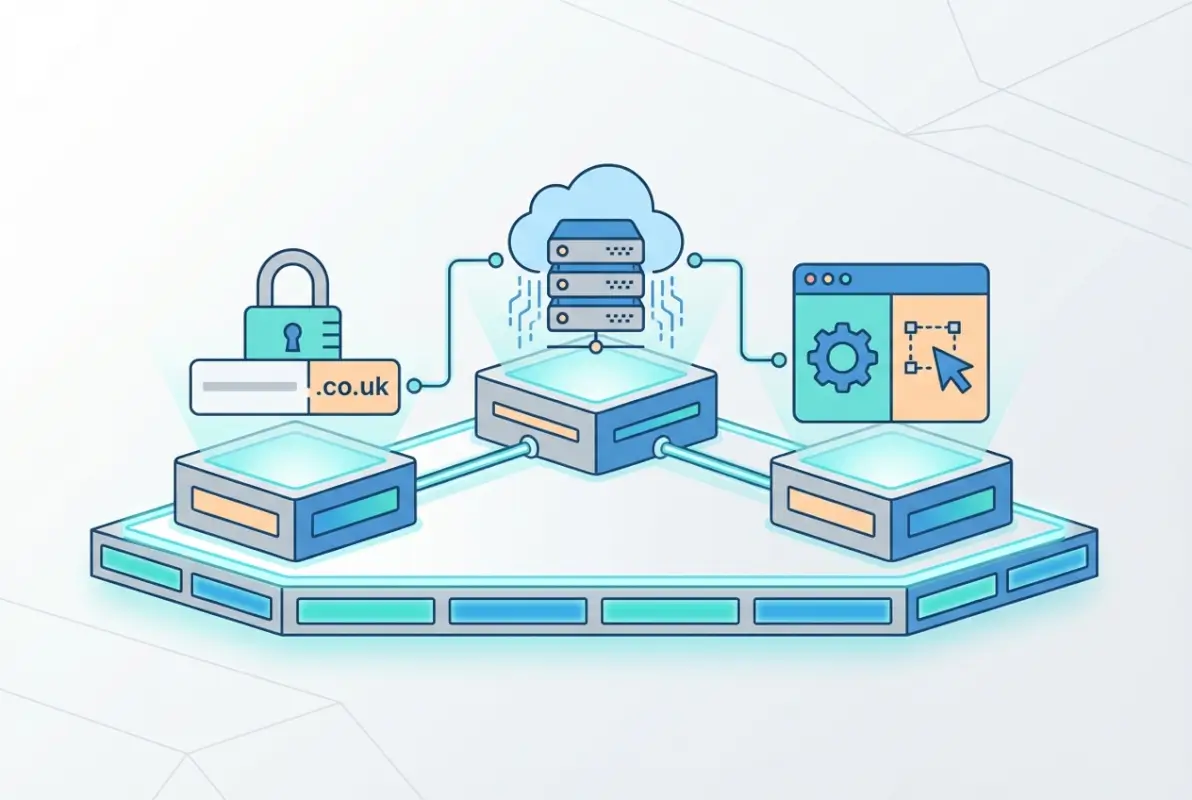
Initial development costs vary wildly based on your chosen approach. A DIY website builder like Wix or Squarespace charges £10-30 monthly but demands significant time investment—expect to spend 15-20 hours learning the platform and building your initial site. Template-based professional development runs £500-2,000, offering faster deployment with some customization. Custom development starts around £1,500 and can easily exceed £5,000 for complex functionality.
What actually drives these costs? Design complexity tops the list—custom illustrations and unique layouts cost significantly more than template modifications. A basic template customization might add £300-500, while fully bespoke design work starts around £1,500. Page count matters too, with each additional page requiring design and content placement work (typically £50-150 per page).
Functionality requirements create the biggest cost variations. A simple contact form is standard, but booking systems, payment processing, member areas, or custom calculators each add £200-1,000+ to development costs. One solicitor I worked with needed a complex case assessment tool—that single feature added £2,800 to what would’ve been a £1,200 website.
| Cost Component | One-Time | Annual | Notes |
|---|---|---|---|
| Domain registration | £10-15 | £10-15 | .co.uk domains are cheapest |
| Hosting (shared) | — | £36-180 | £3-15/month typical |
| SSL certificate | Free-£50 | Free-£50 | Let’s Encrypt is free |
| Premium plugins | £50-200 | £50-200 | Most require annual renewal |
| Maintenance/updates | — | £300-1,000 | Can DIY to reduce costs |
Content creation often gets overlooked in initial budgets but significantly impacts final costs. Professional copywriting runs £50-100 per page, photography costs £300-800 for a half-day shoot, and stock imagery adds £100-500 depending on licensing needs. Many businesses save here by writing their own content and using smartphone photography—the quality difference is smaller than you’d think for most local businesses.
Website Types and Their Real-World Costs
Not all websites are created equal, and understanding which type your business actually needs saves thousands in unnecessary features. I’ve seen retailers spend £8,000 on e-commerce functionality when they really needed a £1,200 brochure site with a phone number—they took orders by phone anyway.
The three main categories serve distinctly different business models, and choosing the wrong one wastes money while potentially hurting your business effectiveness.
Brochure Websites: Digital Business Cards Done Right
Brochure websites serve one primary purpose—establishing credibility and providing information. If you’re a service business (consultants, tradespeople, professional services) or a local business that primarily operates offline, this is probably your sweet spot.
Realistic cost range: £500-1,500
At the lower end (£500-800), you’re looking at heavily template-based solutions with minimal customization. This works perfectly fine for many businesses—I know a successful plumber whose £600 website generates 3-5 enquiries weekly. The upper range (£800-1,500) includes more design customization, better copywriting, and typically 8-12 pages instead of 5-7.
Standard brochure website features include mobile-responsive design (absolutely non-negotiable in 2025), contact forms with spam protection, Google Maps integration, social media links, basic SEO setup, and simple analytics. Some businesses add appointment booking (£200-500 extra) or live chat widgets (£15-30/month ongoing).
The timeline for brochure websites runs 2-4 weeks with professional help, or 1-2 weeks if you’re DIYing with a website builder. The biggest time sink isn’t the design—it’s gathering content, writing copy, and taking photos. Start that process before engaging a designer to save time and money.
E-commerce Websites: Selling Products Online
E-commerce changes everything. You’re not just presenting information anymore, you’re processing payments, managing inventory, handling customer data, and complying with additional regulations. The complexity and cost reflect these requirements.
Realistic cost range: £2,000-10,000+
That enormous range reflects the vast differences in e-commerce complexity. A boutique selling 30 handmade items needs vastly different functionality than a retailer with 500 products across multiple categories. Product count, payment integrations, shipping complexity, and custom features all drive costs.
Platform choice significantly impacts both initial and ongoing costs. Shopify charges £29-299 monthly but includes hosting, security, and many features standard—making it cost-effective for many businesses despite higher monthly fees. WooCommerce (WordPress) has no platform fees but requires separate hosting (£20-50/month for adequate performance) and paid extensions (£100-400 annually) for essential features.
Essential e-commerce features include product catalogs with variant support (sizes, colors), shopping cart functionality, secure payment processing (Stripe, PayPal, or UK-specific gateways), inventory management, order tracking, customer accounts, product search and filtering, and mobile-optimized checkout. Each additional feature like subscription billing, wholesale pricing, or multi-currency support adds £300-1,000.
UK-specific considerations add complexity but aren’t optional. VAT must display clearly on all prices, you need compliant returns and refund policies, UK GDPR requirements affect how you handle customer data, and distance selling regulations impose specific obligations. These requirements might add £300-600 to development costs if your developer properly implements them.
Custom Websites: Built for Unique Business Models
Custom websites make sense when your business model doesn’t fit standard templates. I’m talking about businesses with unique workflows, complex user interactions, proprietary tools, or specialized data requirements that off-the-shelf solutions simply can’t handle.
Realistic cost range: £3,000-15,000+
What justifies custom development? Unique functionality central to your business model—like a mortgage broker’s custom calculator that integrates with multiple lenders, a recruitment agency’s candidate-matching system, or a service business’s complex booking system with resource allocation. If your competitive advantage comes from how your website works (not just what it says), custom development might be worth the investment.
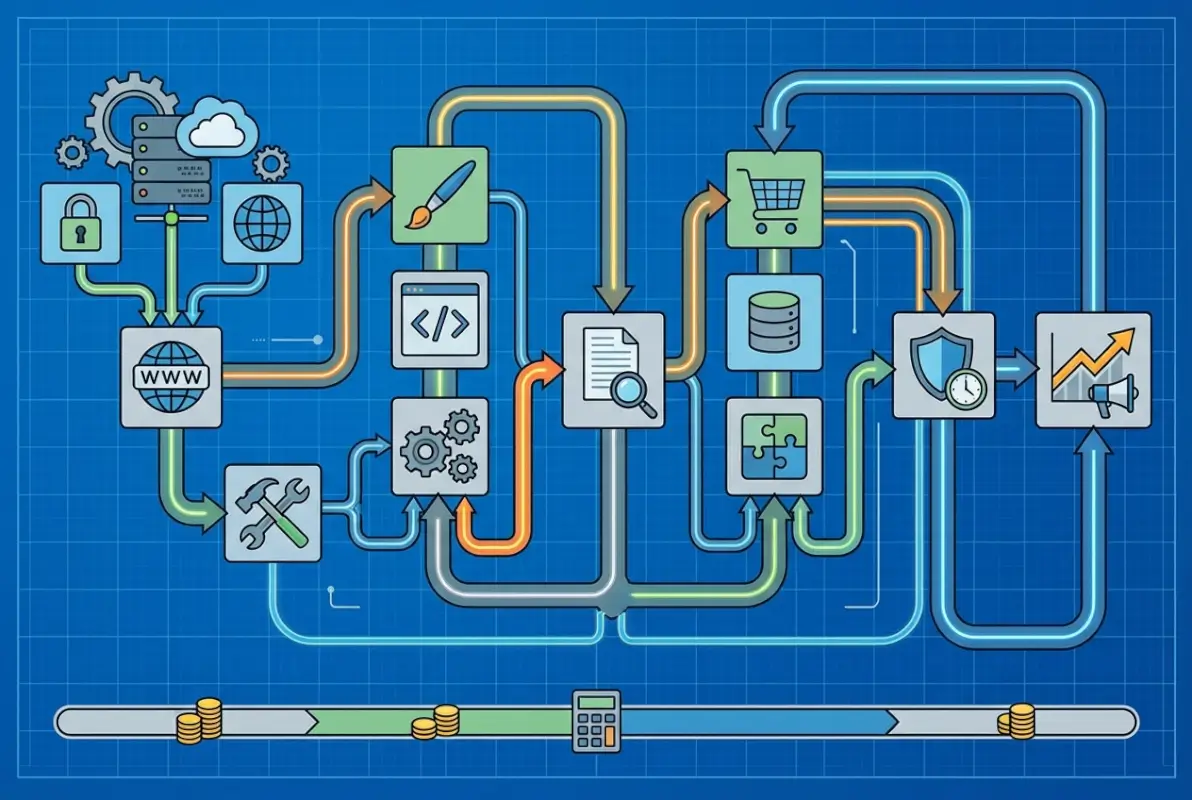
Custom development processes include discovery phases (defining exact requirements), wireframing (planning layout and user flows), design mockups (visual appearance), development sprints (building functionality), testing phases (ensuring everything works), and deployment. This comprehensive process ensures you get exactly what you need but extends timelines to 8-16 weeks minimum.
If you’re considering custom development, have you explored whether existing tools could be integrated instead? Sometimes combining a standard website with a specialized third-party tool (even at £50-100/month) costs less than building custom functionality. Your website may need to function as a successful directory website business, which might be better served by specialized platforms.
The DIY Route: Website Builders and Their True Costs
Website builders have genuinely democratized web design—I’ve seen business owners with zero technical skills create surprisingly professional sites. But “easy” doesn’t mean “free,” and the time investment is substantial.
Popular platforms like Wix, Squarespace, and WordPress.com offer templates, drag-and-drop editors, integrated hosting, and reasonably good support. Monthly costs run £10-30 for basic plans, £20-40 for business features, and £25-60 for e-commerce functionality. Annual billing typically saves 15-25%.

The real cost of DIY isn’t the subscription—it’s your time. Expect to invest 15-20 hours learning the platform and building your initial site, plus 2-4 hours monthly for updates and maintenance. For a business owner billing £50/hour, that initial 20 hours represents £1,000 in opportunity cost. Sometimes paying a professional £1,200 makes better financial sense than “saving money” yourself.
| Platform | Monthly Cost | Best For | Limitations |
|---|---|---|---|
| Wix | £10-35 | Total beginners, visual businesses | Less flexible, harder to migrate later |
| Squarespace | £11-35 | Design-focused businesses, portfolios | Fewer integrations available |
| WordPress.com | £0-45 | Content-heavy sites, blogs | Steeper learning curve |
| Shopify | £29-299 | E-commerce focused businesses | Higher cost, transaction fees on basic plan |
Hidden costs in DIY platforms include premium templates (£50-200 one-time), essential apps and extensions (£5-30/month each), premium support (£10-30/month), email marketing integrations (£10-50/month as you grow), and professional email addresses (£3-10/month). What starts as a “£10/month website” can easily become £40-60/month with necessary additions.
The biggest limitation? Customization restrictions. You’re working within the platform’s constraints, which is fine for standard business needs but frustrating when you need something specific. I watched a friend spend 8 hours trying to make Squarespace do something that would’ve taken a developer 30 minutes with custom code—sometimes you’re just hitting the platform’s ceiling.
Ongoing Costs That Catch Business Owners Off Guard
This is where many small business owners get stung—they budget for the build but forget about the running costs. I can’t count how many times I’ve heard “Wait, I have to pay every year?”
Hosting costs vary dramatically based on your needs and traffic. Shared hosting (£3-15/month) works fine for most small business websites handling under 10,000 monthly visitors. VPS hosting (£20-50/month) suits growing businesses and e-commerce sites with moderate traffic. Dedicated hosting (£100+/month) becomes necessary only for high-traffic sites or resource-intensive applications. Managed WordPress hosting (£25-60/month) offers optimized performance and expert support specifically for WordPress sites.
Domain registration seems minor but adds up—£10-15 annually for standard .co.uk domains, £15-25 for .com domains, and £30-100+ for premium or specialized domains. I always recommend registering your domain separately from your hosting provider; it gives you flexibility if you ever need to switch services.
Security and maintenance requirements aren’t optional extras—they’re essential for keeping your site running and protecting customer data. SSL certificates (often free with Let’s Encrypt, but premium versions cost £50-200/year), security monitoring and malware scanning (£5-20/month), regular backups (£3-15/month), plugin and theme updates (DIY or £200-500/year professionally), and content updates (DIY or £50-100/hour professionally) all contribute to ongoing costs.
The websites I’ve seen fail usually skip maintenance entirely, then face emergency situations costing far more than preventive maintenance would have. A hacked website might cost £500-2,000 to clean and repair, plus lost revenue while it’s down. Spending £300-500 annually on proactive maintenance is vastly cheaper than dealing with emergencies.
According to Mozilla’s web security guidelines, regular security updates should be considered mandatory, not optional, for any business website.
Smart Strategies to Control Website Costs
After helping dozens of small businesses navigate website development, I’ve identified several strategies that genuinely save money without sacrificing quality. These aren’t corners to cut—they’re smarter approaches to the same goal.
Starting with a minimum viable website makes tremendous sense for most businesses. Launch with 5-7 core pages that answer customer questions and establish credibility, then add features based on actual user behavior rather than assumptions. I worked with a gym that planned a complex class booking system, but after launching with a simple contact form, they discovered most members preferred booking by phone anyway. They saved £1,800 by not building functionality they didn’t need.

Phased development spreads costs over time while ensuring you’re building the right features. Launch phase one with essential functionality (month 1-2), monitor user behavior and gather feedback (month 3-4), then add phase two features based on actual needs (month 5-6). This approach costs more overall than building everything at once but wastes far less money on unused features.
Learning basic website maintenance yourself saves hundreds annually. Most modern content management systems make updating text, images, and prices remarkably easy—if you can use Microsoft Word, you can update a WordPress site. Ask your developer for a 1-hour training session (£50-100) covering basic updates, plugin management, and backup procedures. This small investment saves £200-500 annually on minor updates.
Choosing the right platform initially prevents expensive migrations later. Consider your 3-year needs, not just immediate requirements—switching platforms typically costs 50-75% of a new build. If you might add e-commerce within two years, start with a platform that supports it even if you’re not using it immediately.
Template customization beats custom design for most businesses. Quality templates have improved dramatically, and customizing a £50 template to match your brand costs £300-800 versus £1,500-3,000 for custom design. Unless your brand truly requires unique design elements, this saves significantly without noticeable quality loss.
| Cost-Saving Strategy | Potential Savings | Trade-Off |
|---|---|---|
| Write your own content | £300-800 | 10-15 hours of your time |
| Use template vs custom design | £1,000-2,200 | Less unique appearance |
| Take your own photos | £300-800 | Slightly lower quality |
| Learn basic maintenance | £200-500/year | 2-3 hours learning + monthly time |
| Start minimal, add features later | £500-2,000 | Launch with fewer features |
Implementing how to search businesses in fslocal directory tips can improve your website’s functionality while controlling development costs through smart integration rather than custom building.
Why Every UK Small Business Needs a Website
With all these costs laid out, you might question whether a website is truly necessary. The data overwhelmingly says yes—and the cost of not having one far exceeds the investment.
Consumer behavior has fundamentally shifted. Recent UK research shows 70% of consumers research businesses online before purchasing, and 57% won’t even consider businesses without websites. That’s more than half your potential customers gone immediately. For local businesses specifically, 76% of people who search on smartphones for nearby businesses visit within 24 hours—but only if they can find you.
Beyond just presence, websites provide tangible business benefits: they work 24/7 generating leads while you sleep, expand your reach beyond physical location limitations, establish credibility and trust (professional websites signal legitimacy), serve as your central marketing platform, and provide cost-effective ongoing visibility compared to traditional advertising.
The competitive landscape demands it. If your competitors have websites and you don’t, you’re fighting with one hand tied. Customers will simply choose businesses they can find and research online. I know a fantastic local electrician who lost work to less-qualified competitors purely because he didn’t have a website—potential customers couldn’t verify his credentials or see examples of his work.
According to W3C web standards, accessible and well-structured websites not only serve customers better but also perform better in search rankings, creating a virtuous cycle of visibility and growth.
Frequently Asked Questions About UK Small Business Website Costs
How much does a basic website cost for a small business in the UK?
A basic brochure website for UK small businesses typically costs £500-1,500 for professional development, or £10-30/month using DIY website builders plus your time investment. Template-based solutions at £500-800 work well for most service businesses, while more customized versions reach £1,200-1,500. These costs include mobile-responsive design, 5-10 pages, contact forms, and basic SEO setup.
What are the ongoing costs of running a business website?
Expect annual running costs of £300-1,000 minimum, including hosting (£36-600/year depending on type), domain registration (£10-15/year), SSL certificates (free-£50/year), security and backups (£60-240/year), and maintenance updates (£200-500/year). E-commerce sites typically cost more due to payment processing fees and enhanced security requirements.
Should I use a website builder or hire a professional developer?
Use website builders like Wix or Squarespace if you have limited budget (under £1,000), time to learn the platform, and straightforward business needs. Hire a professional developer if you need custom functionality, want faster completion, have unique design requirements, or value your time over the cost savings. Most service businesses succeed with website builders, while e-commerce and complex sites benefit from professional development.
How much does an e-commerce website cost in the UK?
E-commerce websites cost £2,000-10,000+ depending on product count and complexity. Basic Shopify or WooCommerce setups with under 50 products start around £2,000-3,000, while custom solutions with hundreds of products, advanced features, and integrations reach £5,000-10,000+. Add monthly costs of £29-60 for platforms, £20-50 for adequate hosting, and payment processing fees of 1.5-3% per transaction.
What hidden website costs should I budget for?
Hidden costs include premium plugins or extensions (£50-300/year), professional photography (£300-800 one-time), copywriting services (£50-100 per page), stock images (£100-500), email hosting (£36-120/year), backup services (£36-180/year), and emergency fixes if problems arise (£75-150/hour). Budget an extra 20-30% beyond your initial quote for these often-overlooked expenses.
Can I build a professional website myself with no experience?
Yes, modern website builders make this possible for basic sites. Wix, Squarespace, and WordPress.com offer templates and drag-and-drop editors requiring no coding knowledge. Expect to invest 15-20 hours learning and building your initial site. However, complex functionality like e-commerce, custom booking systems, or unique integrations still benefit from professional development. Your time investment versus cost savings should guide this decision.
How long does it take to build a small business website?
Timeline varies by approach and complexity. DIY website builders allow launch in 1-2 weeks if you have content ready. Professional template-based sites take 2-4 weeks including content gathering and revisions. Custom websites require 8-16 weeks for discovery, design, development, and testing. E-commerce sites need 4-8 weeks due to product setup and payment integration. Content preparation (writing, photography) often takes longer than actual website building.
Do I need to update my website regularly?
Yes, regular updates are essential for security, functionality, and search rankings. Security updates should occur monthly to patch vulnerabilities. Content updates every 4-8 weeks help search rankings and keep information current. Plugin and theme updates need checking monthly. Budget 2-4 hours monthly for DIY maintenance or £200-500 annually for professional maintenance. Neglected websites become security risks and lose search visibility.
What’s the difference between hosting types for small businesses?
Shared hosting (£3-15/month) works for most small business sites under 10,000 monthly visitors but shares resources with other sites. VPS hosting (£20-50/month) provides dedicated resources for better performance and security, suitable for growing businesses and e-commerce. Dedicated hosting (£100+/month) offers entire servers for high-traffic sites. Managed WordPress hosting (£25-60/month) optimizes specifically for WordPress with expert support included.
How much should I budget for website maintenance annually?
Budget £300-1,000 annually for standard small business websites, covering hosting, domain renewal, security updates, backups, and basic maintenance. E-commerce sites need £500-1,500 due to additional security requirements and payment system maintenance. Custom websites often require £800-1,500 annually as updates can’t rely on pre-built components. Learning basic updates yourself can reduce these costs by £200-400 annually.
Making Your Website Investment Work
The question isn’t whether you can afford a website—it’s whether you can afford not to have one. With basic sites starting around £500 and DIY options even cheaper, the barrier to entry has never been lower. What matters more than the initial cost is understanding exactly what you’re getting and ensuring it actually serves your business needs.
Start by defining your actual requirements, not what you think you should have. A well-executed £800 template site that clearly communicates your value and makes contact easy will outperform a £5,000 custom site that confuses visitors. I’ve seen it happen repeatedly—simpler often wins.
Remember that your website is an investment that works 24/7, not an expense. The business owner who spent £1,200 on her bakery website generates roughly £8,000 annually in additional revenue from online enquiries—that’s a 550% return on a one-time investment. Your results will vary, but the principle holds: a professional online presence pays for itself many times over.
Don’t let analysis paralysis prevent you from moving forward. The worst website decision is having no website at all. Start with something simple and functional, then improve based on real user feedback rather than assumptions. Your business deserves the visibility and credibility that only an online presence provides.
Was this article helpful?