7 Best Business Directory Apps to Boost Local Visibility in 2025-2026

Finding the right business directory app can feel like searching for a needle in a digital haystack. With over 180 million businesses competing for attention across various platforms, standing out requires more than just being listed—it demands strategic placement in directories where your ideal customers actually search. The landscape has shifted dramatically; what worked in 2023 won’t necessarily drive results today.

The difference between thriving businesses and those struggling for visibility often comes down to their business directory app strategy. I’ve watched countless small businesses transform their customer acquisition by focusing on just three well-optimized directory profiles rather than spreading themselves thin across dozens of mediocre listings. The secret isn’t about being everywhere—it’s about being prominently positioned where it matters most.
Recent changes in local search algorithms have fundamentally altered how directory apps impact your discoverability. Mobile-first indexing, AI-powered search results, and integrated booking systems have turned these platforms into sophisticated customer acquisition engines. Whether you’re running a neighborhood coffee shop or a multi-location service business, understanding which business listing app platforms deliver actual ROI will determine your competitive positioning.
TL;DR – Quick Takeaways
- Directory apps are customer acquisition channels – not just listing services; optimization directly impacts revenue
- Google Business Profile remains mandatory – 76% of local searches result in store visits within 24 hours
- Vertical-specific directories outperform generic ones – healthcare, hospitality, and service businesses see 3x better conversion rates
- Mobile optimization is non-negotiable – 70%+ of directory searches happen on smartphones with immediate intent
- Review management drives trust signals – active response rates correlate with 35% higher engagement
- Complete profiles get 7x more visibility – filling every field triggers algorithmic prioritization
- Integration capabilities matter – seamless CRM and booking connections reduce friction and capture more leads
What Makes a Business Directory App Essential for Local Discovery
A business directory app functions as your digital storefront for customers who don’t yet know your name but are actively searching for solutions you provide. Unlike traditional advertising that interrupts, directory apps connect you with high-intent searchers at the exact moment they’re making purchasing decisions. Think of them as matchmaking platforms between businesses and customers with immediate needs.
Modern directory apps have evolved far beyond simple yellow pages digitization. They now incorporate geolocation intelligence, sentiment analysis from reviews, booking integrations, and sophisticated search algorithms that surface the most relevant options based on dozens of signals. When someone searches for “emergency plumber near me” at midnight, the directory app that surfaces your business first captures that valuable lead.
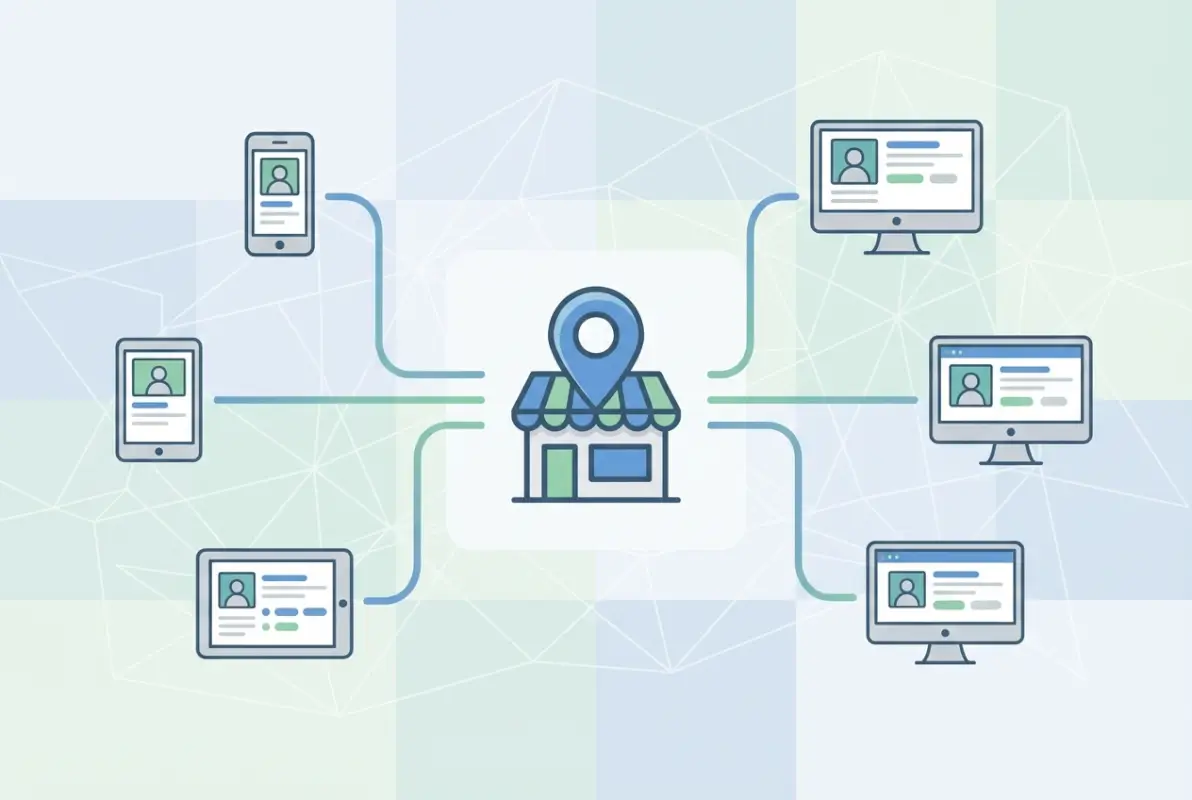
The mobile revolution fundamentally changed consumer behavior around local business discovery. People expect instant access to complete business information—hours, reviews, photos, menu items, appointment availability—all within seconds on their smartphones. According to research on local search behavior, businesses that maintain complete, optimized directory profiles capture leads that competitors with partial information simply miss.
Why Directory Visibility Directly Impacts Revenue
The connection between directory presence and bottom-line revenue isn’t abstract—it’s measurable and often dramatic. A restaurant client increased walk-in traffic by 43% within sixty days simply by optimizing listings on three key platforms. The reason? Their complete profiles with current menus, photos, and active review responses triggered higher placement in local search results.
Directory apps work because they solve the trust problem that plagues online business discovery. When potential customers see consistent information across multiple reputable platforms, accompanied by genuine reviews and professional imagery, they perceive lower risk in choosing your business. This trust signal conversion happens before they ever contact you directly.
Local SEO benefits compound over time with consistent directory presence. Search engines view citations—mentions of your business name, address, and phone number across multiple authoritative sources—as validation signals. Each quality directory listing strengthens your overall local search authority, creating a network effect that benefits all your digital properties including your website.
Key Features That Separate Effective Directories from Time-Wasters
Not all business listing apps deliver equal value. The platforms worth your investment share several distinguishing characteristics: robust mobile experiences, meaningful analytics dashboards, review management tools, integration capabilities with your existing systems, and—critically—active user bases actually searching for businesses like yours.
Analytics capabilities separate amateur directories from professional-grade platforms. You need visibility into how many people viewed your profile, clicked for directions, called your business, saved you for later, or visited your website. Without this data, you’re essentially marketing blind, unable to calculate ROI or optimize your listings for better performance.
Integration features have become table stakes for modern directory platforms. The ability to sync your business information automatically across multiple platforms, connect to your CRM for lead tracking, and enable direct booking or purchasing dramatically reduces friction in the customer journey. When I implemented automated integrations for a service business, their lead response time dropped from hours to minutes, directly increasing conversion rates.
| Essential Feature | Why It Matters | Impact Level |
|---|---|---|
| Mobile Optimization | 70%+ of local searches occur on smartphones | Critical |
| Review Management | Active responses increase engagement 35% | Critical |
| Analytics Dashboard | Enables ROI measurement and optimization | High |
| Booking Integration | Reduces friction in conversion funnel | High |
| Photo & Video Support | Visual content increases engagement 2-3x | Medium |
| Multi-location Management | Scales efficiently for growing businesses | Medium |
The 7 Best Business Directory Apps Driving Results Right Now
Choosing which platforms deserve your attention requires understanding both your business model and where your target customers actually search. The following seven platforms represent the current leaders across different use cases—from universal essentials to vertical-specific powerhouses that dominate particular industries.
These aren’t ranked strictly by size or popularity, instead I’ve organized them by the strategic value they provide for different business types. Your optimal directory strategy likely involves three to five of these platforms rather than attempting to maintain presence everywhere.

1. Google Business Profile – The Non-Negotiable Foundation
Google Business Profile stands alone as the single most important digital directory app for virtually every business with a physical presence or service area. Its integration with Google Search and Maps means it touches the vast majority of local business discovery moments. When potential customers search for businesses like yours, GBP determines whether you appear in the coveted local pack results.
Recent enhancements have transformed GBP from a simple listing into a comprehensive customer engagement platform. AI-powered response suggestions, expanded post formats, product catalogs, and booking integrations mean your profile can drive immediate conversions without users ever leaving Google. The platform now captures approximately 63% of all local business searches according to Pew Research Center data on online search behavior.
The platform’s zero cost makes it accessible to any business, but the real competitive advantage comes from optimization depth. Most businesses claim their profile and stop there, missing opportunities with weekly posts, Q&A section management, and strategic photo uploads that dramatically increase engagement rates.
2. Yelp – The Review-Driven Discovery Engine
Yelp dominates consumer decision-making for restaurants, retail, and service businesses where reviews heavily influence purchasing choices. Its community-driven ecosystem and sophisticated filtering capabilities make it particularly powerful for businesses competing in crowded local markets. The platform’s Request-a-Quote feature has become essential for service providers, generating qualified leads with specific project details.
While basic listings remain free, Yelp’s advertising options starting around $300 monthly provide significant advantages including competitor ad suppression and enhanced placement. The investment makes sense for businesses in competitive categories where prominent Yelp visibility directly correlates with phone calls and reservations. A home services contractor reported that Yelp advertising generated a consistent 4:1 return on ad spend after optimization.
What separates Yelp from other platforms is its focus on detailed, authentic reviews. The platform’s review filtering algorithm—while sometimes controversial—actually benefits businesses by surfacing legitimate feedback while suppressing suspicious or coerced reviews. This creates an environment where genuine reputation management matters more than gaming the system.
3. Apple Business Connect – The iOS User Gateway
Apple Business Connect has rapidly become essential for businesses targeting the affluent iOS user demographic. Your presence here directly influences how your business appears in Apple Maps, Siri searches, Spotlight, and Wallet—collectively representing billions of local searches monthly from users with above-average spending power.
The platform’s Showcases feature enables limited-time promotions that appear directly in search results, while Action Links allow seamless booking, ordering, or reservations through Apple Pay integration. This friction-free path from discovery to transaction is particularly valuable for hospitality and retail businesses. The entire service remains free, making it a no-brainer addition to your directory strategy.
4. Nextdoor – The Hyperlocal Neighborhood Champion
Nextdoor occupies a unique position as the neighborhood-focused business listing platform where personal recommendations carry exceptional weight. The platform’s structure—organized by actual neighborhoods with verification requirements—creates a high-trust environment where neighbor endorsements convert at rates significantly higher than traditional advertising.
For service businesses like plumbers, electricians, landscapers, and contractors, Nextdoor has become an essential lead generation channel. The neighborhood-specific targeting means every impression reaches someone within your actual service area, eliminating wasted advertising spend. Local Deals and Business Posts enable surgical targeting to specific neighborhoods with time-sensitive promotions.
Paid advertising starts at just $25 daily, making it one of the most cost-effective options for local businesses. The platform’s recommendation system, where neighbors vouch for businesses they’ve personally used, generates leads with built-in social proof. A residential contractor shared that Nextdoor consistently delivers their highest-quality leads with the shortest sales cycles.
5. TripAdvisor – The Hospitality and Experience Authority
TripAdvisor extends far beyond travel to encompass restaurants, attractions, entertainment venues, and experiences where customer reviews drive booking decisions. The platform’s Travelers’ Choice awards significantly impact visibility and customer perception, with award-winning businesses reporting substantial increases in direct bookings and premium pricing power.
Premium management tools starting around $150 monthly provide competitive intelligence, performance benchmarking, and enhanced visibility features that deliver measurable ROI for hospitality businesses. The platform’s international reach makes it particularly valuable for businesses in tourist destinations or those targeting travelers. During peak season, tourism businesses often find TripAdvisor becomes their most productive booking channel.
Recent additions including virtual tours, video integration, and AI-powered personalization have enhanced the platform’s ability to convert browsers into bookers. The Management Center’s competitive set analysis helps you understand positioning against similar businesses and identify specific improvement opportunities based on guest feedback patterns.
6. Industry-Specific Directories – The Vertical Specialists
While broad directories offer extensive reach, industry-specific platforms often deliver superior conversion rates by attracting highly qualified searchers. Healthcare businesses benefit enormously from Healthgrades and Zocdoc, where patients actively search for providers by specialty, insurance, and availability. Legal services dominate on Avvo and FindLaw, where potential clients research attorneys by practice area and credentials.
These vertical directories typically offer features tailored to specific industry needs—appointment scheduling for healthcare, case evaluation forms for legal services, menu management for restaurants. The targeted audience means competition focuses specifically within your industry rather than across all business categories. For a specialized medical practice, investing in premium Healthgrades placement delivered better ROI than any general directory.
When evaluating vertical directories for your industry, research which platforms your competitors maintain premium presence on and where your target customers actually search. For insights on building your own specialized directory, the php business directory simple steps approach offers a framework for custom solutions.
7. HubSpot’s Directory Integration – The B2B Lead Machine
HubSpot’s integrated directory features particularly benefit B2B companies and professional service providers by seamlessly connecting directory presence with sophisticated CRM capabilities. Lead capture forms, automatic contact syncing, and marketing automation workflows create a continuous pipeline from initial discovery through conversion nurturing. The listedin business directory key benefits for your business include this type of systematic lead management.
While newer compared to consumer-focused directories, HubSpot’s integration advantages create unique value for businesses already using their marketing platform. Directory leads flow directly into your CRM with full attribution tracking, automated follow-up sequences trigger based on engagement, and you gain complete visibility into which directory interactions convert to actual customers.
Pricing varies based on your HubSpot subscription tier, with basic directory capabilities available on free plans. The real competitive advantage emerges when directory presence becomes another touchpoint in your overall inbound marketing strategy rather than an isolated tactic. For B2B businesses, this integration eliminates the manual data entry and follow-up gaps that cause leads to fall through cracks.
| Platform | Best For | Starting Investment | Primary Strength |
|---|---|---|---|
| Google Business Profile | All local businesses | Free | Maximum search visibility |
| Yelp | Restaurants & consumer services | $300/month | Review ecosystem |
| Apple Business Connect | iOS-focused businesses | Free | Apple ecosystem integration |
| Nextdoor | Local service providers | $25/day | Hyperlocal targeting |
| TripAdvisor | Hospitality & tourism | $150/month | International traveler reach |
| Industry Directories | Specialized verticals | Varies widely | Qualified vertical traffic |
| HubSpot Integration | B2B companies | Free-$800/month | CRM automation |
How to Optimize Directory Listings for Maximum Lead Generation
Creating directory profiles is the easy part—optimization separates businesses that generate consistent leads from those wondering why their listings don’t perform. Complete profiles trigger algorithmic prioritization across all major platforms, yet most businesses leave 30-40% of profile fields empty. This single oversight costs them significant visibility.
Start with NAP consistency—your business Name, Address, and Phone number must match exactly across every platform. Even minor discrepancies like “Street” versus “St.” or variations in suite numbers confuse search algorithms and dilute your local SEO authority. Create a master reference document with your exact business information and use it religiously for every listing.

Visual content has become the primary driver of engagement on directory platforms. High-quality photos of your exterior (so customers can recognize your location), interior spaces, products, team members, and work-in-progress shots dramatically increase profile interactions. Businesses with 10+ professional photos see engagement rates 2-3x higher than those with minimal imagery. The business directory boosts local marketing impact through strategic visual content cannot be overstated.
The Complete Profile Optimization Checklist
Comprehensive profile completion requires methodical attention to every available field. Business hours deserve particular care—include holiday hours, special event modifications, and temporary closures well in advance. Nothing frustrates potential customers more than arriving during listed business hours to find you closed.
Category selection directly impacts discoverability. Most platforms allow primary and secondary categories—research which terms your target customers actually search for rather than defaulting to generic options. A coffee shop might benefit from categories like “Specialty Coffee,” “Breakfast Restaurant,” and “WiFi Cafe” rather than just “Restaurant.”
- Complete every available profile field (aim for 100%)
- Upload minimum 15 high-quality photos across different categories
- Create detailed service/product listings with descriptions
- Add attributes (parking, accessibility, payment methods, amenities)
- Write keyword-rich business descriptions (200-300 words)
- Enable all communication features (messaging, calls, bookings)
- Set up post scheduling for weekly content updates
- Configure automated review request workflows
Strategic Keyword Integration Without Spamming
Effective keyword optimization requires understanding search intent behind the terms your customers use. Rather than stuffing your primary keyword repeatedly, incorporate semantic variations and long-tail phrases naturally throughout your description. Someone searching “emergency plumber” has different intent than someone seeking “bathroom remodel plumber”—your profile should address both.
Use keywords strategically in specific profile sections: business description, service listings, photo captions, and post content. Modern algorithms penalize obvious keyword stuffing while rewarding natural, comprehensive content that genuinely helps searchers understand what you offer. Focus on answering the implicit questions potential customers have when discovering your business.
Monitor which search terms actually drive traffic to your listings through platform analytics. You might discover customers find you through terms you hadn’t prioritized, revealing opportunities to adjust your content strategy. This data-driven approach beats guessing which keywords matter most.
Review Management as a Competitive Advantage
Active review management separates businesses that thrive on directories from those that merely exist there. Respond to every review—positive and negative—within 48 hours to demonstrate engagement and customer commitment. Your responses appear publicly, influencing potential customers who read reviews before deciding.
For negative reviews, acknowledge the concern, apologize for the experience, and offer to resolve the issue privately. This approach shows prospective customers you take feedback seriously and actively work to address problems. I’ve watched businesses transform their online reputation simply by implementing consistent, professional review response protocols.
Implement systematic review generation processes by requesting feedback from satisfied customers through follow-up emails, text messages, or in-person at purchase. Make it easy by providing direct links to your profiles on preferred platforms. Businesses that actively solicit reviews typically maintain 3-5x more review volume than those relying on organic submissions alone.
Common Directory Mistakes That Kill Your Visibility
The most damaging mistake businesses make with directory apps is treating them as “set it and forget it” marketing tools. Platforms increasingly reward active participants with algorithmic preference, meaning stale profiles gradually lose visibility even if they were initially well-optimized. Schedule monthly maintenance sessions to refresh content, update photos, and verify information accuracy.
Inconsistent information across platforms creates what SEO professionals call “citation conflicts” that confuse search engines and erode trust signals. When Google sees your business listed with three different phone numbers across various directories, it cannot confidently surface your information to searchers. This single issue probably costs businesses more visibility than any other mistake.

Many businesses create profiles on every directory they discover, then lack capacity to properly maintain them all. This spray-and-pray approach typically underperforms a focused strategy on 3-5 well-maintained profiles. Quality beats quantity—better to dominate placement on platforms where your customers actually search than to maintain mediocre presence everywhere.
The Hidden Costs of Incomplete Profiles
Incomplete profiles trigger multiple compounding penalties. First, algorithms deprioritize them in search results since partial information provides less value to users. Second, potential customers view incomplete profiles as signals of neglect or potential business instability. Third, you miss opportunities to rank for specific search terms associated with attributes and services you didn’t bother listing.
Profile completion directly correlates with conversion rates. When customers can answer all their questions from your directory profile—hours, services, pricing indicators, booking options—they convert to action (call, visit, book) at dramatically higher rates than when they must navigate to your website for basic information.
Why Ignoring Analytics Costs You Money
Most directory platforms provide robust analytics about profile performance, yet businesses rarely examine this data systematically. Understanding which platforms drive actual customer actions—calls, direction requests, website visits, bookings—enables intelligent resource allocation toward your highest-performing channels.
Analytics reveal optimization opportunities you’d never discover otherwise. Perhaps your profile receives strong views but minimal calls, suggesting your phone number isn’t prominently displayed or your call-to-action messaging needs strengthening. Maybe direction requests spike on weekends, indicating opportunity for weekend-specific promotions. This intelligence drives continuous improvement.
For businesses considering building their own directories, resources like the business directory website complete guide provide frameworks for tracking and optimizing performance from the ground up.
Choosing Between Free and Paid Directory Features
The free versus paid decision for directory platforms requires calculating potential return on investment rather than defaulting to free options because they cost nothing. In highly competitive markets, premium placement often delivers multiples more visibility than free listings, easily justifying the investment through additional customer acquisition.
Start with comprehensive free listing optimization across your core platforms. After 60-90 days, analyze performance data to identify which directories drive meaningful traffic and leads. These high-performers become candidates for paid upgrades where enhanced features like sponsored placement, competitor ad blocking, or advanced analytics might deliver incremental gains.

Premium features make most sense when you operate in competitive categories where organic placement keeps you buried below competitors, when your customer lifetime value justifies higher acquisition costs, or when advanced features like booking integration directly reduce friction in your sales process. A home services business spending $500 monthly on Yelp advertising with $15,000 average project values has very different ROI math than a coffee shop with $8 average transactions.
Calculating True Directory ROI
Accurate ROI calculation requires tracking directory-sourced leads through to actual revenue. Implement call tracking numbers specific to each directory platform, use unique booking links, and train staff to ask new customers how they found you. This attribution data reveals which platforms justify investment versus which drain resources without returns.
Consider both direct and indirect value from directory presence. While immediate customer acquisition represents obvious ROI, directory profiles also provide SEO benefits through citation building, brand awareness through repeated exposure, and trust signals when customers research you across multiple platforms before converting. These secondary benefits are harder to quantify but contribute real value.
| ROI Factor | How to Measure | Typical Impact |
|---|---|---|
| Direct lead volume | Platform analytics + attribution | High |
| Lead quality/intent | Conversion rates by source | High |
| Local SEO authority | Overall search ranking trends | Medium |
| Brand awareness | Direct/branded search volume | Medium |
| Customer trust signals | Multi-touch attribution analysis | Medium |
When to Build Your Own Directory Platform
Some businesses reach a point where creating their own directory platform makes strategic sense—typically when you want to aggregate information across an industry or geography, when existing directories don’t adequately serve your niche, or when directory ownership itself becomes a business model. Building versus partnering represents a fundamental strategic choice with different resource requirements and potential returns.
Consider building when you have proprietary data or relationships that create competitive moats, when you can offer unique features that existing directories lack, or when you’re establishing authority positioning in a specific vertical. A trade association might build a member directory that becomes the authoritative resource for their industry, creating value for members while establishing the association’s centrality.
The W3C web standards for accessibility provide essential guidance for ensuring your directory platform serves all users effectively if you choose to build. TurnKey Directories offers WordPress-based solutions that provide complete control while integrating with major platforms, giving you flexibility to start with proven tools rather than building entirely from scratch.
Frequently Asked Questions
What exactly is a business directory app and why does my business need one?
A business directory app is a digital platform that helps consumers discover and research local businesses through searchable databases organized by category, location, or specialty. Your business needs strategic presence on these platforms because they capture high-intent customers actively searching for solutions you provide, often immediately before making purchasing decisions. Directory apps essentially serve as digital storefronts that complement your physical location and website.
How many business directory listings should I maintain for effective local SEO?
Focus on 3-5 well-optimized, actively maintained directory profiles rather than spreading thin across dozens of platforms. Prioritize Google Business Profile as non-negotiable, then add 2-4 additional directories based on your industry and where your target customers actually search. Quality of optimization and consistency beats quantity of listings. Maintain complete profiles with regular updates, active review management, and fresh content on your core platforms.
How do I optimize my business profile across multiple directory apps efficiently?
Start by creating a master business information document with your exact NAP details, descriptions, categories, and all relevant attributes. Use this reference to ensure consistency across platforms. Implement a monthly maintenance calendar to systematically review each profile, update photos and information, respond to reviews, and post fresh content. Consider tools that sync basic information across multiple directories to reduce manual entry while still customizing content for each platform’s unique features.
What’s the real difference between free and paid business directory apps?
Free directory listings provide basic visibility with standard search placement, while paid options typically offer enhanced placement in search results, competitor ad suppression, advanced analytics, additional profile features, and priority customer support. Paid makes sense when you operate in competitive markets where organic placement underperforms, when customer lifetime value justifies higher acquisition costs, or when advanced features like booking integration directly improve conversion rates. Calculate ROI based on actual lead generation rather than assuming paid is always better.
How can I effectively monitor and respond to reviews across multiple directories?
Set up notification systems within each platform to alert you immediately when new reviews appear. Develop response templates for common scenarios while personalizing each actual response. Respond within 48 hours to all reviews—positive and negative. For negative reviews, acknowledge the concern, apologize sincerely, and offer offline resolution. Track review sentiment patterns to identify systemic service issues requiring operational improvements rather than just response management.
Should I build my own directory app or partner with existing platforms?
Partner with existing platforms if your primary goal is customer acquisition and visibility, as established directories already have user traffic and search authority. Build your own when you have proprietary data creating competitive advantages, when serving a niche inadequately addressed by existing platforms, or when the directory itself becomes your business model. Building requires significant ongoing investment in technology, content, marketing, and user acquisition that most businesses find more expensive than premium listings on established platforms.
How do I keep directory data accurate and synchronized across multiple platforms?
Create a master business information document that serves as your single source of truth for all listings. Schedule quarterly comprehensive audits of all your directory profiles to catch discrepancies. When business information changes, immediately update your master document and systematically update all active directory profiles within 24 hours. Consider directory management tools that can push updates to multiple platforms simultaneously, though you’ll still need manual verification since platforms have different fields and requirements.
Which business directory apps work best for B2B companies versus B2C businesses?
B2C businesses typically prioritize consumer-focused platforms like Google Business Profile, Yelp, Apple Business Connect, and Nextdoor where individual customers search for immediate needs. B2B companies benefit more from LinkedIn, industry-specific directories, and integrated platforms like HubSpot that connect with their CRM and sales processes. B2B directory strategy should emphasize professional credibility signals, detailed capability descriptions, and lead capture forms rather than reviews and immediate bookings that matter more for B2C.
How long does it take to see results from optimized business directory listings?
Initial visibility improvements often appear within 2-3 weeks of comprehensive profile optimization as search algorithms recognize your enhanced information completeness. Meaningful lead generation typically builds over 60-90 days as your listings accumulate reviews, fresh content, and engagement signals that algorithms reward. Sustained results require ongoing maintenance—businesses that optimize then neglect their profiles see performance gradually decline over 4-6 months as competitors with active management gain algorithmic advantage.
Can business directory apps completely replace my business website?
Directory apps should complement rather than replace your website. While directories provide crucial discovery and initial information, your website offers complete control over branding, messaging, detailed information, and conversion optimization. The most effective strategy uses directory profiles to capture high-intent local searches, then directs interested prospects to your website for deeper engagement and conversion. Your website also provides the destination for customers who want to learn more after discovering you through directory platforms.
Taking Action on Your Directory Strategy Today
Success with business directory apps requires treating them as active marketing channels demanding consistent attention rather than one-time setup tasks. The businesses that dominate local search results don’t necessarily have better products or services—they simply execute directory optimization more systematically than competitors who create profiles then abandon them.
Start with a comprehensive audit of your current directory presence. Search for your business name across major platforms to discover existing listings you may not control, then claim and optimize each one systematically. This foundation work typically requires 6-8 hours of focused effort but delivers compounding returns for years.
Implement a realistic maintenance schedule you’ll actually follow. Monthly reviews beat ambitious weekly plans you abandon after two months. Block specific calendar time for directory management rather than hoping you’ll find time organically. Treat this commitment like any other critical business function—because it directly impacts your customer acquisition effectiveness.
The directory landscape will continue evolving with new platforms emerging, features expanding, and algorithms adjusting. Staying current requires following platform updates, monitoring performance data, and adjusting your strategy based on results rather than assumptions. The businesses that thrive treat directories as dynamic channels requiring ongoing optimization rather than static listings to check off a to-do list.
Which directories will you optimize first? The competitive advantage goes to businesses that execute consistently rather than those with perfect strategies they never implement. Start with Google Business Profile today, then systematically expand to additional platforms that align with your specific business model and customer behaviors. Your future customers are searching right now—make sure they find you at your best.