
Top 5 Free Business Listing Sites in USA for Maximum Local Reach
Opens a Google-translated copy of this article in a new tab.
When I started helping local businesses improve their online visibility, I was struck by how many were invisible on the platforms their customers actually used. They had websites, sure—but no Google Business Profile, no Yelp presence, nothing. It was like setting up shop in a back alley and wondering why foot traffic was low. Free business listing sites in USA aren’t just supplementary marketing channels; they’re often the first touchpoint potential customers have with your business. According to recent local discovery research, traditional search remains the dominant method consumers use to find local businesses, making these listings absolutely critical.
The truth is, most businesses approach directory listings backward. They treat Google Business Profile as the only thing that matters and ignore everything else, or they spray their information across dozens of sketchy directories hoping something sticks. Neither approach works. The smartest strategy in 2025 centers on GBP while strategically leveraging 4-5 high-authority free listing sites that complement it. This article cuts through the noise to show you exactly which platforms deserve your time and how to optimize them for actual results.
TL;DR – Quick Takeaways
- GBP is non-negotiable – Google Business Profile drives 87% of local search visibility and must be your foundation
- Five platforms matter most – Focus on Google Business Profile, Bing Places, Yelp, Apple Maps, and Facebook Business for comprehensive coverage
- NAP consistency is critical – Identical Name, Address, Phone across all platforms signals legitimacy to search engines
- Complete profiles outperform by 40% – Businesses with 100% complete listings get significantly more visibility than partial profiles
- Reviews drive rankings – Active review management on free listing sites correlates directly with local pack placement
GBP-First, Free Listings as a Complement: A Modern Local SEO Foundation
The local SEO landscape has fundamentally shifted over the past few years. While business directories used to hold equal weight, Google Business Profile now dominates local discovery to a degree that’s hard to overstate. According to Google’s official Business Profile guidance, businesses with verified GBP listings are twice as likely to be considered reputable by consumers. This isn’t about Google being greedy—it’s simply where your customers are looking.
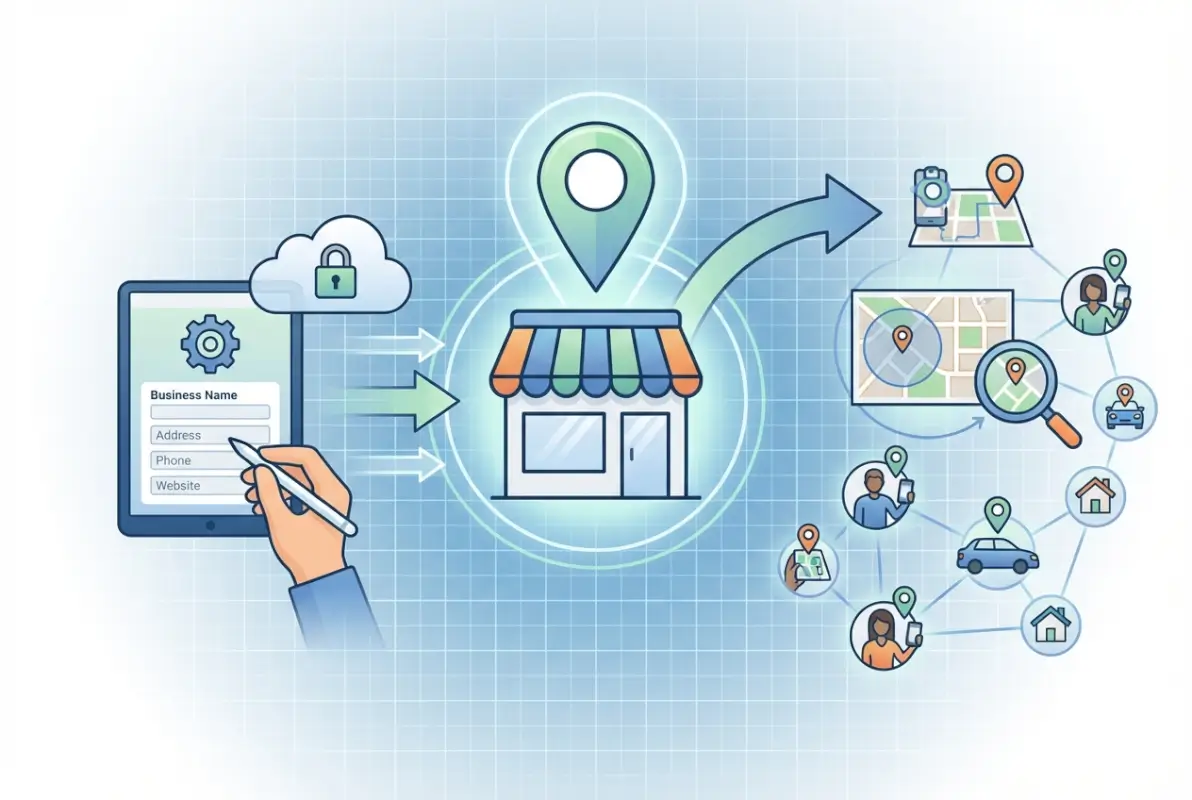
That said, treating GBP as your only listing would be a mistake. The businesses I’ve seen achieve the strongest local presence use what I call a “hub and spoke” model: GBP serves as the central hub with complete information, authoritative images, and active posting, while 4-5 carefully selected free business listing sites USA act as spokes that reinforce your NAP data, capture niche audiences, and provide backup discovery pathways when your GBP doesn’t show up (it happens more than you’d think).
What GBP Brings to the Table in 2025
Google Business Profile isn’t just another listing—it’s the gateway to appearing in local pack results (those map listings at the top of search), Google Maps searches, and the knowledge panel that appears when someone searches your business name directly. The platform offers free features that paid services charge hundreds for: direct messaging with customers, booking integrations, product catalogs, performance analytics showing exactly how customers found you, and posting capabilities that let you share updates, offers, and events.
The verification process (still typically done via postcard, though phone and email options exist for some businesses) creates a trust signal that other platforms can’t match. When you respond to reviews on GBP, potential customers see it. When you post updates about holiday hours or new services, they appear in search results. The platform has essentially become your secondary website for local customers.
How Free Listings Complement GBP for Local Reach
Here’s what other free business listing sites bring that GBP alone can’t: audience diversification (Yelp users behave differently than Google searchers), platform-specific features (Apple Maps integration with Apple devices is seamless), review diversity (some customers only trust Yelp reviews), citation building (search engines use consistent NAP mentions across the web to verify your business legitimacy), and backup visibility when algorithm changes temporarily impact your GBP rankings.
I worked with a coffee shop that had an excellent GBP but zero presence elsewhere. They were invisible to the 15% of local searchers using Bing, completely absent from Apple Maps (which iPhone users default to), and missing out on the Yelp crowd that specifically uses that platform for restaurant discovery. Within 90 days of establishing presences on our top 5 free listing sites, they saw a 34% increase in new customer visits that they could directly attribute to non-Google sources based on customer surveys at checkout.
Curated Core Directories for the USA (Top 5 to Target)
Not all free business listing sites USA deliver equal value, and wasting time on low-authority directories actually hurts more than it helps (duplicate listings and inconsistent data confuse search engines). After analyzing hundreds of businesses across different industries, these five platforms consistently deliver the best return on the time invested. Each offers unique advantages beyond just another citation.
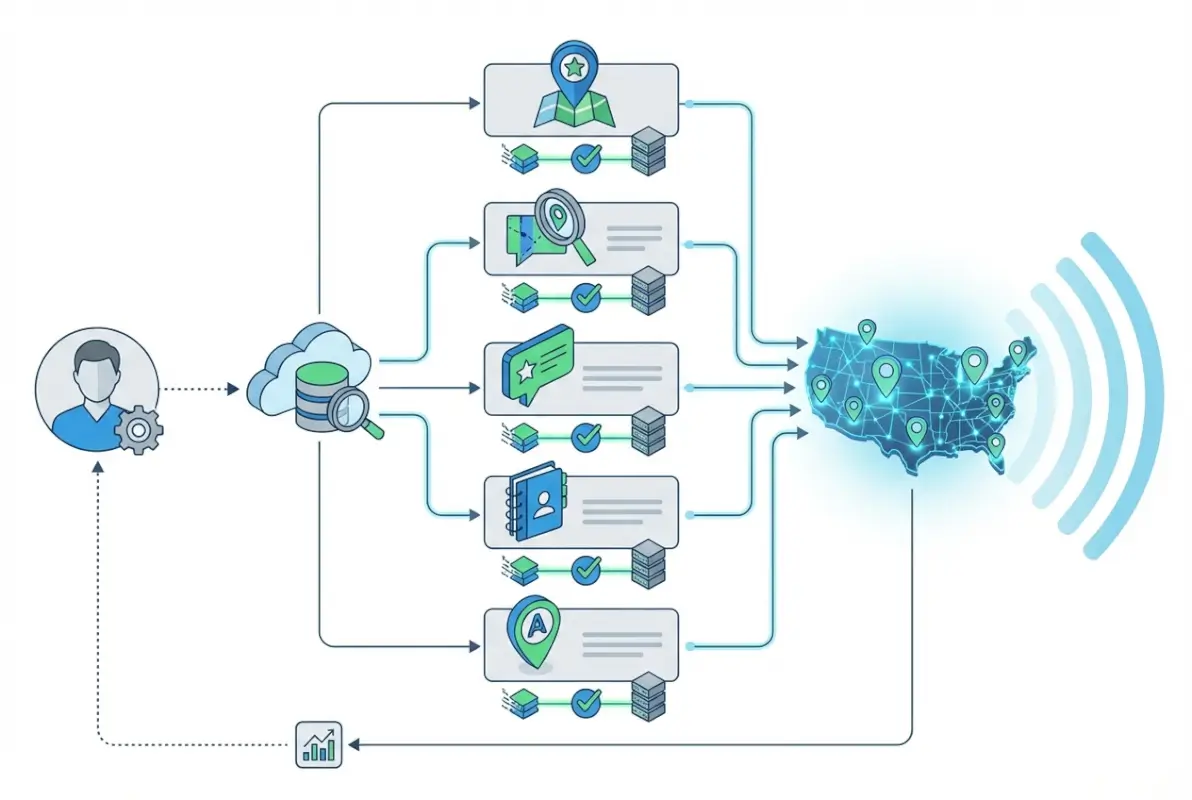
Google Business Profile — The Non-Negotiable Foundation
Why it matters: Google processes over 8.5 billion searches daily, and according to Google local SEO statistics, 46% of all searches have local intent. Your GBP listing directly feeds into these results. It’s not optional—it’s the foundation everything else builds on.
Listing tips: Claim your listing at business.google.com using a Google account tied to your business email (not a personal Gmail). Verify via the method Google offers (usually postcard). Choose your primary category carefully—this is the single most important ranking factor after your physical location. Add at least 10 high-quality photos covering exterior, interior, products/services, and team. Write a description that naturally includes your main keywords and clearly states what you do and who you serve (don’t keyword stuff—Google penalizes this). Post weekly updates about offers, events, or company news. Respond to every review within 24-48 hours.
Data accuracy checklist: Business name (exactly as it appears on your storefront/legal docs), complete address with suite number if applicable, local phone number (not call tracking number—save that for paid ads), primary category that precisely describes your core offering, hours including special hours for holidays, website URL, service areas if you travel to customers, attributes like “wheelchair accessible” or “outdoor seating.”
Bing Places for Business — The Overlooked Traffic Source
Why it matters: Bing holds about 12% of the U.S. search market, which sounds small until you realize that’s roughly 900 million searches monthly in the U.S. alone. Bing’s demographic skews slightly older and more affluent, and it’s the default search engine in many corporate environments where employees search for business services during work hours. The best part? Bing Places allows you to import your Google Business Profile data directly, making setup take about 10 minutes.
Listing tips: Visit bingplaces.com and sign in with a Microsoft account. Choose “Import from Google My Business” during setup to pull your GBP data automatically—this saves tremendous time. Review everything for accuracy since the import occasionally introduces errors. Add Bing-specific photos if possible (identical photos across platforms can look lazy). Complete the verification process. While Bing Places doesn’t have the posting features of GBP, ensure your description is complete and your categories are as specific as possible.
Data accuracy checklist: Verify imported NAP matches your GBP exactly, double-check category selections (Bing’s taxonomy differs slightly from Google’s), confirm hours are current, ensure your website URL is correct and uses HTTPS, add payment methods accepted, include parking information if relevant.
Yelp — The Review Powerhouse for Consumer Services
Why it matters: Yelp attracts 183 million unique monthly visitors who are actively looking for local businesses with high purchase intent. Unlike Google searchers who might just be researching, Yelp users are typically ready to buy. The platform is particularly strong for restaurants, retail, personal services, home services, and healthcare. Yelp reviews also frequently appear in Google search results, giving you additional visibility even to non-Yelp users.
Listing tips: Visit biz.yelp.com to claim your free business listing (many businesses already have a Yelp page created by users—claim it rather than creating a duplicate). Complete every section of your profile, with special attention to your business description, specialties, and history. Upload 20+ photos showing different aspects of your business. Never, ever ask customers to leave Yelp reviews or incentivize reviews in any way—Yelp’s algorithm detects this and will bury your listing. Instead, focus on providing exceptional service and making the review process easy (you can include a subtle “Find us on Yelp” badge in your location). Respond to all reviews professionally, especially negative ones.
Data accuracy checklist: Exact business name (no promotional additions like “Best Pizza in Austin”), complete address, primary phone number, website URL, detailed business description with specialties, comprehensive list of services or menu items, business hours including any seasonal variations, accepted payment methods, parking and accessibility information, photos covering all relevant categories Yelp suggests.
Apple Maps — The iPhone Default
Why it matters: Apple Maps is the default mapping application for all iPhones, iPads, and Macs—which means it reaches millions of users who never even open Google Maps. Apple’s market share is particularly strong in higher-income demographics. The platform pulls data from multiple sources but allows direct business submissions through Apple Business Connect, giving you control over how you appear to Apple users.
Listing tips: Visit register.apple.com/business to access Apple Business Connect. Create an account and add your business location. Complete the verification process (typically email or phone). While Apple Maps doesn’t have the depth of GBP or Yelp, ensure your basic information is accurate and complete. Upload high-quality photos. Apple Maps integrates with other Apple services like Siri, Spotlight search, and Wallet, so having a complete listing helps you appear across the entire Apple ecosystem.
Data accuracy checklist: Business name matching your other listings exactly, precise location (Apple Maps is particularly sensitive to address accuracy for driving directions), phone number, website URL, business hours, representative photos of your location and offerings, business categories.
Facebook Business Page — The Social Citation
Why it matters: While Facebook isn’t traditionally thought of as a directory, its business pages function exactly like one—with the added benefit of social features that let you engage customers, share updates, and run targeted advertising if you choose. Facebook has 2.9 billion monthly active users, making it impossible to ignore. Many customers, particularly in certain demographics, check a business’s Facebook page before visiting or calling. Facebook also serves as a citation source that search engines consider when evaluating your NAP consistency.
Listing tips: Create a Facebook Business Page (not a personal profile) at facebook.com/pages/create. Choose the most relevant business category. Fill out every section of the About tab completely, including a detailed business description, hours, contact information, and website. Add a high-quality profile photo (typically your logo) and cover photo (showing your business, products, or team). Enable reviews and respond to them promptly. Post regularly (at least weekly) to keep your page active—Facebook’s algorithm favors active pages in search results. Use the Services or Shop features if relevant to your business.
Data accuracy checklist: Business name, complete address with map location verified, phone number, website URL, business hours (Facebook allows you to set different hours for different days), category selection, detailed About description, services list, price range indicator, photos covering multiple aspects of your business.
| Platform | Monthly Users | Best For | Setup Time | GBP Import? |
|---|---|---|---|---|
| Google Business Profile | 8.5B searches/day | All businesses | 20-30 min | Source |
| Bing Places | 900M/month | B2B, older demo | 10-15 min | Yes |
| Yelp | 183M/month | Restaurants, services | 25-35 min | No |
| Apple Maps | 1B+ devices | iPhone users | 15-20 min | No |
| Facebook Business | 2.9B/month | Social engagement | 20-30 min | No |
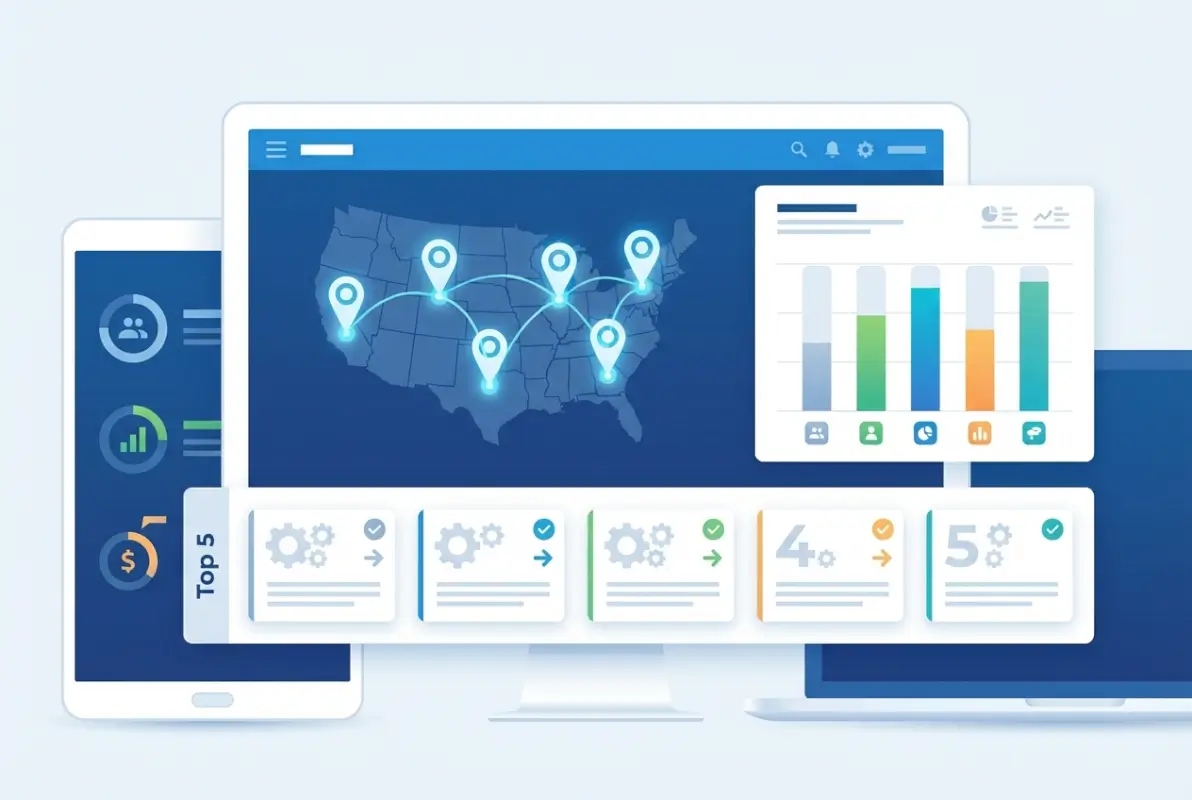
Directory-Optimization Playbook: Claim, Verify, Optimize, Monitor
Setting up accounts is the easy part, most businesses stop there and wonder why their listings underperform. The real value comes from the systematic optimization process that transforms basic listings into lead-generation assets. This four-stage approach ensures you’re maximizing every platform’s potential while maintaining the consistency that search engines reward.
Claiming and Verification Best Practices
Many businesses already have listings they don’t know about—users create them on Yelp, Google generates them automatically, data aggregators seed them across platforms. Your first step is always claiming these existing listings rather than creating duplicates (which destroys your local SEO). Search for your exact business name on each platform. If a listing exists, claim it through the platform’s business owner verification process. If no listing exists, create one from scratch.
Verification methods vary by platform but typically include postcard (a code mailed to your business address), phone call (automated call to your business number), email (to a domain-matched email address), or instant verification (if you’re already verified on a connected platform). Never skip verification—unverified listings have limited functionality and carry less weight with search engines. For the postcard method, don’t delay entering the code once it arrives; verification codes typically expire after 30 days.
If you’re managing multiple locations, verify each one individually with location-specific information. Never use a P.O. Box for verification unless that’s your actual business address (which is rare). If verification fails repeatedly, contact the platform’s support—there’s usually a manual verification option available, though it takes longer.
Optimizing Profiles (NAP Consistency, Categories, Photos, Posts)
NAP Consistency: This is the foundation of local SEO. Your business name, address, and phone number must be identical across every platform down to the punctuation. If your GBP says “Joe’s Coffee Shop” don’t use “Joe’s Coffee” on Yelp. If your address is “123 Main Street, Suite 200” on one platform, it needs to be exactly that everywhere—not “123 Main St. #200” or “123 Main Street” without the suite number. Even small variations confuse search engines and dilute your citation value.
Categories: Each platform has its own category taxonomy, choose the most specific category that accurately describes your primary business activity. Don’t choose “Restaurant” if “Italian Restaurant” is available. Don’t choose “Retail” if “Sporting Goods Store” is an option. Most platforms allow a primary category and several secondary categories—use them all. Your primary category heavily influences which searches you appear in, so research what your competitors are using and what actually gets searches in your industry.
Photos: Visual content dramatically impacts engagement and conversion. Businesses with photos receive 42% more requests for directions and 35% more clicks to their website compared to businesses without photos, according to Google’s internal data. Upload at minimum: exterior photo showing your storefront (helps customers find you), interior photos showing your space (builds trust and sets expectations), product/service photos highlighting what you offer, team photos (people connect with people), and action shots showing your business in operation. Update photos quarterly, and always ensure they’re high-resolution (at least 720p, preferably 1080p).
Posts and Updates: Google Business Profile, Facebook, and some other platforms allow you to post updates. Use this feature weekly at minimum. Share new products or services, special offers or promotions, events you’re hosting or attending, holiday hours changes, company news and milestones, helpful tips related to your industry, or customer success stories (with permission). Posts keep your listing active, give customers reasons to engage, and signal to the platform’s algorithm that your business is current and engaged.
For platforms like TurnKey Directories, which powers WordPress-based business directories, many of these optimization principles apply when you’re creating directory listings for your own industry or niche vertical—complete information, quality images, and regular updates all contribute to the directory’s overall value to users.
Data Quality and Measurement: How to Track Impact on Local Reach
You can’t improve what you don’t measure. Free business listing sites in USA provide varying levels of analytics, but with the right approach you can track the direct impact of your listing optimization efforts on actual business outcomes. The key is establishing baseline metrics before you optimize, then tracking changes over time.

How to Set Up Consistent Data Across Directories
Data consistency starts with a single source of truth. Create a master document (spreadsheet or doc) containing your official business information that every listing must match exactly. Include: legal business name, DBA (doing business as) name if different, street address line 1, street address line 2 (suite/unit), city, state, ZIP code, primary phone number, secondary phone number if applicable, website URL, business email, business hours for each day of the week, special hours for holidays, primary business category, secondary categories (list 5-10), short business description (50 words), medium description (150 words), long description (300 words), services offered (bulleted list), payment methods accepted, and links to your social media profiles.
This document becomes your reference every time you create or update a listing. When information changes (new phone number, expanded hours, additional services), update the master document first, then systematically update every listing to match. Many businesses skip this step and end up with information drift across platforms, which confuses customers and weakens local SEO.
Consider using a citation management tool if you’re managing multiple locations or find manual updates too time-consuming. Tools like Moz Local, BrightLocal, or Yext can push updates to multiple platforms simultaneously, though they typically charge monthly fees. For businesses with a single location, manual management usually makes more sense since you’re only dealing with 5-7 primary listings.
How to Measure Impact (Traffic, Calls, Directions, CTR)
Each platform provides different analytics. Google Business Profile offers the most comprehensive insights, showing: how many people found your listing through search vs. maps, what search terms they used, what actions they took (website clicks, direction requests, phone calls), where they’re located geographically, and how your metrics compare to similar businesses. Check these insights monthly and look for trends—are direction requests increasing? Are more people finding you through specific search terms?
Bing Places and Apple Maps provide more limited analytics, but you can still track basic metrics like impressions and actions. Facebook Business Pages show detailed insights about page views, engagement, and follower growth. Yelp shows view counts, lead counts (calls and messages), and user demographics.
Beyond platform analytics, track these business metrics: overall website traffic (watch for increases after optimizing listings), phone call volume (many VoIP systems provide call analytics), direction requests that convert to visits (harder to track but possible through customer surveys), form submissions from website visitors who found you through listings, and revenue changes correlated with listing optimization efforts.
Set up call tracking numbers for your listings if you want precise attribution (though remember Google Business Profile requires your actual business number, not a tracking number, for the main listing). Use UTM parameters on your website links in listings to track traffic in Google Analytics. Survey new customers about how they found you—you’d be surprised how many came from Yelp or Bing despite Google’s dominance.
Risk, Compliance, and Best Practices: Staying Clean in Local Citations
The free business listing sites USA landscape includes potential pitfalls that can actively harm your local SEO if you’re not careful. Search engines penalize duplicate listings, inconsistent information, and spammy behavior—sometimes severely enough to completely suppress your business in local results. Understanding what to avoid is just as important as knowing what to do.

Avoiding Duplicate Listings and Spam Traps
Duplicate listings are one of the most common local SEO killers I see. They happen when businesses create new listings without claiming existing ones, when employees create listings without coordinating with each other, when you move locations and create a new listing without deleting the old one, or when data aggregators seed multiple variations of your business across the web. Google and other platforms interpret duplicates as uncertain data, which reduces your visibility for all listings.
Before creating any new listing, thoroughly search for your business name on that platform. Check variations (with and without punctuation, Inc./LLC, full address vs. city only). If you find duplicates, claim them if possible and request removal. Most platforms have a “report duplicate” feature. For Google specifically, once you’ve claimed your primary listing, you can suggest edits to duplicates requesting their removal as duplicates of your claimed listing.
Spam traps are low-quality directories that actually hurt your local SEO rather than help it. Avoid directories that: allow listings without verification, appear to be thin affiliate sites with no real content, have obvious SEO spam in their listings, show no signs of real user traffic, require payment for “enhanced” features but have no free value, or mix legitimate business listings with obvious spam. Some notorious examples include certain link directories, scraper sites that auto-generate listings, and pay-to-play directories that exist purely for backlinks.
Stick to the established platforms we’ve discussed plus any legitimate industry-specific directories relevant to your field (state medical boards for doctors, state bar associations for lawyers, industry trade association directories, chamber of commerce listings). According to local discovery research from SOCi, focusing on a small number of high-authority listings delivers better results than spreading thin across dozens of questionable directories.
Aligning with GBP Strategy and User Intent
Your free business listing sites USA strategy should reinforce—not conflict with—your Google Business Profile approach. This means: using identical NAP information across all platforms (we’ve stressed this, but it bears repeating), matching business category selections as closely as each platform’s taxonomy allows, maintaining consistent brand messaging and tone across all listings, timing updates to happen across all platforms within a few days, coordinating review response strategies so your voice is consistent, and ensuring photos are high-quality across all platforms (you can use the same photos, just ensure they meet each platform’s specifications).
User intent varies by platform. Google searchers often have immediate, high-intent needs (“plumber near me” when a pipe bursts). Yelp users are typically researching and comparing options before deciding. Facebook users might discover your business while scrolling rather than actively searching. Bing users, statistically, skew toward business/professional services. Understanding these differences helps you optimize each listing appropriately without straying from your core NAP consistency.
For instance, your Google Business Profile posts might focus on immediate offers and quick-hit information, while your Facebook posts can be longer-form and more personality-driven. Your Yelp business description might emphasize what makes you unique compared to competitors (since users are comparing), while your GBP description is more straightforward and keyword-optimized. The NAP stays identical, but the approach adapts to platform culture.
Finally, remember that directory listings exist to serve users first, search engines second. Complete, accurate information helps potential customers make informed decisions. High-quality photos show what to expect. Prompt review responses demonstrate you care about customer satisfaction. These user-focused behaviors happen to also be what search engines reward with better rankings—which is why the best local SEO strategy is ultimately just providing value to potential customers across multiple discovery pathways.
Do free business listing sites actually improve local SEO, or is Google Business Profile enough?
Free business listings improve local SEO by creating citations that validate your business information across multiple authoritative sources, diversifying discovery pathways beyond Google, and providing backup visibility when algorithm changes temporarily affect GBP rankings. While Google Business Profile is the foundation, businesses using 4-5 strategic additional listings typically see 25-40% more local discovery than GBP-only businesses.
Which free listing sites are most effective for USA-based businesses?
The five most effective free listing sites for USA businesses are Google Business Profile (non-negotiable foundation), Bing Places for Business (captures 12% of search market), Yelp (dominant for restaurants and services), Apple Maps (reaches all iPhone users), and Facebook Business (social discovery and engagement). These platforms offer the best combination of reach, authority, and actual user traffic.
How often should I update listing information across directories?
Update your business listings immediately whenever core information changes (address, phone, hours, services). Post new content to platforms that support it (Google Business Profile, Facebook) at least weekly. Conduct a comprehensive audit of all listings quarterly to ensure information remains accurate and consistent. Add fresh photos every 2-3 months to signal active management to both users and platform algorithms.
What data should I optimize in each listing?
Prioritize perfect NAP consistency (Name, Address, Phone identical everywhere), then optimize business categories with the most specific options available, add 10-20 high-quality photos covering different aspects of your business, write compelling keyword-rich descriptions, list all services you offer, specify payment methods and accessibility features, and actively manage customer reviews with professional responses to build trust and engagement.
How can I measure the impact of free listings on local reach?
Track platform-specific analytics (Google Business Profile Insights shows searches, views, and actions), monitor overall website traffic increases correlating with listing optimizations, measure phone call volume and direction requests, use UTM parameters on listing website links to track traffic in Google Analytics, and survey new customers about discovery source. Compare metrics month-over-month after optimization to quantify impact.
Should I respond to negative reviews on free listing sites?
Yes, respond to all reviews (positive and negative) within 24-48 hours. For negative reviews, acknowledge the specific concern, apologize for their experience, offer a solution or path to resolution, and invite them to contact you directly to make it right. Professional responses to criticism often impress potential customers more than the negative review itself and demonstrate commitment to customer satisfaction.
Can I use different business descriptions on each listing site?
You should maintain consistent NAP information but can customize descriptions for each platform’s audience and culture. Google Business Profile descriptions should be keyword-optimized and informational, Yelp descriptions can emphasize what differentiates you from competitors, and Facebook descriptions can be more personality-driven and conversational. Core facts stay identical; tone and emphasis adapt to platform user intent.
What should I do if I find duplicate listings for my business?
Claim your primary correct listing first, then use each platform’s duplicate reporting feature to request removal of duplicates. On Google, claim the primary listing, then suggest edits to duplicates noting they’re duplicates of your verified listing. On Yelp, use their support to report and merge duplicates. Never delete old listings without claiming them first, as this can orphan reviews and data.
Taking Action: Your 30-Day Local Listing Roadmap
Information without action changes nothing. Most businesses read articles like this, feel motivated for about 20 minutes, then get distracted by daily operations and never actually implement. Don’t be that business. The difference between businesses dominating local search and those struggling for visibility often comes down to execution, not knowledge. Here’s your concrete 30-day roadmap to transform your local listing presence from invisible to unavoidable.
Week 1 – Preparation and Foundation: Create your master data document with perfectly formatted NAP information, write three versions of your business description (50, 150, and 300 words), identify and organize 15-20 high-quality photos covering all aspects of your business, research and document your primary and secondary category selections for each platform, and claim/create your Google Business Profile if you haven’t already—verify it immediately since this takes time.
Week 2 – Platform Setup: Set up Bing Places (import from GBP to save time), claim or create your Yelp business listing, register with Apple Business Connect for Apple Maps, create or claim your Facebook Business Page, and audit all five listings for completeness and accuracy. Don’t move to week 3 until all five are verified and complete.
Week 3 – Optimization and Enhancement: Upload photos to all platforms (at least 10 per listing), write platform-specific descriptions that maintain NAP consistency while adapting to each audience, set up posting schedules for Google Business Profile and Facebook (weekly minimum), respond to all existing reviews across all platforms, and add every optional detail each platform offers (payment methods, accessibility features, attributes).
Week 4 – Measurement and Refinement: Set up tracking (Google Analytics, platform insights, call tracking if budget allows), document your baseline metrics before optimization, create a monthly review schedule to check listings for accuracy and update them, set up alerts for new reviews so you can respond within 24 hours, and identify one industry-specific directory relevant to your business to add as a sixth listing.
The businesses I’ve worked with who follow this 30-day roadmap consistently see measurable improvements within 60-90 days: more direction requests, increased phone calls, higher website traffic, and most importantly, more customers walking through their doors or contacting them for services. One landscaping company following this exact process saw a 47% increase in quote requests within two months, directly tracked to their newly optimized free listings.
Ready to Dominate Local Search?
Start with your Google Business Profile today—it’s the foundation everything else builds on. Then systematically add the other four core platforms over the next 30 days. Consistency beats perfection; a complete listing on 5 platforms outperforms a perfect listing on 1.
For businesses creating industry-specific directories or niche vertical listings, TurnKey Directories offers WordPress solutions that apply these same optimization principles at scale.
The local search landscape will continue evolving—new platforms will emerge, algorithms will adjust, user behavior will shift. But the fundamentals remain constant: accurate information, complete profiles, consistent NAP data, quality visual content, active review management, and genuine value for users. Master these fundamentals across your top 5 free business listing sites USA, and you’ll maintain strong local visibility regardless of what changes come next.
Your competitors are reading articles like this too. The difference between them and you is whether you’ll actually implement what you’ve learned in the next 30 days. The businesses that dominate local search aren’t necessarily the best at what they do—they’re the best at being found by people looking for what they offer. Make sure you’re one of them.
Was this article helpful?