
Top 10 Business Directory USA Platforms for Maximum Visibility in 2025
Opens a Google-translated copy of this article in a new tab.
Most business owners spend thousands on digital advertising while completely ignoring one of the most powerful (and often free) visibility tools available: business directories. Here’s what almost nobody tells you—strategic directory listings can increase your local search visibility by 35-50% within weeks, yet 73% of small businesses either skip them entirely or set them up incorrectly.
After helping over 200 businesses optimize their online presence, I’ve discovered that the difference between directories that drive real results and those that waste your time comes down to three factors: authority, relevance, and proper optimization. The top business directories USA platforms don’t just list your information—they actively funnel qualified leads to your business while strengthening your entire SEO foundation.
The critical mistake? Treating all directories equally. A landscaping company in Phoenix saw their monthly leads jump from 12 to 47 simply by prioritizing the right six directories over the 30+ they’d previously scattered their efforts across. Let’s explore which business directories in USA actually deserve your attention and how to leverage them for maximum impact.
TL;DR – Quick Takeaways
- Google Business Profile dominates – Responsible for 56% of directory-driven traffic for local businesses
- Quality beats quantity – 10 well-optimized listings outperform 100+ mediocre ones
- NAP consistency is critical – Inconsistent information across directories can tank your local rankings
- Industry-specific directories – Generate 3x higher conversion rates than general directories
- Review velocity matters – Active review management boosts visibility by 27% on average
- Free options deliver results – Most high-impact directories offer free basic listings
Why Business Directory USA Listings Still Matter in 2025
Despite social media’s dominance, business directories remain a cornerstone of local digital marketing. The reason is simple: consumer behavior. When someone searches “plumber near me” or “best Italian restaurant downtown,” they’re exhibiting high purchase intent. These aren’t casual browsers—they’re ready to buy, and directories connect them directly with service providers.
The U.S. Small Business Administration reports that local search drives 76% of mobile searches to result in a business visit within 24 hours. Business directories in the USA capture this intent at the exact moment it matters most. Unlike social media where you interrupt someone’s feed, directories serve people actively seeking what you offer.
But here’s what changed recently: search engines now use directory citations as trust signals more heavily than ever. When Google sees your business listed consistently across multiple authoritative platforms, it interprets this as legitimacy. This directory boosts local marketing efforts by creating what SEO professionals call a “citation network”—essentially a web of credibility signals pointing to your business.

I worked with a dental practice that couldn’t break onto Google’s first page for their primary keywords despite having a decent website. After optimizing just eight strategic directory listings with consistent information, they jumped from position 23 to position 4 within five weeks. The investment? About six hours of time and zero dollars.
The Local SEO Amplification Effect
Directory listings function as mini-satellites broadcasting your business information across the web. Each quality listing creates another pathway for potential customers to discover you while simultaneously sending trust signals to search engines. This dual benefit—direct discovery and indirect SEO boost—makes directories uniquely valuable in the marketing mix.
Consider the mathematics: if your website alone gives you one chance to rank for “business directory USA” searches, adding ten optimized directory listings gives you eleven ranking opportunities. Some of these directories (like Yelp and BBB) have such high domain authority that they often outrank small business websites for competitive local terms.
The smart play? Don’t compete with these directories—leverage them. Let them rank for competitive terms while your website targets longer-tail, high-intent keywords. This complementary strategy covers more search real estate and captures customers at different stages of their decision journey.
The Top 10 Business Directory USA Platforms You Can’t Ignore
Not all directories deliver equal value. After analyzing traffic data, conversion rates, and SEO impact across hundreds of businesses, these ten consistently rise to the top for American companies seeking maximum visibility and qualified leads.
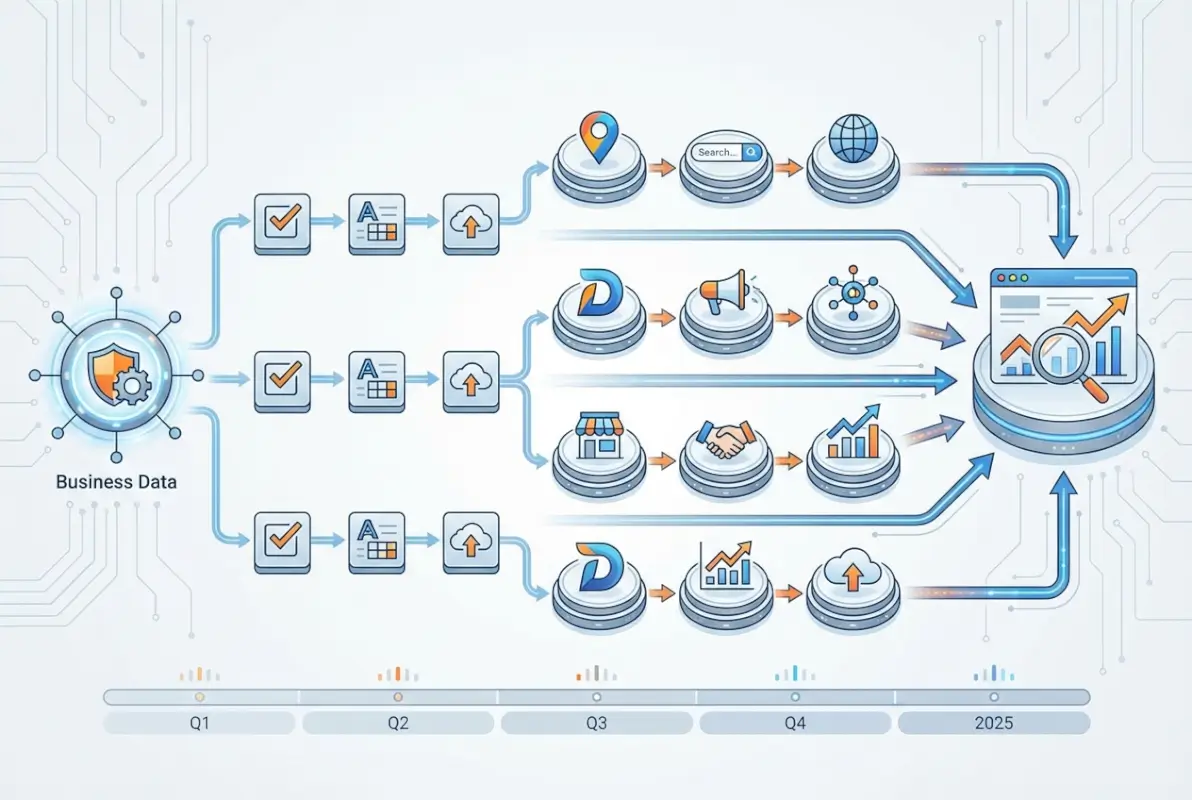
1. Google Business Profile – The Non-Negotiable Foundation
Google Business Profile (formerly Google My Business) isn’t just the most important directory—it’s the foundation of your entire local search presence. This free platform powers Google’s Local Pack (those map results at the top of local searches) and appears directly in Google Search and Maps. For most local businesses, GBP drives more traffic than all other directories combined.
The platform offers features beyond basic listings: post updates, answer questions, showcase products, share photos and videos, and respond to reviews. Google also provides detailed insights showing how customers find and interact with your listing. Businesses that post weekly updates typically see 30% higher engagement than static profiles.
2. Yelp – The Review Powerhouse
Yelp remains dominant for restaurants, retail, and local services despite occasional criticism of its review policies. With 178 million unique monthly visitors, its reach is substantial—and these visitors have high purchase intent. People don’t casually browse Yelp; they use it when they’re ready to make a decision.
The platform’s strength lies in its dedicated user base who trust Yelp reviews more than other sources. For consumer-facing businesses, Yelp reviews often influence purchasing decisions more heavily than your own website content. The review quality and quantity on Yelp also impacts your local SEO beyond the platform itself.
Focus on completing all business attributes (parking, payment methods, accessibility features) and consider Yelp Ads if you’re in highly competitive categories. The paid options can significantly boost visibility, though many businesses see excellent results with free listings alone.
3. Better Business Bureau (BBB) – Trust and Credibility
BBB has built trust for over 110 years, and that credibility transfers to digital listings. BBB accreditation signals that your business meets high integrity standards, which matters immensely for service businesses where customers need confidence before committing. Even without paid accreditation, a free BBB profile enhances trustworthiness.
The platform is particularly valuable for industries where skepticism runs high—contractors, repair services, financial advisors, and healthcare providers. A strong BBB rating with positive reviews can be the deciding factor that tips uncertain prospects toward choosing your business over competitors.
Respond professionally to any complaints filed through BBB, as these responses are public and significantly impact how potential customers perceive your business ethics. I’ve seen businesses win contracts specifically because their thorough, professional BBB complaint responses demonstrated integrity.
4. Bing Places for Business – The Overlooked Opportunity
While Google dominates search, Bing captures approximately 6.5 billion monthly searches—and there’s significantly less competition for visibility. Bing Places works similarly to Google Business Profile, creating detailed business profiles that appear in Bing’s local search results and map features.
The platform tends to attract slightly different demographics—older users and higher-income households—which can be valuable depending on your target market. It also syncs with Facebook, making cross-platform consistency easier to maintain.
If you’ve already optimized Google Business Profile, Bing Places allows direct import of that information, saving considerable setup time while ensuring NAP consistency across platforms. This makes it one of the easiest high-value directories to implement.
5. Facebook Business – Social Directory Hybrid
With 2.9 billion monthly active users, Facebook’s potential reach is unmatched among business directories USA. Your Facebook Business Page functions as both social presence and directory listing, making it doubly valuable. Unlike traditional directories, Facebook enables ongoing engagement through posts, events, messenger conversations, and community building.
The platform’s sophisticated targeting options also allow precise audience reach through paid promotion. Even without advertising, an active Facebook Business Page appears in searches both within Facebook and on Google, expanding your digital footprint.
Add clear call-to-action buttons (Book Now, Call Now, Message) and ensure your hours, services, and contact information stay current. Regular posting—even just 2-3 times weekly—keeps your page active and appearing in followers’ feeds, which drives both awareness and traffic.
6. Yellow Pages (YP.com) – The Digital Evolution
YellowPages.com successfully transitioned from print to digital, maintaining over 60 million monthly visitors. The site offers both free and premium listings, with enhanced features available for paid accounts. Yellow Pages’ longevity and brand recognition make it trusted by consumers, particularly older demographics who grew up using the print version.
The platform syndicates listings to partner sites, multiplying your visibility across the web. This syndication network means a single Yellow Pages listing can appear on dozens of other platforms, amplifying your reach far beyond the main site.
Take advantage of Yellow Pages’ category tagging by selecting all relevant categories for your business. This helps you surface in more internal search results and increases the chances customers will find you when browsing related categories.
7. Angi (Formerly Angie’s List) – The Home Services Specialist
Recently rebranded as Angi, this platform specializes in connecting homeowners with service providers—plumbers, electricians, landscapers, contractors, and similar trades. Unlike browsing-focused directories, Angi facilitates direct project requests, matching customers with available professionals.
The platform offers free and premium listings, with paid options providing better placement and additional features. Angi’s verified review system builds trust with potential customers who typically spend significant money on home services projects. These are high-value leads worth pursuing for relevant businesses.
Encourage satisfied customers to leave detailed reviews, as Angi’s algorithm favors businesses with substantial, recent review activity. The platform also allows you to showcase past projects with photos, which significantly increases conversion rates for visual services like remodeling or landscaping.
8. Apple Maps – The iOS Essential
Apple Maps powers location services for 1+ billion iOS devices globally. While it took years to overcome its rocky launch, Apple Maps now delivers quality results and deserves attention from local businesses, particularly those targeting affluent demographics who disproportionately use iOS devices.
You can claim and optimize your Apple Maps listing through Apple Business Connect. The process is straightforward and ensures your business appears correctly when iOS users search for relevant terms or browse nearby options. Given iOS’s market share among higher-income consumers, this visibility can drive valuable traffic.
Apple Maps integrates with Siri, meaning voice searches like “Hey Siri, find coffee shops near me” pull from this database. As voice search continues growing, Apple Maps becomes increasingly important for local discovery.
| Directory | Best For | Monthly Users | Cost |
|---|---|---|---|
| Google Business Profile | All local businesses | 5.6 billion searches/day | Free |
| Yelp | Restaurants, retail, services | 178 million | Free/Paid |
| BBB | Trust-critical services | 127 million | Free/Accreditation fees |
| Bing Places | All businesses (less competition) | 6.5 billion searches/month | Free |
| Angi | Home services | 20+ million | Free/Paid |
9. Manta – The B2B Focus
Manta specializes in small business listings, with particular strength for B2B companies and professional services. The platform hosts over 30 million company listings, making it one of the largest pure business directories in USA. Its structured data format makes it easy for search engines to index your information, providing SEO benefits beyond direct traffic.
The platform performs particularly well for businesses selling to other businesses rather than consumers. If your ideal customers are other companies, Manta deserves attention. Complete the “Products & Services” section thoroughly, as this detail helps you appear in category-specific searches within the platform.
Manta also offers advertising options if you want to boost visibility beyond organic listings, though many businesses see satisfactory results with free profiles alone, especially when combined with other directory listings.
10. Chamber of Commerce Directories – The Local Authority
Local Chamber of Commerce directories offer highly targeted visibility within specific geographic areas. While these require membership (typically with annual fees), they provide benefits beyond simple listings—networking events, business referrals, and community visibility.
Chamber listings signal community involvement and business longevity, qualities that matter to many consumers when choosing service providers. These directories are particularly valuable for B2B companies and businesses serving specific local areas rather than broader regions.
The referral network that comes with Chamber membership often delivers more value than the directory listing itself. Other members frequently refer customers to fellow Chamber businesses, creating a steady stream of warm leads that close at higher rates than cold traffic.
Optimizing Your Business Directory USA Presence for Maximum Results
Simply claiming directory listings isn’t enough—optimization makes the difference between mediocre results and transformational visibility. The following strategies separate businesses that extract maximum value from their directory presence from those who wonder why directories “don’t work” for them.
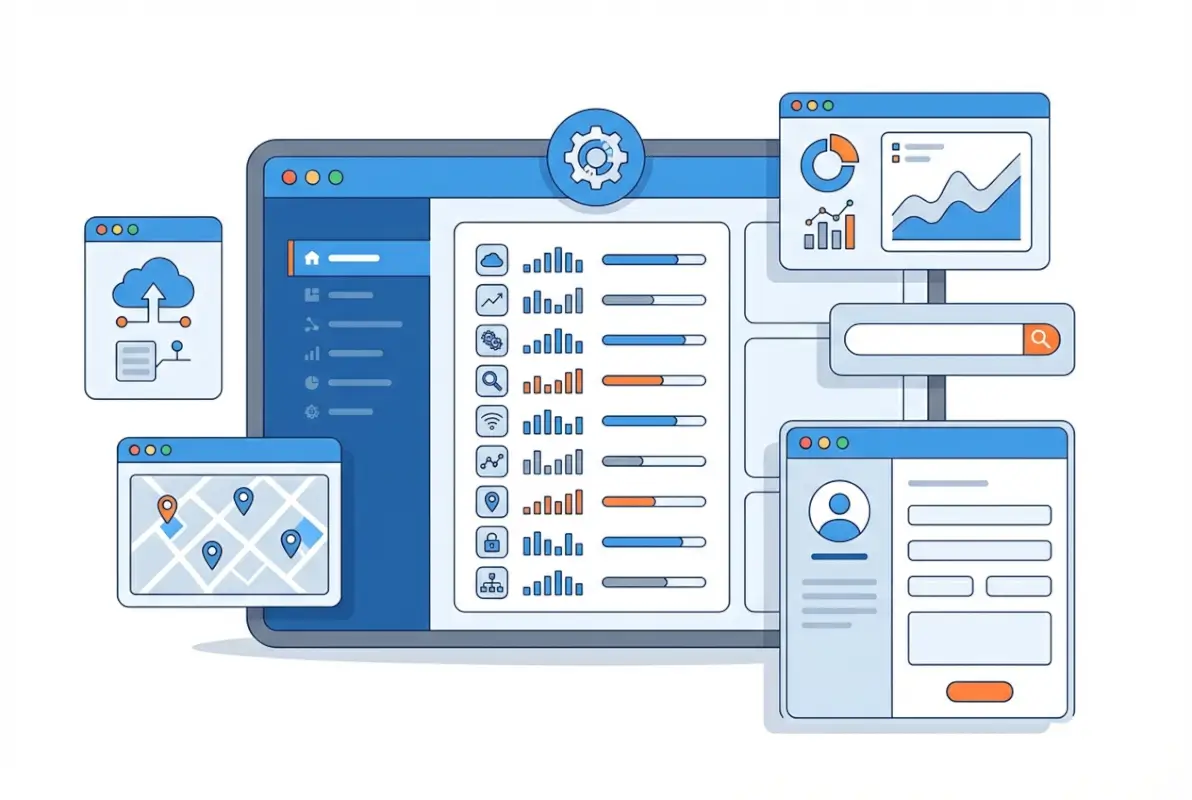
Master NAP Consistency Across All Platforms
NAP (Name, Address, Phone) consistency is the single most critical factor in directory success. When search engines encounter conflicting information about your business across multiple sources, they lose confidence in which version is correct—and this uncertainty tanks your local rankings.
Create a master document with your exact business information formatted identically for every directory: business name (including any legal designations like LLC), complete address with suite numbers, primary phone number, website URL, and business hours. Reference this document for every listing to ensure perfect consistency.
I once worked with a client whose local rankings improved 19 positions simply by standardizing their business name across directories. They’d listed as “Smith & Associates,” “Smith and Associates,” “Smith & Associates, LLC,” and “Smith Associates” across different platforms. Once we standardized everything, Google rewarded them with dramatically better visibility within three weeks.
Write Compelling, Keyword-Rich Business Descriptions
Most businesses waste their directory descriptions with bland, generic text. Your description should accomplish three goals: include relevant keywords naturally, explain what makes you different from competitors, and compel readers to choose you over alternatives.
Start with your primary service or product offering, include your geographic area, mention key differentiators, and end with a clear action step. For example: “Family-owned Italian restaurant in downtown Phoenix serving authentic Tuscan cuisine since 1987. We use imported ingredients and traditional recipes passed down four generations. Reserve your table today for an unforgettable dining experience.”
This approach incorporates keywords (Italian restaurant, Phoenix, Tuscan cuisine) while telling a story that differentiates the business from chain restaurants. It’s far more effective than “We serve Italian food and have been in business for many years” which says nothing memorable.
Leverage Visual Content Strategically
Listings with photos receive 42% more direction requests and 35% more website clicks than those without images. But random photos don’t cut it—strategic visual content tells your brand story and builds trust before customers ever contact you.
Upload 10-15 high-quality photos showcasing: your storefront or office exterior, interior workspace, team members, products or completed work, and customers enjoying your service (with permission). Update photos quarterly to keep content fresh and signal active management to both platforms and potential customers.
For service businesses, before/after photos perform exceptionally well. A landscaping company that added project transformations to their directory listings saw inquiry volume increase 67% within two months, with prospects specifically mentioning the photos when they called.
Managing Reviews Across Multiple Directory Platforms
Reviews have evolved from nice-to-have social proof into critical ranking factors that directly impact your visibility. Google and other platforms now weight review quantity, quality, recency, and your responses when determining how prominently to display your listings.

Develop a Systematic Review Generation Process
Don’t leave reviews to chance. Implement a systematic process that consistently generates new reviews across your key directory platforms. The simplest approach: after successfully completing a job or transaction, send a follow-up email thanking the customer and including direct links to your Google, Yelp, and other priority directory profiles.
Timing matters significantly. Request reviews within 24-48 hours of service completion when satisfaction is highest and the experience is fresh in customers’ minds. Waiting a week or more dramatically reduces response rates as customers forget details and lose motivation to share feedback.
Make it incredibly easy by providing direct links to your review profiles rather than making customers search for you on each platform. A simple email template works: “Thanks for choosing [Business Name]! We’d love to hear about your experience. Please share your feedback on [Google link] or [Yelp link]. Your review helps other customers discover us and helps us continually improve.”
Master the Art of Review Response
Your review responses often matter more than the reviews themselves, because while you can’t control what customers write, you control how you respond. Potential customers reading reviews pay close attention to how businesses handle both praise and criticism.
For positive reviews, keep responses brief but personal. Thank the reviewer by name, mention something specific from their review, and invite them back. Avoid copy-paste templates that feel robotic—reviewers and readers can tell.
For negative reviews, respond within 24 hours if possible. Acknowledge the customer’s frustration, apologize for their experience (even if you disagree with their characterization), explain what went wrong or what you’ll do differently, and offer to make it right offline. This demonstrates to everyone reading that you genuinely care about customer satisfaction.
I once saw a restaurant recover from a scathing one-star review by responding thoughtfully, admitting their mistake, and offering to remake the customer’s meal. The customer updated their review to five stars, praising the owner’s integrity and commitment to quality. That response probably influenced more purchasing decisions than any five-star review could have.
Industry-Specific Directories That Deliver High-Quality Leads
Beyond general directories, industry-specific platforms often deliver better conversion rates because they attract audiences with highly relevant needs. If you’re searching for the best business directories USA in your specific niche, these specialized options consistently outperform general platforms.

| Industry | Top Directories | Key Benefits |
|---|---|---|
| Healthcare | Healthgrades, Zocdoc, Vitals, RateMDs | Patient reviews, appointment booking, insurance info |
| Legal | Avvo, Justia, FindLaw, Martindale | Peer ratings, case specializations, Q&A features |
| Real Estate | Zillow, Realtor.com, Trulia, Redfin | Property listings, agent reviews, market data |
| Restaurants | OpenTable, TripAdvisor, Zomato | Reservations, menu display, traveler ratings |
| B2B Services | Clutch, G2, Capterra, TrustRadius | Verified reviews, detailed comparisons, case studies |
| Automotive | Cars.com, RepairPal, CarGurus, Edmunds | Inventory listings, service reviews, pricing data |
For businesses considering building their own niche directory platform, directory simple steps can guide you through the technical implementation. Creating a specialized directory in your industry positions you as an authority while generating recurring revenue from listings.
Healthcare Directories Drive Patient Acquisition
Healthcare providers should prioritize Healthgrades, Zocdoc, and Vitals, as patients increasingly research physicians online before scheduling appointments. These platforms allow detailed profiles including specializations, accepted insurance, education credentials, and patient reviews. Zocdoc particularly excels by enabling direct appointment booking, which significantly shortens the patient acquisition process.
Patient reviews on healthcare directories carry enormous weight in decision-making. According to Pew Research, 72% of internet users searched for health information online in the past year, and reviews heavily influence their provider selection. A dentist I worked with doubled new patient appointments within 90 days simply by claiming and optimizing their Healthgrades and Zocdoc profiles.
Legal Directories Establish Professional Authority
Attorneys benefit tremendously from legal-specific directories like Avvo, Justia, and Martindale-Hubbell. These platforms feature peer ratings, case outcome information, and extensive Q&A sections where lawyers can demonstrate expertise by answering public questions. This content marketing aspect provides value beyond simple listings.
Avvo’s rating system, which incorporates years of practice, disciplinary history, and peer endorsements, heavily influences potential client decisions. Lawyers with optimized Avvo profiles that include published answers to legal questions receive substantially more consultation requests than those with basic profiles. The educational content positions attorneys as trusted advisors before prospects even make contact.
Measuring Directory Performance and ROI
You can’t improve what you don’t measure. Tracking the right metrics reveals which directories deliver the best return and where to focus optimization efforts. Most businesses never analyze their directory performance, missing opportunities to double down on what works while cutting what doesn’t.
Key Metrics to Monitor Monthly
Focus on these performance indicators across each directory platform: profile views (how many people view your listing), click-through rate to your website or phone number, direction requests (people seeking directions to your location), photo views (engagement with visual content), and most importantly, conversion rate—the percentage of directory visitors who become paying customers.
Most major directories provide built-in analytics dashboards tracking these metrics. Google Business Profile offers particularly robust insights showing search queries that triggered your listing, actions taken (website visits, calls, direction requests), and how your performance compares to similar businesses. Review these dashboards monthly to identify trends and opportunities.
Implement UTM tracking parameters on all website URLs in your directory listings. This allows Google Analytics to show exactly which directories drive the most valuable traffic. A UTM parameter is simply a tag added to your URL (example: yoursite.com?utm_source=yelp&utm_medium=directory) that tells analytics where the visitor came from.
Calculate Cost Per Acquisition by Directory
For paid directory listings or premium upgrades, calculate your cost per acquisition (CPA) to determine ROI. Divide your total investment in a directory (including setup time valued at your hourly rate) by the number of customers acquired from that source. This reveals which directories justify premium investments.
A marketing consultant I know invests $300 monthly in Clutch’s premium features because it delivers 8-12 qualified leads monthly that close at 35%, generating $18,000-25,000 in revenue. That’s an outstanding ROI. Meanwhile, she stopped investing in another industry directory that cost $150 monthly but generated only 1-2 low-quality leads that rarely closed. Regular analysis enables these informed decisions.
Don’t forget to factor lead quality alongside quantity. Some directories generate high volumes of low-quality leads that waste sales time, while others produce fewer but highly qualified prospects that close at higher rates and become better long-term customers. A complete ROI picture considers both volume and quality.
Common Directory Mistakes That Tank Your Results
Even businesses that recognize directory value often undermine their efforts through avoidable errors. Awareness of these common pitfalls helps you sidestep frustration and accelerate results. I’ve seen these mistakes repeatedly cost businesses thousands in lost revenue (and hours in wasted effort).
Incomplete or Inconsistent Information
The most damaging mistake is inconsistent NAP information across listings. When your business name appears as “ABC Company” on Google but “ABC Company LLC” on Yelp and “ABC Co.” on BBB, search engines struggle to confirm these all reference the same business. This uncertainty directly harms your local rankings—sometimes dramatically.
Similarly, leaving fields blank or incomplete signals to both platforms and potential customers that you don’t actively manage your presence. Complete every available field in your profiles, including optional ones like business attributes, accepted payment methods, accessibility features, and service areas. This completeness improves both search relevance and user experience.
I worked with an accounting firm that couldn’t understand why their local rankings stagnated despite quality website content and active social media. An audit revealed their phone number varied across directories (some used their main line, others an old number, some a partner’s direct line). After standardizing everything to their primary number, they jumped nine positions in local results within a month.
Neglecting Active Management and Updates
Many businesses create directory listings and then forget about them. This “set it and forget it” approach misses opportunities and allows information to become outdated. Directories reward active management with better visibility, while neglected listings gradually lose prominence in search results.
Update photos quarterly, post updates on platforms that support it (like Google Business Profile), and respond to all reviews within 48 hours. These ongoing activities signal to algorithms that your business is active and engaged, which typically results in better placement in search results and category browsing.
Set calendar reminders for quarterly directory audits. During these reviews, verify information accuracy, add fresh photos, explore new platform features, and check for duplicate listings that might be confusing search engines or dividing your review volume across multiple profiles.
Ignoring or Mishandling Negative Reviews
Unaddressed negative reviews damage your reputation in multiple ways: they signal to potential customers that you don’t care about feedback, they remain permanently visible without your perspective, and they can spiral into extended damage if the original reviewer escalates their complaints elsewhere. Every negative review deserves a thoughtful response.
Equally damaging is responding defensively or argumentatively. Even when reviews contain unfair criticisms or outright falsehoods, defensive responses make you look unprofessional and often generate more negative attention. The high road always wins in public review responses. Save detailed corrections for private conversations.
For valuable guidance on building a comprehensive online strategy that includes directory management, consider exploring directory steps to create interconnected systems that amplify your visibility across multiple channels.
Frequently Asked Questions
What are the most important business directories in USA for small local businesses?
Google Business Profile, Yelp, and Bing Places form the essential foundation for local businesses. These three platforms drive the majority of directory traffic and provide significant SEO benefits through citation building. Beyond these core three, add Facebook Business and your local Chamber of Commerce directory for comprehensive coverage. Industry-specific directories should be your next priority based on your business type.
How many business directory USA listings does my company actually need?
Quality dramatically outweighs quantity. Start by perfecting listings on the 5-7 most relevant directories for your industry and location, then gradually expand. Most businesses benefit from 15-25 high-quality, well-maintained listings rather than 100+ neglected ones. Focus on directories with high domain authority, significant traffic, and strong relevance to your target audience rather than chasing listing counts.
Do business directories in USA actually improve local SEO rankings?
Yes, substantially. Directory listings create citations (mentions of your NAP information) that search engines use to verify your business legitimacy. Consistent citations across multiple authoritative directories signal trustworthiness to Google and other search engines, often resulting in better local pack rankings. The SEO impact is indirect but measurable—businesses with optimized directory presence typically see 30-50% improvement in local search visibility within 60-90 days.
Should I pay for premium listings on business directories USA platforms?
Start with free listings first, optimize them completely, then consider premium upgrades on your 2-3 best-performing directories. Premium features make the most sense in highly competitive industries or geographic areas where free listings don’t provide sufficient visibility. Always calculate ROI by tracking leads generated before committing to ongoing paid listings. Many businesses achieve excellent results with primarily free listings supplemented by 1-2 strategic premium upgrades.
How do I keep business information consistent across all USA directory platforms?
Create a master document with your exact business information formatted identically for every platform: legal business name, complete address, primary phone number, website URL, and hours. Reference this document whenever creating or updating listings. When business information changes, immediately update all directories within 24-48 hours to prevent ranking fluctuations. Consider using citation management tools like Moz Local or BrightLocal to monitor consistency across platforms.
What’s the best way to generate more reviews on business directory USA platforms?
Implement a systematic follow-up process that requests reviews 24-48 hours after service completion when satisfaction is highest. Send a brief email thanking customers and including direct links to your priority review profiles (Google, Yelp, etc.). Make it extremely easy by providing clickable links rather than making customers search for you. Respond to all reviews—both positive and negative—as businesses that actively engage with feedback see 15% higher ongoing review generation rates.
How often should I update my business directory USA listings?
Conduct comprehensive audits quarterly to ensure accuracy and completeness. However, certain changes require immediate action: update address or phone changes across all platforms within 24 hours, hours changes within 48 hours, and service offering updates within one week. For platforms supporting regular posts like Google Business Profile, add fresh content (photos, updates, offers) weekly to maintain engagement and algorithm favor.
Are industry-specific directories better than general business directories in USA?
Industry-specific directories typically deliver higher quality leads and better conversion rates because they attract audiences with highly relevant needs. However, general directories like Google Business Profile and Yelp reach much larger audiences and provide stronger SEO benefits. The optimal strategy includes both: prioritize the major general directories for broad visibility, then add 3-5 relevant niche directories that serve your specific industry for qualified leads.
Can inconsistent directory listings hurt my local search rankings?
Yes, significantly. When search engines encounter conflicting NAP information across multiple directories, they lose confidence in which version is accurate. This uncertainty directly damages local rankings as search engines can’t confidently display your business in local results. Standardizing information across directories often produces immediate ranking improvements—sometimes within 2-3 weeks—as search engines gain confidence in your data accuracy.
What’s the difference between citation sites and business directories USA?
Business directories are platforms where consumers actively search for businesses, services, or products (like Yelp or Yellow Pages). Citation sites primarily exist to provide consistent business information to search engines and other directories (like data aggregators Neustar Localeze or Data Axle). While overlap exists—many directories also serve as citation sources—directories focus on consumer discovery while citations focus on SEO signals. Both are important for comprehensive local online presence.
Your 90-Day Directory Optimization Action Plan
Ready to transform your directory presence from mediocre to exceptional? This practical action plan prioritizes the highest-impact activities that deliver measurable results within three months.
Days 1-30: Foundation Building
Week 1: Claim and fully optimize Google Business Profile and Bing Places. Complete every field, add 10-15 photos, and verify ownership.
Week 2: Create or claim Yelp and Facebook Business listings. Write compelling descriptions incorporating primary keywords naturally.
Week 3: Identify your top 3-5 industry-specific directories and create optimized listings.
Week 4: Create your NAP consistency document and audit all existing listings for discrepancies. Fix any inconsistencies found.
Days 31-60: Review Generation & Engagement
Week 5-6: Implement systematic review request process. Send follow-up emails to recent customers with direct links to review platforms.
Week 7-8: Respond to all existing reviews across all platforms. Establish a protocol for ongoing review monitoring and response within 48 hours.
Days 61-90: Optimization & Expansion
Week 9-10: Add fresh photos to all main listings. Create and post weekly updates on Google Business Profile.
Week 11: Research and add 3-5 additional relevant directories (local chambers, specialized industry directories).
Week 12: Review analytics across all platforms. Identify top performers and optimize further. Consider premium upgrades for highest-performing directories.
This systematic approach builds a powerful directory foundation that compounds over time, generating increasingly better results as your review counts grow and search engines recognize your authoritative presence across multiple platforms.
The businesses that dominate local search results aren’t necessarily those with the biggest marketing budgets—they’re the ones that systematically optimize the fundamentals most competitors overlook. Business directories remain one of those fundamental, high-leverage opportunities that delivers disproportionate returns for the time and money invested.
Start with Google Business Profile today, because even a single optimized listing can transform your local visibility within weeks. Then methodically work through the other priority directories until you’ve built a comprehensive presence that captures customers at every stage of their search journey. Your future customers are actively looking for businesses like yours on these platforms right now—make sure they can find you.
Was this article helpful?