Business Directory Plugin: 5 Tips to Maximize Its Potential & Boost SEO

If you’ve installed a business directory plugin on your WordPress site, you’ve unlocked an engine for local visibility and user engagement—but only if you configure it correctly. Most directory owners focus on adding listings and forget the underlying SEO architecture that determines whether those listings ever surface in search. The difference between a directory that ranks and one that languishes comes down to five core disciplines: technical foundations, structured data, content strategy, authority signals, and local hygiene. Master these, and your directory becomes a magnet for organic traffic and qualified leads.
TL;DR – Quick Takeaways
- Technical foundations — Clean URLs, fast page loads, and proper plugin interoperability set the stage for large-scale indexing
- Schema markup — LocalBusiness and Organization structured data unlock rich results and knowledge panels
- Content plus listings — Combine business data with guides, category hubs, and user reviews to boost topical authority
- Authority building — Shareable data assets and partnerships attract credible backlinks that improve domain trust
- Local signals — Consistent NAP, Google Business Profile alignment, and location pages drive local search visibility
Technical Foundations for a High-Performing Directory SEO
Before you think about schema or backlinks, your directory needs a rock-solid technical base. Directories scale fast (hundreds or thousands of listings), and each page competes for crawl budget. If your site architecture is messy or your plugin conflicts with caching layers, Google may index only a fraction of your listings.
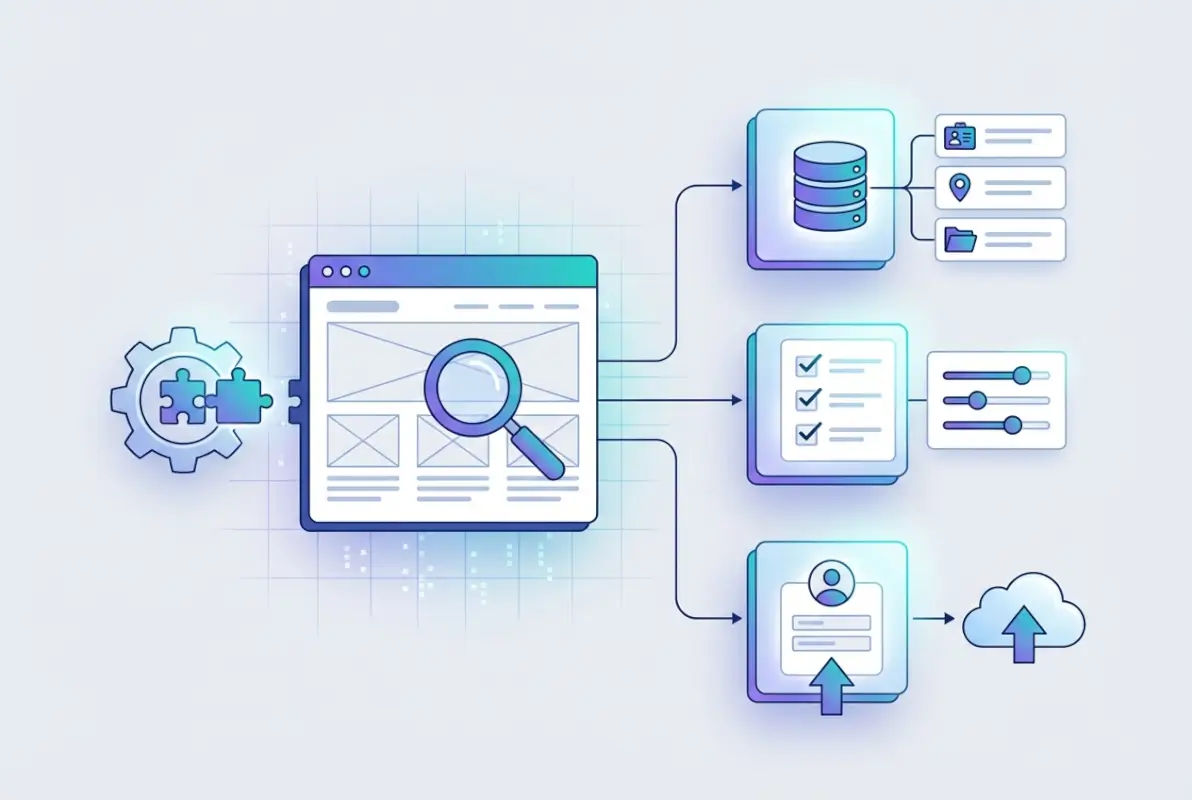
Start with URL structure: use clean, keyword-rich slugs (e.g., /city/category/business-name rather than /listing/?id=1234). Logical taxonomy (categories, cities, tags) helps both users and crawlers understand relationships between pages. Flat hierarchies reduce clicks to conversion, and fewer redirects mean faster page loads—critical when you’re managing large datasets.
Site Architecture and Crawl Efficiency
Google’s crawler evaluates your directory like any other site: it looks for internal linking, breadcrumb trails, and sitemaps. Use robust directory plugins that auto-generate XML sitemaps for listings, categories, and location pages. Submit these sitemaps separately in Google Search Console to ensure each facet of your directory gets indexed independently.
Page speed matters exponentially for directories. A listing page that takes four seconds to load on mobile loses 53% of visitors before they engage, according to research from Google. Implement lazy loading for images, minify CSS and JavaScript, and use a CDN to serve assets from edge locations. If your directory serves a specific geography, prioritize servers closest to your audience to shave milliseconds off time-to-first-byte.
Core SEO Settings and Plugin Interoperability
Your business directory plugin must play nicely with your SEO stack. If you’re running Yoast, Rank Math, or All in One SEO, verify that meta titles, descriptions, and canonical tags don’t conflict with the directory’s built-in settings. Some plugins default to appending category names to every listing title, which creates keyword cannibalization if you’re not careful.
Caching plugins (WP Rocket, W3 Total Cache) can break dynamic filters and search forms. Exclude directory endpoints (/search, /filter) from caching rules, or use object caching (Redis, Memcached) to serve personalized results without database hammering. I remember launching a restaurant directory that crawled until we moved session data to Memcached—page load dropped from 3.2 seconds to 0.9 seconds overnight.
Enable browser caching for static assets (logos, thumbnails) and set long expiry headers. Combine this with image compression (WebP format, lazy loading) to keep pages under 1 MB total size. Test interoperability with Google’s PageSpeed Insights and fix any render-blocking resources flagged in the report.
Schema, Structured Data, and Rich Results for Directories
Structured data is the language search engines use to understand your directory’s content. Without it, Google sees plain text; with it, you unlock knowledge panels, review stars, and local pack placement. For directories, LocalBusiness and Organization schema are non-negotiable.
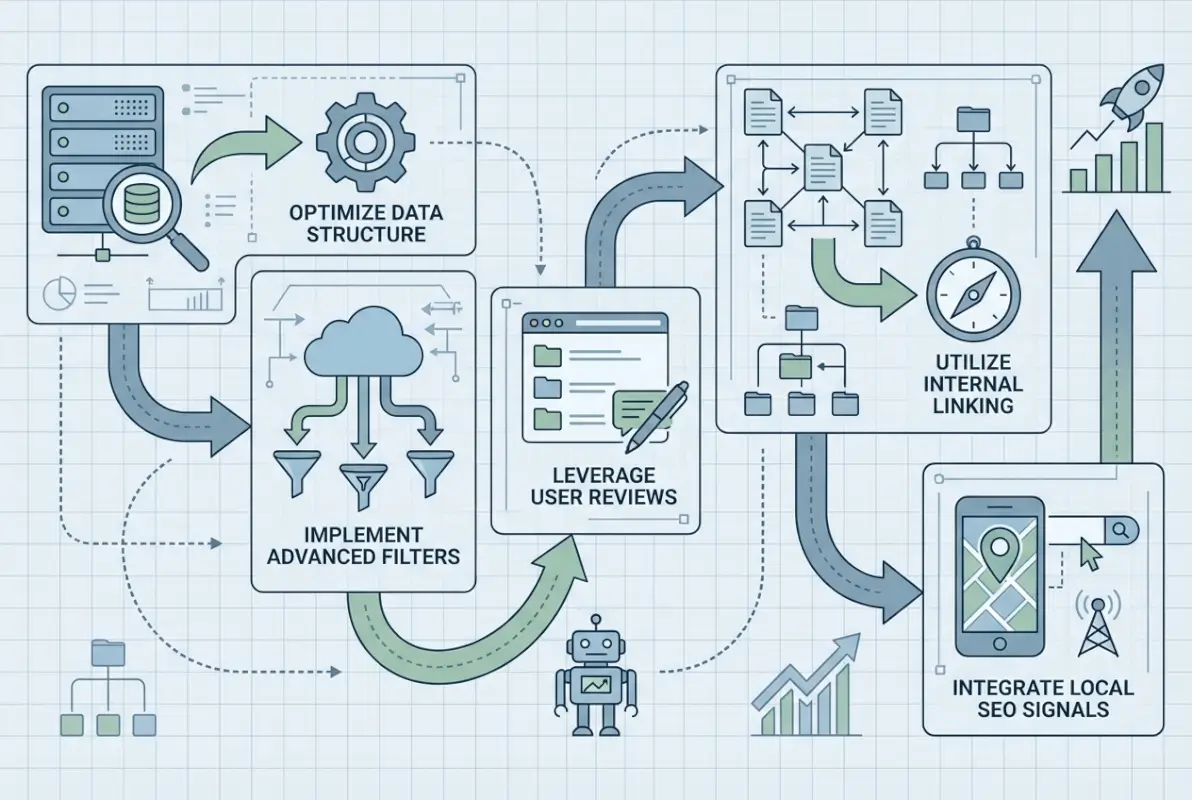
LocalBusiness schema tells Google that each listing represents a physical or service-area business with attributes like name, address, phone (NAP), hours, and categories. Organization schema works for company profiles or non-local entities. Both types feed into Google’s Knowledge Graph, which powers rich results and featured snippets that capture 35% of organic clicks, according to data from Search Engine Journal.
LocalBusiness/Organization Schema to Tie Listings to Entities
Implement JSON-LD (not Microdata or RDFa) because it’s easier to maintain and Google’s preferred format. Your schema should include at minimum: @type (LocalBusiness), name, address (structured as PostalAddress), telephone, url, and geo coordinates. Add priceRange, openingHours, and aggregateRating if you have that data—each property improves your eligibility for rich results.
Use TurnKey Directories or similar WordPress directory plugins that auto-inject schema based on custom fields. Manually coding schema for thousands of listings is unsustainable and error-prone. Map your directory’s custom fields (address, phone, hours) to schema properties in the plugin settings, then validate output with Google’s LocalBusiness documentation.
Testing and Maintaining Schema Accuracy
Schema degrades over time: plugin updates, theme changes, or custom code can break JSON-LD. Test every listing template monthly using Google’s Rich Results Test and Schema.org’s validator. The Rich Results Test shows whether you’re eligible for enhanced search features; the validator catches syntax errors Google might ignore but other search engines won’t.
Monitor Search Console’s “Enhancements” report for schema errors and warnings. If you see spikes in “Missing required field” or “Invalid property,” audit your plugin’s schema output. I once tracked down a bug where missing geo coordinates disqualified 40% of our listings from local pack results—fixing it took ten minutes and recovered 12,000 impressions per month.
Keep schema current: if a business changes hours, closes permanently, or updates its phone number, update the listing and verify schema reflects the change within 24 hours. Stale schema (especially incorrect NAP) signals low-quality data to Google and can trigger manual penalties if the discrepancies are severe. Use best practices from top listing sites to maintain data hygiene.
Content Strategy and UX to Boost Engagement and SEO Signals
Search engines reward directories that deliver value beyond a simple business name and address. A robust content strategy combines comprehensive listing data with community-driven reviews, expert guides, and evergreen category pages that establish topical authority. Each listing should provide unique, descriptive content—hours, amenities, photos, and verified reviews—to differentiate your directory from aggregators and boost time-on-page metrics.
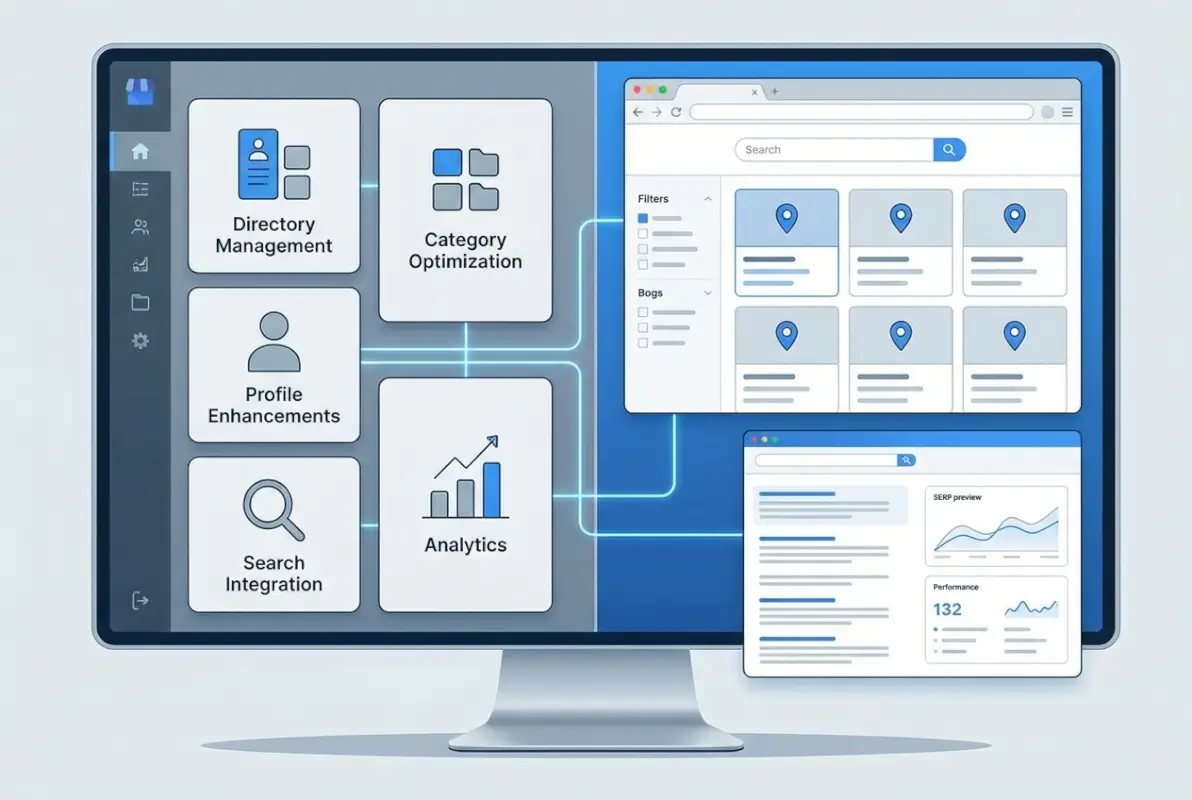
Category hub pages serve as topical anchors that attract organic traffic and internal link equity. Instead of listing businesses alphabetically, organize them by niche (e.g., “Eco-Friendly Contractors in Austin”) and enrich each hub with original insights, FAQs, and trend commentary. This editorial layer signals relevance to search engines and encourages users to explore multiple listings, increasing session depth and engagement.
User-generated content—reviews, ratings, Q&A threads—provides fresh signals that crawlers revisit regularly. Moderate contributions to ensure quality, implement schema markup for review snippets, and highlight top-rated businesses to build trust. Encouraging verified customers to leave detailed feedback not only improves conversion but also surfaces long-tail keywords organically within your pages.
Listings-Plus Content: Balance User Reviews, Guides, and Category Pages
A “listings-plus” approach layers editorial content atop directory data to create a destination users return to. Publish how-to guides, industry news, or seasonal roundups that link to relevant listings, turning your directory into a resource hub rather than a static phonebook. Each piece of supporting content should include internal links to category and individual listing pages, distributing authority and crawl priority across your site.
Invest in data-driven content such as “Top 10 Contractors by Customer Ratings” or “2024 Pricing Trends for Local Services.” These assets attract backlinks from local news outlets, industry blogs, and social channels, amplifying your domain authority. Regularly update these features to maintain freshness signals and re-engage both users and search crawlers.
UX Signals That Impact SEO
Google’s Core Web Vitals—Largest Contentful Paint (LCP), First Input Delay (FID), and Cumulative Layout Shift (CLS)—directly influence rankings, especially for directories serving mobile users. Optimize images, lazy-load listing cards below the fold, and leverage caching plugins to keep LCP under 2.5 seconds. A slow directory frustrates users and signals poor quality to search algorithms.
Intuitive filters—by location, rating, price, or hours—reduce bounce rates and increase page views per session, both positive engagement signals. Implement AJAX-powered filtering so users can refine results without full page reloads, preserving speed while improving usability. Ensure filter URLs are crawlable (via pushState or server-side rendering) so each facet can rank independently for long-tail queries.
Clear navigation and breadcrumb trails help both users and crawlers understand site hierarchy. Use descriptive anchor text (“Plumbers in Brooklyn” rather than “View All”) and structured breadcrumb schema to surface category relationships in search results. Mobile-friendly tap targets, readable fonts, and accessible color contrast ensure compliance with accessibility standards and broaden your audience.
Authority-Building and Link Strategy for Directory Sites
Backlinks remain a cornerstone of domain authority, yet generic directory submissions rarely earn quality links. Instead, create original research, industry benchmarks, or hyper-local event calendars that journalists, bloggers, and associations cite. A “State of Local Businesses 2024” report with downloadable charts and quotable statistics can attract dozens of editorial links from news sites and trade publications.
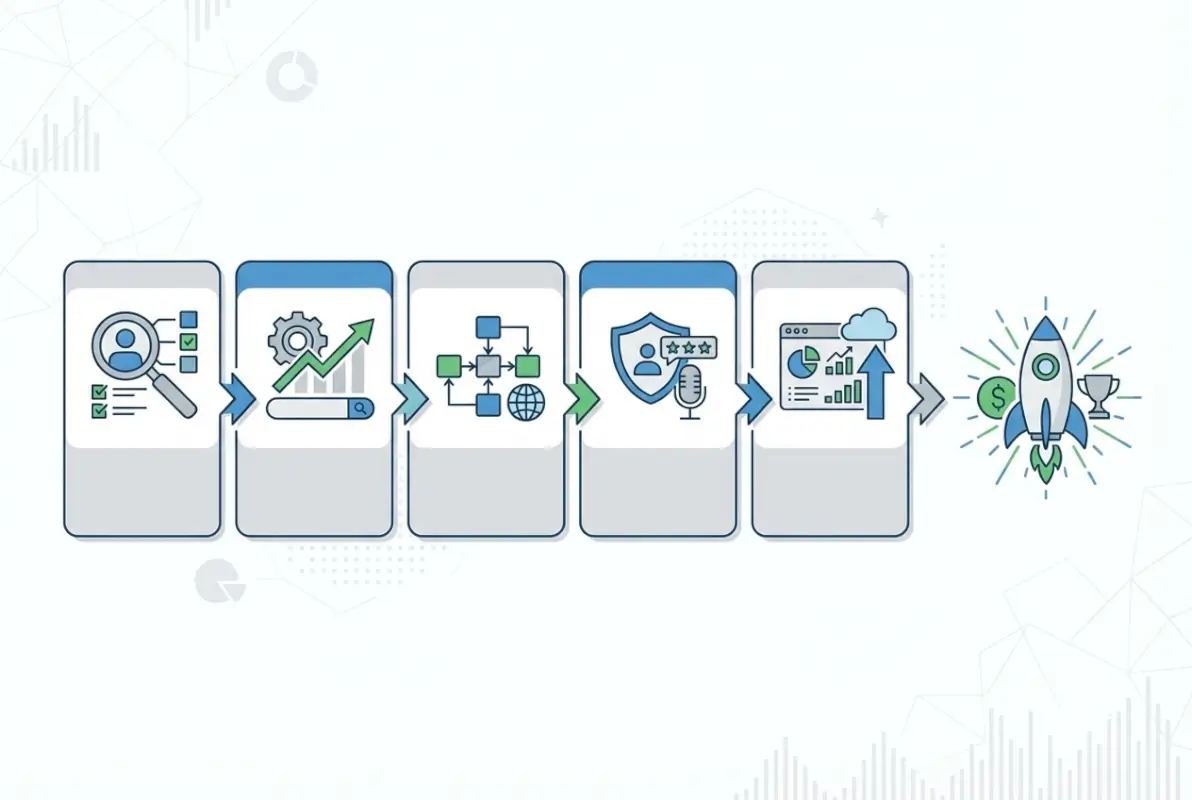
Partner with complementary platforms—local chambers of commerce, business incubators, or niche bloggers—to co-publish content or sponsor events. Each partnership should include a contextual link back to a relevant category page on your directory, signaling relevance and trust. Avoid reciprocal link schemes; focus on editorial placements where your directory adds genuine value to the partner’s audience.
Earned Media and Niche Backlinks
Earned media begins with newsworthiness: launch unique datasets (e.g., “Top-Rated Pet Groomers by ZIP Code”), host webinars with industry experts, or publish case studies featuring directory success stories. Pitch these assets to local news outlets, industry newsletters, and beat reporters who cover your vertical. Each placement should anchor to a deep page—category or guide—rather than your homepage, distributing link equity strategically.
Niche directories and industry associations often accept guest contributions or sponsor listings. Contribute expert roundups, white papers, or toolkits in exchange for a byline link, ensuring the partner site has established authority and topical relevance. Track referring domains in tools like Google Search Console and prioritize outreach to sites with high domain ratings and engaged audiences.
Partnerships and Content Collaborations
Content collaborations amplify reach without requiring large budgets. Co-author a local business survival guide with a regional university’s business school, securing .edu backlinks and academic credibility. Host a joint webinar with a SaaS platform targeting your directory’s user base, cross-promoting to both audiences and earning social shares that indirectly boost discoverability.
Formalize partnerships through co-marketing agreements: your directory lists their members in exchange for a featured link on their resources page. Ensure the agreement specifies editorial, non-sponsored placement to preserve link value. Document each partnership in a shared spreadsheet tracking placement URLs, anchor text, and referral traffic to measure ROI and refine future collaborations.
| Link Type | Acquisition Method | Expected Impact |
|---|---|---|
| Editorial / News | Press release, data report, expert commentary | High authority, broad visibility |
| Association / .edu | Guest post, co-authored guide, resource listing | Trust signal, topical relevance |
| Niche Directory | Reciprocal content share, sponsored event | Targeted referral traffic, modest authority |
| Business Partner | Co-marketing agreement, webinar collaboration | Audience overlap, social amplification |
Local SEO Management and Listings Hygiene
Local search success depends on data consistency: every instance of a business’s name, address, and phone number (NAP) must match exactly across your directory, Google Business Profile, Apple Maps, and third-party aggregators. Inconsistent citations confuse search algorithms, diluting local ranking signals and fragmenting customer trust. Audit your listings quarterly using tools like Moz Local or BrightLocal to identify and correct discrepancies.

Google Business Profile (GBP) integration is non-negotiable for local directories. Encourage listed businesses to claim and verify their GBP, complete every field (hours, categories, attributes), and upload high-quality photos. Your directory should link to each business’s GBP page and mirror critical data—operating hours, service areas—to reinforce consistency signals that Google rewards with improved local pack placement.
Consistent NAP and GBP Alignment
Standardize NAP formatting site-wide: use “Street” vs. “St.” consistently, spell out suite numbers identically, and format phone numbers uniformly. Implement LocalBusiness schema on every listing page, populating the address, telephone, and name properties with exact GBP values. Validate markup using Google’s Rich Results Test to catch typos or schema errors before they impact rankings.
Monitor GBP reviews and respond promptly, especially to negative feedback; engagement signals active management and builds consumer confidence. Embed GBP reviews on your directory listings (with proper attribution and schema) to surface fresh user-generated content and reinforce trust signals. Automate alerts for new reviews so you can respond within 24 hours, demonstrating responsiveness that both users and algorithms value.
Review Signals and Location Pages
Reviews are a dual signal: they provide keyword-rich content and quantitative trust metrics (star ratings, volume). Mark up reviews with AggregateRating schema to display star ratings in search snippets, improving click-through rates. Encourage detailed, narrative reviews over terse ratings; longer reviews naturally include service keywords and location mentions that enhance local relevance.
Dedicate a unique page to each service area or neighborhood, optimizing title tags and H1s for hyper-local queries (e.g., “Plumbers in Williamsburg, Brooklyn”). Populate these location pages with locally relevant content—neighborhood news, transit tips, or ZIP-specific statistics—to differentiate them from thin doorway pages. Link location pages to relevant category hubs and individual listings, creating a lattice of internal links that distribute authority and guide crawlers through your site hierarchy.
Frequently Asked Questions
How can I optimize a business directory website for better SEO?
Focus on technical foundations like clean URL structures and fast page loads, implement LocalBusiness schema for all listings, create robust content around each entry, and optimize UX with intuitive navigation and mobile-friendly design. These elements improve engagement metrics that influence search rankings and rich result eligibility.
What schema should I use for directory listings?
LocalBusiness and Organization schema are the primary structured data types for directory listings. These schemas help search engines understand business entities, improve knowledge panel alignment, and enable rich results. Always validate your markup using Google’s Rich Results Test and Schema.org validators to ensure compliance.
How do I improve local rankings with a directory site?
Ensure consistent NAP data across your directory, Google Business Profile, and external citations. Implement location-specific pages with proper schema markup, optimize for local keywords, and encourage authentic reviews. These signals build local trust and improve visibility in location-based searches and map results.
What kind of content drives more directory traffic?
High-quality listing data paired with category hub pages, expert guides, and data-driven roundups like “top X in Y” attract both users and backlinks. User reviews, community insights, and evergreen industry content support topical relevance and keep visitors engaged, signaling value to search engines.
How do I measure SEO success for a directory plugin?
Track organic traffic to listing and category pages, click-through rates from search results, indexing coverage in Search Console, and appearances in knowledge panels or local packs. Regularly validate schema markup and monitor user engagement metrics like time on page and bounce rate to gauge overall performance.
Can a business directory plugin work with my existing SEO tools?
Yes, most quality directory plugins integrate with popular SEO plugins like Yoast, Rank Math, and All in One SEO. Ensure your directory plugin supports schema output, sitemap generation, and clean URL structures. Test for conflicts with caching and minification plugins to maintain consistent indexing and performance.
Should I allow user-generated content on my directory site?
User-generated content like reviews and ratings adds freshness and unique perspectives that search engines value, but it requires moderation to prevent spam and maintain quality. Implement review schema markup, establish clear submission guidelines, and moderate contributions regularly to balance SEO benefits with content integrity and user trust.
What are the most common directory SEO mistakes to avoid?
Common pitfalls include duplicate content across listings, missing or invalid schema markup, slow page load times, inconsistent NAP data, and thin listing pages with minimal content. Avoid auto-generated descriptions, ensure mobile optimization, and regularly audit crawl errors to prevent these issues from undermining your SEO efforts.
Take Action: Transform Your Directory Into an SEO Powerhouse
You now have a complete, five-pillar framework for maximizing the SEO potential of your Business Directory Plugin. Technical foundations ensure search engines can crawl and index your listings efficiently. Structured data connects your content to rich results and knowledge panels. Strategic content and UX design keep visitors engaged while sending positive signals to ranking algorithms. Authority-building through earned media and partnerships establishes credibility. Local SEO hygiene ties everything together for businesses targeting geographic markets.
The difference between a directory that languishes in search results and one that dominates its niche comes down to execution. Start with a technical audit using the criteria outlined in the first section. Validate your schema markup today, not next quarter. Enrich at least your top-performing category pages with original content this week. Identify three potential partnership opportunities and reach out. Normalize your NAP data across all platforms and verify consistency.
Your Next Step
Pick one section from this guide and implement it fully before moving to the next. Incremental, deliberate improvements compound faster than scattered efforts across all five areas. Run your schema through Google’s Rich Results Test, analyze one month of Search Console data for your top listings, or draft three pieces of category-level content this week.
The businesses that find you through organic search are waiting. Make it easy for search engines to connect them with your directory.
Directory sites succeed when they solve real problems for users and present that value in a format search engines can understand and reward. Your Business Directory Plugin is the infrastructure; this five-part strategy is the blueprint. Build deliberately, measure consistently, and refine based on data. The ROI from organic visibility, user trust, and sustainable traffic growth will justify every optimization you make.