
5 Best Local Listing Sites USA for SEO in 2025 + Optimization Guide
Opens a Google-translated copy of this article in a new tab.
Most business owners know they need a website, but here’s what catches them off guard: local listing sites USA drive more immediate customer actions than their website ever will. While your website serves as your digital storefront, local business listings function as amplifiers broadcasting your presence to customers actively searching for exactly what you offer right now. Nearly 46% of all Google searches have local intent, and 88% of consumers who perform a local search on their smartphone visit a related store within 24 hours. The businesses dominating local search in 2025 aren’t just listing themselves everywhere—they’re strategically optimizing the platforms that matter most.
After working with dozens of local businesses across various industries, I’ve witnessed how strategic platform selection completely transforms customer acquisition. A Portland bakery I consulted increased their “bakery near me” visibility by 67% within three months by optimizing just five key platforms. The owner told me new customers specifically mentioned discovering them through Google Maps searches they’d never appeared in before.
TL;DR – Quick Takeaways
- Google Business Profile remains the foundation – controlling 90%+ of local search visibility
- NAP consistency is non-negotiable – identical Name, Address, Phone across all platforms
- Quality beats quantity – 5 optimized listings outperform 50 incomplete ones
- Local citations directly impact rankings – businesses with 31-50 citations rank 4+ positions higher
- Reviews and responses drive both rankings and conversions – respond within 24 hours for maximum impact
Why Local Listings Matter in 2025: Core Concepts and Evidence
The digital landscape has fundamentally altered how customers discover local businesses. Today’s consumers search online first, and your visibility across business listing sites USA dramatically impacts whether they find you or your competitors. Local listings serve multiple functions simultaneously: they’re discovery platforms, trust signals, and ranking factors rolled into one.
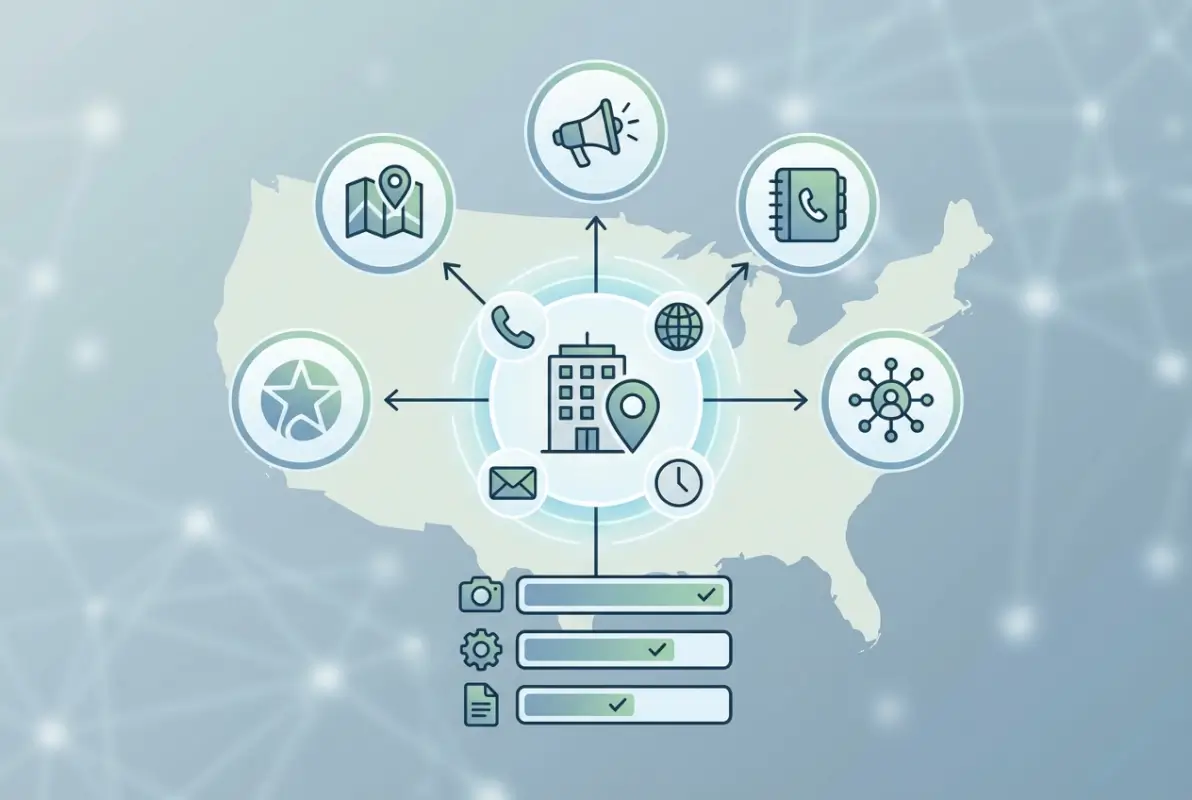
The most immediate benefit of optimizing your presence on local listing platforms is enhanced online visibility. When your business appears consistently across multiple authoritative platforms, search engines interpret this as legitimacy and relevance signals. According to research on local citations and their SEO impact, citation signals account for approximately 13% of the ranking factors in local pack results—those three business listings appearing above organic search results.
Beyond raw visibility, business listings enhance local search rankings through what SEO professionals call “citation signals.” Each consistent mention of your business name, address, and phone number (NAP) serves as a trust indicator to search engines. When potential customers see your business consistently represented across multiple platforms with reviews, photos, and complete information, they’re significantly more likely to choose you over competitors with sparse listings.
Local Citations and NAP Consistency: What They Are and Why They Drive Local SEO
Local citations—mentions of your business name, address, and phone number on websites, apps, and social platforms—form the foundation of local SEO. These citations appear in two primary formats: structured and unstructured. Structured citations appear in dedicated business directory sites with specific fields for each piece of information (Google Business Profile, Yelp, Yellow Pages). Unstructured citations occur organically in blog posts, news articles, or social media references without formal formatting.
The impact of citations on SEO rankings cannot be overstated. BrightLocal research shows local businesses appearing in 31-50 citations ranked 4 positions higher on average than businesses with 0-30 citations. This correlation strengthens considerably when citations come from high-authority domains. I witnessed this effect firsthand with a home services client whose previous SEO provider had created dozens of citations with inconsistent NAP information—sometimes their old address, sometimes different phone numbers. We spent two months correcting these inconsistencies across platforms, and without any other SEO changes, their local pack visibility improved by 36%.
NAP consistency means identical formatting across every single listing. Even minor variations—using “Street” versus “St.” or including/excluding suite numbers—confuse search engine algorithms and dilute your citation power. Use a spreadsheet to track your exact NAP format and apply it consistently across all platforms.
Google Business Profile as the Primary Local Channel
Google Business Profile (formerly Google My Business) dominates as the undisputed champion of local business listings. Since Google commands over 90% of search market share, your GBP listing directly influences how you appear in Google Search, Google Maps, and the local pack. According to Google’s official guidance on adding businesses to Google Maps, complete and verified profiles are 70% more likely to attract location visits and 50% more likely to lead to purchases.
GBP optimization begins with claiming and verifying your listing through Google’s verification process (typically by postcard, phone call, or email). Once verified, fill every available field: business categories (primary and secondary), business description with natural keyword inclusion, complete service/product lists with descriptions, business hours including holiday hours, payment methods, parking information, and business-specific attributes.
The most successful businesses update their GBP profiles at least monthly with fresh photos, posts about promotions or updates, and respond to all reviews—both positive and negative—within 24 hours. This signals to Google active customer engagement, which directly influences local ranking factors.
The 5 Best Local Listing Sites USA for Maximum Visibility
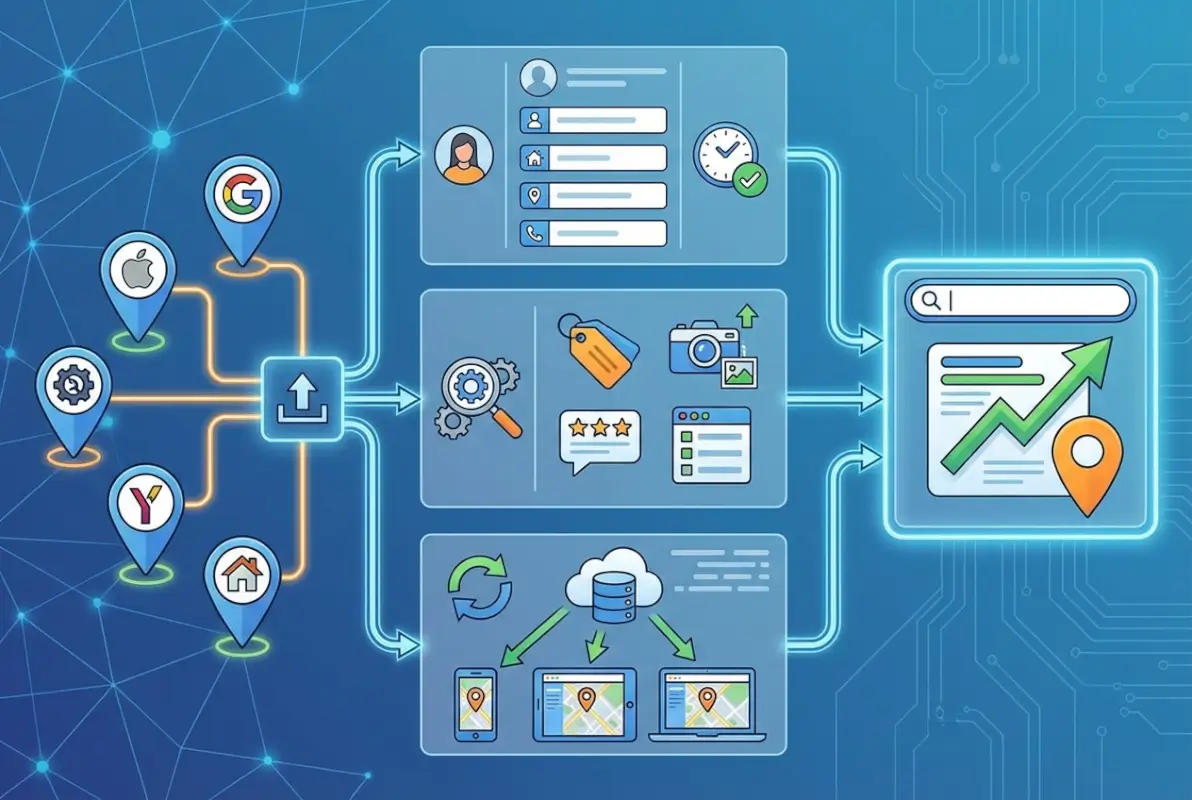
Based on comprehensive research and hands-on experience with hundreds of local businesses, these five platforms consistently deliver the strongest results for local SEO and customer acquisition in 2025. Quality trumps quantity—five fully optimized listings outperform fifty incomplete ones every time.
General Directories for Broad Reach
1. Google Business Profile / Google Maps
Google Business Profile remains the foundation. Key benefits include direct integration with Google Search and Maps, free posting capabilities for promotions, detailed analytics on customer discovery patterns, primary influence on local pack rankings, and product/service showcase capabilities. With over 90% search market dominance, GBP isn’t optional—it’s essential.
2. Bing Places for Business
While Google dominates, Bing Places shouldn’t be overlooked. Microsoft’s integration of Bing into Windows and Office products reaches approximately 126 million unique U.S. users monthly. Additionally, Bing Places data feeds into Apple Maps, providing additional exposure. Benefits include less competition than Google Business Profile, automatic synchronization options with your Google listing, integration with Bing Maps and Bing local search, and easier verification processes. For businesses targeting older demographics or B2B markets, Bing Places delivers particularly strong results as these audiences use Microsoft products more frequently.
3. Facebook Business Pages
While primarily a social platform, Facebook’s local business pages function as powerful business listings appearing in both Facebook searches and increasingly in Google search results. With 2.9 billion monthly active users, Facebook offers unparalleled audience reach. Key benefits include integration with Facebook Marketplace for product-based businesses, built-in appointment booking and messaging capabilities, community-building features through posts and events, review and recommendation functionality, and targeted local advertising options. Facebook Business pages work best when regularly updated with engaging content—businesses posting at least 3 times weekly see significantly higher engagement and visibility.
| Platform | Monthly Reach | Best For | Key Advantage |
|---|---|---|---|
| Google Business Profile | 90%+ of searches | All businesses | Local pack dominance |
| Bing Places | 126M users | B2B, older demographics | Less competition |
| Facebook Business | 2.9B users | Community engagement | Social integration |
| Yelp | 178M visitors | Restaurants, retail, services | Consumer trust & reviews |
| Better Business Bureau | Varies by industry | High-trust industries | Third-party credibility |
Industry-Specific and Vertical Directories for Trust
4. Yelp
Despite controversial review filtering practices, Yelp remains critical for local businesses, particularly in restaurant, retail, and service industries. With over 178 million unique monthly visitors, Yelp listings often rank highly for local service searches and serve as Apple Maps’ default business information provider. Benefits include high domain authority helping Yelp listings rank well in organic search, integrated reservation and appointment booking capabilities, enhanced listing options with menu displays and call-to-action buttons, review response capabilities to address customer feedback, and highly trusted platform status for consumer research. While Yelp’s free listing provides significant value, their paid advertising options deliver mixed results depending on industry—restaurants typically see strong ROI, while service businesses often report less favorable outcomes.
5. Better Business Bureau (BBB)
The BBB offers unique value among best business listing sites: third-party credibility. While not the highest-traffic platform, BBB listings significantly impact consumer trust, particularly for home services, financial services, and high-ticket purchases. Benefits include accreditation options signaling trustworthiness, detailed business information verification, complaint resolution services, strong domain authority helping listings rank in organic search, and trust badges for your website. BBB listings prove particularly effective for businesses in industries where trust is paramount—contractors, financial advisors, and healthcare providers.
When building your presence across these platforms, prioritize completeness and consistency. According to research on local business citations and their impact, businesses with complete listings on top citation sites see 347% more search traffic than businesses with incomplete or inconsistent listings.
Building a Scalable Listings Process
Creating listings represents just the first step—systematic management delivers the real competitive advantage. The most successful local businesses follow structured processes for maintaining consistency and maximizing listing performance over time.
[KBIMAGE_3]Data Consistency, Updates, and Audit Routines
Profile completeness is the most fundamental yet overlooked aspect of listing optimization. Google indicates businesses with complete profiles are 70% more likely to attract location visits and 50% more likely to lead to purchases. Complete means filling every possible field: business categories (primary and secondary), business description with natural keyword inclusion, complete service/product lists with descriptions, business hours including special hours for holidays, payment methods accepted, parking information and accessibility features, and attributes specific to your business type.
Establish a consistent schedule for regular updates: post news or offers weekly, respond to reviews within 24 hours, update hours for holidays or special events, add new photos monthly, check for and correct unauthorized changes, and monitor competitor listings for benchmarking. I’ve seen businesses gain significant ranking improvements simply by correcting inconsistent NAP information. One client had their business name listed three different ways across various platforms; after standardizing to a single version, they saw local pack visibility increase by 23% within six weeks.
Tools and Automation for Citation Management
Managing multiple listings manually becomes unsustainable as your business grows. Citation management tools streamline the process while ensuring consistency. The most effective tools include BrightLocal for citation management and ranking tracking, Moz Local for automated listing distribution, Google Business Profile Insights for performance metrics, and Whitespark for citation building. For multi-location businesses, enterprise solutions like Yext or Uberall provide scaled management capabilities with centralized control and reporting.
If you’re managing directory listings for clients or building your own directory platform, solutions like TurnKey Directories provide WordPress-based tools for creating and managing business directory websites. For businesses seeking comprehensive solutions, exploring white label business directory software solutions can streamline the process of maintaining consistent information across multiple platforms.
Automation should handle routine tasks (monitoring for changes, distributing updates across platforms, tracking citation building progress), but human review remains essential for quality control. Set up monthly audits to verify automated systems are maintaining accuracy and catching edge cases automation might miss.
Content and Profile Optimization Tactics
Beyond the basics of NAP consistency and platform selection, strategic content optimization separates top-performing listings from average ones. These tactics directly influence both search rankings and conversion rates.
[KBIMAGE_4]NAP, Categories, Descriptions, and CTAs
Category selection significantly impacts which searches you appear in. Choose the most specific primary category that accurately describes your business, then add secondary categories to capture related searches. For example, a coffee shop might select “Coffee Shop” as primary, with “Breakfast Restaurant,” “Bakery,” and “Wi-Fi Spot” as secondary categories. Each additional relevant category expands your potential visibility.
Business descriptions should incorporate local keywords naturally while providing genuine value to readers. Rather than just optimizing for “dentist in Portland,” incorporate terms like “emergency tooth extraction Portland” or “same-day dental crowns downtown Portland” that match specific customer needs. Keyword research tools identifying local search volume for specific services provide competitive advantages. Using this approach, I helped a local attorney capture specific practice area searches competitors were missing, resulting in higher-value client acquisitions.
Call-to-action elements vary by platform but should always make the next step obvious. Use click-to-call functionality in all phone numbers, add booking buttons where available, include website links optimized for mobile, and create platform-specific posts highlighting current offers or announcements. Test the complete user journey from mobile search to your listing to your website to identify and fix friction points.
Reviews and Engagement: Strategies to Earn and Respond
Reviews directly influence both search rankings and consumer decisions. Research shows businesses responding to at least 25% of their reviews earn 35% more revenue on average. This engagement signals to both customers and search engines that you’re an active, customer-focused business. Implement a review management strategy that includes actively soliciting reviews from satisfied customers (following each platform’s guidelines), creating easy review links customers can access with one click, developing templates for common review responses to ensure consistency, training all customer-facing staff on generating positive experiences, and incorporating review feedback into operational improvements.
Review response best practices: thank positive reviewers with personalized messages and invite them back, address negative reviews with empathy and solutions (never defensively), respond to neutral reviews with additional value information, use keywords naturally in responses to reinforce relevance, and sign responses with your name and position to add personal touch. I once worked with a restaurant that hadn’t updated their hours on Yelp after extending weekend service—they were receiving negative reviews from customers arriving during actual open hours only to find their listing showed them as closed. This simple oversight was costing them both customers and reputation damage.
Measuring Impact: Metrics, Benchmarks, and ROI
Local SEO efforts only matter if they drive measurable business results. Tracking the right metrics and establishing benchmarks enables data-driven optimization and demonstrates ROI to stakeholders.
[KBIMAGE_5]What Metrics to Track
Track these key performance indicators across your listing platforms: impressions (how often your listing appears in search results), clicks (how often users click through to your website or listing details), click-through rate or CTR (clicks divided by impressions), direction requests (users asking for directions to your location), phone calls (tracked through platform analytics or call tracking numbers), website visits from local sources (filtered in Google Analytics), appointment bookings through listings, local pack position for target keywords, review volume and average rating, and ultimately increases in store visits and revenue correlating with local visibility improvements.
Google Business Profile Insights provides detailed data on how customers find your listing (direct searches for your business name vs. discovery searches for your category), what actions they take (website visits, direction requests, phone calls), and how your performance trends over time. According to comprehensive local SEO management guidance, businesses tracking these metrics monthly and adjusting strategies based on performance data see 2-3x better results than those managing listings without analytics review.
Implement attribution models connecting these metrics to actual revenue. Use unique phone numbers for different listings to track which platforms drive calls, create landing pages specific to each major listing platform to track website conversions, offer platform-specific promotions to measure direct response, and maintain consistent tracking across all customer touchpoints.
How to Benchmark Against Competitors
Competitive benchmarking reveals gaps and opportunities in your local SEO strategy. Identify your top 3-5 local competitors and analyze their listing presence: which platforms they’re on, completeness of their profiles, number and quality of reviews, posting frequency and engagement, local pack positioning for shared keywords, and content strategies they’re using.
Tools like BrightLocal’s Local Search Rank Checker and Moz Local provide competitive comparison features. Focus on: citation gaps (directories where competitors appear but you don’t), review velocity (how quickly competitors accumulate reviews), content depth (how complete their listings are vs. yours), and engagement patterns (how they respond to reviews and interact with customers).
Don’t just copy what competitors are doing—identify what they’re missing. I worked with a local HVAC company that noticed none of their competitors were actively using Google Posts for seasonal promotions. By consistently posting weekly offers, they captured significant visibility competitors were leaving on the table, resulting in a 41% increase in direction requests during their first quarter of consistent posting.
Frequently Asked Questions
What are the best business listing sites for local SEO?
The best local listing sites include Google Business Profile (essential for all businesses), Bing Places for Business, Facebook Business Pages, Yelp (particularly for restaurants and services), and Better Business Bureau for trust-dependent industries. Focus on these five core platforms before expanding to industry-specific directories. Complete, consistent listings on these platforms deliver more impact than incomplete listings on dozens of directories.
How do I improve my local SEO rankings quickly?
Start by claiming and fully optimizing your Google Business Profile with complete information, photos, and regular posts. Ensure NAP consistency across all platforms using identical formatting. Actively solicit and respond to reviews within 24 hours. Build local citations on the five core platforms listed above, then add industry-specific directories. Quick wins come from fixing existing inconsistencies and completing incomplete listings rather than creating new ones.
How many local citations does my business need for strong rankings?
According to BrightLocal research, businesses with 31-50 citations rank approximately 4 positions higher than businesses with 0-30 citations. However, quality and consistency matter more than raw quantity. Start with 10-15 high-quality, complete citations on authoritative platforms before expanding. Focus on accuracy and NAP consistency across all citations rather than accumulating hundreds of low-quality listings.
Should I focus on general directories or industry-specific directories?
Both matter, but prioritize differently. Start with the five core general directories (Google Business Profile, Bing Places, Facebook, Yelp, BBB) for broad visibility. Then add 3-5 industry-specific directories where your target customers actually search. Industry directories often deliver higher-quality leads despite lower traffic volume. For example, Houzz for contractors, Healthgrades for healthcare providers, or TripAdvisor for tourism businesses.
How do I optimize my Google Business Profile effectively?
Complete every available field including precise primary and secondary categories, keyword-rich business description, all services or products with descriptions, at least 10 high-quality photos, weekly posts about offers or updates, answers to all questions, and responses to all reviews within 24 hours. Add special attributes relevant to your business type, keep hours updated including holidays, and regularly check insights for improvement opportunities.
What metrics indicate my listing updates are improving local visibility?
Track impressions (how often your listing appears), clicks and click-through rate, direction requests, phone calls, website visits from local sources, and local pack position improvements for target keywords. Google Business Profile Insights provides detailed data on customer discovery and actions. Businesses tracking these metrics monthly and adjusting strategies based on performance see significantly better results than those managing listings without regular analytics review.
Are paid business listing upgrades worth the investment?
Paid listing upgrades vary significantly in value by industry and platform. Restaurants often see strong ROI from Yelp advertising, while service businesses report mixed results. Request performance data before committing to expensive annual contracts. Start with shorter-term commitments to test results. Prioritize spending on platforms where your target customers actively search for your specific services. Many businesses see better returns optimizing free listings completely before investing in paid upgrades.
How do I avoid duplicate business listings?
Always search for your business on each platform before creating new listings. Claim existing listings rather than creating additional ones. Maintain consistent NAP information across all platforms to prevent system-generated duplicates. Document access credentials for all platforms in a central location so multiple team members don’t accidentally create duplicates. When discovered, use each platform’s specific duplicate reporting process to merge or remove them promptly.
Take Action on Your Local Listing Strategy Today
Establishing powerful presence across the best local listing sites USA isn’t a one-time task—it’s an ongoing process of optimization, engagement, and adaptation. The businesses that excel in local search view business listings not as SEO checkboxes but as dynamic customer touchpoints deserving regular attention. Every update, photo, and review response strengthens your local digital footprint and connects with potential customers actively searching for what you offer.
Start with the fundamentals: claim and verify your Google Business Profile today if you haven’t already. Complete 100% of available fields with accurate, keyword-rich information. Then systematically add the other four core platforms (Bing Places, Facebook Business, Yelp, and BBB), ensuring perfect NAP consistency across all. Once these foundations are solid, expand to 3-5 industry-specific directories where your ideal customers actually search.
Your Local SEO Action Plan
The local visibility advantages you build now will compound over time, creating sustainable competitive advantages that directly impact your bottom line. Businesses maintaining structured data and consistent information across platforms see measurably better search performance than competitors with fragmented online presences.
Audit your existing listings for completeness and consistency this week, then develop a systematic calendar for ongoing management.
For businesses managing multiple listings or building directory platforms for clients, understanding key steps to run a successful directory website business provides valuable insights into effective listing management strategies. If you’re located in commercial centers, don’t forget to leverage specialized location-based directories by learning ways to access business park directory listings for additional local relevance signals.
What listing platform has delivered the best results for your business? Have you discovered industry-specific directories that outperform the major platforms? The most successful businesses treat their local listing presence as a strategic asset, not an afterthought—and the results speak for themselves. Start optimizing today, measure your progress monthly, and watch your local visibility transform your customer acquisition.
Was this article helpful?