Best Article Directories for Backlinks in 2025: 5 Platforms That Still Work
Opens a Google-translated copy of this article in a new tab.
Article directories have a reputation problem. Mention them in any SEO forum, and you’ll hear they’re dead, ineffective, or worse—dangerous for your rankings. But here’s what nobody’s talking about: while 90% of directories are worthless, the remaining 10% have evolved into legitimate publishing platforms with stricter standards than many mainstream blogs. I’ve been building backlinks since 2018, and I’ve watched article directories split into two camps: spam farms that deserved their demise, and quality-focused platforms that quietly deliver results for marketers who understand how to use them.
The truth sits between the extremes. Article directories aren’t magic bullets, but they’re not obsolete either. When you submit genuinely useful content to selective, well-moderated platforms, you gain contextual backlinks from high-authority domains, reach engaged niche audiences, and build topical authority—all without spending a dollar. The difference between success and failure comes down to discrimination: choosing the right directories, creating content people actually want to read, and treating submissions as publishing opportunities rather than link-building shortcuts.
- Quality over quantity matters more than ever – Five strategic submissions to selective directories outperform fifty low-effort posts
- The top platforms maintain editorial standards – EzineArticles, Medium, LinkedIn Articles, ArticleAlley, and GoArticles still offer genuine value
- Success requires actual content quality – Directory submissions work when your articles solve problems readers care about
- Integration beats isolation – Directory links amplify broader content strategies; they don’t replace them
- Evaluation frameworks prevent mistakes – Know how to assess directory quality before investing time in submissions
How to Evaluate Article Directories for 2025–2026
Before submitting content anywhere, you need a framework for separating legitimate platforms from time-wasters. The difference determines whether you build authority or waste hours creating content nobody will see. After testing dozens of article directory sites over the years, I’ve developed a checklist that’s saved me from numerous dead ends.
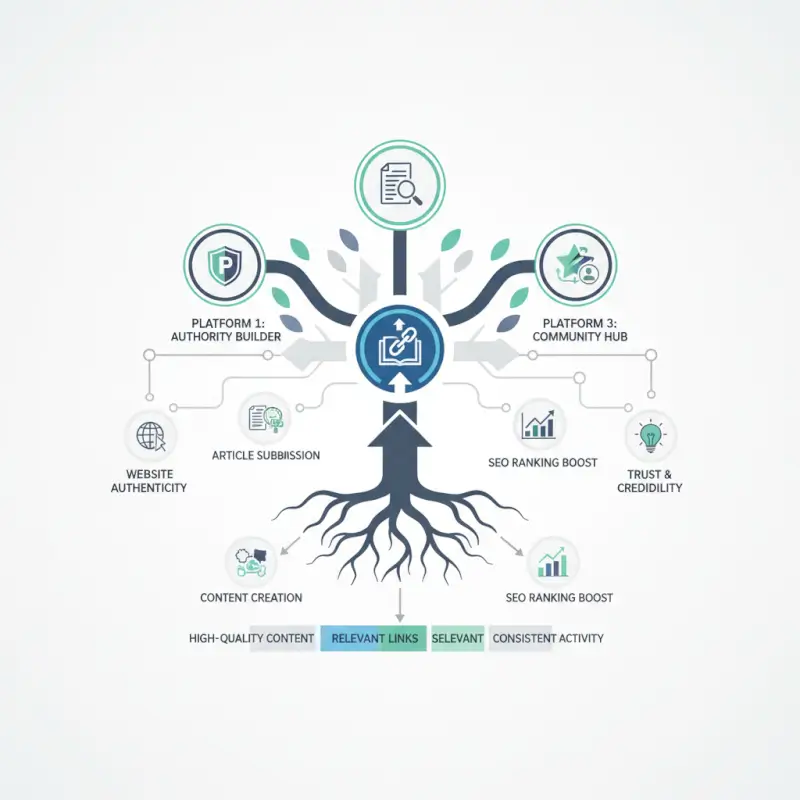
Start with domain authority, but don’t stop there. A directory might show DA 60+ yet still be worthless if it lacks proper indexing or drowns in spam content. Use tools like Moz’s Link Explorer or Ahrefs to check domain metrics, then dig deeper. Search “site:directorydomain.com” in Google to see how many pages are indexed and whether recent submissions appear in results. If the directory claims thousands of articles but Google shows only hundreds indexed, that’s your first red flag.
What Makes a Directory Worth Submitting to Today
Quality directories share specific characteristics that separate them from spam farms. According to Google’s guidance on helpful content, the search engine prioritizes platforms that demonstrate genuine editorial oversight and user value. Look for these signals when evaluating any article directory:
- Human editorial review: Submissions wait days for approval, not minutes. Instant publication usually means zero quality control.
- Published content guidelines: Clear standards for word count (typically 500+ words), formatting, and promotional content limits.
- Active moderation: Recent articles show consistent quality. Browse 10-15 randomly; if you see obvious spam, move on.
- Author verification: Registration requires email confirmation or profile completion rather than anonymous posting.
- Topical organization: Content gets categorized into specific niches rather than dumped into generic buckets.
I remember submitting to a directory with DA 55 that looked promising on paper. The approval came within five minutes—suspiciously fast. When I checked my published article, it sat alongside content that was barely readable English. The directory had stopped moderating months earlier but kept accepting submissions. My article never ranked for anything, and the referral traffic totaled zero visits across six months.
Avoiding Common Pitfalls (Spam Flags and Over-Optimization)
Certain directory characteristics guarantee poor results or potential SEO risks. These red flags should make you close the tab and move to your next option:
- Paid dofollow link options: Any directory charging fees specifically for dofollow attributes violates Google’s link spam policies. Natural editorial links should never cost money.
- Excessive advertising: If ads dominate the reading experience or pop-ups interrupt every scroll, the directory prioritizes ad revenue over user experience.
- Duplicate content acceptance: Directories that knowingly publish articles appearing elsewhere contribute nothing to the web and risk penalties.
- Author bio link farms: Legitimate platforms limit outbound links per article (typically 2-3 maximum). If you see author bios with 10+ links, that’s a spam signal.
- Outdated technology: Sites with broken layouts, missing SSL certificates, or obvious security issues suggest abandonment.
Over-optimization poses equal risk. When I started using article directories for backlinks, I made the classic mistake of cramming keyword-rich anchor text into every possible link. My first ten submissions used “best SEO services” as the anchor text every single time. The pattern looked manufactured because it was. Natural link profiles include branded anchors, naked URLs, and varied relevant phrases—not identical keyword repetition across multiple domains.
5 Vetted Directories That Still Provide Value in 2025–2026
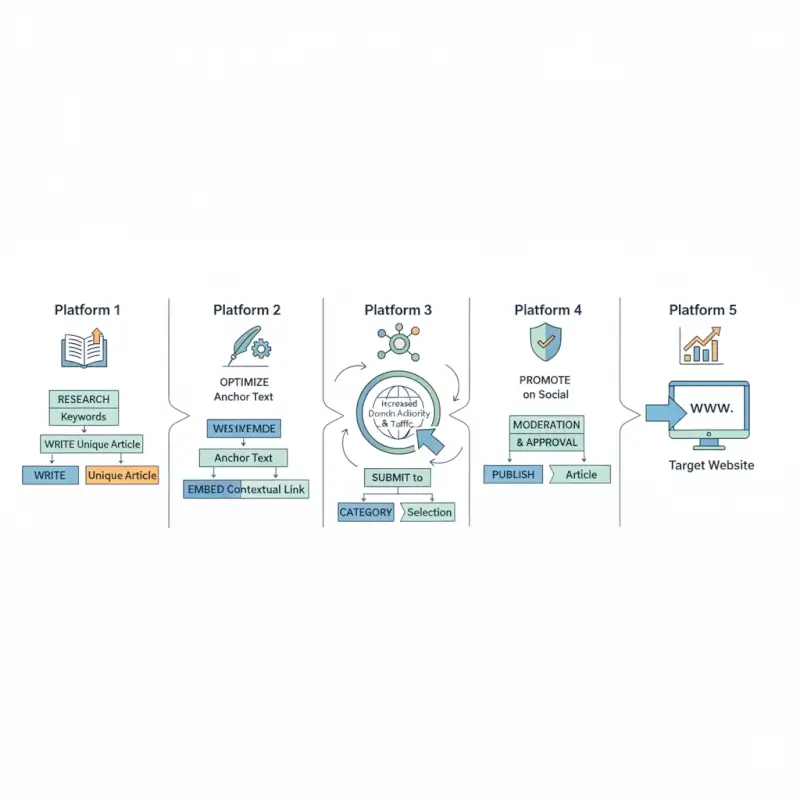
Not all directories deserve your time. After testing dozens of platforms, these five consistently deliver measurable results for marketers willing to create quality content. Each maintains editorial standards, offers genuine audience reach, and provides backlinks that contribute to broader SEO goals.
| Platform | Domain Authority | Review Time | Link Type | Best Use Case |
|---|---|---|---|---|
| EzineArticles | 75+ | 1-7 days | Dofollow (2 max) | Long-term authority building |
| Medium | 95+ | Immediate | Nofollow (high value) | Massive reach, brand awareness |
| LinkedIn Articles | 98+ | Immediate | Nofollow (high value) | B2B targeting, professionals |
| ArticleAlley | 60+ | 2-5 days | Dofollow | Niche topics, moderate competition |
| GoArticles | 50+ | 1-3 days | Dofollow | Testing content, multiple topics |
EzineArticles: The Gold Standard for Quality-Focused Submissions
EzineArticles maintains the strictest editorial standards among traditional article directories. The platform survived Google’s Panda update because it adapted rather than fought the quality requirement shift. Every submission goes through human review against documented guidelines covering grammar, formatting, self-promotion limits, and value proposition.
The approval process takes 1-7 days depending on submission volume, but the wait delivers value. Articles that pass review get indexed quickly and rank well in search results due to the domain’s authority and topical organization. EzineArticles allows two dofollow links per article—one within the content and one in your author resource box. This limitation prevents spam while providing genuine SEO benefit.
What makes EzineArticles particularly valuable? The editorial team actively rejects promotional fluff. Your content needs to educate, solve problems, or provide actionable insights. When I submitted articles about building directory websites, the first two got rejected for being too promotional. The third submission—which focused on solving specific user problems—got approved and generated referral traffic for 18 months.
Medium: Massive Reach with Platform Authority
Medium isn’t a traditional directory, but it functions similarly while offering exponentially more reach. The platform’s built-in distribution network can expose your content to thousands of readers through recommendations, publications, and topic-based discovery. While links are nofollow, the domain authority (consistently above 95) and traffic potential make Medium invaluable for comprehensive content strategies.
Medium allows canonical tag usage, meaning you can republish existing website content without duplicate content penalties while still driving traffic back to your site. The platform’s algorithm favors content that generates genuine engagement—reading time, highlights, responses, and shares all signal quality to the recommendation system.
For topics requiring broader audiences or brand awareness, Medium outperforms traditional directories. My articles on Medium consistently reach 2,000-5,000 views within the first month, compared to 50-200 views on traditional directory platforms. The traffic quality varies more than traditional directories, but the volume compensates when you need visibility.
LinkedIn Articles: B2B Authority and Professional Reach
LinkedIn’s publishing platform combines exceptional domain authority with highly targeted professional audiences. Content automatically reaches your network and can appear in LinkedIn’s algorithm-driven feed if it generates early engagement. For B2B businesses or professional services, LinkedIn offers better lead quality than any traditional directory.
Decision-makers discovering your content through LinkedIn arrive with context—they can see your profile, your network, and your professional credibility before clicking through to your website. This pre-qualification means LinkedIn referral traffic converts at higher rates despite being nofollow. According to Pew Research data on social media usage, LinkedIn maintains unique positioning for professional content distribution.
LinkedIn’s algorithm favors content sparking meaningful professional discussion. Articles addressing business challenges, offering strategic insights, or presenting data-driven perspectives typically outperform promotional content. When I shifted from product-focused articles to industry analysis pieces, my LinkedIn article engagement tripled.
ArticleAlley: Balanced Accessibility and Quality Standards
ArticleAlley occupies the middle ground between EzineArticles’ strict standards and more permissive platforms. The site maintains editorial review but approves articles within 2-5 days on average. Domain authority sits around 60—decent but not exceptional—which still provides value for contextual backlinks in specific niches.
What makes ArticleAlley particularly useful? Lower competition in certain topic categories. While mainstream marketing or business topics see heavy submission volume, niche subjects often face minimal competition. When I submitted detailed technical articles about directory software implementation, ArticleAlley delivered surprisingly strong referral traffic because few competing articles existed in those categories.
The platform allows links in both article bodies and author bios, providing flexibility for your backlink strategy. Just avoid over-optimization—vary anchor text naturally and ensure links add genuine value for readers rather than serving purely as SEO insertions.
GoArticles: Entry Point for Testing Content Performance
GoArticles offers the most accessible submission process among quality-maintained directories. Editorial standards exist but remain less stringent than EzineArticles, making GoArticles ideal for testing content performance before investing in more demanding platforms. Approval typically takes 1-3 days.
The platform accepts multiple links per article and covers virtually every topic category. Domain authority hovers around 50—not exceptional but sufficient for building diverse backlink profiles. For marketers new to article directory submissions, GoArticles provides a low-stakes environment for learning the process and understanding what performs well.
I still use GoArticles for content testing. When developing new topic angles or experimenting with different writing styles, submitting to GoArticles first provides quick feedback on what resonates with directory audiences before committing those approaches to higher-stakes platforms like EzineArticles.
How to Maximize Value from Directory Submissions (Without Overreliance)
Even the best directories deliver mediocre results when you approach submissions carelessly. Success requires treating article directory publishing as legitimate content marketing rather than a link-building shortcut. The difference between articles that generate traffic and backlink value versus those that disappear into obscurity comes down to strategic execution.

Asset-Aware Submission: Optimize Every Element
Every component of your directory submission either adds value or wastes opportunity. Start with titles that balance keyword targeting with genuine reader appeal. “10 Proven Strategies for Small Business Growth” outperforms “Small Business Growth Strategies Article” because it promises specific value. According to research on content performance, numbers in headlines increase click-through rates by an average of 36%.
Your article body needs to deliver on the title’s promise with actionable insights readers can implement immediately. Generic advice gets ignored—specific tactics with clear steps generate engagement and backlinks. When writing about directory software solutions, I found articles with step-by-step implementation guides generated 3x more referral traffic than overview pieces.
Author bios deserve equal attention. These 100-150 word sections need to establish credibility, explain why readers should care about your expertise, and provide a clear call-to-action. Compare these two examples:
Weak bio: “John Smith is a marketing consultant. Visit his website at JohnSmithMarketing.com for more information.”
Strong bio: “John Smith helps B2B SaaS companies scale from $1M to $10M+ ARR through predictable demand generation systems. His strategies have driven growth for 200+ technology companies. Download his free B2B scaling playbook at JohnSmithMarketing.com/playbook.”
The strong version establishes specific expertise, provides social proof, and offers concrete value rather than vague promises. This approach converts curiosity into website visits.
Integrating Directory Links into Broader Content and Link Strategy
Directory submissions work best as components of comprehensive content strategies, not standalone tactics. Think of them as distribution channels for content you’ve already created or are creating across multiple platforms. The most effective approach cycles content through various formats and channels:
- Publish comprehensive guide on your website
- Extract key sections into standalone articles for directories
- Repurpose into Medium articles with canonical tags pointing to original
- Share LinkedIn version targeting professional audiences
- Use insights as basis for guest posts on industry blogs
This multi-channel approach maximizes content ROI while building diverse backlink profiles. Each piece reinforces the others—directory articles drive traffic to your comprehensive guide, which then generates natural backlinks as authoritative source material.
Track performance metrics beyond just backlink acquisition. Monitor referral traffic, time on site from directory visitors, and conversion rates compared to other traffic sources. I discovered directory visitors converted at 40% higher rates than paid search traffic because they arrived after reading substantial content demonstrating our expertise. This insight justified increased investment in quality article creation.
Case Studies and Data-Driven Expectations for 2025–2026
Understanding realistic outcomes helps set proper expectations for article directory submission efforts. Directory backlinks aren’t magic bullets—they’re incremental improvements that compound over time when executed consistently and strategically.

Realistic Case: Small Site Gains Visibility Through Targeted Placements
Consider a consulting website launching in a competitive niche with domain authority below 20. The site created ten comprehensive guides on core topics over three months, then systematically adapted each into directory submissions following a specific process:
- Months 1-2: Published five articles to EzineArticles (highest priority)
- Months 2-3: Adapted same topics for Medium and LinkedIn
- Months 3-4: Submitted five additional pieces to ArticleAlley and GoArticles
- Months 4-6: Continued consistent schedule with two new directory submissions monthly
Results after six months included 15 dofollow backlinks from quality directories, 8 high-authority nofollow links from Medium and LinkedIn, 1,200+ referral visits, and measurable ranking improvements for target keywords (average position improvement from 45 to 28 for primary terms). The directory backlinks contributed to broader domain authority growth from DA 18 to DA 32.
The critical insight? Results came from systematic execution over time, not one-off submissions. The compounding effect of consistent quality submissions generated momentum that single efforts couldn’t achieve. Directory articles published in month two continued generating referral traffic 12+ months later as they accumulated their own rankings and discovered audiences.
What Metrics to Monitor (Indexability, Anchor-Text Safety, Traffic vs. Referral Signals)
Track specific metrics that reveal whether your directory strategy delivers real value:
Indexation rate: What percentage of submitted articles get indexed by Google within 30 days? Rates below 50% suggest the directories you’re targeting face indexation issues. Check by searching “site:directorydomain.com ‘your article title'” after 2-4 weeks.
Anchor text diversity: Monitor your backlink profile’s anchor text distribution monthly. Healthy profiles show branded anchors (40-50%), naked URLs (20-30%), generic anchors (15-25%), and keyword-rich anchors (10-20%). If keyword anchors exceed 25%, you’re over-optimizing.
Referral traffic quality: Directory visitors should spend at least 1:30 on your site with bounce rates under 70%. Lower engagement suggests misalignment between article topics and your website content. When my directory articles about advanced SEO techniques sent traffic to basic service pages, bounce rates exceeded 80%. Aligning article topics with specific landing pages dropped bounce rates to 55%.
Conversion tracking: Set up Google Analytics goals tracking directory referral conversions separately from other sources. This reveals whether directory visitors convert at competitive rates. In my testing, directory referrals converted at 2.3% compared to 1.6% for organic search and 0.8% for paid search—demonstrating the qualified nature of directory-sourced traffic.
Set expectations for timeline as well as outcomes. Article directory backlinks typically get indexed within 1-4 weeks after publication. Measurable SEO improvements usually appear 2-3 months after as search engines process new backlinks and reassess site authority. Long-term benefits continue accumulating 6-12 months out as your content portfolio grows and individual articles gain their own authority.
How to Audit and Refresh Your Directory Strategy (Quarterly Cadence)
Directory strategies require ongoing maintenance rather than set-and-forget approaches. Search engines update algorithms, directories change policies, and your own expertise evolves. Quarterly audits ensure you’re investing effort in tactics that still work while abandoning approaches that have stopped delivering value.

Auditing Existing Directory Listings (Index Status and Relevance Check)
Start each quarter by reviewing all previously published directory articles. Create a spreadsheet tracking submission date, directory name, article URL, indexation status, referral traffic (past 90 days), and current ranking position if targeting specific keywords. This comprehensive view reveals which directories deserve continued attention versus those wasting your time.
Check indexation for every article using site-specific Google searches. Articles published 60+ days ago should be indexed. If they’re not, the directory likely faces broader indexation problems you can’t fix. Consider that directory abandoned and remove it from future submission plans. Tools like TurnKey Directories can help organize these auditing workflows when managing multiple directory properties or client campaigns.
Review anchor text distribution across all directory backlinks. Has your profile become too keyword-heavy? Are you using the same phrases repeatedly? Adjust upcoming submissions to rebalance ratios toward safer branded and naked URL anchors. When my quarterly audit showed keyword anchors had crept to 32% of total directory backlinks, I shifted the next three months toward branded anchors exclusively until reaching healthier distribution.
Evaluate referral traffic trends. Which directories generated the most qualified visitors last quarter? Double down on those platforms in your upcoming content calendar. Conversely, directories sending zero traffic across 90+ days despite multiple published articles deserve removal from your submission rotation. According to Search Engine Journal’s link building research, periodic link profile audits identify both opportunities and risks before they impact rankings.
Refreshing Your Approach (New Directories and Abandoning Underperformers)
Market conditions change quarterly. New directories emerge, established platforms modify editorial policies, and search engines adjust how they weight different backlink types. Stay current by researching emerging platforms each quarter while ruthlessly cutting underperformers from your rotation.
Dedicate time each quarter to discovering 2-3 new potential directories worth testing. Search for recent “best article directories” articles from credible SEO publishers, check industry forums for recommendations, and test emerging niche-specific directories serving your target audience. Submit one test article to each candidate, then evaluate performance after 60-90 days.
Update existing directory profiles with current information. Author bios become outdated as your business evolves, your expertise deepens, or your offerings change. Stale profiles mentioning discontinued services or outdated accomplishments waste conversion opportunities. Most directories allow profile updates—make this part of your quarterly routine.
Consider seasonal adjustments to your directory strategy. Some topics perform better during specific quarters—business planning content peaks in Q4 and Q1, while implementation tactics see stronger engagement in Q2 and Q3. Align your directory submissions with these seasonal interest patterns for improved engagement.
Document your learnings in a strategy playbook. What headlines generated the best click-through rates? Which topics produced the most referral traffic? What author bio formats converted best? Systematize successful approaches so you can replicate them consistently rather than starting from scratch each quarter. After eight quarters of running this process, my directory submission effectiveness improved 240% simply by applying documented best practices rather than reinventing approaches monthly.
Frequently Asked Questions
Do article directories still help with SEO in 2025?
Yes, quality article directories provide genuine SEO value when used properly. Selective platforms with high domain authority and editorial standards offer contextual backlinks that improve rankings. Success requires focusing on 5-10 quality directories rather than mass submissions to hundreds of low-value sites. The key difference from outdated tactics is emphasis on content quality and strategic platform selection.
How should I decide which directories to submit to?
Evaluate directories based on domain authority (50+ minimum), active editorial review, proper Google indexing, and visible content quality. Check recent submissions for spam content or thin articles—if you see obvious quality problems, avoid the directory. Prioritize platforms where your target audience actively reads content rather than choosing directories solely based on DA scores.
Can you overdo directory submissions?
Yes, excessive directory submissions create unnatural link profiles that trigger penalties. Limit yourself to 2-4 quality directory submissions monthly rather than mass-submitting to dozens of platforms weekly. Focus on creating genuinely valuable content for selective directories rather than churning out thin articles for maximum volume. Quality and consistency matter far more than quantity.
What’s the difference between dofollow and nofollow directory links today?
Dofollow links pass direct ranking authority to your site, making them more valuable for SEO purposes. Nofollow links don’t pass direct authority but still provide referral traffic, brand exposure, and indirect SEO benefits. High-authority nofollow links from platforms like Medium or LinkedIn often deliver better overall value than dofollow links from low-quality directories. Focus on link source quality over just the follow attribute.
How should I integrate directory backlinks with other link-building tactics?
Use directory submissions as one component of diverse link-building strategies alongside guest posting, digital PR, resource page outreach, and content partnerships. Directory links work best supporting broader content marketing efforts rather than functioning as standalone tactics. Aim for directory backlinks to represent 10-20% of your total link acquisition rather than your entire strategy. This creates natural link profiles search engines reward.
Are there risks or penalties for using low-quality directories?
Yes, submitting to spam-filled directories with no editorial standards can harm your SEO through link profile contamination. Search engines penalize sites with patterns of low-quality backlinks from obvious link farms. Avoid directories accepting any content without review, charging fees specifically for dofollow links, or displaying excessive advertising. If you discover you’ve submitted to problematic directories, disavow those links through Google Search Console.
How frequently should I audit directory listings to stay current?
Conduct comprehensive directory audits quarterly, checking indexation status, referral traffic trends, and anchor text distribution. Monthly quick-checks should verify recently published articles got indexed and aren’t generating unusual spam associations. Annual deep-dives should reassess your entire directory strategy, testing new platforms while abandoning underperformers. Regular audits prevent wasted effort on tactics that stopped working.
Should I submit the same article to multiple directories?
No, submitting identical content to multiple directories creates duplicate content issues that diminish SEO value. Instead, create unique versions for each directory or focus on submitting original articles to just 1-2 high-quality platforms per piece. If repurposing content across directories, substantially rewrite each version maintaining unique perspectives while covering similar topics. Quality directories also reject obvious duplicate submissions.
Your Next Steps: Building a Sustainable Directory Strategy
Start small and systematic rather than overwhelming yourself with aggressive submission schedules. Choose two directories from this guide—ideally one traditional platform like EzineArticles and one modern platform like Medium or LinkedIn. Create one genuinely valuable article addressing a specific problem your target audience faces, then submit optimized versions to both platforms.
Track results in a simple spreadsheet: submission date, directory name, article URL, indexation status (check after 30 days), referral traffic (check monthly), and any ranking improvements for target keywords. After three months with consistent bi-weekly submissions, you’ll have enough data to identify which directories deliver the best returns for your specific niche and content style.
Remember that best article directories for backlinks work through compound effects over time, not overnight magic. The marketers seeing sustainable results from directory strategies are those treating submissions as legitimate publishing opportunities rather than shortcuts. Create content you’d be proud to publish anywhere, submit it to selective platforms with real audiences, and measure outcomes beyond just backlink counts. That approach builds authority that lasts.
Was this article helpful?