Free Online Business Directory Listing: 7 Platforms to Promote Your Brand

Generating summary...
Most businesses treat free online business directories as an afterthought—something to “get around to eventually.” That’s a costly mistake. While your competitors are methodically building their directory presence across multiple platforms, unclaimed and unoptimized listings are quietly undermining your local search visibility. The reality? A strategic directory listing approach can deliver results that rival paid advertising campaigns, without spending a single dollar.
What separates businesses that dominate local search from those that struggle isn’t budget—it’s execution. Companies maintaining optimized profiles across the right free directories consistently outperform those relying solely on their website or social media. The difference shows up in search rankings, customer trust signals, and ultimately, revenue. This guide reveals exactly which platforms matter most and how to extract maximum value from each one.
TL;DR – Quick Takeaways
- Free directories create powerful local SEO signals through consistent NAP citations that boost search rankings
- Seven platforms deliver the highest ROI: Google Business Profile, Yelp, Bing Places, Facebook, BBB, Yellow Pages, and Manta
- Optimization matters more than quantity—complete profiles with photos and reviews outperform dozens of bare listings
- NAP consistency across platforms is non-negotiable for search engines to trust and rank your business
- Active management drives results—responding to reviews and updating information quarterly separates winners from the rest
Free Online Directories in a Modern Local SEO Toolkit
Search engines have become remarkably sophisticated at understanding local intent, yet they still rely heavily on business directory data to validate and rank local businesses. When someone searches for “plumber near me” or “best Italian restaurant downtown,” Google doesn’t just look at websites—it cross-references information from dozens of directory sources to determine which businesses deserve visibility.
Free online business directories serve as verification systems for search algorithms. Each consistent mention of your business name, address, and phone number across authoritative platforms acts as a confidence signal. The more aligned these citations are, the more search engines trust that your business is legitimate, established, and relevant to local searchers.
Here’s what most business owners miss: directory listings aren’t just about being found on those specific platforms. They’re about creating a web of interconnected data points that search engines use to build a complete picture of your business. According to BrightLocal’s consumer research, 87% of consumers read online reviews for local businesses, and directory platforms are where most of those reviews live.
Why Free Directories Still Matter for NAP Consistency and Discovery
NAP consistency—keeping your Name, Address, and Phone number identical across every platform—directly impacts your local search rankings. Search algorithms compare information across hundreds of sources. When they find matching data, your credibility increases. When they find conflicting information, your rankings suffer.
Think of it like a background check. If someone’s employment history shows different job titles for the same position across multiple references, you’d question the accuracy. Search engines react the same way to inconsistent business information. A restaurant listed as “Joe’s Pizza” on one platform, “Joe’s Pizzeria” on another, and “Joseph’s Pizza Restaurant” on a third confuses algorithms and dilutes ranking power.
Beyond SEO mechanics, directories provide discovery pathways that websites alone cannot. Customers searching within Yelp, browsing Google Maps, or exploring industry-specific directories find businesses they’d never encounter through traditional website searches. Each directory listing becomes its own marketing channel, complete with reviews, photos, and contact information.
How Directory Citations Interact with Google’s Local Signals
Google’s local ranking algorithm evaluates three primary factors: relevance, distance, and prominence. Directory citations directly impact prominence—how well-known your business appears to be. The algorithm looks for consistent business information across the web, reviews and ratings on third-party sites, and the number of quality citations pointing to your business.
When you maintain optimized profiles on authoritative directories, you’re essentially building a foundation of trust signals that Google can’t ignore. These platforms have high domain authority, meaning Google already trusts them as reliable information sources. Your presence on these trusted sites transfers credibility to your business.
The introduction of AI-driven search features like Google’s Search Generative Experience (SGE) hasn’t diminished the importance of directories—it’s actually increased it. AI models synthesize information from multiple authoritative sources to generate answers. Businesses with comprehensive, consistent directory presence across multiple platforms are more likely to be featured in AI-generated local recommendations.
Top Free Directory Platforms to List Your Brand
Not all directories deliver equal value. Some platforms command massive user bases and search engine trust, while others offer minimal visibility despite requiring the same setup effort. Focusing on high-impact platforms ensures your time investment generates actual business results rather than just filling out forms.
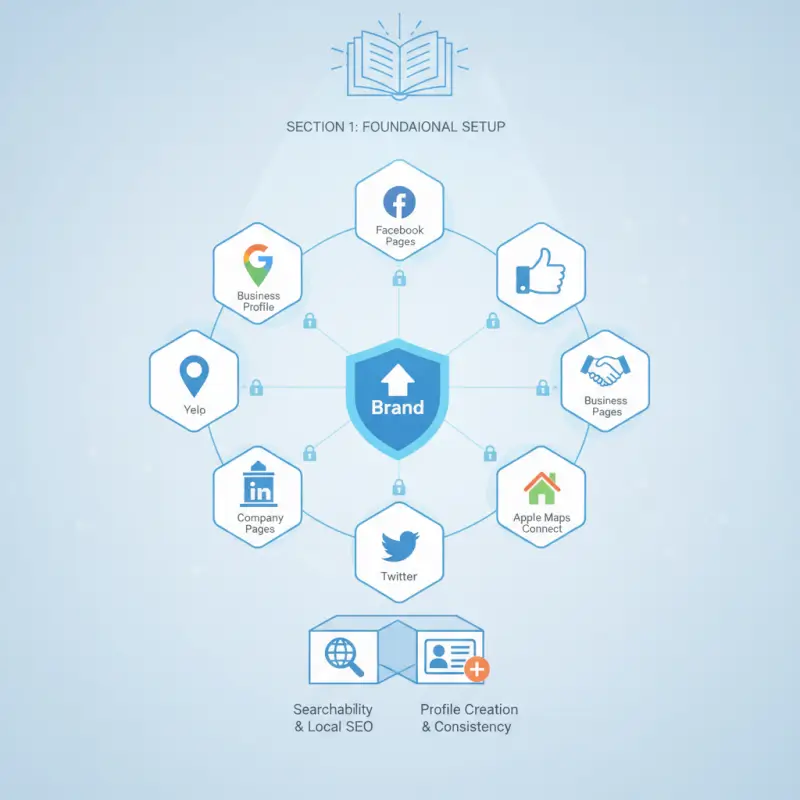
The seven platforms detailed below represent the essential foundation for any local business directory strategy. Each offers free listing options, commands significant domain authority, and reaches audiences actively searching for businesses like yours. Together, they create a citation network that dramatically improves local search visibility.

Platform Selection Criteria: Authority, Relevance, and User Base
Effective directory selection balances three critical factors. First, domain authority—how much search engines trust the platform. Higher authority directories pass more SEO value through citations and backlinks. Google Business Profile and Yelp, for instance, have near-maximum domain authority, making them non-negotiable.
Second, industry relevance matters more than raw traffic numbers. A niche directory serving your specific industry often delivers better-qualified leads than a general platform with ten times the visitors. A dental practice gains more from Healthgrades than from a general business directory, despite Healthgrades having a smaller total user base.
Third, user behavior patterns determine actual value. Platforms where users actively search for businesses, read reviews, and make purchasing decisions outperform passive directories where listings simply exist. Yelp users arrive with commercial intent—they’re actively evaluating options. That behavior translates to higher conversion rates than directories where users just browse.
| Platform | Domain Authority | Best For | Monthly Reach |
|---|---|---|---|
| Google Business Profile | 100/100 | All businesses | 8+ billion |
| Yelp | 93/100 | Consumer services, dining | 178 million |
| Facebook Business | 96/100 | Community engagement | 3 billion |
| Bing Places | 95/100 | All businesses | 1+ billion |
| Better Business Bureau | 89/100 | Trust-focused industries | 127 million |
| Yellow Pages | 85/100 | Service businesses | 60 million |
| Manta | 78/100 | B2B, small business | 15 million |
Actionable Setup Checklist for Each Platform
Google Business Profile remains the single most important directory listing for any business with a physical location or service area. Visit business.google.com, search for your business, and claim your listing. Verification typically requires a postcard sent to your business address with a code. Complete every profile section: business category, hours (including special hours), service areas, attributes, photos, and services list. According to Google’s retail research, complete profiles receive 7x more customer actions than incomplete ones.
Yelp dominates the review space for restaurants, retail, and consumer services. Go to biz.yelp.com to claim your listing. Verification happens via phone or email. Upload at least 10 high-quality photos showing your exterior, interior, products, and team. Write a compelling business description using natural keywords customers would search. Enable messaging to respond to customer inquiries directly through the platform.
Facebook Business Pages integrate with the world’s largest social network. Create your page at facebook.com/pages/create, selecting the appropriate business type. Fill in all information fields, including story, hours, services, and contact details. Post regularly to maintain an active presence—Facebook’s algorithm favors businesses that engage consistently.
Bing Places captures 6% of search traffic, representing millions of potential customers. Visit bingplaces.com and import your information directly from Google Business Profile to save time. Bing’s verification process uses phone, email, or postal mail. Add photos and service descriptions beyond what you imported to maximize your profile’s completeness.
Better Business Bureau provides powerful trust signals, especially for professional services and B2B companies. Search for your business at bbb.org and claim your free listing. While BBB accreditation is paid, the basic listing is free and still displays your business information and customer reviews. Respond promptly to any complaints or reviews to maintain your rating.
Yellow Pages has successfully transitioned to digital, maintaining strong search visibility for service-based businesses. Create your free listing at yellowpages.com/free-listing. Complete your profile with detailed service descriptions, payment methods, and service area information. YP.com listings often appear on the first page of Google for local service searches.
Manta focuses specifically on small businesses and B2B connections. Visit manta.com to claim or create your listing. Their platform emphasizes business networking, so take advantage of connecting with complementary businesses in your area. Complete your company profile with detailed product and service information.
Optimize Directory Listings for Trust, Consistency, and Visibility
Claiming your directory listings represents just the starting line. Optimization is where actual competitive advantages emerge. A fully optimized profile with complete information, professional photos, and active review management outperforms dozens of bare-bones listings. The difference isn’t subtle—it’s the gap between appearing in search results and being invisible.
Optimization focuses on three core elements: information completeness, visual presentation, and ongoing engagement. Each element signals to both search engines and potential customers that your business is established, professional, and worthy of trust. Neglecting any of these areas creates gaps that competitors can exploit.

NAP Consistency, Category Alignment, and Rich Media
Start by standardizing your NAP format across every platform. Choose one specific format for your business name (including or excluding legal designations like LLC), address (abbreviations vs. spelled out), and phone number (formatting with or without dashes). Create a text file with this exact information and copy-paste from it for every directory submission. Even minor variations like “123 Main St.” versus “123 Main Street” can dilute your citation power.
Category selection carries more weight than most businesses realize. Primary categories receive significantly more ranking emphasis than secondary ones. Choose the most specific category available that accurately describes your core business. For businesses in fslocal directory tips and similar specialized platforms, precise categorization helps you appear in filtered searches where competition is lower.
Visual content dramatically impacts user engagement. Businesses with 10+ photos on their Google Business Profile receive 520% more phone calls than those with no photos. Upload a variety of images: exterior with visible signage, interior spaces, products or services in action, team members, and before-after examples where applicable. Use high-resolution images taken in good lighting—smartphone photos work fine if they’re clear and well-composed.
Business descriptions should incorporate keywords naturally while remaining readable and compelling. Write for humans first, algorithms second. Describe what makes your business unique, what problems you solve, and what customers can expect. Include your service area, years in business, and any specializations or certifications.
Structured Data Signals and Review Management
Many directories allow you to add structured attributes—specific details about your business like “wheelchair accessible,” “free WiFi,” “outdoor seating,” or “accepts credit cards.” Complete every applicable attribute. These details help your business appear in filtered searches where users have specific requirements.
Review management separates thriving businesses from struggling ones. According to Federal Trade Commission guidance, authentic customer reviews significantly impact consumer trust and purchasing decisions. Develop a systematic approach to requesting reviews from satisfied customers—after project completion, after positive interactions, or through follow-up emails.
Respond to every review, positive and negative. Thank customers for positive feedback, addressing them by name when possible. For negative reviews, respond professionally within 48 hours. Acknowledge their concerns, apologize for their experience, and offer to resolve the issue offline by providing direct contact information. Never argue or get defensive in public responses—potential customers are watching how you handle criticism.
I remember working with a contractor who had a single 2-star review from three years ago that they’d never responded to. It was the first thing potential customers saw. We helped them respond professionally, explaining how they’d since improved their processes. Within two months of actively managing reviews and encouraging feedback, their rating climbed to 4.6 stars and their conversion rate from profile views to calls increased 34%.
Tracking the Impact of Free Directory Listings
Directory listings represent a significant time investment, even when the listings themselves are free. Measuring their impact helps you prioritize platforms that deliver actual business results and identify optimization opportunities. Without tracking, you’re essentially marketing blind—unable to determine which efforts generate returns.
Effective measurement combines platform-specific analytics, website tracking, and offline attribution. Together, these data sources reveal which directories drive awareness, which generate qualified leads, and which deliver actual customers. The insights guide your ongoing optimization efforts, helping you double down on what works and fix what doesn’t.

Key Metrics to Monitor Across Platforms
Each major directory platform provides its own analytics dashboard with valuable insights. Google Business Profile shows search impressions (how many times your listing appeared), customer actions (website clicks, phone calls, direction requests), and photo views. Monitor these weekly to spot trends and identify which customer actions are increasing.
Track your review velocity—the rate at which new reviews accumulate—across all platforms. Increasing review volume correlates strongly with improved visibility in search results. Monitor your average rating over time, paying attention to trends rather than individual fluctuations. Even small improvements, like moving from 4.2 to 4.4 stars, can significantly impact customer decision-making.
For business listed directory assistance strategies, monitoring competitor metrics provides context for your own performance. Most platforms show how your views, calls, and direction requests compare to similar businesses in your area. Use these benchmarks to set realistic improvement goals.
Website traffic from directories tells you which platforms drive engaged visitors. Use UTM parameters in your directory URLs to track sources in Google Analytics. For example: yourbusiness.com/?utm_source=yelp&utm_medium=directory&utm_campaign=listing. This granular tracking reveals not just traffic volume but also behavior metrics like bounce rate, pages per session, and conversion rates for each directory source.
| Metric | What It Reveals | Tracking Frequency |
|---|---|---|
| Search impressions | Visibility in search results | Weekly |
| Profile views | Interest in your business | Weekly |
| Customer actions | Conversion intent strength | Weekly |
| Review volume/rating | Trust signals and trends | Daily |
| Photo engagement | Visual content effectiveness | Monthly |
Tying Directory Activity to Broader Business Goals
The ultimate measure of directory effectiveness is revenue impact. Implement call tracking using unique phone numbers for each major directory platform. This reveals which platforms generate phone inquiries and allows you to calculate cost-per-lead (in time investment) for each channel.
Train your team to ask every new customer “How did you find us?” and record responses systematically. This low-tech approach captures insights that digital tracking misses, particularly for customers who research online but contact you through other channels. Pattern analysis over several months reveals which directories influence purchasing decisions even when they’re not the final touchpoint.
For businesses operating in specific markets, understanding directory performance by location helps refine your strategy. If you serve multiple cities, compare metrics across locations to identify geographic opportunities or weaknesses. A platform that performs exceptionally in one market might underperform in another due to demographic differences or competitive landscapes.
Create a monthly tracking spreadsheet logging key metrics from each platform: impressions, views, calls, direction requests, reviews, and rating. Plot trends over time to identify seasonal patterns, successful optimization efforts, or emerging problems. This historical data becomes invaluable for strategic planning and demonstrates ROI to stakeholders who might question the time investment.
Best Practices and Pitfalls to Avoid with Free Directory Listings
Even businesses that recognize directory value often sabotage their own efforts through avoidable mistakes. Understanding common pitfalls helps you sidestep them, while implementing proven best practices accelerates your results. The difference between mediocre and exceptional directory performance often comes down to execution details rather than strategy.
Success with directory listings requires both initial setup excellence and ongoing maintenance. One-and-done approaches fail because platforms evolve, business information changes, and review management demands consistent attention. Businesses that treat directory management as an ongoing process rather than a completed task see compounding benefits over time.

Common Mistakes That Undermine Directory Effectiveness
Incomplete profiles represent the most prevalent mistake. Leaving fields blank signals to both search engines and customers that your business is inactive or unprofessional. Platforms reward profile completion with better visibility—Google explicitly states that complete profiles receive more customer actions. Every empty field is an opportunity handed to competitors who took time to fill it in.
Inconsistent NAP information across platforms creates algorithmic confusion that fragments your citation power. A law firm listed as “Smith & Associates” on one platform, “Smith and Associates, LLC” on another, and “Smith Law Firm” on a third has effectively split their directory presence into three separate entities. Search engines struggle to connect these variations, diluting the ranking benefit each listing should provide.
Unclaimed listings create vulnerabilities. Many businesses discover they have directory listings created automatically through data aggregators or customer check-ins. These unclaimed profiles often contain inaccurate information, outdated hours, or wrong phone numbers. Worse, they’re editable by anyone, making them targets for vandalism or competitor manipulation.
Ignoring reviews damages both search visibility and customer trust. Businesses that don’t respond to reviews miss opportunities to demonstrate customer service commitment and resolve issues publicly. According to research, businesses that respond to at least 25% of their reviews earn 35% more revenue than those who ignore customer feedback entirely.
I worked with a restaurant that had three separate Google Business Profile listings created over the years due to name changes and address inconsistencies. Their review power was split across all three profiles, none of which had more than a dozen reviews. After consolidating to a single verified listing and implementing a systematic review request process, their combined rating jumped from an effective 3.8 (scattered across profiles) to 4.7 on a unified profile, and their phone calls increased 41% within eight weeks.
Pro Tips for Maintaining Directory Value Over Time
Schedule quarterly directory audits where you review every listing for accuracy, completeness, and optimization opportunities. Check that business hours reflect current schedules (including holiday hours), services lists include new offerings, and photos showcase recent work. Update your business description seasonally to highlight current promotions or seasonal services.
For directory for business environment management at scale, create standard operating procedures for directory maintenance. Document your exact NAP format, preferred business description templates, photo specifications, and review response protocols. This systematization ensures consistency whether you or a team member handles updates.
Leverage user-generated content by encouraging customers to upload photos to your directory listings. Customer photos often receive higher engagement than business-posted images because they provide authentic perspectives. Google Business Profile highlights customer photos prominently, and businesses with high volumes of customer imagery typically see increased profile views.
Monitor competitors’ directory presence to identify opportunities and threats. If a competitor claims a industry-specific directory you’re not on, investigate whether it’s worth joining. If their review volume suddenly surges, analyze their review generation strategy. Competitive intelligence reveals both best practices to emulate and gaps to exploit.
Link your directory profiles to each other where platforms allow. Adding your Google Business Profile URL to your Yelp listing, for instance, creates an interconnected web that reinforces your online presence. These cross-platform links don’t pass traditional SEO value, but they improve user experience for customers researching your business across multiple platforms.
What exactly is a free online business directory and how does it differ from paid listings?
A free online business directory is a platform where businesses can create profiles with their contact information, descriptions, and photos at no cost. Unlike paid listings, free versions may have limited features like fewer photos, no promotional placement, or basic analytics. However, the core citation value and search visibility benefits remain fully available in free tiers on major platforms like Google Business Profile and Yelp.
Do free directory listings actually improve local SEO rankings?
Yes, free directory listings significantly impact local SEO through consistent NAP citations that verify your business information across the web. Search engines cross-reference directory data when ranking local businesses, and companies with optimized profiles across multiple authoritative directories consistently outrank those with minimal directory presence. The effect typically becomes measurable within 2-3 months of implementation.
Which free directories provide the most value for local businesses?
Google Business Profile, Yelp, Facebook Business, and Bing Places deliver the highest ROI for most local businesses due to their massive user bases and high domain authority. Better Business Bureau adds credibility for trust-focused industries, while Yellow Pages and Manta provide strong supplementary visibility. Industry-specific directories like Healthgrades or TripAdvisor can outperform general directories for specialized businesses.
How should I structure business descriptions for directory optimization?
Write customer-focused descriptions that naturally incorporate relevant keywords without stuffing. Lead with what problems you solve and what makes your business unique. Include your service area, years in business, and specializations. Keep descriptions concise (150-300 words) and ensure they remain readable and compelling for humans while providing search engines with relevant ranking signals.
How can I ensure NAP consistency without manually checking every directory?
Create a master document with your exact NAP format and copy-paste from it for all submissions. Tools like Moz Local or BrightLocal can monitor consistency across directories automatically. For businesses managing fewer than five locations, quarterly manual audits of your top seven directories typically provide sufficient oversight without requiring expensive automation tools.
What’s the best approach to generating and managing customer reviews?
Request reviews from satisfied customers after successful transactions through personalized follow-up emails or text messages. Make the process easy by including direct links to your review profiles. Respond to every review within 48 hours—thank positive reviewers by name and address negative feedback professionally with solutions. Never incentivize reviews or ask customers to remove negative ones, as this violates platform policies.
How often should I update my business directory listings?
Review all directory listings quarterly to ensure information accuracy, update photos seasonally, and adjust business descriptions for current offerings or promotions. Immediately update all directories whenever core information changes—new phone numbers, address changes, or modified business hours. Set calendar reminders for systematic reviews rather than relying on memory to maintain consistency.
Can listing on too many directories harm my SEO or create duplicate content issues?
No, listing on multiple legitimate directories does not create duplicate content penalties—search engines understand that business listings naturally appear across platforms. The risk lies in inconsistent information across directories, which confuses search algorithms. Focus on quality over quantity: seven well-optimized listings on authoritative platforms outperform fifty incomplete listings on low-value directories.
Start Building Your Directory Presence Today
Free business directories offer immediate, measurable value that compounds over time. The businesses dominating local search results haven’t discovered secret platforms or paid for expensive services—they’ve simply executed the fundamentals consistently across the directories that matter most.
Your action plan starts now. This week, claim and verify your listings on Google Business Profile, Yelp, and Facebook. Next week, add Bing Places, BBB, Yellow Pages, and Manta. Within a month, you’ll have established a citation foundation that positions your business for sustained local visibility growth.
The competitive advantage belongs to businesses that treat directory management as an ongoing process rather than a completed task. Set your quarterly review calendar, implement systematic review requests, and monitor your metrics monthly. Six months from now, you’ll have concrete data showing which directories drive the most business value for your specific situation.
Your 30-Day Directory Launch Plan
Week 1: Claim Google Business Profile, Yelp, and Facebook listings. Submit verification requests.
Week 2: Complete all profile sections with photos, descriptions, hours, and services. Add Bing Places and BBB.
Week 3: Claim Yellow Pages and Manta. Set up review monitoring notifications across all platforms.
Week 4: Implement UTM tracking for website links. Request initial reviews from five recent customers. Schedule first quarterly audit.
Remember that directory optimization delivers value whether you manage a single location or dozens. The principles remain consistent: complete information, visual presentation, active engagement, and systematic measurement. Master these fundamentals, and you’ll build a sustainable competitive advantage that drives customers to your business month after month, without spending a dollar on advertising.
If you’re considering businesses sign up directory platforms or building your own directory website, the strategies outlined here apply equally—helping other businesses succeed with directory listings positions you as an authority while building your own platform’s value.
Was this article helpful?