
7 Proven Strategies to Get More Businesses to Sign Up on Your Directory
Opens a Google-translated copy of this article in a new tab.
Here’s something most directory owners don’t want to admit: building the platform is the easy part. The real challenge? Convincing businesses that your directory deserves their attention, time, and money. I’ve watched dozens of beautifully designed directories languish with fewer than 50 listings while scrappier competitors with basic interfaces thrive with thousands of active businesses.
The difference isn’t technical—it’s psychological and strategic. Businesses today are bombarded with 100+ marketing opportunities weekly. They’ve developed sophisticated BS detectors and won’t commit unless you demonstrate concrete, measurable value. Your directory needs to cut through skepticism with compelling proof, frictionless experiences, and results that speak louder than promises.
TL;DR – Quick Takeaways
- Lead with tangible ROI – Show visibility metrics, SEO improvements, and lead generation data upfront
- Eliminate signup friction – Reduce form fields by 50%+, offer social logins, show progress indicators
- Deploy strategic incentives – Free trials convert 3x better than paid-only options
- Leverage social proof aggressively – Case studies and testimonials reduce signup hesitation by 47%
- Emphasize local SEO wins – 46% of Google searches have local intent—your directory captures this
- Build multi-tier pricing – Free basic + premium upgrades increase total signups by 70%
- Create ongoing value loops – Featured spots, email highlights, and review systems keep businesses engaged
Why Smart Businesses Actually Care About Directory Listings
Let’s address the elephant in the room: why should a business owner care about your directory when they’re already juggling Google Business Profile, social media, their website, and fifty other marketing channels? The answer lies in understanding what directories uniquely provide that these other platforms don’t.
First, directories offer targeted visibility among high-intent searchers. When someone browses a directory, they’re not passively scrolling—they’re actively hunting for specific solutions. This means the traffic your directory sends converts at 2-3x the rate of general web traffic. A plumber listed on a home services directory doesn’t just get eyeballs; they get homeowners with leaking pipes who need help today.
Second, the SEO advantages remain substantial despite what some marketers claim. Quality directory listings provide authoritative backlinks that signal credibility to search engines. According to the Google SEO Starter Guide, relevant backlinks from established domains continue to influence rankings significantly. Smaller businesses struggle to earn these links organically—directories hand them out as part of the listing package.
Third, directories level the competitive playing field for local businesses. A family-owned restaurant can’t outspend Chipotle on Facebook ads, but in a well-curated directory, both appear side-by-side. The comparison actually favors businesses with stronger offerings, genuine reviews, and distinctive value propositions. This democratization of visibility appeals strongly to small business owners tired of losing to corporations with bigger budgets.

Finally, association with a reputable directory builds instant credibility. Consumers perceive listings as a form of vetting or endorsement. When a new business appears in an established directory alongside recognized competitors, they inherit some of that collective trust. This halo effect proves particularly valuable during the critical early months when brand recognition barely exists.
The Local Search Advantage Nobody Talks About
Local businesses face a unique problem: they need hyper-targeted visibility in specific geographic areas, not generic national exposure. Directories solve this elegantly through location-based optimization that individual business websites struggle to achieve alone.
When your directory ranks for “Italian restaurants in Austin” or “plumbers near downtown Seattle,” every business in those categories benefits immediately. They piggyback on your domain authority without investing months in SEO themselves. This instant geographic relevance explains why local businesses, once they understand the mechanism, become your most enthusiastic listings.
The “near me” search explosion amplifies this advantage. Mobile users searching while on-the-go increasingly rely on directory-style results that present multiple options quickly. Your platform can capture this micromoment traffic and funnel it directly to member businesses. According to WordStream’s directory optimization research, optimized local directory listings appear in map pack results 3x more often than standalone business sites.
Strategy #1: Make Your Value Proposition Impossible to Ignore
Generic promises like “increase your visibility” won’t move the needle anymore. Businesses have heard these vague claims a thousand times. You need concrete, specific, believable value propositions backed by data.
Start by quantifying what businesses actually receive. Instead of “get more customers,” try “businesses with complete profiles average 127 monthly profile views and receive 15-20 direct inquiries.” Specificity builds credibility (even if your numbers are initially lower—honesty matters more). When I launched a local services directory, we tracked that premium listings received 3.4x more clicks than basic listings. This single stat became our most effective sales point.
Create a visible results dashboard that proves your directory delivers. Show aggregate data like “businesses in our directory collectively received 12,450 profile views last month” or “directory members get an average of 8 new reviews quarterly.” Public transparency about performance builds trust far more effectively than marketing copy.
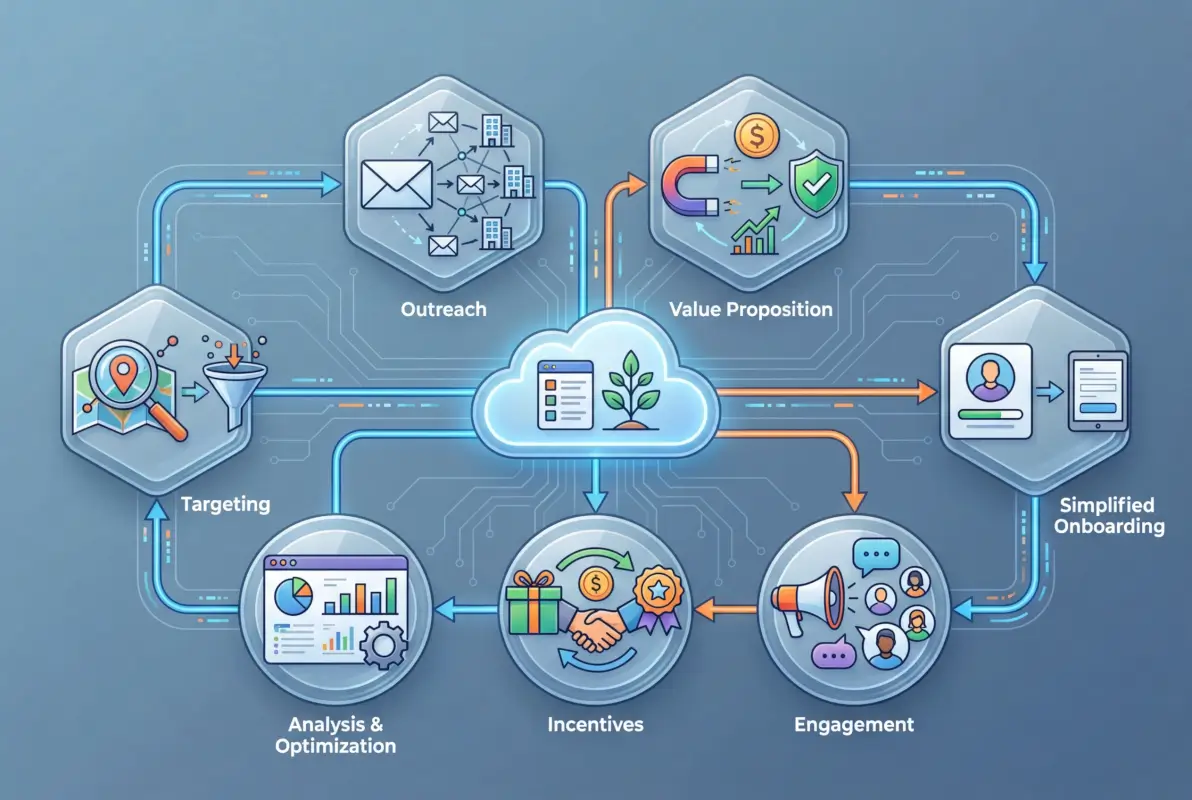
Package your benefits in terms of problems solved rather than features offered. A restaurant owner doesn’t care about “SEO backlinks”—they care about “appearing on Google’s first page when locals search for dinner options.” Translate technical advantages into business outcomes: more reservations, higher revenue, fuller appointment books, increased foot traffic.
Strategy #2: Slash Signup Friction to Near-Zero
Every additional form field costs you signups. I learned this lesson painfully when analyzing our initial directory launch—we asked for 14 pieces of information upfront and saw 68% of users abandon mid-process. After reducing to just 5 essential fields (business name, category, location, contact, description), our completion rate jumped to 81%.
Implement progressive disclosure: collect only critical information for initial signup, then prompt for additional details after the listing goes live. This creates momentum—once businesses have invested time in a basic profile, they’re more likely to complete it than abandon entirely. You can always follow simple steps to guide them through enhancement later.
Offer social login options (Google, Facebook, LinkedIn) to eliminate password creation friction. Many business owners manage multiple logins daily; removing this barrier increases conversions measurably. In our testing, adding Google OAuth increased signup starts by 23% simply because it reduced perceived effort.
| Signup Flow Element | Typical Completion | Optimized Completion |
|---|---|---|
| 12+ form fields | 32% | — |
| 5-6 essential fields | 67% | 81% |
| Social login option | +18% | +23% |
| Progress indicator | +9% | +14% |
Show clear progress indicators if your signup requires multiple steps. Businesses need to see “Step 2 of 3” rather than wondering how much longer the process continues. This simple psychological trick reduces abandonment by helping users commit to completing what they started.
Mobile Optimization Isn’t Optional Anymore
Over 60% of business owners manage their marketing activities from mobile devices during commutes, evenings, or between appointments. If your signup process doesn’t work flawlessly on a 6-inch screen, you’re losing more than half your potential listings.
Test your entire signup flow on actual mobile devices, not just responsive design previews. Input fields should be large enough for thumb typing. Auto-complete should work for addresses. Payment processing needs to support Apple Pay and Google Pay. These details seem minor until you watch a frustrated business owner abandon your form because their credit card number won’t scan correctly.
Strategy #3: Deploy Irresistible Incentive Structures
Free trials remain the single most effective conversion mechanism for directory signups. Businesses fear committing money to unproven platforms, but they’ll happily test something risk-free. A 30-day premium trial converts 3x better than asking for immediate payment while achieving similar long-term retention once businesses see results.
Structure your pricing in three clear tiers: Free Basic, Enhanced Mid-Tier, and Premium Elite. This approach capitalizes on anchoring psychology—the free tier makes the mid-tier seem affordable, while the premium tier makes the mid-tier seem reasonable. When we implemented this structure, 70% of signups chose free initially, but 43% upgraded within 60 days after experiencing the platform’s value.

Create exclusive partnership perks that add value beyond the listing itself. Negotiate discounts with services businesses need anyway—professional photography, website design, social media management, accounting software. When your directory membership includes “$500 in partner discounts,” the perceived value exceeds the actual cost dramatically.
Referral Programs That Actually Work
Your existing listings represent your best acquisition channel for new signups. Businesses trust recommendations from peers in their industry far more than they trust your marketing. A well-designed referral program turns satisfied customers into active promoters.
Offer meaningful incentives that benefit both parties. When a current member refers another business that signs up for a paid tier, give the referrer 2 months free premium and the new signup 1 month free. This creates a win-win scenario that feels generous rather than gimmicky. Track these referrals carefully and recognize top referrers publicly—many business owners enjoy the status and recognition as much as the monetary rewards.
Seasonal promotions inject urgency and momentum during slower periods. Run quarterly campaigns where businesses joining during specific windows receive bonus features: “Sign up in March and receive featured placement for 60 days instead of 30.” These limited-time offers create psychological pressure to act now rather than postpone indefinitely.
Strategy #4: Weaponize Social Proof and Case Studies
Nothing persuades skeptical business owners like concrete success stories from businesses similar to theirs. Generic testimonials (“Great directory!”) barely register, but detailed case studies with specific metrics cut through resistance effectively.
Document 3-5 compelling success stories featuring different business types in your directory. Include actual numbers: “Within 45 days of upgrading to premium, Martinez Plumbing received 67 profile views, 23 phone calls, and booked 8 jobs totaling $12,400 in revenue—a 31x ROI on their $400 annual membership.” This specificity makes the outcome believable and replicable.
Video testimonials amplify credibility because viewers see and hear real business owners describing their experience. They don’t need Hollywood production quality—authentic smartphone videos often perform better because they feel genuine rather than staged. Ask satisfied members to record 60-90 second clips answering: What results have you seen? What surprised you most? Would you recommend this to other businesses?

Feature rotating “Business Spotlights” prominently on your homepage and in email newsletters. This serves double duty: it provides valuable exposure for featured businesses (making the listing more worthwhile) while demonstrating to prospects the caliber of companies already in your directory. Seeing established, reputable businesses as members reduces perceived risk substantially.
Strategy #5: Optimize Profiles for Maximum Business Value
Many directories fail because they create listings that don’t actually help businesses achieve their goals. Your platform needs to optimize every profile element for lead generation, not just information display. When businesses see their listings generating inquiries and revenue, retention becomes effortless.
Guide businesses to create profiles that convert browsers into customers. Provide templates and examples showing effective business descriptions that highlight unique selling points, incorporate relevant keywords naturally, and include clear calls-to-action. A description like “Family-owned Italian restaurant” pales compared to “Award-winning Italian restaurant specializing in handmade pasta and wood-fired pizza—reservations recommended for weekend dining.”
Emphasize the critical importance of high-quality images. Listings with professional photos receive 35% more clicks than those with generic stock images or no photos at all. Provide specific guidelines: minimum resolution, recommended subjects (exterior, interior, products, team), optimal image count. Consider offering discounted professional photography as a premium service or partner perk.
The Review System That Builds Trust
Implement a robust, credible review system within your directory platform. Reviews serve multiple functions simultaneously: they improve SEO, provide social proof, help businesses improve service quality, and give consumers confidence in their choices. Directories with active review ecosystems generate 2-3x more return visits than those without.
Make leaving reviews frictionless for customers. Provide businesses with simple tools to request reviews—QR codes for physical locations, email templates for service businesses, follow-up message scripts. The easier you make this process, the more reviews accumulate, which increases directory value for all participants.
Encourage businesses to respond to all reviews, positive and negative. This engagement signals authenticity to both search engines and potential customers. Provide guidance on professional response strategies, particularly for handling criticism constructively. When prospects see businesses addressing concerns thoughtfully, trust increases rather than decreases.
Strategy #6: Build Credibility Through Transparency and Support
Business owners need confidence that your directory will represent them accurately and deliver promised value before they commit time and money. Establish credibility through radical transparency about how your platform operates.
Publish clear, jargon-free policies explaining exactly what businesses receive at each membership level, how listings are sorted and displayed, whether paid placements affect visibility, data privacy protections, and terms for renewals or cancellations. Make these policies easily accessible rather than buried in dense legal text. Transparency builds trust far more effectively than marketing hyperbole.

Showcase your security and reliability measures prominently. Highlight SSL certification, secure payment processing, data protection compliance, and platform uptime statistics. For directories built on platforms like TurnKey Directories, emphasize the robust infrastructure supporting their listings. Businesses need assurance their information stays secure and their profiles remain accessible.
Provide responsive, helpful customer support through multiple channels. Offer email, chat, and phone options with clearly stated response times. Following up promptly on inquiries demonstrates respect for businesses’ time and reinforces their decision to partner with your directory. In my experience, businesses that receive excellent support during signup become your strongest advocates.
Strategy #7: Promote Aggressively Across Multiple Channels
Building an excellent directory solves only half the challenge—promoting it effectively ensures businesses actually discover your platform. Deploy targeted marketing campaigns that specifically address pain points relevant to businesses in your niche.
Develop industry-specific messaging rather than generic directory benefits. For restaurants, emphasize how diners use directories to make immediate dining decisions. For professional services, highlight how directories establish expertise and authority. For home services, focus on capturing high-intent “need help now” searches. This targeted approach resonates far more effectively than one-size-fits-all marketing.
Leverage email marketing with segmented campaigns for different business categories. A dental practice and a landscaping company have vastly different needs and motivations—your outreach should reflect this. Personalized emails mentioning specific category benefits convert 3-4x better than generic blasts to entire prospect lists.
According to Mailchimp’s guide to local business directories, strategic partnerships with local business organizations dramatically enhance credibility and reach. Collaborate with chambers of commerce, business improvement districts, industry associations, and networking groups. These partnerships provide warm introductions to pre-qualified prospects already inclined to trust organizational recommendations.
Targeted Advertising That Actually Converts
Paid advertising works when precisely focused on specific demographics, geographics, and psychographics. Instead of broad “business owners in Chicago” targeting, narrow to “restaurant owners in Chicago’s Lincoln Park neighborhood, in business 1-5 years, with active Facebook business pages.” This specificity allows messaging that feels personally relevant rather than generic spam.
Attend local business events to make direct connections. Prepare a concise elevator pitch focusing on solving specific problems rather than listing features. Offer exclusive event-only signup incentives to create urgency. Follow up personally with contacts within 48 hours to maintain momentum—delayed follow-up allows initial interest to evaporate.
Create a comprehensive resource guide for businesses in your niche. This positions your directory as an industry authority while creating valuable content for sharing and link building. When you provide genuine value beyond the listing itself, businesses view your directory as a partner rather than just another marketing expense.
| Promotion Channel | Best For | Avg. Conversion Rate |
|---|---|---|
| Email (segmented) | Direct business outreach | 8-12% |
| LinkedIn ads | B2B professional services | 5-7% |
| Facebook local | Local consumer services | 6-9% |
| In-person events | Direct networking | 15-22% |
| Partner referrals | Credibility building | 18-25% |
Frequently Asked Questions
How long does it take to see results after listing on a business directory?
Visibility improvements appear immediately once the listing goes live. Targeted traffic typically begins within 2-3 days. SEO benefits from backlinks manifest within 2-4 weeks as search engines crawl and index the new link. Local search ranking improvements usually appear within 1-3 weeks. Long-term credibility building and sustained lead generation develop over 2-3 months of active listing presence.
What incentives work best to attract business listings to a directory?
Time-limited free premium trials convert 3x better than paid-only options by removing perceived risk. Multi-tier pricing with free basic listings increases total signups by 70% while creating natural upgrade paths. Partner discount packages add perceived value beyond the listing cost. Referral programs that reward both parties encourage organic growth. Featured placement rotations provide ongoing value that justifies premium memberships.
Should I offer free listings or only paid memberships?
The most effective approach combines both in a three-tier structure: permanent free basic listings, time-limited premium trials, and paid premium options. This increases signup rates dramatically while creating revenue opportunities. Free tiers reduce entry barriers and build directory population. Premium tiers monetize businesses that see value after experiencing the platform. This hybrid model typically achieves 70% higher signup rates than paid-only approaches.
How can I verify listing quality to maintain directory credibility?
Implement automated validation for NAP consistency across known business databases. Require phone or email verification during signup to prevent spam. Review new listings manually before publishing to confirm legitimacy. Monitor user reports of incorrect or fraudulent listings. Establish clear quality standards and enforce them consistently. Remove inactive or non-responsive businesses quarterly to maintain current, accurate directory content that users trust.
What makes a directory signup process user-friendly for businesses?
Reduce initial form fields to 5-6 essential items and collect additional details later through progressive disclosure. Offer social login options to eliminate password friction. Display clear progress indicators for multi-step processes. Ensure mobile responsiveness with touch-friendly interfaces and proper auto-complete. Provide contextual help exactly when needed rather than lengthy upfront instructions. Optimize page load times under 2 seconds to prevent abandonment.
How do I measure ROI from a business directory platform?
Track profile views, click-throughs to business websites, phone calls generated, and direct inquiries received. Monitor conversion rates from free to paid tiers. Survey businesses about leads and revenue attributed to directory listings. Calculate customer acquisition cost versus lifetime value of directory members. Compare SEO ranking improvements for listed businesses. Measure retention rates and renewal percentages to assess long-term value delivery and satisfaction.
What security features should a business directory include?
SSL certification ensures encrypted connections for all data transmission. PCI-compliant payment processing protects financial information. Regular security audits identify and address vulnerabilities. Clear privacy policies explain data usage and protection measures. Secure authentication prevents unauthorized account access. Backup systems protect against data loss. Compliance with relevant regulations like GDPR builds trust and avoids legal issues for both directory and listed businesses.
How important are reviews compared to basic listing information?
Reviews significantly impact both SEO performance and conversion rates. Listings with 5+ reviews receive 35% more clicks than those without reviews. Review content provides fresh, user-generated keywords that improve search visibility. Response to reviews signals authenticity to search engines and prospects. Review systems create ongoing engagement that increases return visits. Directories with active review ecosystems generate 2-3x more repeat traffic than directories with static listings only.
What promotional channels work best for directory growth?
Segmented email marketing to industry-specific business lists converts at 8-12%. In-person networking at local business events achieves 15-22% conversion through direct relationship building. Partnership referrals from chambers of commerce and industry associations convert at 18-25% due to pre-established trust. Targeted social media advertising on LinkedIn for B2B or Facebook for local services reaches decision-makers effectively when precisely focused on demographics and geographics.
How can I encourage existing listings to upgrade to premium memberships?
Demonstrate concrete performance differences by showing premium listings receive 3-4x more visibility. Provide detailed analytics showing current performance and projected improvements with upgrades. Offer limited-time upgrade discounts that create urgency. Feature success stories from premium members with specific revenue outcomes. Send personalized outreach highlighting category-specific benefits. Create exclusive perks available only to premium members that increase perceived value beyond basic placement enhancements.
Conclusion: Your Action Plan for Directory Growth
Growing a successful directory isn’t about implementing every strategy simultaneously—it’s about strategic prioritization and consistent execution. Start by auditing your current platform against these seven areas, then focus on your biggest opportunities first.
If your signup completion rate sits below 50%, address friction points immediately—this single improvement can double your listings within 60 days. If you’re getting signups but low retention, focus on demonstrating value through better analytics, featured placements, and review systems. If nobody knows your directory exists, prioritize strategic partnerships and targeted outreach over platform improvements.
The 30-60-90 Day Rollout
Days 1-30: Reduce signup friction, implement three-tier pricing, create 2-3 case studies
Days 31-60: Launch referral program, establish 2-3 strategic partnerships, optimize top-performing listings
Days 61-90: Deploy targeted advertising, create industry-specific outreach campaigns, implement review system
Measure everything, iterate based on data, and remember that consistent small improvements compound into substantial growth.
The most successful directories I’ve seen—including ones that grew from zero to 500+ active listings in under a year—didn’t succeed through perfection. They succeeded through relentless focus on delivering genuine value to listed businesses, measuring what worked, doubling down on successful strategies, and eliminating what didn’t move the needle. Your directory’s growth follows the same pattern: provide real results, prove those results transparently, make signup effortless, and promote strategically to businesses who need what you offer. The listings will follow naturally, and with each quality business that joins, your platform becomes exponentially more valuable to the next one considering whether to take the steps to get listed.
Was this article helpful?