Why Local Listing Is Important: 5 Critical Reasons Your Business Can’t Ignore

Generating summary...
Local listings have evolved from optional digital yellow page entries into make-or-break assets for business survival. Why local listing is important isn’t just an academic question anymore—it’s the difference between appearing when nearby customers search for your services and watching competitors capture those customers instead.
The data tells a stark story: 60% of all local search clicks flow to the Local Pack results at the top of Google’s search page, meaning businesses without optimized listings lose the majority of potential customers before the competition even begins. According to the BrightLocal Local Search Ranking Factors, Google weighs your business profile completeness, citation consistency, and proximity signals heavily when deciding which three businesses appear in that coveted Local Pack.
Yet despite this massive opportunity, most small businesses either skip local listings entirely or create half-finished profiles that sit neglected for years. This leaves enormous visibility gaps that competitors with even basic optimization can exploit.
TL;DR – Quick Takeaways
- Local Pack dominance – 60% of clicks go to the top three map results; proper listing optimization puts you in contention for this traffic
- Proximity is king – Search algorithms prioritize businesses near the searcher; accurate location data and service areas are non-negotiable
- NAP consistency drives rankings – Identical Name, Address, Phone across all platforms builds search engine confidence in your legitimacy
- Reviews multiply visibility – Volume, recency, and quality of reviews directly influence both rankings and consumer trust
- Results in 6-12 weeks – Optimized listings typically show measurable traffic increases within 30-90 days
Understanding Local Listings and Why They Matter in 2026
What Is a Local Listing and Where Does It Appear
A local listing is your business’s verified presence on platforms like Google Business Profile, Bing Places, Apple Maps, and industry directories like Yelp or TripAdvisor. These profiles contain your core business information—name, address, phone number, hours, categories, photos, and customer reviews—displayed when people search for businesses like yours.
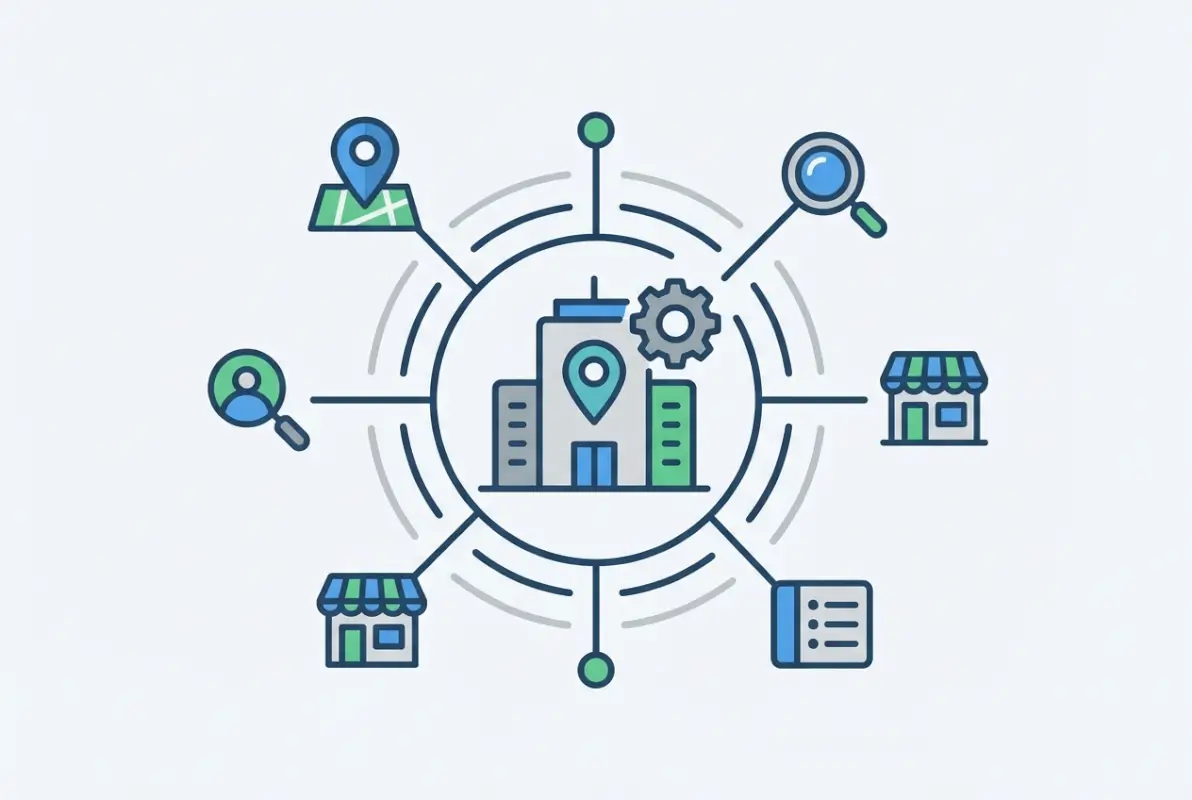
The most valuable placement is Google’s Local Pack, those three business listings with map pins that appear above organic search results for location-based queries. According to Whitespark’s 2026 Local Search Ranking Factors analysis, appearing in the Local Pack requires a combination of GBP optimization, strong citation profile, proximity to the searcher, and positive review signals.
Beyond the Local Pack, your listings appear in Google Maps results, voice search answers (Siri, Alexa, Google Assistant), and the knowledge panel that sometimes appears on the right side of desktop search results. Each placement represents a different entry point for potential customers to discover your business.
How Search Engines Determine Local Relevance and Proximity
Google’s local algorithm weighs three primary factors when ranking businesses: relevance (how well your profile matches the search query), distance (proximity between your business and the searcher), and prominence (how well-known and credible your business appears based on reviews, citations, and online presence).
Relevance comes from your selected categories, business description, services list, and attributes. If someone searches “emergency plumber Phoenix,” Google scans your profile for category matches, location confirmation, and service keywords. The more precise and complete your profile, the stronger your relevance signal.
Distance calculations use your physical address or defined service area. This is why consistency matters so much—conflicting addresses across platforms confuse the algorithm and weaken your proximity signal. For service-area businesses without storefronts, properly defining your service zones in GBP is critical for appearing in relevant searches.
Prominence builds through review quantity and quality, citation volume across directories, website authority, and social signals. A business with 200 four-star reviews and citations on 50 directories will generally outrank a competitor with 20 reviews and sparse citations, all else being equal.
Key Signals That Make Local Listings Powerful
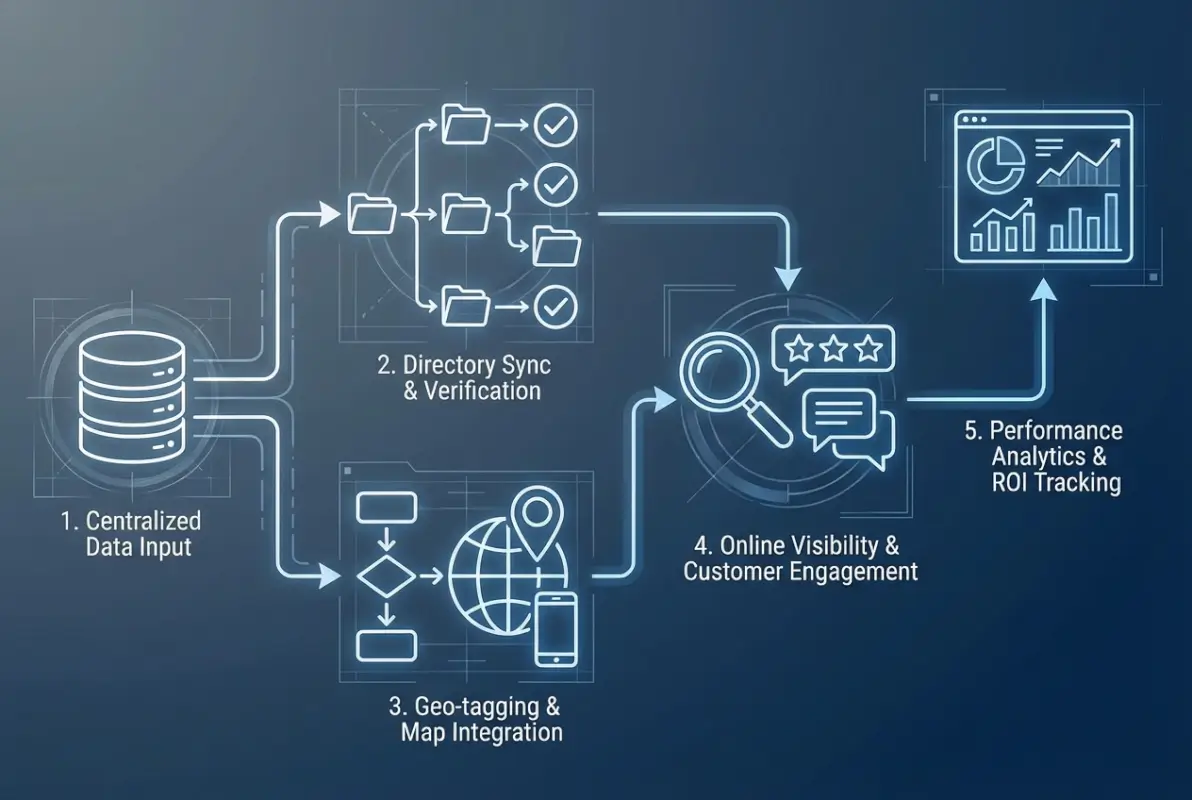
NAP Consistency Across Channels Drives Trust and Rankings
NAP consistency—keeping your Name, Address, and Phone number identical across every platform—acts as a trust signal to search engines. When Google crawls the web and finds your business mentioned on Yelp, your website, Facebook, and 30 other directories with the exact same details, it confirms your legitimacy.
Even minor inconsistencies create problems. Using “Street” on one platform and “St.” on another, including a suite number on some listings but not others, or having an old phone number on forgotten directories—all these variations dilute your signal. I worked with a law firm that couldn’t figure out why they weren’t ranking despite good reviews; turns out they had three different suite number formats across platforms, and fixing that single issue moved them from position 8 to the Local Pack within six weeks.
The solution is maintaining a master spreadsheet with your exact NAP format, then auditing all existing listings to match it perfectly. This includes your website footer, contact page, social profiles, and every directory listing you can find.
Citations, GBP Optimization, and Review Signals as Credibility Indicators
Citations—any online mention of your NAP information—function as votes of confidence. According to the 2025 Small Business SEO Impact Report, businesses with 50+ consistent citations across authoritative directories see 2-3x higher Local Pack visibility than those with fewer than 10 citations.
Google Business Profile completeness directly impacts rankings. GBP has dozens of fields—business categories (primary and secondary), services offered, product catalog, attributes (wheelchair accessible, free Wi-Fi, outdoor seating), Q&A section, posts, and booking links. Businesses that complete 100% of applicable fields consistently outrank those with bare-bones profiles, even when other factors are similar.
Review signals encompass multiple dimensions: total review count, average rating, review recency (how recently you received reviews), review velocity (consistent new reviews versus long gaps), keyword relevance in review text, and response rate to reviews. The algorithm notices when customers mention specific services in reviews, feeding that keyword data back into relevance calculations.
| Signal Type | Impact Level | Quick Win Opportunity |
|---|---|---|
| NAP Consistency | High | Audit and fix in 1-2 days |
| GBP Completeness | High | Fill missing fields in 1 hour |
| Review Volume | Very High | Launch review request system |
| Citation Count | Medium-High | Build 10 core citations this month |
| Photo Quality/Quantity | Medium | Add 8-10 professional photos |
Optimization Blueprint: How to Build a High-Impact Local Listing Profile
Complete and Accurate GBP Profile Essentials
Start with category selection—your single most important GBP decision. Choose the most specific primary category that describes your core business function. A restaurant should select the exact cuisine type (Italian Restaurant, not just Restaurant), while a lawyer should pick the practice area (Personal Injury Attorney, not Generic Lawyer).
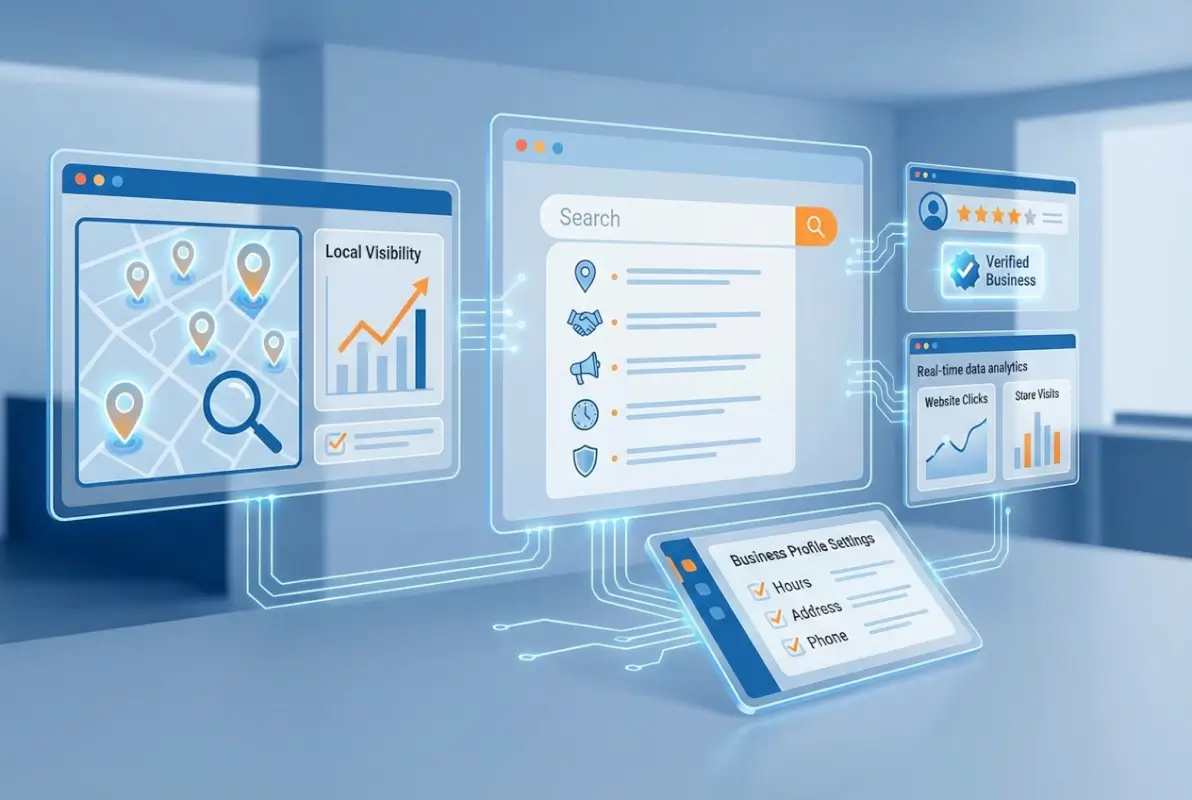
Add 3-5 secondary categories that capture additional services. That Italian restaurant might add Pizza Restaurant, Wine Bar, and Catering Service. These secondary categories help you appear in more diverse searches without diluting your primary focus.
Hours of operation require precision—list your actual hours, update for holidays in advance, and use the “special hours” feature for one-off changes. Businesses with accurate, current hours see 35% fewer negative reviews related to “showed up and they were closed” complaints (which damage both ratings and rankings).
The services section lets you list specific offerings with optional descriptions. A plumber might list “Emergency Repairs,” “Water Heater Installation,” “Drain Cleaning,” and “Bathroom Remodeling.” Each service becomes a searchable element that improves relevance for specific queries.
Attributes—those small icons showing wheelchair accessibility, outdoor seating, free Wi-Fi, etc.—seem minor but influence click-through rates significantly. According to Google Business Profile optimization fundamentals, profiles with 8+ attributes selected see 22% higher engagement than those with none.
Local Citations and Review Strategy
Build citations systematically, starting with the major platforms every business needs: Google Business Profile, Bing Places, Apple Maps, Facebook Business Page, and Yelp. Then add industry-specific directories—restaurants should be on TripAdvisor, OpenTable, and Zomato; healthcare providers need Healthgrades and Vitals; home service businesses benefit from Angi, HomeAdvisor, and Thumbtack.
For businesses needing a robust directory presence, platforms like TurnKey Directories offer WordPress-based solutions to create and manage comprehensive business listings across multiple locations and categories, giving you control over your citation network while maintaining perfect NAP consistency.
Your review generation system should be simple and consistent. After successful service delivery, send a brief follow-up email or text with direct links to your Google and Yelp profiles. The key is making it effortless—two clicks maximum from request to review form.
Respond to every review within 24-48 hours. Positive reviews deserve personalized thanks that mention specific details from the review (not generic “thanks for the review!” responses). Negative reviews require a calm, solution-focused approach: acknowledge the issue, apologize for their experience, offer a concrete resolution, and invite them to contact you directly to make it right.
Review response impacts rankings because it signals active management and customer care. But it also influences conversion—87% of consumers say thoughtful responses to negative reviews make them more likely to use that business, turning potential reputation damage into trust-building opportunities.
The Business Impacts: From Visibility to Foot Traffic and Revenue
Visibility in the Local Pack and Maps Results
The Local Pack—those three businesses with map pins at the top of local search results—captures approximately 60% of all clicks from local searches. This creates a winner-take-most dynamic where the businesses occupying those three slots receive the lion’s share of traffic, while position four and below fight for scraps.
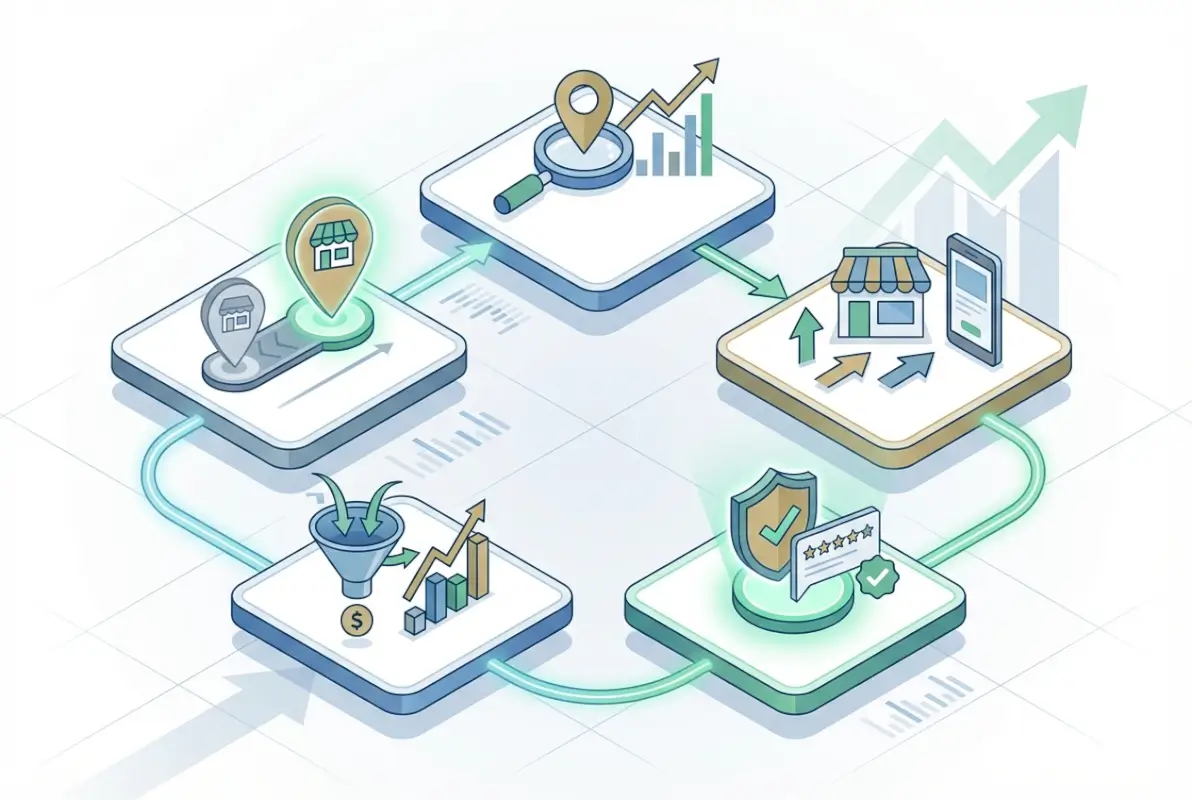
Getting into the Local Pack isn’t random. It requires the optimization fundamentals we’ve covered: complete GBP profile, strong citation network, consistent NAP, regular fresh reviews, and actual proximity to the searcher. But once you achieve it for your key search terms, the traffic flows continuously without the ongoing costs of paid advertising.
Maps results provide a secondary opportunity, particularly for mobile searchers who often skip text results entirely and go straight to the map interface. These searchers have extremely high intent—they’re typically in or near your service area and ready to make a decision quickly.
Voice search pulls heavily from local listings. When someone asks Siri or Alexa for “pizza near me,” the answer comes directly from business listing data. As voice search continues growing—now representing over 20% of mobile queries according to Mozilla’s Web Speech API research—having complete, accurate listings becomes even more critical for capturing this traffic stream.
Consumer Behavior: Proximity and Near-Me Searches Convert Fast
Local searches demonstrate purchase intent that’s among the highest across all search types. When someone searches “emergency plumber” or “restaurants open now,” they’re not researching options for next month—they need service immediately or within hours.
This immediacy translates to higher conversion rates. Local searches convert at approximately 4-5x the rate of general informational searches, because the friction between search and transaction is minimal. The searcher is already in buying mode; they just need to decide which business to choose.
Proximity matters enormously in these decisions. Studies show 72% of consumers who perform a local search visit a business within five miles, and 88% of mobile local searches result in a call or visit within 24 hours. Your listing’s distance from the searcher directly influences whether you make the cut.
This is why service area businesses need to carefully define their coverage zones in GBP. If you serve a 30-mile radius but only list your office address, you’ll miss searches from the edges of your actual service area. Properly configured service areas help you appear in relevant searches across your entire territory.
Measuring Success: KPIs and Quick Wins for 6-12 Weeks
Metrics to Track: From Impressions to Revenue Attribution
Google Business Profile Insights provides your core performance data. Focus on these metrics: total impressions (how many times your listing appeared in search or maps), total clicks (actions taken including website visits, calls, and direction requests), and the breakdown between discovery searches (people finding you without knowing your name) versus direct searches (people searching your business name specifically).

Discovery search growth indicates improving visibility for relevant search terms. If your discovery impressions and clicks increase month-over-month, your optimization efforts are working. Stagnant or declining discovery searches suggest you’re losing ground to competitors.
Call clicks and direction requests measure high-intent actions. Someone clicking for directions or calling directly from your listing has strong purchase intent. Track these separately from general profile views to understand conversion trends.
Beyond GBP Insights, set up call tracking numbers for your listings to measure phone conversions, and use UTM parameters on your website link to track listing-referred traffic in Google Analytics. This creates end-to-end visibility from impression to actual customer acquisition.
Calculate revenue attribution by tracking how many new customers came from listing-referred channels, then multiply by your average customer value. Even rough estimates reveal the ROI, when a single new customer might be worth $500-5,000+ depending on your business, even modest listing improvements quickly justify the optimization effort.
Quick-Win Tweaks for 30-Day Improvement
Start with a NAP consistency sweep. Use a tool or manual search to find all existing mentions of your business online, document any variations, then systematically update them to match your master format. This alone can trigger ranking improvements within 2-3 weeks as search engines recrawl those sources.
Complete every empty field in your GBP profile. Take 60-90 minutes to add services, products, attributes, Q&A preemptively (answer common questions yourself), and high-quality photos. Google tends to reward profile activity with temporary visibility boosts, and maintaining that completeness sustains the gains.
Launch review generation immediately. Send review requests to your 10 most satisfied recent customers this week. Getting 5-10 reviews in a short window creates positive momentum that both algorithm and consumer psychology reward.
Monitor your metrics weekly for the first month, then bi-weekly. You should see initial movement in impressions within 2-3 weeks, followed by click increases in weeks 4-8. Meaningful traffic and lead growth typically appears in the 6-12 week range, with continued improvement over 3-6 months as citation updates propagate and review volume builds.
Frequently Asked Questions
What is a local listing and why does it show up in Google Maps?
A local listing is your business’s verified profile on platforms like Google Business Profile, containing your address, hours, photos, and reviews. It appears in Maps and local search results because Google uses this structured data to match businesses with nearby searchers looking for relevant services, prioritizing proximity and relevance signals.
How does NAP consistency affect my Google ranking and local visibility?
NAP consistency—identical Name, Address, Phone across all platforms—builds search engine confidence in your legitimacy. Inconsistent information confuses algorithms, dilutes your citation value, and can prevent you from ranking in the Local Pack. Even minor variations like “St.” versus “Street” create problems that hurt visibility.
How many local listings should a business maintain and where should I list?
Every business needs Google Business Profile, Bing Places, Apple Maps, Facebook, and Yelp at minimum. Add 5-10 industry-specific directories relevant to your sector (like TripAdvisor for restaurants or Healthgrades for medical practices). For comprehensive management, directory solutions like TurnKey Directories help maintain consistent multi-platform presence efficiently.
Do reviews impact local search rankings and how should I respond?
Reviews significantly impact rankings through quantity, quality, recency, and velocity. Google considers total review count, average rating, how recently you received reviews, and response rate. Respond to all reviews within 48 hours—thank positive reviewers personally and address negative reviews with empathy, solutions, and an offer to resolve the issue directly.
What is a quick-start plan to optimize my GBP in 30 days?
Week 1: Audit and fix NAP inconsistencies across all platforms. Week 2: Complete 100% of your GBP fields including categories, services, hours, and attributes, plus upload 8-10 quality photos. Week 3: Request reviews from 10 recent satisfied customers. Week 4: Monitor metrics and respond to all new reviews immediately.
How long does it take to see results from updating local listings?
Initial visibility changes appear within 2-3 weeks as search engines recrawl updated listings. Meaningful traffic increases typically emerge in 6-12 weeks, depending on competition level and optimization thoroughness. Businesses implementing comprehensive optimization (NAP cleanup, profile completion, review generation) often see 20-30% impression growth within the first 30-45 days.
What is the difference between GBP optimization and local citations?
GBP optimization focuses on completing and maintaining your Google Business Profile with accurate information, photos, reviews, and active management. Local citations are mentions of your NAP information across other websites and directories. Both matter—GBP optimization maximizes your primary listing while citations build the network of references that strengthen your overall local authority.
Can I use the same business listing for multiple locations?
No, each physical location requires a separate listing with unique information. Multi-location businesses should create individual GBP profiles for every address where customers can visit, maintaining brand consistency while customizing details like hours, photos, and services to reflect each location’s specific offerings and local character.
Stop Losing Customers to the Competition
The businesses appearing in Google’s Local Pack when your customers search aren’t there by accident. They’ve optimized the signals that matter—NAP consistency, complete profiles, strong review presence, and authoritative citations.
Start with the 30-day quick-win plan: fix your NAP across all platforms this week, complete your GBP profile to 100% next week, then launch your review generation system. Track your discovery impressions weekly and watch them climb as search engines recognize your improved relevance and credibility.
Was this article helpful?