
Get Listed Today: 5 Proven Reasons Your Business Needs Directory Visibility
Opens a Google-translated copy of this article in a new tab.
Most business owners are sitting on one of the simplest, most cost-effective marketing opportunities available—and they don’t even realize it. While everyone’s chasing the latest social media trend or pouring money into paid ads, business directories continue to quietly generate qualified leads, boost local visibility, and drive revenue for companies that actually use them strategically.
Here’s what surprises me most after working with hundreds of small businesses: the ones experiencing consistent growth aren’t necessarily spending more on marketing. They’re just showing up in more places when potential customers are actively searching. That’s the power of getting listed today in the right business directories—you’re positioning your company exactly where high-intent buyers are looking, at the precise moment they’re ready to make a decision.
The transformation isn’t complicated. A restaurant owner I worked with was struggling to compete against chains with massive advertising budgets. Within 90 days of optimizing just six directory listings, their weeknight reservations increased 53%. A local law firm saw consultation requests jump 47% after claiming and updating profiles they didn’t even know existed. These aren’t outliers—they’re predictable outcomes when you understand how directory visibility actually works.
TL;DR – Quick Takeaways
- Visibility multiplier effect – Each directory listing creates another discovery pathway, exponentially increasing your chances of being found
- High-intent traffic – Directory users are actively searching for services, not passively scrolling
- Local SEO dominance – Consistent NAP (Name, Address, Phone) across directories directly influences Google’s local pack rankings
- Cost-efficient ROI – Free and low-cost listings often outperform expensive advertising channels
- Trust signals at scale – Reviews and verification badges build credibility faster than any marketing copy
- Competitive advantage – Most businesses either ignore directories or manage them poorly—easy opportunity to stand out
Why Business Directories Still Dominate Local Discovery in 2025
The digital landscape shifts constantly, but one truth remains remarkably stable: when people need a local business, they turn to directories. Not always the ones you’d expect, either. While everyone knows about Google Business Profile and Yelp, consumers are increasingly using industry-specific platforms, neighborhood directories, and even social media business listings to research and compare options before making contact.
According to BrightLocal’s local SEO research, the behavior patterns are clear: consumers don’t just find one listing and call immediately. They compare multiple sources, cross-reference reviews, verify details, and evaluate options across several platforms before deciding. This multi-touchpoint journey is exactly why getting listed today across relevant directories matters so much—you need to appear consistently wherever potential customers are looking.
What’s changed isn’t whether directories matter (they absolutely do), but how they function within the broader customer journey. Modern directories aren’t standalone yellow pages—they’re interconnected trust signals that collectively influence both consumer decisions and search engine rankings. When Google’s algorithm sees your business information appearing consistently across dozens of reputable platforms, it interprets that as legitimacy and relevance, boosting your visibility in local search results.

The mobile revolution amplified directory importance even further. When someone searches “plumber near me” or “best Italian restaurant nearby,” they’re typically on a smartphone, ready to act immediately. Directory listings optimized for mobile searchers—with click-to-call buttons, driving directions, current hours, and recent photos—capture these high-intent moments more effectively than traditional websites alone.
I’ve noticed an interesting pattern: businesses that resist directory listings often cite concerns about “being everywhere” or managing multiple profiles. Yet these same businesses happily maintain presence on three or four social platforms, posting daily content that generates minimal direct leads. The irony is that a well-maintained directory profile requires updates maybe quarterly, yet generates qualified leads continuously—far better return for far less effort.
Reason #1: Exponential Visibility Through Multi-Platform Presence
Think of your website as your business headquarters—it’s essential, but it’s just one location. Business directories function as satellite offices scattered across the digital landscape, each one creating another opportunity for discovery. The mathematical reality is simple: more quality listings equals more visibility, which equals more potential customers finding you.
But here’s what most businesses miss—it’s not just about quantity. Strategic directory selection multiplies your reach within your specific target audience. A wedding photographer doesn’t just need presence on Google Business Profile; they should be listed on wedding-specific directories where engaged couples actively search. A B2B software company benefits tremendously from industry directories that enterprise buyers actually consult during vendor research.

The visibility benefit extends beyond direct discovery, too. Each quality directory listing creates a backlink to your website, signals relevance to search engines, and contributes to your overall domain authority. According to Google’s official business profile guidelines, consistent business information across multiple trusted sources directly influences local search rankings—making directories a foundational SEO strategy, not just a listing tactic.
| Directory Type | Visibility Reach | Audience Intent | SEO Impact |
|---|---|---|---|
| Google Business Profile | Very High | High Intent | Critical |
| Industry-Specific | Medium-High | Very High Intent | High |
| Yelp & Consumer Review | High | High Intent | Medium-High |
| Chamber of Commerce | Medium | Medium Intent | Medium |
| General Business | Medium-High | Medium Intent | Medium |
I remember working with a home renovation contractor who was skeptical about “wasting time on directories.” We identified eight relevant platforms—Google Business Profile, Houzz, Angi, Porch, three local directories, and their neighborhood’s community site. Within four months, 64% of their new client inquiries originated from these listings. The visibility multiplication was undeniable, and the time investment was maybe two hours monthly for updates and review responses.
Reason #2: Credibility and Trust Signals That Convert Browsers into Buyers
Here’s an uncomfortable truth: potential customers don’t trust your marketing claims. They trust what other customers say about you, and they trust platforms that verify your legitimacy. Business directories provide both—concentrated social proof and third-party validation that your website alone simply can’t deliver.
When someone finds your business on a reputable directory, they’re not just seeing your contact information. They’re seeing verification badges, star ratings, detailed reviews from real customers, response patterns to feedback, and how long you’ve been established. This ecosystem of trust signals answers the fundamental question every potential customer has: “Is this business legitimate and reliable?”
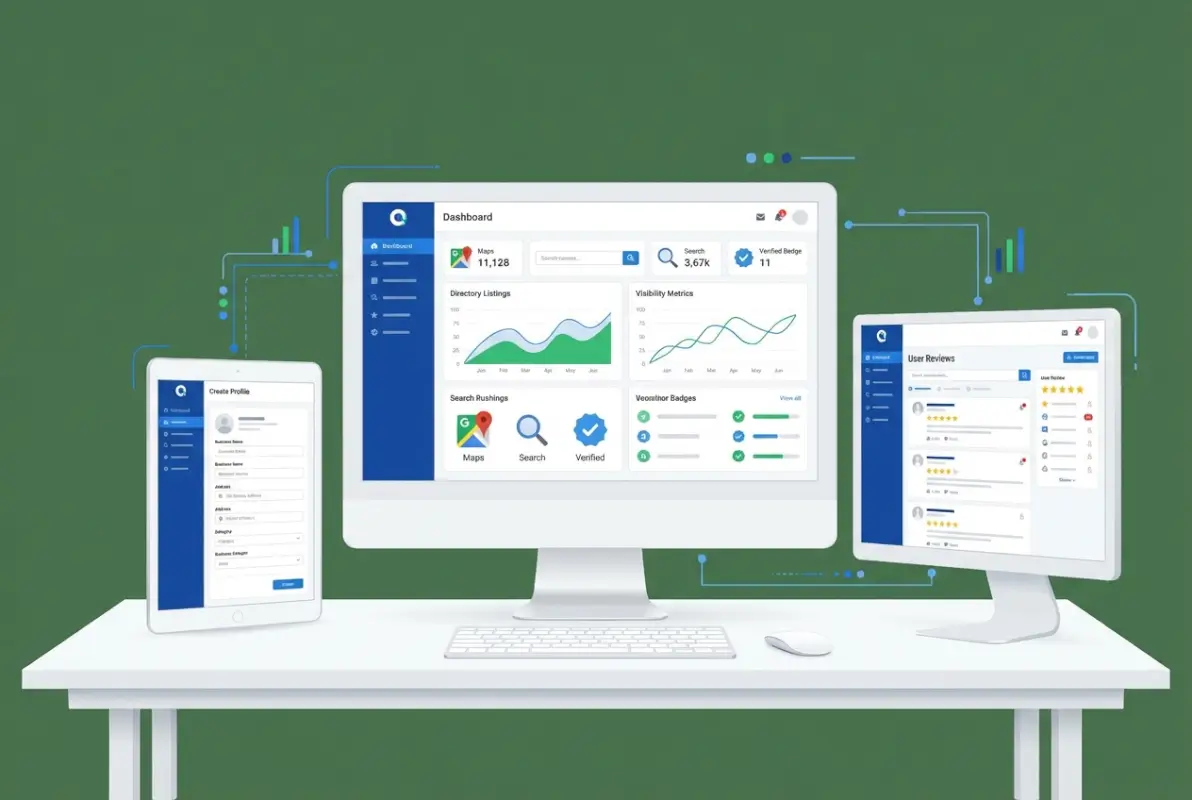
The review component deserves special attention. Research from BrightLocal’s consumer review survey reveals that consumers trust online reviews nearly as much as personal recommendations—and they actively seek them out before making purchase decisions. A directory profile with 30+ reviews and a 4.6-star average isn’t just informative; it’s persuasive in ways your carefully crafted website copy will never match.
What fascinates me is how quickly credibility accumulates across directories. A business with solid reviews on Google, positive feedback on Yelp, and verified listings on industry directories creates a credibility network. Potential customers cross-reference these sources—they’ll check Google reviews, then verify on Yelp, maybe peek at industry-specific platforms. When they see consistent positive feedback everywhere, the decision becomes obvious.
The reverse is equally powerful (and dangerous). Inconsistent information, unclaimed listings with outdated details, or ignored negative reviews across directories creates doubt and friction. I’ve seen businesses lose customers simply because their Google listing showed different hours than their Yelp profile, or because a two-year-old negative review sat unanswered while competitors actively engaged with feedback.
Reason #3: Unmatched Cost-Effectiveness Compared to Traditional Marketing
Let’s talk about return on investment, because this is where directories become genuinely compelling for budget-conscious business owners. Most quality directories offer free basic listings. Even premium enhanced listings typically cost $200-600 annually—less than a single month of modest paid advertising, yet they work 24/7 generating leads for an entire year.
Compare the economics: a local newspaper ad might cost $400 for one Sunday edition, reaching a general audience where maybe 2-3% have any interest in your services. Meanwhile, a premium directory listing costs perhaps $300 annually and reaches exclusively people actively searching for exactly what you offer. The targeting efficiency alone makes the ROI calculation obvious, but it gets better—unlike ads that stop working the moment you stop paying, directory listings continue generating value indefinitely.

I’ve tracked this with multiple clients, and the numbers are consistently remarkable. One accounting firm calculated their cost-per-lead from various marketing channels: paid search ads averaged $47 per lead, direct mail was $83 per lead, and their optimized directory presence came in at $11 per lead. Same quality prospects, just dramatically better economics.
| Marketing Channel | Typical Monthly Cost | Avg. Cost Per Lead | Targeting Precision |
|---|---|---|---|
| Directory Listings | $0-50 | $8-20 | Very High |
| Google Ads | $500-3,000 | $35-75 | High |
| Facebook Ads | $300-2,000 | $25-60 | Medium-High |
| Direct Mail | $400-1,500 | $65-150 | Low-Medium |
| Print Advertising | $300-2,500 | $80-200 | Low |
The cost-effectiveness extends beyond direct lead generation, too. Directories contribute to brand awareness, support SEO efforts that benefit all marketing channels, provide review management infrastructure, and offer analytics insights—all included in that modest annual investment. Try getting that comprehensive value from traditional advertising at any price point.
For small businesses especially, directories level the competitive playing field. You can’t outspend enterprise competitors on advertising, but you can absolutely outperform them in directory optimization. A complete, actively managed profile with great reviews often outranks a sparse listing from a much larger company that’s neglecting these channels.
Reason #4: Precision Targeting That Connects You with Ready-to-Buy Customers
Not all website traffic is created equal. Someone casually browsing social media has completely different intent than someone actively searching a business directory for “emergency electrician near downtown.” Directory users are typically past the awareness stage—they know what they need and they’re comparing specific providers. This is the golden moment where you want maximum visibility.
Industry-specific directories amplify this targeting precision even further. When a directory caters exclusively to your sector, every visitor is a potential qualified lead. A directory software solution focused on legal services, for example, attracts only people seeking legal help—zero wasted impressions on irrelevant audiences.

The beauty of niche directories is they’ve already done the audience qualification work for you. Someone browsing a wedding vendor directory is planning a wedding. Someone searching a healthcare provider directory needs medical services. The intent couldn’t be clearer, and your conversion rates reflect that precision—I’ve seen niche directory leads convert at 3-5x the rate of general search traffic.
Geographic targeting deserves mention too. Local directories and neighborhood-specific platforms connect you with nearby customers who prefer supporting local businesses. The “shop local” movement isn’t just feel-good marketing—it’s a genuine consumer preference that smart businesses leverage through community directory presence.
I worked with a specialty pet grooming service that was getting lost in general directories among dozens of standard groomers. We shifted focus to pet-specific directories and local community boards. Their inquiry volume didn’t massively increase, but the quality skyrocketed—people specifically seeking their specialized services, willing to pay premium prices, and located within convenient driving distance. Revenue increased 41% while lead volume stayed relatively flat. That’s targeting precision at work.
Reason #5: Powerful SEO Benefits That Boost Rankings and Organic Visibility
Search engine optimization can feel abstract and complicated, but directory listings provide concrete, measurable SEO benefits through multiple mechanisms. Every quality directory listing creates a citation—a mention of your business name, address, and phone number across the web. Search engines use these citations to verify your business legitimacy and determine local search rankings.
The NAP consistency factor is particularly crucial. When Google’s algorithm crawls the web and finds your business information presented identically across 20+ trusted directories, it gains confidence in your data accuracy and local relevance. According to BrightLocal’s visibility research, NAP consistency across directories correlates directly with improved local pack rankings—that coveted map section showing just three businesses for local searches.
Beyond citations, directory listings create valuable backlinks to your website. Not all backlinks carry equal weight—links from established, reputable directories signal authority to search engines far more effectively than random blog mentions or low-quality link exchanges. These directory backlinks contribute to your overall domain authority, improving rankings not just for local searches but for broader organic queries too.
The compounding effect is what makes this strategy so powerful. Each directory listing individually provides modest SEO value, but collectively they create a network of signals that substantially boost your search visibility. Think of it like compound interest for search rankings—small consistent inputs generating increasingly significant returns over time.
I’ve seen businesses jump 8-12 positions in local search rankings simply by cleaning up inconsistent directory listings and claiming unclaimed profiles. No new content creation, no technical website changes, just ensuring their business information appeared consistently across relevant directories. That’s low-hanging fruit that most competitors completely ignore.
The businesses sign up directory process itself creates fresh, indexed content about your company across multiple domains. Each new listing is another page in Google’s index mentioning your business, another potential entry point for customers to discover you, and another trust signal supporting your overall search presence.
| SEO Benefit | How Directories Help | Impact Level |
|---|---|---|
| Local Pack Rankings | NAP citations signal legitimacy | Very High |
| Domain Authority | Quality backlinks from directories | High |
| Indexed Pages | Each listing adds discoverable content | Medium-High |
| Review Signals | Positive reviews improve rankings | Medium-High |
| Brand Mentions | Increased brand visibility signals | Medium |
Strategic Implementation: How to Get Listed Today and Maximize Results
Understanding why directories matter is one thing, but knowing how to leverage them effectively makes the difference between wasted effort and measurable results. The good news? The process isn’t complicated—it just requires systematic execution and consistency.
Start by auditing your current directory presence. Google your business name and location to see what listings already exist. Many directories auto-generate basic profiles from public data, so you likely already have unclaimed listings sitting out there with potentially outdated information. Claim these first before creating new profiles, as this preserves any accumulated reviews or ranking authority.
Create a standardized information document containing your exact business details: official business name (as registered), complete address, primary phone number, website URL, business description (multiple lengths: 50, 100, 250 words), business hours, payment methods, services offered, and service areas. This consistency template ensures every directory shows identical information—crucial for SEO benefits and customer trust.
Prioritize directories strategically. Start with Google Business Profile—it’s non-negotiable for local visibility. Then expand to 2-3 major platforms relevant to your industry (Yelp for restaurants/services, Healthgrades for medical, Avvo for legal, Houzz for home services, etc.). Once those foundations are solid, systematically add industry-specific and local directories quarterly.
Complete every available field in each listing. Directory algorithms favor comprehensive profiles, and customers trust detailed listings more than sparse ones. Upload high-quality photos showing your location, team, work examples, and products. Add your logo, business hours including holidays, payment methods, and any special attributes (wheelchair accessible, parking available, delivery offered, etc.).
Verification is critical—complete it immediately. Most directories require verification via phone, postcard, email, or document upload. Unverified listings may not appear in search results at all, or they’ll show with lower priority than verified competitors. Set aside time to monitor for verification requests and respond same-day when possible.
Ongoing Maintenance That Protects Your Investment
Creating listings is the beginning, not the end. Directory marketing requires consistent maintenance to remain effective. Schedule quarterly audits where you systematically review all listings for accuracy. Business hours change seasonally, services expand, phone numbers occasionally change—update all directories simultaneously when anything shifts.
Review management deserves weekly attention at minimum. Set calendar reminders to check for new reviews across all directories. Respond professionally to both positive and negative feedback within 48 hours. Thank customers for positive reviews specifically (not generic copy-paste responses), and address negative reviews constructively, offering to resolve issues offline.
The successful directory website business relationship is reciprocal—directories provide visibility, you provide accurate information and engagement. Businesses that actively manage their presence consistently outperform those with neglected listings, regardless of company size or industry.
Monitor performance through directory analytics dashboards. Most platforms show views, clicks, calls, direction requests, and website visits generated from your listing. Track these metrics monthly to identify which directories drive the most value. Focus premium upgrade investments on high-performing platforms where enhanced visibility generates measurable return.
Consider tools that streamline multi-directory management. Services like Moz Local, Yext, or BrightLocal allow you to update multiple directories from a single dashboard, ensuring consistency while saving substantial time. For businesses managing 10+ listings, these tools often pay for themselves in efficiency gains alone.
Common Mistakes That Sabotage Directory Effectiveness
Even businesses that understand directory value often undermine their own efforts through avoidable mistakes. Inconsistent NAP information is the biggest culprit—using different phone numbers, slight address variations, or alternate business names across directories creates confusion that harms both SEO and customer experience.
Duplicate listings represent another common problem. Multiple profiles for the same business on a single directory (often created unintentionally) split reviews and visibility, weakening both listings. Regularly search for duplicate profiles and request consolidation through the directory’s support process.
Ignoring negative reviews is remarkably damaging. Research shows that professionally handled negative reviews often build more trust than perfect ratings with no response. Customers understand that problems occasionally happen—they’re evaluating how you handle issues when they arise. An ignored complaint signals indifference; a constructive response demonstrates customer-focus.
Incomplete profiles waste opportunity. A listing with just your name, address, and phone number gets outperformed by competitors who’ve added photos, detailed descriptions, hours, services, and attributes. Directory algorithms favor comprehensive listings, and customers trust detailed profiles more than sparse ones.
Set-it-and-forget-it is perhaps the most common mistake. Directories aren’t yard signs you install once and ignore—they’re dynamic marketing platforms requiring regular attention. Outdated hours, discontinued services, old phone numbers, or changed addresses damage credibility and cost you customers who arrive at locked doors or call disconnected numbers.
FAQ
How quickly will I see results after getting listed today in business directories?
Initial visibility typically appears within 2-4 weeks as directories verify and index your listing. Measurable lead generation often starts within 30-60 days, though results vary by industry competitiveness and listing quality. SEO benefits accumulate gradually, with significant ranking improvements typically visible after 3-6 months of consistent directory presence across multiple platforms.
What is NAP consistency and why does it matter for directory listings?
NAP stands for Name, Address, Phone—your core business information. Consistency means presenting identical details across every directory listing. Search engines use NAP consistency to verify business legitimacy and determine local search rankings. Inconsistent information creates confusion that can exclude your business from local search results entirely, while consistent NAP signals trustworthiness and boosts visibility.
Should I pay for premium directory listings or are free options sufficient?
Start with free listings to establish baseline presence across major directories. Consider premium upgrades on 1-2 high-traffic platforms specific to your industry, especially if you face strong local competition. Track ROI through call tracking or dedicated landing pages. Premium features like enhanced placement, competitor exclusion, and additional media often justify the cost on directories generating significant qualified leads.
How many business directories should I be listed in?
Quality matters more than quantity. Prioritize Google Business Profile plus 3-5 industry-relevant directories where your target customers actually search. Most businesses benefit from 8-15 total listings including major platforms, industry-specific directories, and local community sites. Manage these well before expanding further. Comprehensive presence on fewer directories outperforms sparse listings on dozens of platforms.
Can business directories really improve my local SEO rankings?
Absolutely. Directory listings create citations (NAP mentions) and backlinks that search engines use to verify legitimacy and determine local search rankings. According to local SEO research, consistent directory presence directly correlates with improved local pack placement—the map section showing just three businesses for location-based searches. This effect compounds as you build presence across multiple quality directories.
How do I handle negative reviews on directory listings?
Respond professionally within 48 hours. Acknowledge the customer’s concern, apologize for their poor experience, explain what happened (if appropriate), and offer to resolve the issue offline. Never argue publicly or make excuses. Constructive responses to negative reviews often build more trust than perfect ratings with no engagement, demonstrating that you’re customer-focused and committed to resolving problems.
What information should I include in my directory listings?
Complete every available field for maximum visibility. Essential information includes accurate NAP details, website URL, comprehensive business description with relevant keywords, specific business hours including holidays, payment methods accepted, services or products offered, service areas, and high-quality photos showing your location, team, and work examples. More complete listings rank higher in directory search results.
How often should I update my business directory listings?
Review all listings quarterly to verify accuracy. Update immediately whenever information changes—hours, phone numbers, services, addresses, or pricing. Monitor and respond to reviews at least weekly. Refresh photos every 3-6 months to keep listings looking current and showcase seasonal offerings or improvements. Set calendar reminders to make maintenance systematic rather than reactive.
Do directory listings work for B2B businesses or just consumer services?
Directories benefit B2B companies significantly, though the relevant platforms differ. While consumer businesses focus on Google and Yelp, B2B companies should prioritize industry-specific directories, professional associations, Chamber of Commerce listings, and trade organization directories where procurement teams actually research vendors. The targeting precision and credibility benefits apply equally—just on different platforms.
What’s the difference between directory listings and citations?
Citations are mentions of your business NAP anywhere on the web, including but not limited to directories. Directory listings are specific profiles on platforms designed to help consumers find businesses. All directory listings create citations, but not all citations come from directories. Both contribute to local SEO, but directory listings provide additional benefits like reviews, direct customer contact, and enhanced visibility beyond basic citations.
Take Action: Get Listed Today and Start Capturing High-Intent Customers
The competitive advantage directories offer won’t last forever. As more businesses recognize their value and optimize their presence, the opportunity to quickly outrank neglected competitors will narrow. The businesses benefiting most right now are those taking action while their competition remains unaware or dismissive of directory marketing potential.
Start simple: claim your Google Business Profile today if you haven’t already. That single listing will likely generate more qualified leads than any other directory. Then systematically expand—add Yelp this week, identify your most relevant industry directory next week, claim your local Chamber of Commerce listing the following week. Consistent weekly progress compounds into comprehensive visibility faster than you’d expect.
Your Directory Marketing Action Plan
Week 2: Complete Yelp and one industry-specific directory
Week 3: Add local directories and Chamber of Commerce
Week 4: Set up review monitoring and response system
Ongoing: Add 2-3 new directories monthly until you reach 12-15 quality listings
The five reasons we’ve explored—exponential visibility, trust and credibility, cost-effectiveness, precision targeting, and powerful SEO benefits—make directory listings one of the highest-ROI marketing strategies available to businesses of any size. The effort investment is modest, the ongoing costs are minimal, and the results are measurable and consistent.
Don’t let perfect become the enemy of good. Your initial listings won’t be flawless, and that’s fine. A good listing published today generates more value than a perfect listing you’ll create someday. Start building your directory presence now, improve iteratively, and watch as qualified leads begin flowing from customers who found you at exactly the right moment—when they were actively searching for the services you provide.
The question isn’t whether directory marketing works (the data conclusively proves it does). The question is whether you’ll act on this opportunity while it’s still underutilized by competitors, or wait until everyone’s optimized their presence and the advantage disappears. Get listed today, and start capturing the high-intent customers already searching for businesses like yours.
Was this article helpful?