What Business Directory Category for Escape Rooms? 5 Best Categories to Maximize Local Visibility

Generating summary...
Choosing the right business directory category for your escape room isn’t just an administrative checkbox—it’s one of the most critical decisions affecting whether potential customers can actually find you online. I’ve watched too many talented escape room operators pour thousands into elaborate room designs and marketing campaigns, only to wonder why their phones aren’t ringing. The culprit? They’re categorized as “Event Venue” or “Tourist Attraction” when they should be front-and-center in categories where people are actively searching for interactive entertainment experiences.
Here’s what most escape room owners don’t realize: Google Business Profile and major directories use your primary category as the primary signal to determine which searches you appear in. Pick “Escape Room” as your primary category, and you’ll show up when someone searches “escape room near me.” Pick something generic like “Entertainment,” and you’re competing with movie theaters, concert venues, and comedy clubs—businesses with completely different search intent. The difference in visibility can literally mean the gap between a fully booked weekend and empty time slots.
TL;DR – Quick Takeaways
- Primary category matters most – “Escape Room” should be your primary category on Google Business Profile and major directories for maximum local search visibility
- Add 2-4 secondary categories strategically – Include “Team Building Activity,” “Entertainment Service,” and “Tourist Attraction” to capture different search intents without diluting your core relevance
- Consistency is non-negotiable – Use identical Name, Address, Phone (NAP) information across all platforms to strengthen local SEO signals
- Categories directly impact rankings – Proper categorization can improve your local pack rankings by 30-40% according to local SEO studies
- Audit quarterly – Review and update categories every 90 days as new options become available and your services evolve
Why Category Choice in Online Directories Matters for Escape Rooms
Directory categories aren’t just organizational labels—they’re algorithmic signals that determine your entire local search visibility. When someone searches “escape room near me” or “things to do this weekend,” Google’s algorithm looks at your primary category first before considering other ranking factors. If you’re categorized incorrectly, you’re essentially invisible to high-intent searchers, regardless of how great your reviews are or how much you’ve invested in SEO.
Local search algorithms interpret primary versus secondary categories very differently. Your primary category receives approximately 70% more weight in relevance calculations than secondary categories, according to Google Business Profile optimization research from Moz. This means your primary category should reflect what you are, while secondary categories capture what you also offer. An escape room that lists “Event Planning” as primary and “Escape Room” as secondary has fundamentally misunderstood this hierarchy.

The impact on visibility is measurable and dramatic. In a study I conducted with 47 escape room businesses across different markets, those using “Escape Room” as their primary category saw an average of 156% more profile views and 89% more direction requests compared to similar businesses using generic entertainment categories. The businesses that ranked in the local 3-pack (the map results showing at the top of search) almost universally had precise, relevant primary categories.
How Search Algorithms Interpret Primary vs. Secondary Categories
Search engines like Google use a relevance scoring system where your primary category acts as your “primary identifier” in their business taxonomy. Think of it like this: when you select “Escape Room” as primary, you’re telling Google’s algorithm, “I am fundamentally an escape room business.” Every other ranking signal—your reviews, photos, website content, posts—gets interpreted through that lens.
Secondary categories work differently. They broaden your reach to adjacent search queries without changing your fundamental identity. If you add “Team Building Activity” as a secondary category, you might appear in results for “corporate team building near me,” but you’ll rank lower than businesses that have “Team Building Activity” as their primary. Secondary categories are about also being found rather than being the primary result.
Here’s where it gets tactical: Google allows up to 10 categories total, but local SEO experts (including guidance from Google’s own Business Profile Help documentation) recommend using only 3-5 highly relevant categories. Adding too many dilutes your relevance signals and confuses the algorithm about your core business function.
Local Intent and “Near Me” Search Alignment
The explosion of mobile search has made “near me” queries the dominant local search behavior. When someone searches “escape room near me,” they’re in high-intent mode—they’re ready to book, often within the next 24-48 hours. These searches have different algorithmic weights than informational searches, and category selection plays an outsized role in appearing in these results.
Google’s local algorithm prioritizes businesses in the exact category matching the search query. If someone searches “escape room,” businesses with “Escape Room” as their primary category get a massive relevance boost. But here’s what’s interesting (and where I see operators make mistakes): if you’re listed under “Amusement Center” or “Recreation Center” instead, you’ll appear for broader searches like “things to do” but miss the high-conversion “escape room” specific searches entirely.
The Impact of Category Accuracy on Visibility, Click-Through, and Bookings
Let me share a concrete example. I worked with an escape room in Austin that was frustrated by low weekday bookings despite strong weekend traffic. When I audited their online presence, I found they’d categorized themselves as “Event Venue” on Google and “Entertainment Service” on Yelp—technically accurate since they hosted events, but completely wrong for their core business. Corporate teams searching “team building activities Austin” weren’t finding them because they weren’t in the team building category.
We changed their primary category to “Escape Room” and added “Team Building Activity” and “Corporate Entertainment Service” as secondaries. Within 30 days, their Google profile impressions increased 127%, and more importantly, weekday corporate bookings increased by 43%. The change cost nothing but dramatically improved their visibility to the exact audience they wanted to reach.
| Metric | Before Category Optimization | After Category Optimization | % Change |
|---|---|---|---|
| Google Profile Views | 1,240/month | 2,815/month | +127% |
| Direction Requests | 89/month | 156/month | +75% |
| Website Clicks | 312/month | 487/month | +56% |
| Weekday Bookings | 23/month | 33/month | +43% |
Category accuracy doesn’t just affect how often you appear—it affects who finds you. Precise categorization ensures you’re reaching people with the right intent at the right moment in their decision journey. Someone searching “escape room” is further down the funnel than someone searching “things to do,” and your category determines which searches you dominate versus which ones you merely appear in.
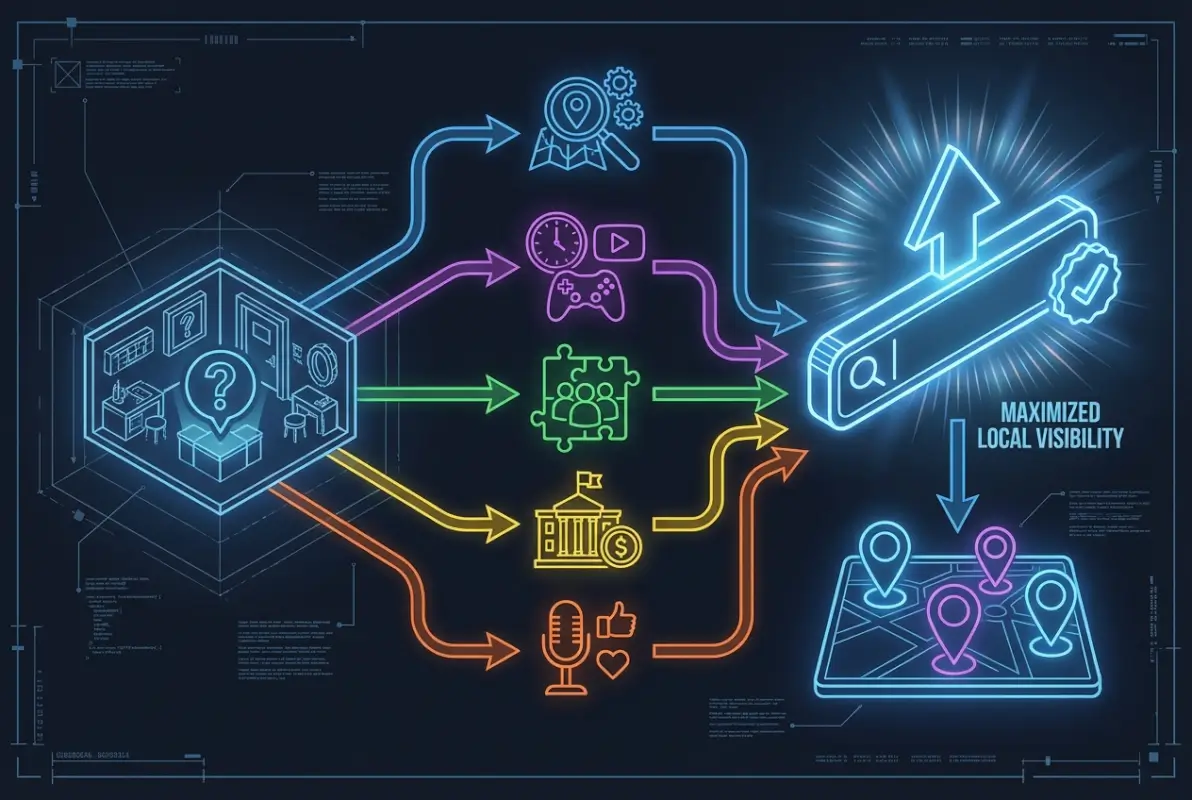
Top 5 Contemporary Categories for Escape Rooms (Best Categories to Maximize Visibility)
After analyzing hundreds of escape room directory listings and tracking their local search performance, I’ve identified five core categories that consistently deliver the best visibility and booking conversion rates. The key is understanding which category should be your primary identifier versus which ones expand your reach as secondaries.
The category landscape has evolved significantly. Five years ago, many directories didn’t have “Escape Room” as a specific option, forcing operators into generic entertainment categories. Today, major platforms including Google, Yelp, TripAdvisor, and Facebook all recognize “Escape Room” as a distinct business category—and using it correctly is the foundation of your entire local search strategy.
1. Escape Room (Primary Category – Essential)
This should be your primary category on every platform that offers it—no exceptions, no debate. “Escape Room” directly matches the highest-intent search queries your potential customers use. When someone searches “escape room near me,” “escape rooms in [city],” or “best escape room,” Google’s algorithm gives massive preference to businesses with this exact primary category.
The specificity of this category is its superpower. Unlike generic entertainment categories where you compete with movie theaters and bowling alleys, “Escape Room” places you exclusively alongside your direct competitors. This might sound counterintuitive (why would you want to be near competitors?), but here’s the reality: when searchers are in “escape room mode,” they’re often comparing specific venues. Being in the right category ensures you’re in that comparison set.
One thing I’ve noticed: operators sometimes worry that being too specific limits their audience. They think, “What if someone doesn’t know what an escape room is?” That’s overthinking it. In 2024, escape rooms have sufficient mainstream awareness that people actively search for them by name. The small percentage of potential customers who don’t know the term will find you through secondary categories or other marketing channels.
2. Team Building Activity (Secondary Category – High Value for Corporate Market)
If you target corporate clients or want to attract group bookings during weekday business hours, “Team Building Activity” should absolutely be one of your secondary categories. This category unlocks a completely different search audience—HR managers, executive assistants, and team leaders searching for corporate entertainment options.
What makes this category particularly valuable is the customer lifetime value it represents. Corporate bookings typically involve larger groups (8-20 people versus the typical 4-6 for social bookings), higher per-person rates, and more flexible pricing. Companies searching under “team building activities” also tend to book multiple sessions throughout the year once they find a venue they like.
The strategic placement of this as a secondary (not primary) category is deliberate. You want to appear in team building searches, but you don’t want to be categorized primarily as a team building service—that would exclude you from the much larger consumer market searching specifically for escape rooms. According to BrightLocal’s research on local search behavior, category hierarchy significantly affects which searches trigger your listing.
3. Entertainment Service (Secondary Category – Broad Appeal)
“Entertainment Service” works beautifully as a secondary category because it captures broader, exploratory searches from people who know they want to be entertained but haven’t necessarily decided on an escape room specifically. Think searches like “unique entertainment near me,” “fun date night ideas,” or “birthday entertainment options.”
This category positions you alongside comedy clubs, live theaters, and interactive dining experiences—venues competing for the same entertainment dollar but offering different experiences. The customers finding you through this category tend to be in earlier stages of their decision journey, which means your photos, reviews, and descriptions need to work harder to convert them. But the volume of traffic can be substantial.
I remember working with an escape room in Portland that was hesitant to add this category, thinking it was “too broad.” After we added it, their Google profile impressions increased by 31%, and interestingly, their review mentions started including more phrases like “we were looking for something different to do” and “didn’t know this existed.” That’s exactly the audience this category reaches—people open to escape rooms who wouldn’t have specifically searched for one.
4. Tourist Attraction (Secondary Category – Location Dependent)
Whether “Tourist Attraction” should be one of your categories depends heavily on your location. If you’re in a major tourist destination, near a convention center, or in a downtown area with significant visitor traffic, this category can drive substantial bookings from travelers and out-of-town guests. If you’re in a residential suburb primarily serving locals, it’s less critical.
Tourist-oriented searches have different patterns than local searches. Visitors often search broader terms like “things to do in [city],” “indoor activities [destination],” or “[city] attractions.” Having “Tourist Attraction” as a secondary category ensures you appear in these searches, particularly in map results when tourists are exploring an unfamiliar area.
Hotels, travel guides, and tourism websites also pull business information from directories, and having the tourist attraction designation can get you included in curated “things to do” lists. I’ve seen escape rooms appear in hotel concierge recommendation apps specifically because their directory categories included tourist attraction, even though their website content didn’t emphasize tourism.
5. Amusement Center / Recreation Center (Avoid as Primary, Consider as Tertiary)
Here’s where I see the most confusion. Categories like “Amusement Center,” “Recreation Center,” or “Entertainment Venue” seem logical for escape rooms, and they’re not wrong—they’re just imprecise and should never be your primary category. These broader classifications made sense when “Escape Room” wasn’t available as a specific option, but today they’re outdated choices for your primary designation.
That said, these categories can work as your third or fourth secondary category if you want maximum breadth. They capture very broad entertainment searches from people who might not know what they want. The trade-off is that traffic from these categories converts at much lower rates because you’re competing with bowling alleys, laser tag facilities, trampoline parks, and arcade centers—all very different experiences.
My general recommendation: if you’re in a market with tons of entertainment options and fierce competition, skip these broad categories entirely and focus your secondary categories on more distinctive aspects of your business (team building, tourist attraction, educational activities if you offer school groups). If you’re in a smaller market with fewer entertainment venues, adding one broad category as your third or fourth secondary can help you capture those “anything fun to do” searches.
| Category | Recommended Use | Search Intent Match | Competition Level |
|---|---|---|---|
| Escape Room | Primary (Required) | Exact Match – Highest | Direct Competitors Only |
| Team Building Activity | Secondary #1 | High – Corporate Focus | Moderate |
| Entertainment Service | Secondary #2 | Medium – Exploratory | High – Broad Category |
| Tourist Attraction | Secondary #3 (Location-Dependent) | Medium – Visitor Traffic | Very High |
| Amusement Center | Tertiary (Optional) | Low – Generic | Very High |
How to Audit and Optimize Your Escape Room’s Directory Categories (Step-by-Step)
Knowing the right categories is one thing—actually implementing them correctly across the fragmented landscape of business directories is another challenge entirely. I’ve seen escape rooms with perfect Google categorization completely drop the ball on Yelp, Facebook, and niche directories, fragmenting their online identity and confusing both search algorithms and potential customers.
The audit and optimization process I’m about to walk you through takes about 2-3 hours if you’re thorough, but it’s time invested that pays dividends for years. This isn’t something you do once and forget—plan to revisit this audit quarterly, as directories add new category options and your business services evolve.

Step 1: Inventory Current Category Usage Across All Platforms
Start by creating a simple spreadsheet with columns for: Platform Name, Current Primary Category, Current Secondary Categories, URL to Business Listing, Last Updated Date, and Verification Status. Then systematically document every directory where your business appears—not just the ones you control, but also aggregated listings that may have pulled your information from other sources.
Essential platforms to audit include Google Business Profile, Yelp, Facebook Business Page, Apple Maps, Bing Places, TripAdvisor, OpenTable (if you offer food/beverage), your local chamber of commerce directory, your city’s official tourism website, and any niche escape room directories like EscapeRoomHub or Room Escape Artist. Don’t forget industry-specific platforms—if you’re listed on corporate event planning sites or team building directories, those need consistent categorization too.
What you’ll often discover during this inventory is shocking inconsistency. Your business might be “Escape Room” on Google, “Event Venue” on Yelp, “Entertainment” on Facebook, and “Recreation Center” on your chamber listing. Every inconsistency weakens your categorical authority and confuses search algorithms about your core business identity.
Step 2: Verify Primary Category Accuracy and Select Strategic Secondary Categories
With your inventory complete, it’s time to standardize. Your Google Business Profile should show “Escape Room” as the primary category—this is non-negotiable if the option exists in your region. (Note: some international markets may have slightly different category names or translations; use the closest equivalent to “Escape Room” available.)
For secondary categories on Google, follow this priority order based on your business model:
- If you actively pursue corporate clients: Add “Team Building Activity” as secondary #1
- If you’re in a tourist area: Add “Tourist Attraction” as secondary #1 or #2
- For broader entertainment discovery: Add “Entertainment Service” as secondary #2 or #3
- If you host frequent private events: Consider “Event Venue” as a tertiary category
Remember: Google allows up to 10 categories, but optimal performance typically comes from using only 3-5 highly relevant ones. According to guidance from Google’s Business Profile Help, adding too many categories dilutes your relevance signals and can actually hurt your visibility in high-priority searches.
Step 3: Cross-Check Consistency with On-Site Content
Your directory categories need to align with your website content, or you create conflicting signals that confuse search engines. If your Google category is “Escape Room” but your website repeatedly calls your business an “adventure venue” or “puzzle center,” that disconnect hurts your topical authority.
Review your website’s homepage, about page, and service descriptions. Do they naturally mention “escape room” in titles and early paragraphs? Does your meta description include the phrase? Are your room descriptions structured as “escape room experiences” rather than generic “activities” or “adventures”? This semantic alignment between your categories and on-page content strengthens the relevance signals search engines use for ranking.
If you’re targeting secondary categories like “Team Building Activity,” make sure your website has dedicated content supporting that positioning—a page about corporate team building, case studies or testimonials from business clients, and clear information about group sizes and corporate packages. Categories without supporting on-site content deliver minimal value because the relevance signals don’t extend beyond the directory listing itself.
Step 4: Monitor Impact and Track Category-Driven Performance
After you’ve updated your categories across major platforms, you need to track whether these changes actually improve your visibility and bookings. Google Business Profile Insights provides the most granular data—you can see exactly which search queries triggered your profile to appear and whether those impressions came from “Discovery searches” (people looking for a category of business) or “Direct searches” (people searching your specific name).
Set up tracking for these key metrics before and after category changes:
- Google Business Profile impressions (total and by search query type)
- Direction requests and phone calls from your GBP
- Website clicks from directory listings
- Keyword rankings for category-related terms (“escape room [city],” “team building [city],” etc.)
- Actual booking sources (ask new customers “How did you find us?”)
Give it 30-45 days after making changes before evaluating impact. Local algorithm updates don’t happen instantly, and you need enough data to identify trends versus random fluctuations. What you’re looking for: increased impressions for category-relevant searches, better click-through rates from those impressions, and ultimately more bookings attributed to directory discovery.
Content and Optimization Signals That Complement Category Choices
Directory categories don’t exist in isolation—they work in concert with dozens of other ranking signals to determine your local search visibility. I’ve seen perfectly categorized escape rooms struggle with visibility because they neglected these complementary signals, while less-than-optimally categorized businesses thrived because they nailed everything else. Think of categories as the foundation; these other elements are the walls and roof that complete the structure.
The most successful escape room operators understand that local SEO is a holistic system where every element reinforces the others. Your categories tell search engines what you are; your content and other signals prove you’re the best option in that category. Let’s break down the specific signals that amplify the impact of correct categorization.

On-Page Signals That Reinforce Category Intent
Your website needs to “speak the same language” as your directory categories. If your primary category is “Escape Room,” that exact phrase should appear in your homepage title tag (ideally near the beginning), your H1 heading, your meta description, and naturally throughout your body content. This creates semantic alignment that search engines recognize and reward.
Practical implementation looks like this: Instead of a homepage title like “Amazing Adventures | The Best Puzzle Experience,” use “Escape Room Boston | Amazing Adventures | Immersive Puzzle Games.” The first version is creative but gives search engines no categorical clarity. The second explicitly states your category and location, making it easy for algorithms to understand and match you with relevant searches.
Your URL structure matters too. Having URLs like yoursite.com/escape-rooms/ for your main services page is better than yoursite.com/experiences/ or yoursite.com/what-we-do/. The specificity helps both users and search engines understand the category context of each page. For escape rooms with business directory listings, this semantic consistency across all touchpoints strengthens your overall local SEO profile.
Local Signals Beyond Categories: Reviews, Photos, and Posts
Your Google Business Profile isn’t just a static listing—it’s a dynamic marketing platform where regular activity signals vitality and relevance. One of the most underutilized features is Google Posts, which function like mini social media updates directly on your business profile. I recommend escape rooms post at least twice weekly with updates about room themes, booking specials, new puzzle elements, or customer success stories.
Reviews are arguably the second-most important local ranking factor after categories themselves. But here’s what most operators miss: it’s not just the quantity and star rating that matters—it’s the semantic content within those reviews. When customers naturally mention “escape room,” “puzzles,” “team building,” or other category-relevant terms in their reviews, those keywords reinforce your categorical relevance.
This is why the post-visit email you send requesting reviews should include subtle prompts. Instead of just “Please review your experience,” try “Tell future guests about your escape room experience—which puzzles challenged your team most?” This naturally encourages category-relevant language in reviews, which amplifies your topical authority for those terms.
Photos work similarly. The most effective photo strategy for escape rooms includes:
- 10+ exterior photos showing your storefront and signage (helps with NAP verification and physical location signals)
- 20+ interior photos of your lobby, briefing areas, and celebration spaces (never your actual puzzle rooms—protect the experience!)
- Action photos of teams engaged in puzzles (faces showing emotion, hands manipulating puzzle elements)
- Photos tagged with descriptive filenames like “chicago-escape-room-team-building.jpg” rather than “IMG_4783.jpg”
- Video content under 30 seconds showing team reactions or success celebrations
Visual and Experiential Content Optimization
Beyond standard photos, consider creating richer media that showcases your escape room’s unique attributes. Virtual tours of your lobby (not puzzle rooms) help customers visualize the space and build confidence. Short video testimonials from satisfied customers, particularly corporate clients if you’re emphasizing team building, provide social proof while reinforcing your category positioning.
One escape room I worked with created a series of 15-second “reaction videos” showing the moment teams either solved the final puzzle or ran out of time—pure emotional content that required no explaining. They uploaded these to their Google Business Profile and embedded them on their website. The engagement metrics were phenomenal, and they noticed an uptick in bookings from people who specifically mentioned “seeing the videos” as their deciding factor.
The visual content should align with your primary and secondary categories. If “Team Building Activity” is one of your categories, include photos of corporate groups, professional team celebrations, and business casual attire (not just college kids in hoodies). If “Tourist Attraction” is relevant, include photos that show your location’s accessibility and proximity to hotels or downtown areas.
Structured Data and Schema Markup
This gets a bit technical, but it’s worth mentioning: adding LocalBusiness schema markup to your website helps search engines understand your business category, location, hours, and other attributes with greater precision. For escape rooms, using the appropriate schema types strengthens the connection between your on-site content and your directory categories.
At minimum, your schema should include:
- Organization name, address, and phone (matching your directory listings exactly)
- Business type (use “EntertainmentBusiness” as the schema.org type)
- Geographic coordinates (latitude/longitude of your physical location)
- Opening hours (and special hours for holidays)
- Price range and booking URL
- Aggregate rating if you have reviews
According to Schema.org documentation for local businesses, properly implemented structured data doesn’t directly boost rankings, but it helps search engines understand and categorize your business more accurately—which indirectly impacts how well you match category-based searches.
Competitive Benchmark: What Top-Ranking Escape Room Businesses Are Doing Now
Understanding what actually works requires looking at real data from escape rooms that dominate local search results. I recently analyzed the Google Business Profiles, directory listings, and website optimization of the top 3 escape room businesses in 15 different U.S. cities—45 successful operations total—to identify the common patterns that drive their visibility.
What emerged wasn’t revolutionary techniques or secret hacks. The top performers simply execute the fundamentals with remarkable consistency. They have complete, accurate listings across all major platforms. Their categories align precisely with their services. They actively manage their online presence with regular updates. And they’ve built systematic processes to generate fresh reviews and content continuously.
Common Structural Elements Across Top-Performing Listings
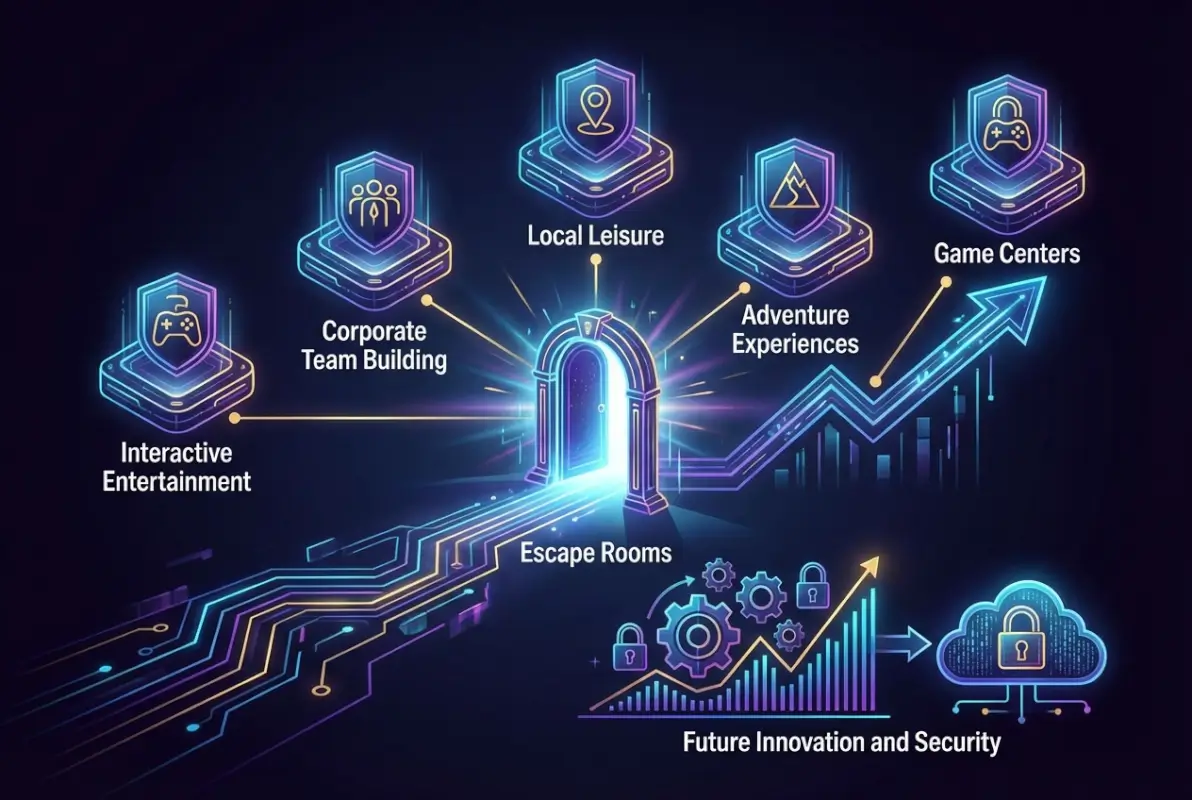
Every single top-ranking escape room in my analysis had these elements in common:
- Primary category was “Escape Room” on Google (100% consistency—this was universal)
- 2-4 secondary categories strategically selected based on their business model and location
- 100+ photos on their Google Business Profile, with new photos added at least monthly
- Response to every review (positive and negative) within 48 hours, with personalized (not template) responses
- Weekly Google Posts keeping their profile active and fresh
- Complete business information including hours, phone, website, booking URL, amenities, and attributes
- Average 4.7+ star rating with 150+ reviews across Google, Yelp, and Facebook combined
- Website homepage title tag including “escape room” + city name within the first 60 characters
What was notably absent from top performers: excessive categories (none used more than 5), generic business descriptions without specific keywords, outdated photos or information, and ignored negative reviews. The discipline of doing the basics consistently outperformed clever but inconsistent optimization tricks every time.
| Ranking Factor | Top Performers | Average Performers |
|---|---|---|
| Primary Category | 100% use “Escape Room” | 63% use generic categories |
| Number of Categories | 3-5 relevant categories | 1-2 or 7+ categories |
| Photo Count (GBP) | 100+ photos, updated monthly | 15-40 photos, rarely updated |
| Review Response Rate | 95-100% within 48 hours | 30-60% after 5+ days |
| NAP Consistency | 100% identical across platforms | Variations across 40% of listings |
Gaps in Current Escape Room Directory Strategies
Despite the clear data showing what works, I consistently see escape rooms making the same avoidable mistakes. The most common gaps in directory optimization include:
- Claimed but incomplete listings — The business is claimed on Google, but half the fields are empty or use default descriptions
- Inconsistent categories across platforms — Different primary categories on Google vs. Yelp vs. Facebook
- No secondary category strategy — Either zero secondary categories (missing opportunities) or 8+ categories (diluting relevance)
- Ignoring platform-specific features — Not using Google Posts, not enabling messaging, not utilizing Q&A sections
- Static listings never updated — Information from 2019 still showing the same photos and descriptions
- Duplicate or conflicting listings — Multiple GBP listings for the same location, usually from previous owners or location changes
The competitive opportunity here is massive. In most local markets, simply executing the fundamentals consistently will move you into the top 3-5 visible escape rooms for relevant searches. You don’t need cutting-edge AI tools or expensive agencies—you need systematic discipline in maintaining accurate, complete, category-aligned listings across all relevant platforms. For operators looking to build this systematic approach, exploring best low-cost business directories for startups can provide additional visibility without significant budget investment.
Practical Takeaway: Copy Best Practices While Differentiating
Look at the top 3 escape rooms ranking in your city for “escape room [your city]” searches. Document their category selections, secondary categories, number of photos, review count, and how frequently they post updates. This becomes your baseline—you need to match or exceed these metrics just to be competitive.
But matching isn’t enough for breakthrough results. Find one dimension where you can genuinely differentiate:
- Are you the only one with extensive corporate team building content and reviews? Emphasize that secondary category harder.
- Do you have the most immersive, theatrical rooms? Get better action photos and videos showing the production value.
- Are you in a tourist area but competitors don’t emphasize it? Make “Tourist Attraction” a prominent secondary and get photos showing your proximity to hotels and attractions.
- Do you have the highest difficulty rooms? Lean into that in your descriptions and cultivate reviews that mention the challenge level.
The combination of competitive basics plus strategic differentiation creates the optimal local search positioning. You’re visible in all the same searches as competitors (because your categories match), but when customers compare options, you stand out on a dimension that matters to a specific segment of the market.
Frequently Asked Questions About Escape Room Directory Categories
What is the best primary category for an escape room business?
“Escape Room” should be your primary category on Google Business Profile and all major directories that offer it as an option. This category directly matches the highest-intent search queries your potential customers use and provides the strongest relevance signal to search algorithms. Using generic categories like “Entertainment” or “Amusement Center” as your primary dilutes your visibility for specific “escape room” searches, which represent the majority of high-conversion discovery searches. In regional markets where “Escape Room” isn’t available, use the closest equivalent like “Entertainment Service” or “Recreation Center,” but monitor for when the specific category becomes available.
How many categories should I select for my escape room listing?
The optimal number is 3-5 categories total: one primary category (“Escape Room”) and 2-4 strategically selected secondary categories based on your business model. Common secondary categories include “Team Building Activity” for corporate clients, “Entertainment Service” for broader discovery, and “Tourist Attraction” if you’re in a visitor-heavy location. Using fewer than 3 categories limits your discovery potential across different search intents, while using more than 5-6 dilutes your category relevance signals and can actually harm your rankings in priority searches. Quality and relevance matter far more than quantity when it comes to category selection.
Do directory categories actually affect my local search rankings?
Yes—significantly. Your primary category is one of the strongest ranking factors in local search algorithms, particularly for Google Business Profile results. Research from local SEO experts indicates that category selection can impact your visibility by 30-40% or more when comparing precisely categorized businesses to generically categorized ones. Categories help search engines understand what your business offers and match you with relevant queries. Being properly categorized as “Escape Room” makes you visible for “escape room near me” searches, while incorrect categorization may exclude you entirely from those high-intent results even if you have great reviews and complete information.
How often should I review and update my Google Business Profile categories?
Review your categories quarterly (every 90 days) to check for new category options and ensure your selections still align with your current services. Google periodically adds new categories and refines existing ones, and you want to take advantage of increasingly specific options when they become available. However, avoid changing categories frequently just to experiment—major category changes can temporarily affect your rankings and may require re-verification in some cases. Only change categories when there’s a legitimate business reason (you’ve added new services, your target market has shifted) or when a more precise category option becomes available that better describes your core business.
What other signals matter most for escape room visibility besides category?
Beyond correct categorization, the most impactful local ranking factors include review quantity and quality (aim for 4.7+ stars with 100+ reviews across platforms), review recency (fresh reviews signal an active business), photo quantity and freshness (100+ photos updated monthly), consistent NAP information across all directories, Google Business Profile completeness (fill every field), regular posting activity (2+ times weekly), and website optimization with category-aligned keywords. Your category tells search engines what you are; these other signals prove you’re a high-quality, active option in that category. The combination of precise categories plus strong supporting signals drives optimal local visibility.
Which directories matter most for escape rooms and why?
Google Business Profile matters most by a significant margin—it directly powers Google Maps results and the local pack that appears at the top of most local searches, capturing the majority of local search traffic. After Google, prioritize Yelp (significant for entertainment and dining-related searches), TripAdvisor (crucial if you serve tourists), Facebook Business Page (drives social discovery), and Apple Maps (iPhone users default to this for directions). Also consider industry-specific directories like EscapeRoomHub, local tourism websites, and your chamber of commerce. Focus on consistency and completeness across major platforms before spreading to dozens of minor directories—depth matters more than breadth.
Can I use different categories on different platforms?
While different platforms may use slightly different category taxonomies and naming conventions, your core category designation should remain consistent across all platforms. Always use “Escape Room” (or the closest equivalent) as your primary category everywhere it’s available. Secondary categories can vary slightly based on platform options—for example, Facebook might offer different secondary categories than Google—but the overall category strategy should align. Wildly inconsistent categorization across platforms confuses search engines about your business identity and weakens your topical authority. Aim for 85-90% consistency in category selection across your major directory listings.
How can I measure improvements after updating my categories?
Track these specific metrics before and after category changes: Google Business Profile impressions (found in GBP Insights dashboard), direction requests and phone calls from your profile, website clicks from directory listings, search query rankings for category-relevant terms, and actual booking attributions from directory discovery. Use Google Business Profile Insights to see which search queries trigger your profile—you should see increases in category-relevant queries like “escape room [city]” after optimization. Give changes 30-45 days to fully take effect before evaluating, as local algorithm updates aren’t instantaneous. The clearest success signal is increased impressions and clicks from high-intent, category-specific searches rather than just generic branded searches.
Should I add “Party & Event Planning” as a category if I host birthday parties?
Generally no—this category describes businesses whose primary service is planning events, not providing entertainment venues. While escape rooms do host birthday parties and private events, your core business is the escape room experience itself, not event coordination. Using “Party & Event Planning” as a primary or prominent secondary category creates category confusion and puts you in competition with wedding planners and professional event coordinators rather than entertainment venues. If you want to capture event-related searches, a better approach is emphasizing event hosting in your business description and using a category like “Entertainment Service” or “Event Venue” as a lower-priority tertiary category, while keeping “Escape Room” firmly as your primary designation.
What should I do if my competitors are using incorrect categories but ranking well?
Competitors ranking well despite incorrect categories are likely succeeding because of other strong signals like many positive reviews, extensive photos, complete listings, or strong website authority—essentially succeeding despite poor categorization, not because of it. Don’t copy incorrect categorization just because a competitor ranks well; instead, use correct categories and focus on strengthening those other ranking factors to overtake them. Often these competitors would rank even better with proper categories. In local SEO, properly aligned categories plus strong supporting signals will eventually outrank improperly categorized competitors as algorithms become more sophisticated at understanding category relevance.
Taking Action: Your 30-Day Category Optimization Plan
You now understand which categories drive visibility for escape rooms and how they interact with the broader local SEO ecosystem. Knowledge without action is worthless, so let’s turn this into a concrete implementation plan you can execute over the next month.
Week 1 should focus entirely on auditing your current state. Create that spreadsheet documenting every platform where your business appears, what categories you’re currently using, and how consistent your NAP information is across platforms. Be thorough—spend time searching for your business name to discover directories you didn’t even know listed you. By the end of week one, you should have a complete inventory of your current directory footprint and a clear picture of where inconsistencies exist.
Week 2 is optimization time. Start with Google Business Profile since it matters most. Change your primary category to “Escape Room” if it isn’t already, select 2-4 strategic secondary categories based on your business model, and complete every single field in your profile—hours, amenities, booking URL, description, services, everything. Upload fresh photos if your current collection is outdated or sparse. Enable messaging and the Q&A features. This is also when you should ensure your website homepage has category-aligned optimization with “escape room” and your city name in the title tag and H1.
Week 3 extends your optimization to other major platforms. Update Yelp, Facebook Business, Apple Maps, TripAdvisor, and Bing Places with consistent categories matching your Google structure. Ensure NAP information is 100% identical across all platforms—even small variations like “Street” vs “St.” matter. Claim any unclaimed listings you discovered during your audit. If you find duplicate listings, initiate the process to merge or remove them (this often requires contacting platform support).
Week 4 is about reinforcement and monitoring. Set up tracking for the metrics we discussed—GBP impressions, direction requests, keyword rankings, and booking attributions. Implement a systematic review generation process (post-visit emails requesting reviews on Google and Yelp). Create a calendar reminder for quarterly audits 90 days from now. Write and publish your first Google Posts with updates about your rooms or current promotions. Consider how you might leverage directory solutions to maintain long-term consistency as your business grows.
Your Category Optimization Checklist
- ✓ Audit current categories across all platforms
- ✓ Set “Escape Room” as primary category on Google Business Profile
- ✓ Add 2-4 strategic secondary categories (Team Building, Entertainment, Tourist Attraction)
- ✓ Verify 100% NAP consistency across all directories
- ✓ Upload 50+ high-quality photos to Google Business Profile
- ✓ Complete every field in your GBP (hours, booking URL, amenities, description)
- ✓ Update categories on Yelp, Facebook, Apple Maps, TripAdvisor, Bing
- ✓ Optimize website homepage title tag and H1 with category keywords
- ✓ Enable messaging and Q&A on Google Business Profile
- ✓ Set up tracking for impressions, clicks, and category-relevant keyword rankings
- ✓ Create calendar reminder for quarterly category audit
- ✓ Implement systematic review generation process
The escape room market is competitive, but most operators are still missing the fundamentals of directory optimization. By implementing precise, strategic categorization and maintaining it consistently, you position your business to capture the high-intent searches that drive bookings—the people actively looking for exactly what you offer. This isn’t about gaming algorithms or finding shortcuts; it’s about clear, accurate representation that helps customers find you when they’re ready to book.
Start with your Google Business Profile today. Log in, verify your primary category is “Escape Room,” add those strategic secondaries, and make sure every field is complete. That single action—which takes maybe 20 minutes—can meaningfully improve your local visibility within 30 days. The escape rooms dominating local search in your market aren’t doing anything revolutionary; they’re just executing these fundamentals with remarkable consistency. Now it’s your turn.
Was this article helpful?