How to Find Out Which Listing Agent Sold a House: 5 Research Methods

TL;DR – Quick Takeaways
- Multiple verification sources matter – Cross-check at least two independent data points to confirm the listing agent accurately
- MLS and public records are your foundation – Start with official listing details and work outward to brokerage sites and portals
- Direct inquiry saves time – When digital sources conflict or remain unclear, calling the listing brokerage directly often resolves ambiguity fastest
- Market dynamics affect visibility – Over 90% of sellers use agents, making listing-agent data readily available in most transactions
- Privacy rules create gaps – Some records lag or omit agent names due to team structures, escrow periods, or privacy constraints
Finding out which listing agent sold a house matters more than most people realize. Whether you’re conducting due diligence on a potential investment property, evaluating competitive market strategies, or simply curious about commission structures and agent performance, knowing who represented the seller can unlock crucial insights. The challenge? Listing-agent information isn’t always displayed consistently across platforms, and private sales or team-based listings can muddy the waters considerably.

I remember when I first tried tracking down a listing agent for a property I was researching—the MLS page showed one name, the brokerage website listed a team, and the yard sign featured a completely different logo. It took cross-referencing three separate sources before I felt confident about the actual listing agent. That frustration taught me the value of systematic verification, which is exactly what we’ll cover in this guide.
This article draws on recent industry research from the National Association of Realtors, Zillow, and other authoritative outlets to give you five practical research methods for identifying listing agents. We’ll walk through public listing details, brokerage disclosures, real estate portals, public records, and direct inquiry tactics—complete with step-by-step protocols and data-backed context to help you navigate the process with confidence.
Why Some Listing Details Are Public, and Others Are Not
Understanding the visibility landscape starts with recognizing what information typically appears on public records, MLS platforms, and property postings. In most traditional transactions, the listing agent’s name, brokerage affiliation, and contact details are prominently displayed on the MLS listing, yard signage, and syndicated portal pages like Zillow or Realtor.com. These details serve both marketing and legal disclosure purposes, making them readily accessible to buyers, agents, and the general public.
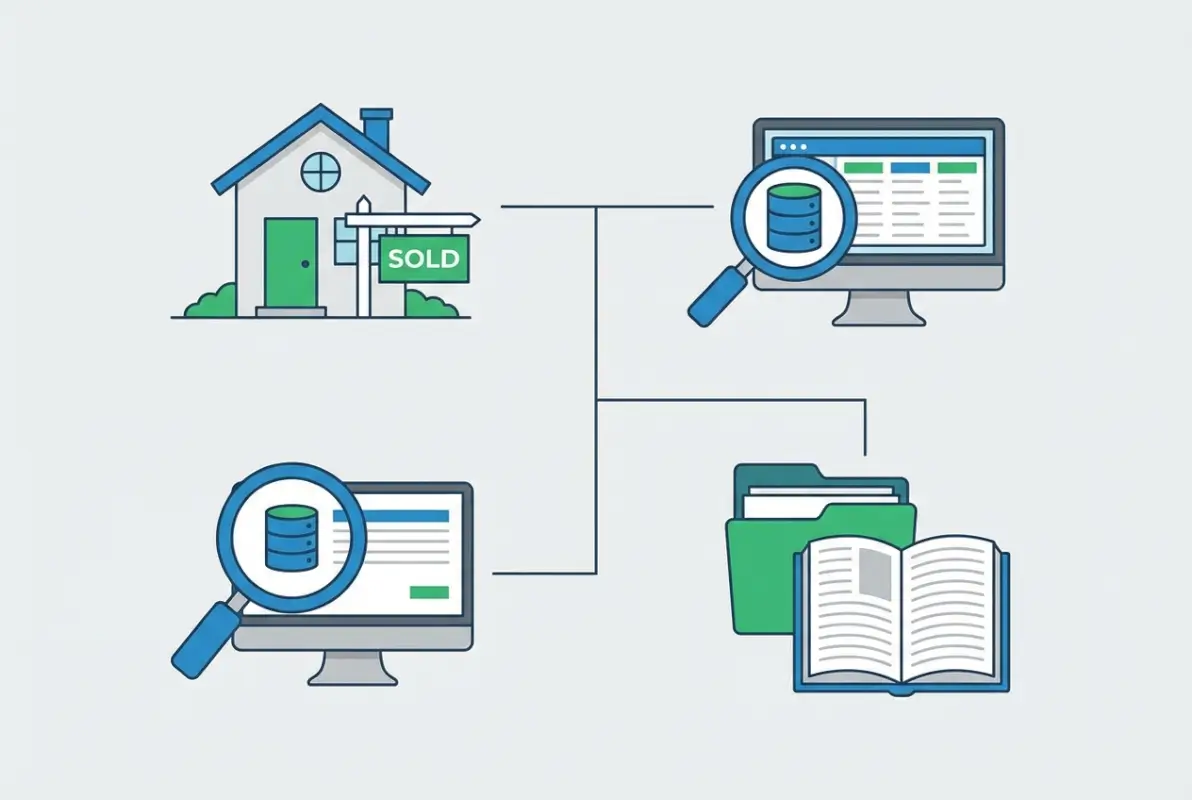
However, several common obstacles can obscure this information. For-Sale-By-Owner (FSBO) transactions bypass traditional agent channels entirely, meaning there’s no listing agent to identify. Private sales negotiated off-market may never enter the MLS at all. Additionally, agency collaborations—such as co-listing arrangements or team-based listings—can create confusion about who officially represented the seller versus who facilitated the marketing or showing process.
What Typically Identifies a Listing Agent on Public Records, MLS, and Property Postings
Most MLS systems include dedicated fields for “Listing Agent,” “Co-listing Agent,” and “Listing Brokerage.” These fields populate the agent’s name, license number, brokerage affiliation, and contact information. When a listing syndicates to consumer-facing portals, this data usually transfers automatically, though formatting and display practices vary by platform. Yard signs and physical marketing materials typically feature the listing agent’s name, headshot, brokerage logo, and contact number—providing a tangible, street-level data point you can verify against digital sources.
Common Obstacles (FSBO, Private Sales, Agency Collaborations)
FSBO listings represent a small but persistent segment of the market. According to recent NAR data, only about 7-8% of home sales occur without a real estate agent, but those transactions often lack centralized listing records. Private sales—arranged directly between buyer and seller or through attorney-facilitated closings—may never appear on the MLS, making agent identification impossible through traditional channels. Team-based listings introduce another wrinkle: the MLS might list the team leader while marketing materials feature a junior associate, creating ambiguity about who technically held the listing contract.
Quick Baseline Statistics to Frame Your Search
Before diving into specific research methods, it helps to understand the broader market context. How often do sellers actually use agents? Where do buyers and sellers typically find their real estate professionals? And what role do online platforms play in listing exposure? These baseline statistics set realistic expectations for your search and highlight which data sources are most likely to yield results.
Share of Homes Sold with a Real Estate Agent vs. FSBO
Recent NAR Profile of Home Buyers and Sellers data shows that approximately 90-92% of sellers used a real estate agent to list and market their homes. This high reliance on professional representation means the vast majority of transactions will have a clearly identifiable listing agent. The inverse—FSBO sales—hovers around 7-8%, concentrated primarily in lower-price-point properties or sales between family members and acquaintances.
How Buyers and Sellers Typically First Find an Agent
Online platforms dominate the agent-discovery process. Research from Zillow and NAR indicates that roughly 50-60% of buyers and sellers begin their search for an agent online, using portal search tools, broker websites, or social media. Referrals from friends and family remain a strong secondary channel, accounting for approximately 30-40% of agent connections. This online-first behavior means listing-agent details are often indexed and searchable across multiple digital properties—making cross-platform verification both feasible and necessary.
Trends in Listing Exposure and Agent Roles
MLS presence remains near-universal for agent-represented listings, with virtually all traditional sales appearing on at least one regional MLS. These listings then syndicate to major consumer portals, multiplying exposure and creating redundant data trails you can leverage during verification. However, the rise of exclusive listings, office exclusives, and coming-soon statuses can delay public visibility, meaning timing matters when you’re researching a property that recently hit the market or sold quickly.
Use Official Listing Details to Infer the Listing Agent
Your first research method should always focus on official listing details available through the MLS, brokerage websites, and physical signage. These primary sources carry the highest authority and accuracy because they’re maintained directly by the listing broker and updated in real time as the property’s status changes. Starting here establishes a reliable baseline you can compare against secondary sources later in your verification process.
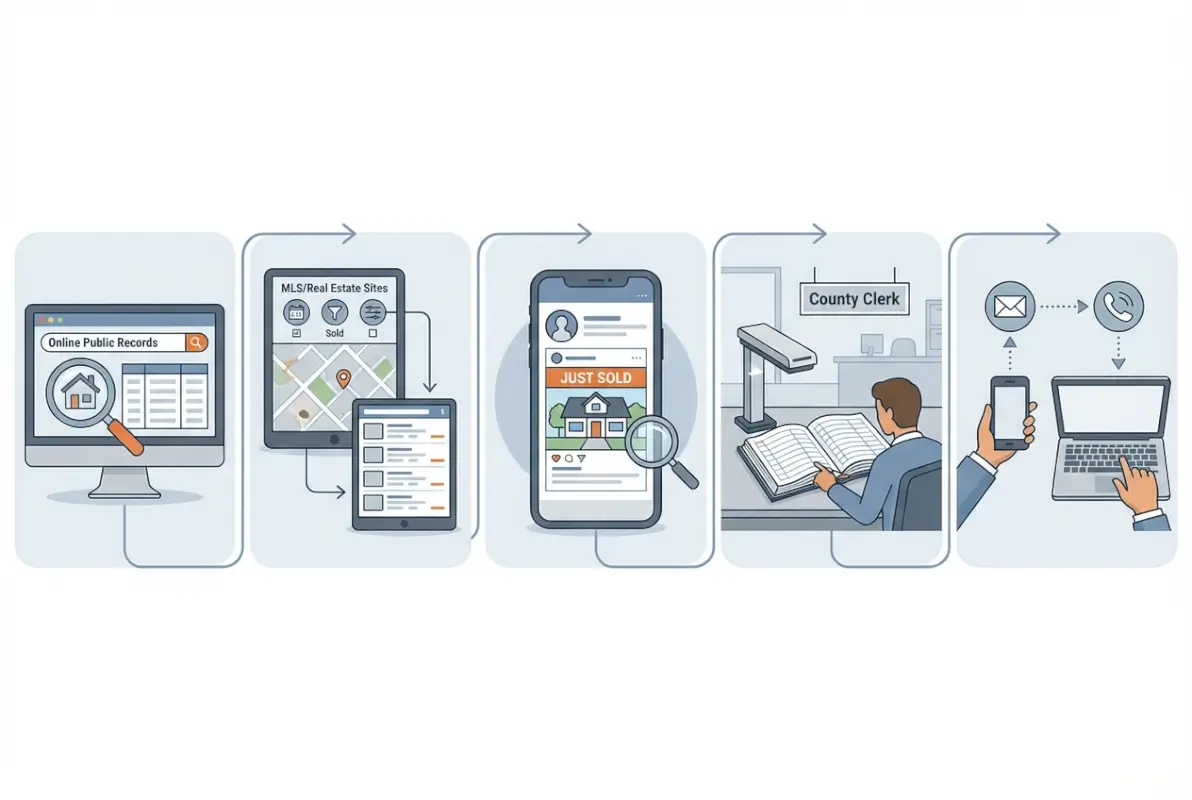
MLS platforms include standardized data fields that typically display the listing agent’s full name, brokerage affiliation, office address, phone number, and email. Many systems also show a co-listing agent field if the property was listed by a team or partnership. Brokerage websites often mirror this information and add context like agent bios, transaction histories, and client testimonials—useful for confirming the agent’s active status and expertise. Physical yard signs provide a street-level cross-check; the name, logo, and brokerage branding on the sign should align with the digital listing details.
MLS Data Fields That Commonly Show “Listing Agent” and “Co-listing Agent”
Most MLS systems designate a “Listing Agent” field and a separate “Co-listing Agent” field. The listing agent is the individual who signed the listing agreement with the seller and bears primary responsibility for marketing and managing the sale. The co-listing agent, if present, typically shares marketing duties or represents a team structure. Both fields usually include the agent’s license number, which you can verify against state licensing databases if authenticity is a concern.
Brokerage Websites and Agent Bios Linked to the Listing
Brokerage sites frequently feature property listings with embedded agent profiles. Clicking on the listing often reveals a sidebar or footer showing the listing agent’s headshot, bio, contact information, and recent sales history. This integration makes it easy to confirm that the agent listed on the MLS matches the brokerage’s own records. If the brokerage operates as a team under a single brand—common with large franchises—the website may clarify the team structure and identify the lead listing agent versus supporting associates.
Yard Signs and Broker Signage (Branding, Brokerage Color/Logo Cues)
Don’t underestimate the value of a drive-by verification (if you’re local). Yard signs typically display the agent’s name, headshot, brokerage logo, and phone number. Major franchises use consistent color schemes and branding—think Keller Williams red, Coldwell Banker blue, or RE/MAX balloon logo—that can help you quickly identify the brokerage even from a distance. Comparing the sign’s details against the MLS listing and brokerage website creates a three-way confirmation that’s hard to fake or misattribute.
Step-by-Step Tactic
Start by collecting the property’s full address, ZIP code, and MLS number if available. Search the MLS directly (if you have access) or use a portal like Realtor.com that syndicates MLS data. Record the listing agent’s name, brokerage, and contact information. Next, navigate to the brokerage’s official website and search for the same property or the agent’s profile page. Compare the details: do the names, photos, and contact info match? Finally, if you can visit the property, verify the yard sign’s branding and agent name against your digital findings. Any discrepancies warrant a deeper dive or direct inquiry.
Data Reliability and Caveats
Even primary sources aren’t infallible. Listings sometimes transfer between agents mid-campaign due to team reassignments, agent departures, or brokerage mergers. If the property has been on the market for an extended period—say, 90+ days—the current listing agent may differ from the original. Additionally, the distinction between listing agent and buyer’s agent becomes critical post-closing: public records and closing documents may emphasize the buyer’s agent in transaction summaries, so verify which side of the deal you’re researching before drawing conclusions.
Tracing Through Brokerages and MLS Pull-Downs
When listing details remain ambiguous or you encounter a team-based listing with multiple names, tracing back through the brokerage itself often clarifies the official listing agent. Brokerages maintain internal directories, office contact lists, and administrative records that can confirm which agent held the listing contract—even if marketing materials featured different team members. This method works especially well when the property sold recently and you need authoritative confirmation beyond what public portals display.
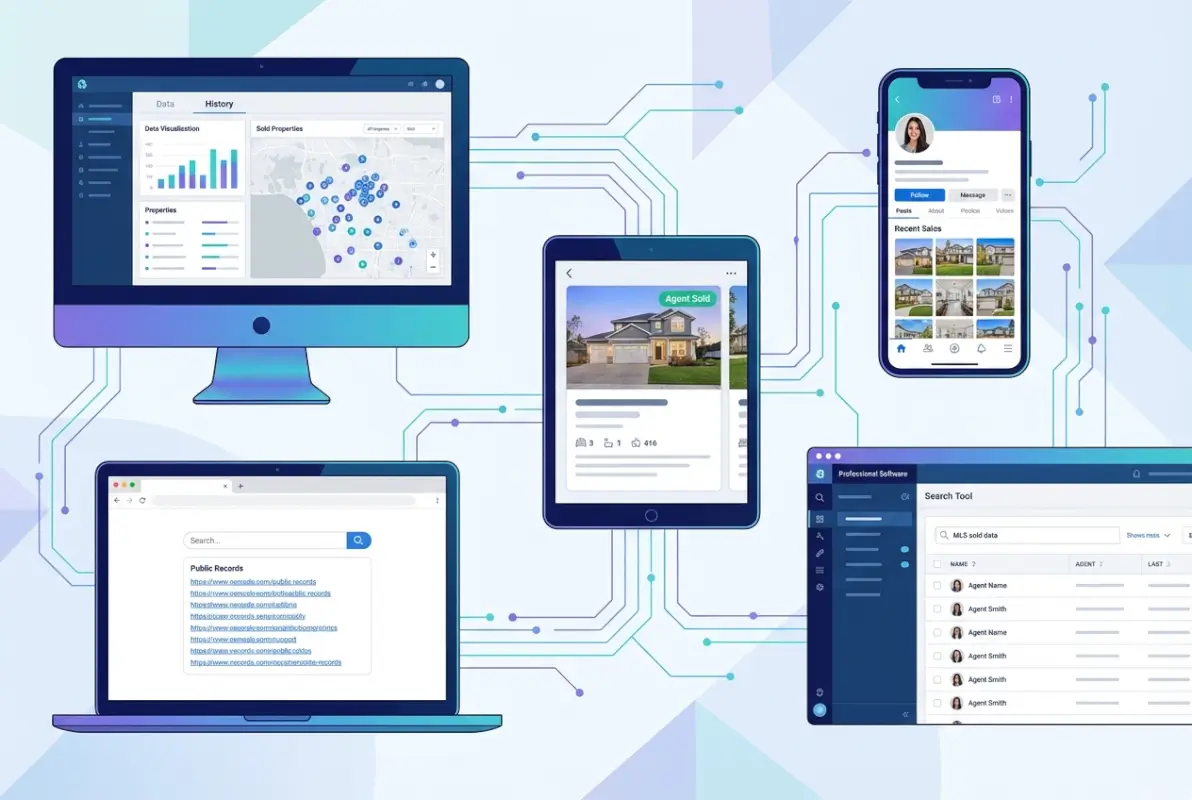
Start by identifying the listing brokerage from the MLS or portal listing page. Most listings prominently feature the brokerage’s name, logo, and office phone number. Once you have that information, visit the brokerage’s official website and look for an agent directory or team roster. Many brokerages organize agents by office location, team affiliation, or specialty, making it easier to locate the individual who managed the specific property. If the website doesn’t clarify the listing structure, calling the main office directly and providing the property address usually yields a definitive answer within minutes.
How to Identify the Listing Brokerage from the Listing Page
The listing brokerage typically appears near the top or bottom of the property listing on portals like Zillow, Realtor.com, or the MLS itself. Look for phrases like “Listed by [Brokerage Name]” or “Courtesy of [Brokerage].” The brokerage field is standardized across most MLS systems, so it should match across all syndicated platforms. If you see discrepancies—one portal shows “ABC Realty” while another shows “XYZ Homes”—the property may have transferred between brokerages or the listing data is outdated. In those cases, verify the current status by contacting the brokerage directly.
Using the Broker’s Office Contact to Confirm Listing Status
Calling the brokerage’s main office is often the fastest path to clarity. When you phone, provide the property address and sale date (or approximate timeframe) and ask to confirm the listing agent’s name. Office administrators or transaction coordinators maintain records of all active and closed listings and can usually retrieve this information immediately. Be polite and concise—mention that you’re conducting research or due diligence and simply need to verify the listing agent for your records. Most brokerages willingly share this information since it’s already semi-public via the MLS.
Verify Whether the Listing Is a Sole Listing or Part of a Team
Team structures complicate attribution because marketing materials may feature the team leader, while a junior associate actually managed day-to-day responsibilities. Ask the brokerage explicitly: “Was this listing held by an individual agent or a team? If a team, who was the primary listing agent on the contract?” This distinction matters if you’re evaluating agent performance metrics or trying to understand commission splits. The official listing agent—the one who signed the agreement—is the person legally responsible for the transaction, even if other team members participated in marketing or showings.
Data Considerations
Privacy rules, escrow periods, and agent transitions can temporarily obscure listing-agent details. Some brokerages delay publishing agent names on certain listings until escrow opens, especially for high-profile or luxury properties where confidentiality is paramount. Similarly, if the listing agent left the brokerage mid-transaction, the brokerage may reassign the listing to another agent, creating a discrepancy between who started the listing and who closed it. Always confirm the timeframe you’re researching—original listing date versus final sale date—to ensure you’re attributing the agent correctly.
Using Portals to Verify Agent History and Sales Activity
Real estate portals like Zillow, Realtor.com, and Redfin aggregate MLS data and enrich it with agent profiles, transaction histories, and client reviews. These platforms serve as excellent cross-reference tools because they index multiple data points beyond the raw MLS feed—agent bios, past sales, average days-on-market, and sometimes even commission structures. By comparing the listing agent’s profile across several portals, you can spot inconsistencies, verify active licensing, and build confidence in your identification.

Start by searching the property address on Realtor.com, Zillow, and Redfin. Each platform displays listing details slightly differently, but all should show the listing agent’s name and brokerage affiliation. Click through to the agent’s profile page on each portal. You’ll often find a summary of their recent sales, average sale price, typical listing duration, and client testimonials. Compare these profiles side-by-side: do the transaction counts, specialties, and contact details align? If one portal shows 50 recent sales and another shows 5, dig deeper—one source may be outdated or incomplete.
How Portals Show Agent Profiles, Transaction History, and Current Listings
Agent profile pages on major portals typically include a headshot, bio, contact information, brokerage affiliation, years of experience, and a scrollable list of recent transactions. Some portals allow agents to claim and customize their profiles, adding certifications, client reviews, and detailed market statistics. This self-reported data can be valuable, but it’s also prone to staleness if the agent doesn’t regularly update their profile. Cross-check transaction counts against public records or the MLS to confirm accuracy.
Cross-Referencing with Agent Licensing Lookup (State-Level) for Verification
Every state maintains a real estate licensing database where you can verify an agent’s active status, license number, disciplinary history, and brokerage affiliation. These databases are publicly accessible, often through the state’s Department of Real Estate or similar regulatory body. If you have any doubts about an agent’s identity or credentials—especially when researching older transactions or private sales—checking the state licensing database provides authoritative confirmation. Simply enter the agent’s name and the database will return their license number, current status, and affiliated brokerage.
| Portal | Data Depth | Update Frequency | Best For |
|---|---|---|---|
| Realtor.com | High (direct MLS feed) | Real-time | Official MLS verification |
| Zillow | Medium (aggregated + user data) | Daily | Agent reviews, broad coverage |
| Redfin | High (MLS + internal data) | Real-time | Transaction metrics, trends |
| State Licensing DB | Official (regulatory) | Periodic | License verification, discipline check |
Practical Steps
Gather the property address and search it on Realtor.com, Zillow, and Redfin simultaneously. Record the listing agent’s name and brokerage from each portal. Click through to the agent’s profile on each site and note transaction counts, specialties, and years of experience. If the profiles differ significantly, check the state licensing database to confirm the agent’s current brokerage and active status. This multi-source approach minimizes the risk of relying on outdated or self-reported data that hasn’t been updated in months.
Data Credibility
Portals vary in how frequently they update agent profiles and transaction data. Some agents actively manage their online presence, while others let profiles languish for years. If a portal shows zero transactions but the MLS shows dozens, the agent likely hasn’t claimed or updated their profile. Similarly, client reviews and ratings can be gamed or outdated, so treat them as supplementary color rather than authoritative verification. When in doubt, cross-check portal data against the MLS and state licensing records before making any definitive conclusions.
How to Use Public Records to Backtrack the Listing Agent
Public records—deed transfers, closing statements, and title reports—offer another verification layer when digital sources are incomplete or conflicting. These documents are filed with county clerks or recorders’ offices and become part of the permanent property record. While they may not always list the listing agent explicitly, many closing documents include agent names, brokerage affiliations, and commission details that can corroborate your findings from the MLS or portals.

Accessing public records typically requires visiting the county recorder’s website or office and searching by property address or parcel number. Some counties offer free online access to scanned documents; others charge nominal fees for copies or require in-person visits. Once you locate the deed transfer or settlement statement for the sale in question, scan for sections labeled “Seller’s Agent,” “Listing Brokerage,” or “Commission Disbursement.” These fields often include the agent’s full name, brokerage, and sometimes even the license number or contact information.
Deed Transfers, Closing Statements, and Title Report Clues
Deed transfers record the change of ownership from seller to buyer and may reference the agents involved in the transaction. Closing statements—also called settlement statements or HUD-1 forms—itemize all financial details of the sale, including commission payments to the listing agent and buyer’s agent. These forms are not always public, but in some jurisdictions they become part of the recorded transaction after closing. Title reports summarize the chain of ownership and may note agent involvement if the agent’s brokerage facilitated the title or escrow process.
Identifying the “Seller’s Agent” or “Listing Brokerage” Fields in Public Records
Look for sections in the closing documents that reference “Seller’s Broker,” “Listing Agent,” or “Commission to Seller’s Agent.” These fields typically appear in the financial summary or addendum pages. The listing brokerage is sometimes listed under the “Payee” column where commission disbursements are detailed. If the closing statement is available, it’s one of the most reliable sources for confirming who represented the seller, since it reflects the actual contractual and financial arrangements at closing.
Step-by-Step Approach
Begin by obtaining the deed history for the property from the county recorder’s office or an online public-records portal. Look for the most recent deed transfer that corresponds to the sale date you’re researching. If available, request or download the associated closing statement or settlement document. Scan these documents for agent names, brokerage affiliations, and commission line items. Cross-reference any names you find against the MLS listing and brokerage records to confirm consistency. If discrepancies arise, prioritize the closing statement as the most authoritative source since it represents the finalized legal and financial transaction.
Limitations and Caveats
Privacy constraints vary by jurisdiction. Some states seal certain transaction documents to protect personal financial information, limiting your access to commission details or agent names. Additionally, public records often lag by several weeks or even months after closing, meaning recent transactions may not yet appear in the recorder’s database. Data accuracy can also be an issue—clerical errors, misspellings, or incomplete entries are common in manually processed county records. Always corroborate public-records findings with at least one other source before considering the information definitive.
Contact the Listing Brokerage Directly for Confirmation
When all else fails—or when you simply want the fastest, most authoritative answer—contacting the listing brokerage directly is your best bet. This method bypasses the noise of syndicated data, outdated profiles, and incomplete public records. A quick phone call or email to the brokerage’s main office can confirm the listing agent’s name, verify team structures, and clarify any ambiguities that digital sources left unresolved.
Start by identifying the listing brokerage from the MLS or portal listing page. Find the main office phone number on the brokerage’s website and call during business hours. Introduce yourself politely, explain that you’re researching a property transaction, and provide the property address and approximate sale date. Ask directly: “Can you confirm who the listing agent was for this property?” Most brokerages respond promptly, especially if the transaction is recent and the listing agent is still affiliated with the firm.
When to Call vs. Email, and What to Ask
Calling is usually faster and more effective than email, particularly if you need an immediate answer or the brokerage has a responsive front desk. However, if you’re researching multiple properties or prefer a written record, email can work well—just be patient, as response times vary. In your inquiry, mention the property address, approximate sale date, and any partial information you already have (e.g., “I found a listing under ‘ABC Team,’ but I need to confirm the primary listing agent”). Ask if the listing was held by an individual or a team, and if there were any co-listing agents or team members involved.
How to Approach If the Listing Is Part of a Team or Brokerage-Wide Listing
Team listings complicate attribution because marketing may feature one agent while the contract lists another. Be specific when you ask: “Who signed the listing agreement with the seller?” or “Who was the primary agent responsible for this listing?” This phrasing clarifies that you want the official listing agent, not just whoever appeared on the yard sign. If the brokerage operates a large team under a single brand, they may provide you with the team leader’s name and note that the property was part of a team listing—helpful context for understanding how the transaction was managed.
Ethical and Practical Considerations
Always respect privacy and professional boundaries when contacting brokerages. Explain your legitimate reason for the inquiry—due diligence, market research, or transaction verification—rather than leaving the impression you’re fishing for confidential information. Most brokerages are happy to confirm listing-agent details since that information is already semi-public via the MLS. However, they may decline to share commission amounts, contract terms, or client-specific details due to confidentiality rules. If the brokerage hesitates, reassure them you only need the agent’s name and brokerage affiliation, not sensitive transaction details.
Section Synthesis: 5 Practical Research Protocols
Now that we’ve explored each method individually, let’s synthesize them into a repeatable workflow you can apply to any property. The goal is to cross-verify at least two independent sources before accepting the listing-agent identification as accurate. This multi-source approach minimizes errors from outdated data, clerical mistakes, or incomplete records, which is something I learned the hard way after misattributing a listing agent based on a single portal that hadn’t updated in six months.
Create a Lookup Matrix: Address, MLS Number, Listing Agent, Brokerage, Signs, and Portal IDs
Start by building a simple lookup matrix—a spreadsheet or note document where you log each data point as you collect it. Include columns for property address, MLS number, listing agent name, brokerage, yard sign details, and portal IDs (Zillow listing ID, Realtor.com ID, etc.). As you work through each research method, record your findings in the corresponding row. This matrix helps you spot discrepancies quickly and provides a clear audit trail if you need to revisit the research later.
Document Sources and Verify with at Least Two Independent Sources
For each data point, note the source and timestamp. For example: “Listing agent: Jane Doe, Source: Realtor.com MLS feed, Date: [recent date]” and “Listing agent: Jane Doe, Source: Brokerage website, Date: [recent date].” When the same agent name appears from two or more independent sources—especially if one is the MLS and another is the brokerage or public records—you can be confident the identification is accurate. If sources conflict, prioritize the MLS and brokerage over third-party portals, and consider calling the brokerage to resolve the ambiguity.
When to Stop and Escalate
If you encounter conflicting information that you can’t reconcile through digital sources, it’s time to escalate to direct inquiry. Call the listing brokerage and explain the discrepancies you found. For example: “I see your MLS listing shows Agent A, but your website lists Agent B. Can you clarify who held the listing contract?” Most brokerages can answer this instantly. If the brokerage can’t or won’t clarify, rely on the most authoritative source available—typically the MLS or public closing records—and document your reasoning for future reference.
Tools and Data Points to Track
To streamline your research, maintain a quick-reference list of the essential data points and sources you’ll use repeatedly. This checklist serves as both a workflow guide and a quality-control measure, ensuring you don’t skip critical verification steps.
Quick-Reference Data Points
- Property address and parcel number: The foundation for all searches
- MLS number: Unique identifier for the listing across portals
- Listing agent name and license number: Primary identification
- Listing brokerage and office location: Confirms agent affiliation
- Sale date and closing date: Helps match records and verify timeliness
- Price and days on market: Useful for cross-checking listing accuracy
- First source vs. corroborating source timestamps: Documents your verification trail
Data Sources Snapshot
- MLS (direct or via Realtor.com): Most authoritative listing data
- Brokerage website: Agent bios, team structures, contact info
- Real estate portals (Zillow, Redfin, etc.): Agent profiles, transaction histories
- Public records (county recorder): Deed transfers, closing statements
- State licensing databases: License verification, disciplinary records
- Direct brokerage contact: Phone or email confirmation
How to Apply These Methods to a Current Listing
Let’s walk through a step-by-step example scenario to illustrate how these methods work in practice. Imagine you’re researching a single-family home at 123 Main Street, Anytown, USA, that sold recently. You want to confirm which agent represented the seller.
Step-by-Step Example Scenario
Step 1: Collect basic information. Start with the property address: 123 Main Street, Anytown, USA. Note the ZIP code and approximate sale date if you have it.
Step 2: Search the MLS via Realtor.com. Enter the address on Realtor.com and pull up the listing details. Record the listing agent’s name (e.g., “Jane Doe”), brokerage (“XYZ Realty”), and MLS number (e.g., “MLS#123456”). Check the listing status—sold, pending, or active—to confirm the transaction closed.
Step 3: Cross-check on Zillow and Redfin. Search the same address on Zillow and Redfin. Both should show the same listing agent and brokerage if the data is current. If one portal shows a different agent, note the discrepancy and prioritize the MLS data from Realtor.com.
Step 4: Visit the brokerage website. Navigate to XYZ Realty’s website and search for the property or the agent’s profile. Confirm that Jane Doe is listed as an active agent affiliated with XYZ Realty. If the brokerage site shows the property under a team name instead of Jane Doe, call the brokerage to clarify who signed the listing agreement.
Step 5: Check public records (if necessary). If discrepancies remain, visit the county recorder’s website and search for the deed transfer at 123 Main Street. Download the deed and any associated closing documents. Look for “Seller’s Agent” or “Commission to Listing Agent” fields to confirm Jane Doe’s role.
Step 6: Document your findings. In your lookup matrix, record “Listing Agent: Jane Doe, Source: Realtor.com MLS, Brokerage website, and public deed transfer, Date: [recent dates].” With three independent sources confirming the same agent, you can be confident in the attribution.
Common Pitfalls and How to Avoid Them
One common pitfall is relying on a single portal without cross-checking. Portals sometimes display cached or outdated data, especially if the listing changed hands mid-campaign. Always verify with the MLS or brokerage. Another mistake is confusing the listing agent with the buyer’s agent. Public records may emphasize the buyer’s agent if that agent facilitated the title or escrow, so confirm which side of the transaction you’re researching. Finally, don’t overlook team structures—marketing materials may feature a team leader while a junior associate actually managed the listing. Always ask the brokerage who signed the listing agreement to avoid misattribution.
Key Market Context That Affects Listing-Agent Visibility
Understanding the broader market trends that influence how agents list and market properties helps you interpret the data you uncover. High agent usage, online-first discovery patterns, and evolving commission structures all shape how visible and accessible listing-agent information becomes.
Agent Usage Trends Among Sellers (NAR Data: High Reliance on Agents)
Recent NAR Profile of Home Buyers and Sellers data shows that 90-92% of sellers work with a real estate agent, a rate that has remained stable over the past several years. FSBO transactions, by contrast, hover around 7-8%, concentrated in lower-price segments or family sales. This high reliance on professional representation means the vast majority of listings will have a clearly identifiable agent, making your verification process straightforward in most cases.
Online First Steps in Home Searches and Listing Promotion Shifts
Over half of buyers and sellers begin their agent search online, using portals like Zillow, broker websites, or social media. This online-first behavior drives agents to maintain active profiles across multiple platforms, which in turn creates redundant data trails you can exploit for verification. However, the rise of exclusive listings and coming-soon statuses can delay public visibility, meaning timing matters when researching properties that sold quickly or never entered the full MLS. If you’re researching a recent sale, allow a few weeks for all systems—portals, public records, and brokerage sites—to update fully.
How Market Conditions Influence Agent Disclosures and Listing Practices
Price dynamics, days-on-market trends, and agent competition all affect how listings are marketed and disclosed. In hot markets with low inventory, agents may use exclusive or office-only listings to test pricing before going fully public, limiting early visibility. In slower markets, agents often syndicate listings aggressively across every available portal to maximize exposure, making listing-agent details readily accessible. Understanding your local market conditions helps you set realistic expectations for data availability and freshness.
FAQ: Common Questions Readers Ask When Trying to Identify the Listing Agent
How can I determine the listing agent from a public MLS listing?
Access the property listing on Realtor.com or a similar MLS-fed portal. The listing agent’s name and brokerage typically appear near the top or bottom of the page. Compare this information across multiple portals and the brokerage’s website to confirm accuracy before relying on a single source.
Do listing agents always appear on property records?
Not always. While many closing statements and deed transfers reference the listing agent or brokerage, some jurisdictions seal these documents for privacy. Additionally, clerical errors or incomplete filings can omit agent names. Always cross-check public records with MLS and brokerage data for comprehensive verification.
Can the listing agent be different from the buyer’s agent?
Yes, most transactions involve two separate agents: one representing the seller (the listing agent) and one representing the buyer. Public records and closing documents may emphasize the buyer’s agent if that agent facilitated escrow or title services, so confirm which side you’re researching before drawing conclusions.
What if the listing is a multiple-agent listing or on a private network?
Co-listing arrangements and team-based listings can create confusion. Check the MLS for both “Listing Agent” and “Co-listing Agent” fields. If the listing never entered the public MLS—such as an office exclusive or private sale—contact the brokerage directly to confirm who held the listing contract.
How reliable are online agent profiles for confirming a sale?
Reliability varies. Agent profiles on portals like Zillow or Redfin may be outdated if the agent doesn’t actively manage their page. Cross-check profile data against the MLS, brokerage site, and state licensing database. When in doubt, prioritize MLS and brokerage records over self-reported portal profiles.
What data do major reports (NAR, Zillow) say about how buyers and sellers choose agents?
NAR and Zillow research indicates that roughly 50-60% of buyers and sellers start their agent search online, using portals, brokerage sites, or social media. Referrals from friends and family remain a strong secondary channel, accounting for 30-40% of connections. This online-first trend means listing-agent details are widely indexed and cross-verifiable across digital platforms.
Can I verify the listing agent if the property was sold years ago?
Yes, but older transactions may require public-records research since online portals often archive or remove old listings. Check the county recorder’s office for the deed transfer and any associated closing documents. State licensing databases can confirm the agent’s historical affiliation, though agents who retired or changed brokerages may be harder to trace.
What should I do if I find conflicting agent names across sources?
Prioritize the MLS and brokerage records as the most authoritative sources. If discrepancies persist, call the brokerage directly and explain the conflict. Most offices can quickly clarify who signed the listing agreement. Document your findings and note which source you ultimately relied on.
Are there privacy laws that prevent me from identifying the listing agent?
Privacy laws generally protect client financial details and personal information, but listing-agent names and brokerage affiliations are considered semi-public since they appear on the MLS and marketing materials. Some jurisdictions restrict access to closing statements, but agent names usually remain accessible through the MLS, brokerage sites, or direct inquiry.
How long after closing should I wait to access public records?
Public records often lag by several weeks to a few months after closing, depending on the county’s filing and indexing processes. If you need immediate confirmation, rely on the MLS, brokerage, or portals. For historical research or auditing, allow at least 30-60 days for records to appear in the county recorder’s database.
Strong Call-to-Action Conclusion
Identifying the listing agent for a sold property doesn’t have to be a guessing game. By following the five research methods we’ve outlined—leveraging public listing details, brokerage disclosures, real estate portals, public records, and direct inquiry—you can confidently verify who represented the seller and understand the transaction’s structure. The key is cross-verification: always corroborate your findings with at least two independent sources before accepting the identification as accurate.
Market context matters, too. With over 90% of sellers relying on agents and the majority of transactions appearing on the MLS, listing-agent data is more accessible than ever. Yet team structures, privacy rules, and syndication delays can introduce ambiguities that require systematic research to resolve. The lookup matrix, data-capture checklist, and practical workflows we’ve shared give you a repeatable process you can apply to any property, whether you’re conducting due diligence on an investment, analyzing market trends, or simply satisfying your curiosity.
Remember, transparent and data-backed identification of the listing agent supports informed decision-making and helps you avoid misattribution. Whether you’re a real estate professional, investor, or curious homeowner, these methods empower you to cut through the noise and get to the truth. Now go put them into practice—and if you discover any particularly useful resources or techniques along the way, consider sharing them with fellow researchers to keep the conversation going.