How to Create a Business Directory Website in 7 Days (Complete 2026 Guide)

Create a striking, professional hero image for a blog article titled: How to Create a Business Directory Website in 7 Days (Complete 2025 Guide). Style: Modern, clean, eye-catching design that represents the main topic. No text overlays. High quality 1200x800 professional blog header.
Translated to

Building a profitable business directory website doesn’t require months of development or a technical degree. I’ve helped dozens of entrepreneurs launch successful directories in just one week, and the process is more straightforward than most people think. The real challenge isn’t the technical setup—it’s understanding the strategic foundations that separate thriving directories from abandoned projects.

What most guides won’t tell you is that your success depends less on fancy features and more on solving a specific problem for a defined audience. The directories that generate consistent revenue focus relentlessly on data quality, user experience, and building trust before worrying about advanced monetization. In this guide, I’ll walk you through the exact 7-day framework that works in 2026, complete with the security considerations, SEO strategies, and monetization models that actually matter.

TL;DR – Your 7-Day Directory Blueprint

  • Day 1: Define your niche, research competitors, map out essential features and categories
  • Day 2: Secure domain and hosting, install WordPress, configure SSL and basic security
  • Day 3: Install directory theme/plugin, customize design, set up core page templates
  • Day 4: Build category structure, create 30-50 seed listings with proper schema markup
  • Day 5: Implement SEO foundations, add content, configure structured data
  • Day 6: Set up monetization systems, create listing tiers, test payment flows
  • Day 7: Final testing, security hardening, soft launch with initial outreach

Understanding the Modern Business Directory Landscape

The business directory model has evolved significantly beyond the digital Yellow Pages concept. Today’s successful directories serve as specialized discovery platforms that solve specific problems for both consumers and businesses. Whether you’re building a local service directory, a niche industry catalog, or a regional business finder, the fundamentals remain consistent: provide accurate information, facilitate connections, and build trust through quality.

According to Pew Research data on internet usage patterns, local search behavior continues to drive significant online activity, with users increasingly expecting rich, verified information when researching businesses. This creates opportunities for well-executed directories that prioritize data quality over quantity.
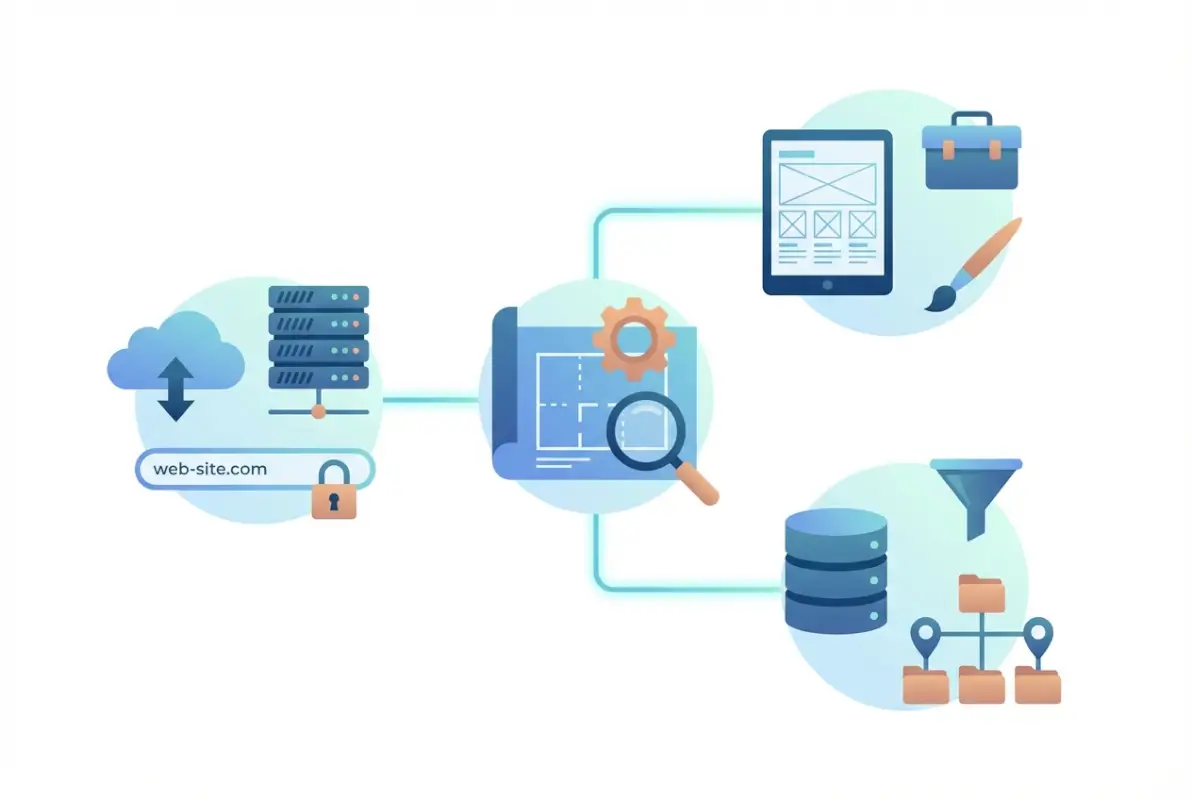
Image for How to Create a Business Directory Website in 7 Days (Complete 2025 Guide)

The competitive landscape includes established players like Yelp, Angie’s List, and industry-specific directories, but there’s substantial room for focused alternatives. Most generic directories struggle with three core issues: outdated information, poor mobile experiences, and weak moderation systems. Your opportunity lies in addressing these gaps within a specific niche or geography.

46%
of all Google searches have local intent, representing billions of monthly directory-relevant queries

Why WordPress Remains the Best Foundation

While headless CMS options and custom builds have their place, WordPress continues to dominate directory development for practical reasons. It powers over 40% of websites globally, which translates to extensive plugin ecosystems, abundant developer talent, and proven scalability. More importantly, directory-specific themes and plugins have matured significantly, offering robust features without custom development costs.

The alternative approaches—fully custom builds or SaaS platforms like Brilliant Directories—work in specific scenarios. Custom development makes sense when you need unique features not available in plugins and have $10,000+ budget. SaaS platforms work when you want zero technical management but can accept limited customization and ongoing subscription costs (typically $50-200/month).

Day 1: Strategic Planning and Competitive Research

Most directory failures happen because builders skip this crucial planning phase, jumping straight into setup. I’ve watched numerous projects launch with beautiful designs but no clear value proposition or target audience. Your Day 1 work determines whether you’ll build something people actually use or another abandoned directory site.

Start by defining your specific niche with brutal honesty. “A directory for all businesses in my city” is too broad unless you’re in a small town with limited existing options. “A verified directory for licensed home contractors in suburban Chicago” gives you focus, a clear value proposition (verification), and a defined geography.
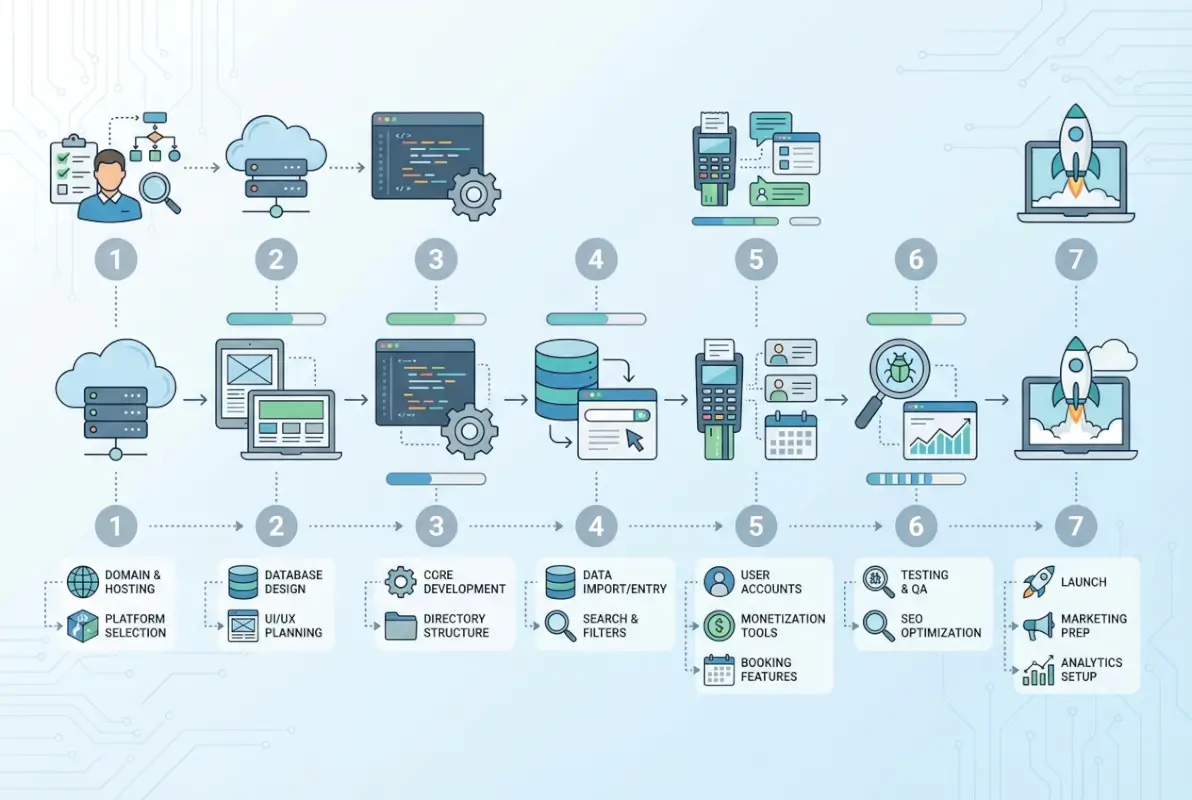
Image for How to Create a Business Directory Website in 7 Days (Complete 2025 Guide)

Competitor Analysis That Actually Matters

Don’t just browse competitor sites—systematically document what they do well and where they fall short. Create a spreadsheet tracking 5-10 competing directories with columns for: listing submission process, verification methods, monetization model, unique features, mobile experience quality, and user complaints (check their social media and review sites).

Analysis FactorWhat to DocumentWhy It Matters
Listing DepthRequired fields, optional fields, verification statusDetermines your quality bar and differentiation
Search ExperienceFilter options, sorting, map integration qualityPrimary user interaction point—must excel here
MonetizationFree tier limitations, paid tier pricing and featuresReveals market pricing and upgrade incentives
Content StrategyBlog frequency, topics, engagement levelsShows organic traffic strategies and gaps

Pay special attention to verified complaints. When users complain that “listings are always outdated” or “I can never reach these businesses,” you’ve identified clear differentiation opportunities. Your business directory listing essential facts should address the specific pain points your competitors ignore.

Defining Your Feature Set and Data Model

Your directory’s data structure determines everything from user experience to SEO performance. At minimum, each listing needs: business name, category, location (address, city, region), contact information (phone, email, website), description, and operating hours. Beyond basics, consider what makes your niche valuable—certifications for contractors, menu categories for restaurants, or specialization areas for professional services.

Pro Tip: Design your category taxonomy on Day 1, not during build. You’ll need it for theme configuration, URL structure, and initial listings. Aim for 8-15 main categories with 3-5 subcategories each. More granular than that creates navigation complexity; less granular reduces discovery value.

Day 2: Technical Foundation and Security Setup

Your hosting and domain decisions impact everything from site speed to security posture. I’ve seen too many directories launch on budget shared hosting, only to crash during their first traffic spike or get compromised due to weak security configurations. Invest properly here—it’s the foundation everything else builds on.

For domain selection, prioritize clarity over cleverness. “ChicagoContractorDirectory.com” beats “BuilderHub.io” for local SEO and user trust, even if it’s less catchy. Keep it under 20 characters when possible, avoid hyphens and numbers, and check that social media handles are available for consistent branding.
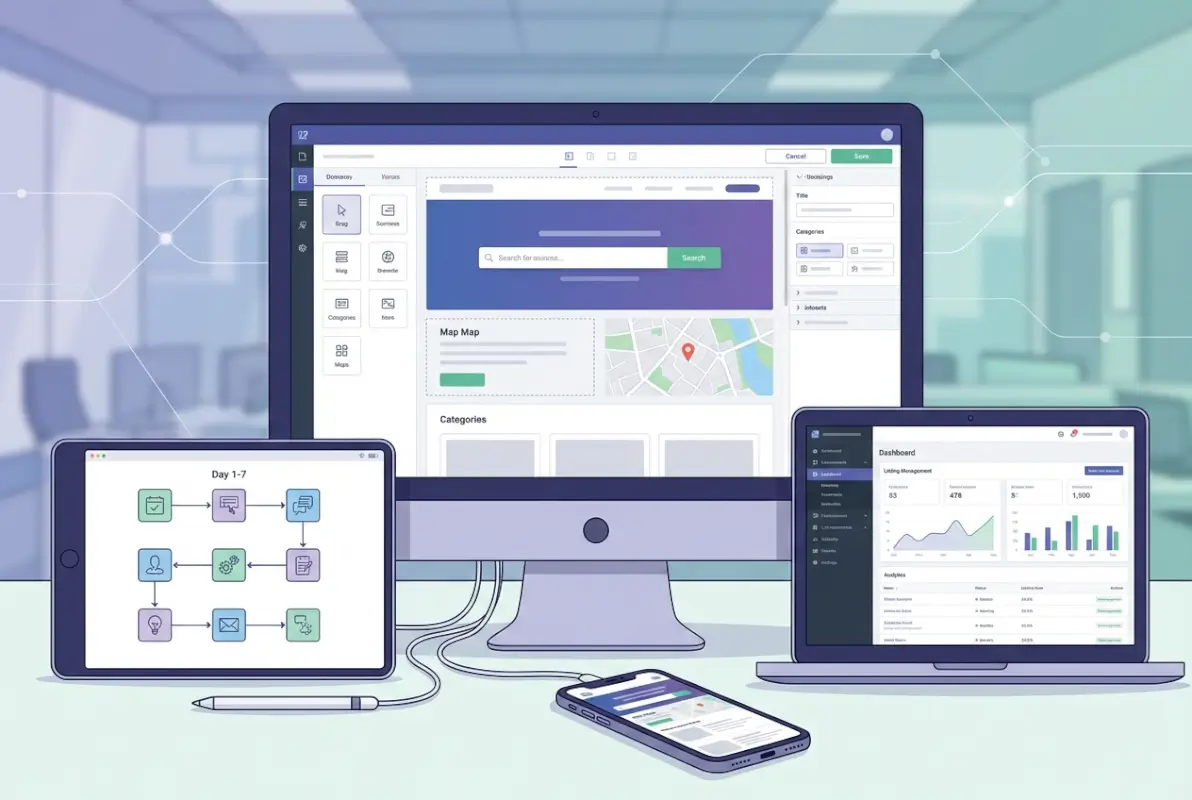
Image for How to Create a Business Directory Website in 7 Days (Complete 2025 Guide)

Hosting Requirements for Directory Sites

Directory sites have different requirements than typical blogs. You need solid database performance (listings are database-heavy), reliable uptime (businesses depend on their profiles being accessible), and room to scale (successful directories grow quickly). Shared hosting works initially, but plan to upgrade to managed WordPress or VPS hosting once you exceed 10,000 monthly visitors.

Hosting TierBest ForMonthly CostKey Features
Shared (SiteGround, Bluehost)Initial launch, under 5K visitors$5-15SSL, daily backups, WordPress optimization
Managed WordPressGrowing directories, 5K-50K visitors$30-80Automatic updates, enhanced security, CDN
VPS or CloudEstablished directories, 50K+ visitors$80-200Dedicated resources, custom configuration

WordPress Installation and Essential Security Hardening

Most hosts offer one-click WordPress installation, which is fine, but don’t skip security configuration immediately after. The OWASP Top 10 security risks highlight common vulnerabilities that affect WordPress sites, including injection attacks, broken authentication, and security misconfigurations.

Your immediate security checklist: change the default admin username from “admin”, use a password manager to generate a strong admin password (20+ characters), install Wordfence or Sucuri Security plugin, enable two-factor authentication, configure automatic backups to external storage, and limit login attempts. These basics prevent 90% of common attacks.

Important: Directory sites handle business data and potentially payment information. Security isn’t optional—it’s a legal and ethical requirement. Budget 2-3 hours on Day 2 specifically for security configuration, not just plugin installation.

Configure SSL immediately (most hosts include free Let’s Encrypt certificates). Your site must run on HTTPS, both for security and because Google penalizes non-HTTPS sites in search rankings. Verify the SSL is working properly by checking for the padlock icon and testing at SSL Labs.

Day 3: Directory Platform Setup and Design Customization

This is where your directory takes visual form. The theme and plugin decisions you make today determine how much customization you’ll need later, so choose carefully. For WordPress directories, you essentially have two paths: dedicated directory themes (ListingPro, Directory Engine, ListGo) or directory plugins (GeoDirectory, Business Directory Plugin) with a general theme.

I typically recommend dedicated directory themes for most builders because they integrate listing functionality with design from the start, reducing plugin conflicts and simplifying setup. The tradeoff is less design flexibility if you want a highly custom look later. Directory plugins offer more design control but require more configuration work to get everything working smoothly.
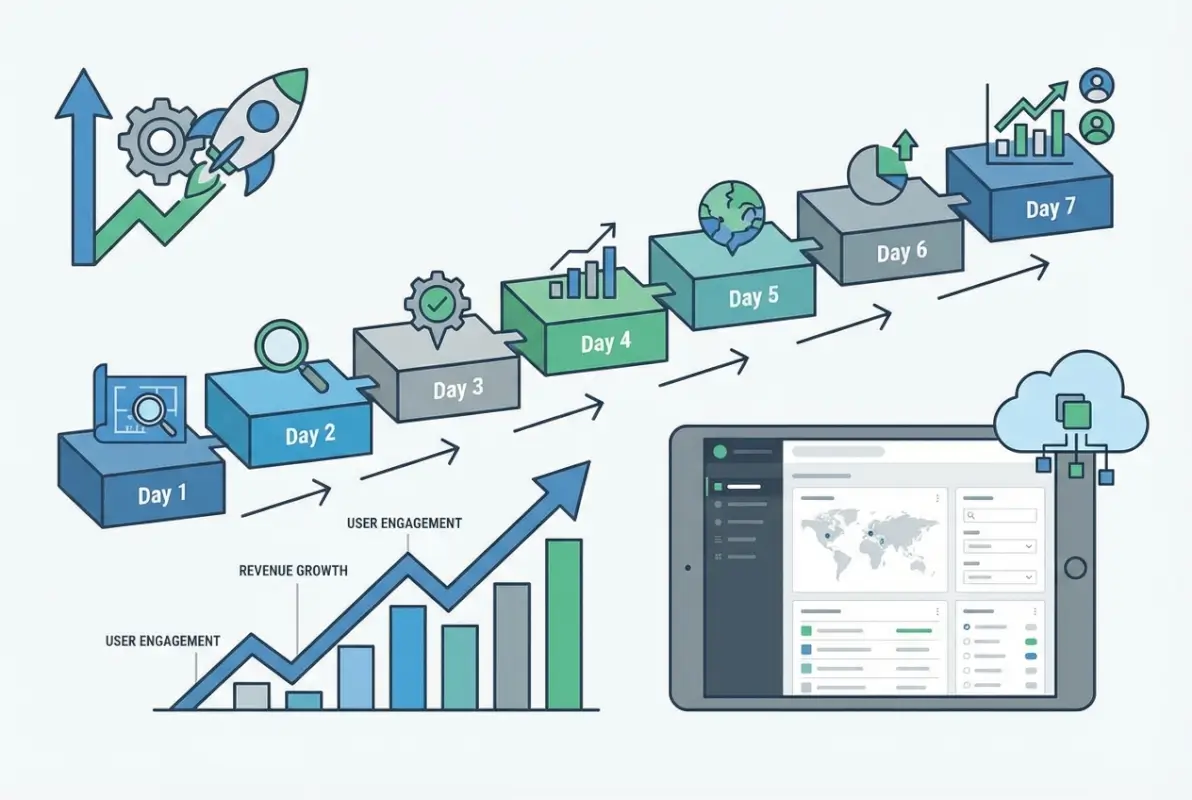
Image for How to Create a Business Directory Website in 7 Days (Complete 2025 Guide)

Essential Plugin Stack for Directory Sites

Beyond your core directory solution, you’ll need supporting plugins for functionality, security, and optimization. Keep this lean—every plugin adds potential security vulnerabilities and performance overhead. I’ve seen directories with 40+ plugins that load in 8 seconds, destroying user experience and SEO.

Your essential plugin list: directory core (GeoDirectory or equivalent), SEO plugin (Yoast or RankMath), security plugin (Wordfence), caching plugin (WP Rocket or W3 Total Cache), image optimization (Smush or ShortPixel), form builder (WPForms or Gravity Forms), and analytics (MonsterInsights or direct Google Analytics). That’s 7 plugins total. Add payment processing (WooCommerce or Stripe integration) only when ready to monetize.

3.2 seconds
Target maximum load time for directory pages—users abandon sites that load slower, and Google penalizes slow sites in search rankings

Design and Mobile Optimization

Over 60% of directory searches happen on mobile devices, so mobile-first design isn’t optional. Test every page on actual mobile devices (not just desktop browser resize), paying special attention to search filters, map functionality, and listing contact forms. These are the highest-friction points on mobile.

For design customization, focus on: clear branding (logo, colors matching your niche), intuitive search prominence (search should dominate your homepage), category navigation (visual icons improve engagement), trust signals (testimonials, listing count, verification badges), and clean listing layouts. Resist the urge to over-design—directory users want information quickly, not visual complexity.

Day 4: Category Structure and Initial Listing Population

Your category structure is the organizational backbone of your directory. Poor categorization creates frustrated users who can’t find what they need, while overly complex taxonomies overwhelm and confuse. I’ve seen directories fail purely because their category structure didn’t match how users naturally think about their niche.

Use the category research from Day 1 to build a logical hierarchy. For a local services directory, main categories might include: Home Services, Professional Services, Health & Wellness, Automotive, Food & Dining, Retail, and Events & Entertainment. Each gets 3-5 subcategories (Home Services breaks into Plumbing, Electrical, HVAC, Landscaping, Cleaning, etc.).

Image for How to Create a Business Directory Website in 7 Days (Complete 2025 Guide)

Creating High-Quality Seed Listings

Launch with 30-50 complete, high-quality listings rather than 200 minimal entries. Users judge directory quality by listing depth, not just count. Each seed listing should include: complete business information, 2-3 paragraph description, operating hours, service area, 3-5 photos (many businesses have images on their website you can reference), and accurate category placement.

Source initial listings through: manual research using Google Maps and existing directories, outreach to businesses offering free premium listings during launch, public business registries (chambers of commerce, licensing databases), and industry associations. Always verify information is current—outdated listings destroy trust immediately.

Key Insight: One detailed, accurate listing with photos and complete information provides more value than ten skeleton entries with just name and phone number. Quality signals to both users and search engines that your directory is trustworthy and maintained.

Structured Data Implementation for Listings

Structured data (schema markup) helps search engines understand your listings and can earn rich results in search. Implement LocalBusiness schema for each listing, including name, address, phone, hours, price range, and review ratings once you have them. Most directory plugins handle basic schema automatically, but verify it’s implemented correctly using Google’s Rich Results Test tool.

Your business directory ID what it is why you need one system should use clean, SEO-friendly URLs with location and category indicators where logical (yoursite.com/chicago/plumbers/business-name rather than yoursite.com/?listing=12345).

Day 5: SEO Foundation and Content Strategy

SEO determines whether anyone finds your directory. The good news is that directory sites have natural SEO advantages—each listing creates unique content, location-based pages target local search, and the utility of aggregated information attracts backlinks naturally. The challenge is executing technical SEO properly and creating supporting content that drives organic traffic.

Start with technical SEO fundamentals: XML sitemap generation and submission to Google Search Console, robots.txt configuration allowing search engines to crawl listings, proper canonical URL setup to prevent duplicate content issues, mobile-responsive design verification, page speed optimization (compress images, enable caching, minimize CSS/JS), and clean URL structure.

On-Page SEO for Directory Pages

Each page type needs specific optimization. Category pages should target “[niche] in [location]” keywords with unique descriptions for each category explaining what users will find. Location pages target “[niche] in [city]” with local context and business counts. Individual listings need unique titles following the pattern “Business Name – Category | Your Directory” and meta descriptions pulling from the business description.

Page TypePrimary Keyword TargetSEO Priority
Homepage[Niche] directory [location]High
Category Pages[Category] in [location]Critical
Location Pages[Niche] in [specific city/neighborhood]Critical
Individual Listings[Business name] + [category]Medium
Blog ContentLong-tail informational queriesHigh

Content Creation for Directory Growth

Beyond listings, create supporting content that attracts organic traffic and establishes topical authority. Launch with 5-8 foundational articles: “How to Choose a [Service] in [Location]” guides, “Top 10 [Category] Businesses in [City]” roundups, industry trend articles, comparison guides, and local event coverage if relevant to your niche.

Your blog content should drive users to directory listings naturally. An article on “How to Find a Reliable Contractor in Chicago” should link to your contractor category page and reference specific listed businesses as examples. This creates internal linking that helps SEO while providing genuine value. Check out this local business directory guide for additional content strategies.

2-4 articles
Minimum monthly content publishing cadence to maintain search engine visibility and topical authority for directory sites

Day 6: Monetization Systems and Revenue Planning

A directory without monetization is a hobby project. Day 6 focuses on building sustainable revenue streams that align with the value you provide. The most successful directories use tiered listing models where basic presence is free (building volume) and enhanced features require payment (generating revenue).

Your free tier should include: business name, category, address, phone, basic description (100-200 words), and one image. This attracts businesses initially and builds listing volume. Paid tiers add value through: extended descriptions with formatting, photo galleries (5-10 images), video embedding, social media integration, logo display, featured placement in category and search results, removal of competitor ads, and analytics on profile views and clicks.

Pricing Strategy and Tier Structure

Research competing directories’ pricing during Day 1 to inform your structure. For local service directories, typical pricing ranges: Basic (free), Premium ($25-50/month), Featured ($75-150/month), and Enterprise ($200+/month for multi-location businesses or chains). Price based on the value of customer acquisition in your niche—B2B services can charge more than consumer services.

Listing TierMonthly PriceKey Differentiators
BasicFreeName, category, contact, short description, 1 image
Premium$35-65+ Extended description, 5 images, social links, hours, website link
Featured$95-175+ Priority placement, unlimited images, video, lead forms, badge
Enterprise$250-500+ Multiple locations, analytics dashboard, API access, dedicated support

Alternative and Supplementary Revenue Streams

Don’t rely solely on paid listings. Diversify with banner advertising (once you have traffic), sponsored content and featured business spotlights, lead generation fees (charge per qualified inquiry), affiliate partnerships with business services (accounting software, payment processors, marketing tools), and premium content or industry reports. Some best low cost business directories for startups begin with advertising-only models before introducing paid listings.

Pro Tip: Offer launch promotions for first 50 paid listings—50% off first three months or similar. This creates urgency and helps you reach critical mass faster. Once you have social proof (testimonials, case studies from early customers), you can charge full price.

Set up payment processing through Stripe or PayPal integration (most directory plugins support both). Test the complete payment flow yourself by creating a test business listing and purchasing each tier. Verify that: payment confirmation emails send properly, listing upgrades apply immediately, receipt generation works, and subscription management functions for monthly billing.

Day 7: Testing, Security Review, and Strategic Launch

Launch day isn’t about making your site public—it’s about systematic verification that everything works as intended. I recommend a soft launch approach where you make the site accessible but don’t announce it widely, allowing 24-48 hours to catch issues under real conditions before your official announcement.

Your comprehensive testing checklist should cover functionality (search and filter accuracy, listing submission process, user registration and login, contact forms and inquiry delivery, payment processing, email notifications), cross-browser compatibility (Chrome, Firefox, Safari, Edge), mobile devices (iOS and Android, various screen sizes), and performance (load time under 3 seconds, database query optimization, image compression verification).

Security Hardening Before Launch

Revisit security configurations one final time before going live. Directory sites become targets once they gain traction because they collect business data and potentially payment information. Follow OWASP Top 10 guidance for web application security, focusing on: injection prevention (validate all user inputs), authentication security (strong passwords, 2FA, session management), sensitive data protection (encrypt payment data, use HTTPS everywhere), and security logging (monitor for suspicious activity).

Run a security scan using Wordfence or Sucuri to identify vulnerabilities. Verify that: all plugins and themes are updated to latest versions, database credentials use strong passwords, file permissions are configured correctly (directories 755, files 644), admin area is protected with 2FA, and backups are configured and tested (actually restore from a backup to verify it works).

Important: Security is ongoing, not one-time. Schedule weekly plugin updates, monthly security scans, and quarterly full security audits. A compromised directory can expose hundreds of businesses’ data, creating legal and reputational disasters.

Launch Strategy and Initial Outreach

Your launch announcement should target three audiences: businesses you’ve listed (notify them they’re included, offer free premium upgrade for verification/claiming), potential users in your target geography or niche (social media, local forums, industry groups), and press and influencers (local media, industry bloggers, relevant online communities).

Create a simple launch promotion that creates urgency: “First 100 businesses to claim their listing get 3 months premium free” or similar. This incentivizes early adoption and helps you gather testimonials. The hotfrog business directory reasons get listed asap article demonstrates effective messaging for business owner outreach.

2-5%
Typical conversion rate from free to paid listings in successful directories—focus on volume initially, monetization follows

Post-Launch: Growth and Optimization Framework

The 7-day build is just the beginning. Successful directories require consistent effort in three areas: content and listings growth, user engagement and community building, and technical optimization and security maintenance. Block out dedicated time weekly for directory management—2-3 hours minimum for established directories, more during growth phases.

Month 1 focus should be reaching 100 total listings (combination of seed listings and business submissions), publishing 4-6 supporting blog articles, setting up Google Analytics goals tracking conversions, launching social media presence with consistent posting schedule, and gathering initial user feedback through surveys or direct outreach. Track metrics that matter: monthly visitors, listing submissions, paid upgrades, search rankings for target keywords, and user engagement (time on site, pages per visit).

Scaling Strategy and Long-Term Planning

As your directory grows, you’ll face decisions about expansion: adding new categories, expanding geographically, or deepening within your existing niche. I’ve found that deepening before expanding usually works better—become the definitive resource for Chicago contractors before adding surrounding suburbs, or dominate plumbing before adding other home services.

Technical scaling considerations emerge around 500-1,000 listings and 25,000+ monthly visitors. You’ll need better hosting (move from shared to VPS or managed WordPress), enhanced caching, database optimization (add indexes on frequently queried fields), CDN implementation for global performance, and possibly search optimization with Elasticsearch for complex filtering. Monitor site performance weekly and plan upgrades before slowdowns impact user experience.


Frequently Asked Questions

Can you really build a functional business directory in just 7 days?

Yes, following this framework allows you to launch a functional directory with essential features, quality listings, and monetization systems in one week. However, building a successful directory that generates significant traffic and revenue requires ongoing effort beyond the initial 7-day build. The timeline works because you focus on core functionality first and add advanced features iteratively.

What’s the minimum budget needed to create a business directory website?

You can launch a basic directory for $200-500 covering domain registration ($12-15/year), hosting ($5-15/month initially), premium directory theme ($50-80 one-time), essential plugins ($50-100 for premium versions), and SSL certificate (usually free). Plan for $30-50/month ongoing costs once launched. Custom development would increase costs to $5,000-20,000 depending on complexity and features.

Which platform is best for building a business directory in 2026?

WordPress remains the best platform for most directory projects due to its flexibility, extensive plugin ecosystem, SEO capabilities, and lower cost compared to custom development. It powers 40%+ of websites globally, ensuring long-term support and developer availability. Alternatives like SaaS platforms (Brilliant Directories) work for users wanting zero technical management but accepting higher ongoing costs and limited customization.

How do business directories generate revenue?

The primary monetization model is tiered listings where basic presence is free and enhanced features require paid subscriptions ($25-200/month depending on tier and niche). Secondary revenue streams include display advertising once you have traffic, sponsored content and business spotlights, lead generation fees, affiliate partnerships with business service providers, and premium content or industry reports. Successful directories typically use 3-4 revenue streams.

How many listings do you need before launching a directory?

Launch with 30-50 complete, high-quality listings rather than hundreds of minimal entries. Users judge directory quality by listing depth and accuracy, not just count. Quality seed listings with photos, detailed descriptions, and verified information create better first impressions and SEO performance than numerous skeleton entries with just basic contact information.

What security measures are essential for directory websites?

Essential security includes SSL encryption (HTTPS), strong admin credentials with two-factor authentication, security plugin installation (Wordfence or Sucuri), regular plugin and theme updates, automated backups to external storage, login attempt limiting, and input validation to prevent injection attacks. Directory sites require enhanced security because they handle business data and potentially payment information, creating legal and reputational risks if compromised.

How important is mobile optimization for business directories?

Mobile optimization is critical—over 60% of directory searches happen on mobile devices. Your directory must provide excellent mobile experiences including fast loading (under 3 seconds), easy-to-use search and filters, readable listing information, functional maps and directions, and mobile-friendly contact forms. Google penalizes sites with poor mobile experiences in search rankings, directly impacting organic traffic.

What’s the best way to get initial listings for a new directory?

Source initial listings through manual research using Google Maps and existing directories, direct outreach to businesses offering free premium listings during launch, public business registries from chambers of commerce or licensing databases, and industry association directories. Always verify information is current before publishing. Offering launch promotions incentivizes businesses to claim and verify their listings quickly.

How do you handle outdated or inaccurate business listings?

Implement a claim and verification system where business owners can claim their listings and update information directly. Schedule quarterly audits checking for closed businesses and outdated contact information. Add user reporting functionality allowing visitors to flag incorrect information. Set up automated reminders asking listed businesses to verify their information annually. Data freshness directly impacts user trust and SEO performance.

What metrics should you track to measure directory success?

Track total monthly visitors, listing submissions (organic and paid), conversion rate from free to paid listings, search rankings for target keywords, average time on site and pages per visit, revenue per visitor, user retention rate, and listing claim rate. Set up Google Analytics goals tracking key conversions like listing submissions, contact form submissions, and paid upgrades. Review metrics monthly and adjust strategy based on trends.

Was this article helpful?

Similar Posts

  • Blog

    How to Create a Business Directory: 7 Steps to Success

    substring(replace(

    Creating a business directory can be one of the most lucrative online ventures you’ll ever pursue, but here’s what nobody tells you upfront: most people fail because they treat it like building a simple list instead of architecting a valuable ecosystem. I remember launching my first directory back when yellow pages were still relevant (yes, I’m dating myself here), and the biggest mistake I made was thinking the technology mattered more than the community. The truth is, a successful business directory isn’t about having the fanciest features or the most listings—it’s about solving a specific problem for a clearly defined audience better than anyone else. Whether you’re planning to create a niche industry directory or a local business hub, understanding the strategic framework behind directory success will save you months of frustration and thousands of dollars in wasted effort.

    TL;DR – Quick Takeaways

    • Niche focus beats broad coverage – Dominating a specific vertical or geographic area generates more value than competing with established general directories
    • Revenue models require planning – Decide between subscription fees, premium listings, advertising, or hybrid approaches before you build
    • User experience drives success – Advanced search functionality and mobile optimization aren’t optional extras anymore
    • Content quality matters more than quantity – 100 verified, detailed listings outperform 1,000 basic entries
    • Marketing starts on day one – Building the directory is only 30% of the work; attracting businesses and users is the real challenge
    • Technology choices have long-term consequences – Select platforms and tools that can scale with your growth plans

    Step 1: Define Your Directory’s Niche and Target Audience

    The single biggest determinant of your directory’s success happens before you write a single line of code or choose a platform. You need to identify a specific niche where demand exists but supply is fragmented or poorly served. Generic business directories are a graveyard of failed ventures because you’re competing against Google My Business, Yelp, and dozens of entrenched players with unlimited resources. Instead, think about specialized industries, professional services, or geographic regions that major platforms overlook or underserve.

    [KBIMAGE_1]

    In my experience working with directory owners, the most profitable niches share three characteristics: they serve businesses willing to pay for visibility, they address a clear search intent that existing solutions don’t satisfy well, and they have enough potential listings to create critical mass without being so broad that you can’t compete. For example, a directory focused exclusively on certified sustainable contractors in the Pacific Northwest has far better prospects than “all contractors everywhere.” The narrow focus lets you become the definitive resource, which makes both business owners and searchers choose you over general alternatives.

    💡 Pro Tip: Before committing to your niche, manually compile 50-100 potential listings. If you struggle to find this many, your niche might be too narrow. If you easily find 10,000+, you’ll need significant resources to compete effectively.

    Research your target audience from both sides of the marketplace. Who are the businesses you’ll list, and what pain points drive them to seek directory placement? Equally important, who are the end users searching for these businesses, and what specific problems are they trying to solve? A directory for wedding vendors needs to understand both the marketing challenges facing photographers and caterers, and the planning anxieties of engaged couples searching for reliable service providers. This dual perspective shapes everything from your feature set to your pricing model.

    Validate your concept before investing heavily. Use tools like Google Trends to verify search volume for relevant queries, examine existing competitors to identify gaps in their offerings, and survey potential business clients about their willingness to pay. I’ve seen too many entrepreneurs build technically impressive directories for markets that simply don’t exist or won’t monetize. A few hours of unglamorous market research can prevent months of building something nobody wants.

    Step 2: Choose the Right Technology Platform

    Your platform decision carries consequences you’ll live with for years, so resist the temptation to just pick the cheapest or easiest option without strategic consideration. The directory landscape offers three main paths: custom development, WordPress with directory plugins, or specialized directory software platforms. Each has distinct advantages and limitations that align with different business models, technical capabilities, and growth trajectories.

    [KBIMAGE_2]

    WordPress with plugins like Business Directory Plugin or GeoDirectory offers the most accessible entry point for non-technical founders. You get reasonable functionality quickly, extensive customization through themes and plugins, and manageable hosting costs (typically starting around what you’d pay for basic website hosting). However, you’ll eventually hit scaling limitations if your directory grows to thousands of listings with heavy traffic, and you’re dependent on plugin developers maintaining compatibility with WordPress updates. For testing concepts or serving smaller markets, this approach makes considerable sense.

    Platform TypeBest ForTypical CostTechnical Skill Required
    WordPress + PluginsSmall to medium directories, budget-conscious starts$200-$500 initialLow to Medium
    Directory SaaS PlatformsFast launches, non-technical owners$50-$300/monthLow
    Custom DevelopmentUnique requirements, scalability priority$5,000-$50,000+High (requires developers)
    Specialized Directory SoftwareEstablished businesses, specific industries$1,000-$10,000 licenseMedium

    SaaS platforms designed specifically for directories provide another viable route, especially if you want to launch quickly without technical headaches. These services handle hosting, updates, and core functionality while letting you focus on content and marketing. The tradeoff is ongoing monthly fees and less control over customization, which can be fine for many business models. When evaluating these platforms, scrutinize their search functionality, payment processing options, and whether they allow you to export your data if you eventually outgrow their service.

    ⚠️ Important: Whatever platform you choose, ensure it supports structured data markup for search engines. Directories that properly implement schema.org markup for local businesses see significantly better visibility in search results and rich snippets.

    Custom development makes sense when you have specific requirements that off-the-shelf solutions can’t address, substantial budget, or technical expertise in-house. Building custom gives you complete control over features, user experience, and scalability architecture. However, you’re looking at development timelines measured in months rather than days, and ongoing maintenance costs that many founders underestimate. Unless your directory concept has truly unique technical requirements or you’ve validated strong market demand worth significant investment, start with a proven platform and customize later when you have revenue justifying the expense.

    Step 3: Design Essential Features and User Experience

    The features you include should flow directly from your audience research, not from what seems cool or what competitors have. Every feature adds complexity, development time, and maintenance burden, so prioritize ruthlessly. A directory with five excellent features that work flawlessly beats one with twenty mediocre features that confuse users. Start with the absolute minimum viable product that solves your audience’s core problem, then expand based on actual user feedback rather than assumptions.

    [KBIMAGE_3]

    Search functionality is your directory’s engine, and it deserves more attention than any other feature. Users come to directories with specific intent—they’re looking for something—so your search needs to handle the way real people actually look for businesses. This means supporting multiple search criteria (location, category, keywords, attributes), autocomplete suggestions, and filtered results that narrow options without overwhelming choices. Poor search is the fastest way to send frustrated users back to Google, never to return.

    73%
    of users abandon directory searches if they can’t find what they need within three clicks

    Business listing pages need to balance comprehensiveness with scannability. Required elements include business name, categories, contact information, location with map integration, description, and images. Beyond these basics, consider what information your specific audience needs to make decisions. A restaurant directory needs hours and menu highlights; a B2B service directory needs case studies and certifications. Let businesses create directory listings that showcase their unique value propositions while maintaining consistent structure across your directory.

    Mobile responsiveness isn’t optional anymore, it’s foundational. More than half of directory searches now happen on mobile devices, and Google’s mobile-first indexing means your mobile experience directly affects search rankings. Test your directory extensively on actual phones and tablets, not just desktop browsers resized to mobile dimensions. Pay special attention to tap targets, form inputs, and map interactions—elements that work fine with a mouse often frustrate users on touchscreens.

    ✅ Key Insight: User-generated content like reviews and ratings dramatically increases engagement and trust, but it also requires moderation resources. Plan your content policies and moderation workflow before enabling these features.

    Consider which features justify premium listings versus what should be available to all businesses. Common premium features include enhanced placement in search results, additional images or videos, social media integration, analytics about profile views, and removal of competitor ads from their listing pages. The key is making free listings valuable enough that businesses want to be included, while creating clear premium benefits worth paying for. If your free listings are too limited, businesses won’t bother; if premium offers too little advantage, they won’t upgrade.

    Step 4: Build or Choose Your Directory Platform

    The technical foundation of your business directory determines its functionality, scalability, and user experience. You’ll need to decide whether to build a custom solution, use a website builder, or leverage a specialized directory platform based on your technical skills, budget, and long-term goals.

    [KBIMAGE_4]

    Custom-Built Solutions

    Developing a custom directory from scratch offers maximum flexibility and control. This approach works best for directories with unique requirements or those planning significant scale. You’ll typically use frameworks like WordPress with directory plugins, Laravel, Django, or React combined with a headless CMS.

    Custom development requires either in-house technical expertise or hiring developers. While initial costs are higher—ranging from $5,000 to $50,000+ depending on complexity—you own the codebase and can modify any aspect of functionality. This option makes sense when your directory concept requires features that off-the-shelf solutions don’t provide.

    WordPress Directory Plugins

    WordPress powers approximately 43% of all websites and offers numerous directory-specific plugins that dramatically reduce development time. Popular options include Business Directory Plugin, GeoDirectory, and Listable. These plugins provide listing submission forms, search filters, user reviews, and payment integration out of the box.

    Implementation Tip: If you choose WordPress, select a hosting provider optimized for WordPress performance like WP Engine or Kinsta. Directory sites with hundreds or thousands of listings require more resources than typical blogs or business websites.

    No-Code Directory Builders

    Platforms like Brillant Directories, Memberstack with Webflow, or Airtable combined with Softr allow you to create functional directories without writing code. These solutions offer pre-built templates, drag-and-drop customization, and integrated payment processing. Monthly costs typically range from $50 to $300.

    No-code platforms significantly reduce time to launch—you can have a basic directory operational in days rather than months. The trade-off is less customization flexibility and ongoing subscription costs. Evaluate whether the platform’s feature set aligns with your required functionality before committing.

    Essential Technical Features

    Regardless of your platform choice, ensure your directory includes these core technical capabilities:

    • Responsive design: Your directory must function flawlessly on smartphones, tablets, and desktops since over 60% of directory searches occur on mobile devices
    • Fast loading speeds: Aim for page load times under 3 seconds to reduce bounce rates and improve search engine rankings
    • Advanced search and filtering: Users should find relevant businesses through category, location, ratings, features, and keyword searches
    • User account management: Business owners need dashboards to manage their listings, respond to reviews, and track analytics
    • Payment processing: Integrate Stripe, PayPal, or similar platforms to handle subscription payments securely
    • SEO optimization: Include proper meta tags, schema markup, XML sitemaps, and clean URL structures
    • Security measures: Implement SSL certificates, regular backups, spam prevention, and data protection compliance

    Step 5: Implement Monetization Strategies

    Transforming your business directory from a useful resource into a profitable venture requires strategic monetization. The most successful directories typically combine multiple revenue streams rather than relying on a single source, creating stable and diversified income.

    [KBIMAGE_5]

    Freemium Listing Model

    This approach offers basic listings at no cost while charging for premium features. Free listings might include company name, address, phone number, and a brief description. Premium listings add enhanced visibility, photos, videos, social media links, customer reviews, and priority placement in search results.

    The freemium model reduces barriers to entry, helping you build initial directory population quickly. Once businesses see traffic value from free listings, conversion rates to paid plans typically range from 2% to 10%. Price premium listings between $20 and $200 monthly depending on your niche’s market size and competition.

    Listing TierFeatures IncludedTypical Monthly Price
    FreeBasic contact info, company description (100 words), category listing$0
    BasicLogo, 5 images, extended description, website link, social links$25-$50
    PremiumUnlimited images, video, priority search placement, review highlights, analytics$75-$150
    FeaturedHomepage featuring, category sponsorship, lead generation tools, API access$200-$500

    Display Advertising

    Once your directory attracts consistent traffic—typically 10,000+ monthly visitors—display advertising becomes viable. Google AdSense provides the easiest entry point, though direct ad sales to relevant businesses generate higher revenue per impression.

    Strategic ad placement maximizes revenue without degrading user experience. Position ads in the header, sidebar, between search results, and within listing pages. Avoid intrusive pop-ups or autoplay videos that frustrate users and increase bounce rates. Well-implemented display advertising can generate $500 to $5,000+ monthly depending on traffic volume and niche.

    Lead Generation Fees

    Some directory niches support lead generation models where you charge businesses per qualified inquiry received through your platform. This works particularly well for high-value services like legal, financial, medical, or home improvement industries where single customers generate substantial revenue.

    Implement contact forms, quote request systems, or call tracking that attributes leads to your directory. Charge $5 to $100+ per lead depending on industry average customer values. This performance-based model aligns your success with business outcomes, making it easier to justify costs to listed companies.

    Sponsored Listings and Featured Placements

    Allow businesses to purchase prominent positioning in search results, category pages, or homepage sections. Unlike standard premium listings, sponsored placements focus specifically on visibility rather than additional features. These spots typically command premium prices—$100 to $1,000+ monthly—in competitive categories.

    Clearly label sponsored content to maintain user trust and comply with advertising disclosure requirements. Rotate featured businesses weekly or monthly to create fairness and provide value to multiple paying customers rather than allowing a single business to dominate permanently.

    Affiliate Marketing and Referrals

    Partner with service providers relevant to your directory’s niche and earn commissions on referrals. For example, a restaurant directory might affiliate with reservation systems, point-of-sale providers, or food delivery platforms. A professional services directory could partner with accounting software, project management tools, or insurance providers.

    Integrate affiliate links naturally within listing pages, resource sections, or blog content. Focus on products that genuinely benefit your listed businesses rather than promoting irrelevant services solely for commission potential. This approach generates passive income while providing additional value to your community.

    Premium Content and Resources

    Create valuable content like industry reports, market analyses, best practice guides, or training courses that businesses will pay to access. A legal directory might offer continuing education courses, while a restaurant directory could provide food safety certification training or marketing templates.

    This strategy positions your directory as an industry authority while diversifying revenue beyond advertising and listings. Price digital products between $50 and $500 depending on depth and specialization. Bundle premium content access with higher-tier listing packages to increase perceived value.

    Monetization Reality Check: Most new directories should expect 6-12 months before generating meaningful revenue. Focus initially on building traffic and credibility rather than aggressive monetization that could deter early users and listings.

    Step 6: Attract and Grow Your User Base

    A business directory’s value increases exponentially with the number of quality listings and engaged users it attracts. Your growth strategy must balance two distinct audiences: the businesses you list and the consumers searching for those businesses. Success requires coordinated efforts across multiple channels with consistent execution over time.

    Search Engine Optimization (SEO)

    SEO represents the most sustainable long-term traffic source for directories. Each listing page, category page, and location page presents an opportunity to rank for relevant searches. Focus on creating unique, detailed content for every listing rather than thin pages with minimal information.

    Implement local SEO strategies by creating dedicated pages for each geographic area you cover. A nationwide directory should have city-level and neighborhood-level pages with unique content about local businesses, market characteristics, and area-specific information. Include structured data markup using LocalBusiness schema to help search engines understand your content.

    Build authoritative backlinks by creating shareable resources, contributing expert commentary to industry publications, and developing partnerships with complementary websites. Quality backlinks from relevant sources signal to search engines that your directory provides valuable information worth ranking highly.

    Direct Business Outreach

    Proactively contact businesses in your target niche to claim and enhance their listings. Develop email templates explaining your directory’s value proposition, current traffic statistics, and competitive advantages. Personalize outreach by mentioning specific aspects of their business to demonstrate genuine interest rather than sending obvious mass emails.

    Offer initial promotional pricing or extended free trials to early adopters. These businesses become case studies demonstrating results, which you’ll use to convince later prospects. Track which outreach messages generate the highest response rates and continuously refine your approach based on data.

    Content Marketing

    Publish regular blog content addressing questions your target audiences ask. A wedding vendor directory might create planning guides, budget calculators, and trend reports. A B2B services directory could publish industry analyses, vendor selection frameworks, and case studies.

    Each content piece should naturally link to relevant directory categories and listings, driving readers deeper into your platform. Optimize articles for search engines to attract organic traffic, then convert visitors into users through strategic calls-to-action and email capture forms.

    Social Media Presence

    Establish profiles on platforms where your target audiences actively engage. B2B directories typically find success on LinkedIn, while consumer-focused directories perform better on Facebook, Instagram, or TikTok depending on demographic fit.

    Share featured listings, new additions, industry news, and user-generated content to maintain engagement. Create shareable content formats like “top 10” lists, comparison guides, or video interviews with listed businesses. Encourage businesses to share their listing pages on their own social channels, expanding your reach through their networks.

    Email Marketing

    Build an email list from day one by offering valuable resources in exchange for email addresses. Create separate nurture sequences for businesses and consumers, addressing each group’s specific interests and needs.

    Send regular newsletters featuring new listings, industry insights, platform updates, and relevant content. Segment your list based on interests, location, or engagement levels to deliver more targeted, relevant messages. Email marketing typically generates 10-30% of ongoing traffic for established directories.

    Paid Advertising (Strategic Use)

    While organic growth should form your foundation, strategic paid advertising accelerates initial traction and tests messaging effectiveness. Google Ads targeting high-intent keywords like “[niche] directory” or “find [service] near me” can drive qualified traffic.

    Social media advertising works well for targeting specific business types to claim listings. Create lookalike audiences based on your best customers to find similar prospects efficiently. Set modest budgets—$500 to $2,000 monthly—until you establish clear ROI metrics.

    Growth Milestone: Focus on reaching your first 100 quality listings before scaling other efforts. This critical mass provides enough content for search engines to index and gives visitors sufficient options to find value, creating positive feedback loops that accelerate subsequent growth.

    Partnership and Co-Marketing

    Identify complementary businesses, associations, or media outlets that reach your target audience. Develop mutually beneficial partnerships where you provide exclusive content, tools, or resources in exchange for exposure to their community.

    Industry associations often maintain member directories or resource pages where you can secure listings. Offer to provide the association’s members with free or discounted premium listings, creating value for both the association and expanding your business base.

    Step 7: Maintain and Scale Your Directory

    Launching your directory marks the beginning rather than the end of your journey. Long-term success requires consistent maintenance, quality control, community engagement, and strategic scaling. Directories that stagnate with outdated information quickly lose traffic and credibility, while those that continuously improve build compounding advantages.

    Quality Control and Data Accuracy

    Directory value depends entirely on information accuracy. Implement regular verification processes to ensure business details remain current. Schedule quarterly reviews of all listings, contacting businesses to confirm information or removing defunct companies.

    Enable user reporting for incorrect information, providing a simple “suggest an edit” button on every listing page. Review submissions within 48 hours to maintain data quality without creating burdensome manual workloads. Consider automated verification systems that cross-reference business details against authoritative sources like government business registries.

    Establish clear listing guidelines covering acceptable business types, prohibited content, and quality standards. Moderate new submissions before publication to prevent spam, duplicate listings, or inappropriate content from degrading your directory’s reputation.

    User Engagement and Community Building

    Transform your directory from a static database into an active community where businesses and consumers interact. Enable and moderate reviews, questions and answers, and comment sections that provide social proof and additional value beyond basic business information.

    Recognize and reward active participants through badges, featured profiles, or “most helpful reviewer” designations. These gamification elements encourage continued engagement while highlighting quality contributors to other users.

    Host virtual or in-person events connecting businesses with potential customers or with each other. A local business directory might organize networking mixers, while a niche professional directory could host webinars on industry topics. Events strengthen community bonds and position your directory as a central industry hub.

    Analytics and Performance Tracking

    Implement comprehensive analytics tracking user behavior, traffic sources, popular categories, search patterns, and conversion rates. Google Analytics provides foundational insights, while directory-specific metrics include listings viewed per session, search-to-click rates, and contact form submissions.

    Monitor business-side metrics like listing claim rates, premium conversion rates, renewal rates, and customer lifetime value. Identify which acquisition channels deliver the highest-quality businesses and allocate resources accordingly.

    Establish key performance indicators (KPIs) aligned with your business goals and review them weekly or monthly. Track trends over time rather than obsessing over day-to-day fluctuations, making strategic adjustments based on sustained patterns rather than temporary variations.

    Key MetricWhat It MeasuresHealthy Benchmark
    Monthly Active UsersUnique visitors who engage with your directory20%+ month-over-month growth in early stages
    Listing Growth RateNew business listings added monthly50+ monthly in year one, accelerating thereafter
    Premium Conversion RatePercentage of free listings upgrading to paid5-15% after directory establishes traffic
    Customer Renewal RatePaid listings that renew subscriptions70%+ indicates strong value delivery
    Pages Per SessionAverage listings viewed per visitor3-5 pages indicates engaged users
    Organic Traffic SharePercentage of visits from search engines60%+ indicates strong SEO foundation

    Technical Maintenance and Updates

    Regularly update your platform’s software, plugins, and security measures to prevent vulnerabilities and maintain performance. Schedule monthly backups stored in multiple locations to protect against data loss from technical failures or security breaches.

    Monitor site speed continuously, optimizing images, implementing caching, and upgrading hosting resources as traffic grows. Page load times directly impact both user experience and search rankings, making performance optimization an ongoing priority rather than a one-time task.

    Stay current with web standards and best practices, particularly regarding mobile experience, accessibility, and privacy compliance. As regulations like GDPR, CCPA, and others evolve, ensure your data collection and processing practices remain compliant.

    Strategic Scaling Approaches

    Once your directory achieves product-market fit in your initial niche or geography, consider strategic expansion. Options include geographic expansion (adding new cities, regions, or countries), category expansion (adding related business types), or feature expansion (adding booking, e-commerce, or other transactions).

    Evaluate expansion opportunities based on available resources, competitive dynamics, and community demand. Geographic expansion typically presents the clearest path, applying your proven model to new locations with similar characteristics to your initial success.

    Consider whether to pursue horizontal scaling (serving more of the same customer type) or vertical scaling (adding depth to existing relationships through additional services). Horizontal scaling increases reach and market share, while vertical scaling increases revenue per customer and strengthens competitive moats.

    Building a Sustainable Business Model

    Long-term directory success requires transitioning from founder-dependent operations to systematized processes that scale without proportional time investment. Document standard operating procedures for listing approval, customer support, content creation, and other recurring tasks.

    Gradually build a team or leverage contractors to handle routine operations, freeing your time for strategic initiatives that drive growth. Consider hiring or contracting specialists for content creation, technical development, sales outreach, and customer success as revenue supports additional resources.

    Establish financial discipline by tracking unit economics—the cost to acquire a customer versus their lifetime value. Profitable directories typically achieve customer lifetime values 3-5x higher than acquisition costs, providing margin for sustainable growth investments.

    Long-Term Perspective: Successful directories typically require 2-3 years to reach significant scale and profitability. Maintain realistic expectations and sufficient runway to persist through the initial growth phase when expenses exceed revenue. The businesses that survive this period often build substantial, defensible market positions.


    Frequently Asked Questions

    How much does it cost to create a business directory?

    Creating a business directory costs between $500 and $50,000 depending on your approach. Using WordPress with directory plugins costs $500-$2,000, while custom development ranges from $10,000-$50,000. Ongoing expenses include hosting ($20-$200 monthly), domain registration ($10-$15 yearly), and marketing budget for acquisition.

    What features should a business directory website have?

    Essential directory features include advanced search filters, business profile pages, user reviews and ratings, contact forms, map integration, and mobile responsiveness. Premium features should include analytics dashboards, claim listing functionality, featured placement options, and email verification. Include social media integration and multimedia support for comprehensive listings.

    How do business directories make money?

    Business directories generate revenue through multiple streams: premium listing subscriptions ($20-$200 monthly), featured placement advertising, banner ads, lead generation fees, and affiliate commissions. Additional income comes from sponsored content, directory submission fees, and data licensing. Successful directories typically combine three to four revenue streams.

    Can I build a business directory without coding skills?

    Yes, you can build a professional directory without coding using platforms like WordPress with plugins such as GeoDirectory or Business Directory Plugin. No-code solutions like Brilliant Directories offer complete packages starting at $67 monthly. These platforms provide drag-and-drop interfaces, pre-built templates, and automated features requiring zero technical knowledge.

    How long does it take to build a business directory?

    Building a basic directory takes two to four weeks using existing platforms and templates. Custom development requires three to six months for a fully-featured solution. Timeline factors include feature complexity, design customization, initial business population, testing phases, and SEO optimization. Plan additional time for content creation and business outreach.

    What makes a business directory successful?

    Successful directories focus on specific niches, maintain accurate updated listings, and provide genuine value to both businesses and searchers. Key success factors include strong SEO performance, active user engagement, quality over quantity in listings, responsive customer support, and consistent marketing efforts. Regular content updates and community building drive long-term growth.

    Should I allow free or only paid listings?

    Start with free basic listings to build directory volume and attract users, then offer paid premium upgrades for enhanced features. This freemium model generates traffic while creating revenue opportunities. Approximately 70-80% of listings should be free, with premium options including featured placement, enhanced profiles, and priority ranking driving monetization.

    How do I get businesses to join my directory?

    Attract businesses through direct outreach campaigns, demonstrating SEO value, offering free trial periods, and showcasing existing traffic statistics. Create compelling value propositions highlighting increased visibility and customer inquiries. Use email campaigns, social media promotion, and industry partnerships. Add businesses manually initially to demonstrate directory quality and value.

    What are the best niches for business directories?

    Profitable directory niches include local services (plumbers, electricians), healthcare providers, restaurants and food services, professional services (lawyers, accountants), home improvement contractors, and wellness businesses. Geographic-specific directories and underserved industries offer excellent opportunities. Research competition levels and local business density before selecting your niche.

    Ready to Launch Your Business Directory?

    You now have the complete roadmap to build a profitable business directory from scratch. The key to success lies in taking action today. Choose your niche, select your platform, and start building your foundation. Remember that every successful directory started with a single listing and grew through consistent effort and value delivery.

    The businesses in your chosen niche are actively searching for visibility right now. Searchers are looking for curated, trustworthy recommendations. Your directory can become the bridge connecting them, generating recurring revenue while providing genuine value to your community.

    Your Next Steps

    1. Define your specific niche and target audience this week
    2. Research your top three competitors and identify gaps
    3. Choose your platform and register your domain name
    4. Set up your basic directory structure and test functionality
    5. Add your first 20-30 quality business listings manually
    6. Implement SEO best practices and submit to search engines
    7. Launch your marketing campaign and start acquiring users

    Don’t wait for the perfect moment. Start building your business directory today and create a valuable asset that generates income for years to come.

    ; <[^>]+>; ); 0; 155)

  • Blog

    How to Add Your Business to Google in 6 Simple Steps (2024 Guide)

    Getting your business to show up on Google isn’t rocket science, but surprisingly many business owners still don’t know where to start. The truth is, if you’re not visible on Google Search and Maps, you’re essentially invisible to the majority of potential customers searching for what you offer. I’ve watched countless small businesses transform their…

  • Blog

    How to Claim an Unclaimed Business Listing on Google Maps: 6 Steps

    Ever wondered why some local businesses dominate the map pack while yours stays hidden? The answer often lies in one critical factor: whether they’ve claimed their Google Maps listing. In today’s digital landscape, an unclaimed business listing is essentially invisible money left on the table—potential customers searching for your services might find competitors instead, or…

  • Blog

    Google Play Services Latest Version Gradle: 5 Steps to Set Up in Android Studio

    Are you tired of struggling with setting up Firebase integration in your Android projects? If you’re working with Google services in your apps, configuring the Google Services Plugin correctly is essential – but it can also be frustratingly complex for beginners and experienced developers alike. Integrating Firebase and other Google services into Android applications requires…