How to Get Your Business Listed in a Directory: 7 Pro Tips That Work

Generating summary...
Getting your business listed in online directories isn’t just about creating another profile—it’s about strategically positioning your company where motivated buyers are already searching. I’ve watched countless small businesses transform their visibility by mastering directory listings, and the results are consistently impressive when done right.
Directory listings serve as digital storefronts that work around the clock, connecting you with potential customers actively seeking your products or services. Beyond simple visibility, properly optimized directory profiles significantly boost your local SEO, establish credibility, and create multiple pathways for customers to discover you. The businesses dominating local search results didn’t get there by accident; they built systematic directory presences across every relevant platform.
TL;DR – Quick Takeaways
- Directory listings dramatically improve local SEO – Consistent NAP citations signal trust to search engines
- Choose quality over quantity – Focus on industry-specific and high-authority directories first
- Optimization matters more than submission – Complete profiles with rich media generate 4x more engagement
- Reviews drive conversion – Directory listings with customer reviews see substantially higher engagement rates
- Measurement enables improvement – Track referral traffic and conversions to identify top-performing directories
- Consistency is non-negotiable – Identical NAP information across all platforms prevents SEO confusion
Understanding Directory Listings in 2025
Directory listings have evolved far beyond the digital yellow pages concept. Today’s directory profiles function as comprehensive business representations that include your NAP (Name, Address, Phone), business categories, detailed descriptions, image galleries, customer reviews, operating hours, service areas, and rich media content. Search engines treat these as critical trust signals when determining local search rankings.

The mechanics are straightforward but powerful: when potential customers search for services in your category, well-optimized directory listings position your business directly in their path. According to comprehensive research on business directory effectiveness, consistent directory presence significantly influences both search engine rankings and consumer purchase decisions.
What makes directory listings particularly valuable is their compound effect. Each properly maintained listing creates another citation signal, builds brand awareness, and provides an additional conversion pathway. I remember working with a local bakery that was practically invisible online despite incredible products. Within three months of establishing consistent directory listings across twenty relevant platforms, their organic traffic increased by 180%.
Why Directory Listings Matter for Local SEO
Search engines like Google consider directory listings as votes of confidence for your business. Each consistent NAP citation strengthens your local SEO profile, and businesses with complete directory listings appear significantly more often in local search results and Google’s map pack—that coveted three-business display at the top of local searches.
The relationship between directory citations and rankings isn’t linear, but the correlation is undeniable. Multiple consistent directory presences signal to search algorithms that you’re an established, legitimate operation rather than a temporary venture. This enhanced credibility translates directly into better positioning for location-based queries.
7 Pro Tips That Work in 2025
Success with directory listings requires strategic execution, not just mass submission. These seven proven strategies will maximize your directory impact while minimizing wasted effort.

Tip 1: Target the Right Directories Based on Relevance and Authority
Not all directories deliver equal value. Industry-specific directories often generate higher-quality leads than general business listings because they connect you directly with pre-qualified prospects actively searching for your services. A wedding photographer listed in bridal directories reaches potential clients already in planning mode, dramatically increasing conversion probability.
When evaluating directories, prioritize domain authority (DA) scores using tools like Moz’s domain analysis. High-authority directories pass more SEO value to your business and generate more trust with potential customers. Focus your initial efforts on:
- Google Business Profile (essential foundation)
- Bing Places for Business
- Apple Maps
- Three to five industry-specific directories where your competitors maintain active profiles
- Local chambers of commerce and business associations
I once helped a boutique accounting firm focus exclusively on financial service directories rather than spreading themselves thin across generic platforms. Their qualified leads increased by 40% within three months while their directory management workload actually decreased.
Tip 2: Achieve Absolute NAP Consistency Across All Listings
Consistency in your Name, Address, and Phone information across all directory listings is absolutely fundamental. Search engines cross-reference your business information across directories, and discrepancies create confusion that can significantly damage your local SEO performance.
Before submitting any listings, compile all necessary information in a single document to ensure consistency:
- Business name exactly as it appears on your signage and legal documents
- Physical address with consistent formatting (spell out “Street” vs. “St.” the same way everywhere)
- Phone number with area code in identical format
- Website URL
- Business hours including holiday schedules
Common inconsistency mistakes include using “St.” on some listings and “Street” on others, including suite numbers inconsistently, formatting phone numbers differently (dashes vs. parentheses), or listing a mobile number on some platforms and landline on others. Pick one format and stick with it religiously across every single platform.
Tip 3: Optimize Every Listing’s Content, Descriptions, and Categories
Creating bare-minimum listings represents a missed opportunity. Directories prioritize complete profiles with rich content, giving them more visibility in search results. Take advantage of every field offered, especially business descriptions, service areas, and custom attributes.
Strategically incorporate relevant keywords into your business description, particularly in the first 100 characters. Instead of just “John’s Auto Shop,” use “John’s Auto Shop: Certified Mechanic Specializing in European Car Repair and Maintenance.” However, maintain natural, reader-friendly descriptions—keyword density should stay around 1-2%.
Category selection deserves careful attention. Choose the most specific category that accurately represents your primary service, then add secondary categories for additional offerings. Getting category selection right dramatically affects which searches trigger your listing.
| Business Type | Primary Category | Secondary Categories |
|---|---|---|
| Restaurant | Italian Restaurant | Pizza, Wine Bar, Catering |
| Legal Services | Personal Injury Attorney | Car Accident Lawyer, Medical Malpractice |
| Contractor | Kitchen Remodeling | Bathroom Remodeling, Flooring, Custom Cabinets |
| Healthcare | Family Medicine | Pediatrics, Urgent Care, Preventive Care |
Tip 4: Leverage High-Quality Visuals and Rich Media
Listings with quality images receive 35% more clicks than those without. Visual content dramatically influences both search visibility and conversion rates. Include multiple high-quality photos showcasing different aspects of your business.
Essential visual elements include your logo (properly sized per directory specifications), exterior photos showing your storefront and parking, interior photos showcasing your space, product photos highlighting best-sellers, team photos building personal connection, and action shots showing your business in operation.
Before uploading, optimize image file sizes and names. Use descriptive, keyword-rich file names like “downtown-seattle-certified-accountant-office.jpg” rather than generic “IMG12345.jpg.” This practice provides additional SEO value while organizing your media library.
Tip 5: Encourage and Strategically Manage Customer Reviews
Directory listings with reviews receive up to four times more engagement than those without. Reviews influence potential customers and provide valuable feedback for improving your business operations. According to research from Pew Research Center, 82% of consumers read online reviews for local businesses, and the majority trust them as much as personal recommendations.
Implement a systematic approach to gathering reviews. Send follow-up emails after completed transactions, create business cards with QR codes linking to your review profiles, and train staff to mention reviews during positive customer interactions. Make the review process as effortless as possible for satisfied customers.
Never buy fake reviews or incentivize positive reviews with discounts—both practices violate most directory terms of service and can result in penalties or removal. Focus instead on providing excellent service and making it easy for satisfied customers to share their experiences.
Respond thoughtfully to all reviews, positive and negative. Responding to reviews signals to both customers and search engines that you’re an engaged, customer-focused business. Even negative reviews become opportunities to demonstrate your professionalism and commitment to customer satisfaction when handled properly.
Tip 6: Build Citations with Purpose, Not Just Volume
Quality trumps quantity when building directory citations. Twenty listings on authoritative, relevant directories deliver more value than two hundred listings on low-quality, spammy directories. Spreading yourself too thin across dozens of irrelevant platforms wastes time and dilutes your efforts.
Avoid mass-submission services that blast your information to hundreds of directories automatically. These services often include low-quality directories that provide minimal SEO value and may actually harm your reputation by association. Strategic, manual submission to carefully selected directories produces superior results.
Track referral traffic from each directory using Google Analytics and UTM parameters. This tracking reveals not just visitor quantity but quality metrics like time on site, pages viewed, and conversion rates. For example, your directory link might look like: https://yourwebsite.com/?utm_source=yelp&utm_medium=directory&utm_campaign=local_listings
Tip 7: Measure, Iterate, and Integrate with Your Local SEO Stack
Without measuring results, you can’t determine which directories deserve continued investment. Set up tracking for profile views, click-through rates, referral traffic, lead generation, and conversion rates from each directory. Most directories provide basic analytics dashboards showing how many people viewed your listing and what actions they took.
Beyond directory-provided analytics, implement your own tracking strategies. Create directory-specific landing pages, use unique phone tracking numbers for different directories, add “How did you hear about us?” fields in contact forms, and set up goal tracking in Google Analytics.
Review your directory performance quarterly at minimum. Identify top performers and consider upgrading to paid placements if available and cost-justified. For underperforming directories, either optimize your listings more thoroughly or redirect that maintenance effort toward more productive platforms.
Directory listings don’t exist in isolation—they’re part of your comprehensive local SEO strategy. Ensure your directory information aligns with your Google Business Profile, Bing Places, Apple Maps, website content, and social media profiles. This cross-channel consistency reinforces search engine trust signals and creates a cohesive brand presence.
Directory Listing Strategy by Industry and Location
Different industries benefit from different directory strategies. Understanding which directories matter most for your specific business type and geographic focus helps prioritize your efforts effectively.
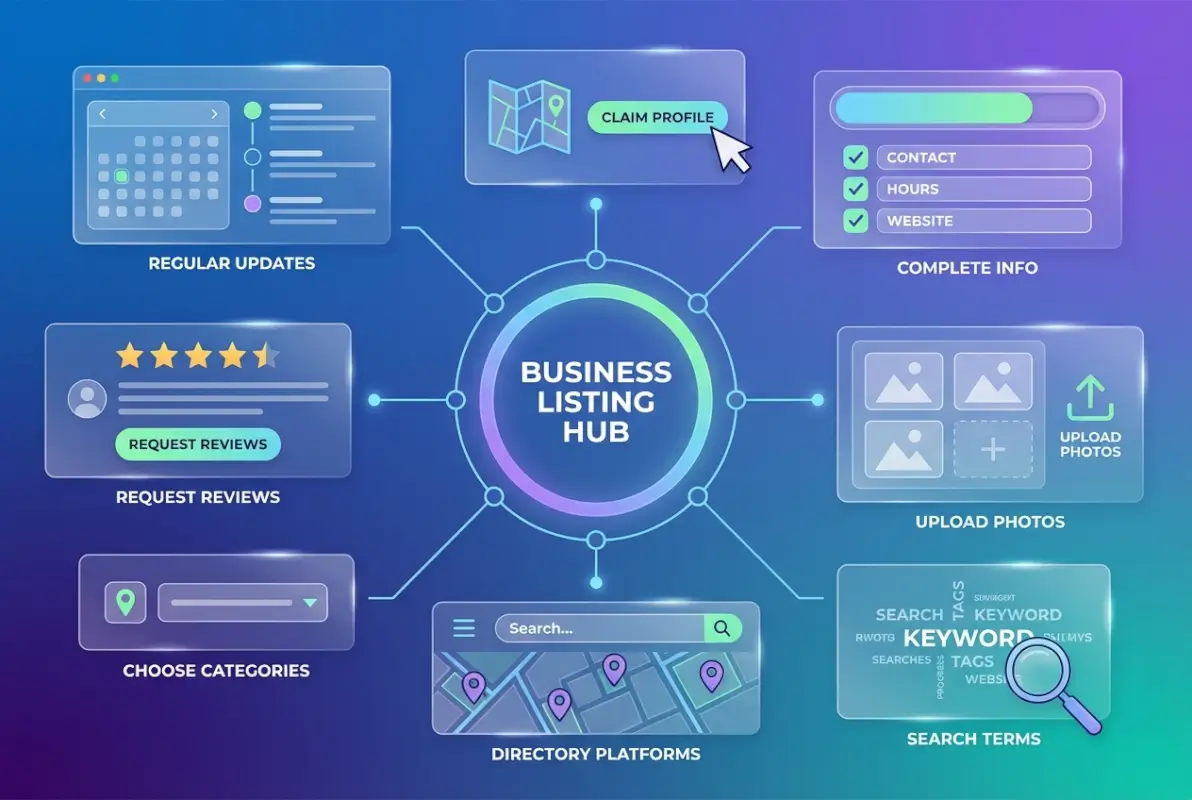
Industry-Specific Directory Selection
Professional services like attorneys, accountants, and consultants should prioritize directories like Avvo, FindLaw, Martindale-Hubbell for legal professionals, or industry association directories. These platforms attract prospects already in research or decision-making mode.
Restaurants and food businesses benefit enormously from Yelp, OpenTable, TripAdvisor, and Google Business Profile. These directories dominate the “where should we eat” decision-making process, with customers actively comparing options and reading reviews before visiting.
Home service providers—contractors, plumbers, electricians, landscapers—should focus on HomeAdvisor, Angi (formerly Angie’s List), Houzz, and Thumbtack. These directories specifically cater to homeowners with active project needs and budgets allocated.
Healthcare providers need presence on Healthgrades, Zocdoc, Vitals, and WebMD. Patients increasingly research providers online before booking appointments, and these directories rank highly for medical search queries.
B2B service companies should target Clutch, G2, Capterra, and industry-specific directories. These platforms serve research-phase buyers comparing vendors and reading peer reviews before engaging sales conversations.
Regional and Local Directory Opportunities
Don’t overlook smaller, geographically-focused directories. Local chamber of commerce websites, city business associations, neighborhood community sites, and regional publications often maintain business directories with strong local authority and targeted audiences.
I’ve consistently seen businesses gain significant traction from hyperlocal directories that larger competitors ignore. A boutique fitness studio might get more qualified leads from their neighborhood association website than from a national fitness directory where they’re competing with thousands of other gyms.
Evaluating Directory Authority and Quality
When assessing potential directories, check several quality indicators. Domain authority (available through tools like Moz) provides a baseline measure of SEO value. Active user communities with recent reviews and regular updates indicate healthy directories worth joining.
Look for directories that have been established for several years, maintain regular content updates, and have clean, functional user interfaces. Dusty, neglected directories with outdated listings and broken links won’t help your business and might actually hurt your reputation by association.
| Quality Indicator | Good Sign | Red Flag |
|---|---|---|
| Domain Authority | DA 40+ | DA below 20 |
| Recent Activity | Reviews within last month | No activity in 6+ months |
| Website Quality | Professional design, mobile-friendly | Broken links, outdated design |
| Verification Process | Required for all listings | No verification or quality control |
Step-by-Step Implementation Process
Approaching directory listings systematically saves time and ensures thoroughness. Follow this proven process to maximize effectiveness while minimizing wasted effort.

Phase 1: Research and Prioritization
Start by creating a spreadsheet to track potential directories. Include columns for directory name, URL, domain authority, relevance score (1-10), cost, special features, and priority ranking. Research where your competitors maintain listings—if three or more competitors appear in the same directory, it likely delivers value.
Prioritize your list based on potential impact. Begin with Google Business Profile (non-negotiable foundation), then add Bing Places and Apple Maps. Next, identify three to five industry-specific directories where your target customers actively search. Finally, add relevant local directories and business associations.
Don’t try tackling everything simultaneously. Start with your top five directories, get those profiles completely optimized, then gradually expand. Thoroughness matters more than speed.
Phase 2: Information Compilation
Before submitting any listings, gather all necessary information in a single document. This ensures perfect consistency across platforms and streamlines the submission process. Required information includes business name, physical address, phone number, website URL, business hours, detailed business description (both 150-character and 500+ character versions), business categories, high-quality logo and photos, owner/manager contact information, year established, payment methods accepted, service areas or delivery radius, and social media profiles.
Create multiple description versions optimized for different character limits. Many directories restrict descriptions to 250 characters while others allow 1000+. Having pre-written descriptions saves time and maintains consistency.
Phase 3: Profile Creation and Optimization
When creating profiles, use a business email address (not personal) for account creation. Document login credentials in your tracking spreadsheet—you’ll need these for future updates. Complete every possible field, even optional ones, because complete profiles rank better and appear more professional.
Write unique descriptions for each platform rather than copy-pasting identical content. Include appropriate keywords naturally while maintaining readable, engaging copy. Upload multiple high-quality photos showing different aspects of your business. Add special attributes or features when directories offer custom fields.
Most directories allow you to claim an existing listing or create a new one. If your business already appears (perhaps added by a customer or automatically sourced), claim and verify that listing rather than creating a duplicate.
Phase 4: Verification and Monitoring
Different directories have various verification processes. Be prepared for postcard verification (physical mail with a code), phone verification (automated call or text), email verification, manual review by directory staff, or document submission (business license, utility bill). Some directories offer expedited verification for a fee, which might be worthwhile for immediate visibility on high-traffic platforms.
Create calendar reminders to check submission status and follow up if necessary. Standard verification typically takes 5-14 days, though some directories process faster. If approval takes longer than expected, most directories offer customer support channels to inquire about your listing status.
After approval, set up monitoring for changes to your listings. Some directories allow third parties to suggest edits to your profile, which can introduce inconsistencies if not caught quickly. Regular monitoring prevents unauthorized changes from undermining your carefully optimized listings.
Common Mistakes That Undermine Directory Success
Even experienced marketers make these directory listing errors. Avoid these pitfalls to maximize your directory effectiveness and protect your online reputation.

Inconsistent NAP Information Across Platforms
This bears repeating because it’s so critical: inconsistent Name, Address, and Phone information across directory listings significantly damages local SEO performance. Search engines cross-reference your business information across directories, and discrepancies create confusion that diminishes ranking potential.
Common inconsistency mistakes include using “St.” on some listings and “Street” on others, including suite numbers inconsistently, formatting phone numbers differently (dashes vs. parentheses vs. periods), using different business name variations, and listing a mobile number on some platforms and landline on others.
The solution is simple but requires discipline: document your exact NAP format once, then use that identical format everywhere. No abbreviations on some platforms and full spelling on others. No creative variations. Absolute consistency.
Creating Bare-Minimum Listings
Many businesses create minimal listings, completing only required fields. This represents a massive missed opportunity. Directories prioritize and give more visibility to complete profiles with rich content. Every empty field is wasted advertising space you’re paying for with your time anyway.
Take advantage of photo galleries, service lists, business attributes, FAQ sections, special offers, and any other fields offered. The listedin business directory key benefits for your business include priority placement for fully optimized profiles with comprehensive information.
Complete profiles also convert better. When potential customers compare you against competitors, a rich profile with multiple photos, detailed services, and positive reviews dramatically outperforms sparse listings with minimal information.
Ignoring Review Management
Unmanaged reviews seriously undermine directory effectiveness. Develop a systematic process for monitoring new reviews across all platforms (set up alerts), responding professionally to negative feedback within 24-48 hours, thanking customers for positive reviews, incorporating feedback into business improvements, and flagging fake or inappropriate reviews.
Responding to reviews signals to both customers and search engines that you’re an engaged, customer-focused business. When prospects see that you respond thoughtfully to feedback—especially criticism—it builds trust and differentiates you from competitors who ignore their reviews.
Overlooking Niche and Local Directories
While major directories like Google and Yelp deserve priority, don’t overlook smaller, specialized directories. Local chamber of commerce listings, industry association directories, and community-specific platforms often deliver highly qualified leads despite lower overall traffic.
These niche directories typically offer less competition and more targeted visibility. A local plumber might get more actual service calls from their neighborhood association website than from a national directory where they’re competing with hundreds of other plumbers.
Failing to Track Performance
Creating directory listings without tracking their performance makes optimization impossible. You need data to determine which directories justify continued investment and which ones waste your time. Implement tracking through Google Analytics UTM parameters, directory-specific contact forms or phone numbers, and regular review of each directory’s analytics dashboard.
Track these metrics for at least 90 days before making upgrade or removal decisions. Some directories have seasonal fluctuations, and you want enough data to make informed choices rather than reacting to short-term variations.
Advanced Optimization Tactics
Once you’ve mastered directory listing basics, these advanced strategies further amplify your results and competitive advantage.
Schema Markup and Structured Data Alignment
Ensure your website uses proper LocalBusiness schema markup that matches your directory NAP information. This structured data helps search engines connect your website with your various directory listings, reinforcing the legitimacy signals. The schema on your site should mirror the information in your directory profiles exactly.
Cross-Platform Review Syndication
Some platforms allow you to display reviews from other sources on your profile. Where permitted, syndicate your best reviews across multiple directories to maximize social proof. This strategy is particularly effective for new directory listings where you haven’t yet accumulated platform-specific reviews.
Directory-Specific Landing Pages
Create unique landing pages on your website for traffic arriving from major directories. These pages can acknowledge the referral source (“Welcome, Yelp visitors!”) and provide directory-specific offers or information. This personalization improves conversion rates and provides clearer tracking of directory ROI.
Competitive Gap Analysis
Regularly audit where your competitors maintain directory listings. If they’re investing time in directories you’ve overlooked, those platforms likely deliver value. Conversely, if you’re listed in directories where competitors have abandoned their profiles, that might indicate poor ROI worth reconsidering.
Integration with Broader Local SEO Strategy
Directory listings deliver maximum value when integrated with your complete local SEO approach. They shouldn’t exist in isolation but rather as one component of a comprehensive visibility strategy.
Your directory information should align perfectly with your Google Business Profile, Bing Places for Business, Apple Maps, website contact pages, social media profiles, and any other online presence. This consistency creates powerful trust signals that amplify your local search performance.
Link building strategies should incorporate your directory listings. When earning backlinks or mentions, ensure the referring sites use your consistent NAP format. Guest posting and PR opportunities provide chances to reinforce your directory citation network.
Content strategy should support your directory presence. Create blog posts and service pages that target the same keywords you’re optimizing for in directory profiles. This multi-channel keyword approach demonstrates topical authority to search engines.
The business directory boosts local marketing effectiveness when combined with other local SEO tactics rather than treated as a standalone activity.
Frequently Asked Questions
How do I get my business listed in online directories?
Start by creating accounts on major directories like Google Business Profile, Bing Places, and Apple Maps. Compile consistent NAP information, complete every profile field thoroughly, upload high-quality photos, select precise business categories, and submit for verification. Gradually expand to industry-specific and local directories relevant to your business.
Do directory listings actually help local SEO rankings?
Yes, directory listings create consistent NAP citations that serve as trust signals to search engines. Properly optimized directory profiles with consistent business information substantially improve local search visibility, especially for location-based queries. Multiple consistent citations across authoritative directories significantly boost local pack rankings according to local SEO research.
Which business directories are most important?
Google Business Profile is non-negotiable for any local business, followed by Bing Places and Apple Maps. Beyond these, prioritize industry-specific directories where your target customers actively search. For restaurants, Yelp and TripAdvisor matter most. For contractors, HomeAdvisor and Angi deliver results. For professionals, industry association directories provide qualified leads.
Should I pay for premium directory listings?
Evaluate premium listings based on potential return rather than making blanket decisions. Start with thoroughly optimized free listings first. For high-traffic, industry-specific directories where your competitors have paid listings, premium placement may justify the cost. Test paid options for 90 days while tracking specific conversion metrics before committing to annual subscriptions.
How long does it take to see results from directory listings?
Most businesses start seeing initial traffic within 2-4 weeks of creating directory listings. Maximum SEO benefits typically develop over 3-6 months as search engines crawl, index, and validate your citations across multiple directories. High-traffic directories like Google Business Profile often generate immediate results, while smaller niche directories may take longer but deliver highly qualified leads.
How often should I update my directory listings?
Review and update your directory listings quarterly at minimum. Immediately update listings when you change phone numbers, addresses, hours, or services. Add new photos every 1-2 months to keep profiles fresh. Respond to new reviews weekly or more frequently for high-traffic directories. Set calendar reminders to ensure consistent maintenance.
What should I do if I find duplicate listings for my business?
Contact the directory immediately to merge or remove duplicate listings. Duplicates confuse customers and dilute your SEO value by splitting reviews and citations across multiple profiles. Most directories have specific processes for claiming and merging duplicates. Keep documentation of your legitimate listing and any verification you’ve completed to expedite consolidation.
Can I use the same business description across all directories?
While you must maintain identical NAP information, varying your business descriptions across directories actually benefits SEO. Write unique descriptions that incorporate similar keywords but with different phrasing. This approach appears more natural to search engines and gives you opportunities to highlight different business aspects. Different character limits often necessitate multiple versions anyway.
How do I measure ROI from directory listings?
Track directory performance through referral traffic in Google Analytics using UTM parameters, conversion tracking with directory-specific contact forms or phone numbers, and review sentiment analysis. Compare these metrics against your time and financial investment to calculate true ROI. Most businesses find directory listings deliver some of the highest ROI of any marketing channel.
What are the biggest directory listing mistakes to avoid?
The most damaging mistakes include inconsistent NAP information across platforms, creating bare-minimum profiles with empty fields, ignoring customer reviews and feedback, spreading too thin across low-quality directories instead of focusing on authoritative platforms, and failing to track performance metrics to identify top-performing directories worth continued investment.
Taking Action on Directory Listings
Directory listings represent one of the most accessible and cost-effective digital marketing strategies available. The businesses dominating local search results built their visibility systematically by establishing and maintaining consistent directory presences across every relevant platform.
Your implementation roadmap should start small and expand strategically. Week one, set up and optimize Google Business Profile, Bing Places, and Apple Maps. Week two, identify and claim listings on three to five industry-specific directories. Week three, create comprehensive profile information and high-quality photos for all platforms. Week four, implement your review generation system and tracking metrics. Monthly, add new photos, respond to reviews, and verify information accuracy. Quarterly, analyze performance data and expand to additional directories based on results.
Your Directory Success Action Plan
- Document your exact NAP format in a master spreadsheet for perfect consistency
- Prioritize directories based on industry relevance and domain authority, not just popularity
- Complete every profile field thoroughly—empty fields represent wasted advertising space
- Implement systematic review generation and response processes
- Track referral traffic and conversions to identify top-performing directories
- Schedule quarterly maintenance to keep information current and add fresh content
The time investment required for effective directory management typically pays significant dividends in increased visibility and qualified leads. For businesses looking for streamlined solutions, platforms that offer directory management integration can simplify maintaining consistent information across multiple platforms. Whether you manage listings manually or use automated tools, the key is maintaining that consistent, optimized presence.
Your future customers are searching directories right now. The question isn’t whether directory listings matter—the data clearly proves they do. The question is whether you’ll invest the effort to do them right. Take action today on at least one directory listing and build from there. Start with Google Business Profile if you haven’t already, then systematically expand your presence across the directories that matter most for your specific industry and location.
Remember that this isn’t a set-it-and-forget-it activity. Directory success requires ongoing maintenance, but the businesses that commit to consistent optimization see compound returns over time. Your listings work for you 24/7, connecting you with motivated buyers at the exact moment they’re searching for your services. That’s marketing leverage worth pursuing.
Was this article helpful?