How to Know if a Business Is Listed as an LLC: 5 Research Methods

When you’re evaluating a potential business partner, vetting a vendor, or simply trying to confirm that a company is legitimate, one of the first questions you’ll ask is: “Is this business actually registered as an LLC?” The answer isn’t always obvious—and with over 36 million small businesses operating across the United States, finding reliable, official information can feel like searching for a needle in a haystack. The good news? State governments and federal agencies have made LLC verification more accessible than ever, but you need to know where to look and how to interpret what you find. In this guide, we’ll walk through five practical research methods to confirm LLC status, using official state portals and trusted government sources. Whether you’re a business owner, a lender, a journalist, or just someone doing due diligence, these techniques will help you avoid scams, misinformation, and costly mistakes.

TL;DR – Quick Takeaways
- Start with state Secretary of State portals – these are the primary, official sources for LLC registration and status
- Check for “Good Standing” or “Active” status – this confirms the LLC is current with state filings and legally operational
- Request official Certificates of Status when needed – useful for contracts, loans, or formal verification (typically $10-$50)
- Beware of scams and third-party certificate requests – only trust .gov domains for official documentation
- Cross-reference with federal records (SAM.gov) only when necessary – most verification should be state-based
Method 1: Check the Secretary of State (SOS) or Equivalent State Business Registry
The single most reliable way to verify whether a business is registered as an LLC is to check the state’s official business registry, usually maintained by the Secretary of State (SOS) or Department of State. Every state requires LLCs to file formation documents—typically called Articles of Organization—and these records are publicly accessible through online search portals. This is your primary verification method, and it should always be your first stop.

Why This Is the Primary Method
State SOS databases are the official system of record. When an LLC is formed, the founders submit paperwork to the state, pay a filing fee, and receive a confirmation that the entity is legally recognized. This database is continuously updated with annual reports, amendments, dissolutions, and status changes, making it the most current and authoritative source. Third-party aggregators and commercial services often pull from these databases, but they may lag behind or contain errors. Going directly to the source eliminates that risk.
Think of the state business registry as the birth certificate for a company. Just as you wouldn’t rely on a blog post to confirm someone’s date of birth, you shouldn’t rely on unofficial websites to confirm LLC status. The Illinois Secretary of State database, for example, allows anyone to search by business name or file number, and it displays the entity’s current status, registered agent, and filing history in real time.
How to Perform the Lookup (Name or File Number)
Most state portals offer two search options: by business name or by file number (also called entity number or ID number). If you have the exact legal name of the LLC, enter it into the search field—but be precise. “Smith Consulting LLC” is different from “Smith Consulting, LLC” or “Smith Consulting Group LLC.” Many searches are case-insensitive, but punctuation and word order matter.
If the name is common or you’re getting too many results, use the file number if you have it. This unique identifier is assigned at formation and never changes, even if the LLC changes its name or merges with another entity. The file number is often printed on official documents, contracts, or invoices, so it’s worth asking the business for it if you’re conducting a formal verification.
What Status Flags Mean (Active, Inactive, Good Standing)
Once you pull up the LLC’s record, look for the status indicator. Common flags include:
- Active or Good Standing: The LLC is current with all state requirements, including annual reports and fees. This is the green light you’re looking for.
- Inactive or Administratively Dissolved: The state has revoked the LLC’s active status, usually for failure to file annual reports or pay franchise taxes. The business may still be operating, but it’s not legally compliant.
- Withdrawn or Cancelled: The LLC has formally dissolved or withdrawn its registration. It no longer exists as a legal entity.
- Suspended: The LLC’s privileges have been temporarily suspended, often for non-payment. It can usually be reinstated.
Each state uses slightly different terminology. New York’s Department of State uses “Active” and “Inactive,” while Massachusetts may use “Good Standing” or “Not in Good Standing.” Regardless of the label, the key is whether the entity is current and compliant.
When to Rely on Official SOS Results vs. Third-Party Aggregators
Third-party services—like commercial legal databases or business directories—can be convenient, but they’re not authoritative. They may update weekly or monthly, meaning you could be looking at stale data. More importantly, they lack the legal standing of an official state record. If you’re relying on verification for a contract, loan application, or legal proceeding, always pull the record directly from the state portal.
That said, aggregators can be useful for preliminary research or when you’re checking multiple states at once. For example, if you’re a vendor working with clients nationwide, you might use a business directory to identify potential leads, then verify each one through the relevant state SOS. Just remember: the .gov portal is the final word.
Method 2: Verify “Good Standing” or Certificate of Status Through Official Channels
Once you’ve confirmed that an LLC exists and appears active in the state database, the next level of verification is to obtain or review a Certificate of Good Standing (also called a Certificate of Status or Certificate of Legal Existence). This is an official document issued by the state that certifies the LLC is current with all filing requirements, fees, and reports. It’s the gold standard for formal verification, especially when a third party—like a bank or investor—requires proof of compliance.
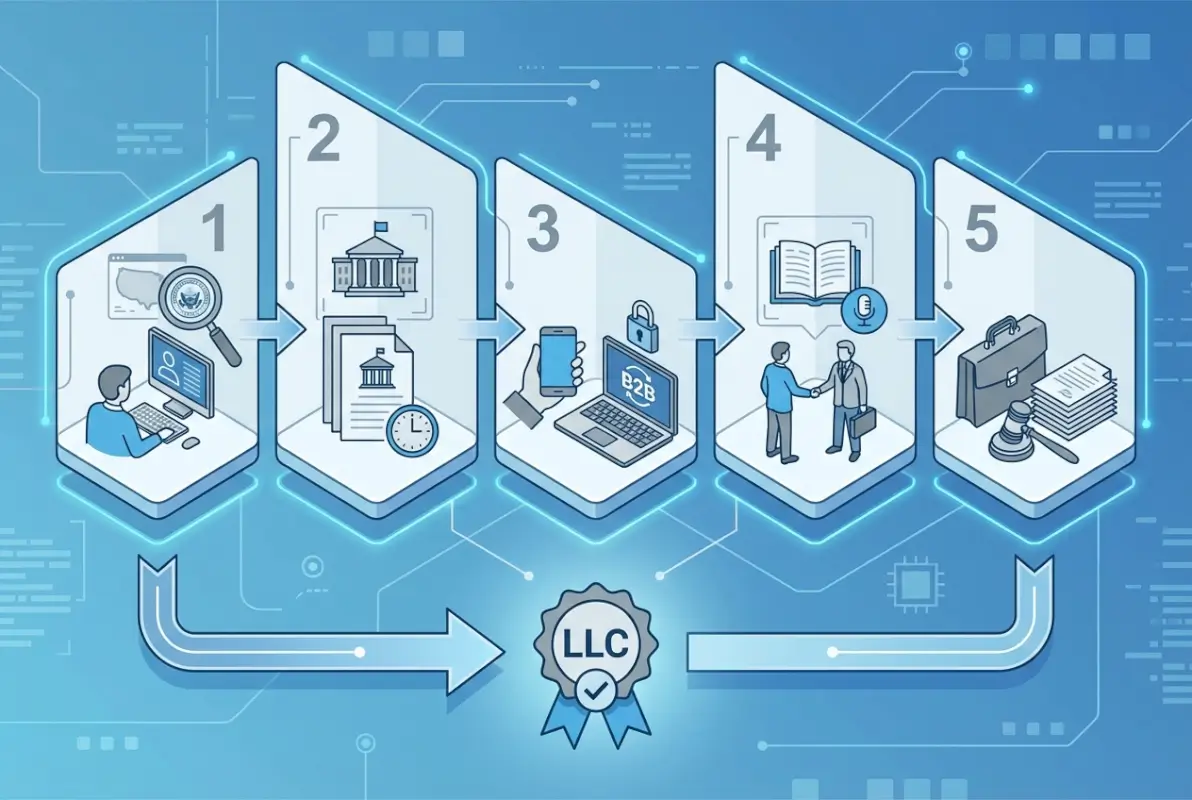
What “Good Standing” Indicates and When You Might Need a Formal Certificate
Being “in good standing” means the LLC has met all state obligations: it filed its Articles of Organization, submitted annual or biennial reports, paid franchise taxes (if applicable), and hasn’t been administratively dissolved or suspended. A Certificate of Good Standing is essentially a snapshot of that status at a specific point in time. It’s often required when:
- Opening a business bank account
- Applying for a commercial loan or line of credit
- Bidding on government contracts
- Registering to do business in another state (foreign qualification)
- Selling or transferring ownership of the LLC
- Entering into a major partnership or vendor agreement
In my experience working with small businesses, lenders almost always request a Certificate of Good Standing before approving financing. It’s one of the first items on the due diligence checklist, and it’s non-negotiable. If the LLC can’t produce one, or if the status is “Inactive,” that’s an immediate red flag.
Typical Costs and Turnaround Times (Varies by State)
The cost and processing time for a Certificate of Good Standing vary by state, but they’re generally affordable and quick. Most states charge between $10 and $50 for a standard certificate, with expedited options available for an additional fee. Turnaround times range from same-day (for online orders) to 5-10 business days (for mail requests).
| State | Cost | Online Available? | Typical Turnaround |
|---|---|---|---|
| Illinois | $25 | Yes | Same day |
| New York | $10 | Yes | 1-2 days |
| Colorado | $10 | Yes | Same day |
| Massachusetts | $20 | Yes | Same day |
| Rhode Island | $10 | Yes | 1-3 days |
Check the exact fees and timelines on your state’s SOS website, because they do change. For instance, Illinois offers online ordering with immediate PDF delivery, while some smaller states may still require a mailed request.
How to Obtain a Certificate (Online or Mail, Common Fees)
Most states now offer online ordering through their SOS portal. You’ll typically need the LLC’s exact legal name or file number, and you’ll pay by credit card or electronic check. Once processed, you’ll receive a PDF copy (sometimes with a digital signature or seal), which you can print or forward electronically. Some states also offer certified copies—printed on special paper with an embossed seal—for an additional fee. These are usually required for international transactions or when the receiving party insists on a physical document.
If online ordering isn’t available, you can submit a written request by mail, along with a check or money order. Include the LLC’s name, file number, and your contact information. Processing times for mail requests are longer—typically 7-10 business days—so plan ahead if you’re on a deadline.
Speaking of scams, there’s a growing problem with fraudulent “Certificate of Status” mailers that look like official government notices. They typically demand payment of $100 or more for a certificate you could order yourself for $10-$25. Forbes Advisor and several state attorney general offices have issued warnings about these schemes. The telltale sign is a return address that’s not a .gov domain, or language that creates a false sense of urgency (“Your certificate is expiring!”). If you receive one, ignore it and report it to your state’s consumer protection bureau.
Method 3: Cross-Check with Federal or Quasi-Federal Verification When Relevant
While state registration is the foundation of LLC verification, there are situations where you’ll want to cross-reference federal records. This is especially true if the LLC is seeking government contracts, applying for federal grants, or working in a regulated industry. The primary federal resource for this is the System for Award Management (SAM.gov), which is the official database for entities doing business with the U.S. government. However, it’s important to understand that federal registration doesn’t replace state verification—it’s an additional layer for specific use cases.

When a Business Is Contracting with the Federal Government or Doing Work Regulated at Federal Level
SAM.gov is where businesses register to bid on federal contracts, receive grants, or participate in federal programs. It requires entities to provide their legal name, Employer Identification Number (EIN), physical address, and other identifying information. If an LLC is registered in SAM, it’s a good sign that it’s a legitimate, active entity—but it’s not proof of state good standing. SAM doesn’t verify state-level compliance; it simply records the information the entity provides.
In practice, federal agencies and prime contractors often require both SAM registration and a Certificate of Good Standing from the LLC’s home state. So if you’re vetting a vendor for a government contract, don’t stop at SAM—follow up with the state SOS to confirm the LLC is still in good standing.
Distinguishing Between State-Registered Status and Federal Eligibility
Here’s a key distinction: state registration creates the legal entity, while federal registration (like SAM) establishes eligibility to do business with the federal government. An LLC can be in good standing with its home state but not registered in SAM, or vice versa. For most purposes—vendor vetting, credit checks, partnership agreements—state verification is sufficient. Federal checks are only necessary when the LLC’s work involves federal contracts, compliance, or regulated activities.
For example, if you’re a journalist verifying that a company claiming to be a federal contractor is legitimate, you’d check both SAM.gov and the state SOS. If the LLC is in SAM but shows as “Inactive” or “Dissolved” in the state database, that’s a serious discrepancy worth investigating.
Practical Steps and Caveats
To search SAM.gov, visit the public search portal and enter the LLC’s legal name, EIN, or Unique Entity Identifier (UEI). You’ll see the entity’s registration status, expiration date, and key contact information. Keep in mind that SAM registrations expire annually, so a lapsed registration doesn’t necessarily mean the LLC is defunct—it may just mean they haven’t renewed yet (perhaps they’re not currently pursuing federal contracts).
Also, SAM is not a substitute for background checks or financial due diligence. It doesn’t verify the LLC’s financial health, legal history, or operational capacity. It’s simply a registry of entities eligible to do business with the federal government. For a more comprehensive understanding of how to leverage business directories in your verification process, consider exploring multiple data sources.
Method 4: Examine Ownership, Filings, and Related Public Records
Beyond confirming that an LLC exists and is in good standing, you may want to dig deeper into the entity’s ownership structure, filing history, and registered agent information. This is especially important if you’re conducting due diligence for a merger, acquisition, or significant investment. State business registries don’t just tell you whether an LLC exists—they also provide a wealth of detail about who’s running it, where it’s located, and how it’s changed over time.
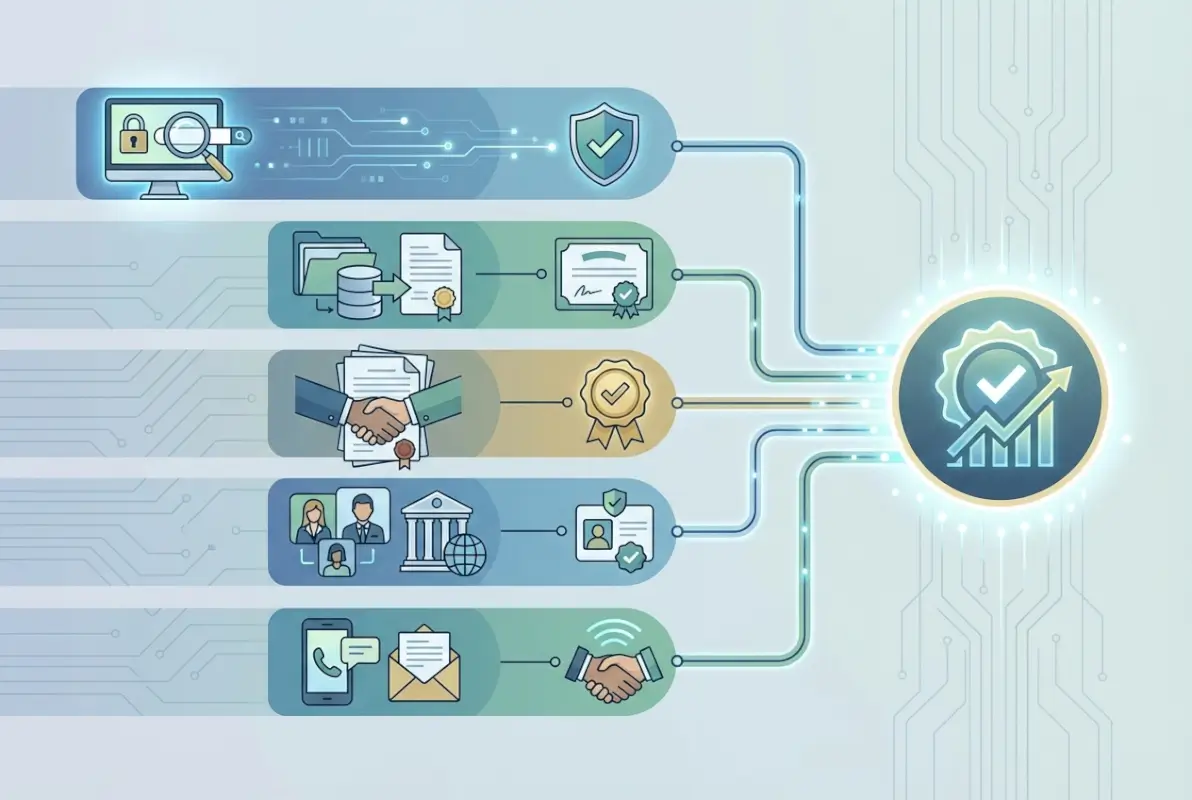
What the Records Typically Reveal (Registered Agent, Principal Addresses, Organizer Names)
When you pull up an LLC’s record in the state database, you’ll typically find:
- Registered Agent: The person or company authorized to receive legal documents on behalf of the LLC. This must be a physical address in the state (not a P.O. box), and it’s publicly listed.
- Principal Office Address: The LLC’s primary business location. This may be the same as the registered agent’s address, or it may be different.
- Organizer Names: The individuals or entities who filed the Articles of Organization. In some states, these are listed; in others, they’re redacted for privacy.
- Member or Manager Information: Depending on the state, you may see names of members or managers. However, many states allow LLCs to keep this information private (e.g., manager-managed LLCs may only list the manager, not all members).
- Filing History: A chronological list of all documents filed by the LLC—formation, amendments, annual reports, dissolutions, etc.
This information can help you verify that the LLC is who it claims to be. For instance, if a vendor tells you they’re based in California but the registered agent is in Delaware and the principal office is in Nevada, you’ll want to ask questions. Similarly, if the organizer’s name doesn’t match the person you’re dealing with, that could indicate a change in ownership—or a potential red flag.
How to Read a File (Filings, Amendments, Annual Reports)
The filing history is like a timeline of the LLC’s life. Start with the Articles of Organization (the birth certificate), then look for amendments, annual reports, and any notices of dissolution or reinstatement. Here’s what each document tells you:
- Articles of Organization: The foundational document that created the LLC. It includes the LLC’s name, registered agent, and sometimes the purpose of the business.
- Annual Reports (or Biennial Reports): Most states require LLCs to file periodic reports confirming their current information (address, registered agent, etc.). If these are up to date, it’s a good sign the LLC is actively managed.
- Amendments: Changes to the LLC’s structure—name changes, address changes, or changes to the registered agent. A string of recent amendments could indicate instability or restructuring.
- Dissolution Notices: If the LLC has been dissolved, there should be a formal notice on file. If you see a dissolution but the LLC claims to still be operating, that’s a major red flag.
In practice, I’ve found that reviewing the filing history can uncover issues that don’t show up in a basic status check. For example, an LLC might appear “Active” but have a pending administrative dissolution for failure to file annual reports. The status hasn’t officially changed yet, but the writing is on the wall.
Common Pitfalls (Name Similarity, Dissolution Notices, or Name Changes)
One of the biggest pitfalls in LLC verification is name similarity. States don’t allow exact duplicates, but they do permit similar names—especially if one entity adds a geographic identifier or a suffix. For example, “Smith Consulting LLC” and “Smith Consulting Group LLC” are legally distinct entities, even if they operate in the same city. Always compare the exact legal name, including punctuation and word order.
Another common issue is failing to notice a dissolution or name change. If an LLC was dissolved three years ago and reformed under a new name, the old record will show “Withdrawn” or “Cancelled,” but the new record will show “Active.” If you only search for the old name, you’ll think the LLC no longer exists. This is why it’s important to ask the business for their current legal name and file number before you start your search.
Resources like those provided by platforms such as business directory websites can help you organize and cross-reference this information, especially if you’re managing multiple verifications at once.
Method 5: Confirm Legitimacy Through Recognized Sources and Consumer Protection Checks
The final layer of verification is to confirm that the sources you’re using are legitimate and that you’re not falling victim to a scam. With the proliferation of third-party services, fake government notices, and phishing schemes, it’s more important than ever to know how to distinguish official verification channels from fraudulent ones. This method is about protecting yourself and your organization from misinformation, identity theft, and financial loss.

Distinguishing Legitimate Verification Sources from Scams
The single most reliable indicator of a legitimate source is a .gov domain. All official state and federal government websites end in .gov, and they’re required to meet strict security and authentication standards. If a website claims to be an official government portal but uses a .com, .net, or .org domain, it’s not official—it’s a third-party service (at best) or a scam (at worst).
For example, the Colorado Secretary of State portal is at sos.state.co.us. Any other domain claiming to be the official Colorado business registry is misleading you. Similarly, Rhode Island’s official site is sos.ri.gov. If you’re directed to a .com site, stop and verify the URL before entering any personal or payment information.
What to Do If You Encounter a Questionable Certificate of Status Request
If you receive a mailed notice requesting payment for a Certificate of Status or Certificate of Good Standing, scrutinize it carefully. Legitimate notices will come from the state SOS office, on official letterhead, with a .gov return address. Scam notices often:
- Use urgent language (“Your certificate is expiring!”)
- Charge inflated fees ($100+ for a document that costs $10-$25 from the state)
- Provide a P.O. box or out-of-state address as the return address
- Include a website URL that’s not a .gov domain
- Have poor grammar or formatting inconsistencies
If you’re unsure whether a notice is legitimate, contact your state SOS office directly (using the phone number or email from the official .gov website, not the contact info on the notice). They can confirm whether the notice was actually sent by their office. In most cases, it wasn’t.
Role of Legitimate Third-Party Services (When Used) Versus Red Flags
There are legitimate third-party services—like registered agent companies, business formation services, and legal research platforms—that can help you with LLC verification. These services charge a fee for convenience, but they’re transparent about what they’re providing and they’re not trying to impersonate the government. Examples include well-known business services that assist with compliance and filings, and they typically operate under their own brand name (not “State of XYZ”).
Red flags for illegitimate services include:
- Claiming to be the “official” government portal (they’re not)
- Using confusingly similar domain names (e.g., “secretary-of-state.com”)
- Charging fees far above state rates without clear justification
- Refusing to provide a physical address or customer service contact
- Pressuring you to act immediately or lose your “status”
If you’re considering using a third-party service, research it first. Check reviews, look for a Better Business Bureau listing, and confirm that it’s a real company with a track record. And remember: you can always go directly to the state portal and do the verification yourself for free or a nominal fee. Tools like business listing directories can also help you cross-reference information across multiple sources.
Common Hurdles, Red Flags, and Best-Practice Checklist
Now that we’ve covered the five primary methods for verifying LLC status, let’s address some of the common challenges you might encounter and how to overcome them. LLC verification can be straightforward, but it can also get complicated—especially when dealing with multi-state operations, name changes, or incomplete records. Here’s a practical checklist and a list of red flags to watch out for.
Quick-Start Verification Checklist (Step-by-Step)
Use this checklist to streamline your LLC verification process:
- Obtain the LLC’s exact legal name and file number (ask the business directly if possible)
- Visit the state Secretary of State portal (always a .gov domain)
- Search by name or file number and review the entity record
- Check the status indicator (Active, Good Standing, Inactive, etc.)
- Review the registered agent and principal address for accuracy
- Examine the filing history (annual reports, amendments, dissolution notices)
- Order a Certificate of Good Standing if required (for contracts, loans, etc.)
- Cross-check with federal records (SAM.gov) if applicable (government contracts)
- Document your findings and retain copies of all records
- If discrepancies arise, contact the state SOS office or seek legal advice
This checklist works for most scenarios, but you may need to adapt it based on your specific needs. For example, if you’re vetting multiple LLCs across several states, consider creating a spreadsheet to track each entity’s status, file number, and verification date.
Red Flags (Scams, Mismatched Names, Delayed Responses, Non-.gov Domains)
Watch out for these warning signs during your verification process:
- Mismatched legal names: The LLC’s business cards, website, or invoices use a different name than what’s listed in the state registry.
- Inactive or dissolved status: The state database shows the LLC as “Inactive,” “Dissolved,” or “Suspended,” but the business claims to be active.
- Missing or outdated annual reports: The LLC hasn’t filed an annual report in several years, suggesting poor compliance or abandonment.
- Registered agent resignation: The registered agent has resigned and hasn’t been replaced, which can lead to administrative dissolution.
- Non-.gov verification sources: You’re directed to a .com or .net site for “official” verification.
- Unsolicited certificate requests: You receive a mailed notice demanding payment for a certificate you didn’t request.
- Reluctance to provide file number or legal name: The business is evasive or refuses to provide basic identifying information.
- Frequent name or address changes: The filing history shows multiple amendments in a short period, which could indicate instability.
Any of these red flags should prompt additional investigation. Don’t hesitate to ask the LLC for clarification, or consult with a business attorney if you’re unsure how to proceed.
Best-Practice Tips (Document Retention, Cross-Checks, and When to Seek Legal Advice)
Here are some best-practice recommendations to ensure thorough, compliant verification:
- Document everything: Save PDF copies of all records, certificates, and search results. Include the date and time of your search, as records can change.
- Cross-check multiple sources: Don’t rely on a single data point. If the state database says “Active” but the registered agent’s website says the entity is dissolved, investigate further.
- Verify the exact legal name: “XYZ LLC” and “XYZ, LLC” are technically different. Use the name exactly as it appears in the state registry.
- Recheck status before finalizing contracts or transactions: LLC status can change quickly (e.g., administrative dissolution for non-filing). Confirm status again just before signing.
- Seek legal advice when necessary: If you’re conducting due diligence for a major investment, merger, or acquisition, consult with a business attorney. They can order title reports, UCC filings, and other records you may not have access to.
- Be cautious with out-of-state LLCs: If an LLC is doing business in your state but is registered elsewhere, verify its good standing in both the home state and your state (foreign qualification).
Taking the time to verify LLC status properly can save you from costly mistakes, legal disputes, and reputational damage. It’s a small investment of time that pays off in peace of mind and risk mitigation. For businesses looking to maintain accurate listings across multiple platforms, consistent verification practices are essential.
Frequently Asked Questions
What is a Certificate of Status (Certificate of Good Standing), and when do I need it?
A Certificate of Status, also called a Certificate of Good Standing or Certificate of Legal Existence, is an official document issued by the state confirming that an LLC is legally registered, current with all filings, and in compliance with state requirements. You typically need it when opening a business bank account, applying for loans, bidding on contracts, or registering to do business in another state. It’s proof that the LLC is legitimate and up to date.
How do I check if an LLC is active or in good standing in my state?
Visit your state’s Secretary of State or Department of State website (always a .gov domain) and use the business entity search tool. Enter the LLC’s exact legal name or file number, then review the status indicator. Look for “Active,” “Good Standing,” or similar language. If the status shows “Inactive,” “Dissolved,” or “Suspended,” the LLC is not in good standing. Most states offer free online searches, and some provide printable certificates for a small fee.
Can a private company verify an LLC’s status for me?
Yes, legitimate third-party services can assist with LLC verification, but they should not claim to be the official government source. These services charge a fee for convenience and may bundle verification with other compliance services. However, always ensure the underlying data comes from the state’s official .gov portal. Be cautious of scams or services that charge inflated fees for documents you can obtain directly from the state for a fraction of the cost.
Is a Certificate of Status the same as official state registration?
No, they’re different. Official state registration occurs when an LLC files its Articles of Organization and is approved by the state—this creates the legal entity. A Certificate of Status is a downstream verification document that confirms the LLC is still in good standing after registration. Think of registration as the birth certificate and the Certificate of Status as a current ID card confirming the entity is still alive and compliant.
Are there authoritative .edu/.gov sources I can trust for LLC verification?
Yes, all state Secretary of State or Department of State portals are authoritative .gov sources for LLC verification. Examples include ilsos.gov (Illinois), dos.ny.gov (New York), sos.state.co.us (Colorado), and sec.state.ma.us (Massachusetts). For federal context, the SBA (sba.gov) provides small-business statistics and guidance, though it doesn’t verify individual LLC status. Always prioritize .gov domains over .com, .net, or .org sites for official verification.
What should I do if an LLC’s status shows as “Inactive” or “Dissolved”?
If the state database shows an LLC as “Inactive,” “Dissolved,” or “Suspended,” contact the LLC directly and ask them to clarify their status. They may have recently reinstated or may be in the process of bringing their filings current. If they can’t provide proof of good standing, consider that a red flag and proceed with caution. Inactive or dissolved LLCs cannot legally conduct business, and any contracts or transactions with them may be void or unenforceable.
How often should I recheck an LLC’s status during ongoing business relationships?
It’s good practice to verify LLC status at the beginning of a business relationship and then annually (or before any major transaction or contract renewal). LLC status can change due to missed annual reports, unpaid taxes, or administrative dissolution. Regular rechecks help you catch compliance issues early and protect your organization from liability. If you’re working with a high-risk vendor or a significant financial commitment, consider checking quarterly.
Can I verify an LLC if it’s registered in a different state than where it operates?
Yes, but you’ll need to check both the home state (where it was originally formed) and any states where it’s registered to do business as a “foreign” LLC. For example, a Delaware LLC operating in California should be in good standing in Delaware and also registered (foreign qualified) in California. Check both state registries to ensure full compliance. Some businesses choose to incorporate in one state for legal or tax reasons but operate elsewhere.
What information do I need before starting an LLC verification search?
Ideally, obtain the LLC’s exact legal name (including punctuation and designators like “LLC” or “L.L.C.”) and its state-issued file number or entity ID. If you only have a trade name or “doing business as” (DBA) name, you may need to search more broadly or ask the business for its legal name. Having the file number makes searches faster and more accurate, since it’s a unique identifier that doesn’t change even if the LLC changes its name.
Is there a centralized national database for LLC verification across all states?
No, LLC registration is handled at the state level, so there’s no single national database. Each state maintains its own registry through its Secretary of State or equivalent office. Some third-party services aggregate data from multiple states, but these are not official and may not be current. For authoritative verification, you must check each state individually through its official .gov portal.
Conclusion
Verifying whether a business is listed as an LLC—and whether it’s in good standing—is one of the most important steps you can take to protect yourself from fraud, ensure legal compliance, and build trust with partners and clients. The five research methods we’ve covered give you a comprehensive toolkit: start with the official state Secretary of State portal, obtain a Certificate of Good Standing when needed, cross-check with federal records in specific contexts, examine ownership and filing history for deeper insights, and always confirm that your sources are legitimate. By following these steps and staying vigilant for red flags, you’ll have confidence that the entities you’re dealing with are legally sound and properly registered.
The landscape of small business in the United States continues to grow at a record pace, with millions of new business applications filed every year and an ecosystem that’s more dynamic than ever. As this expansion continues, the need for reliable verification practices becomes even more critical. Whether you’re a vendor evaluating a new client, a lender assessing risk, or simply someone doing your due diligence, the time you invest in proper LLC verification is time well spent. Use the official tools, trust the .gov portals, and don’t be afraid to ask questions or seek expert guidance when you need it.