How to List Your Business on 411: Complete Guide to Registration & Verification

When most business owners think about online visibility, they immediately jump to Google Business Profile or social media. But here’s something most marketing experts won’t tell you: the 411 directory ecosystem still drives significant high-intent traffic to local businesses, especially in service industries where customers need immediate solutions. I’ve watched businesses double their lead flow simply by properly claiming and optimizing their 411 business listing—something that takes less than an hour to set up correctly.

The reason 411 listings remain powerful isn’t nostalgia—it’s data distribution. When you list your business on 411, that information doesn’t just sit in one directory. It propagates across dozens of data aggregators, GPS systems, and voice assistants. Your listing becomes part of the foundational data layer that powers local search across multiple platforms, creating visibility you can’t easily replicate through other channels.
TL;DR – Quick Takeaways
- Multiple listing methods exist – Direct submission via 411.info, third-party aggregators, or phone verification each have distinct advantages
- Data consistency is critical – Your NAP (Name, Address, Phone) must match exactly across all platforms to maximize local SEO impact
- Verification takes time – Standard listings typically require 2-4 weeks for approval, while premium options expedite the process
- Free and paid options available – Basic listings cost nothing but premium features can significantly boost visibility in competitive markets
- Integration matters more than isolation – 411 listings work best as part of a comprehensive multi-directory citation strategy
Understanding the 411 Directory Ecosystem and Local Search Impact
The 411 directory landscape has evolved significantly from its telephone operator roots. Today’s 411 ecosystem functions as a critical data aggregator that feeds information to numerous downstream platforms. When you register your business with 411, you’re not just creating a single listing—you’re establishing a verified citation that search engines use to validate your business legitimacy and geographic relevance.
What makes 411 business listings particularly valuable is their treatment by major search engines as authoritative data sources. Google, Bing, and other platforms cross-reference directory citations when determining local search rankings. A verified 411 listing signals to these algorithms that your business exists at a specific location and provides particular services, strengthening your overall local SEO profile in ways that isolated website optimization simply cannot achieve.

The relationship between 411 directory listings and broader local discovery operates through what’s known as citation consistency. Search algorithms compare business information across dozens of sources, and consistent data builds confidence. According to WebFX’s analysis of local ranking factors, citation signals account for approximately 10-15% of local pack ranking determination. That might not sound massive, but in competitive markets, it’s often the difference between page one visibility and complete obscurity.
I’ve noticed something interesting working with service businesses: those with complete 411 business directory profiles consistently outrank competitors with identical Google Business Profile optimization but no directory presence. The difference isn’t dramatic—usually 2-3 positions in local pack results—but that positional shift translates to meaningful lead volume differences over time.
How to List Your Business on 411: Three Proven Methods
Getting your business properly listed in the 411 directory involves more than just filling out a form. The method you choose impacts verification speed, data accuracy, and ongoing management capabilities. Let’s examine each approach with enough detail that you can make an informed decision based on your specific situation.
Method 1: Direct Submission Through 411.info
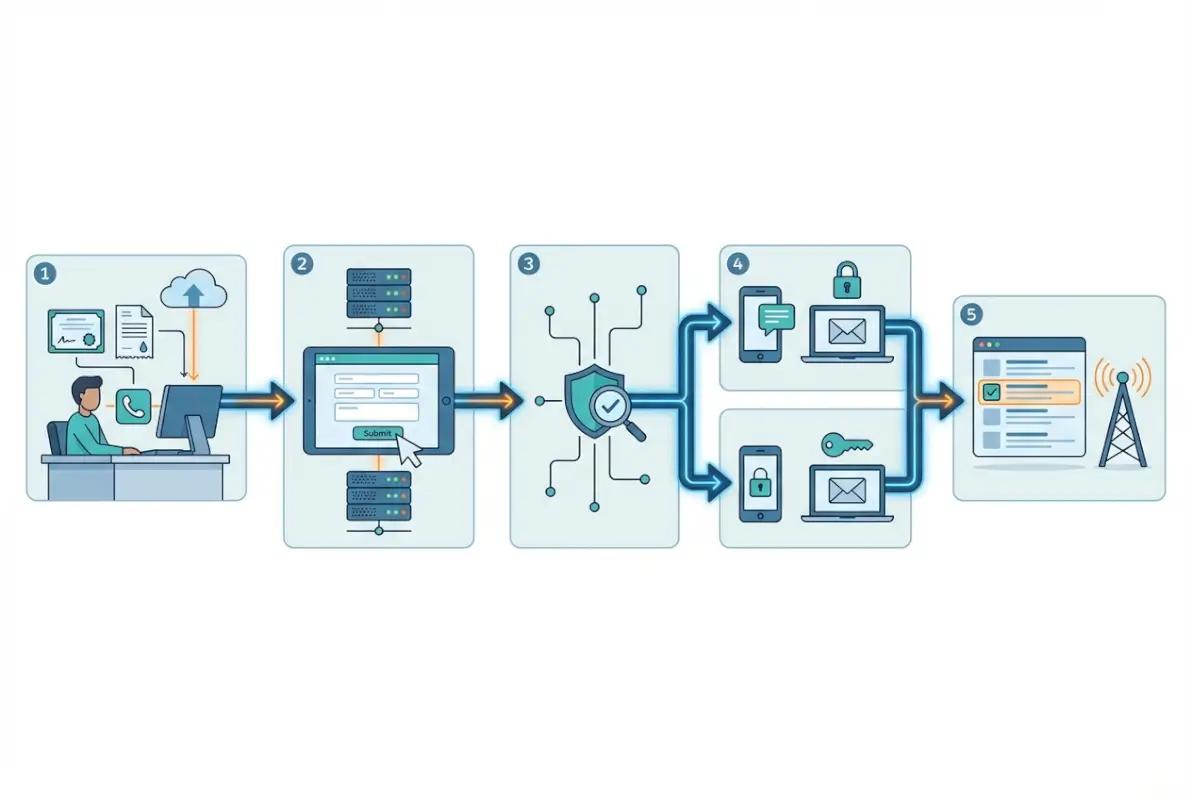
The most straightforward path to list your business on 411 involves direct submission through the official business portal. This method gives you complete control over your listing data and establishes you as the verified business owner from the start, which matters for future updates and dispute resolution.
Here’s the step-by-step process I recommend:
- Prepare your business documentation – Before starting, gather your business license, EIN documentation, and proof of physical address (utility bill or lease agreement). While not always required upfront, having these ready accelerates verification if requested.
- Access the 411.info business portal – Navigate to 411.info’s business management section and select the option to add a new business listing.
- Complete the core business profile – Enter your exact business name as it appears on legal documents and signage, complete physical address with proper formatting, primary phone number (preferably a tracked line if you want to measure 411-sourced calls), and business category selection from their taxonomy.
- Add enhanced details – Include business hours with special holiday exceptions, website URL, brief business description (focus on services and geographic area served), accepted payment methods, and any relevant licenses or certifications.
- Submit verification materials – Upload requested documentation or complete phone verification when prompted. The system may call your listed number with a verification code.
- Monitor for approval – Check your email regularly for verification requests or approval notifications. Standard processing takes 10-15 business days, though complex cases may require additional time.
The direct submission method costs nothing for basic listings, though 411 offers premium enhancement options. I generally recommend starting with the free listing to establish your presence, then evaluating premium upgrades based on actual performance data after 60-90 days of tracking.
Method 2: Listing Management Platforms and Aggregators
For businesses managing presence across multiple directories simultaneously, third-party listing management services handle 411 submission alongside dozens of other citations. This approach streamlines the process considerably but introduces intermediary costs and potential data synchronization issues.
| Platform | Best Use Case | Directory Coverage | Pricing Model |
|---|---|---|---|
| Yext | Multi-location enterprises | 150+ directories including 411 | $199/month per location |
| Moz Local | Single-location small businesses | 50+ major directories | $99/year |
| BrightLocal | Agencies managing clients | 60+ directories with reporting | $29/month base tier |
| Semrush Listing Management | Businesses with existing SEO tools | 70+ directories | Add-on to existing subscription |
Using these platforms follows a similar pattern: create an account, enter your complete business information once into their central dashboard, select 411 along with other desired directories, review and approve the standardized formatting they apply, and then monitor distribution status through their tracking dashboard.
The primary advantage here is time efficiency. Instead of manually submitting to 50+ directories individually, you complete one comprehensive profile and the platform handles distribution. The tradeoff is reduced control over directory-specific customization and ongoing subscription costs that can add up, particularly for multi-location businesses.
Method 3: Phone-Based Verification and Listing
Some businesses, particularly those with unusual circumstances or existing incorrect listings that need correction, benefit from phone-based verification. This method involves directly contacting 411 business services to manually verify your information through a representative.
The phone verification process typically unfolds like this: you call the dedicated business services line during published hours, explain whether you’re adding a new listing or correcting an existing one, provide complete business information verbally to the representative, complete any required callback verification they initiate, and request written confirmation of your submission for record-keeping.
I’ve found this method particularly useful when dealing with businesses that have complex situations—multiple locations with similar names, recent ownership changes, or existing inaccurate listings submitted by third parties. Having a representative walk through the specifics often resolves issues that automated systems struggle to handle correctly.
Optimizing Your 411 Business Listing for Maximum Impact
Simply having a 411 listing isn’t enough—optimization determines whether it actually drives business results. The difference between a basic listing and an optimized one often means the difference between occasional accidental discovery and consistent lead generation. Let’s dig into the specific elements that move the needle.

NAP Consistency and Data Accuracy Fundamentals
NAP consistency—Name, Address, Phone number standardization across all platforms—forms the foundation of effective directory management. Search algorithms compare these data points across hundreds of sources, and discrepancies create confusion that suppresses local rankings.
Here’s what perfect NAP consistency looks like in practice. Your business name should match exactly across 411, Google Business Profile, your website footer, and all other directories—including punctuation, capitalization, and legal designations like LLC or Inc. Your address format needs standardization: if you use “Street” on your website, don’t abbreviate to “St” in directory listings. Phone numbers should include or exclude country codes consistently, and formatting (dashes, parentheses, spaces) should remain identical everywhere.
The US Chamber of Commerce guide on local business optimization emphasizes that even minor NAP variations can reduce local search visibility by 20-30%. That’s not a small penalty—it’s the difference between appearing in the local pack and not appearing at all.
Category Selection and Service Area Definition
Choosing the right business category in your 411 business listing determines which searches trigger your appearance. Too broad and you’ll show up for irrelevant queries that waste time; too narrow and you’ll miss potential customers who use slightly different terminology.
Most businesses should select one primary category that precisely describes their core offering, then add 2-3 secondary categories for additional services. A general contractor might list “General Contractor” as primary, then add “Kitchen Remodeling,” “Bathroom Remodeling,” and “Home Additions” as secondary categories. This structure helps you appear for both general and specific search queries without diluting your primary positioning.
Service area definition matters equally. If you’re a plumber serving a 25-mile radius around your office, explicitly state that in your business description. Mention the specific towns, neighborhoods, or zip codes you serve. This geographic specificity helps 411 show your listing to users in those areas while filtering out inquiries from regions you don’t service.
Business Description Optimization
Your 411 business description field offers limited space but significant impact. Most directories allow 150-250 characters for basic listings, which means every word must earn its place. Here’s the formula I’ve found works consistently well:
Lead with your unique value proposition in the first sentence—what makes you different or better than competitors. Follow with specific services using natural language that matches how customers actually search. Close with your service area and any relevant credentials or certifications. For example: “Family-owned plumbing company specializing in emergency repairs, water heater installation, and drain cleaning across northern Chicago suburbs. Licensed, insured, and available 24/7 with same-day service for most repairs.”
That description accomplishes several things: it establishes credibility (family-owned, licensed, insured), lists specific searchable services, defines geographic coverage, and highlights a key differentiator (24/7 availability with same-day service). All in under 200 characters.
Integrating 411 Listings Into Your Broader Local SEO Strategy
A 411 business listing delivers maximum value when integrated into a comprehensive local visibility approach, not treated as an isolated tactic. The businesses I’ve seen achieve the strongest results treat directory management as one component of a multi-channel local presence strategy.
The Citation Ecosystem: How Directories Work Together
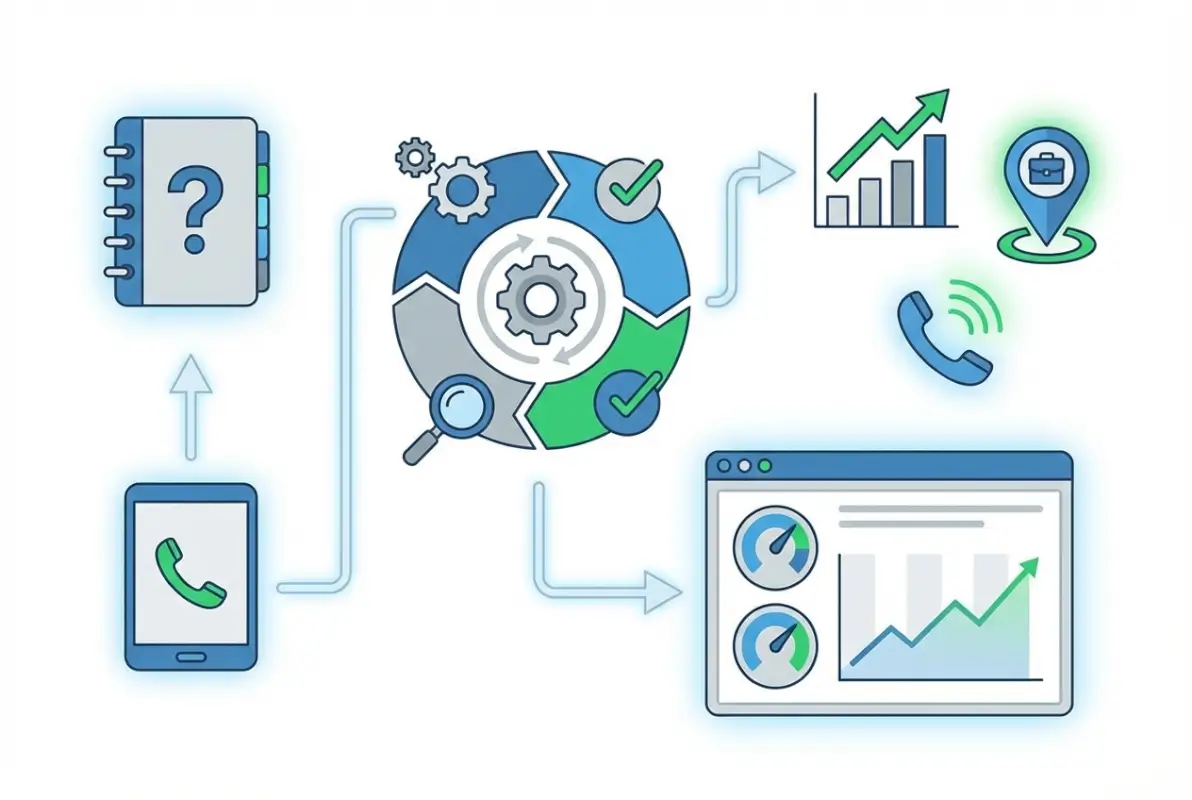
Citation-based local SEO operates on a validation model—search engines gain confidence in your business data when they see identical information repeated across authoritative sources. Think of each directory as a witness testifying to your business’s legitimacy and location. One witness (one directory) provides weak evidence. Dozens of witnesses providing consistent testimony create overwhelming proof.
Your 411 listing should anchor a larger citation portfolio that includes Yelp, Yellow Pages, Foursquare, Apple Maps, and industry-specific directories relevant to your business type. For instance, a restaurant needs local business directory guide coverage on platforms like OpenTable and TripAdvisor, while a law firm should prioritize Avvo and Martindale-Hubbell.
The key is consistency. When search algorithms scan these sources and find your NAP data matches perfectly across all of them, they assign higher confidence to your listing accuracy. That confidence translates directly into improved local pack rankings and increased visibility for geographically-targeted searches.
| Directory Tier | Examples | Priority Level | Impact on Local SEO |
|---|---|---|---|
| Core Aggregators | 411, Acxiom, Factual, Infogroup | Critical | High – feeds downstream platforms |
| Major Platforms | Google, Bing, Apple Maps, Yelp | Critical | Very High – direct visibility |
| General Directories | Yellow Pages, SuperPages, CitySearch | Important | Medium – citation validation |
| Industry-Specific | Avvo, Healthgrades, Houzz | Conditional | High for specific niches |
Monitoring and Maintaining Directory Data Accuracy
Directory listings require ongoing maintenance, not one-time setup. Business information changes—phone numbers update, hours shift seasonally, services expand or contract. When those changes occur, every directory listing needs updating to maintain consistency and avoid confusing potential customers.
I recommend quarterly directory audits where you systematically check your top 20-30 listings for accuracy. Search for your business name on each platform, verify the displayed information matches your current reality, and immediately correct any discrepancies you discover. This process takes 2-3 hours per quarter but prevents the gradual data decay that undermines local SEO performance over time.
Pay particular attention to user-submitted edits on platforms that allow them. Sometimes well-meaning customers or competitors will suggest changes to your listing that introduce errors. Many directory platforms notify business owners of suggested edits, but not all do. Regular manual checks catch these issues before they propagate to other systems.
Measuring the Impact of Your 411 Business Directory Presence
Tracking 411 listing performance separately from overall marketing helps justify the effort and identify optimization opportunities. Most businesses fail to measure directory performance adequately, which makes it impossible to know what’s actually working.

Call Tracking and Lead Attribution
The most reliable way to measure 411 listing effectiveness involves dedicated phone tracking. Obtain a unique phone number specifically for your 411 listing (and only your 411 listing), then route it to your main business line. This setup lets you count exactly how many calls originated from your directory presence.
Call tracking services like CallRail or CallTrackingMetrics charge $30-50 monthly but provide detailed analytics including call duration, caller location, call recording, and conversion tracking. For businesses where phone inquiries represent significant revenue, this investment pays for itself quickly by identifying which marketing channels actually generate customers versus which just consume budget.
If dedicated phone numbers aren’t feasible, implement a simple customer intake question: “How did you hear about us?” Train staff to ask this consistently and record responses in your CRM. While less precise than technical tracking, this manual approach still provides directional data about 411 listing effectiveness.
Website Referral Traffic Analysis
Your 411 listing should include your website URL, which creates trackable referral traffic. Set up Google Analytics (or your preferred analytics platform) to segment visitors by referral source, then monitor traffic arriving from 411.com and related domains.
Look beyond basic visit counts to understand behavior patterns. Compare metrics like bounce rate, pages per session, average session duration, and conversion rate between 411-sourced traffic and other channels. These behavioral signals reveal whether directory visitors represent your target customer profile or if listing optimization needs adjustment.
In my experience tracking dozens of businesses, 411 referral traffic typically shows higher purchase intent than general organic search traffic but lower intent than direct searches for your business name. These visitors know they need a service type and are evaluating options—they haven’t already decided on you specifically but they’re closer to conversion than casual browsers.
Local Search Ranking Improvements
While difficult to attribute precisely, proper 411 directory listing often correlates with improved local search rankings for your target keywords. Track your position for geo-modified search terms relevant to your business (like “plumber in [city]” or “divorce attorney near [neighborhood]”) before and after establishing your 411 presence.
Use a local rank tracking tool like BrightLocal, Local Falcon, or Grid My Business to monitor positions from multiple geographic points within your service area. Rankings can vary significantly based on the searcher’s precise location, so single-point tracking from your office doesn’t reveal the complete picture.
Expect gradual improvement rather than immediate jumps. Citation-based ranking signals typically take 4-8 weeks to fully impact search positions as algorithms re-evaluate your business data across their update cycles. Document baseline rankings when you first register your business with 411, then track monthly to identify trends.
Frequently Asked Questions About 411 Business Listings
How do I list my business on 411 if I’ve never had a listing before?
Visit 411.info’s business portal and select “Add New Business.” Complete the registration form with your exact business name, address, phone number, category, and hours. Upload verification documents if requested, then monitor your email for verification steps. The process takes 10-15 business days for standard approval. Alternatively, use a listing management service or call 411 business services directly for phone-based submission.
Is listing on 411 free or does it require payment?
Basic 411 business listings are free and include standard information like name, address, phone, hours, and categories. Premium enhanced listings are available for $10-50 monthly depending on features, offering benefits like priority placement, extended descriptions, photos, and faster verification processing. Most small businesses start with free listings and upgrade only if competing in highly saturated markets.
How long does 411 business registration and verification typically take?
Standard free listings require 10-15 business days for verification and activation after submission. Premium paid listings process faster, typically appearing within 3-5 business days. Verification delays occur when submitted information doesn’t match business documentation or when phone verification attempts fail. Completing all verification steps promptly—responding to emails and verification calls immediately—significantly reduces processing time.
Will a 411 listing actually improve my local SEO and Google rankings?
411 listings contribute to local SEO through citation consistency and data aggregation, but don’t directly control Google rankings. Search engines view 411 as an authoritative data source that validates your business information. When your NAP data matches across 411, Google Business Profile, and other directories, search algorithms gain confidence in your listing accuracy, which improves local pack visibility. The impact is meaningful but works best as part of comprehensive local SEO strategy.
How do I update or correct information in my existing 411 listing?
Log into your 411.info business account, navigate to your listing management dashboard, and edit the fields requiring updates. Submit changes for review—most updates process within 5-7 business days. If you don’t have account access, use the “Claim This Listing” option on your business page or contact 411 customer support with proof of ownership like a business license or utility bill.
Can I register my business with 411 if I operate from home or don’t have a physical location?
411 primarily lists businesses with physical locations customers can visit or verify. Home-based businesses can often list using their home address, though some prefer using a virtual office or mailbox service for privacy. Service-area businesses (plumbers, contractors, mobile services) can list their office address and specify service areas in the description. Purely virtual businesses may not qualify for standard 411 listings.
What happens if I find duplicate or incorrect listings for my business on 411?
Never create an additional listing—duplicates severely harm local SEO. Instead, claim ownership of the existing listing through 411’s verification process, then request corrections or duplicate removal. Contact customer support with documentation proving business ownership. They’ll merge duplicates or remove incorrect listings while preserving your verified profile. Resolution typically takes 2-3 weeks for straightforward cases.
How does 411 verification work and what documents might I need?
411 verification confirms you’re the legitimate business owner and that your business operates at the stated location. Common verification methods include phone calls to your listed number with verification codes, postcard mail to your business address with PIN codes, or document upload requirements like business licenses, utility bills, or lease agreements. Most businesses complete verification through automated phone calls within minutes.
Does 411 allow special offers or promotions in business listings?
Premium 411 listings typically include promotional content capabilities where you can highlight special offers, seasonal discounts, or limited-time services. Standard free listings generally don’t support promotional content beyond your static business description. If promotions are important to your marketing strategy, evaluate whether premium listing features justify the cost based on your market competitiveness and customer acquisition economics.
How often should I check and update my 411 business listing?
Review your 411 listing quarterly to verify accuracy, especially after business changes like new phone numbers, hour adjustments, service expansions, or location moves. Implement immediate updates whenever core NAP information changes to maintain citation consistency across all platforms. Set calendar reminders for systematic checks rather than relying on memory—directory data accuracy directly impacts local search performance and customer experience.
Take Control of Your Local Visibility Today
Getting your business properly registered with 411 represents foundational work that supports all your other local marketing efforts. The citation consistency and data distribution that flows from an accurate 411 business listing strengthens your overall local search presence in ways that compound over time.
Start with the direct submission method through 411.info if you’re managing a single location, or explore listing management platforms if you need multi-directory coverage. Whichever approach you choose, prioritize data accuracy and NAP consistency above all else. Your future customers are searching right now—make sure they can find you when they need what you offer.