How to Look Up a Business Listing: 6 Online Directories to Use

Looking up your business listing across online directories isn’t just about “being found” anymore, it’s about controlling the narrative of your brand before potential customers even click through to your website. Most businesses treat directory listings as a one-and-done task, but here’s what few talk about: inconsistent listings across platforms can actually hurt your visibility more than having no listings at all. Search engines interpret conflicting NAP (Name, Address, Phone) data as a trust signal failure, and you drop in local rankings without ever knowing why.

The real power move? Understanding that each directory serves a different search intent and customer journey stage. Some directories capture people already ready to buy, others build awareness, and a few exist purely to feed data to the major search engines. When you know how to look up and verify your listings strategically across the right six platforms, you’re not just maintaining accuracy—you’re building a local search ecosystem that compounds your visibility over time.
TL;DR – Quick Takeaways
- Consistency matters more than quantity – Six well-maintained listings outperform 30 inconsistent ones for local SEO
- Each directory has a unique role – Google captures local intent, Yelp drives reviews, industry-specific directories build niche authority
- Quarterly audits are essential – Business data changes, and stale listings actively damage your search rankings
- NAP verification is your foundation – Identical Name, Address, Phone across all platforms signals trustworthiness to search algorithms
- Missing data costs you conversions – Incomplete profiles with no hours, photos, or categories lose up to 40% of potential customer actions
Understanding Online Business Directories and Why They Matter
Business directories have evolved far beyond the digital version of Yellow Pages (remember flipping through those massive books?). Today’s directories serve as trust verification systems for search engines, discovery platforms for consumers, and data aggregation hubs that feed information to voice assistants, map applications, and local search results. When someone asks Siri for “coffee shops near me,” the answer pulls from directory data—often multiple sources cross-referenced for accuracy.
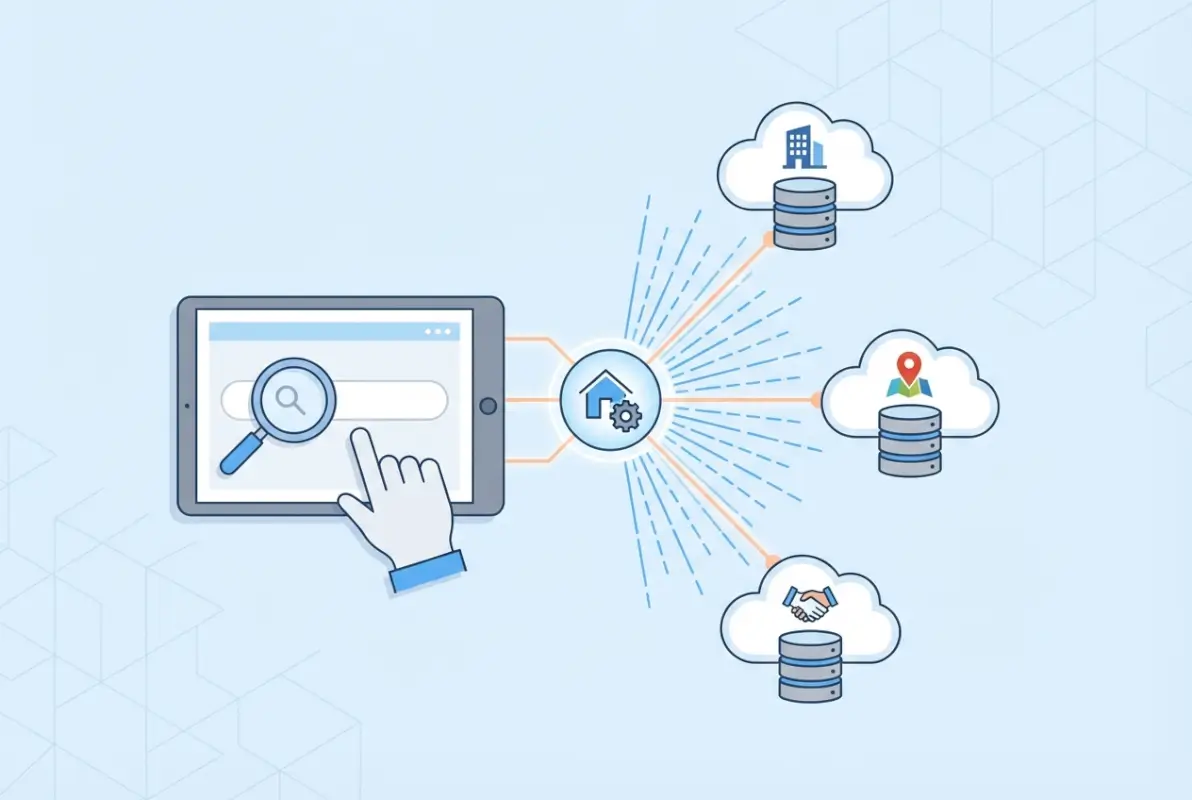
What is a Business Listing and What Data Should It Contain
A complete business listing functions as your digital storefront across the web. At minimum, every listing should contain your NAP data presented identically across all platforms. That means if you use “Street” in your Google Business Profile, don’t abbreviate it to “St.” on Yelp, consistency in every character matters to algorithmic trust.
Beyond the basics, comprehensive listings include business hours (including special holiday hours), your website URL, business categories that match how customers actually search, a compelling business description with natural keyword inclusion, high-quality photos of your location and offerings, and service area specifications if you serve customers beyond your physical address. Many businesses miss the service area component entirely, which limits visibility for “near me” searches from adjacent neighborhoods.
The Role of Reputable Directories in Local SEO and Consumer Trust
Search engines use citations from reputable directories as confidence signals. When Google’s algorithm sees your business listed consistently across established platforms, it treats your business as more legitimate and authoritative. This isn’t speculation, targeted directory exposure directly correlates with improved local pack rankings.
How Directories Differ: Free vs. Paid, Breadth vs. Niche, Verification Processes
Not all directories operate the same way. Free directories like Google Business Profile offer massive reach but limited differentiation—everyone gets similar treatment. Paid directories often provide enhanced features like priority placement, detailed analytics, or the ability to showcase more extensive service catalogs, but they only make sense if your target customers actually use that platform.
Broad directories cast a wide net across all industries and locations. Niche directories focus on specific sectors (healthcare providers, contractors, restaurants) and typically deliver higher-intent traffic because users browse them with purchase intent already formed. Verification processes also vary dramatically. Some directories accept any submission immediately, others require phone verification, postcard confirmations, or business documentation before approving your listing.
Use-Case Scenarios: Brand Building, Local Discovery, Review Aggregation
Different directories serve different strategic purposes in your marketing ecosystem. For brand building, comprehensive profiles on established platforms create multiple touchpoints where potential customers encounter your business name and value proposition. For local discovery, map-integrated directories capture people actively searching for solutions right now in their immediate area—these are your highest-intent prospects.
Review aggregation platforms like Yelp or Trustpilot serve a dual purpose: they provide social proof that influences purchase decisions, and they generate fresh user-generated content that search engines love. Each positive review adds unique content mentioning your business, which strengthens your overall online presence.
The 6 Online Directories to Look Up (and Why Each Matters)
The directory landscape includes hundreds of options, but spreading yourself too thin dilutes your effort. The six platforms that follow represent the highest-impact opportunities for most businesses—they combine massive reach, strong domain authority, direct search engine integration, and actual usage by consumers making purchase decisions. Your goal isn’t to be everywhere, it’s to be accurate and comprehensive where it actually moves the needle.

Google Business Profile (The Local Search Foundation)
Google Business Profile remains the single most critical listing for local visibility. It powers Google Maps results, the local pack that appears in search results, and even voice search responses. When someone searches for your business name or relevant keywords with local intent, your GBP listing often appears before your actual website.
To look up your listing, search for your exact business name plus city in Google. Your profile should appear in the right sidebar on desktop or at the top on mobile. Verify that your business name matches your legal or DBA name exactly, your address includes the full street address with correct suite or unit numbers, your phone number is a local number (not a tracking number, which violates Google’s guidelines), and your primary category accurately reflects your main business focus.
What sets Google apart is the breadth of features: posts for announcements, Q&A where customers ask questions publicly, attributes that highlight specific features (wheelchair accessible, free Wi-Fi, outdoor seating), booking integration for appointments, and menu uploads for restaurants. If any of these elements are missing or incorrect, you’re losing conversions to competitors who completed their profiles.
Quick improvement action: If you haven’t claimed your GBP, do it immediately through Google Business. If you have claimed it but haven’t updated it in months, assume information has drifted and needs correction. According to Google’s business representation guidelines, maintaining accurate information is ongoing, not a one-time task.
Bing Places (The Overlooked Search Alternative)
Bing powers more searches than most marketers realize—about 12 billion monthly searches globally, and it’s the default search engine for Windows devices and Microsoft Edge browser users. More importantly, Bing Places data feeds into Apple Maps and other platforms, giving it outsized influence beyond its direct search volume.
Look up your Bing listing by searching your business name plus location on Bing.com. The verification process requires either phone, email, or postcard confirmation. Check that your listing includes the same NAP data as your Google profile, your business description communicates value proposition clearly within the character limit, and you’ve selected all relevant categories (Bing allows multiple, unlike Google’s more restrictive system).
Many businesses completely ignore Bing, which means less competition for visibility. If you operate in demographics that skew older or in B2B sectors where Windows dominance remains strong, Bing placement delivers disproportionate value relative to effort invested.
Apple Maps (Voice Search and iOS Dominance)
Apple Maps integration matters for one massive reason: Siri. When iPhone users ask Siri for business recommendations, directions, or information, the results pull from Apple Maps data. With iOS commanding significant market share in high-income demographics, Apple Maps reaches customers with above-average purchasing power.
Apple Maps sources data from multiple partners, but you can suggest edits directly through the Maps app on any Apple device. Search for your business, scroll down to “Report an Issue,” and submit corrections for any inaccurate information. Verify your business name appears correctly without unnecessary keywords stuffed in, your location pin sits exactly on your physical location (not across the street or at a generic area midpoint), and your business category aligns with Apple’s taxonomy.
The challenge with Apple Maps is the opacity of the verification process—changes can take weeks to process, and rejections often come without detailed explanations. Persistence pays off though, because once your listing is accurate, it tends to stay accurate with minimal maintenance needed.
Yelp (Review-Driven Discovery Platform)
Yelp’s strength lies in review volume and the platform’s role in consumer decision-making for specific industries—restaurants, home services, healthcare, and personal services dominate. Users visit Yelp with high purchase intent, actively comparing options before making decisions.
Look up your business by searching on Yelp.com. Claim your free business page through their business directory submission process, which requires verification through phone or email. Critical elements to verify include consistent NAP data, complete business attributes (price range, parking availability, accepted payment methods, etc.), a photo gallery that showcases your location, offerings, and team, and active responses to reviews—both positive and negative.
Yelp’s algorithm rewards engagement. Businesses that respond to reviews, update their information regularly, and maintain complete profiles tend to rank higher in Yelp’s internal search results. The platform also offers paid advertising, but the free organic listing delivers substantial value if you maintain it properly.
Facebook Business Page (Social Integration and Community Engagement)
Facebook’s business directory functionality integrates with the platform’s social features, creating opportunities for customer engagement beyond basic listing information. Your Facebook Business Page appears in Facebook search results, Google search results, and serves as a landing page for social traffic from ads or organic posts.
To verify your listing, search for your business name on Facebook. If someone created a page for your business (yes, customers can do this), you’ll need to claim it. Check that your “About” section includes complete information with your website link, phone number, and physical address if applicable. Your business category should match customer search behavior, and your profile and cover photos should be high-quality and on-brand.
What differentiates Facebook is the ability to receive messages directly through Messenger, post updates that appear in followers’ feeds, and gather reviews that display prominently on your page. The messaging feature particularly matters—many customers prefer messaging over phone calls, and response time affects your page’s responsiveness rating.
Industry-Specific Directory (Niche Authority Building)
Your sixth directory should be the most authoritative platform specific to your industry. For medical practices, this might be Healthgrades or Zocdoc. For contractors, Angi (formerly Angie’s List) or HomeAdvisor. For attorneys, Avvo or FindLaw. For restaurants, TripAdvisor or OpenTable. These niche platforms often deliver the highest-quality leads because users browse them with specific intent already formed.
Research which platform dominates your industry by asking customers where they found you or where they researched before choosing you. Look up your business on that platform and verify the listing contains industry-specific information that matters to your customers—for healthcare, this includes accepted insurance and subspecialties; for contractors, this includes licensing numbers and service area details; for restaurants, this includes cuisine type and dietary accommodation information.
Industry directories typically have more rigorous verification processes because trust matters more in specialized contexts. Expect to provide business documentation, licensing information, or professional credentials. This friction actually works in your favor—it keeps lower-quality competitors out and makes your presence on the platform more valuable.
| Directory | Best For | Key Strength | Update Frequency |
|---|---|---|---|
| Google Business Profile | All businesses | Search dominance | Monthly |
| Bing Places | B2B, older demographics | Apple Maps integration | Quarterly |
| Apple Maps | iOS users, affluent markets | Siri integration | Quarterly |
| Yelp | Restaurants, services | Review volume and trust | Monthly |
| Facebook Business | Community engagement | Social reach | Weekly |
| Industry-Specific | Niche authority | High-intent leads | Quarterly |
How to Research Each Directory Efficiently (Step-by-Step)
Systematic research prevents the chaos of scattered information and duplicate efforts. When you approach directory lookups with a documented process, you catch inconsistencies before they damage your rankings, and you build a baseline for measuring improvement over time. This isn’t about perfection on day one—it’s about creating a repeatable system that scales as your business grows or changes.

Step 1: Prepare Your Business Identifiers
Before touching any directory, document your authoritative business information. Create a master reference document that includes your legal business name exactly as registered, your DBA (Doing Business As) name if different, your complete physical address formatted according to USPS standards, your primary local phone number (not toll-free numbers, which many directories reject), your website URL with the https:// prefix included, your current business hours including any seasonal variations, and your primary business category using common industry terms.
This master document becomes your single source of truth. Every directory submission should match this document exactly—same punctuation, same abbreviations (or lack thereof), same formatting. When you need to update information later, update the master document first, then cascade changes across all directories from that authoritative source.
Step 2: Run a Controlled Lookup
Start with one directory at a time, beginning with Google Business Profile since it affects the most immediate visibility. Use your exact business name plus city and state in the search query. Don’t assume the first result is yours—verify the address and phone number match before claiming or editing anything.
For each directory, document whether a listing exists, whether it’s claimed or unclaimed, and who has admin access if it’s already claimed. Sometimes employees create listings using personal accounts, then leave the company with access credentials unknown. Identifying these orphaned listings early prevents headaches later.
Step 3: Record Data Fields
Create a spreadsheet (honestly, even a simple Google Sheet works fine) with directories as columns and data fields as rows. For each directory listing you find, record the business name as it appears, the address including any suite or unit numbers, the phone number formatted however it displays, the website URL if present, the business hours, the primary and secondary categories, the business description or about text, the number of photos present, and the number and average rating of reviews.
This comparative view immediately highlights inconsistencies. You might discover your address lists Suite 100 on Google but Ste. 100 on Yelp, or that your Bing listing shows hours from two years ago before you changed to winter hours. These discoveries are exactly why systematic lookup matters—you can’t fix problems you don’t know exist.
Step 4: Assess Data Quality
Beyond simple presence or absence, evaluate whether each listing actually serves customers effectively. Is the business description compelling and informative, or generic boilerplate? Do your photos show your actual location and offerings, or are they low-resolution stock images? Do your categories match how customers actually search for your type of business?
Check review recency too. If your last review is three years old, it signals to potential customers (and search algorithms) that you might not be actively operating. For effective SEO through directory submissions, freshness matters almost as much as accuracy.
Step 5: Resolve Inconsistencies
Prioritize fixes based on impact. Start with NAP inconsistencies since these directly affect local SEO. Update your Google Business Profile first, then cascade the same corrections to Bing, Apple Maps, and others in order of platform importance to your business.
For unclaimed listings, claim them through each platform’s verification process. For incorrect listings you can’t directly edit, submit correction requests through the platform’s support channels. For duplicate listings (a common problem when businesses move locations), request deletion of the old listing while ensuring the new one is complete and accurate.
Document every change with the date and who made it. This creates an audit trail when you’re troubleshooting issues months later, or when you delegate listing management to team members.
Step 6: Document Verification Status and Follow-Up Actions
Not every issue resolves immediately. Verification postcards take weeks to arrive, correction requests sit in approval queues, and duplicate listings require back-and-forth with platform support. Create a tracking system for pending actions with expected completion dates and actual completion dates.
Your tracking system might be as simple as a spreadsheet tab labeled “Pending Actions” with columns for directory name, issue description, action taken, date submitted, expected resolution date, and status. This prevents items from falling through the cracks during busy periods (which, let’s be honest, is most of the time).
Data Quality, Verification, and What to Do When Listings Don’t Match
Inconsistent listings are inevitable at some point—businesses move, phone systems change, ownership transfers happen, websites get redesigned with new URLs. The question isn’t whether you’ll face data quality issues, it’s how quickly you detect and resolve them before they cost you visibility and customers.

How to Determine Authoritative Data
When you find conflicting information across directories, you need a hierarchy for determining which source is authoritative. Your own business records come first—your website, your legal registration documents, your actual signage, and your phone system. These reflect what you control directly and what you intend customers to experience.
Google Business Profile typically serves as your primary public-facing authoritative source because it’s the most visible and most frequently updated. Whatever appears on your verified GBP should match what you publish everywhere else. Secondary directories should mirror your GBP data, not vice versa.
Be cautious about data aggregators that scrape information from multiple sources and publish “the most common” version. These services can perpetuate old information if it appears on more platforms than your current data does. Always treat your direct submissions as more authoritative than scraped or aggregated data.
How to Fix or Request Corrections on Major Platforms
Each platform has different correction processes, and knowing the fastest path saves substantial time. For Google Business Profile, claimed listings allow direct editing through the Business Profile Manager dashboard—changes typically appear within 48 hours. For unclaimed listings, you can suggest edits as a user, but claiming the listing gives you control.
Bing Places allows direct editing for verified businesses through their Bing Places portal. Apple Maps requires you to suggest edits through the Maps app or their online reporting form—these often take longer to process, sometimes several weeks. Yelp allows business owners to update most information directly once verified, but some changes require Yelp support intervention.
For directory platforms without direct edit capabilities, look for “Suggest an Edit,” “Report an Issue,” or “Update Listing” options. These submissions enter review queues that vary in responsiveness. Follow up if you don’t see changes within the platform’s stated timeframe—persistency often accelerates resolution.
How to Handle Duplicate Listings and Mergers
Duplicate listings fragment your review count, dilute your citation strength, and confuse customers trying to contact you. They commonly occur after business moves, name changes, or when multiple people create listings for the same business without coordination.
On Google, report duplicates through the “Suggest an edit” feature with the option “Remove this place” and select “Duplicate of another place.” You’ll need to provide the listing ID of the correct listing. Google reviews the request and typically merges listings within a few weeks, combining reviews from both into the surviving listing.
For other platforms, check their help documentation for duplicate handling procedures. Some platforms merge duplicates automatically when you report them, others delete the duplicate and leave the surviving listing untouched. In cases where the duplicate has more reviews than your primary listing, specify which listing should survive if the platform gives you that option.
What to Do If You Find Incorrect Historical Data
Old information persists on the internet like digital ghosts, especially in data aggregator databases that scrape and republish information across networks. You might correctly update your ten most important listings, only to have old data reappear months later when an aggregator re-publishes outdated scraped data.
Address this by identifying which data aggregators feed the directories where you keep seeing old information resurface. Major aggregators include Factual, Neustar Localeze, Foursquare, and Data Axle. Many offer free business listing services where you can claim your profile and correct your information at the source, preventing re-contamination of downstream directories.
Set calendar reminders to check your top six directories quarterly, even after you’ve corrected everything. This vigilance catches when aggregators re-introduce old data before it significantly impacts your visibility. The ongoing management approach matters more than perfection on any single day.
Impact of Inaccuracies on Local Search Visibility and Consumer Trust
Inconsistent NAP information across directories signals to search engines that data about your business is unreliable. When Google’s algorithm encounters your business name with three different phone numbers across three citations, it reduces confidence in all of them. This uncertainty directly impacts your local pack rankings—you drop below competitors with clean, consistent data, even if your business is otherwise superior.
From a consumer perspective, inconsistent information creates friction at the exact moment they’re trying to take action. A customer finds your business on Google showing 9 AM opening, drives to your location, and discovers you actually open at 10 AM according to your door signage. That frustration damages trust even before you have a chance to deliver your service. According to FTC guidance on business advertising, accuracy in public claims—including hours and location—isn’t just good practice, it’s a legal expectation.
SEO and Reputation Impacts: Turning Listings into Local Value
Accurate listings are table stakes, the real competitive advantage comes from optimization that drives measurable business outcomes. Every element of your directory presence—from category selection to review response strategy—either moves potential customers closer to choosing you or pushes them toward competitors. The businesses winning local search in competitive markets aren’t just present on directories, they’re strategically optimized across every touchpoint.

Converting Listings into Measurable Actions
Directory listings generate three primary measurable actions: phone calls, website visits, and direction requests. Track these metrics separately for each directory platform to identify which actually drive customer behavior for your specific business. Google Business Profile provides built-in analytics showing these actions—use them to establish baseline performance before optimization.
Set up tracking phone numbers if you want to attribute calls to specific directories beyond Google (though remember, Google prohibits tracking numbers in GBP). For website visits, use UTM parameters in the website URLs you provide to different directories so Google Analytics can show which listings send traffic. For direction requests, you’ll generally rely on each platform’s native analytics since this action doesn’t touch your own properties.
The insight you’re seeking is efficiency: which directories generate the most valuable actions per hour you invest in maintaining them? If Yelp drives 80% of your calls despite being only one of six directories, you might prioritize Yelp response and optimization more heavily than platforms generating minimal engagement.
Best Practices for Listing Optimization
Category selection matters more than most businesses realize. Your primary category defines which searches trigger your listing, so choose the category that matches your customers’ search behavior, not necessarily your preferred description of your business. If you’re a “boutique handcrafted furniture studio” but customers search for “furniture store,” choose furniture store as your primary category, then use your business description to communicate the boutique handcrafted angle.
Business descriptions should front-load value proposition and specific services within the first two sentences, since many directories truncate descriptions after 100-150 characters in search results. Include natural mentions of your location and service areas to strengthen local relevance signals. Avoid keyword stuffing—write for humans first, with keywords integrated naturally into helpful descriptions of what you actually offer.
Service area specification helps you appear in searches beyond your immediate address. If you’re a plumber serving a 20-mile radius, define those service areas in platforms that support it (Google, Bing, Yelp all allow service area designation for service-area businesses). This expands your visibility to “near me” searches from customers in adjacent neighborhoods or towns.
Photo optimization often gets overlooked, but listings with 10+ photos receive substantially more engagement than those with one or two. Include exterior photos showing your building and signage so customers can recognize your location when arriving, interior photos that showcase your environment or facilities, product or service photos demonstrating what you actually deliver, and team photos that humanize your business and build connection before the first interaction.
Monitoring and Maintenance Cadence
Quarterly audits catch most issues before they significantly impact performance. Set calendar reminders for the first week of each quarter to review your top six directories, checking for data accuracy, responding to any new reviews, and adding fresh photos if your business has seasonal changes or new offerings.
Monthly maintenance should focus on Google Business Profile specifically since it changes frequently and impacts the most visibility. Check for new reviews requiring responses, verify your hours remain accurate (especially around holidays), and post updates if you have news, offers, or seasonal information to share. Google prioritizes businesses that actively maintain their presence—monthly engagement signals you’re an active business worth showing to searchers.
Event-driven updates happen whenever your business changes in ways that affect customer experience. You’re moving locations? Update all six directories immediately, not “when you get around to it.” Changing your phone number? Same-day updates across platforms prevent customer frustration and lost opportunities. Extended holiday hours? Add those hours two weeks before the holiday period, then revert them afterward.
Ethical Considerations and Compliance
Honesty in directory listings isn’t just ethical, it’s legally required under truth-in-advertising regulations enforced by the Federal Trade Commission. Misrepresenting your business hours, service area, qualifications, or capabilities can violate FTC regulations and trigger consumer complaints.
Review generation practices must follow platform guidelines and FTC disclosure rules. Incentivizing reviews is prohibited on most platforms including Google and Yelp. Selectively soliciting only satisfied customers (filtering) violates FTC guidelines. The compliant approach involves asking all customers for feedback, making it easy for them to leave reviews on their preferred platform, and never compensating them for positive reviews.
Fake reviews—whether written by business owners, employees, or paid services—violate both platform policies and FTC regulations. Platforms increasingly use machine learning to detect inauthentic reviews, and the consequences include listing suspension, legal penalties, and severe reputation damage when the deception becomes public. The short-term ranking boost isn’t worth the long-term risk.
Common Pitfalls and How to Avoid Them
The gap between knowing best practices and actually implementing them is where most businesses stumble. These common pitfalls cost more than just rankings, they cost actual customers who couldn’t find accurate information when they needed it.
Over-Reliance on a Single Directory
Some businesses optimize their Google Business Profile thoroughly, then completely ignore every other platform. This strategy works until it doesn’t—algorithm changes, policy violations, or technical issues can temporarily suspend your primary listing, and without presence on other directories, you become virtually invisible overnight.
Diversification across six well-maintained directories creates resilience. If one platform has issues, the others continue generating visibility and traffic. Plus, different customer segments prefer different platforms—Yelp users exhibit different behavior than Google Maps users, and neither group overlaps completely with Facebook users.
Inconsistent NAP Across Platforms
We’ve mentioned NAP consistency repeatedly because it’s simultaneously the most important factor and the most commonly mishandled. Businesses often update their address on Google but forget Bing, or change their phone number on Yelp but overlook Apple Maps. These inconsistencies accumulate until search algorithms can’t determine which version is correct, damaging all your listings’ effectiveness.
The fix is systematic: maintain your master reference document with authoritative information, and whenever that information changes, update all six directories from the master source within the same week. Don’t update one today and “remember to update the others later”—later rarely happens until it becomes a crisis.
Inaccurate Hours or Service Area
Nothing frustrates potential customers faster than discovering your listed hours don’t match reality. A customer planning their day around your 9 AM opening who discovers you actually open at 10 AM has just wasted their time and formed a negative impression before you even knew they existed.
Holiday hours deserve special attention. Most platforms allow you to set special hours for holidays—use this feature instead of hoping customers “just know” you’re closed on Thanksgiving or open shorter hours on Christmas Eve. Update holiday hours at least two weeks before the holiday so customers planning ahead see accurate information.
Incomplete Profile Data
Many businesses claim their listings but only fill in mandatory fields, leaving optional sections empty. This approach costs conversions because incomplete profiles appear less established and trustworthy than comprehensive ones, and they trigger fewer search result appearances because algorithms favor complete profiles.
Aim for 100% profile completion on your top three directories (Google, your industry-specific directory, and whichever general directory generates the most traffic for your business). For the other three, target at least 80% completion. Every additional field you complete adds ranking signals and customer confidence.
| Pitfall | Impact | Quick Fix |
|---|---|---|
| Single directory focus | Vulnerability to platform issues | Maintain at least 3 active platforms |
| NAP inconsistency | Reduced search rankings | Quarterly NAP audit across directories |
| Wrong business hours | Lost customers and negative reviews | Update immediately when hours change |
| Incomplete profiles | Lower conversion rates | Fill 100% of available fields |
| Ignoring reviews | Missed reputation management | Respond to all reviews within 48 hours |
Negative Reviews Management and Response Strategy
Negative reviews aren’t the problem most businesses think they are—unaddressed negative reviews are the problem. A thoughtful, professional response to a critical review demonstrates to future customers that you take feedback seriously and work to resolve issues. Businesses with exclusively five-star reviews actually generate less trust than businesses with a mix of ratings and visible responses to the occasional negative review.
Respond to negative reviews within 48 hours, acknowledging the customer’s experience without getting defensive. Offer to resolve the issue offline by providing contact information (email or phone). Never argue in the review response—public disputes damage your reputation more than the original negative review did.
For positive reviews, brief appreciation messages suffice. “Thank you for the kind words, Jennifer! We’re glad we could help with your project” demonstrates engagement without coming across as robotic or form-letter generic. Personalize responses with specific details from the review to show you actually read it.
Practical Takeaways and a 30-Day Action Plan
Theory without implementation doesn’t move the needle. This 30-day action plan breaks the directory lookup and optimization process into manageable weekly chunks that won’t overwhelm your other business responsibilities.
Week 1: Audit and Initial Updates for 6 Directories
Create your master reference document with authoritative NAP data, current hours, website URL, and primary business category. Search for your business on all six target directories and document whether listings exist and their current claimed status. For any unclaimed listings, initiate the claim and verification process.
Priority this week is getting visibility into your current state across all platforms. Don’t try to fix everything yet—just document what exists, what’s claimed, what’s unclaimed, and what data appears incorrect. This baseline assessment guides your improvement efforts in subsequent weeks.
Week 2: Align NAP and Categories; Claim and Verify Listings
Update NAP data on all claimed listings to match your master reference document exactly. Submit verification requests for any unclaimed listings you identified in Week 1. For platforms with pending verification (waiting for postcards, phone calls, or email confirmations), follow up on those processes.
Review and optimize your primary category selection on each platform, ensuring it matches customer search behavior rather than your preferred industry jargon. Add secondary categories where platforms allow them, choosing categories that describe your actual offerings and services.
Week 3: Add Rich Media and Service Details; Implement Review Response Plan
Upload photos to all six platforms—at minimum, exterior, interior, and three photos showing your products or services. Write compelling business descriptions that front-load value proposition and service specifics. Add service area definitions for any platforms that support them.
Respond to all existing reviews across all platforms, starting with negative reviews that need professional responses. For positive reviews, add brief thank-you messages. Set up a process for ongoing review monitoring—calendar reminders, email alerts, or third-party tools that aggregate reviews across platforms into a single dashboard.
Week 4: Set Up Ongoing Monitoring and Quarterly Refresh Plan
Document your complete as-updated directory information in a spreadsheet or directory management tool. Set quarterly calendar reminders (first week of each quarter) to re-audit all six directories for accuracy and completeness. Set monthly reminders to check Google Business Profile specifically for new reviews and profile updates.
Identify baseline metrics you’ll track quarterly: listing completion percentage for each directory, NAP consistency score (number of directories with exact matches / total directories), number of photos per directory, number of reviews and average rating per directory, and customer actions attributed to directory listings (calls, website visits, direction requests) from platform analytics.
Calculate your current baseline for each metric so you have a comparison point for future quarters. Improvement trends matter more than absolute numbers—if you’re moving from 60% profile completion to 85% over two quarters, you’re creating compounding visibility gains.
Frequently Asked Questions
What is a business listing and why should I look it up?
A business listing is your company’s profile on online directories containing name, address, phone, hours, and other details. Looking up your listings regularly ensures accuracy across platforms, which directly affects local search rankings and customer ability to find correct information about your business.
How many directories should I list my business in for local SEO?
Focus on six high-impact directories rather than spreading effort across dozens. Prioritize Google Business Profile, Bing Places, Apple Maps, Yelp, Facebook Business Page, and the leading directory specific to your industry. Quality and consistency matter more than quantity.
How do I verify that a business listing is accurate?
Search for your exact business name plus city on each directory. Compare the displayed NAP data, hours, categories, and description against your master reference document. Check that photos are current and reviews are being monitored. Inconsistencies signal needed corrections.
What should I do if my business listing is incorrect or outdated?
For claimed listings, log in and edit directly through the platform’s business dashboard. For unclaimed listings, claim them through the verification process then update. For listings you can’t edit, use the platform’s “Suggest an Edit” feature to submit corrections for review.
Are there risks to listing in too many directories or paid listings?
The main risk is maintenance burden—more listings require more time to keep accurate. Low-quality directories can also associate your business with spam if they lack editorial standards. Paid listings make sense only if your target customers actually use that specific platform to make purchasing decisions.
How often should I update my business listing data?
Update immediately when business information changes (address, phone, hours). Conduct comprehensive audits quarterly to catch drift and ensure consistency. Check your Google Business Profile monthly for new reviews and to add fresh content like posts or updated photos.
What data fields are most important to fill in for local search?
NAP (name, address, phone) consistency is foundational. Beyond that, prioritize accurate hours including special hours, primary category that matches search behavior, website URL, business description with value proposition, service areas if applicable, and high-quality photos showing your location and offerings.
How can I fix inconsistent NAP across listings?
Create a master reference document with authoritative NAP data formatted exactly as you want it everywhere. Update each directory to match this master source, making changes within the same week. Set quarterly reminders to verify NAP consistency hasn’t drifted across platforms.
Does listing on directories affect my Google Maps ranking?
Yes, consistent citations across reputable directories signal business legitimacy to Google’s algorithm. While directories aren’t direct ranking factors, the trust signals they provide and the structured data they contain contribute to improved local pack and Maps rankings over time.
Where can I find official guidance on business listings and advertising truthfulness?
Google provides comprehensive guidelines through Google Business Profile Help. For advertising compliance and truth-in-advertising standards, consult the Federal Trade Commission’s advertising guidance for small businesses.
Final Thoughts: Building Long-Term Local Visibility
Looking up your business listings across directories isn’t a weekend project you complete once and forget, it’s an ongoing component of your local marketing infrastructure. The businesses dominating local search results in competitive markets didn’t get there through superior products alone—they got there through systematic attention to the foundational elements that search algorithms use to determine trustworthiness and relevance.
Your six-directory foundation—Google Business Profile, Bing Places, Apple Maps, Yelp, Facebook Business, and your industry-specific platform—creates the citation consistency and trust signals that compound over time. Each quarter you maintain accurate data, you pull further ahead of competitors who let their listings decay into inconsistency and irrelevance.
The local search landscape continues evolving with voice search gaining share, AI-driven search becoming more sophisticated, and new platforms emerging. What remains constant is the value of accurate, comprehensive, consistent business information across the platforms your customers actually use to make decisions.
Start with Week 1 of the 30-day action plan this week. Document your current state, identify the gaps, and begin the systematic improvement process. The visibility gains won’t happen overnight, but six months from now when you’re outranking competitors who ignored these fundamentals, you’ll appreciate the time you invested in getting directory listings right.
Your local visibility is too valuable to leave to chance or outdated information scattered across directories you claimed years ago and forgot about. Take control of your directory presence, maintain it systematically, and watch as consistent local citations translate into the customer actions that actually grow your business.