How to Register Your Company in 411 Business Directory: Complete Guide

Getting your business listed in the 411 Business Directory isn’t just about filling out another form—it’s about creating a digital footprint that potential customers can actually find. Most business owners approach directory listings as a checkbox exercise, but the companies seeing real results treat them as strategic assets that require careful setup and ongoing attention.

The difference between a directory listing that drives phone calls and one that sits dormant often comes down to details most people overlook during registration. Through working with hundreds of local businesses, I’ve seen firsthand how proper directory registration can transform a company’s online visibility, sometimes generating more leads than their entire social media presence combined.
TL;DR: 411 Directory Registration Essentials
- Prepare first – Gather NAP (Name, Address, Phone) data, business description, and images before starting
- Consistency matters – Use identical business information across all directories for SEO benefits
- Verification is critical – Complete all verification steps to activate your listing and build trust
- Premium options exist – Evaluate paid features based on competition in your market
- Maintenance required – Update listings quarterly to maintain accuracy and performance
- Track results – Monitor which directories drive actual customer actions
Understanding the 411 Directory Ecosystem and Why It Matters
The 411 Business Directory functions as part of a larger local search ecosystem that helps consumers find businesses when they need specific products or services. Unlike social media platforms where your content competes with cat videos and vacation photos, directory listings appear when someone has clear intent to find a business like yours.

What makes directory listings particularly valuable is their role in building what SEO professionals call “citation consistency”—when search engines see your business name, address, and phone number appearing identically across multiple trusted platforms, they gain confidence in your business’s legitimacy and location. According to Google’s Search Central documentation, consistent business information across the web significantly influences local search rankings.
The 411 Directory specifically serves businesses seeking to improve their findability in traditional directory searches. While it may not have the massive user base of Google Business Profile, it contributes to your overall citation portfolio and can appear in search results when consumers use directory-specific queries.
For local businesses particularly, the directory provides an opportunity to capture customers at the exact moment they’re searching for your services. Unlike passive marketing channels, directory listings intercept active searches—people already looking to buy, not people you’re trying to convince they need something.
Pre-Registration Preparation: Gathering Your Business Intelligence
Before touching the registration form, successful businesses spend 30-45 minutes organizing their information. This preparation phase prevents the frustrating experience of abandoning a half-completed form because you can’t locate your business license number or remember which email address you used for your domain registration.

Start by creating a master document with your official business name exactly as it appears on legal documents. This matters more than most people realize—if your LLC is registered as “Smith Consulting Services, LLC” but you register directories as “Smith Consulting” and your website says “Smith Consulting Services,” search engines see three different businesses, which dilutes your SEO value considerably.
Your business description deserves particular attention. Most people write descriptions that sound impressive to industry insiders but confuse potential customers. I remember helping a client who described their HVAC business as providing “comprehensive climate control solutions utilizing state-of-the-art SEER-rated equipment”—which sounds fancy but doesn’t tell someone with a broken air conditioner that you’ll come fix it today. Better to key steps launch successful business directory with clear, customer-focused language.
| Information Type | What You Need | Common Mistakes |
|---|---|---|
| Business Name | Exact legal name including LLC, Inc., etc. | Using shortened versions inconsistently |
| Address | Physical location, formatted consistently | Mixing “Street” vs “St.”, “Suite” vs “#” |
| Phone Number | Primary contact number | Using different formats: (555) 123-4567 vs 555-123-4567 |
| Business Hours | Complete schedule including holidays | Forgetting to update seasonal hours |
| Categories | Primary and secondary service types | Choosing overly broad categories |
Visual assets make a substantial difference in listing performance. Directories with professional photos receive significantly more clicks than text-only listings. You’ll need your logo in high resolution (at least 500×500 pixels), photos of your storefront or office, product images if applicable, and ideally some photos showing your team at work. These don’t need to be professionally shot—modern smartphones produce adequate quality—but they should look clean, well-lit, and representative of your actual business.
For credentials and certifications, have digital copies ready of any professional licenses, industry certifications, insurance documentation, or business permits. While not every directory requests these during initial registration, having them accessible speeds up verification processes and allows you to add credibility markers when opportunities arise.
The Step-by-Step 411 Directory Registration Process
The actual registration process follows a predictable sequence once you’ve assembled your information. Most directory platforms follow similar patterns, though specific field names and requirements vary slightly.
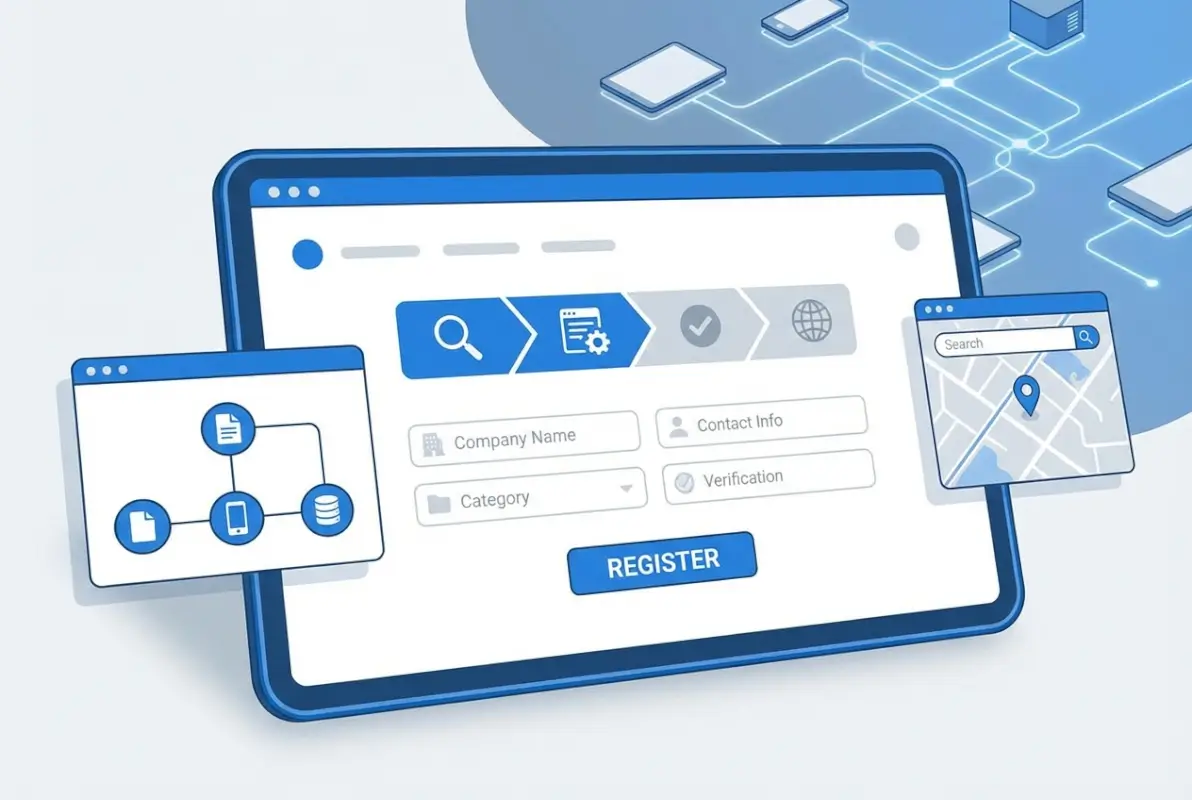
Begin by navigating to the 411 Business Directory homepage and locating the business registration option. This typically appears as “Add Your Business,” “List Your Business,” or “Get Listed” in the main navigation or as a prominent call-to-action button. Before proceeding with new listing creation, conduct a search for your business name—many directories automatically scrape public records and may already have a basic listing for your company.
If you find an existing listing, you’ll need to claim it rather than create a duplicate. Duplicate listings confuse customers and dilute your SEO value across multiple profiles. The claim process typically requires proving business ownership through documentation or verification methods we’ll discuss shortly.
Account creation comes next. Use a professional email address you check regularly—not a personal Gmail you ignore for weeks. This email receives verification messages, customer inquiries, and important updates about directory policies. Choose a secure password following standard best practices recommended by OWASP authentication guidelines.
The registration form itself typically spans multiple screens or sections. Work through each methodically, using your prepared master document to ensure consistency. Most forms follow this general structure:
Completing Each Registration Section Effectively
The basic information section captures your NAP data. Copy-paste from your master document rather than typing to eliminate transcription errors. Pay attention to formatting—if the form has separate fields for street address, city, state, and ZIP code, don’t paste your full address into the street address field.
Category selection significantly influences who finds your listing. Most directories offer primary and secondary categories. Choose the most specific category that accurately describes your core business rather than the broadest one. A plumbing company should select “Plumbing Services” or “Residential Plumbing” rather than “Home Services”—the specificity helps you appear in more targeted searches.
The business description field allows 150-500 words depending on the directory. Structure this for both humans and search engines by naturally incorporating relevant keywords while maintaining readability. Front-load your most important information—assume readers only consume the first two sentences. For businesses exploring proven tactics grow business directory presence, this description serves as your primary sales pitch.
When uploading images, most directories accept JPEG or PNG formats with maximum file sizes between 2-5MB. Upload the highest quality images that fall within size limits. Image file names matter for SEO—name your logo “business-name-logo.jpg” rather than “IMG_4829.jpg” before uploading.
Verification Methods and Listing Activation
Verification separates legitimate businesses from spam, which protects directory quality and user trust. The specific verification method varies by directory, but most employ one or more of these approaches.

Email verification represents the simplest method. You’ll receive an automated message with a confirmation link to the email address provided during registration. Click this link within the specified timeframe (usually 24-72 hours) to verify email ownership. If the message doesn’t arrive within 10 minutes, check spam folders before requesting a new verification email.
Phone verification involves receiving either an automated call with a PIN code or a text message to your business phone number. This confirms you control the phone number listed and helps prevent competitors from creating fraudulent listings with your business name but their contact information—a surprisingly common sabotage tactic in competitive industries.
Postcard verification, while slower, provides the strongest confirmation of physical location. The directory mails a postcard to your business address containing a unique PIN code. Once received, you log into your account and enter this code to complete verification. This method typically takes 5-10 business days from request to completion, so factor this timeline into your planning if you need listings activated by a specific date.
Document verification requires submitting proof of business legitimacy. Acceptable documents typically include business licenses, utility bills showing your business name and address, tax documents, or articles of incorporation. Most directories accept PDF, JPG, or PNG formats for document uploads. Ensure documents are current, legible, and clearly show both your business name and address matching your listing information.
Troubleshooting Common Verification Issues
If verification doesn’t proceed smoothly, several common issues might be at play. Mismatched information between your listing and verification documents triggers rejections—your listing says “123 Main St.” but your business license shows “123 Main Street.” Even minor variations can cause problems, which is why NAP consistency matters so much.
For phone verification issues, ensure the number you’ve listed accepts automated calls or text messages. Some VoIP services or call-blocking apps interfere with automated verification systems. Temporarily disabling call screening during the verification period can resolve these problems.
Postcard non-delivery sometimes occurs with complex address formats. If you’re in a multi-tenant building, ensure you’ve included suite numbers correctly. For businesses operating from home, some directories flag residential addresses for additional scrutiny—you may need to provide extra documentation proving you’re running a legitimate home-based business rather than attempting to spam the directory.
Evaluating Premium Listing Options and ROI
Once your basic listing is verified and active, directories typically present premium upgrade options. These paid enhancements promise increased visibility, but whether they deliver value depends on your specific market conditions and competition level.

Premium listings generally offer some combination of priority placement in search results, enhanced visual presentation with larger photos or video capability, removal of competitor advertisements from your listing page, additional business description space, and detailed analytics showing how users interact with your listing.
| Premium Feature | Typical Cost | Best For |
|---|---|---|
| Priority Placement | $25-75/month | Highly competitive markets |
| Enhanced Media | $15-40/month | Visual businesses (restaurants, hotels, retail) |
| Detailed Analytics | $10-30/month | Data-driven businesses testing channels |
| Competitor Ad Removal | $20-50/month | Service businesses with direct local competitors |
The question of premium value depends heavily on how much traffic the specific directory receives in your category and location. A premium listing on a directory that generates 5 views per month delivers questionable value regardless of features. The same premium package on a directory driving 200 monthly views might justify the investment.
Before committing to premium options, run your free listing for 30-60 days while monitoring whatever basic analytics the platform provides. Look for actual customer actions—phone calls, website clicks, direction requests—not just views. If your free listing generates meaningful engagement, premium features can amplify that performance. If your free listing sits dormant, premium features won’t magically create interest; you likely need to focus on different directories entirely. Many successful operators use strategies similar to proven strategies monetize business directory platforms employ.
For businesses operating in multiple locations, some directories offer multi-location management packages that reduce per-location costs. If you’re managing 5+ locations, these enterprise-level packages often provide better value than individual premium listings for each location.
Ongoing Listing Maintenance and Optimization
Directory registration isn’t a set-and-forget activity. Businesses that maintain active listing management see substantially better performance than those that register once and never return.
Establish a quarterly review schedule where you verify all information remains current. Business hours change seasonally, services expand or contract, phone numbers sometimes change. Each outdated element frustrates potential customers—imagine someone driving to your business during posted hours only to find you closed because you forgot to update your winter schedule in the directory.
Beyond accuracy updates, refreshing your business description and photos every 6-12 months signals to both directory algorithms and human visitors that your business is active and current. I’ve seen listing visibility improve simply from updating photos, even when all text information remained identical—directories appear to reward recent activity in their ranking algorithms.
Review management deserves particular attention. When customers leave reviews on your directory listing, respond promptly and professionally. According to Pew Research data on online reviews, businesses that respond to reviews are perceived as more trustworthy than those that ignore customer feedback.
Positive reviews warrant acknowledgment—a simple “Thank you for your business, we appreciate your feedback” takes 10 seconds and shows other prospective customers that you value client relationships. Negative reviews require more careful handling but present opportunities to demonstrate customer service quality publicly. Address the specific concern, offer to resolve the issue offline with contact information, and maintain professional tone regardless of how unreasonable the complaint might be.
Security and Access Management
Directory accounts represent valuable digital assets that require protection. Enable two-factor authentication if available to prevent unauthorized access. According to Microsoft Security research, multi-factor authentication blocks 99.9% of automated account attacks.
For businesses with multiple staff members, consider who truly needs account access. Many directories allow different permission levels—some users can respond to reviews while others can modify core business information. Restricting full administrative access to 1-2 trusted individuals reduces the risk of accidental changes or intentional sabotage.
Document your directory accounts in a secure password manager or internal documentation system. I’ve worked with businesses that couldn’t access their own directory listings because the employee who created them left the company and no one documented the login credentials—requiring lengthy identity verification processes to regain access.
Measuring Performance and Tracking Directory ROI
Effective directory management requires understanding which listings actually drive business results. Generic vanity metrics like “listing views” matter less than concrete actions—phone calls, website visits, direction requests, or direct purchases.
Most directories provide basic analytics within your account dashboard. Review these monthly, focusing on trends rather than absolute numbers. A listing generating 50 views but zero clicks suggests either your listing isn’t compelling or the directory doesn’t attract your target customers. A listing with 20 views and 5 website clicks indicates high engagement worth investing more attention toward.
For deeper tracking, implement UTM parameters on website links within your directory listings. This allows Google Analytics or similar platforms to attribute website traffic specifically to each directory source. A proper UTM structure might look like: yourwebsite.com?utm_source=411directory&utm_medium=listing&utm_campaign=local-directories
Compare directory performance against other marketing channels using consistent metrics. If your directory listings collectively cost $50/month and generate 10 qualified leads, calculate your cost-per-lead at $5. Compare this against your Facebook ads at $8/lead or your direct mail at $15/lead to make informed budget allocation decisions. Those running their own directories might apply lessons from create thriving local business directory optimization.
Track not just quantity but quality of directory-sourced leads. A directory generating 20 leads monthly where only 2 convert to customers delivers worse results than a directory producing 5 leads where 3 become customers. Conversion rate matters more than raw lead volume for actual revenue impact.
Integration With Broader Local SEO Strategy
Directory listings work most effectively as part of a comprehensive local SEO approach rather than standalone tactics. Citation consistency across directories reinforces your Google Business Profile, which typically drives more traffic than any individual directory.
Consider your directory presence as building a foundation that supports all other local marketing. When someone finds you through a Google search and then verifies your legitimacy by seeing consistent information across multiple directories, that cross-verification increases trust and conversion likelihood.
Link your social media profiles to your directory listings and vice versa. This interconnected web of business information helps search engines understand your business comprehensively while providing customers multiple pathways to find and contact you regardless of which platform they prefer.
Frequently Asked Questions About 411 Business Directory Registration
How long does 411 Directory registration typically take from start to activation?
The registration form itself takes 15-30 minutes with prepared information. Email verification activates immediately, phone verification within 24 hours, and postcard verification requires 5-10 business days. Total timeline from starting registration to live listing ranges from same-day to two weeks depending on verification method.
What happens if my business information changes after registration?
Log into your account dashboard and update the relevant fields. Changes typically undergo brief review before publishing, usually completing within 24-48 hours. For major changes like relocating your business, some directories may require reverification to confirm the new address legitimacy.
Can I register multiple locations for the same business?
Yes, most directories support multi-location businesses. Create separate listings for each physical location rather than trying to list multiple addresses under one profile. Each location should have unique local phone numbers and location-specific details for optimal local SEO performance.
Should I register in 411 Directory if I already have Google Business Profile?
Yes, multiple directory listings strengthen your overall local SEO through citation diversity. While Google Business Profile typically drives more traffic, additional directories contribute to citation consistency signals that boost your Google rankings. They also provide backup discovery channels when potential customers search directory-specific sites.
What should I do if I find duplicate listings for my business?
Claim and verify the most complete listing, then request deletion of duplicates through the directory’s support process. Provide proof of business ownership when requesting duplicate removal. Maintaining duplicate listings confuses customers and dilutes your SEO value across multiple profiles.
How do I handle negative reviews on my directory listing?
Respond professionally within 24-48 hours. Acknowledge the concern, apologize for any negative experience, and offer to resolve the issue offline with your contact information. Never argue publicly or get defensive. Your response demonstrates customer service quality to prospective customers reading the review.
Are premium directory listings worth the investment for small businesses?
Test with free listings first for 30-60 days to gauge organic engagement. If a directory generates meaningful customer actions through your free listing, premium features can amplify that performance. If your free listing sits idle, premium won’t fix fundamental traffic or relevance issues on that platform.
What’s the most important information to get exactly right in directory listings?
NAP consistency—your business Name, Address, and Phone number formatted identically across every single directory listing. Inconsistent NAP information confuses search engines and reduces local SEO effectiveness. Create a master reference document and copy-paste from it for every listing to ensure perfect consistency.
How often should I update my directory listings?
Review quarterly for accuracy, update immediately when business information changes, and refresh descriptions and photos every 6-12 months. Regular activity signals to directory algorithms that your business is current and active, which can improve your listing visibility.
Can I remove my business from a directory after registration?
Most directories allow listing removal through account settings or by contacting support. However, removing a listing eliminates that citation source and any SEO value it provided. Unless the directory presents reputational issues or consistently provides zero value, maintaining even dormant listings contributes to citation consistency.
Taking Action on Your 411 Directory Registration
Directory registration represents one of the few marketing activities where you can complete meaningful work in under an hour that continues generating value for months or years afterward. The businesses seeing best results treat it as strategic foundation-building rather than administrative busywork.
Start by blocking 90 minutes on your calendar this week specifically for directory work. Spend the first 30 minutes assembling your master information document with NAP data, descriptions, and images. Use the next 45 minutes to complete the 411 Directory registration process. Reserve the final 15 minutes to set quarterly calendar reminders for listing reviews and updates.
Remember that directory presence works cumulatively—each additional quality listing strengthens your overall local search visibility. While the 411 Directory represents one piece of that puzzle, the registration skills and information assembly you develop transfer directly to other directories you’ll want to target next.
The difference between businesses that succeed with directory marketing and those that don’t usually comes down to consistency and follow-through rather than any secret tactics. Complete your registration thoroughly, verify promptly, maintain actively, and measure honestly. Those fundamentals outperform any premium feature or optimization trick.